半导体行业观察

Search documents
芯片,要变了!
半导体行业观察· 2025-07-25 01:44
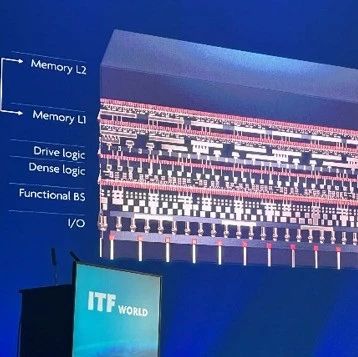
Core Viewpoint - The semiconductor industry is transitioning from traditional scaling methods to a new paradigm called CMOS 2.0, which focuses on 3D integration and vertical stacking of components to overcome the limitations of 2D scaling and maintain performance improvements [2][3][34]. Group 1: CMOS 2.0 Overview - CMOS 2.0 aims to break the limitations of single-chip designs by manufacturing each layer independently and optimizing them for their specific functions before stacking them into a unified component [5][10]. - The approach combines four main concepts: backside power delivery, fine-pitch hybrid bonding, complementary FETs (CFET), and a dual-sided process [6][8][9]. Group 2: Technical Pillars of CMOS 2.0 - Backside power delivery moves power rails to the wafer's backside, reducing voltage drop and freeing up routing resources [12]. - Fine-pitch hybrid bonding connects stacked layers using dense copper-to-copper contacts, allowing for high bandwidth and low latency interconnects [12]. - CFET technology vertically stacks n-type and p-type transistors, reducing standard cell height by 30% to 40% and improving density without shortening gate lengths [13]. - The dual-sided process allows for device and contact construction on both sides of the wafer, creating new wiring and integration options [12]. Group 3: Design Rule Changes - CMOS 2.0 fundamentally alters how designers think about system-on-chip (SoC) partitioning, wiring, and verification, requiring early decisions on module placement and current flow [16]. - The design process must adapt to a three-dimensional approach, necessitating new tools for modeling and managing power delivery and signal integrity across multiple layers [17]. Group 4: Manufacturing Challenges - The transition to CMOS 2.0 faces significant manufacturing challenges, particularly in achieving sub-micron hybrid bonding and managing wafer thinning and backside processing [19][20]. - The complexity of integrating multiple technologies into a single process flow poses risks to yield management and process control [19]. Group 5: Economic Considerations - CMOS 2.0 presents potential reliability and cost risks, as any defect in one layer can compromise the entire stack, necessitating rigorous online testing and monitoring [24]. - The economic viability of 3D wafer stacking may vary across markets, with high-performance computing being more likely to absorb the associated costs compared to other sectors [25]. Group 6: Competitive Alternatives - CMOS 2.0 is not the only strategy for scaling; alternatives like 2.5D integration using chiplets and monolithic CFET scaling are also being explored, each with its own advantages and challenges [26][28]. - The choice among these strategies will depend on product requirements, economic constraints, and the readiness of the ecosystem [30]. Group 7: Future Outlook - The success of CMOS 2.0 as a standard platform hinges on overcoming its technical, economic, and logistical challenges, with a focus on achieving reliable, void-free interconnects and mature EDA processes [32][33]. - High-performance computing, AI accelerators, and premium mobile devices are expected to be the initial applications for CMOS 2.0 technology, with broader market adoption possible as yield and process stability improve [34].

ST十多年来首次亏损,创下单日最大跌幅,收购恩智浦MEMS业务
半导体行业观察· 2025-07-25 01:44
Core Viewpoint - STMicroelectronics reported a loss in Q2 for the first time in over a decade, primarily due to restructuring and impairment costs amounting to $190 million, leading to a significant stock price drop of 16.6% [2][3] Financial Performance - The company experienced an operating loss of $133 million in Q2, which was below analyst expectations of a profit of $56.2 million [2] - Revenue for Q2 increased to $2.76 billion from $2.52 billion in the previous quarter, surpassing expectations [3] - The company anticipates Q3 revenue to reach $3.17 billion, exceeding analyst forecasts of $3 billion [3] Market Position and Strategy - STMicroelectronics heavily relies on in-house manufacturing, accounting for approximately 80% of sales, which poses challenges during market slowdowns [2] - The company has initiated a cost-cutting plan aimed at saving hundreds of millions by restructuring its manufacturing facilities, including a workforce reduction of 5,000 employees by 2027 [4] Acquisition Plans - STMicroelectronics plans to acquire NXP's MEMS sensor business for up to $950 million, enhancing its position in the sensor market [6][7] - The acquisition is expected to generate approximately $300 million in revenue in 2024 and improve profit margins significantly [7] - The deal will be financed through existing cash and is expected to close in the first half of 2026, pending regulatory approvals [7]



英特尔陈立武:朝着正确方向迈进
半导体行业观察· 2025-07-25 01:44
Core Viewpoint - Intel's CEO emphasizes the company's strong second-quarter performance and outlines a strategic plan to enhance operational efficiency, streamline the organization, and focus on key growth areas to regain market share and drive long-term profitability [5][6][12]. Group 1: Financial Performance - Intel reported revenues exceeding the upper limit of its guidance for Q2 2025, indicating robust demand across its business segments and effective execution by the team [5]. - The company is implementing a plan to reduce its workforce by approximately 15%, aiming to lower the total global employee count to around 75,000 by the end of the year [5]. Group 2: Organizational Changes - The company is undergoing significant organizational restructuring to enhance efficiency and accountability, which includes a reduction of about 50% in management levels [5][6]. - Intel is also preparing for a return to office policy by September, ensuring that all locations are ready for full operational status [5]. Group 3: Strategic Focus Areas - Intel has identified three key areas for strategic focus: 1. **Foundry Business**: The company aims to establish a disciplined approach to its foundry operations, halting previously planned projects in Germany and Poland, and integrating operations in Costa Rica with larger facilities in Vietnam and Malaysia [7]. 2. **Revitalizing x86 Ecosystem**: Intel plans to enhance its market share in core client and server segments, focusing on the Panther Lake processor for consumer and commercial laptops, and reintroducing simultaneous multithreading (SMT) technology in data center products [10]. 3. **Optimizing AI Strategy**: The company is shifting its AI strategy to focus on a unified chip, system, and software stack, targeting emerging AI workloads and developing differentiated solutions [11]. Group 4: Future Outlook - Intel's leadership expresses confidence in the company's direction, emphasizing the need for urgency, discipline, and focus to build a new Intel in the evolving semiconductor landscape [12].


AI芯片的黄金时代
半导体行业观察· 2025-07-25 01:44
Core Viewpoint - The article discusses the exponential growth in hardware capabilities, particularly in the context of artificial intelligence, drawing parallels to Moore's Law and the concept of "doubling" in computing power [4][6]. Group 1: Hardware Advancements - Significant advancements in hardware have been made since the 1950s and 1960s, with a focus on the exponential nature of growth in computing power [3][4]. - The Cerebras WSE-2 chip can perform approximately 7.5 petaFLOPS, while the WSE-3 can reach 125 petaFLOPS, showcasing the power of parallel processing [6][7]. - The evolution of hardware has transitioned from single-core to multi-core systems, highlighting the increasing complexity and capability of modern chips [6]. Group 2: AI and Hardware Acceleration - The article emphasizes the role of hardware acceleration in driving advancements in artificial intelligence, with a historical perspective on the evolution of processing capabilities [9][10]. - Innovations such as quantization in GPU design can significantly enhance efficiency, with 4-bit multipliers being several orders of magnitude more efficient than 32-bit multipliers [13][14]. - The concept of "smart clusters" is introduced, where companies are working on designing intelligent hardware systems to optimize AI performance [16]. Group 3: Global Supply Chain and Impact - The article highlights the complexity of the global supply chain involved in chip production, which can span multiple continents and countries [16]. - The importance of rare earth minerals and chemicals in the semiconductor industry is noted, with Taiwan's dominance in chip manufacturing being a key point [16]. - The current phase of hardware acceleration is described as being at a "hockey stick curve," indicating rapid growth and potential future developments [17].

颠覆通用CPU,全球最省电处理器,正式发布
半导体行业观察· 2025-07-25 01:44
公众号记得加星标⭐️,第一时间看推送不会错过。 几十年来,我们一直用错误的方式构建通用CPU——这是Efficient Computer团队的大胆宣言。为此,他们在今日正 式发布了其首款产品 E1 处理器,希望开创通用计算效率的新时代。 Efficient Computer表示。这是一款通用处理器,彻底颠覆了业界长期以来对冯·诺依曼架构的依赖。除了是 Efficient Computer 首款独立硬件产品之外,这款芯片还值得关注的另一个点是该公司称其为"全球最节能的通用处理器"。 据 介 绍 , 与 传 统 的 冯 · 诺 依 曼 处 理 器 在 内 存 和 计 算 核 心 之 间 传 输 数 据 时 消 耗 过 多 能 量 不 同 , Electron E1 处 理 器 基 于 Efficient 的 Fabric 架构构建——这是一种执行通用代码的空间数据流架构,无需进行成本高昂的分步计算。与传统的低 功耗 CPU 相比,这种方法可将能效提升高达 100 倍,使边缘智能应用在电力和维护受限的环境中也能拥有长达数年的使 用寿命。 公司的初衷,对传统CPU失望 Efficient Computer 直言,公司 ...
特斯拉下一代智驾芯片,太猛了
半导体行业观察· 2025-07-25 01:44
Core Viewpoint - Tesla is developing the next-generation AI5 FSD computer, which will feature a powerful AI chip tailored for its autonomous vehicles, with production expected to start by the end of 2026, delayed by a year from the original timeline [3][5][15]. Group 1: AI5/HW5 Development - The AI5/HW5 computer will utilize a custom-designed AI chip built on a 3nm process, which is expected to be significantly more powerful than the current AI4 chip, with performance ranging from 2000 to 2500 TOPS [6][14]. - The AI5 chip is anticipated to be five times faster than the HW4 computer currently used in Model Y vehicles, enabling it to support fully autonomous driving capabilities [7][14]. - Tesla plans to integrate the AI6 hardware into its ecosystem, ensuring interoperability between its robots and autonomous vehicles [5][15]. Group 2: Regulatory and Export Challenges - The U.S. government has imposed new export controls on AI chips, which may conflict with Tesla's plans for the AI5 chip, as it is designed to exceed these limitations [4][26]. - Elon Musk expressed hope that export control thresholds could be gradually raised, allowing Tesla to avoid compromising the AI5 computer for international markets [4][26]. Group 3: Hardware Upgrades and Future Plans - Tesla has confirmed that it will pause upgrades for HW3 owners until the autonomous driving issues are resolved, indicating that significant changes may be required for compatibility with newer hardware [11][12]. - The company is focusing on completing FSD testing with AI4 before considering upgrades for HW3 vehicles, with AI5 production expected to ramp up by late 2026 or early 2027 [26][16]. - Tesla aims to enhance the FSD capabilities significantly, with expectations of a tenfold increase in parameters and improved performance over the current HW4 hardware [23][26]. Group 4: Market Expansion and FSD Adoption - Tesla is preparing to expand its FSD offerings in China and Europe, awaiting regulatory approvals, which could lead to a significant increase in sales once granted [18][19]. - The adoption rate of FSD in North America has surged, with approximately 25% of customers purchasing FSD since the release of version 12, partly due to price reductions [23][24].


博通690亿美元的收购,生变数
半导体行业观察· 2025-07-25 01:44
Core Viewpoint - The European Cloud Infrastructure Service Providers Association (CISPE) has formally appealed to the European General Court to annul the European Commission's approval of Broadcom's acquisition of VMware, citing legal errors and significant failures in the competition assessment process [2][9]. Group 1: Legal and Competitive Concerns - CISPE claims that Broadcom unilaterally terminated existing contracts and imposed burdensome new licensing conditions, leading to cost increases of up to tenfold and long-term commitments for necessary VMware software [2][10]. - The organization has been lobbying the European Commission for two years, expressing concerns that the Commission has not taken substantial actions to support European cloud service providers or their customers [3][11]. - CISPE argues that the Commission acknowledged significant risks to competition in its official summary but did not impose any conditions to prevent Broadcom from gaining a dominant market position [9]. Group 2: Impact on Cloud Service Providers - The new restrictive licensing terms announced by Broadcom could exclude many small cloud service providers, including CISPE members, from purchasing and reselling VMware-based cloud services, which are essential for providing secure and flexible cloud solutions [10][11]. - CISPE Secretary Francisco Mingorance highlighted that the dominant position of VMware software in the virtualization market means that the unfair licensing terms affect all organizations using cloud technology in Europe, including hospitals and universities [11]. Group 3: Competitive Landscape - Before the acquisition, VMware faced competition from companies like Microsoft, Nutanix, and XCP-NG, while the European Commission's investigation primarily focused on hardware products rather than the impact on virtualization software competition [4][5]. - Despite the challenges, alternatives to VMware exist, with Nutanix remaining a strong competitor and new entrants like Platform9, Arcfra, and OpenNebula actively positioning themselves in the market [5][6].



破局关键期!湾芯展2025邀您共探半导体产业新机遇
半导体行业观察· 2025-07-25 01:44
Core Viewpoint - The semiconductor industry is entering a trillion-dollar growth cycle driven by AI technology, while recent changes in global trade patterns and tariff policies present new opportunities and challenges for the sector [1]. Group 1: Industry Growth and Challenges - Barclays reports that the implementation of the U.S. Section 232 semiconductor tariffs is expected to begin between mid-August and September, with a potential uniform tariff rate of 25%, although analysts suggest this may be overly optimistic [1]. - The possibility of phased tariff increases could have profound implications for the semiconductor industry [1]. Group 2: Event Overview - The Bay Area Semiconductor Industry Expo (Bay Chip Expo) will take place from October 15 to 17, 2025, at the Shenzhen Convention Center, covering an exhibition area of 60,000 square meters [1]. - The expo will feature over 600 leading semiconductor companies globally, providing a platform for exhibition, high-level forums, awards, talent recruitment, and research reports [1]. Group 3: Technological Innovations - The expo will showcase four major exhibition areas: wafer manufacturing, compound semiconductors, IC design, and advanced packaging, highlighting cutting-edge technologies and innovative products [4]. - Numerous exhibitors will launch significant new products and technologies at the event, catering to over 60,000 professional attendees [4]. Group 4: Resource Aggregation and Networking - The Bay Chip Expo will leverage Shenzhen and the Greater Bay Area's vast application market and major industrial project clusters to gather over 600 leading semiconductor enterprises, facilitating direct communication with industry giants [6]. - The event aims to provide a precise matching platform for buyers and suppliers, enhancing cooperation efficiency and reducing costs [8]. Group 5: Conference and Forums - The 2025 Greater Bay Area Semiconductor Conference, a core component of the expo, will include two high-end seminars, an opening ceremony, and over 20 technical forums focusing on key industry topics such as lithography, equipment, components, materials, advanced packaging, IC design, AI, and investment strategies [11]. - The forums will offer insights into industry trends and strategic thinking, inviting representatives from leading companies, experts, and innovative forces [11].

DDR 6要来了,速度惊人
半导体行业观察· 2025-07-24 00:46
Core Viewpoint - The next generation of PC memory, DDR6, is set to be commercially available by 2027, with significant advancements in speed and efficiency compared to its predecessor, DDR5 [3][4]. Summary by Sections DDR6 Development - DDR6 standard is being drafted by the end of 2024 and is expected to enhance various fields, including gaming and AI workloads [3]. - Major chip manufacturers like Samsung, Micron, and SK Hynix are progressing well with prototype designs and are focusing on controller development [3][4]. - Intel and AMD are collaborating on interface testing for DDR6, with platform validation expected to begin next year [3]. Performance Enhancements - DDR6 will feature a significant architectural upgrade, starting with a default speed of 8,800 MT/s and potentially reaching up to 17,600 MT/s, which is double the official limit of DDR5 [3][4]. - Overclocked modules may achieve speeds of up to 21,000 MT/s [3]. Multi-Channel Architecture - DDR6 will introduce a multi-channel architecture with four 24-bit sub-channels, improving parallel processing and bandwidth efficiency compared to DDR5's dual 32-bit layout [4]. - This new design will require higher standards for module I/O design and signal integrity [4]. CAMM2 Specification - CAMM2 is positioned as a key specification for DDR6, particularly in laptops and compact devices, promising better performance and efficiency compared to traditional DIMM and SO-DIMM [4]. LPDDR6 Development - The final draft of LPDDR6 has been released, allowing semiconductor companies and memory manufacturers to begin testing and validation under a unified framework [4]. - Companies like Qualcomm, MediaTek, and Synopsys are developing hardware to support LPDDR6, with Samsung and SK Hynix planning to start mass production by the end of the year [4]. Historical Context and Expectations - DDR5 was officially established in July 2020, and DDR6 is anticipated to follow a similar trajectory of rapid adoption [6]. - Samsung predicts that DDR6 will achieve a maximum operating speed of 12,800 MT/s, with potential overclocking capabilities reaching 16,800 MT/s [7][9]. Memory Speed and Bandwidth - The development of DDR memory standards shows a significant increase in speed and bandwidth, with DDR6 expected to provide at least 134.4 GB/s of memory bandwidth [12][13]. - The number of memory channels in DDR6 will increase to four, doubling the count from DDR5, and the number of memory groups will also double to 64 [11][12].


索尼考虑出售芯片业务
半导体行业观察· 2025-07-24 00:46
Core Viewpoint - Sony Group is considering selling its cellular chipset division to focus more on its entertainment business, reflecting a strategic shift towards recurring revenue models rather than cyclical hardware markets [3][13]. Summary by Sections Sale Consideration - Sony is reportedly working with investment bankers to sell its semiconductor division in Israel, which is still in the early stages of the transaction [4]. - The division generates approximately $8 million in recurring revenue annually, with an estimated valuation close to $300 million [5]. Business Focus - Sony has been increasing its focus on gaming, film, and music, with over 60% of its profits coming from entertainment last year [9]. - The company is also planning to partially spin off its financial services division for a direct listing later this year [10]. Semiconductor Division Insights - Sony Semiconductor Solutions Corp. is known for its global leadership in image sensors, with significant revenue coming from entertainment products [12]. - The semiconductor division's profit margins have declined from 20% in 2019 to below 10% in 2024 due to increased competition and market saturation [13]. Strategic Reconfiguration - The potential sale aligns with a broader trend in the tech industry to prioritize recurring revenue streams [13]. - Sony's aggressive capital allocation strategy includes a ¥250 billion stock buyback plan and a ¥1.8 trillion strategic investment fund, indicating a shift towards shareholder returns over capital-intensive hardware manufacturing [14]. Market Opportunities - The gaming, music, and streaming industries are projected to grow at a compound annual growth rate of 8-12% over the next five years, presenting opportunities for Sony to leverage its cross-departmental synergies [15]. - The potential sale of the semiconductor division could attract niche investors or private equity firms focused on the semiconductor sector [15]. Long-term Outlook - While the strategic logic behind the sale is sound, the impact on Sony's overall revenue, which sees 16% contribution from the semiconductor division, must be considered [16]. - The success of the spin-off will depend on macroeconomic factors and Sony's ability to execute its capital allocation strategy effectively [16]. - The move is not merely a cost-cutting measure but a deliberate step to align with a content-driven economy, presenting an investment opportunity for those betting on Sony's success in entertainment [16][17].