天天基金网

Search documents
最新中国500强出炉!国家电网第一,四大行均列前十
天天基金网· 2025-07-23 11:42
Core Insights - The 2025 Fortune China 500 list shows a total revenue of $14.2 trillion for the listed companies in 2024, a decrease of approximately 2.7% compared to the previous year [1] - Net profit for these companies reached $756.4 billion, reflecting a growth of about 7% year-on-year [1] - The total revenue of the 500 companies accounts for roughly three-quarters of China's GDP, which is projected to be $18.75 trillion in 2024 [1] Group 1: Company Rankings - State Grid Corporation leads the list with a revenue of $548.4 billion [1] - China National Petroleum Corporation and China Petroleum & Chemical Corporation rank second and third, respectively [1] - The "Big Four" banks are all in the top ten, with Industrial and Commercial Bank of China ranked fifth [1] - JD.com is the highest-ranked private enterprise at 11th, followed by Alibaba at 18th and Tencent at 32nd [1] Group 2: Profitability - The top ten most profitable companies include five commercial banks and China National Petroleum, along with four private enterprises: TSMC, Tencent, Alibaba, and China Ping An Insurance [2] - TSMC ranks fourth with a net profit of $36.1 billion, while Tencent's net profit exceeds $26.9 billion, showing a year-on-year growth of over 65% [2] - Alibaba and China Ping An rank ninth and tenth in profitability, respectively, with the top ten companies accounting for approximately 41% of the total profits of the listed companies [2]








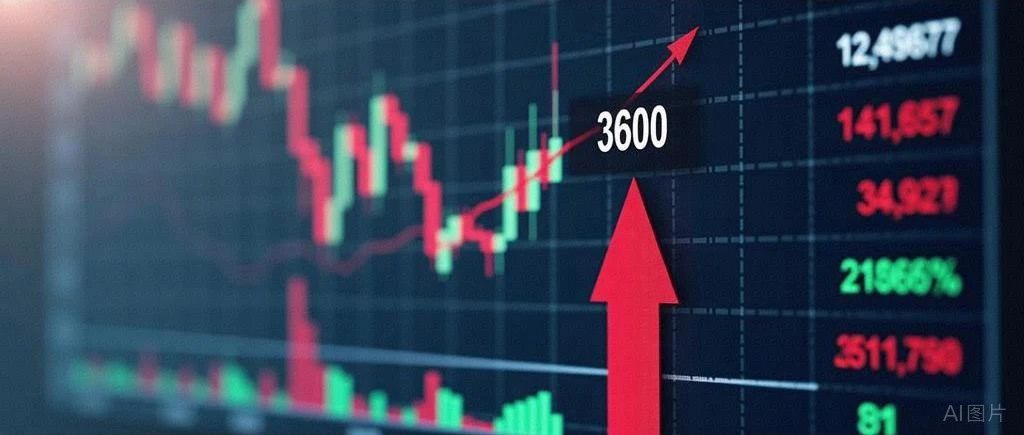
A股重磅信号!3600点是起点还是终点?
天天基金网· 2025-07-23 11:42
Core Viewpoint - The A-share market experienced a high point at 3600 but faced a pullback, indicating potential volatility and the need for cautious investment strategies [1][5][17]. Market Performance - The three major A-share indices rose and then fell back, with the Shanghai Composite Index briefly reaching 3613 before closing slightly higher, while over 4000 stocks declined [1][5]. - The total trading volume in the market was 1.86 trillion yuan, with sectors like water and electricity leading the gains, while brokerage, semiconductor, and insurance sectors also performed well [3]. Market Analysis - Analysts suggest that the A-share market continues to follow a structural bull market logic, with short-term support around 3420 points. Key factors to monitor include oil prices, trading volume, and the stability of the RMB exchange rate [4]. - The rapid rise of the Shanghai Composite Index from 3500 to 3613 points in just ten days was attributed to fast sector rotation and profit-taking near key resistance levels [5][8]. Historical Context - Historically, the Shanghai Composite Index has crossed the 3600-point mark multiple times, notably during the bull markets of 2007, 2015, and the structural bull market of 2021 [18][20]. - The 2007 bull market was driven by significant economic growth and reforms, while the 2015 surge was fueled by liquidity and leveraged funds. The 2021 rally was characterized by institutional support and a focus on specific sectors [20][21]. Current Market Dynamics - The current market differs from previous instances of crossing 3600 points due to a shift in leading sectors, with financial stocks taking the lead instead of consumer and healthcare sectors [21]. - The market is supported by favorable policies and improving fundamentals, with signs of economic stabilization following a low point last year [21][22]. Investment Strategy - The current conditions suggest that the A-share market may be in the early stages of a bull market, characterized by friendly policies, ample liquidity, and recovering market sentiment [23]. - Investors are advised to remain rational, avoid chasing highs, and maintain a balanced portfolio between value stocks and growth sectors, while being cautious of emotional trading behaviors [23].
天天基金养老投教活动首进上市公司,带您解锁从容养老密码
天天基金网· 2025-07-23 11:42
Core Viewpoint - The year 2025 is crucial for the personal pension business to seek long-term development, with initiatives aimed at enhancing public understanding of personal pension systems and encouraging participation among employees of listed companies [1][19]. Group 1: Event Overview - The first event of the "From Planning to Steady Growth" pension education series took place on July 18 in Jiangyin, Jiangsu, featuring a professional team from Fidelity Fund to provide engaging and informative pension investment education [3][4]. - The event aimed to help employees understand policies and calculate their pension needs, emphasizing the importance of early planning for retirement [4][11]. Group 2: Policy and Product Education - Fidelity Fund's team provided a comprehensive overview of the multi-tiered pension security system, addressing the challenges posed by China's aging population [6]. - The latest personal pension policies, including tax benefits and investment options such as savings, financial products, commercial pension insurance, and public funds, were explained in detail [9][11]. Group 3: Engagement and Impact - An interactive quiz segment was included to reinforce pension knowledge, with employees expressing newfound awareness of the benefits and opportunities associated with personal pensions [11][14]. - The event successfully reached a diverse group of employees, enhancing their understanding of pension finance and encouraging proactive retirement planning [14][17]. Group 4: Future Directions - The Jiangyin event is just the beginning of a series of activities aimed at delivering professional pension planning knowledge to more employees across various companies [17]. - The company plans to continue its efforts in pension education, aligning with regulatory bodies to promote high-quality development in the public fund industry and meet diverse investor needs [21].
3600点敲门!是狂欢的终点,还是财富的起点?
天天基金网· 2025-07-23 11:42
Core Viewpoint - The article discusses the current bullish sentiment in the A-share market, highlighting the rise of the Shanghai Composite Index and the factors driving this trend, while also noting the underlying risks and market differentiation [1][2]. Group 1: Market Drivers - Continuous policy benefits are being released, including deepening capital market reforms and subsidies for equipment upgrades, which are expected to stabilize low-valued sectors like finance and real estate [3]. - Economic data has exceeded expectations, with Q2 GDP growth at 5.2%, industrial output increasing by 6.8% in June, and new social financing reaching 4.2 trillion yuan, indicating a recovery in corporate profits [4]. - Breakthroughs in the technology sector are prompting asset revaluation, with companies like Nvidia and AMD resuming chip supplies to China, leading to growth in hardware sectors [5]. Group 2: Market Differentiation and Risks - Despite the overall bullish trend, there is significant market differentiation, with sectors like water conservancy and rare earths seeing gains over 20%, while banks and semiconductor stocks lag behind [7]. - Concerns about incremental capital are emerging, as northbound capital saw a net outflow of 28.7 billion yuan in July, with significant sell-offs in growth sectors like electronics and computing [7]. - External risks are also present, with potential tariff increases from the U.S. and EU, which could impact foreign trade [8]. - The domestic real estate market remains weak, with June residential sales down 12.6% year-on-year, which may continue to suppress consumer recovery [9]. - Historical data shows that previous breaches of the 3600-point mark in the Shanghai index were accompanied by valuation bubbles and volume exhaustion, raising concerns about current valuations in some tech sectors [10]. Group 3: Investment Strategies - Investors are advised to balance their portfolios to mitigate risks while seizing opportunities, considering both defensive and growth-oriented strategies [12]. - Defensive strategies include recommending low-volatility dividend funds, such as high-dividend banks and coal and power sectors, to hedge against market fluctuations [13]. - Growth strategies should focus on sectors benefiting from dual policy engines, such as AI infrastructure and high-end manufacturing [14]. - The 3600-point level is viewed as a point for asset rebalancing rather than a terminal point for investment, emphasizing the importance of professional asset management during volatile periods [15].

聊聊几个投资红利基金的必要认知
天天基金网· 2025-07-23 11:42
Core Viewpoint - The article emphasizes the importance of dividend strategies in investment, highlighting their ability to provide stable returns through dual sources of income: dividend income and capital appreciation [2][11][48]. Group 1: Nature of Dividend Funds - Dividend funds are fundamentally equity assets, not fixed-income products, despite their high dividend yields [5][11]. - Investors often misinterpret dividend funds as low-risk investments, overlooking their inherent market volatility [8][9]. - The resilience of dividend funds is demonstrated by their performance during market downturns, where they have shown a tendency to recover faster than broader indices [13][14]. Group 2: Understanding Dividend Distribution - Dividend distribution is not a zero-sum game; it reflects a company's financial health and commitment to shareholder returns [18][20]. - Companies that consistently pay dividends are typically in a mature phase with stable cash flows, indicating strong operational performance [19][21]. - The reinvestment of dividends can lead to significant compounding effects over time, enhancing overall returns [21][22]. Group 3: Types of Dividend Indices - There are three main types of dividend indices: traditional dividend strategies focusing on high dividend yields, enhanced dividend strategies incorporating additional factors, and Hong Kong stock dividend strategies benefiting from unique market conditions [30][34][36]. - Enhanced dividend strategies have shown higher excess returns compared to pure high-dividend strategies, albeit with increased volatility [36]. - The concentration of dividend indices in the banking sector necessitates careful consideration for investors concerned about potential market fluctuations [36]. Group 4: Dynamic Nature of Dividend Strategies - Dividend indices are dynamically updated, ensuring that they maintain a relatively high dividend yield by replacing underperforming stocks with new candidates [40][41]. - The relationship between stock price and dividend yield is complex, with market dynamics influencing both [42][43]. - The article concludes that understanding the nuances of dividend strategies can help investors make informed decisions and achieve stable cash flows over the long term [48].

天天基金养老投教活动首进上市公司,带您解锁从容养老密码
天天基金网· 2025-07-23 06:32
Core Viewpoint - The year 2025 is crucial for the personal pension business to seek long-term development, with initiatives aimed at enhancing public understanding of personal pension systems and encouraging participation among employees of listed companies [1][19]. Group 1: Event Overview - The first event of the "From Planning to Steady Growth" pension education series took place on July 18 in Jiangyin, Jiangsu, featuring a professional team from Fidelity Fund to provide engaging and informative pension investment education [3][4]. - The event aimed to help employees understand policies and calculate their pension needs, emphasizing the importance of early planning for retirement [4][11]. Group 2: Policy and Product Education - Fidelity Fund's team provided insights into the multi-tiered pension security system, addressing the challenges posed by China's aging population and demonstrating the importance of early pension planning through simulations using the "Fidelity Pension Calculator" [6][9]. - The latest personal pension policy was explained, highlighting the tax benefits associated with personal pension accounts and detailing various investment options such as savings, financial products, commercial pension insurance, and public funds [9][11]. Group 3: Engagement and Impact - An interactive quiz segment was included to reinforce pension knowledge, with employees expressing newfound awareness of the significance of personal pensions and the available tax incentives [11][14]. - The event successfully reached a diverse group of employees, enhancing their understanding of pension finance and promoting a scientific approach to retirement planning [14][21]. Group 4: Future Initiatives - The Jiangyin event marks the beginning of a series of educational activities aimed at delivering professional pension planning knowledge to more employees across various companies [17][21]. - The company plans to continue responding to regulatory calls and exploring diverse pension service paths to meet investors' needs while enhancing the quality of pension education [20][21].
基金南下抢筹,港股银行和创新药最受青睐!
天天基金网· 2025-07-23 06:31
Core Viewpoint - The recent public fund reports for Q2 2025 indicate that nearly 1,800 funds have increased their positions in Hong Kong stocks, with significant allocations towards high-growth sectors like innovative pharmaceuticals and high-dividend sectors such as bank stocks [1][3]. Group 1: Fund Position Changes - Nearly 1,800 funds have raised their Hong Kong stock allocations in Q2, with around 300 funds increasing their exposure by over 10 percentage points [3]. - The Green Hong Kong Stock Connect Fund significantly increased its Hong Kong stock allocation from 37% at the end of Q1 to 94.87% at the end of Q2, with its top ten holdings now entirely in Hong Kong stocks [2]. - The Penghua Shanghai-Shenzhen-Hong Kong Internet Fund raised its Hong Kong stock allocation from 22.87% to 77.85%, with nine out of its top ten holdings being Hong Kong stocks by the end of Q2 [2]. - The Nordex New Trend A Fund increased its Hong Kong stock allocation from 2.41% to 44.45%, reflecting a shift towards high-quality technology assets in the Hong Kong market [2]. Group 2: Sector Focus - The primary sectors for increased allocations are innovative pharmaceuticals and banking, showcasing a barbell strategy of high growth and high dividends [4]. - The allocation to the Hong Kong healthcare sector increased from 0.54% to 0.88%, while the financial sector allocation rose from 0.5% to 0.67% [4]. - Notable stocks in the innovative pharmaceutical sector that received significant fund inflows include Stone Pharmaceutical, China Biologic Products, and Innovent Biologics, with over 10% of the circulating shares held by mainland public funds by the end of Q2 [4]. Group 3: Banking Sector Investments - High-dividend bank stocks such as China Construction Bank, Industrial and Commercial Bank of China, Agricultural Bank of China, and Minsheng Bank saw substantial increases in fund allocations, with 108 funds increasing their positions in China Construction Bank alone [5]. - The Industrial and Commercial Bank of China received additional investments from 91 funds, while 47 funds increased their holdings in Agricultural Bank of China [5]. Group 4: Market Trends and Outlook - The chief economist at Qianhai Kaiyuan Fund noted that the Hong Kong market's dual advantages are driving the shift in fund allocations, with the Hang Seng Technology Index showing relative valuation advantages compared to some overseas markets [6]. - Fund managers believe that ongoing macro policies and breakthroughs in various sectors are improving market sentiment, despite significant volatility due to external macro factors [6]. - Future market trends may exhibit a "seesaw effect" between technology and high-dividend sectors, with innovative pharmaceuticals and new consumption areas currently attracting higher trading interest [6].

2.55万亿元!养老金调仓路径浮现
天天基金网· 2025-07-23 06:31
Core Viewpoint - The article discusses the current state and future plans of China's social insurance system, particularly focusing on pension funds and employment statistics, highlighting the growth in pension fund investments and the stability of the employment market [3][5][7]. Group 1: Pension Fund Operations - As of June 30, the scale of pension fund investment operations reached 2.55 trillion yuan, an increase of 150 billion yuan from the previous quarter [3]. - The Ministry of Human Resources and Social Security plans to continue expanding the entrusted investment scale of basic pension insurance funds and enhance regulatory measures [3][2]. - The total income of the three social insurance funds (pension, unemployment, and work injury) in the first half of the year was 4.53 trillion yuan, with total expenditures of 3.89 trillion yuan, resulting in a cumulative balance of 9.83 trillion yuan by the end of June [3]. Group 2: Employment Statistics - In the first half of the year, 6.95 million new urban jobs were created, achieving 58% of the annual target [5]. - The urban survey unemployment rate in June was 5.0%, unchanged from the same period last year [5]. - The Ministry of Human Resources and Social Security has implemented various training programs to address skill shortages in sectors such as digital talent and elderly care [5]. Group 3: Investment Trends - Basic pension insurance funds have increasingly appeared in the top ten shareholders of several A-share listed companies, indicating a growing interest in equity investments [7]. - Notably, the pension fund has increased its holdings in companies like Silver Wheel Holdings, which has shown significant growth in revenue and profit over the years [8]. - Silver Wheel Holdings has a compound annual growth rate of 17% in revenue and 20% in net profit since its listing in 2007, with recent expansions into digital energy thermal management [8].


A股重磅!“国家队”,再度出手!
天天基金网· 2025-07-23 06:30
Core Viewpoint - The article highlights the significant investment and strategic importance of controlled nuclear fusion technology in China's energy landscape, emphasizing the establishment of the China Fusion Energy Company and the involvement of major state-owned enterprises in funding this initiative [2][4][5]. Investment and Company Formation - On July 22, 2023, the China Fusion Energy Company was officially established, with major stakeholders including China National Nuclear Corporation and China Nuclear Power announcing a joint investment of approximately 11.49 billion yuan [2][3]. - China Nuclear Power plans to invest 1 billion yuan for a 6.65% stake in the fusion company, which is currently a wholly-owned subsidiary of the China National Nuclear Corporation [2][3]. Financial Overview - As of December 31, 2024, the total assets of the fusion company are reported at approximately 611.56 million yuan, with owner equity at about 611.03 million yuan. The company has not generated any revenue and reported a net loss of approximately 202.60 million yuan for the same period [3]. - For the first half of 2025, the company is projected to have total assets of around 5.37 billion yuan, with a net loss of approximately 4.33 million yuan [3]. Strategic Importance - The investment in the fusion company aligns with China's national energy strategy and aims to solidify the position of state-owned enterprises in the nuclear fusion industry, which is seen as crucial for energy security and environmental protection [4][5]. - The controlled nuclear fusion technology is regarded as a key solution to global energy challenges and is positioned as a competitive frontier in international technology [5]. Market Trends and Future Outlook - The global investment in the fusion sector is expected to accelerate, with significant funding from both China and the United States, indicating a growing interest in fusion research and development [6]. - The article notes that the nuclear power sector in China is set for expansion, with projections indicating that installed nuclear capacity could reach 110 million kW by 2030 and 150 million kW by 2035 [8]. Uranium Market Dynamics - The article discusses the increasing demand for uranium, with projections indicating a compound annual growth rate of over 4% from 2024 to 2040, driven by the global nuclear power revival [9]. - The supply of uranium is expected to tighten due to high resource concentration and declining exploration investments, which may lead to sustained high prices in the long term [9].



公募二季报盘点!ETF仍是增长引擎,基金“大象”何以登上“红色火箭”?
天天基金网· 2025-07-23 06:30
Core Viewpoint - The article discusses the transformation of the public fund industry in China, emphasizing a shift from a sales-driven model to a customer-centric approach, driven by regulatory guidance and investor demand. The recently released second-quarter fund reports serve as a critical window to observe this trend. Group 1: Fund Industry Overview - As of the end of Q2, the total management scale of 162 public fund institutions reached 34.05 trillion yuan, growing by 4.91% compared to the end of last year, indicating a slowdown in industry growth [2] - The top ten public fund institutions now account for 40.71% of the total management scale, reflecting an increase in concentration among leading firms [2] - In the first half of the year, 86 public fund institutions saw growth in management scale, with notable increases from firms like Huaxia Fund and E Fund, both exceeding 100 billion yuan in growth [2] Group 2: Profitability and Performance - The total profit of fund products in Q2 exceeded 380 billion yuan, marking a more than 50% increase from the previous quarter [4] - Huaxia Fund led the industry with a profit of 30.09 billion yuan in Q2, being the only institution to surpass 30 billion yuan [4] - For the first half of the year, E Fund, Huaxia Fund, and Fortune Fund topped the profitability rankings with profits of 58.44 billion yuan, 57.32 billion yuan, and 35.93 billion yuan, respectively [4] Group 3: Performance of Equity Funds - The performance of equity funds has improved significantly, with the median average return of equity fund products reaching 15.92% as of the end of Q2 [5] - Huaxia Fund's equity products achieved an average return of 17.12%, ranking first among large equity fund companies [5] - The Huaxia North Exchange Innovation Small and Medium Enterprises Selected Fund reported a three-year return rate of 175.64%, showcasing exceptional performance [11] Group 4: ETF Growth and Market Dynamics - The non-monetary management scale of fund companies continued to grow, with a quarterly increase of nearly 1.29 trillion yuan, surpassing 20 trillion yuan in total scale [6] - Huaxia Fund and E Fund were the only two institutions to see non-monetary scale growth exceeding 100 billion yuan in Q2 [6] - The total scale of non-monetary ETFs reached 4.15 trillion yuan, with only ten institutions managing over 100 billion yuan, capturing 80.05% of the market share [6] Group 5: Huaxia Fund's Strategic Positioning - Huaxia Fund has established a comprehensive ETF product matrix, with 110 non-monetary ETFs, including 12 with scales exceeding 10 billion yuan [9] - The company has transformed ETFs from mere trading instruments into service platforms, enhancing user experience and lowering investment barriers [9][10] - Huaxia Fund's marketing strategy focuses on practical effectiveness and deep connections with investors, moving away from superficial trends [10] Group 6: Research and Development Capabilities - Huaxia Fund has built a robust research and development team, emphasizing the importance of research in creating value [16] - The company has optimized its research system to enhance efficiency and effectiveness in investment analysis [16] - The shift in the public fund industry from a focus on scale to quality is exemplified by Huaxia Fund's performance and strategic approach [16]