日经中文网

Search documents
总裁选预测:小泉赢日元升、高市赢股价涨
日经中文网· 2025-09-23 02:58
Core Viewpoint - The Japanese Liberal Democratic Party (LDP) presidential election is drawing significant attention from financial and capital markets, with varying predictions on market impacts depending on the candidates' economic policies [2][4][5]. Group 1: Candidate Analysis - Among the candidates, Takashi Kawai is noted for his strong fiscal expansion and monetary easing stance, with predictions suggesting that if he wins, the Nikkei average could rise to around 48,000 points by year-end [2][5]. - Shunichi Suzuki, representing a continuation of the current government's fiscal tightening policies, is perceived as lacking the ability to drive overall market growth, leading to expectations of a slight market adjustment if he wins [4][7]. - Yoshihide Suga's policies are expected to maintain the status quo, with limited impact on market fluctuations if he is elected [7][8]. Group 2: Market Reactions - The market has reacted positively to the prospect of Kawai's victory, with short-term foreign capital inflows boosting related stocks, indicating a strong correlation between candidate selection and market performance [5][8]. - In the foreign exchange market, there is a consensus that Kawai's election would not hinder the Bank of Japan from raising interest rates, with expectations for the yen to appreciate towards 145 yen per dollar [4][7]. - Conversely, if Suzuki wins, the yen may depreciate by approximately 2 yen against the dollar, reflecting concerns over fiscal policy direction [7]. Group 3: Economic Policy Implications - Kawai's economic policies emphasize growth through advanced technologies and tax revenue increases, while also showing signs of pragmatic adjustments, such as reconsidering previous tax reduction proposals [7][8]. - Concerns about fiscal deterioration are prevalent, with predictions that the 30-year government bond yield could drop to around 3% from its current level of approximately 3.2% [4][7]. - The upcoming election is expected to be more dynamic than in 2024, with a smaller candidate pool allowing for more in-depth discussions, potentially exposing weaknesses in candidates like Suzuki [8].


日本自民党总裁选举发布公告,5人参选
日经中文网· 2025-09-22 08:00
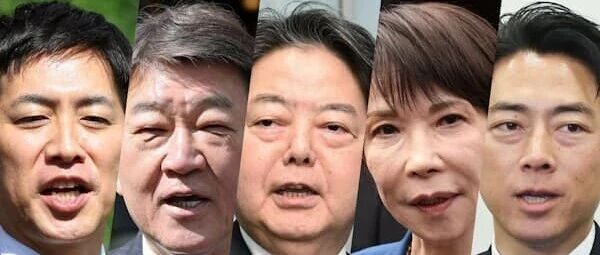
Core Viewpoint - The upcoming leadership election of Japan's ruling Liberal Democratic Party (LDP) is primarily focused on economic policies, particularly measures to address rising prices, as well as foreign and security policies. The election will take place on October 4, following a series of debates and discussions among the candidates [2][5][7]. Group 1: Candidates and Their Proposals - The candidates for the LDP leadership include former Economic Security Minister Takashi Kobayashi, former LDP Secretary-General Toshimitsu Motegi, Chief Cabinet Secretary Yoshihide Suga, former Economic Security Minister Sanae Takaichi, and Agriculture Minister Shinjiro Koizumi. All five have previously participated in the presidential election in September 2024 [2][4]. - Takashi Kobayashi advocates for a flat tax reduction for young and working individuals to combat rising prices. Toshimitsu Motegi proposes a special local grant of several trillion yen to support living expenses. Yoshihide Suga suggests making a 1% annual increase in real wages a standard practice [5][6]. Group 2: Election Context and Process - This election marks the first leadership contest for the LDP after suffering significant losses in both the House of Representatives and the House of Councillors elections in 2024, resulting in the party becoming a minority ruling party. The ability to pass budgets and legislation will depend on cooperation with opposition parties [7]. - The election will utilize a "full-scale" voting method, where each LDP member of the Diet receives one vote, totaling 295 votes from Diet members, alongside an equal number of votes distributed to party members and supporters, resulting in a total of 590 votes [7]. - If no candidate secures a majority in the first round, the top two candidates will proceed to a runoff, where the weight of Diet member votes remains the same, but the distribution of party member votes will change [8].
受美股拉动,日经平均股指再创新高
日经中文网· 2025-09-22 08:00
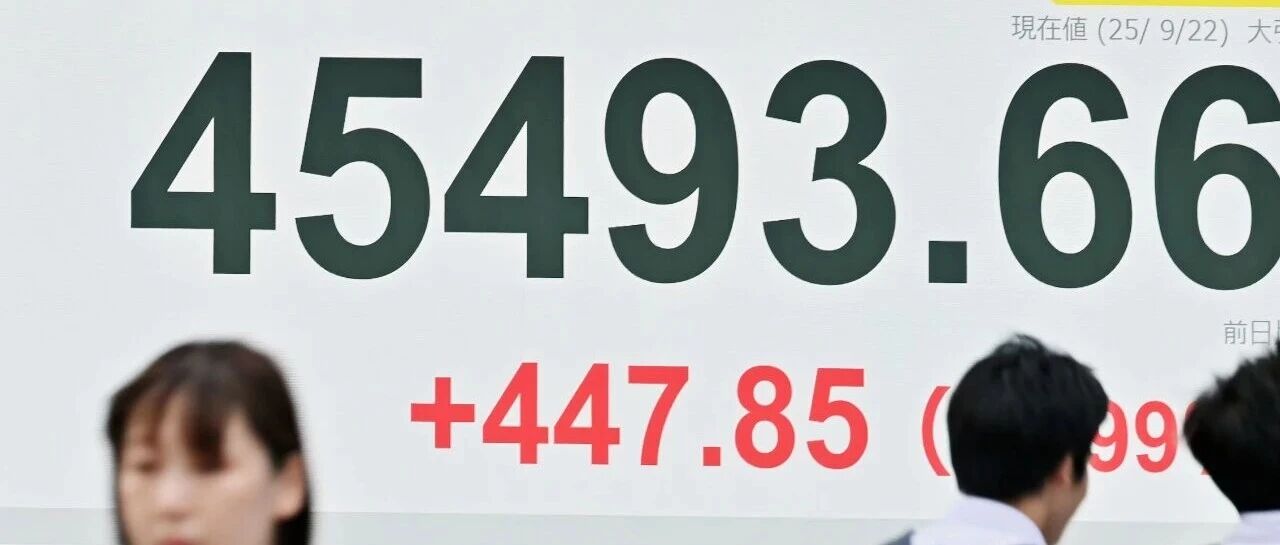
Group 1 - The Nikkei average stock index rebounded to 45493.66 points on September 22, up 447.85 points (0.99%) from the previous weekend, surpassing the previous high of 45303.43 points on September 18 [2][3] - The rise in the Tokyo stock market is attributed to the positive performance of major US stock indices, with expectations that the US Federal Reserve will continue to lower interest rates, supporting a stable US economy [2][3] - Semiconductor-related stocks such as Tokyo Electron and Lasertec saw significant buying, driven by speculation of strong pre-order performance for Apple's new iPhone, leading to a notable increase in Japanese electronic component stocks like TDK [3] Group 2 - The Bank of Japan's decision to sell its holdings of exchange-traded funds (ETFs) was unexpected, but the market perceives it as a move to minimize its impact on the overall Japanese stock market [3] - Despite domestic institutional investors selling stocks due to high-risk concerns and seasonal factors, long-term overseas investors are buying undervalued stocks across various sectors [3]
美政府动用黄金股干预,日铁重振美钢开局受挫
日经中文网· 2025-09-22 08:00
Core Viewpoint - The article discusses the challenges faced by Nippon Steel in acquiring U.S. Steel, particularly due to U.S. government intervention and labor union pressures, which complicate operational decisions and investment plans [2][4][10]. Group 1: Acquisition Challenges - The U.S. government intervened to stop U.S. Steel's plan to close the Granite City steel plant, highlighting the difficulties Japanese companies face in communicating with the U.S. government [2][4]. - Nippon Steel's acquisition of U.S. Steel involves a "golden share" agreement, which grants the U.S. government veto power over significant operational decisions, including plant closures [4][10]. - U.S. Steel had previously indicated intentions to close the Granite City plant, which has two blast furnaces that were already inactive before the acquisition [5][6]. Group 2: Investment Plans - Nippon Steel plans to invest approximately $11 billion in U.S. Steel by 2028, focusing on enhancing production capabilities and introducing advanced technologies [8]. - The company aims to increase U.S. Steel's crude steel production from 14.18 million tons in 2024 to over 20 million tons within the next decade [6]. - Investments include $3.1 billion for upgrading the largest blast furnace in Indiana and discussions for a $4 billion electric furnace plant in the U.S. [8][9]. Group 3: Labor and Political Dynamics - The U.S. government is sensitive to employment issues, as the Granite City plant employs around 800 union members, leading to strong political pressure against any job losses [5][9]. - The United Steelworkers union has expressed strong opposition to U.S. Steel's closure plans, indicating potential political ramifications for Nippon Steel's operational strategies [9][10]. - Nippon Steel's ability to implement its mid-term business plan and reform U.S. Steel will be a critical test of its operational freedom under the current political climate [10].


因投诉频发,大阪拟停受理“特区民宿”申请
日经中文网· 2025-09-22 05:01
Group 1 - The core viewpoint of the article highlights Osaka's decision to suspend the acceptance of applications for "special zone minpaku" (private lodging) due to frequent complaints from residents [2] Group 2 - The article discusses the increasing number of complaints related to noise, sanitation, and safety issues associated with minpaku operations in Osaka [2] - It mentions that the local government is responding to these complaints by considering stricter regulations on minpaku, which could impact the growth of the short-term rental market in the region [2] - The potential suspension of new applications may lead to a decrease in the availability of minpaku accommodations, affecting both tourists and property owners [2]
日本政府将为稀土勘探制定环保指南
日经中文网· 2025-09-22 05:01
南鸟岛海域的深海海底已发现分布着含有高浓度稀土的泥沙。日本政府将根据环保指南,从2027年开始 进行正式调查。 6000米级别的正式海底调查在全球范围内尚无先例。日本政府的目标是在2028年度前验证可持续性开采 的技术。 稀土滥采引发的环境污染被视为一大问题。日本将在世界各国中率先确立注重环保的勘探与开采流程, 在努力实现在日本国内供应稀土的同时,向全世界展示日本的技术实力。 版权声明:日本经济新闻社版权所有,未经授权不得转载或部分复制,违者必究。 日本的 海域蕴藏着世界屈指可数的稀土资源。左图为南鸟岛,右图为稀土泥。 日本在2027年正式启动南鸟岛海域专属经济区(EEZ)内的稀土开采计划之前,将从调查阶段开始建立 防止土壤和水质污染的相关规则。稀土滥采引发的环境污染被视为问题。日本将率先确立注重环保的勘 探与开采流程…… 日本政府将制定进行稀土开采调查时的环保指南。在2027年正式启动南鸟岛海域专属经济区(EEZ)内 的稀土开采计划之前,将从调查阶段开始建立防止土壤和水质污染的相关规则。希望借此向全世界展示 日本的勘探和开采技术,引领海洋开发。 自2026年1月起,日本将在南鸟岛海域启动环境监测。通过从勘探 ...

日本央行清仓ETF需"100年以上",前路艰难
日经中文网· 2025-09-22 05:01
Core Viewpoint - The Bank of Japan (BOJ) has decided to gradually sell off its holdings of ETFs and REITs, which have reached a scale of 70 trillion yen, indicating a long-term exit strategy from its previous monetary easing policies [2][4][10]. Group 1: Background and Policy Shift - The BOJ has been purchasing ETFs and REITs since 2010 as part of its monetary easing strategy, significantly increasing its holdings after the introduction of "quantitative and qualitative monetary easing" in 2013 [4][6]. - The previous BOJ leadership believed that large-scale purchases of ETFs would positively impact the economy and prices, viewing it as a tool to combat deflation [6][9]. Group 2: Challenges and Concerns - There are concerns that the BOJ's actions have distorted stock prices, which should be determined by corporate performance, and have weakened corporate governance by delegating voting rights to asset management companies [6][9]. - The BOJ's decision to sell off its ETF holdings is complicated by fears of market disruption, especially if a large volume is sold at once, which could lead to significant stock price declines [9][12]. Group 3: Future Strategy and Financial Implications - The BOJ has opted for a gradual and long-term selling strategy while retaining the option to adjust the pace of sales based on market conditions [9][12]. - The potential for losses due to market fluctuations exists, as the BOJ's accounting rules require provisions for any unrealized losses on ETFs, which could temporarily worsen its financial condition [12]. - As of September 19, the BOJ's ETF holdings amounted to approximately 85 trillion yen, representing about 8% of the total market capitalization of the Tokyo Stock Exchange's Prime market [10].
滴滴加码投资巴西外卖,押注中南美
日经中文网· 2025-09-22 05:01
Core Viewpoint - Didi is actively expanding its overseas business, particularly in Latin America, to seek new growth opportunities as its market share in China declines due to intensified competition from rivals like Alibaba and Meituan [2][7][8]. Group 1: Market Expansion and Strategy - Didi has entered 14 countries, focusing on Latin America, with Brazil as a key market for its new food delivery service "99Food" [2][9]. - The company plans to double its investment in the food delivery sector in Brazil to 2 billion Brazilian Reais by June 2026 [4]. - Didi aims to expand its service coverage in Brazil from two cities to 20 by January 2026, collaborating with Yadea Group to develop dedicated electric delivery vehicles [5]. Group 2: Financial Performance - Didi's sales revenue for the period from April to June 2025 increased by 10% year-on-year, reaching 56.4 billion yuan, with overseas sales growing 2.4 times compared to the same period in 2022 [11]. - Overseas business now accounts for 25% of Didi's total transaction volume, surpassing the growth rate of its Chinese ride-hailing business [11]. Group 3: Competitive Landscape - Didi faces fierce competition in the Latin American market, particularly from local players like iFood, which holds an 80% market share in Brazil's food delivery sector [12]. - The company is also contending with regulatory changes in Mexico aimed at protecting the rights of delivery workers, which may increase operational costs [12].

FT中文网精选:从现代汽车到西贝,企业的最大难题都是人
日经中文网· 2025-09-22 05:01
编者荐语: 日本经济新闻社与金融时报2015年11月合并为同一家媒体集团。同样于19世纪创刊的日本和英国的两家 报社形成的同盟正以"高品质、最强大的经济新闻学"为旗帜,推进共同特辑等广泛领域的协作。此次, 作为其中的一环,两家报社的中文网之间实现文章互换。 以下文章来源于FT中文网 ,作者李瀚明 FT中文网 . 英国《金融时报》集团旗下唯一的中文商业财经网站,旨在为中国商业菁英和决策者们提供每日不可或 缺的商业财经资讯、深度分析以及评论。 现代汽车在美国销售的车辆 美国既有的工作签证政策由于不符合外国人才的实际需要,正在影响外资企业在美投资 的意愿和进度。 文丨李瀚明 最近在企业界最有趣的事情有两个:一个是美国现代在美国的电池厂被揭发用工不当, 475 名 熟练技工被逮捕;一个是西贝因为中央厨房供菜而陷入公关危机。 餐饮业和汽车行业本身都是制造业,核心生意模式都是"把各种零件按一定的工序组装在一 起成为产品",只不过在选址和资源管理上有分别。对于餐厅而言,零件是肉、蛋、蔬菜组 合在一起,成为一道菜,再搭点米饭;汽车行业那就是发动机加上变速箱(或者电池加上电 动机),组合在一起,拼成一部车。 阅读更多内容请点击 ...

源自日本的“痛文化”在中国自主进化
日经中文网· 2025-09-21 00:33
Core Viewpoint - The "pain culture," which expresses deep affection for characters, is evolving independently in China, leading to the emergence of local "pain" products such as "pain gold" and "pain notebooks" driven by a strong consumer base of young people [2][6]. Group 1: Pain Gold Products - The popularity of "pain gold" products, such as gold notes priced at 520 yuan and small gold ornaments around 1300 yuan, is attributed to the collaboration with popular anime like "Tian Guan Ci Fu" [4]. - Despite the higher cost compared to pure gold products, the desire to keep beloved characters close and the potential for value appreciation are driving sales of "pain gold" [6]. Group 2: Pain Notebooks - The "pain notebook" (pain ben) is designed with a cover that is easy to write on and resistant to ink bleed, priced at 9.9 yuan, allowing users to customize it with stickers [8]. - The target demographic for these products includes middle and high school students, reflecting the ongoing character craze among the youth [8]. Group 3: Market Trends and Events - The "pain culture" has roots in Japan's otaku culture, with phenomena like "pain cars" and "pain bags" gaining traction in China, exemplified by the gathering of approximately 800 pain cars at the "Bilibili World" event in July [6]. - In the context of economic slowdown, consumers are becoming more frugal, yet they are willing to spend on character-related products, indicating a unique consumer behavior trend [8].