日经中文网

Search documents
日本d支付、Merpay的加盟店已支持微信支付
日经中文网· 2025-09-24 02:58
Core Viewpoint - The article discusses the integration of WeChat Pay into the merchant networks of Japan's d Payment and Merpay, highlighting the growing trend of digital payment solutions in Japan and the collaboration between Chinese and Japanese payment systems [2]. Group 1: Company Developments - Japan's d Payment and Merpay have expanded their merchant support to include WeChat Pay, indicating a significant step towards enhancing payment options for consumers [2]. - This integration allows users of WeChat Pay to make purchases at participating merchants in Japan, reflecting a broader trend of cross-border payment solutions [2]. Group 2: Industry Trends - The collaboration between Japanese payment platforms and Chinese payment systems signifies a shift in the digital payment landscape, aiming to cater to the increasing number of Chinese tourists in Japan [2]. - The move is expected to boost the adoption of digital payments in Japan, aligning with global trends towards cashless transactions [2].



EV用金属的价格低迷看不到出口
日经中文网· 2025-09-24 02:58
Core Viewpoint - The prices of mineral resources used for electric vehicle (EV) batteries, particularly lithium, are experiencing a downturn due to oversupply in the market, despite some government measures to curb production in China [1][4]. Group 1: Lithium Market Dynamics - As of September 15, the price of lithium carbonate, a key price indicator, is at 72,500 yuan per ton, down 37% from the peak in March 2024 [2]. - The lithium market has seen a previous downturn, with speculative investments driving prices to nearly 568,500 yuan per ton in November 2022, which is about eight times the current price [5]. - Analysts predict that unless there is significant production cutback, lithium oversupply is expected to persist until 2032 [5]. Group 2: Other EV Metals - Nickel, used in high-performance "ternary" batteries, is also in a low price range, with prices at $15,405 per ton, down 29% from the peak in May 2024 [8]. - Indonesia, which accounts for 60% of global nickel production, is projected to triple its output by 2024 compared to 2020 [8]. - Cobalt prices remain low, with the Democratic Republic of the Congo halting exports due to severe oversupply, which is a significant source of revenue for the country [8]. Group 3: Future Demand Projections - Long-term demand for EV metals is expected to grow, with the International Energy Agency (IEA) forecasting that lithium demand could reach nine times the 2024 levels by 2050 under a net-zero emissions scenario [8]. - Nickel demand is projected to double by 2050, but current production is expanding at a rate that exceeds actual demand, indicating a need for time before a market reversal occurs [8].

软银集团ALL in AI,5年精简35%子公司
日经中文网· 2025-09-24 02:58
软银集团会长兼社长孙正义在线上与OpenAI首席执行官萨姆·奥尔特曼对话(7月,东京都港区) 软银集团2021财年经历了史上最大亏损之后,孙正义开始正式投身"AI革命"。截至2025年6月底,软银 集团通过愿景基金1号和2号共投资了335家公司,其中大部分都是AI相关企业…… 日本软银集团(SBG)正在整合旗下子公司。截至3月底,软银集团子公司为965家,比1年前减少了 23%。这是因为软银集团出售了在人工智能(AI)基础设施业务上难以产生乘积效应的美国投资基金。 以通过同志联合来追求乘积效应的"群战略"为前提,软银正在试图转型为汇集AI精锐企业的组织体。 软银集团的年度报告显示,子公司数量低于1000家是自2016财年(截至2017年3月)以来、时隔7年的 首次。较2019财年的1475家减少了35%。上一财年的锐减是因为全部出售了美国堡垒投资集团(Fortress Investment Group)的持股。 2017年 ,软银集团以33亿美元(按当时汇率计算约3700亿日元)收购了堡垒投资。当时"软银愿景基金 (SVF)"刚刚成立,希望通过收购堡垒投资来吸收投资公司的运营经验。 软银集团目前的股价表现坚挺 ...


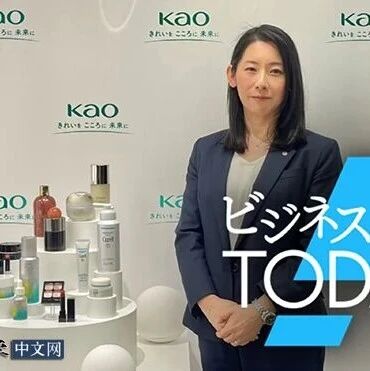
花王强化海外化妆品业务,欧亚市场成重点
日经中文网· 2025-09-23 09:24
Core Viewpoint - Kao aims to increase the overseas proportion of its cosmetics business operating profit from 30% to 70% by expanding sales in the Eurasian market, focusing on six key brands as the domestic market matures [2][5]. Group 1: Strategic Initiatives - Kao's new strategy emphasizes creating competitive products through unique technology rather than relying on mass production, aiming to build a global network [4]. - The company plans to deepen its presence in Europe with the "Curel" brand, targeting the 40% of the population suffering from dry skin, and will launch new moisturizing products by 2026 [4]. - By 2027, Kao intends to increase its specialty stores in Europe to 3,000, expanding the number of SKUs from 7 to 50 and increasing the number of countries from 12 to 20 [4]. Group 2: Financial Goals - The strategic plan aims to boost cosmetics business revenue by 20% to 300 billion yen by 2027, with the overseas operating profit ratio also increasing to 70% and targeting an operating profit margin of over 7% [5][6]. - Kao has set a long-term revenue target of 400 billion yen for its cosmetics business by 2030, with an operating profit margin of 15% [6]. Group 3: Market Challenges - Kao's cosmetics business has faced difficulties, with revenue dropping to 244.1 billion yen in the fiscal year ending December 2024, resulting in an operating loss of 3.7 billion yen [6]. - The company has reduced its brand portfolio from around 50 to approximately 20 since 2018, focusing on profitability [6]. - Despite recent improvements, with a profit of 400 million yen in the first half of 2025, concerns remain regarding Kao's global strategy, as highlighted by Oasis Management, which holds about 5% of the company's shares [6].
亚洲赴美国集装箱运量8月增4%,中国出发减少
日经中文网· 2025-09-23 09:24
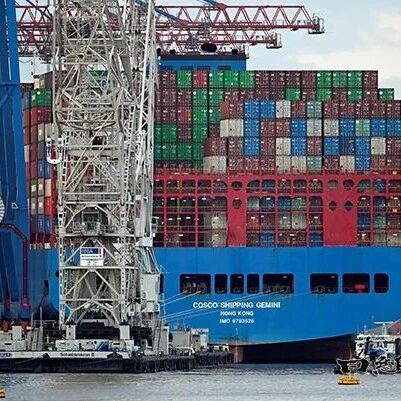
Key Points - The volume of goods transported from Southeast Asia and South Asia has seen significant growth, with Vietnam increasing by 40%, Thailand by 16%, Sri Lanka by 77%, India by 33%, and Singapore by 21% [4] - Conversely, the volume of goods transported from mainland China has decreased by 6%, Japan by 7%, South Korea by 10%, and Taiwan by 3% [4] - According to Descartes Datamyne, the volume of sea containers shipped from Asia to the U.S. in August increased by 4% year-on-year, reaching 1,862,590 TEUs, although it decreased by 3% compared to July [2] - The largest category of transported goods, furniture, grew by 5%, while six other categories, including plastics (up 15%) and machinery (up 3%), exceeded last year's levels [4] - The U.S. National Retail Federation (NRF) predicts that container import volumes will decrease by 3.4% in 2025 compared to 2024, citing tariff policies as a significant factor for a slowdown in goods transportation by the end of the year [4]
中国REIT迎扩容机遇,学日本经验?
日经中文网· 2025-09-23 09:24
Core Viewpoint - The expansion of public REITs in China is gaining momentum, with the government actively promoting the development of the market to attract diverse investments and enhance market vitality [2][4][5]. Group 1: Market Overview - China's public REITs began in June 2021, with 74 REITs listed in Shanghai and Shenzhen as of September 17, 2023, and a total market capitalization exceeding 220 billion RMB [8]. - The first batch of REITs included 9 funds, and the market has since expanded to include various asset types, with industrial park REITs being the most prevalent [8]. - The upcoming listing of foreign commercial facility REITs, such as CapitaLand's, indicates strong investor interest, with an IPO subscription rate exceeding 500 times [8]. Group 2: Government Initiatives - The National Development and Reform Commission (NDRC) has issued guidelines to cultivate the REIT market, emphasizing the importance of infrastructure projects and encouraging local governments and state-owned enterprises to establish REITs [4][5]. - The NDRC aims to broaden the investment scope of REITs to include railways, ports, and renewable energy, thereby attracting more private sector participation [5]. Group 3: Investment Performance - The average distribution yield of public REITs in China is projected to reach 6.37% by the end of 2024, surpassing Japan's 5.15% [10]. - Renewable energy-related REITs are expected to achieve a distribution yield of 11.55%, highlighting the potential for stable returns in this sector [10]. Group 4: Challenges and Market Dynamics - Despite the growth of the REIT market, challenges remain, including high vacancy rates in commercial properties due to over-investment and shifts in consumer behavior towards online shopping [9]. - The REIT model in China is not a quick fix for the country's bad debt issues, as significant real estate inventory remains to be addressed [12]. - The market's ability to sustain required yields and the potential for conflicts of interest in the REIT structure are ongoing concerns [11][12].


日本的自主AI让人形机器人变身滑板高手
日经中文网· 2025-09-23 02:58
Core Viewpoint - The article discusses the advancements in Japan's autonomous AI technology, particularly its application in humanoid robots that can perform activities such as skateboarding, showcasing the potential of AI in enhancing robotic capabilities [2]. Group 1: AI Technology Advancements - Japan's autonomous AI has significantly improved the performance of humanoid robots, enabling them to master complex physical activities like skateboarding [2]. - The integration of AI in robotics is expected to revolutionize various industries by enhancing automation and efficiency [2]. Group 2: Implications for Robotics Industry - The development of skateboarding humanoid robots highlights the growing intersection of AI and robotics, which could lead to new applications in entertainment, sports, and beyond [2]. - Companies in the robotics sector may see increased investment and interest as AI capabilities expand, potentially leading to new market opportunities [2].

日经BP精选:中国企业瞄准硫化物固态电解质,包围日本出光兴产
日经中文网· 2025-09-23 02:58
编者荐语: 日经中文网"开设了"日经BP精选"栏目。日经BP是日本经济新闻社媒体集团的一员,成立于1969年。作 为日本领先的B2B媒体公司,聚焦经营管理、专业技术及生活时尚三大主要领域。敬请读者关注。 以下文章来源于日经BP ,作者日经BP 纯电动汽车(EV)用全固态电池的量产最早将于2026年启动。为了实现这个目标,当然必须先于电池 量产全固态电池特有的材料,即固态电解质。从推进这种材料量产的情况来看,也可以了解什么样的全 固态电池今后将成为主流。 出光兴产在硫化物类的 开发方面压倒其他企业 从结论来说,量产方面进展最快的固态电解质是被称为硫化物类的材料。作为其原料的是硫化锂。目 前,在这种硫化锂以及硫化物类固态电解质的生产方面行动较快的厂家之一是日本出光兴产。 出光兴产在全固态电池、硫化物类固态电解质和硫化锂领域的专利申请数与其他公司的比较 (来源:日经XTECH拍摄的出光兴产的解说 板) 出光兴产透露称,截至2024年底,该公司硫化锂相关的专利申请数为19件,高居首位,达到第2位的近2 倍,从硫化物类固态电解质来看,出光兴产也以223件排在第2位,正在接近第1位。用于相关量产的投 资额达到约213亿日 ...

日本央行决定出售ETF,为何股市还能上涨?
日经中文网· 2025-09-23 02:58
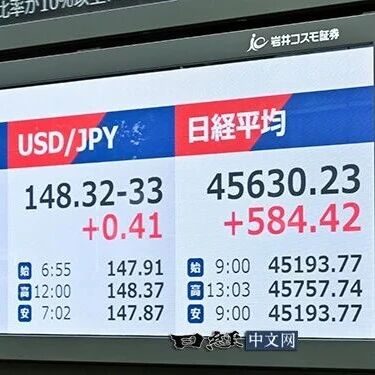
Core Viewpoint - The article discusses the impact of the Bank of Japan's (BOJ) decision to sell Exchange-Traded Funds (ETFs) on the Japanese stock market, highlighting a significant rise in bank stocks and the Nikkei index, as well as potential corporate governance reforms resulting from reduced reliance on the central bank [1][3]. Group 1: Market Reactions - Following the BOJ's announcement on September 19 regarding the sale of ETFs, the Nikkei index initially dropped over 800 points but rebounded to a new high, gaining 447 points (1%) to reach 45,493 points by September 22 [1][3]. - Investors have resumed buying Japanese stocks despite the BOJ's ETF sales, with the Nikkei index recovering nearly 1,000 points from its low on September 19 [3]. Group 2: Corporate Governance Reforms - Analysts suggest that the BOJ's gradual exit from ETF purchases could enhance corporate governance in Japan, as companies may become less dependent on the central bank's support [1][5]. - The Tokyo Stock Exchange's PBR reform initiated in 2023 is prompting companies to accelerate the reduction of cross-shareholdings and stabilize their shareholder bases [5][6]. Group 3: Corporate Actions and Strategies - Companies like Omron and Mitsubishi Electric are actively considering structural reforms, including divesting underperforming business units to improve return on equity (ROE) [5][6]. - Omron's stock rose by 7% following its announcement to consider divesting its struggling electronic components business [5]. - Mitsubishi Electric aims to increase its ROE from 8% in FY2024 to 10% by FY2027, with its stock price rising by 20% after the announcement [6]. Group 4: Market Sentiment and Future Outlook - The market is closely monitoring the BOJ's ETF sales as a potential catalyst for accelerating corporate governance reforms in Japan [6]. - UBS analysts predict that companies will increasingly focus on shareholder returns and business restructuring to enhance profitability in the wake of the PBR reforms [5][6].
巴菲特清仓比亚迪,买了日本商社股
日经中文网· 2025-09-23 02:58
Core Viewpoint - Warren Buffett's Berkshire Hathaway has completely divested its shares in BYD, citing increased competition in the Chinese automotive industry, slowing performance, and geopolitical risks as key reasons for the decision [3][4][5]. Group 1: Reasons for Selling BYD - Increased competition in the Chinese automotive sector has led to a slowdown in BYD's performance, with five out of six major automotive companies reporting reduced profits or losses in the first half of 2025 [3]. - The profit growth rate of BYD has also declined compared to the previous year, indicating a potential ceiling on its performance [3]. - Geopolitical risks have influenced Berkshire's decision to reduce its stake in BYD, with the holding dropping below 5% by June 2024 [4]. Group 2: Shift to Japanese Investments - Berkshire Hathaway has increased its stake in Japanese trading company Mitsui & Co., with the shareholding exceeding 10% as of September 22 [7]. - The company has expressed a commitment to continue seeking investment opportunities in Japanese enterprises, viewing this as a strategic shift away from Chinese stocks [5][6]. - The positive market reaction to Berkshire's investment in Mitsui & Co. was evident, with the stock price rising to a new high since July 2024 following the announcement [7].