日经中文网

Search documents
英伟达强劲财报也无法消除中国风险
日经中文网· 2025-08-29 02:48
Core Viewpoint - Nvidia's financial performance for May to July 2025 reached record profits, with CEO Jensen Huang emphasizing negotiations with the U.S. government to address the significant Chinese market, aiming to prevent competitors from rising globally [1][3]. Financial Performance - Nvidia reported a 56% year-on-year increase in revenue for May to July, reaching $46.743 billion, and a 59% increase in net profit to $26.422 billion, both setting historical highs and exceeding market expectations [3]. - The company forecasts revenue of approximately $54 billion for August to October, a 54% increase compared to the same period last year, also surpassing market expectations [3]. Product Development and Market Strategy - Nvidia continues to benefit from the demand for high-performance AI semiconductors, with plans to launch the next generation AI semiconductor "Rubin" in 2026, following the recent release of "Blackwell" [3][11]. - The company's software advantage, particularly the CUDA development environment, has become a significant barrier to entry for competitors, making it difficult for them to switch from Nvidia products even if they develop high-performance semiconductors [3]. China Market Dynamics - The stock market is closely monitoring developments in the Chinese market, especially after the U.S. government placed Nvidia's AI semiconductor "H20" under export controls in April, which led to halted shipments [5][6]. - In July, the U.S. government indicated a willingness to allow the resumption of H20 exports, with Nvidia estimating potential sales of $2 billion to $5 billion in China for August to October, although this was not included in their earnings forecast [5][6]. - Nvidia's revenue from the Chinese market accounted for only 13% of total revenue as of January 2025, a significant decrease from the previous year, while revenue from markets outside the U.S. still constitutes over half of total revenue [9]. Political and Competitive Landscape - Nvidia has increased its lobbying efforts, spending $1.56 million in the first half of 2025, a nearly fivefold increase from the previous year, as it seeks to navigate the complex political landscape regarding U.S.-China relations [7]. - The company faces competition from Chinese firms like Huawei and Cambricon, which are developing alternative products and encouraging domestic AI developers to shift away from Nvidia [9][11]. - Nvidia's strategy includes exploring the introduction of higher-performance products in the Chinese market, with ongoing negotiations with the U.S. government regarding export conditions and potential revenue-sharing agreements [11].



外资1~6月对日本房地产投资额创新高
日经中文网· 2025-08-29 02:48
Core Viewpoint - Overseas capital investment in Japanese real estate, particularly office buildings, has surged, reaching a record high of over 1 trillion yen in the first half of 2025, doubling the amount from the same period last year, driven by expectations of inflation and rising rents [2][6]. Group 1: Investment Trends - In the first half of 2025, the acquisition amount for office buildings reached over 1 trillion yen, marking a historical peak [2]. - Notable transactions include Blackstone's acquisition of "Tokyo Garden Terrace Kioicho" for approximately 400 billion yen, the largest foreign investment in Japanese real estate to date [4]. - Gaw Capital Partners purchased "Tokyu Plaza Ginza" for about 150 billion yen, indicating continued interest in high-value assets [4]. Group 2: Market Conditions - The consumer price index (CPI) in July showed a 3.1% increase year-on-year, maintaining above 3% for eight consecutive months, which is expected to exert upward pressure on real estate rents [6]. - The yield gap for office buildings in central Tokyo is estimated at 1.9%, higher than New York (1.7%) and London (1.2%), making Japanese real estate attractive globally [6]. Group 3: Corporate Actions - Companies are increasingly selling off real estate assets to enhance asset efficiency, with active shareholder proposals for real estate sales on the rise [6]. - Nissan is considering selling its Yokohama headquarters, with expected proceeds close to 100 billion yen, as part of a strategy to raise funds for future investments [7]. - Sapporo Holdings has decided to divest its real estate business, including prime properties in central Tokyo, attracting market attention [7]. Group 4: Future Outlook - The trend of high levels of overseas investment is likely to continue, supporting stable real estate prices in the short term [7]. - The average listing price for second-hand homes in Tokyo reached a record high of 10.477 million yen in July, reflecting a 1.4% month-on-month increase [7].
鸟贵族要在上海开100家店,加速开拓中国市场
日经中文网· 2025-08-29 02:48
Core Viewpoint - The company plans to open 100 new stores in Shanghai, accelerating its expansion in the Chinese market [2] Group 1: Company Expansion - The company aims to significantly increase its presence in China by opening 100 stores in Shanghai [2] - This expansion strategy is part of a broader initiative to tap into the growing consumer market in China [2] - The company is focusing on enhancing brand visibility and accessibility to attract more customers [2] Group 2: Market Potential - The Chinese market presents substantial growth opportunities due to its large population and increasing consumer spending [2] - The company is positioning itself to capitalize on the rising demand for its products and services in urban areas [2] - The expansion aligns with the overall trend of foreign brands increasing their footprint in China [2]

日本制铁将在美国新建采用大型电炉的钢铁厂
日经中文网· 2025-08-29 02:48
Core Viewpoint - Nippon Steel plans to build an electric arc furnace steel plant in the U.S. with an investment of $4 billion, aiming for operation after 2029, to enhance the competitiveness of U.S. Steel and respond to job creation demands from the Trump administration [2][4]. Group 1: Investment and Operations - U.S. Steel's final profit for fiscal year 2024 is projected to decrease by 57% to $384 million, indicating ongoing struggles [4]. - The new plant will utilize scrap metal as raw material, employing two large electric furnaces that are more efficient and environmentally friendly, with an annual production capacity of 3 million tons [6]. - Nippon Steel has committed to an additional investment of approximately $11 billion by 2028, which includes the initial investment for the new plant [6]. Group 2: Employment and Economic Impact - The construction of the new steel plant is expected to create job opportunities, aligning with Trump's narrative of boosting investment and employment through the acquisition of U.S. Steel [6]. - The decision on the construction site will be made by mid-2026 after evaluating land conditions and labor availability [6]. Group 3: Technological Advancements - Nippon Steel plans to leverage its advanced technology to enhance production capabilities, including the production of high-quality automotive-grade electromagnetic steel sheets within 1-2 years [6]. - The company aims to increase the overall crude steel production of its group, including U.S. Steel, to 100 million tons over the next decade, a 60% increase from current levels [8]. Group 4: Market Context - Despite a challenging global steel market due to oversupply from China, the U.S. steel market benefits from high tariffs imposed by the Trump administration, providing a protective environment for U.S. Steel [8]. - Nippon Steel believes that investments and quality improvements through its technology will enhance profitability, even in a difficult market [8].

【日经BP书籍】日元贬值的背后:虚假的贸易顺差国
日经中文网· 2025-08-29 02:48
Core Viewpoint - The long-term depreciation of the Japanese yen, which began in 2022 and continues into 2025, is primarily driven by underlying issues in Japan's trade balance rather than just interest rate differentials between the US dollar and the yen [6]. Group 1: Trade Balance Analysis - Japan's trade balance statistics reveal a disconnect from actual cash flows, indicating that Japan has entered a trade deficit when considering the "digital deficit" issue [6]. - The reliance on US IT giants, high costs of overseas insurance and pension services, and stagnation in domestic R&D capabilities are significant economic problems affecting Japan's international trade [6]. Group 2: Currency and Cash Flow Dynamics - The fluctuations in exchange rates reflect the movement of cash flows, which helps to understand the complex dynamics of global trade and the competition between nations [6].

市场看好日股日元双走高,年内或4万5000点
日经中文网· 2025-08-28 08:00
Group 1 - The core expectation in the market is for "stock price increases and yen appreciation," with predictions that the Federal Reserve will cut interest rates 2-3 times and the Bank of Japan will raise rates once this year [1][6]. - There is a strong belief that the Nikkei average index will rise to between 44,000 and 45,000 points in November and December, driven by a reassessment of tariff impacts and potential upward revisions in corporate earnings [3][6]. - The market anticipates that the yen may appreciate beyond 140 yen per dollar, as current expectations have not fully reflected this potential [6]. Group 2 - Fed Chairman Jerome Powell's recent speech highlighted employment risks and hinted at the possibility of rate cuts, surprising the market which had previously been cautious about such moves [3]. - The upcoming U.S. employment data release on September 5 is critical, as poor results could strengthen expectations for a 0.5% rate cut by the Fed [6]. - Concerns about rising inflation in the U.S. could lead to increased selling pressure on the yen, especially if combined with political and fiscal uncertainties in Japan [6].

日本要在印度构建半导体供应链,成熟产品摆脱对华依赖
日经中文网· 2025-08-28 08:00
Group 1 - The core focus of the Japan-India summit on August 29 is to establish a framework for cooperation on the procurement of essential materials, particularly in the semiconductor and mineral resources sectors [1][3]. - Japan aims to strengthen economic security cooperation with India, particularly in the semiconductor industry, by facilitating the entry of Japanese companies into the Indian market to help build a local supply chain [1][3]. - Tokyo Electron is set to launch its first manufacturing equipment development base in India in September, with plans to expand its workforce to 300 by 2027 [3]. Group 2 - AIR WATER INC. plans to construct multiple factories near Mumbai to produce nitrogen and other gases essential for semiconductor manufacturing, with an investment of approximately 50 billion yen [5][4]. - The Indian semiconductor market is projected to reach $82.9 billion by 2029, doubling its current size, indicating significant growth potential [5]. - NIPPON EXPRESS HOLDINGS will establish logistics bases in three Indian cities by 2026 to support semiconductor storage, ensuring transportation stability in challenging road conditions [5]. Group 3 - The Indian government is actively constructing power plants and substations to support semiconductor production, while JFE Steel aims to increase its production capacity of high-grade steel for transformers in India by seven times by 2030 [6]. - Japan and India are working to diversify their procurement channels to mitigate risks associated with supply chain disruptions, particularly in light of geopolitical tensions [6][10]. - The initiative to transfer semiconductor and LCD production to India is part of a broader strategy to reduce reliance on China and enhance economic security cooperation between Japan and India [9][10].

丰田7月全球销量创新高,在中国持续复苏
日经中文网· 2025-08-28 08:00
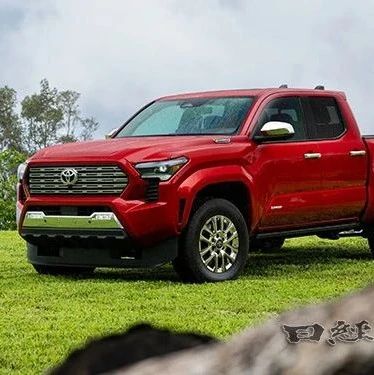
Core Insights - Toyota's global sales reached a record high of 899,449 units in July, marking a 5% year-on-year increase, driven by strong demand for large vehicles and hybrid models in the U.S. market [2][4] - The U.S. market saw a significant 20% increase in sales, with notable performance from the Tacoma pickup and 4Runner SUV [4] - In China, sales continued to recover with a 6% increase, totaling 151,669 units, supported by government subsidies and strong sales of new models [4] Group 1 - Toyota's global production also hit a record high for July, increasing by 5% to 846,771 units, with the U.S. production up by 29% and China by 17% [4] - The U.S. government and Japan reached an agreement to reduce additional tariffs on automobiles from 25% to 15%, leading to a 25% increase in the number of cars exported from Japan to the U.S., totaling 55,306 units [4] - Despite the positive trends, production and sales in Japan were affected by a recent earthquake, resulting in a 6% decrease in production to 292,041 units and a 4% decrease in sales to 135,249 units [4]

夏普将发售手掌大小的AI聊天机器人
日经中文网· 2025-08-28 03:05
Group 1 - The core viewpoint of the article is that Sharp is set to release a palm-sized AI chatbot, indicating a trend towards more compact and user-friendly AI devices in the market [2] Group 2 - The new AI chatbot by Sharp is designed to be portable, enhancing user convenience and accessibility [2] - This product launch reflects the growing demand for AI technology in everyday life, as consumers seek more integrated solutions [2] - The introduction of this device may position Sharp competitively within the AI and consumer electronics sectors, potentially attracting a new customer base [2]

台积电3名前技术人员涉泄密被台检方起诉
日经中文网· 2025-08-28 03:05
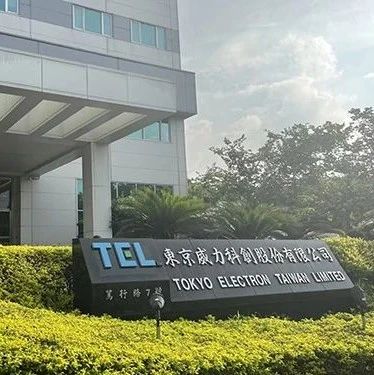
Core Viewpoint - The article discusses the legal actions taken against former TSMC employees for the improper use of trade secrets, highlighting the implications for Taiwan's semiconductor industry and national security [2][4]. Group 1: Legal Actions - Three individuals, including a former TSMC technician, have been indicted for improperly using TSMC's trade secrets outside Taiwan, with charges including violations of the National Security Law [2][4]. - One of the accused has transferred to a subsidiary of Tokyo Electron, a partner of TSMC, and allegedly solicited TSMC's technical staff for trade secrets to enhance Tokyo Electron's position as a supplier for TSMC's next-generation 2nm semiconductor equipment [2][4]. - The former TSMC technician faces a total of 14 years in prison, while the other two co-defendants face sentences of 9 years and 7 years respectively for their roles in providing trade secrets to Tokyo Electron [4]. Group 2: Implications for the Semiconductor Industry - The case is seen as a serious threat to Taiwan's semiconductor industry's international competitiveness, as it involves core technologies deemed critical to the nation's industrial lifeline [4]. - The Taiwanese authorities have expressed concerns over the potential outflow of important technologies, leading to amendments in the National Security Law in 2022 that introduced new offenses related to economic espionage and the improper acquisition of core technologies for use outside Taiwan [4].