虎嗅APP

Search documents
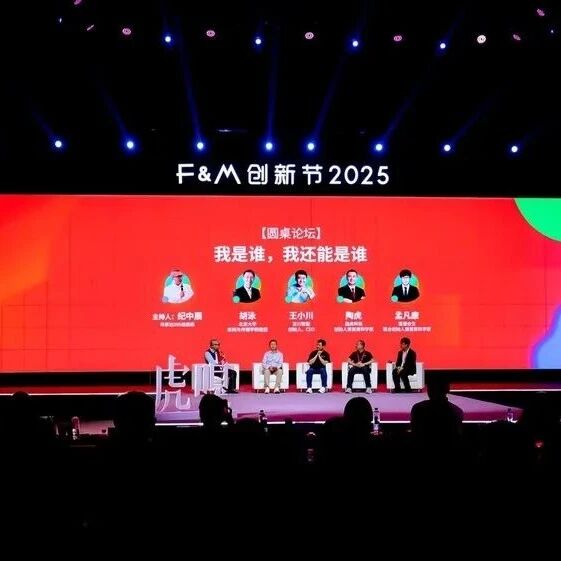
要不要重新设计“我”:三个科技“天才”与一个人文学者的思想对抗
虎嗅APP· 2025-11-29 03:06
Core Viewpoints - The discussion revolves around the implications of AI and technology on human identity and existence, questioning whether humans can maintain their essence in the face of advanced AI and biotechnology [2][3][4]. Group 1: AI and Human Identity - The panelists explore how AI and technology redefine human existence, with a focus on AI in healthcare, brain-computer interfaces, and synthetic biology [4][5]. - Wang Xiaochuan views AI as an integral part of human civilization, suggesting that future human history will be co-written with AI [4][5]. - Tao Hu emphasizes the brain's central role in defining humanity, arguing that enhancing human capabilities through technology is essential for survival in an intelligent competition [4][8]. Group 2: Ethical and Philosophical Considerations - The conversation raises ethical questions about the implications of consciousness transfer and the potential loss of individuality if consciousness can be digitized [11][12]. - Meng Fankang discusses synthetic biology's potential to redefine what it means to be human, suggesting that it could lead to healthier lives but also risks altering human identity [12][13]. - Hu Yong warns that the rapid advancement of AI could lead to a loss of human control, drawing parallels to historical technological developments that had unforeseen consequences [23][24]. Group 3: The Future of Human-AI Interaction - The panelists express concerns about the increasing decision-making power of AI, with Wang Xiaochuan noting that humans may become mere executors of AI decisions [21][22]. - Tao Hu highlights the importance of improving communication between humans and AI to enhance societal progress [18][19]. - Meng Fankang presents a vision where AI aids in human evolution and adaptation, potentially expanding human capabilities [29]. Group 4: The Role of Ethics in Technological Advancement - The discussion emphasizes the need for ethical frameworks to guide the development of technologies like synthetic biology and AI, ensuring that advancements do not compromise human values [26][27]. - The panelists agree that while technology can enhance human life, it must be approached with caution to avoid ethical pitfalls [13][26]. - Hu Yong suggests that the concept of "responsible life design" is paradoxical, as once life is engineered, the notion of responsibility may become irrelevant [25].

困在“优绩主义竞缘脑”里的东亚年轻人
虎嗅APP· 2025-11-29 03:06
Core Viewpoint - The article discusses the evolution of the term "good student" from a positive connotation to a derogatory one, highlighting the societal disdain for meritocracy among the youth today [5][6][34]. Group 1: The Concept of Meritocracy - Meritocracy is described as a "spiritual drug" that many young people are beginning to recognize as harmful, leading to a collective aversion towards it [6][34]. - The article illustrates how the character "Qianqian" embodies the traits of a "good student," who seeks attention and validation through academic success, often at the expense of others [11][12][34]. Group 2: Cultural Reflections - The portrayal of "Qianqian" resonates with many individuals' school experiences, evoking memories of competitive and often toxic classroom dynamics [13][25][37]. - The character's actions, such as seeking attention through academic performance and social manipulation, reflect a broader critique of societal values that prioritize achievement over well-being [20][34]. Group 3: The Impact of Competition - The article introduces the concept of "competition brain," which describes a mindset where all social interactions are viewed through a competitive lens, leading to jealousy and anxiety [40][46]. - This competitive mentality is rooted in a culture that equates success with constant comparison, creating a cycle of stress and dissatisfaction among individuals [44][82]. Group 4: The Shift in Youth Attitudes - There is a growing skepticism among the youth regarding traditional notions of success, as evidenced by their reactions to motivational phrases that once inspired them [68][79]. - The article suggests that many young people are now seeking to escape the pressures of a meritocratic society, indicating a shift towards valuing personal happiness over societal expectations [69][82].

“禁酒令”之下,县城五星级酒店的荒诞自救
虎嗅APP· 2025-11-28 13:42
Core Viewpoint - The article discusses the absurd self-rescue efforts of a five-star hotel in a small county facing challenges due to a "ban on alcohol" policy, which significantly impacts its business model reliant on government and corporate dining [5][8][16]. Group 1: Hotel Operations and Challenges - The hotel, known as "Qianxin Hotel," is a landmark establishment in a small county, heavily linked to the local coal industry and government functions [5][6]. - The hotel experienced initial success after its opening, boosted by the popularity of a nearby video game, but has since struggled with unstable revenue [6][7]. - A recent "ban on alcohol" policy threatens the hotel's core business, which primarily serves government and corporate clients for dining and events [8][17]. Group 2: Impact of the "Ban on Alcohol" - The "ban on alcohol" has created a climate of fear among potential customers, particularly public servants, who are now hesitant to dine out due to the risk of being reported [9][18]. - The hotel’s management is concerned that the ban will lead to a significant drop in business, as their main clientele consists of local officials and business owners [17][18]. - The article highlights the broader implications of the ban, noting that it has led to a cultural shift in dining habits, with many opting for low-key gatherings or avoiding restaurants altogether [19][20]. Group 3: Adaptation Strategies - In response to declining business, the hotel is exploring new strategies, such as offering lower-priced local dishes and outdoor dining options to attract customers [29][30]. - The management is considering innovative marketing approaches, including collaborations with local influencers to improve visibility and attract a broader clientele [34][35]. - Despite these efforts, the hotel faces challenges in changing perceptions, as many locals still view it as too upscale and expensive for casual dining [31][32].

芯片禁令的反复之下,也正是芯片投资的黄金窗口期
虎嗅APP· 2025-11-28 13:42
Core Viewpoint - The potential approval of NVIDIA's H200 AI chip sales to China indicates a possible easing of the two-year high-end chip ban, reflecting the unstoppable rise of the domestic chip industry amidst fluctuating market conditions driven by technological competition and AI transformation [2][3]. Group 1: Market Dynamics - The H200 chip, released two years ago, is not NVIDIA's most advanced chip, and the previous allowance of a "crippled" H20 version has led Chinese customers to accelerate their shift towards domestic solutions [3]. - The back-and-forth nature of the chip ban has inadvertently allowed Chinese companies to gain ground in the AI chip market, creating a "window period" for domestic innovation [3][5]. - The global semiconductor supply chain is being reshaped by high-end computing demands, with major players like Samsung and SK Hynix shifting production towards HBM and DDR5 products, leading to significant price increases in NAND and DRAM [5][6]. Group 2: Investment Opportunities - The current chip cycle, combined with breakthroughs in domestic technology, presents a unique opportunity for Chinese chip companies, as evidenced by the strong performance of the STAR Market chip index, which has risen 55.9% since the beginning of 2025 [5][6]. - Morgan Stanley predicts that tech giants will invest $400 billion in AI infrastructure this year, creating massive demand for the latest storage chips, with AI servers requiring significantly more DRAM and NAND than standard servers [6]. - The approval of 16 public funds focusing on hard technology provides investors with diversified investment opportunities to capitalize on the growth of the Chinese chip industry [6][12]. Group 3: Industry Collaboration - The release of Huawei's Mate80 series highlights the importance of collaboration across the semiconductor supply chain, which includes both leading companies with high technical barriers and flexible suppliers [8][10]. - The cyclical nature of the chip industry presents challenges for individual stock investments, emphasizing the need for a broader perspective to mitigate risks [8][9]. - China's chip industry benefits from a robust ecosystem supported by government policies, a large consumer market, and a growing AI ecosystem, which collectively enhance the resilience and vitality of the industry [9][10]. Group 4: Strategic Investment Philosophy - Investors are encouraged to adopt a macro perspective, focusing on the entire ecosystem rather than individual companies, to navigate the volatility and identify opportunities [10][12]. - The use of index funds, such as the E Fund STAR Market Chip Index Fund, is recommended for capturing explosive growth in the chip sector while maintaining overall portfolio stability [12].

当悲剧发生,我们如何应对人生无常
虎嗅APP· 2025-11-28 13:42
Core Viewpoint - The article discusses the emotional impact of sudden loss and the importance of acknowledging grief while finding ways to cope and cherish memories of lost relationships [5][6]. Group 1: Understanding Grief - Grief is a natural response to loss, and it reflects the deep connections we have with others. The article emphasizes that it is normal to feel profound sadness and that this sadness is a price we pay for love [5][6]. - The article suggests that acknowledging the impermanence of life can help individuals continue to cherish the present and the people around them [6]. Group 2: Coping Strategies - One suggested method is to take "breaks" from grief, allowing individuals to engage in normal activities without feeling guilty about not grieving constantly. This can help in the healing process [9][13]. - Another approach is to construct meaning from the loss, helping individuals understand the reasons behind the loss and integrating it into their life narrative [15][17]. - Maintaining a connection with the lost individual through memories or symbolic items can provide comfort and a sense of ongoing relationship [19][20][21]. Group 3: Addressing Unfinished Business - The article highlights the concept of "unfinished business," which refers to unresolved feelings or unexpressed thoughts related to the lost relationship. Engaging in activities like creating a "relationship tree" can help individuals process these feelings [27][28][30]. - Writing letters to the deceased, even if they are not sent, can be a therapeutic way to express feelings and thoughts that were left unsaid [31][34]. Group 4: Living with Pain - The goal of grief therapy is not to eliminate pain but to find ways to coexist with it. This includes accepting the loss and integrating it into one's life while still being able to find joy and purpose [46][54]. - Individuals may experience moments of respite from grief, indicating progress in their healing journey [51].

这届年轻人,不想站上讲台了
虎嗅APP· 2025-11-28 13:42
Core Viewpoint - The global education system is facing a structural crisis due to a significant shortage of qualified teachers, which is not just a matter of quantity but also of quality and distribution [5][10]. Group 1: Global Teacher Shortage - The average turnover rate of fully qualified teachers across 19 countries is 6.5%, with some countries exceeding 10% [5][7]. - In countries like Denmark, Estonia, and Lithuania, teacher turnover rates exceed 10%, with 51% of resignations being voluntary, indicating a decline in the profession's attractiveness [7][11]. - The proportion of unqualified teachers is rising, with Sweden reporting 16.3% in primary and 21.6% in secondary education [7][8]. Group 2: Structural Issues - The teacher shortage is characterized by a mismatch in qualifications, with many newly hired teachers leaving within five years due to inadequate support [7][10]. - Countries like Austria, Israel, and Poland have over 30% of resignations coming from teachers with less than five years of experience, highlighting a lack of effective retention mechanisms [7][11]. - The issue is exacerbated in remote areas and special education, leading to unequal educational opportunities and varying teaching quality [8][12]. Group 3: China's Teacher Landscape - While China has a sufficient number of teachers, it faces structural challenges, particularly in rural areas and vocational education [13][14]. - The average age of teachers in some western regions exceeds 45, leading to difficulties in offering specialized courses [14]. - New teachers often lack job security and support, resulting in a trend where young teachers leave the profession shortly after entering [14][15]. Group 4: Recommendations for Improvement - To enhance teacher retention, it is essential to build a system that increases the profession's attractiveness, similar to France's approach of providing job security and clear career paths [17]. - Strengthening initial support for new teachers through mentorship and professional development can significantly improve retention rates [18]. - Optimizing the distribution of teaching resources and addressing regional mismatches can help alleviate structural imbalances in the education system [19]. Conclusion - The structural issues in the teaching profession are critical to the future of education, emphasizing the need for systemic reforms to ensure a stable and qualified teaching workforce [22][23].

小学生人数,开始减少了
虎嗅APP· 2025-11-28 09:55
Group 1 - The core viewpoint of the article is that after reaching a peak in population, the number of students in various educational stages will also peak, leading to significant changes in the education sector [4][5]. - In 2023, the number of primary school students reached its peak, with a projected peak for junior high school in 2024, high school in 2029, and higher education by 2032 [6][12]. - The number of students in primary schools is expected to decrease from 108 million to 105.6 million, a reduction of 2.52 million [7]. Group 2 - The decline in the number of students is a delayed response to changes in birth rates, which have dropped from over 18.8 million to a low of 9.02 million in recent years [12][14]. - The number of kindergartens and primary schools has already decreased, with over 20,000 kindergartens and 7,000 primary schools closing in the past year [16]. - The education system will need to adjust to the declining student population, including changes in school and teacher resources [15][19]. Group 3 - The teaching workforce, which peaked at nearly 19 million, is now facing a surplus due to declining student numbers, with a projected surplus of 1.5 million primary school teachers by 2035 [28][32]. - The article suggests that the traditional "iron rice bowl" of teaching positions may not lead to immediate layoffs but will result in hiring freezes and reallocation of teachers to address imbalances [34][36]. - Strategies to cope with the surplus include expanding early childhood education and implementing small class sizes, although financial constraints may limit these options [38][40].

李想,杀回理想
虎嗅APP· 2025-11-28 09:55
Core Viewpoint - The article discusses the transition of the Chinese electric vehicle (EV) industry from the first phase of growth, characterized by range extension and user experience, to a new phase focused on AI, smart driving, and intelligent vehicles. The company Li Auto is highlighted for adopting a "founder model" to navigate this shift and enhance its organizational efficiency and product development [2][3][4]. Group 1: Industry Transition - The first phase of competition in the Chinese EV market relied on momentum, range extension, and user experience, while the second phase will focus on pure electric vehicles, smart technology, and AI-driven cars [6]. - Li Auto's Q3 financial report signals a shift from a successful past to a more competitive future, emphasizing the need for a new operational model to thrive in the evolving landscape [6][12]. - The company is entering a new technological cycle, which requires a reevaluation of its strategies and operational frameworks to maintain competitiveness [4][5]. Group 2: Li Auto's Strategic Shift - Li Auto is actively restructuring itself, moving away from a "professional manager" governance model to a "founder model," which emphasizes direct involvement from the founder in decision-making and strategic direction [5][8]. - The founder model is not merely about the founder's presence but represents a comprehensive methodology that aligns the company's operations with its long-term vision [8][9]. - The company is focusing on a three to five-year product roadmap, which will guide its research, supply chain, manufacturing, and marketing efforts, ensuring a cohesive approach to product development [8][9]. Group 3: Future Outlook - Li Auto's management has indicated that 2026 will be a critical year for the launch of new AI systems and products, with significant advancements expected in battery technology and charging infrastructure [5][12]. - The company aims to transition from a product-driven growth model to a technology-driven approach, emphasizing the importance of AI and smart technology in future product offerings [5][12]. - The success of Li Auto in the new competitive landscape will depend on its ability to effectively implement its organizational changes and technological advancements [12][13].


裁了7000人的2000亿美元巨头,疯狂啃“兔子”
虎嗅APP· 2025-11-28 09:55
Core Viewpoint - The article discusses the significant box office success of "Zootopia 2" in China, highlighting its record-breaking pre-sale and opening day earnings, and the strategic marketing efforts by Disney to leverage its IP in the Chinese market [5][9][11]. Group 1: Box Office Performance - "Zootopia 2" achieved a pre-sale box office of over 310 million yuan, surpassing "Nezha" to become the highest pre-sale animated film in Chinese history [5]. - On its opening day, the film grossed 228 million yuan, with projections indicating a first-week total exceeding 1.2 billion yuan and a total box office target of 2.5 billion yuan [5]. - The film's release revitalized the domestic cinema market, which had been struggling during previous summer and National Day periods [5]. Group 2: Marketing and Promotion - Disney's marketing strategy for "Zootopia 2" included extensive brand collaborations and promotional events, such as a global premiere at Shanghai Disneyland attended by key Disney executives [7][9]. - The film's marketing efforts were characterized by a high volume of brand partnerships, with at least 47 brand collaborations announced in the four months leading up to the release [9][10]. - The film's merchandise, including themed products from various partners, saw a significant increase in demand, with some items selling out quickly [6][19]. Group 3: Strategic Shift in Disney's Approach - Disney has shifted its focus from aggressive online expansion to leveraging its creative and brand assets, emphasizing traditional IP models [9][15]. - The company plans to invest 60 billion USD in its parks and experiences over the next decade, doubling its previous investment, indicating a strong commitment to experiential business [18]. - Disney's strategy includes a focus on established IPs, with upcoming releases primarily featuring sequels and familiar characters, reflecting a trend towards maximizing the value of existing properties [21][22]. Group 4: Market Context and Competition - The Chinese film market has evolved, with local IPs like "Nezha" and "Boonie Bears" gaining significant traction, posing challenges for foreign IPs [20][22]. - Disney's success in China is attributed to its ability to create immersive experiences that resonate with local audiences, a strategy that local competitors are also beginning to adopt [18][20]. - The competition in the entertainment industry is shifting towards maximizing the value of existing IPs rather than creating new stories, indicating a potential challenge for Disney in maintaining originality [21][22].


如何让每一天过得既满足又充实?
虎嗅APP· 2025-11-28 09:55
Core Viewpoint - The article emphasizes the importance of cultivating a sense of "gain" in daily life, which can lead to a more fulfilling and meaningful existence. This sense of gain is defined as the feeling of having accomplished something significant each day, contributing to overall life satisfaction [6][11]. Group 1: Understanding "Gain" - "Gain" is described as the feeling of satisfaction and fulfillment when reflecting on the day, indicating that the day was not wasted [6][11]. - The lack of "gain" often leads to feelings of emptiness and boredom, prompting individuals to seek out late-night activities to reclaim a sense of control over their time [7][8]. Group 2: Cultivating Unique Experiences - To cultivate a sense of "gain," individuals should approach each day as unique and distinct from others, employing a "project" mindset in daily life [9][10]. - Unique experiences, such as travel or personal projects, create lasting memories and differentiate one day from another, contributing to a sense of fulfillment [11][12]. Group 3: Balancing Routine and Exploration - Life is influenced by two forces: "inertia," which promotes routine and minimal resource consumption, and "exploration," which encourages new experiences [18]. - Finding a balance between these forces is crucial for enriching daily life and avoiding monotony [19]. Group 4: Project Management in Daily Life - The article draws parallels between project management concepts and daily life, suggesting that routine tasks are akin to "operations," while unique, goal-oriented activities are "projects" [19]. - Incorporating more "projects" into daily routines can enhance life satisfaction and create memorable experiences [20]. Group 5: Creating Personal Projects - Individuals are encouraged to consciously create personal projects or "side tasks" that have specific goals and timelines, which can lead to a sense of achievement [22]. - Examples include researching new tools, organizing community events, or starting a blog to share personal insights [28][29]. Group 6: Overcoming Time Constraints - The article acknowledges that busy schedules may hinder the pursuit of personal projects, but emphasizes the importance of carving out time for meaningful activities [32]. - By prioritizing personal interests and reducing time spent on passive entertainment, individuals can break the cycle of dissatisfaction and cultivate a more engaging life [33].