材料汇

Search documents
新材料投资:12页PPT秒懂新材料产业投资逻辑与估值
材料汇· 2025-06-24 15:16
Core Viewpoint - The article discusses the investment landscape and strategies in the new materials industry, emphasizing the importance of understanding market dynamics, technological advancements, and the unique challenges faced by companies at different stages of development [1]. Group 1: Industry Overview - The new materials industry is characterized by high barriers to entry, including long validation times and the necessity for unique technological capabilities [10]. - Key countries leading in the materials sector include the United States, Japan, and South Korea, each specializing in various advanced materials such as biocompatible materials, nanomaterials, and high-performance composites [6][5]. Group 2: Investment Strategies - Investment strategies vary by stage of company development, with seed and angel rounds presenting the highest risks due to the lack of established products and sales channels [12]. - In the growth stage, companies typically experience explosive sales growth and require additional financing to expand capacity, making this phase attractive for investors [13]. - Pre-IPO companies are seen as low-risk investments, having established themselves as industry leaders with significant market share [15]. Group 3: Market Dynamics - Once a company secures a few major clients, acquiring additional customers becomes easier, leading to a positive cycle of reduced unit costs and increased profits [17]. - Initial stages of a company may show negative profits due to high R&D and operational costs, with a typical timeline of 2-3 years from inception to significant growth [17]. Group 4: Key Considerations for Investment - Successful companies in the materials sector excel in technology, supply chain integration, and customer service, highlighting the importance of experienced personnel in these areas [14]. - Investors should be cautious of companies lacking industry experience or strong sales teams, as these factors are critical for success in the materials market [14].


人形机器人:75页PPT深度详解灵巧手及其产业链
材料汇· 2025-06-23 13:19
Core Viewpoint - The article emphasizes the growing importance of dexterous robotic hands in enhancing the generalization capabilities of robots, highlighting their role in various applications and the significant market potential associated with them [1][4]. Group 1: Industry Trends - Dexterous hands are crucial for the flexible operation of objects, which is essential for the generalization capabilities of robots. The industry is witnessing a shift towards the development of dexterous hands as key components in robotic systems [2][8]. - The leading companies, such as Tesla, are driving advancements in dexterous hand technology, which is expected to lead to significant changes in the industry landscape [16][17]. - The dexterous hand currently accounts for a substantial portion of the overall cost of robotic systems, with estimates suggesting it represents about 17% of the cost of Tesla's second-generation Optimus robot [24][27]. Group 2: Market Participation - The market for dexterous hands includes a wide range of participants, from manufacturers of the hands themselves to component suppliers and research institutions. This diversity is expected to accelerate technological advancements and cost reductions [21][25]. - The demand for dexterous hands is driven by their ability to solve practical problems in various sectors, including manufacturing, warehousing, and food service, with customers willing to pay for enhanced functionality [24][27]. - The article outlines several companies involved in the development of dexterous hands, highlighting their unique features and market applications, which range from industrial manufacturing to household services [26][27]. Group 3: Technical Aspects - The dexterous hand system comprises four key components: drive, transmission, sensing, and control systems. Each component plays a vital role in the overall functionality and performance of the robotic hand [7][35]. - Current trends indicate a preference for electric motor drives, with ongoing debates regarding the best transmission methods, such as rigid versus flexible solutions [43]. - The article provides a breakdown of the bill of materials (BOM) for a typical dexterous hand, indicating that the drive and transmission components account for approximately 64% of the total cost, while sensing components make up about 35% [30][29].


100页PPT详解2024新材料产业投资机遇与趋势
材料汇· 2025-06-23 13:19
Core Viewpoint - The article discusses the current state and future prospects of China's new materials industry, highlighting its rapid growth, investment opportunities, and the challenges it faces in terms of technology and market competitiveness. Group 1: Current Development of China's New Materials Industry - China's new materials industry has entered a phase of rapid growth, with a market size that has expanded significantly, yet the overall strength of the industry remains weak, characterized by small, scattered, low-quality, and weak entities [10][18]. - The total output value of China's new materials industry has increased from less than 1 trillion yuan to 6.8 trillion yuan in 2022, with an annual compound growth rate of 22% from 2012 to 2022 [14][15]. - The industry is projected to reach a value of 10 trillion yuan by 2025, with a compound annual growth rate of 13.5% from 2020 to 2025 [14]. Group 2: Investment Landscape - Investment activity in the new materials sector has significantly increased, with the number of investments and capital amounting to 954 cases and 1,035.84 billion yuan in 2023, reflecting a compound growth rate of 21.3% and 22.2% respectively over the past decade [49]. - Despite the rising investment enthusiasm, the support rate from venture capital and private equity remains below 5%, indicating that many quality enterprises are still waiting to be discovered [48][49]. - The Yangtze River Delta region shows the highest investment activity, but there is a nationwide effort to cultivate new materials enterprises, with promising projects emerging across various regions [48]. Group 3: Challenges and Opportunities - The industry faces challenges such as a lack of core technology, high dependency on imports for key materials, and a fragmented market structure that limits collaboration and innovation [18][20][28]. - The "carbon neutrality" and "carbon peak" goals present significant strategic opportunities for the industry to build new advantages [47]. - The focus on key strategic materials, particularly semiconductor and new display materials, is expected to drive innovation and investment in the sector [30][34]. Group 4: Product Development and Market Trends - Mainstream products are transitioning from growth to maturity, with some areas achieving technological breakthroughs, yet the reliance on imported key materials remains high [20][24]. - The domestic market for new materials is characterized by a high degree of fragmentation, with many small players lacking the scale to compete effectively [18][19]. - The increasing focus on advanced semiconductor materials and new display materials indicates a trend towards specialization and higher performance standards in product development [34][38].

新材料投资:100+页PPT详解17种化工新材料潜在投资机会
材料汇· 2025-06-22 15:11
Core Viewpoint - The new materials industry is experiencing rapid growth, with significant opportunities arising from technological advancements, policy support, and the need for domestic production capabilities in response to international trade tensions [2][9][13]. Group 1: Industry Overview - The global new materials industry reached a value of $2.8 trillion in 2019, with a competitive landscape divided into three tiers: developed countries in the first tier, rapidly developing countries like China in the second tier, and emerging economies in the third tier [8][12]. - China's new materials industry generated a total output value of 6.4 trillion yuan in 2021, with an average annual growth rate of 23.1% from 2010 to 2021, and is projected to reach 7.5 trillion yuan in 2022 [9][10]. Group 2: Semiconductor Sector - The global semiconductor market was valued at $595 billion in 2021, with expectations to grow to $790 billion by 2026, driven by advancements in 5G and automotive electronics [3][16]. - The semiconductor materials market in China reached $11.9 billion in 2021, growing by 22.2% year-on-year, indicating a significant increase in domestic demand [31][32]. Group 3: Display Materials - The global OLED materials market is expected to grow from approximately $900 million in 2019 to about $2.6 billion by 2024, with a compound annual growth rate (CAGR) of 23.6% [4]. - Domestic companies like Wanrun and Ruile New Materials are leading suppliers in the liquid crystal and OLED material sectors, with significant market shares [4][15]. Group 4: New Energy Materials - The new energy sector is rapidly evolving, with key materials such as composite copper foil, conductive carbon black, and sodium battery materials expected to see substantial market growth [5][15]. - The market for photovoltaic materials is projected to reach 20 billion yuan by 2025, driven by increasing demand for solar energy solutions [15]. Group 5: Environmental Materials - Traditional chemical applications are witnessing upgrades, with domestic companies like Zhongchumai and Jianlong Weina capitalizing on opportunities in molecular sieves and lubricating oil additives [6][15]. - Aerogels, known for their exceptional insulation properties, are gaining traction in construction and electric vehicle markets, with companies like Chenguang New Materials entering this space [6][15].



化工新材料:有机硅及供需格局分析(附32页PPT)
材料汇· 2025-06-22 15:11
Group 1 - The core viewpoint of the article emphasizes the diversity and wide application of silicone products, particularly polysiloxane, which includes silicone rubber, silicone oil, and silicone resin. In 2022, silicone rubber accounted for approximately 70% of polysiloxane consumption in China, with room temperature and high-temperature adhesives being the main varieties [1][10][12]. - The main application areas for polysiloxane in China in 2022 were electronics (21.2%), power/new energy (17.3%), construction (16.3%), textiles (9.5%), and medical/personal care (8.7%) [1][16][18]. Group 2 - The supply-demand structure of the silicone industry is expected to improve, with limited new production capacity anticipated in the future. The overall supply is currently exceeding demand, leading to price pressure. However, the demand for silicone products has been robust, with a projected apparent consumption of 1.82 million tons in 2024, representing a year-on-year growth of 20.9% [2][3][64]. - The export scale of silicone products from China has shown an overall growth trend, with an expected export of 550,000 tons of primary polysiloxane in 2024, and a compound annual growth rate of approximately 14.3% from 2017 to 2024 [3][64]. Group 3 - The article suggests that the silicone industry is likely to see a recovery in its overall prosperity due to the anticipated growth in both domestic and international demand, while supply expansion is expected to approach its limits. This is expected to lead to a gradual increase in the industry's operating rate [3][64]. - The current profitability of silicone intermediates is at a historical low, but there is an expectation for gradual recovery in the industry's prosperity in the future [3][64]. Group 4 - Investment recommendations highlight the diverse range of silicone products and their wide applications, with the supply side expected to see limited new capacity while the demand side is anticipated to maintain rapid growth, leading to a potential recovery in industry prosperity [4].




院士报告:100页详解稀土与磁性材料
材料汇· 2025-06-21 15:10
点击 最 下方 关注《材料汇》 , 点击"❤"和" "并分享 添加 小编微信 ,寻 志同道合 的你 正文 任何物质都具有磁性, 任何空间都存在磁场 从基本粒子到宏观宇宙天体,磁场与磁现象无处不在 1000 1E12 1E15 1E-15 1E-12 1E-6 1E-3 -- 1E6 1E9 1E-9 uT T MT pT 力学 化学 天文学 女是 生物学 电子学 磁学 多学科交叉 内容丰富 凝聚态 物理 地质学 地球物 光学 播录 基本粒 子物理 r 2 材料汇 核物理 徽性材料和磁技术的广泛应用 T 45 电子 家用 年产 电力 电影 新能 交通 运输 磁应 信息 FF Fi 通讯 国防 世后 彩学 环境 探测 研究 ◆ 在迄今为止的206位诺贝尔物理 学奖获得者中,有32位获奖者的 获奖工作与磁学研究有关。 磁学是现代物理学中的重要基础 学科。 | 年代 | 获奖者 | 与磁学有关工作 | | --- | --- | --- | | 1902 | P. Zeeman | 寒曼能 | | 1902 | H. A. Lorentz | 洛论茨力 | | 1903 | P. Curie and M. Curie ...

金属材料:110页PPT详解九大类战略金属材料的新机遇
材料汇· 2025-06-21 15:10
Group 1: Strategic Metal Pricing and Supply Dynamics - The strategic attributes of metals are increasingly important, with China implementing export controls on key strategic metals, leading to significant price differentiation domestically and internationally. This has resulted in an overall upward trend in domestic strategic metal prices [12][14][51]. - The supply of rare earth materials is tightening due to slowed domestic mining quotas and increased instability in overseas supply. In 2024, China's rare earth production is expected to be 270,000 tons REO, with a year-on-year growth rate dropping from 21% in 2023 to 6% [19][26][52]. - China's dominance in rare earth resources is evident, holding 48.9% of global reserves and 69% of global production in 2024. The concentration of resources is significant, with the top four countries accounting for 86.2% of global reserves [19][21][49]. Group 2: Demand Growth in Key Sectors - The demand for rare earth permanent magnets is expected to grow, driven by the rapid development of electric vehicles, energy-saving motors, and humanoid robots, which are key areas for future growth [52]. - The tungsten market is anticipated to see steady demand recovery, supported by the increasing need for hard alloys and applications in the photovoltaic sector, alongside military demand due to geopolitical tensions [3][5]. - The electronic materials sector is benefiting from advancements in AI technology, which is driving the need for upgraded electronic materials to meet higher performance requirements [7][8]. Group 3: Investment Opportunities in New Materials - The AI technology evolution is creating opportunities for the electronic new materials sector, with a notable recovery trend in the electronic industry expected to accelerate the demand for these materials [7][8]. - The military sector is gradually recovering, with new materials for military applications expected to see increased demand as the aerospace industry continues to evolve [10][11]. - The titanium market is poised for growth due to the ongoing development of the aerospace sector, with increasing orders for domestic aircraft like the C919 [10].

先进封装:100页PPT详解传统工艺升级&先进封装技术
材料汇· 2025-06-20 15:14
Core Viewpoint - The demand for advanced packaging continues to grow, driven primarily by AI-related applications [3][30]. Group 1: Advanced Packaging Demand - The advanced packaging market is expected to grow from $39 billion in 2023 to $80 billion by 2029, with a compound annual growth rate (CAGR) of 12.7% [12]. - The 2.5D/3D packaging segment is projected to grow at a CAGR of 20.9% over the next five years, becoming a key driver for market expansion [12]. - Advanced packaging shipments are anticipated to rise from 70.9 billion units in 2023 to 97.6 billion units by 2029, with a CAGR of 5.5% [15]. Group 2: Technology and Equipment - Four main advanced packaging technologies—FC, WLP, 2.5D, and 3D—are facilitating the evolution of packaging technology [5][7]. - The global advanced packaging equipment market is expected to reach $3.1 billion in 2024, marking a historical high [5]. - The demand for etching, thin film deposition, and plating equipment is rapidly increasing due to advancements in packaging technology [5]. Group 3: Market Dynamics - The semiconductor industry is experiencing a downturn in 2023, impacting the advanced packaging market, which saw a year-on-year decline of 3.5% [12]. - The recovery in specific end markets and the ongoing application of advanced packaging technology are expected to sustain healthy growth in the coming years [15]. - AI applications are driving long-term growth in semiconductor revenues, with the AI-related semiconductor market projected to grow at a CAGR of 28.9% from 2024 to 2033 [27]. Group 4: Investment Opportunities - Companies such as ASMPT, North Huachuang, and Zhongwei Company are recommended for investment due to their breakthroughs in niche areas of the domestic equipment market [5]. - Major packaging projects are underway or planned, with total investments amounting to approximately $100 billion [29].

PEEK行业:供需格局、市场前景、产业链及公司(附29页PPT)
材料汇· 2025-06-20 15:14
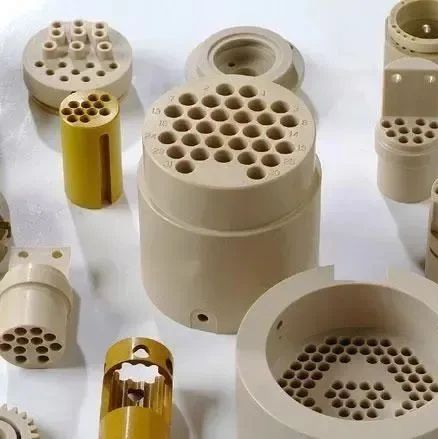
Core Viewpoint - The PEEK industry is experiencing rapid growth due to its superior properties compared to metals and conventional plastics, making it a key material in robotics and various high-end applications [2][3]. Industry Overview - PEEK (Polyether Ether Ketone) is a type of high-performance engineering plastic with superior mechanical, thermal, and chemical properties, making it suitable for demanding applications [6][11]. - PEEK is classified as a special engineering plastic, with its performance and added value being the highest among plastics [6]. Market Status - The global PEEK market is projected to grow significantly, with China's consumption expected to increase from 2,480 tons in 2022 to 5,079 tons by 2027, reflecting a CAGR of 15.42% [33][35]. - In 2022, the Chinese PEEK market was valued at approximately 1.496 billion yuan, with the electronic information sector being the largest consumer [51]. Process Route Comparison - PEEK can be synthesized through two main routes: nucleophilic substitution and electrophilic substitution, with the former yielding higher purity but at a higher cost [39][45]. - The nucleophilic substitution route is the primary industrial method, utilizing fluoroketone as a key raw material, which constitutes about 50% of the production cost [40][48]. Supply and Demand Structure - The demand for PEEK is broad, with applications in aerospace, automotive, and medical fields, driven by its excellent properties such as high strength and temperature resistance [51]. - The supply side is characterized by a few dominant players, with Victrex being the largest global producer, followed by Syensqo and Evonik [25][29][31]. Industry Chain Analysis - The PEEK industry chain includes raw material procurement, polymerization, processing, and forming, with significant investment required for high-purity production [18][22]. - The production process involves multiple steps, including polymerization, cooling, and various processing techniques to achieve the desired product forms [18][26]. Related Companies - Victrex is the largest PEEK producer globally, with a production capacity of 8,000 tons per year expected by 2024 [25]. - Syensqo, the second-largest producer, focuses on applications in electronics and aerospace, with a production capacity of 1,500 tons per year [29]. - Evonik, the third-largest producer, has a production capacity of 1,250 tons per year and primarily exports to Europe [31]. Market Cost Reduction Core - The cost structure of PEEK production is heavily influenced by raw material prices, particularly fluoroketone, which is critical for maintaining product quality [40][42]. - Efforts to reduce costs include optimizing the supply chain and increasing domestic production capabilities to enhance competitiveness [35]. Market Outlook - The PEEK market is expected to continue its upward trajectory, with significant growth opportunities in robotics and other high-tech applications due to its lightweight and durable properties [51].
人形机器人:多传感融合&材料构建具身智能(附50页PPT)
材料汇· 2025-06-18 15:25
Group 1 - The article emphasizes that China is increasing its investment in embodied intelligence, leading to the small-scale mass production of humanoid robots [4][5] - The humanoid robot sector is expected to see significant growth, with 2025 being marked as the year of mass production [10][11] - The article highlights the collaboration between government and enterprises to overcome the bottlenecks in embodied intelligence [4][22] Group 2 - The sensor industry is poised for development opportunities, particularly in visual sensors, force sensors, and tactile sensors [4][45] - Key companies in the sensor sector include Orbbec (688322), Koli Sensor (603662), and Hanwei Technology (300007) [4][45] - The demand for high-end materials is expected to surge due to the mass production of humanoid robots, with companies like Water Co. (002886) and Nanshan Zhishang (300918) being highlighted [4][45] Group 3 - The humanoid robot market in China is projected to grow rapidly, with a CAGR of 93.6% from 2024 to 2029 [40][41] - The article provides a detailed analysis of various companies involved in the humanoid robot sector, including their production timelines and expected output [38][39] - The market size for humanoid robots is expected to reach significant figures, with estimates suggesting a production of around 20,000 units globally in 2025 [38][39] Group 4 - The article discusses the advancements in AI models for humanoid robots, including the Genie Operator-1 model, which can generalize to new scenarios with minimal data [37] - Companies like Zhiyuan Robot and Tesla are leading the charge in humanoid robot production, with significant output targets set for 2025 [38][39] - The article notes that the domestic humanoid robot market is still in its early stages, with substantial growth potential anticipated [41][42] Group 5 - The article outlines the importance of sensors in humanoid robots, noting that they account for approximately 20%-25% of the total cost [57][58] - Visual sensors, six-dimensional force sensors, and tactile sensors are identified as critical components for the functionality of humanoid robots [57][58] - The demand for advanced sensors is expected to rise as humanoid robots become more prevalent in various applications [58][59]