经济观察报

Search documents
资本游戏还是两方对垒?护肤品牌绽美娅卷进隔空骂战的隐秘角落
经济观察报· 2025-06-13 12:54
Core Viewpoint - The ongoing disputes in the beauty industry reflect marketing strategies and tactics, with conflicts becoming a means to generate traffic, ultimately harming consumers who struggle to discern product authenticity [1][4]. Group 1: Dispute Overview - The conflict began when Aierfu criticized Zhenmeiya for allegedly misleading claims regarding the development of artificial skin technology, which Aierfu claims infringes on its patented technology [2][4]. - Zhenmeiya responded by asserting that it developed its own technology unrelated to Aierfu's patents, claiming that Aierfu's patent had expired and thus entered the public domain [3][9]. Group 2: Patent and Technology Details - Aierfu holds a patent for "tissue-engineered skin," which was reported to have expired in October 2021, while Zhenmeiya claims its technology is based on a different patent for a 3D epidermal model used in skincare product testing [7][9]. - The core of the dispute revolves around the interpretation of patent rights and the distinction between patent inventors and patent holders, with both companies asserting their respective claims [7][12]. Group 3: Industry Implications - The frequent conflicts in the beauty industry indicate a lack of transparency and standards, leading to confusion among consumers regarding product claims and authenticity [21][22]. - Experts suggest that the industry needs to establish clearer standards and verification mechanisms to help consumers make informed decisions about beauty products [22].

政策推动港深“双重上市”:哪些港股大湾区企业将会率先“回A”?
经济观察报· 2025-06-13 12:54
Core Viewpoint - The recent policy allows Hong Kong-listed companies from the Guangdong-Hong Kong-Macao Greater Bay Area to list on the Shenzhen Stock Exchange, which is expected to enhance their valuation and attract international capital into the A-share market [2][12]. Group 1: Policy Overview - The State Council's recent opinion supports eligible Hong Kong-listed companies to issue depositary receipts on the Shenzhen Stock Exchange [2]. - The policy aims to strengthen the core position of the Shenzhen Stock Exchange and enhance its global competitiveness [2][12]. - The Greater Bay Area development plan emphasizes the importance of cross-border financial flows and dual listings for attracting international capital [2]. Group 2: Current Market Landscape - There are over 200 companies from Guangdong listed in Hong Kong, primarily using the red-chip model, with notable examples including Tencent Holdings and Xiaopeng Motors [3][4]. - Companies listed under the H-share structure, such as Sunshine Insurance and UBTECH, are registered in Shenzhen [4][5]. - As of June 12, 2023, Tencent Holdings has a market capitalization of 4.69 trillion HKD, while other significant companies like Xiaopeng Motors and China Gas also exceed 200 billion HKD in market value [4]. Group 3: Types of Companies Likely to Return to A-Shares - High-tech companies with undervalued stock in Hong Kong may seek to return to A-shares for better valuations and funding opportunities [7]. - Mature tech platform companies that are still in a cash-burning phase may also consider returning to A-shares for additional financial support [7]. - Core technology firms in policy-sensitive industries could benefit from the dual listing, gaining both funding and favorable government policies [8]. Group 4: Challenges in Policy Implementation - The transition from Hong Kong to A-shares may face challenges due to differences in listing rules, financial auditing standards, and information disclosure requirements [13][14]. - Companies using red-chip or VIE structures may encounter high costs and lengthy processes to adjust their frameworks for A-share listings [13]. - The need for timely performance delivery is crucial, as delays could lead to investor trust issues and affect stock prices [13]. Group 5: Recommendations for A-Share Market - Suggestions include simplifying the review process for returning companies and establishing a green channel for eligible firms to expedite their listing [17][18]. - The introduction of a dedicated channel for tech companies on the ChiNext board could focus on core technology and business models rather than short-term profitability [18]. - Enhanced cooperation between the Shenzhen Stock Exchange and Hong Kong Stock Exchange is recommended to unify information disclosure standards and involve industry experts in the review process [19].

八折收购VS展期降息 西咸空港新城高息非标债化解路径几何?
经济观察报· 2025-06-13 06:50
自2024年上半年以来,西咸空港新城集团陆续出现了商业承 兑汇票逾期的情况,并且这些逾期信息逐渐被曝光。 作者:蔡越坤 封图:图虫创意 2025年6月初,骄阳似火,在一家融资租赁机构任资产管理部经理的徐浩,来到陕西省西咸新区空 港新城开发建设集团有限公司(下称"西咸空港新城集团"),追索目前该集团处于违约状态的租 金。 债务陆续违约 西咸空港新城集团为重要的基础设施建设主体,主要从事空港新城范围内的基础设施及保障房建 设、土地开发整理、房屋销售、商品销售等业务。 自2024年上半年以来,西咸空港新城集团陆续出现了商业承兑汇票逾期的情况,并且这些逾期信 息逐渐被曝光,引发了外界的关注。 根据上海票据交易所披露的《截至2024年3月31日承兑人逾期名单》,西咸空港新城集团票据承兑 逾期余额为2.13亿元。 与西咸空港新城集团相关负责人交涉后,徐浩此次"追债"最终未能取得实质性进展。他带着无奈与 遗憾,无果而归。 徐浩说,2019年,该租赁机构与西咸空港新城集团开展合作,向后者提供了2亿元融资,投放租赁 期为五年,于2024年10月18日结束。该项目由陕西省西咸新区秦汉新城开发建设集团有限责任公 司提供连带责任担保 ...

中国象棋的“秘密”:多少冠军靠“买卖”而来?
经济观察报· 2025-06-12 23:59
包括2012年全国象棋个人锦标赛在内,王天一至少有8个冠 军 , 存 在 " 买 卖 棋 " 的 行 为 。 徐 超 等 人 的 夺 冠 , 也 有 " 买 卖 棋"的存在。 作者: 李微敖 封图:图虫创意 在很长一段时间里,这届比赛被中国象棋迷们"津津乐道"。 2012年10月,全国象棋个人锦标赛在浙江省金华市磐安县举行。这项比赛始于1956年,是每年中国象棋诸多赛事里最重要的比赛,获冠军者将荣膺"棋 王"之誉。在2012年之前的56年间,中国象棋界诞生了15位"棋王"。 时年23岁的北京棋手王天一,前五轮比赛4胜1和。随后,他连续战平4位名将许银川、赵鑫鑫、申鹏和洪智。按照比赛规则,赢家得2分,和棋得1分, 输者不得分。此时,王天一积分达到13分,与洪智、许银川并列第一。 另外10位棋手赵鑫鑫、申鹏、汪洋、陈泓盛、孙勇征、程鸣、蔚强、孙逸阳、葛超然、赵勇霖10人各积12分,张强、黄竹风、郑惟桐、孙博、郑一 泓、吕钦等13人各积11分。 比赛的态势相当胶着。 送钱给未成年人2万元 赢得首个"棋王"称号 不过,本届赛事期间"买卖棋"的传闻,已经在一定范围内流布。 关键的第10轮,王天一对阵江苏棋手孙逸阳。 1 ...

上半年A股IPO平均首日回报达到220% 你打新赚了多少?
经济观察报· 2025-06-12 13:32
就A股市场来看,A股上半年共有50家企业实现首发上市,上 市企业以中小规模企业为主,合计筹资超过371亿元,IPO数 量和筹资额实现双增长,均同比上升14%。 作者:姜鑫 封图:图虫创意 "2025上半年,未有IPO破发,IPO平均首日回报达到220%,与2024上半年的136%相比,同比大幅上升。" 2025年6月12日,在《中国内地和香港IPO市场》报告(下称"报告")发布现场,安永北京主管合伙人杨淑娟如是介绍了上半年A股IPO(首次公开募 股)发行情况。 报告显示,2025年上半年,中国内地和香港地区IPO活动在全球中的占比上升。其中,香港IPO活动表现抢眼,筹资额占全球总筹资额的24%,与A股 合计占全球总筹资额的33%。同时,得益于宁德时代等大型IPO推动,港交所以140亿美元募资规模登顶全球。 全球市场IPO数量和融资规模 A股IPO平均首日回报达到220% 就A股市场来看,A股上半年共有50家企业实现首发上市,上市企业以中小规模企业为主,合计筹资超过371亿元,IPO数量和筹资额实现双增长,均同 比上升14%。 报告显示,从行业来看,工业、科技和材料领域的IPO数量和筹资额分居前三位。汽车行业作 ...

腾讯收购喜马拉雅:单打独斗的故事越来越难书写
经济观察报· 2025-06-12 10:15
Core Viewpoint - The acquisition of Ximalaya by Tencent Music signifies a pivotal moment in the audio industry, highlighting the challenges faced by vertical platforms in a saturated market and the necessity for integration with larger ecosystems to ensure survival [2][16]. Group 1: Acquisition Details - On June 10, Tencent Music Entertainment Group signed an acquisition agreement with Ximalaya for a total transaction value of approximately 12.6 billion USD in cash and Tencent Music-related equity, amounting to about 182 billion RMB [2]. - Ximalaya will maintain its brand independence post-acquisition, while Tencent Music aims to address its shortcomings in long audio content [3]. Group 2: Industry Context - Ximalaya's valuation has plummeted from a peak of 36 billion RMB to the current transaction price of 18.2 billion RMB, reflecting a broader trend of declining valuations in the audio industry [4]. - Since its establishment in 2012, Ximalaya has faced significant challenges, including four failed IPO attempts and a lack of sustainable profitability despite over 9 billion RMB in cumulative financing [5][6]. Group 3: Competitive Landscape - The long audio sector is becoming increasingly crowded, with competitors like Lizhi and Qingting FM still active, alongside new entrants such as ByteDance's Tomato Listening and NetEase Cloud Reading [7]. - The rise of video content has intensified competition for user attention, leading to stagnation in Ximalaya's advertising and subscription revenue growth [8]. Group 4: Strategic Rationale - Tencent Music's acquisition is not merely a financial investment; it is a strategic move to bolster its content offerings in response to slowing user growth and increasing competition from companies like ByteDance and NetEase [9][10]. - Ximalaya's vast resources, including 300 million registered users and 15 million creators, will help Tencent Music fill gaps in its non-music audio content [10]. Group 5: Future Implications - The acquisition marks the beginning of a significant restructuring in the audio industry, with potential for increased industry concentration as companies seek to integrate and consolidate [16]. - The collaboration may lead to innovations in business models, such as "audio + social" and "audio + knowledge payment," which could transform the industry's reliance on advertising [13]. Group 6: Challenges Ahead - Balancing Ximalaya's independent operations with Tencent Music's ecosystem integration will be a critical challenge for management [14]. - The fundamental competition for user attention remains a pressing issue, as overlapping membership benefits could lead to internal competition that affects the synergy of the acquisition [15].


通威TNC 2.0亮相上海SNEC:双面率破88% 重构光伏收益模型
经济观察报· 2025-06-12 10:15
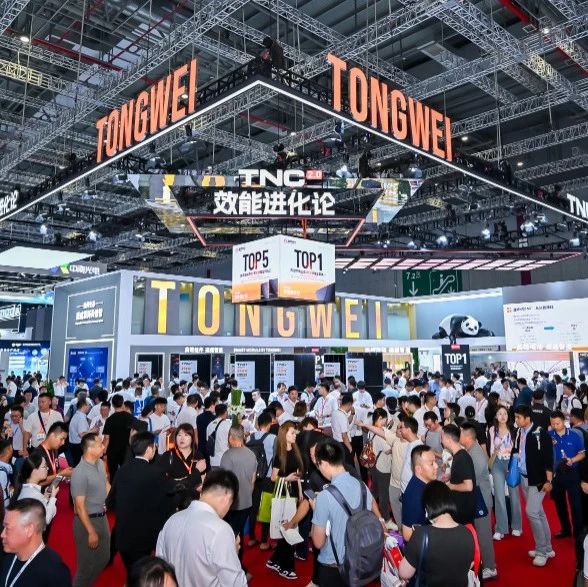
Core Viewpoint - The article highlights the launch of Tongwei's latest TNC 2.0 module, which utilizes advanced technologies to enhance module efficiency and performance in the photovoltaic industry [1][3]. Group 1: Product Launch and Technology - Tongwei introduced the TNC 2.0 module at the SNEC exhibition, showcasing its capabilities through innovative technologies such as 908 technology, TPE technology, polytech, and steel mesh printing [1][3]. - The TNC 2.0 module features a bifaciality rate exceeding 88%, aligning with industry trends and providing high-quality, efficient solar solutions [4][9]. - Compared to conventional TOPCon products, the TNC 2.0 module's bifaciality rate has improved by 5-10 percentage points, significantly enhancing energy generation in open-field scenarios [10]. Group 2: Market Trends and Competitive Landscape - The photovoltaic industry is witnessing a shift from merely maximizing peak power to focusing on the alignment of generation curves with electricity price curves, as well as controllable investment risks [6][8]. - The competition among mainstream manufacturers of BC and TOPCon technologies is intensifying, with production power differences remaining within 10W [5]. - The TNC 2.0 module's high bifaciality and excellent low-light performance provide a competitive edge, particularly during early morning and late evening hours [10][26]. Group 3: Economic Benefits and Financial Performance - The TNC 2.0 module can reduce EPC costs by over 200,000 yuan for a 10,000 square meter commercial rooftop project, resulting in a net profit increase of more than 94,000 yuan [23][25]. - The project offers cash flow advantages, with net profits consistently exceeding those of BC projects over a 14-25 year operational period, depending on electricity prices [24][25]. - The TNC 2.0 project is positioned to mitigate investment risks associated with market fluctuations and policy changes, providing a robust return on investment [25][26]. Group 4: Industry Evolution and Future Outlook - The SNEC exhibition reflects a broader industry trend towards quality over quantity, with a focus on extreme environment adaptability defining the next generation of modules [27]. - The investment return model is evolving, with factors such as payback periods, capital occupancy ratios, and electricity price curves becoming critical decision-making criteria [28]. - The competitive landscape in the photovoltaic sector is shifting towards a multidimensional approach, emphasizing the economic viability of the entire lifecycle of solar power plants [29].

告别“韦尔股份”
经济观察报· 2025-06-12 10:15
Core Viewpoint - The company is transitioning from "Weir" to "OmniVision" to better reflect its current business focus on semiconductor design, particularly image sensors, rather than its original distribution model [2][4][19]. Business Transformation - The company reported a significant shift in its business structure, with 2024 main business revenue reaching 25.67 billion yuan, of which semiconductor design revenue was 21.64 billion yuan, accounting for 84.3% [4]. - The image sensor solutions from OmniVision contributed 19.19 billion yuan, representing 74.76% of the company's main business revenue [4]. - The name change is seen as a necessary step to align the company's identity with its current operations and to facilitate the collaboration of its three major design businesses [4][5]. Strategic Rationale - The rebranding aims to enhance the company's global brand recognition, as "OmniVision" has a stronger international presence compared to "Weir" [5]. - The name change is also intended to support the company's plans for an H-share listing, making it more recognizable to international investors [5]. Historical Context - The acquisition of OmniVision in 2019 marked a pivotal moment for the company, transforming its revenue structure and significantly increasing its market presence [6][7]. - Following the acquisition, the company's revenue surged to 13.63 billion yuan in 2019, with image sensor business becoming a key revenue driver, accounting for over 71% of total revenue [6]. Market Position and Challenges - The company is focusing on multiple sectors, including mobile, automotive, and AI vision, with mobile business being a core area facing intense competition [9][10]. - The mobile CIS market is nearing saturation, leading to a shift towards high-end and cost-reduction strategies [9][10]. - The automotive CIS business is seen as a growth opportunity, with higher profit margins compared to mobile CIS, but it requires significant upfront investment and a lengthy certification process [12][13]. Financial Performance - In 2024, the automotive market revenue reached approximately 5.91 billion yuan, growing by 29.85%, becoming a strong growth engine for the company [15]. - The company faced challenges in other segments, with a 17.77% decline in solution business revenue due to market imbalances and shifts in display technology [15][16]. Competitive Landscape - The global CIS market is dominated by Sony and Samsung, with OmniVision holding about 11% market share, indicating a competitive environment [17]. - The company must navigate challenges from major players and the trend of large tech firms developing in-house chips, which could impact market share [18]. Future Outlook - The name change signifies the end of the "Weir" era and the beginning of the "OmniVision" era, marking a strategic shift towards a unified brand aimed at competing on a global scale [19].


“降费潮”来了!买1万银行理财,年管理费低至1块钱
经济观察报· 2025-06-12 10:15
Core Viewpoint - The recent fee reduction in the banking wealth management sector primarily targets management and sales fees, with some smaller banks implementing more significant reductions compared to state-owned banks [1][5]. Fee Reduction Details - Minsheng Wealth Management has reduced the fixed management fee rate of a pure fixed-income product from 0.5% to 0.05% [2]. - Since the interest rate cut on deposits began on May 20, several banks, including Minsheng Wealth Management, have initiated fee reductions, with some products' fixed management fees dropping to as low as 0.01% [3]. - Agricultural Bank of China announced multiple fee reductions, including a significant drop in management fees for cash management products from 0.3% to 0.01% [4]. - Other banks, such as China Minmetals Bank and Everbright Wealth Management, have also announced fee reductions for various fixed-income products [6][7][8]. Market Dynamics - The average fixed management fee rate across the banking wealth management market has decreased to 0.1865%, down 0.45 basis points from the end of 2023 [11]. - The fee reduction trend is driven by increased competition, regulatory guidance, and a shift from extensive growth to refined operations within the wealth management industry [11][12]. - Smaller wealth management companies are more aggressive in fee reductions to quickly expand their market share, while larger banks focus on enhancing research and service quality [3][11]. Strategic Implications - The fee reductions are seen as a short-term strategy to attract customers and respond to declining interest rates, with the potential for ultra-low fee products to become a norm among leading firms [12]. - Long-term sustainability of such low fees may be challenging for smaller firms due to operational costs and revenue pressures [12]. - The industry may need to shift from a "scale-driven" approach to a "value-driven" strategy, focusing on optimizing asset allocation and improving risk management for sustainable returns [12].

“童装第一股”易主 黄涛资本版图再扩张
经济观察报· 2025-06-11 13:33
一家新设公司的闪电收购 素有"童装第一股"称号的安奈儿,因近年来业绩持续下滑而频有重组转型的动作,但这次其即将迎 来的控股股东,却是一家新近设立的投资公司。 公开信息显示,新创源成立于2025年5月27日,主要从事投资管理业务,其注册资本为3.95亿元; 成立后仅3天,即5月30日,新创源便向曹璋、王建青支付了8000万元的意向金(作为股份转让对 价款的一部分);6月9日,交易各方签署了《股份转让协议》,根据协议,新创源此次为获取安 奈儿的控股权将耗资约4.22亿元。 安奈儿的股价走势近期亦十分活跃,在5月27日至5月30日连 涨4天,涨幅超过20%,5月30日当天更是强势涨停。而5月 27日正是新创源成立的日期,5月30日则是新创源向曹璋夫妇 支付8000万元意向金的日期。 对于股价的此种走势,安奈儿 的上述工作人员表示,"公司的信息披露不存在问题"。 作者:邹永勤 封图:图虫创意 2025 年 6 月 10 日 , 此 前 因 筹 划 控 制 权 变 更 而 停 牌 5 个 交 易 日 的 深 圳 市 安 奈 儿 股 份 有 限 公 司 (002875.SZ,下称"安奈儿")发布公告,披露了此次股权变更事 ...