digihuman(835670)

Search documents
华夏银行牵头簿记发行“区块链+数字人民币”债券
Xin Lang Cai Jing· 2025-12-03 09:25
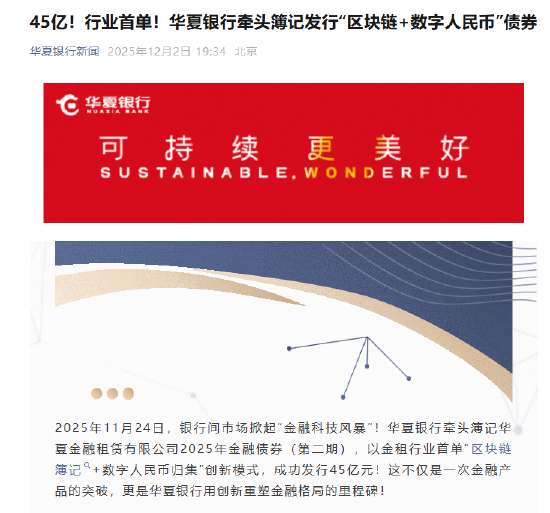
12月3日金融一线消息,据"华夏银行新闻"微信公众号,近日,华夏银行牵头簿记,以行业首创"区块链 簿记+数字人民币归集"创新模式,成功发行45亿元金融债券。发行全流程信息实时上链、不可篡改, 投资者随时能查。募集资金直接通过数字人民币归集,省去中间多重清算环节。本次债券发行人为华夏 银行控股子公司华夏金融租赁有限公司。本期债券初始计划发行30亿元,同步设置15亿元超额发行权, 最终全额触发超额配售,以45亿元满额收官,3年期票面利率锁定1.84%。 责任编辑:秦艺 责任编辑:秦艺 12月3日金融一线消息,据"华夏银行新闻"微信公众号,近日,华夏银行牵头簿记,以行业首创"区块链 簿记+数字人民币归集"创新模式,成功发行45亿元金融债券。发行全流程信息实时上链、不可篡改, 投资者随时能查。募集资金直接通过数字人民币归集,省去中间多重清算环节。本次债券发行人为华夏 银行控股子公司华夏金融租赁有限公司。本期债券初始计划发行30亿元,同步设置15亿元超额发行权, 最终全额触发超额配售,以45亿元满额收官,3年期票面利率锁定1.84%。 ...



中大发布特色资源数字人文平台等三项最新研究成果
Nan Fang Du Shi Bao· 2025-12-03 05:36
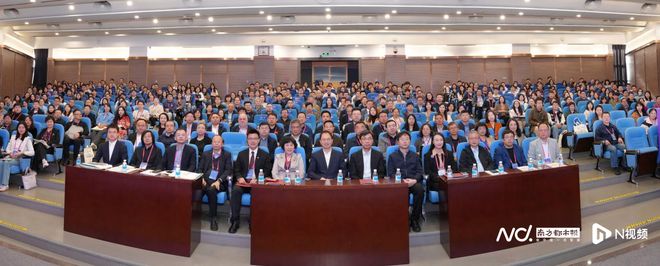
Core Insights - The conference "Humanities Intelligence Transformation: The Wisdom Singularity of Digital Humanities" was held at Sun Yat-sen University, where three significant research outcomes were announced, including a digital humanities platform, a large model for folk historical literature, and an intelligent agent for folk historical literature [1][3]. Group 1: Research Outcomes - The digital humanities platform integrates various resources such as Huizhou documents, ancient texts, and newspapers, utilizing technologies like IIIF and knowledge graphs for multi-modal resource presentation and activation [3]. - The large model for folk historical literature is based on a high-quality knowledge base and advanced algorithms, providing scholars with reliable knowledge services through multi-turn dialogue and precise contextual understanding [3]. - The intelligent agent for folk historical literature enables deep content mining, supporting functions like word frequency statistics, knowledge graph reasoning, and topic analysis, assisting researchers in identifying patterns from extensive literature [3]. Group 2: Strategic Importance - Digital humanities, as an emerging interdisciplinary field, is seen as a crucial force for future academic development, driven by national strategic initiatives [4]. - The conference introduced the "Explorer Forum" and "Digital Market" to foster cross-disciplinary dialogue and showcase digital humanities projects from various research institutions across the country [4]. - The China Digital Humanities Annual Conference, the largest and most influential academic event in the field, has been successfully held for seven consecutive years since 2019, attracting over 400 experts and scholars from universities and research institutions [4].
广电运通:已打造广州、防城港等地数字人民币区域性平台,中标数字广州数据流通利用基础设施建设试点项目
Sou Hu Cai Jing· 2025-12-03 04:11
Core Insights - The company has made significant progress in the digital economy, particularly in digital currency and AI-driven data elements, positioning itself as a leader in these innovative fields [1] Digital Currency Developments - The company is one of the few in China capable of providing comprehensive digital currency technology services, having established regional platforms in cities like Guangzhou and Fangchenggang [1] - Notable implementations include the first digital currency metro transit scenario in Guangzhou and the first government closed application scenario in the city [1] Data Element Market Engagement - The company was among the first listed firms to enter the data element market, focusing on building operational capabilities in public data processing, development, and trading [1] - It has a stake in the Guangzhou Data Exchange and has successfully entered the secondary market for data elements [1] - In April, the company won a bid for a pilot project in digital data circulation infrastructure in Guangzhou, valued at 35.0187 million yuan, marking a significant milestone in urban data market configuration [1] Future Plans and Integration - The company aims to further integrate digital currency, data elements, and technologies like AI and big data to provide comprehensive digital solutions across various sectors, including finance, government, and transportation [1] - The strategy involves a dual-driven approach of "industry + capital" to empower the digital transformation of numerous industries [1]

广电运通:公司目前已打造了广州、防城港等地市数字人民币区域性平台
Mei Ri Jing Ji Xin Wen· 2025-12-03 03:57
Core Insights - The company has made significant advancements in the digital economy, particularly in digital currency and AI-driven data elements, positioning itself as a leader in these future-oriented sectors [1][2] Group 1: Digital Currency Developments - The company is one of the few in China capable of providing comprehensive digital RMB technology services, having established regional platforms in cities like Guangzhou and Fangchenggang [2] - Notable implementations include the first digital currency application in Guangzhou's subway system and a closed application scenario for government services in the city [2] - The company has also created Guangdong's first digital financial ecosystem cooperation platform, showcasing its leadership in digital currency applications [2] Group 2: Data Element Market Engagement - The company is among the early entrants in the data element market, focusing on building operational capabilities in public data processing, development, and trading [2] - It has invested in the Guangzhou Data Exchange, successfully entering the secondary market for data elements [2] - A significant milestone was achieved with a successful bid for a project worth 35.0187 million yuan aimed at constructing data circulation infrastructure in digital Guangzhou, marking a breakthrough in urban data element market configuration [2] Group 3: Future Integration and Strategy - The company plans to continue integrating digital RMB, data elements, and technologies like AI and big data to provide comprehensive digital solutions across various industries [2] - The strategy involves a dual approach of "industry + capital" to empower sectors such as finance, government, and transportation in their digital transformation efforts [2]
数智联盟打造全球数字资产确权与数字人民币跨境结算重要基础设施
Sou Hu Cai Jing· 2025-12-03 00:27
Core Viewpoint - The establishment of the Digital Intelligence Alliance marks a strategic response to the accelerating global digital economy and the restructuring of the international financial system, positioning itself as a key player in building digital financial infrastructure for the future [1][14]. Group 1: Global Trends in Digital Economy - The global financial technology competition has entered a new phase, with digital currencies becoming a crucial focus for international finance [1]. - Asset tokenization is emerging as a new standard in the financial industry, ensuring data credibility, transparency, and immutability [2]. - Intelligent regulation is evolving as a key direction for global regulatory systems, emphasizing risk warning, cross-border compliance, and data traceability [3]. - These trends are collectively driving a reconstruction window for global digital financial infrastructure [4]. Group 2: Core Positioning of the Digital Intelligence Alliance - The Digital Intelligence Alliance aims to be a participant and builder of global digital asset infrastructure, focusing on four main areas: asset rights confirmation, payment settlement, on-chain governance, and inclusive finance [6][7]. - Key initiatives include the establishment of a unified, trustworthy, and verifiable digital asset custody platform, which will cover asset ownership registration, digital certificate generation, data storage, and cross-border asset recognition [8]. - The alliance will promote a traceable and auditable governance system for digital assets, achieving full data transparency, automated compliance checks, intelligent risk monitoring, and verifiable transaction paths [9]. - The construction of a cross-border payment and settlement system for the digital yuan will expand its application in international trade and supply chain finance [10][11]. - The alliance will assist in the digital upgrade of international trade and supply chain finance, focusing on the digitization of trade certificates and the on-chain confirmation of orders and receivables [12][13]. Group 3: Building International Digital Financial Standards - The Digital Intelligence Alliance will transition from a single platform to a participant in international digital financial standards, focusing on the standardization of international digital asset management rules and the formulation of cross-border usage norms for the digital yuan [6][7]. - Collaboration mechanisms with overseas nodes and international organizations will be established to support the internationalization of the renminbi [13]. Group 4: Contribution to Global Financial Order - The official launch of the Digital Intelligence Alliance represents a significant step in upgrading China's digital financial system and is a product of the new phase of the global digital economy [14]. - By constructing an open, compliant, and sustainable digital financial infrastructure, the alliance aims to provide long-term value for national strategies, international trade, and public users [14].

号称取代微信支付宝的数字人民币,为啥现在无人问津了,背后原因很真实
Sou Hu Cai Jing· 2025-12-02 23:14
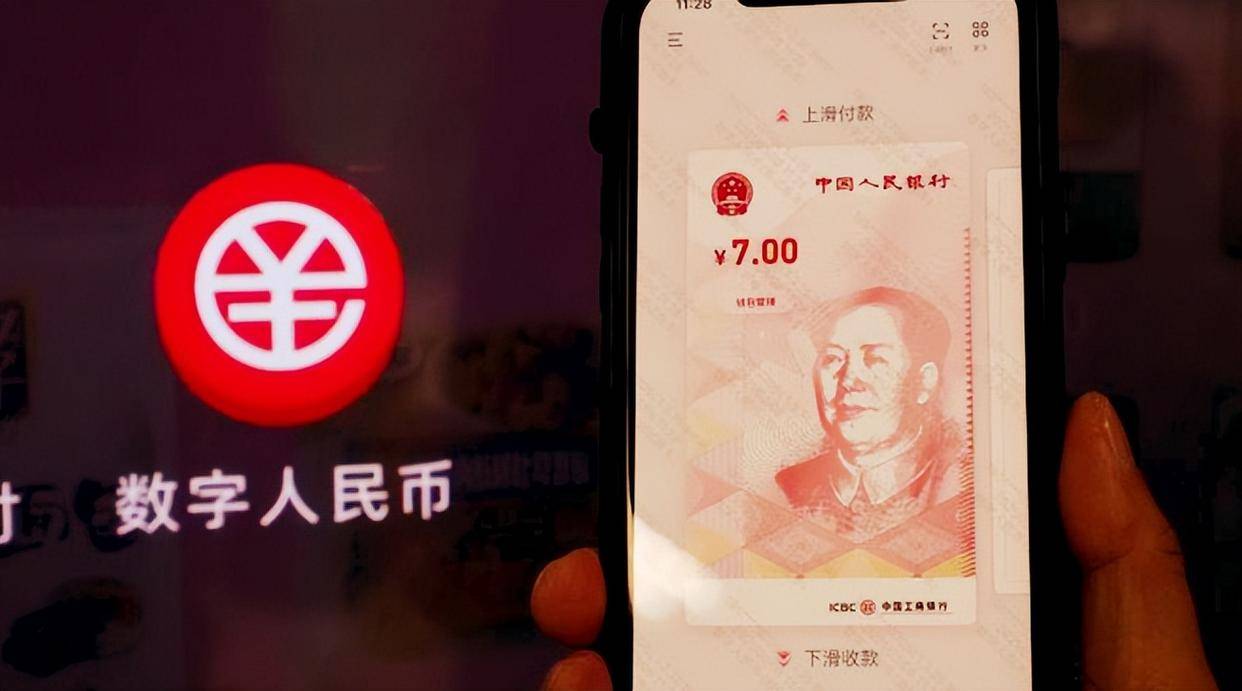
Core Viewpoint - The digital RMB, or DCEP, is a state-issued digital currency that aims to modernize payment systems but faces challenges in user adoption and market penetration [1][4][7]. Group 1: Definition and Features - Digital RMB is a digital version of the Chinese yuan, allowing users to make payments via a mobile app or a chip on a bank card [1]. - It is a legal tender issued by the state, offering higher security compared to private payment platforms like WeChat Pay and Alipay [3]. - Digital RMB can be used offline, providing a unique advantage in situations where internet access is unavailable [3]. Group 2: User and Merchant Perspectives - Users lack motivation to adopt digital RMB due to the convenience of existing platforms like WeChat Pay and Alipay, which offer faster payment processes [4]. - Digital RMB does not provide significant incentives or rewards for users, unlike its competitors that offer cashback and points [4]. - Merchants are hesitant to support digital RMB due to the additional costs of new payment equipment and employee training, especially when existing systems are already in place [4][5]. Group 3: Technical and Usage Limitations - The payment network for digital RMB is not fully developed, leading to slower transaction speeds and less stability compared to established platforms [5]. - The limited acceptance of digital RMB in various retail environments restricts its practical use, as many merchants do not support it [5]. - Users are accustomed to existing payment methods, making it difficult to shift their habits even if digital RMB has advantages [5]. Group 4: Initial Expectations vs. Reality - Initial media coverage created high expectations for digital RMB, suggesting it would replace WeChat Pay and Alipay, which has not materialized [7]. - The gap between expectations and actual adoption has led to decreased interest in digital RMB [7]. Group 5: Future Outlook - Digital RMB is expected to coexist with existing payment systems rather than replace them, serving as a supplementary tool in the payment ecosystem [14]. - Its primary value may lie in enhancing national financial management and policy implementation rather than everyday transactions [14][15].
京东数字人直播免费 百位数字人总裁将空降京东直播间
Zhong Guo Xin Wen Wang· 2025-12-02 13:51
Core Insights - JD.com has officially announced the free opening of its digital human live streaming service to all merchants, allowing them to easily set up their own AI hosts [3][4]. Group 1: Digital Human Live Streaming Features - The digital human live streaming service enables merchants to create 24/7 live streaming rooms, enhancing transaction efficiency [1][6]. - Merchants can choose from nearly 300 character models and over 200 voice styles, providing flexibility in presentation [4][6]. - AI-generated scripts simplify content creation, reducing the pressure on merchants to produce live content [4][6]. - Digital humans can interact with users in real-time, addressing inquiries and preventing engagement drop-offs [1][4]. - AI-driven content distribution maximizes reach, allowing for effective user engagement and content virality [1][4]. Group 2: Business Impact and Performance - The digital human initiative has already driven hundreds of billions in GMV, showcasing significant business impact [6][7]. - The average conversion rate for sales through digital humans has increased by 30%, indicating improved sales performance [6]. - During the 11.11 shopping festival, the number of merchants using digital human live streaming grew nearly sixfold compared to the previous year [7]. Group 3: Technological Advancements - The JoyAI model has evolved to support a wide range of applications, including the generation of long-form videos and high-quality character animations [7]. - Advanced technologies such as DPO reinforcement learning have addressed common challenges in AI-generated content, enhancing precision and speed [7]. - The latest digital human technology allows for the rapid creation of personalized digital hosts, making it accessible for small and medium-sized businesses [7].

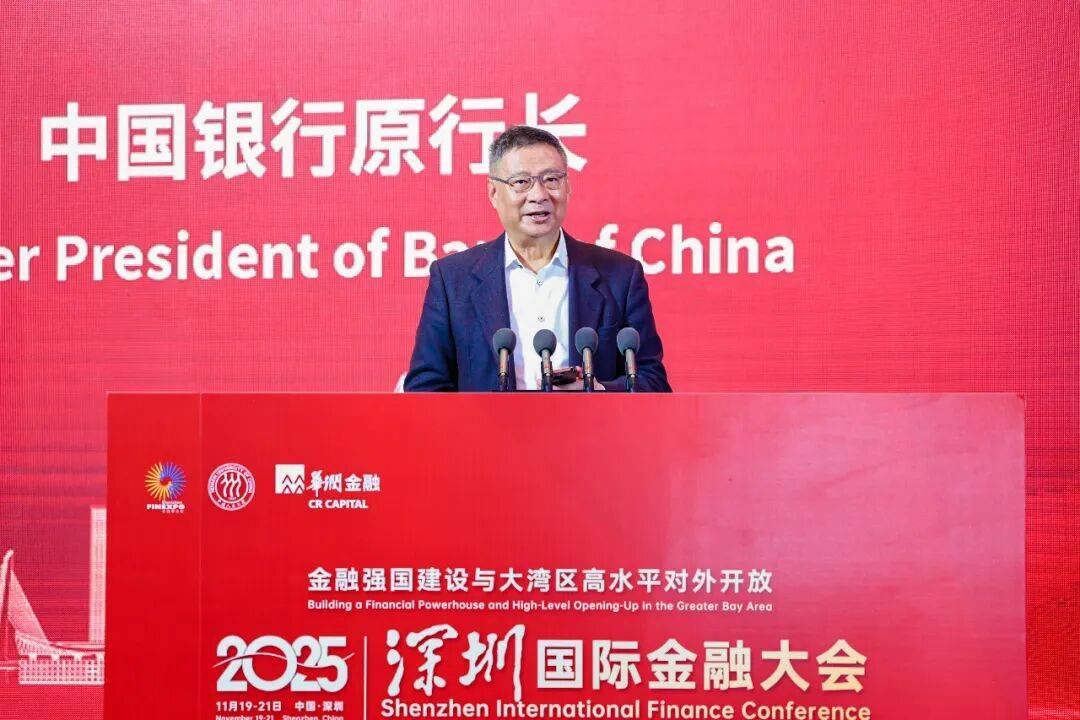
中国银行原行长李礼辉: 数字人民币的国际化
Sou Hu Cai Jing· 2025-12-02 13:31
Core Viewpoint - The "2025 Shenzhen International Financial Conference" focuses on the theme of "Building a Financial Power and High-Level Opening Up in the Greater Bay Area," discussing the strategic path for China's financial development amid global economic changes [1]. Digital Currency Development - The digital RMB has undergone three phases since 2014: theoretical research, closed-loop pilot, and open pilot, gradually being promoted in daily life [3]. - The digital RMB features a centralized management and dual-layer operation model, ensuring reliable monetary policy transmission and efficient monetary control [3]. - It possesses both account and value characteristics, allowing for value transfer without the need for a bank account, thus reducing reliance on financial intermediaries [4]. Technological Infrastructure - The digital RMB employs a hybrid technical architecture that combines centralized and distributed systems, supporting high transaction volumes and continuous operations [4]. - It can load smart contracts, enabling programmability and automatic payment transactions based on agreed conditions [4]. - The digital RMB aims for greater internationalization, advanced digitization, and broader tool functionality, expanding its use beyond daily transactions to digital asset trading platforms [5][6]. Challenges and Strategic Responses - The digital RMB faces challenges from the U.S. financial hegemony and competition in the domestic mobile payment market [1][7]. - To counter U.S. monetary dominance, China aims to enhance the stability of the RMB, promote a multi-polar currency system, and establish a robust cross-border payment infrastructure [9][10]. - The digital RMB is positioned as a credible digital payment tool backed by national credit, aiming to compete with U.S. stablecoins [10]. Market Application and Expansion - In 2024, mobile payments in China reached 2,109.8 billion transactions, with a total transaction amount of 563.7 trillion yuan, dominated by Alipay and WeChat Pay [12]. - By mid-2025, the cumulative transaction amount of digital RMB is expected to reach 12.9 trillion yuan, with 3.16 billion transactions [12]. - The digital RMB will continue to expand its application scenarios, including personal payments, merchant payments, and cross-border transactions, while optimizing user experience and acceptance environments [12][13].
12项举措出台!数字人才培养迎来新支撑
Bei Jing Shang Bao· 2025-12-02 12:57
Core Viewpoint - The release of the "Opinions" by five major departments aims to strengthen the construction of data element disciplines and digital talent teams, providing comprehensive support for the development of the digital economy and promoting high-quality growth in this sector [2][3]. Group 1: Talent Development Initiatives - The "Opinions" propose 12 measures to enhance the construction of data-related disciplines and digital talent teams, focusing on integrating education, research, and industry needs [2][3]. - There is an emphasis on optimizing discipline settings, encouraging universities to establish data science and digital economy programs, and adjusting vocational education based on industry demands [3][4]. - The initiative supports the establishment of digital colleges within comprehensive universities and encourages specialized institutions to develop programs in areas like digital trade, data security, and health data management [4]. Group 2: Trends in Digital Talent Training - The current trends in digital talent training include accelerated interdisciplinary integration, a stronger emphasis on practical skills, and regional specialization in talent development [4][5]. - The focus is shifting from single-discipline training to a "data + profession" approach, enhancing hands-on capabilities to reduce the adaptation period for talent entering the workforce [4][5]. - Regions with active economies are encouraged to cultivate talents in digital marketing and planning to meet specific market needs [4]. Group 3: Research and Innovation - The "Opinions" call for accelerated research in key areas such as data marketization, data rights, and emerging technologies like AI and blockchain, aiming to establish a robust theoretical and policy framework for data elements [5][6]. - There is a push for collaboration between academia and industry to foster innovation, with enterprises taking a leading role in identifying technical needs and implementing solutions [6]. - The initiative encourages the development of application scenarios to enhance the synergy between education, research, and industry, promoting the cultivation of innovative and practical digital talent [6].

分层分类、微专业、动态调整 多举措夯实数字人才培养 构建深度融合人才生态
Yang Shi Wang· 2025-12-02 09:44
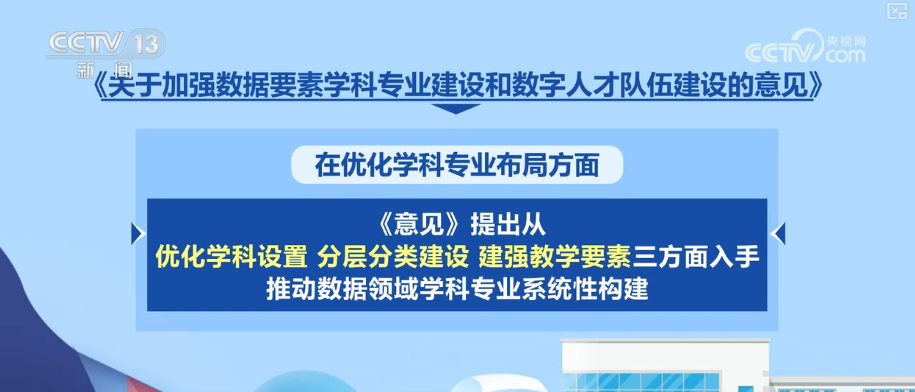
Core Viewpoint - The issuance of the "Opinions" by five government departments marks a significant step towards addressing the shortage of digital talent in China, aiming for systematic, professional, and high-quality development in this area [8]. Group 1: Optimization of Academic and Professional Layout - The "Opinions" propose three approaches to optimize the academic structure: improving subject settings, building a tiered and categorized system, and strengthening teaching elements to systematically construct disciplines related to data [3]. Group 2: Promoting Deep Integration of Industry, Academia, and Research - The "Opinions" emphasize the use of application scenarios as a vehicle to promote deep integration among industry, academia, and research, thereby maximizing the value of talent cultivation [5]. Group 3: Deepening Industry-Education Integration and Vocational Education Reform - The "Opinions" focus on building an ecosystem for industry-education integration, reforming education and teaching, and developing course resources to address the disconnect between learning and application, thus bridging the final gap in talent development [6][15]. Group 4: Supporting Higher Education Institutions - The "Opinions" support comprehensive universities in establishing digital colleges and integrating relevant academic resources, as well as encouraging specialized institutions to enhance their programs in data technology, data analysis, and digital arts [11]. Group 5: Development of Micro Majors - The "Opinions" advocate for universities to offer "micro majors" that meet the urgent knowledge and skill requirements of the data industry, such as digital trade and digital media arts, fostering a collaborative innovation system led by enterprises [13]. Group 6: Addressing the Skills Gap in Vocational Education - The "Opinions" encourage vocational colleges to add data-related programs to address the skills gap, focusing on areas like data collection, cleaning, annotation, and operation, in response to market demands [16]. Group 7: Building a Comprehensive Ecosystem - The "Opinions" propose a complete ecosystem integrating academic disciplines, vocational education, academic research, and industry-academia-research collaboration, aiming to resolve the disconnect between learning and application through a three-integration mechanism [18].