
GUANGDONG DRIVE BIO-TECH CO.(838275)

Search documents
《2025中国光伏建设进展报告》发布,中国光伏产业成为全球能源转型的重要驱动力
Mei Ri Jing Ji Xin Wen· 2025-12-01 01:54
Core Insights - The photovoltaic industry in China has achieved significant growth over the past decade, becoming a key driver of global energy transition [1] - The "2025 China Photovoltaic Construction Progress Report" highlights major achievements and innovations in the sector, emphasizing the shift towards sustainable development [1] - The industry is experiencing a transition from low-price competition to sustainable growth due to supportive policies and technological advancements [1] Industry Overview - The photovoltaic ETF Huaxia (515370) tracks the CSI Photovoltaic Industry Index, encompassing upstream, midstream, and downstream companies in the photovoltaic supply chain [2] - The report indicates that N-type monocrystalline silicon technology is expected to capture over 96.9% market share, marking a departure from the P-type era [1] - The photovoltaic installed capacity is witnessing exponential growth, with policies aiding in optimizing the competitive landscape and restoring profitability [1]

韩国11月出口延续增长 半导体与汽车成核心驱动力
Xin Hua Cai Jing· 2025-12-01 01:11
新华财经北京12月1日电 11月,韩国出口在半导体和汽车两大支柱产业的强劲表现下继续保持增长态 势。尽管面临全球贸易保护主义抬头及美国关税上调等外部压力,韩国当月出口展现出较强韧性。 韩国央行行长李昌镛表示,货币政策委员会内部对未来经济前景存在分歧:3名委员支持继续实施宽松 政策,另3名委员则主张短期内维持利率不变。 此外,韩国央行小幅上调了截至2026年的经济增长与通胀预期,反映出对出口驱动型复苏路径的一定信 心。 (文章来源:新华财经) 经工作日差异调整后,11月韩国出口额同比增长13.3%,略低于10月14%的增幅;未调整的整体出口额 同比增长8.4%,而10月经修正后的同比增幅为3.5%。同期,进口额同比增长1.2%,实现97亿美元的贸 易顺差。 细分领域中,半导体出口成为最大亮点,受人工智能及数据中心需求稳定支撑,同比大幅攀升近39%。 汽车出口亦表现亮眼,同比增长近14%,有效抵消了石化等部分行业对整体出口增长的拖累。 此份贸易数据发布前数日,韩国央行维持基准利率于2.5%不变,并对政策声明作出微调,暗示其进一 步降息的倾向已有所减弱。 ...
机构论后市丨聚焦明年景气方向;科技仍是主要驱动力
Di Yi Cai Jing· 2025-11-30 10:09
③中信证券:未来可能需要内需的重大变化打开市场高度 中信证券表示,市场呈现出低波慢牛的特征,主要宽基的波动率有所下降,回撤以及夏普比率亦好于过 往;但主观多头的体感改善相对有限,今年以来依旧跑输量化策略,仅略微跑赢万得全A,同时择时的 作用明显弱化。从市场微观流动性结构来看,保险和固收+为代表的配置型资金增量富裕,配置型资金 和量化资金定价权持续抬升,但主观选股型产品增量有限,具有个股定价能力的增量资金欠缺;定价权 削弱的背景下,出于控制回撤的考量,主观多头对于个股和板块的估值和安全边际反而会提出更高的要 求,风险偏好始终难以有效提升,"蹲、打、撤"成为主流策略。打破僵局只能是大超预期的基本面变 化,今年是外需和出海,未来可能还是需要内需的重大变化打开市场高度。在超预期的变化出现前,配 置上建议延续资源/传统制造业定价权的重估以及企业出海两个方向。 东吴证券:成长风格业绩持续修复,科技仍是主要驱动力;中信证券:未来可能需要内需的重大变化打 开市场高度。 沪指本周累计上涨1.4%,深证成指涨3.56%,创业板指涨4.54%。A股后市怎么走?看看机构怎么说: 中国银河证券表示,11月市场行情呈现出高低切换特征,资 ...
东吴证券:成长风格业绩持续修复,科技仍是主要驱动力
Di Yi Cai Jing· 2025-11-30 08:44
东吴证券表示,伴随着总量层面量价齐升、以及科技成长领域展现出的高景气、叠加低基数效应,全A 营收和利润同比增速开启反弹。从不同行业风格角度出发,成长风格引领本轮的盈利周期修复。机构此 前提到,预计明年6月前后是"成长→价值"风格新一轮转换的关键窗口。微观结构视角上看,虽然反内 卷政策持续发力,但对于价格的提振或需要3到4个季度左右的验证期;以海外算力链为主的方向,仍将 受益全球AI浪潮下的高额资本开支。 ...
富达国际: AI已成企业盈利增长的关键驱动力 料该趋势将延续至2026年
Zhi Tong Cai Jing· 2025-11-27 08:53
Group 1 - AI has been a key driver of market performance, corporate earnings, and individual stock performance, with expectations for this trend to continue until 2026 [1] - In the Chinese market, there has been an improvement in shareholder equity returns, with AI model performance steadily increasing and R&D investment being a fraction of that in the U.S., suggesting better products and services at lower prices for consumers and businesses [1] - After years of volatility, the Chinese stock market is beginning to show positive earnings growth, with a strong correlation between stock market trends and earnings performance in the long term [1] Group 2 - Globalization is shifting towards regional influences, leading to more differentiated trends in key areas such as inflation [2] - By 2026, it is expected that central banks will likely adopt supportive policies, with a relatively loose fiscal environment in the U.S. and other regions, contributing to a more optimistic market outlook despite some high valuations [2] - Corporate earnings are anticipated to be strong in 2026, supported by policy measures and expectations of Federal Reserve interest rate cuts, which may lead to relatively positive returns [2]
银河证券传媒互联网2026年度策略:业绩驱动+AI赋能仍是行业增长核心驱动力
Zheng Quan Shi Bao Wang· 2025-11-26 00:20
Core Insights - The core driving forces for growth in the media and internet industry are performance-driven factors and AI empowerment [1] Group 1: Investment Recommendations - Companies with increasing AI investments and multiple long-term benefits in the Hong Kong internet core assets should be closely monitored [1] - AI applications and related sub-sectors that are deepening AI empowerment are recommended for attention [1] - The content sector, characterized by high-quality content production and a high degree of performance release certainty, is also highlighted as a focus area [1]
戴尔第四财季指引乐观 AI服务器销售强劲成驱动力
Xin Lang Cai Jing· 2025-11-25 22:33
Core Viewpoint - Dell's latest fourth-quarter revenue and profit forecasts exceed Wall Street expectations, indicating that increased data center investments to support AI applications are continuously boosting server demand [1] Group 1: Financial Performance - Dell's stock price rose over 4% in after-hours trading following the announcement [1] - The company projects AI server shipment revenue to reach $25 billion in fiscal year 2026, a significant increase from the previous forecast of $20 billion made in August [1] - Dell has raised its full-year revenue forecast for fiscal year 2026 from $105 billion-$109 billion to $111.2 billion-$112.2 billion, with adjusted earnings per share expectations increasing from $9.55 to $9.92 [1] Group 2: Market Position and Competition - Dell currently offers AI-optimized servers equipped with high-performance chips from NVIDIA [1] - The strong outlook from Dell is expected to alleviate investor concerns regarding two main issues: the impact of intense competition in the AI server market from rivals like AMD on profit margins, and the high manufacturing costs of products [1]
宜人智科(YRD.US)发布Q3财报:以AI技术为驱动力 推动业务稳健发展
智通财经网· 2025-11-25 12:49
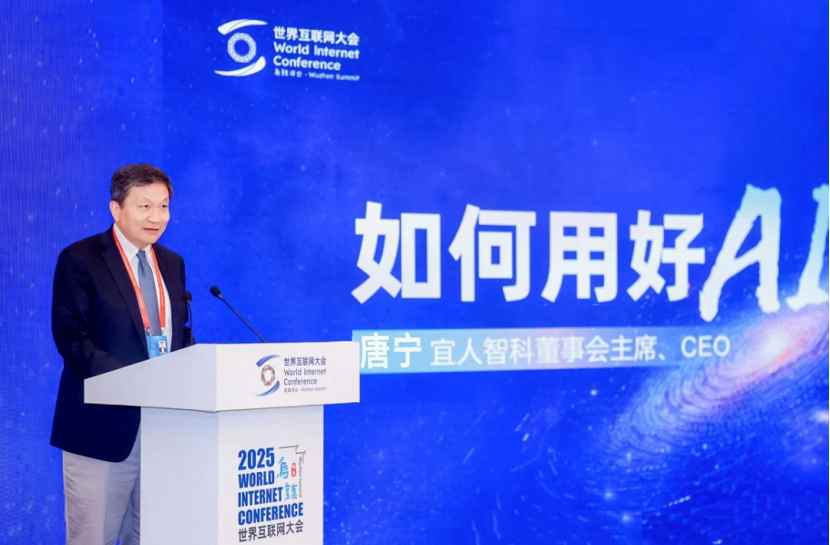
Core Viewpoint - Yiren Zhike (YRD.US) continues to drive steady business development through AI technology, emphasizing compliance and risk management in its operations [1][2]. Financial Performance - In Q3 2025, Yiren Zhike facilitated transaction amounts of 20.2 billion yuan and had a loan balance of 34.2 billion yuan, serving 14.01 million borrowers and 126,500 small businesses [2]. - The insurance business achieved a premium of 1.15 billion yuan, with a focus on optimizing the business structure and leveraging AI for customer acquisition and underwriting [2]. AI Strategy and Technological Advancements - The company upgraded its AI strategy, evolving AI from a tool to a collaborator, with enhancements to its "Zhiyu" model and the 2.0 version of the Magic Cube AI platform [3]. - The upgraded "Zhiyu" model improves internal operations and enables multi-agent collaboration, while the Magic Cube AI platform enhances marketing, content creation, quality inspection, and code security [3]. Industry Engagement and Recognition - Yiren Zhike showcased its technological capabilities at major industry events, including the Hong Kong FinTech Week and the World Internet Conference, discussing AI applications in finance [4]. - The company received the "Annual Corporate Social Responsibility Award" for its performance in technology innovation and social responsibility, ranking in the top 10% globally in ESG ratings [8]. Corporate Social Responsibility - Yiren Zhike actively engages in social responsibility initiatives, including consumer rights protection and data security, and has launched several industry self-regulation initiatives [10].


民营经济人士话高质量发展:科技创新是核心驱动力
Zhong Guo Xin Wen Wang· 2025-11-25 06:17
百年前,"状元"张謇在南通兴实业、办教育、建城镇,铸就"中国近代第一城"的传奇;百年后,一群来 自全国各地的"企二代"齐聚张謇企业家学院,展开一场关于企业家精神与高质量发展的时代对话。 11月18日至21日,由国家发展改革委联合中央统战部、全国工商联共同举办的新时代民营经济人士培育 赋能第六期培训班在南通举行,130余名年轻民营企业家代表参与学习。 上海港湾集团董事长首席助理鲍美萍坦言,"常听企业家感叹'做企业难',但我总建议他们来这里静心 学习。与张謇先生当年的创业艰辛相比,我们今天面对的困难其实不算什么。" "你若芬芳,蝴蝶自来。"谈及民营企业如何实现高质量发展,鲍美萍指出,科技创新是第一生产力,企 业必须牢牢掌握核心技术,才能让产品和服务在市场上立于不败之地。 上海港湾集团超九成业务布局海外,海外员工占比高达85%。"无论是海外还是国内市场,我们靠的都 是技术实力赢得项目、获得认可。"鲍美萍强调,科技创新离不开人才,公司研发团队专注于技术攻 关,其余事务均有专人服务,确保他们心无旁骛。 理想汽车相关负责人对此深表认同。自成立之初,理想汽车便将自主创新作为企业发展的核心引 擎。"掌握核心技术,是构建长期竞 ...
津上机床中国早盘涨超6% AI液冷接头订单有望成为后续业绩增长驱动力
Zhi Tong Cai Jing· 2025-11-25 02:20
Core Viewpoint -津上机床中国 reported strong mid-year performance with significant revenue and profit growth, driven by AI liquid cooling products and a favorable market position in the industry [1] Financial Performance - The total revenue for the first half of the year reached approximately 2.497 billion RMB, representing a year-on-year increase of about 26.2% [1] - Gross profit was around 863 million RMB, with a year-on-year growth of approximately 35.1% [1] - The overall gross margin improved by about 2.5 percentage points from approximately 32.1% in the same period last year to about 34.6% [1] - Net profit amounted to approximately 502 million RMB, reflecting a year-on-year increase of about 47.7% [1] - The company proposed an interim dividend of 0.60 HKD per ordinary share [1] Product and Market Insights - The performance of AI liquid cooling products was highlighted, with sales amounting to approximately 120 million RMB, accounting for 5.2% of domestic sales, serving as a key driver for revenue growth [1] - Direct cooling joints represent 80% of total market demand, with the company's main product, automatic lathes, having a significant competitive advantage in processing [1] - The processing technology for liquid cooling joint products is now largely established, and the industry has entered a phase of bulk equipment procurement [1] - From January to September 2025, the company has signed equipment orders with dozens of clients, representing about 5% of domestic order value, indicating strong future growth potential [1] - The industry is expected to become a major growth driver for the company's performance in the second half of the 2026 fiscal year and into the 2027 fiscal year [1]