Tsingtao Brewery(00168)

Search documents
“像极了交易中心的数据大屏”,买啤酒当“股”炒!被挤爆的“青岛啤酒交易所”能否形成长久消费模式?
Mei Ri Jing Ji Xin Wen· 2025-06-12 12:59
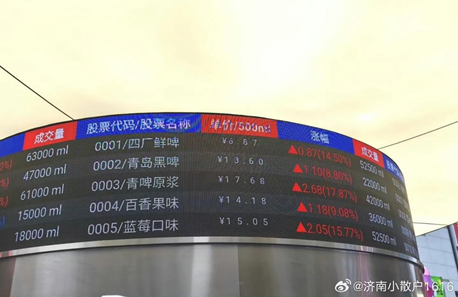
Core Viewpoint - The "Qingdao Beer Exchange" has become a popular attraction, merging the experience of drinking beer with stock trading, creating a unique consumer experience that drives sales and engagement during the beer season [2][4][10]. Group 1: Business Model and Consumer Engagement - The "Qingdao Beer Exchange" allows consumers to buy various types of beer, such as Qingdao Pure Draft and Qingdao White Beer, using a stock-like trading mechanism where prices fluctuate based on real-time demand [2][4]. - The exchange has seen significant foot traffic, with daily visitor numbers exceeding 10,000 during the Dragon Boat Festival, and beer sales reaching 120,000 milliliters in a single day [4][5]. - This innovative model combines elements of financial trading with consumer behavior, creating a social and engaging atmosphere that enhances the overall drinking experience [4][10]. Group 2: Market Trends and Consumer Preferences - The trend of "dopamine consumption" is emerging in the beverage market, with consumers seeking new and exciting experiences, such as the interactive nature of the beer exchange [6][10]. - A report indicates that diverse flavors, including tea and floral-infused beers, are gaining popularity among consumers, reflecting a shift towards more varied taste preferences [6]. - The beer industry is increasingly focused on attracting younger consumers by providing emotionally engaging experiences, which is essential for driving sales in a competitive market [8][10]. Group 3: Future Implications and Innovations - Experts suggest that the "Qingdao Beer Exchange" represents a new marketing model that could lead to a transformation in consumer experiences, moving from traditional consumption to emotionally-driven engagement [10]. - The concept of integrating trading-like experiences into beverage consumption could be replicated in various settings, potentially changing how consumers interact with beer and other alcoholic beverages [10].

2025年啤酒行业趋势洞察报告-艺恩数据
Sou Hu Cai Jing· 2025-06-11 07:16
Group 1: Current Status of the Beer Industry - The retail sales of tobacco and alcohol increased by 6.1% year-on-year from January to October 2024, indicating stable consumer demand [2][14] - China's beer production has shown steady growth since 2021, with low industry inventory levels in 2023 and strong confidence among distributors [2][17] - The market is highly concentrated, with five major brands (China Resources, Tsingtao, Yanjing, Chongqing, and Zhujiang) holding 70% of the market share, and Yanjing Beer reported a remarkable net profit growth of 94.3% in 2023 [2][17] Group 2: Trends in Beer Consumption Demand - Beer has gained significant popularity on social media, with a 260% year-on-year increase in social media mentions, leading the beverage industry [3][24] - The flavor profile of beer is diversifying, with white beer and fruit-flavored beers gaining traction, and the integration of tea flavors becoming a new trend [3][27] - The market for non-alcoholic and low-alcohol beers is rapidly growing, with a market value of 94.07 billion yuan in 2023, expected to increase its market share by 4% by 2027 [3][19] Group 3: Future Development Trends in the Beer Industry - Product innovation is on the rise, with a focus on integrating Chinese tea culture into beer, and packaging trends leaning towards functionality and sustainability [4][17] - Health-conscious products are emerging, such as zero-sugar and zero-alcohol beers, with brands like Suntory introducing vitamin D-infused non-alcoholic options [4][19] - Marketing strategies are evolving, with platforms like Douyin and Xiaohongshu being key for brand promotion, and live-streaming sales gaining traction [4][30]



山东上市公司4月传播影响力指数均值微涨,谁被挤出TOP10?
Sou Hu Cai Jing· 2025-06-11 06:38
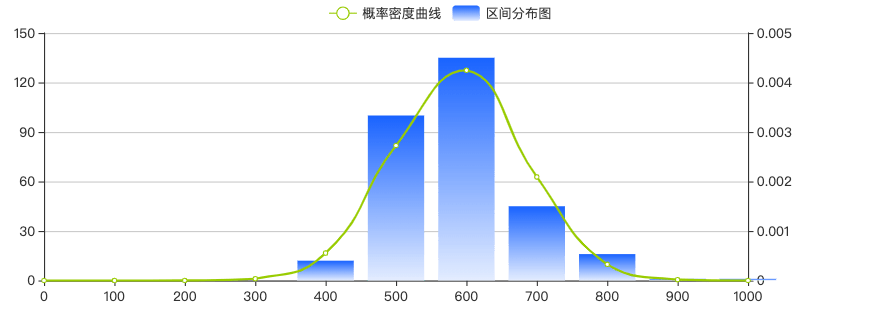
Core Insights - The overall brand communication effectiveness of Shandong listed companies showed improvement in April 2025, with an average INC index of 588.49, reflecting a 0.43% increase from March [1][3] - The company with the highest increase in ranking was Zhongchuang Logistics Co., Ltd., which rose by 156 positions, while Zhiyang Innovation Technology Co., Ltd. experienced the largest drop, falling by 132 positions [1] INC Index Overview - The INC index, or Internet Communication Influence Index, serves as a quantitative evaluation system for brand communication effectiveness in the digital age [2] - The index evaluates dimensions such as communication breadth, heat, online attention, and official website presentation [2] Industry Level Analysis - The average INC index of 588.49 indicates that most brands in the industry are maturing and gaining more attention, with both brand voice and social concern on the rise [3] - The skewness coefficient of the INC index is 0.77, indicating a moderate right-skewed distribution, where a few units exhibit outstanding communication influence, enhancing the overall industry INC level [3] Communication Breadth Analysis - The average communication breadth index for April was 2.73, categorized as "standard level" [5] - Eight companies achieved the highest level (5), including Qingdao Beer Co., Ltd. and Haier Smart Home Co., Ltd. [5] - A total of 68 companies reached level 4 ("upgraded level"), while 212 companies were at level 3 ("standard level") [5] Communication Heat Analysis - The average communication heat index was 2.36, also at the "standard level" [6] - Five companies reached the highest level (5), including Qingdao Beer Co., Ltd. and Haier Smart Home Co., Ltd. [7] - A total of 50 companies achieved level 4, indicating strong activity and high information engagement [7][8] Online Attention Analysis - The average online attention index was 1.6, categorized as "regional attention" [9] - 107 companies reached level 3 or above ("national attention"), including Qingdao Beer Co., Ltd. and Haier Smart Home Co., Ltd. [10] - 114 companies were at the lowest level ("sporadic attention"), indicating low brand awareness [10] Official Website Presentation Analysis - The average official website presentation index was 1.08, below the "standard level" [11] - Two companies achieved the highest level (5), including Haier Smart Home Co., Ltd. [12] - A total of 176 companies were at the lowest level ("deep water level"), indicating poor website visibility [12]



智通AH统计|6月10日
智通财经网· 2025-06-10 08:22
Core Insights - The article highlights the top and bottom AH share premium rates as of June 10, with Northeast Electric (00042) leading at a premium rate of 958.82% and Ningde Times (03750) at the bottom with -1.75% [1][2]. Group 1: Top AH Share Premium Rates - Northeast Electric (00042) has a premium rate of 958.82% with H-share priced at 0.255 HKD and A-share at 2.25 CNY [2]. - Hongye Futures (03678) follows with a premium rate of 271.39%, H-share at 3.390 HKD and A-share at 10.51 CNY [2]. - Andeli Juice (02218) ranks third with a premium rate of 268.02%, H-share at 15.980 HKD and A-share at 49.1 CNY [2]. Group 2: Bottom AH Share Premium Rates - Ningde Times (03750) has a premium rate of -1.75%, with H-share at 299.600 HKD and A-share at 245.75 CNY [2]. - WuXi AppTec (02359) has a premium rate of 5.05%, H-share at 74.000 HKD and A-share at 64.9 CNY [2]. - China Merchants Bank (03968) has a premium rate of 5.13%, H-share at 50.900 HKD and A-share at 44.67 CNY [2]. Group 3: Top Share Deviation Values - BYD Company (01211) leads with a deviation value of 202.33%, H-share at 135.600 HKD and A-share at 353.13 CNY [2]. - Longpan Technology (02465) follows with a deviation value of 30.49%, H-share at 6.910 HKD and A-share at 15.33 CNY [2]. - Yanzhou Coal Mining (01171) has a deviation value of 11.04%, H-share at 8.250 HKD and A-share at 12.79 CNY [2]. Group 4: Bottom Share Deviation Values - China Shipbuilding Defense (00317) has the lowest deviation value at -46.55%, H-share at 13.360 HKD and A-share at 24.9 CNY [3]. - Zhejiang Shibao (01057) follows with -37.20%, H-share at 4.650 HKD and A-share at 11.93 CNY [3]. - Junshi Biosciences (01877) has a deviation value of -35.39%, H-share at 24.600 HKD and A-share at 37 CNY [3].


沪深300食品饮料指数报23349.84点,前十大权重包含青岛啤酒等
Jin Rong Jie· 2025-06-10 08:20
Core Viewpoint - The Shanghai Composite Index opened high but closed lower, with the CSI 300 Food and Beverage Index reported at 23,349.84 points [1] Group 1: Index Performance - The CSI 300 Food and Beverage Index has decreased by 5.27% over the past month, 2.96% over the past three months, and 4.25% year-to-date [2] Group 2: Index Composition - The CSI 300 Index is categorized into 11 primary industries, 35 secondary industries, over 90 tertiary industries, and more than 200 quaternary industries, with a base date of December 31, 2004, and a base point of 1,000.0 [2] - The top ten weights in the CSI 300 Food and Beverage Index are: Kweichow Moutai (50.79%), Wuliangye (13.2%), Yili (9.98%), Shanxi Fenjiu (4.72%), Luzhou Laojiao (4.66%), Haitian Flavoring (3.82%), Dongpeng Beverage (3.78%), Yanghe Brewery (2.19%), Jinshiyuan (1.75%), and Tsingtao Brewery (1.41%) [2] Group 3: Market Distribution - The market distribution of the CSI 300 Food and Beverage Index shows that the Shanghai Stock Exchange accounts for 76.26%, while the Shenzhen Stock Exchange accounts for 23.74% [2] Group 4: Industry Breakdown - The industry composition of the CSI 300 Food and Beverage Index includes: Baijiu (78.63%), Dairy Products (9.98%), Condiments and Cooking Oils (4.81%), Soft Drinks (3.78%), Beer (1.41%), and Meat Products (1.40%) [3] Group 5: Sample Adjustment - The index samples are adjusted biannually, with adjustments implemented on the next trading day following the second Friday of June and December each year [3] - Weight factors are generally fixed until the next scheduled adjustment, with temporary adjustments made in response to changes in the CSI 300 Index samples [3]



2025酒饮行业细分及竞争格局研究报告-酒业一线
Sou Hu Cai Jing· 2025-06-09 09:52
Industry Overview - The Chinese alcoholic beverage market is nearing 2 trillion yuan, with an expected compound annual growth rate (CAGR) of 7.1% from 2025 to 2030, reaching 1.86 trillion yuan [1][21][22] - Baijiu remains the core category, maintaining a market share of 65%-68%, with projected sales revenue of 950 billion yuan by 2025 [1][26] - The beer market is experiencing a trend towards premiumization and craft brewing, with a production volume of 35.687 million kiloliters in 2022, showing a 1.1% year-on-year increase [1][28] Market Segmentation - The production capacity and revenue of sauce-flavored baijiu are expected to reach 1.1 million kiloliters and 250 billion yuan, respectively [1] - The wine market is stabilizing after facing import pressures, with domestic wine quality improvements driving structural adjustments [1] - Emerging low-alcohol beverages, such as pre-mixed cocktails, are expected to grow at an average annual rate of 12.3% from 2025 to 2030, driven by female consumers and Generation Z [1] Consumer Characteristics - The primary consumer demographic consists of individuals born in the 1980s and 1990s, with a notable increase in demand for low-alcohol beverages among women [1][32] - Online sales channels, particularly live-streaming e-commerce, are experiencing rapid growth, with a 210% year-on-year increase in gross merchandise value (GMV) for alcoholic beverages in Q1 2025 [1] - Consumers are increasingly focused on quality, taste, and packaging, with a rising market share for low-sugar and low-alcohol products, projected to reach 22% by 2025 [1] Competitive Landscape - Leading companies like Moutai and Wuliangye dominate the high-end market through cultural marketing and product diversification [2] - Regional brands focus on local market penetration, while emerging brands leverage innovative products and online marketing to attract younger consumers [2] - The industry is shifting from price competition to brand and channel differentiation, with a focus on offline channel depth for leading companies and online and instant retail for new brands [2] Technological Innovations - Trends include intelligent brewing, green processes, and blockchain traceability, with Moutai achieving a 65% digitalization rate in its channels [2] - The penetration rate of online alcohol sales reached 32% in 2023, with live-streaming e-commerce sales increasing by 87% year-on-year [2] Policy Environment - Tax adjustments and environmental regulations are prompting companies to transition towards standardization and sustainability, with smaller enterprises facing cost pressures [2]
从“青岛啤酒交易所”爆红看文旅产业创新
Zheng Quan Ri Bao Zhi Sheng· 2025-06-08 17:11
Core Insights - The "Qingdao Beer Exchange" has gained popularity by integrating financial pricing logic into the beer consumption experience, attracting over 10,000 daily visitors and achieving a daily sales volume of 1.2 million milliliters [1][2]. Group 1: Consumption Upgrade Trends - The dynamic pricing model transforms beer cups into "investment targets," with prices fluctuating every 10 minutes based on real-time sales, allowing for daily price increases of up to 20% for popular items, effectively balancing supply and demand [2]. - The initiative revitalizes the century-old Qingdao Beer brand, appealing to Generation Z by modernizing its image and ensuring consistent quality through partnerships with local distributors [2]. - The experience emphasizes emotional value, with consumers engaging in a fun and immersive way to enjoy Qingdao beer, leading to a significant increase in foot traffic and sales in surrounding businesses during peak periods [2][3]. Group 2: Digital Transformation of Cultural Spaces - The revitalization of the Qingdao Taidong Pedestrian Street is part of a broader initiative to transform historical commercial areas into digital hubs, creating a "consumption ecosystem" that integrates various entertainment and cultural offerings [3]. - As Generation Z becomes the main consumer group, the competition in the urban tourism industry shifts from mere visual appeal to the depth of experiential engagement, indicating a potential evolution in the industry [3].
青岛啤酒(菏泽):构建多功能交互于一体的啤酒节行业新标杆
Qi Lu Wan Bao Wang· 2025-06-07 02:52
Core Viewpoint - The Qingdao Beer Festival, as a significant brand event for Qingdao Beer, is set to innovate and enhance its offerings in 2025, focusing on immersive experiences and cultural engagement [3][4]. Investment and Innovation - The total investment for the event has increased to 4.8 million yuan, emphasizing immersive scene construction, smart equipment upgrades, and quality service optimization [3][4]. - The festival will feature a "Time Corridor" theme exhibition and iconic visual scenes, aiming to set a new benchmark in the beer festival industry [3]. Event Features - The festival will introduce innovative elements such as a beer greenhouse encyclopedia area and a high-end craft beer tasting area, transitioning from a "drinking carnival" to a "cultural feast" [4]. - It will be the largest and most comprehensive Qingdao Beer Festival in Shandong Province, covering nearly 9,000 square meters and utilizing VR and AR technologies to create an engaging beer culture theme space [4]. Target Audience and Economic Impact - The event aims to attract over 100,000 visitors, significantly boosting regional consumption potential and invigorating the local economy by linking various industries such as dining, accommodation, transportation, and retail [5]. - Approximately 500 temporary jobs will be created, contributing to local residents' income and achieving a win-win situation for economic and social benefits [5].
精酿战局未歇 汽水烽烟又起啤酒巨头跨界开辟新战场
Zhong Guo Zheng Quan Bao· 2025-06-06 21:00
Core Insights - The craft beer trend is reflecting consumer upgrades, with over 24,000 craft beer-related companies in China, driven by personalized flavor and quality experiences [1][3][4] - Major beer companies are entering the craft beer market to capture high-end segments, while also exploring non-alcoholic beverage markets through a "beer + soda" strategy [1][6][8] Industry Overview - The craft beer market in China has seen rapid expansion, with new registrations increasing from 3,111 in 2021 to 3,832 in 2024, indicating a growing interest in craft beer [3] - The global craft beer market was valued at approximately 728 billion yuan in 2022, with a projected compound annual growth rate (CAGR) of 11.2%, expected to exceed 1.7 trillion yuan by 2030 [3] Market Dynamics - Craft beer is characterized by lower production volumes and more refined brewing processes compared to industrial beer, appealing to consumers seeking unique flavors and higher quality [4][5] - Major beer companies like Qingdao Beer and Yanjing Beer are launching craft beer sub-brands to enhance their product offerings and address the high-end market demand [5][6] Strategic Initiatives - Companies are leveraging their established distribution channels and supply chain management to expand into the non-alcoholic beverage market, particularly in the soda segment [6][7] - Yanjing Beer has introduced a new soda product, "Beistejia Bing," as part of its "beer + beverage" marketing strategy, aiming for long-term market penetration [7][8] Future Outlook - The craft beer segment is expected to continue growing, with companies focusing on expanding their product lines and enhancing brand recognition in both craft beer and non-alcoholic beverages [6][8]
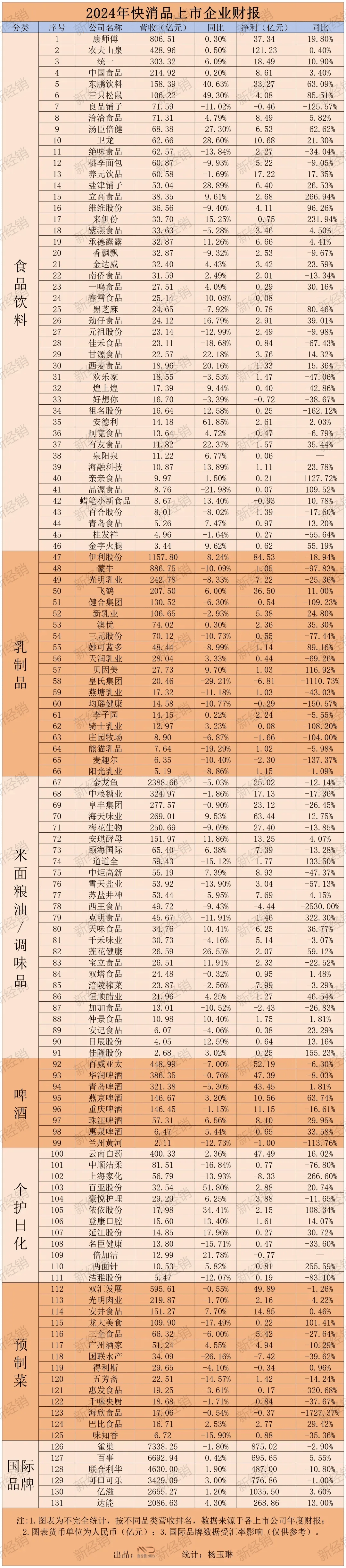
雀巢、康师傅、伊利、海天等131家快消品上市公司发布年报,63家营收增长,68家营收下滑!
Sou Hu Cai Jing· 2025-06-06 10:07
Core Insights - In 2024, China's total retail sales of consumer goods reached 48.79 trillion yuan, growing by 3.5%, marking the first time it fell below the GDP growth rate of 5% [1] - The fast-moving consumer goods (FMCG) industry is transitioning into a phase dominated by "stock competition," focusing on efficiency improvement, brand optimization, and structural adjustments [1] FMCG Company Performance - **Master Kong**: Achieved revenue of 806.51 billion yuan, a slight increase of 0.30%, with net profit rising by 19.80% to 37.34 billion yuan [2][6] - **Nongfu Spring**: Reported revenue of 428.96 billion yuan, up by 0.50%, and net profit of 121.23 billion yuan, a marginal increase of 0.40% [2][6] - **Uni-President**: Generated revenue of 303.32 billion yuan, a growth of 6.09%, with net profit of 18.49 billion yuan, increasing by 10.90% [2][6] - **China Foods**: Recorded revenue of 214.92 billion yuan, up by 0.20%, and net profit of 8.61 billion yuan, a growth of 3.40% [2][6] - **Eastroc Beverage**: Achieved significant growth with revenue of 158.39 billion yuan, up by 40.63%, and net profit of 33.27 billion yuan, increasing by 63.09% [2][6] - **Three Squirrels**: Reported revenue of 106.22 billion yuan, a substantial increase of 49.30%, with net profit rising by 85.51% to 4.08 billion yuan [2][6] Industry Trends - The FMCG sector is experiencing a shift towards efficiency and brand optimization as the era of rapid market growth driven by demographic dividends comes to an end [1] - Companies are adapting to market changes through product innovation, structural optimization, and brand rejuvenation to establish new growth curves and core competitiveness [13] - The beverage segment is seeing strong performance from Nongfu Spring's tea drinks, which have become a major revenue source despite challenges in the bottled water segment [8][13] - The snack segment is witnessing varied performance, with companies like Qinqin Foods achieving profitability through export and OEM manufacturing, while others like Liuyifei face challenges due to strategic adjustments [13] Dairy Industry Performance - **Yili Group**: Maintained its position as Asia's leading dairy company with revenue of 1,157.80 billion yuan, despite a decline of 8.24% [15][16] - **Mengniu Dairy**: Experienced a revenue drop of 10.09% to 886.75 billion yuan, with net profit significantly declining by 97.83% [15][16] - **Bright Dairy**: Reported revenue of 242.78 billion yuan, down by 8.33%, and net profit of 7.22 billion yuan, a decrease of 25.36% [15][16] - The dairy industry is facing challenges with supply-demand imbalances and declining consumer demand, leading to revenue declines for many traditional dairy giants [18]