GEELY AUTO(00175)

Search documents
吉利汽车(00175) - 翌日披露报表
2026-01-21 08:35
FF305 翌日披露報表 (股份發行人 ── 已發行股份或庫存股份變動、股份購回及/或在場内出售庫存股份) 表格類別: 股票 狀態: 新提交 公司名稱: 吉利汽車控股有限公司 呈交日期: 2026年1月21日 如上市發行人的已發行股份或庫存股份出現變動而須根據《香港聯合交易所有限公司(「香港聯交所」)證券上市規則》(「《主板上市規則》」)第13.25A條 / 《香港聯合交易所有限公司GEM證券 上市規則》(「《GEM上市規則》」)第17.27A條作出披露,必須填妥第一章節 。 | 第一章節 | | | | | | | | | --- | --- | --- | --- | --- | --- | --- | --- | | 1. 股份分類 | 普通股 | | 股份類別 不適用 | | 於香港聯交所上市 | 是 | | | 證券代號 (如上市) | 00175 | 說明 | | | | | | | 多櫃檯證券代號 | 80175 | RMB 說明 | | | | | | | A. 已發行股份或庫存股份變動 | | | | | | | | | | | | 已發行股份(不包括庫存股份)變動 | | 庫存股份變動 | ...
向天拓路:沿海城市台州的“低空”答卷
Xin Lang Cai Jing· 2026-01-21 07:05
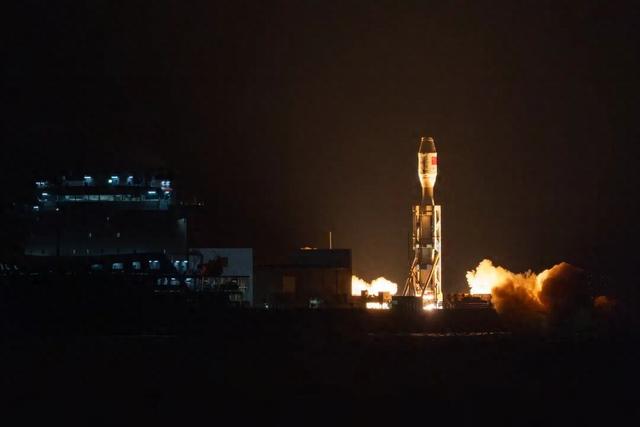
Core Viewpoint - The establishment of the Zhejiang private "star chain" is marked by the successful launch of 64 satellites, achieving global communication coverage (excluding the polar regions) and supported by the Geely Satellite Super Factory in Taizhou Bay New Area, which innovates the aerospace industry with automotive manufacturing principles [1][3]. Industry Development - By 2025, Taizhou's low-altitude economy has developed a three-dimensional structure, with Taizhou Bay New Area leading as the only pilot zone for future aerospace industries and low-altitude economic integration in Zhejiang Province, ranking second nationally in industrial activity [3][4]. - The "one star, four machines" industrial concept initiated in 2016 has laid the foundation for Taizhou's aerospace ambitions, attracting key players like the China Aerospace Aerodynamics Research Institute and Geely's Taizhou Starry Sky Intelligent Technology Co., Ltd. [4][5]. Ecosystem and Collaboration - The establishment of a comprehensive industrial ecosystem includes partnerships with leading enterprises, resulting in a strategic ecological co-construction project worth billions in the special aircraft industry [4][5]. - By November 2025, seven projects with a total investment of 2.64 billion yuan were signed, enhancing the full industrial chain from manufacturing to operational services [5]. Technological Advancements - The successful launch of Geely's satellites and other significant projects like the "Tai Zhou" computing satellite and the "Blue Carbon No. 1" marine satellite highlight the region's advancements in aerospace technology [7]. - The integration of drones in various sectors, including agriculture and emergency services, demonstrates the practical applications of low-altitude logistics, significantly improving response times and operational efficiency [8][10]. Future Goals and Investments - Taizhou aims to establish itself as a national-level low-altitude economic comprehensive industrial demonstration zone, targeting an industry scale of 18 billion yuan by 2026 and 30 billion yuan by 2030 [13]. - The region has set up a low-altitude economic industry fund with an initial scale of 1 billion yuan, alongside various other funds to support the entire industrial cycle [13].

吉利银河V900上市 限时指导价26.98万元起
Zhong Guo Zhi Liang Xin Wen Wang· 2026-01-21 05:10
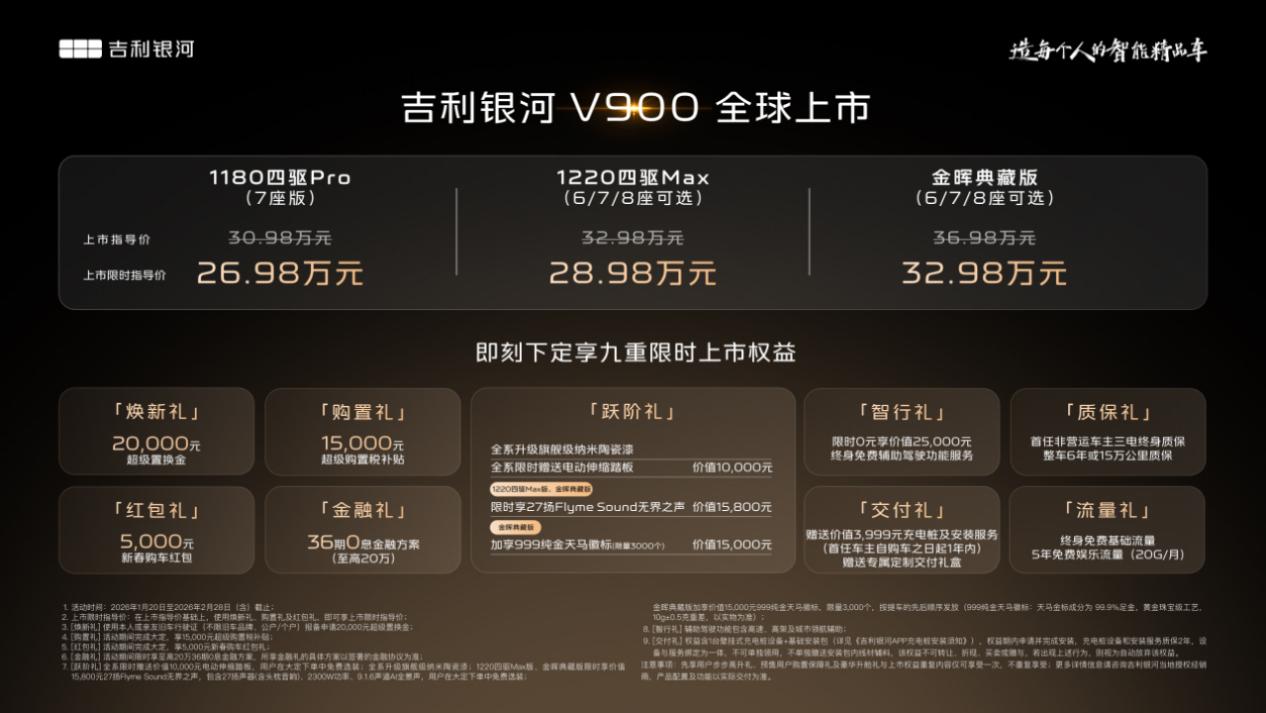
Core Viewpoint - The launch of the Galaxy V900, an AI-driven luxury MPV by Geely, aims to meet diverse family needs with a focus on comfort, safety, and intelligent features, while also enhancing the brand's product lineup to cover mainstream family demands in China [18]. Product Features - The Galaxy V900 is priced between 269,800 to 329,800 yuan and offers various purchasing incentives through multiple platforms [1] - It features a spacious interior with a 91.8% usable space rate and a length of 3.97 meters, providing over 1000mm of legroom in both the second and third rows [4] - The vehicle includes a rear trunk space of 1100L, capable of accommodating 15 pieces of 20-inch luggage [5] - Equipped with 11-layer cloud-like SPA seats, the V900 offers Nappa leather, heating, ventilation, and massage functions, along with a 27-speaker sound system for an immersive audio experience [7] Design and Aesthetics - The design philosophy of the Galaxy V900 combines international aesthetics with Eastern expressions, featuring elements inspired by natural water patterns and cultural symbols [9] - The vehicle's luxurious design aims to resonate with diverse cultural backgrounds while maintaining a high standard of aesthetic appeal [9] Performance and Safety - The V900 is equipped with a smart dual-motor all-wheel-drive system, delivering a peak power of 340kW and a torque of 523N·m, achieving 0-100 km/h in 6.5 seconds [11] - It incorporates a high-strength steel structure with a 76.6% high-strength steel ratio and advanced safety features, including multiple airbags and a robust chassis design [13][14] Intelligent Features - The Galaxy V900 features a super AI range extension system with a thermal efficiency of 47.26%, capable of generating 3.77 kWh of electricity from 1 liter of fuel [16] - The AI-driven cockpit includes an emotional intelligent assistant that can understand and remember user preferences, enhancing the driving experience [16] - The vehicle supports advanced parking features, capable of recognizing over 300 types of parking spaces and facilitating efficient parking [16] Market Positioning - The launch of the Galaxy V900 completes Geely's product range from compact cars to luxury MPVs, positioning the brand to meet the needs of mainstream Chinese families and laying a solid foundation for future growth [18]
瞄准家庭出行场景 吉利银河V900携AI增程技术上市
Zheng Quan Ri Bao Wang· 2026-01-21 04:58
Core Viewpoint - The launch of the Geely Galaxy V900 marks a significant entry into the high-end family MPV market, emphasizing a multi-scenario family experience and comfort for all passengers [1][4]. Group 1: Product Features - The Geely Galaxy V900 offers three versions and emphasizes a spacious interior with a room rate of 91.8% and an effective interior length of 3.97 meters [2]. - The vehicle features a maximum trunk capacity of 1100 liters, catering to family travel and cargo needs [2]. - Comfort is enhanced with 11-layer cloud sensation SPA seats, a 27-speaker Flyme Sound audio system, and various entertainment options for long journeys [2]. Group 2: Design and Aesthetics - The design philosophy combines "international aesthetics with Eastern expression," featuring a grille design inspired by "water rhythm" and a light group that reflects "arch bridge moon" motifs [3]. - The design aims for cultural inclusivity, ensuring broad aesthetic recognition across different markets [3]. Group 3: Performance and Safety - The V900 is equipped with a dual-motor all-wheel-drive system, delivering a peak power of 340 kW and a peak torque of 523 N·m, with a 0-100 km/h acceleration time of 6.5 seconds [3]. - The vehicle's body structure consists of 76.6% high-strength steel, enhancing safety, particularly for rear passengers [3]. Group 4: Intelligent Features - The V900 incorporates a super AI range extension system with a thermal efficiency of 47.26%, achieving a comprehensive range of over 1200 kilometers [4]. - It features an AI interaction experience with emotional recognition and memory capabilities, along with advanced parking assistance functions [4]. Group 5: Market Positioning - The launch of the Galaxy V900 signifies Geely Galaxy's strategic positioning in the MPV market, reflecting the brand's deepening understanding of high-end family vehicles [4].
一代“神车”本田飞度跌破7万元上市,但这个市场早已不属于它
Xin Lang Cai Jing· 2026-01-21 04:07
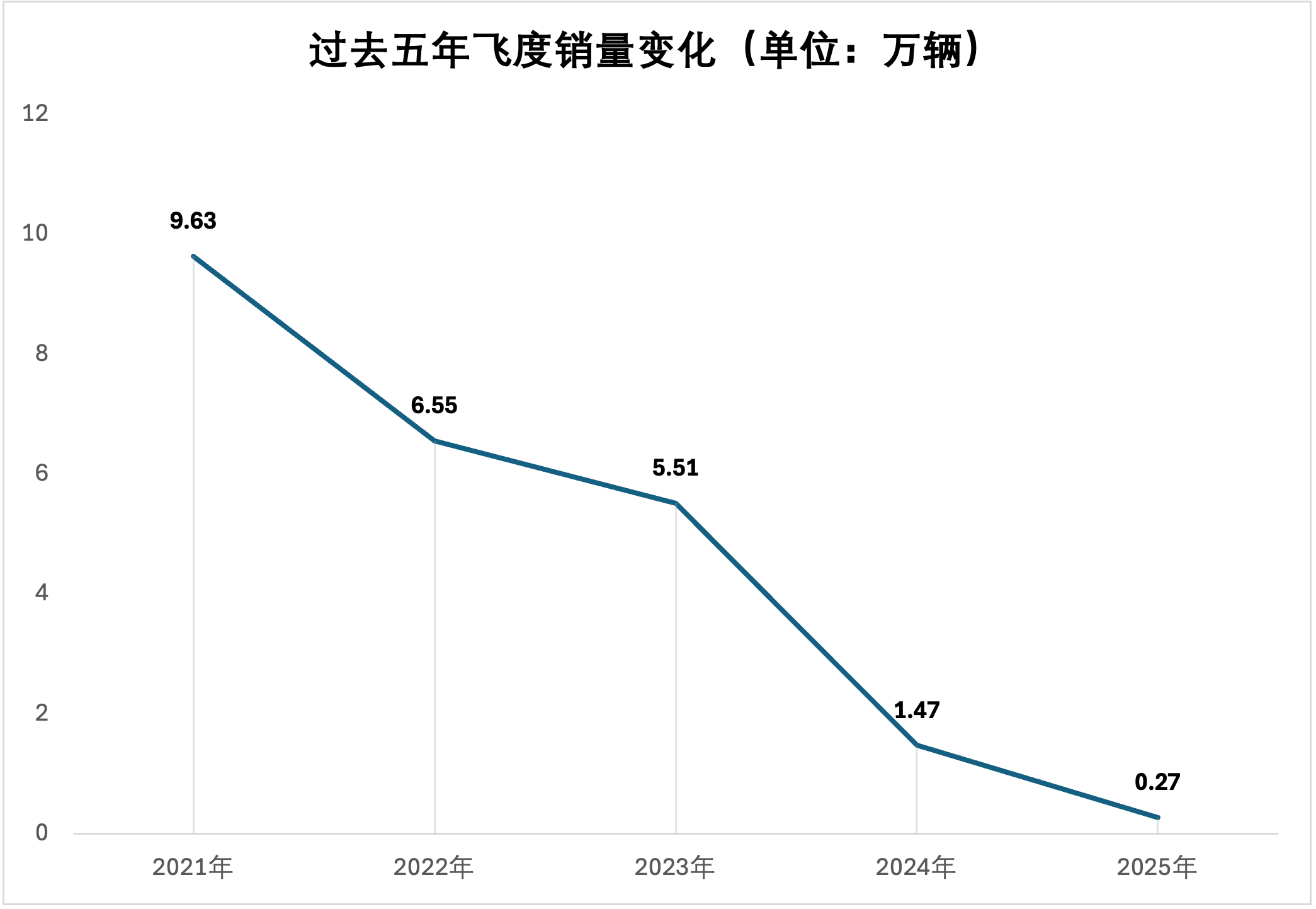
Core Viewpoint - Honda Fit is attempting to regain market attention through price reductions and limited marketing strategies, launching a new model priced at 66,800 yuan with a limited release of 3,000 units, despite only selling 2,695 units in 2025, which is less than the new model's release quantity [1][2] Group 1: Honda Fit's Market Position - The new Honda Fit has not changed in body size or power parameters compared to the 2024 model, with updates primarily in interior features, including a new 10.1-inch central control screen and standard Bluetooth and CarPlay functions [1] - The previous market dominance of the Fit was due to its competitive advantages in the fuel vehicle era, offering better interior space and fuel economy in the 100,000 yuan price range, making it a preferred choice for young consumers [1] - In 2018, the Fit achieved peak annual sales of 129,200 units in China, but by 2024, its sales plummeted over 70% to 14,700 units, dropping to eighth place in its segment [2] Group 2: Competitive Landscape - BYD has quickly filled the market gap left by the declining Fit, with its Dolphin and Seagull models dominating the small car market, achieving sales of 453,600 units for the Seagull in 2024, nearly double that of the second-place Wuling Bingo [4] - In 2025, Geely's Star Wish surpassed BYD's Seagull with sales of 465,800 units, becoming the new leader in the small car market and the overall sales champion in the Chinese passenger car market [4][5] - The small car market is highly concentrated, with only two to three models actively competing, making it crucial for brands to maintain a presence in consumer purchase intentions [5] Group 3: Challenges for Other Brands - Great Wall's Ora brand has seen a decline in market share, with sales dropping from 73,600 units in 2023 to 29,300 units in 2025, due to a strategic focus on profitability and reduced investment in the Ora brand [6] - The new Ora 5 model, launched after a three-year hiatus, is positioned as a compact SUV with a higher price range of 99,800 to 133,800 yuan, moving away from the small car segment [7] - The shift in branding strategy for Ora, moving from a female-focused identity to a broader market appeal, raises questions about the effectiveness of this change in a competitive environment [7] Group 4: Emerging Trends in the Small Car Market - The market for premium small cars, represented by brands like BMW MINI and NIO's Firefly, focuses on design and brand positioning rather than scale, achieving higher price points and brand premiums [10] - NIO's Firefly has captured 61% of the high-end small car market share, with plans for international expansion, including a launch in Singapore [11] - In contrast, Smart's sales have declined from 42,300 units in 2023 to 30,800 units in 2025, as its product strategy lacks focus, failing to maintain its classic small car appeal in the electric era [12] Group 5: Policy and Market Dynamics - The new subsidy policies for electric vehicles will limit the financial incentives for low-priced models, making it essential for companies to compete based on real value and product strength [13] - The small car market is expected to face overall declines in 2026 due to the dual pressures of subsidy reductions and tax changes, necessitating a balance between sales volume and profitability for all participants [13]


降9成关税,又给电车补贴,加德对华贸易转机利好谁?
3 6 Ke· 2026-01-21 03:10
Core Insights - The global automotive industry is experiencing significant growth in exports, particularly from China, with projections indicating a 21.1% increase in vehicle exports by 2025, reaching 7.098 million units [1] - Germany and Canada have introduced favorable policies to boost electric vehicle sales, which are expected to benefit Chinese automotive exports significantly [3][5] Group 1: Market Growth and Export Opportunities - China's automotive exports are projected to reach 8.32 million units in 2025, a 30% increase year-on-year, with an export value of $142.4 billion [1] - In Germany, the introduction of a €3 billion subsidy plan aims to support the purchase of approximately 800,000 electric vehicles, with a focus on low to middle-income groups [3] - Chinese automakers achieved a record sales volume of 68,700 units in Germany in 2025, marking a 120.4% year-on-year increase, with expectations to reach 100,000 units by 2026 [3] Group 2: Policy Changes and Strategic Shifts - Canada has reduced tariffs on Chinese electric vehicles from 106.1% to 6.1%, establishing an import quota that will increase from 49,000 units in the first year to approximately 70,000 units by the fifth year [5] - The Canadian government plans to collaborate with Chinese companies to develop local electric vehicles, aiming to become the first North American country to achieve this [5] - Germany's subsidy policy is seen as a response to domestic market challenges and aims to stimulate competition and innovation within the automotive sector [10][12] Group 3: Competitive Landscape and Challenges - The Canadian automotive industry faces a significant gap in electric vehicle production, with no local manufacturers capable of producing over 50,000 units annually, leading to a reliance on imports [6] - Germany's automotive manufacturers are under pressure due to declining market shares and the need for innovation, with predictions of up to 90,000 job losses by 2030 if current trends continue [12] - The introduction of subsidies in Germany is expected to increase the registration of electric vehicles by 17% in 2026, with Chinese brands playing a crucial role in achieving this target [12][20] Group 4: Future Prospects and Strategic Moves - The penetration rate of Chinese electric vehicles in the German market is projected to exceed 11% by the third quarter of 2025, with further growth anticipated following the subsidy policy [20] - Chinese automakers like BYD and Geely are positioned to capitalize on the new market opportunities in Canada and Germany, with plans for local production and strategic partnerships [15][17] - The overall trend indicates a shift towards value competition over protectionism, highlighting the importance of technological and cost advantages in the global automotive market [20]

智驾与汽车Agent进展
2026-01-21 02:57
Summary of Key Points from Conference Call Industry Overview - The conference call discusses advancements in the automotive industry, particularly focusing on AI integration in vehicles and the development of autonomous driving technologies. The key players mentioned include traditional automakers and tech companies like Xiaomi, Huawei, and Nvidia. Core Insights and Arguments 1. **AI Cabin Assistants**: AI cabin assistants enhance user experience by providing immersive interactions and can increase purchase intent by 10%-15% when compared to traditional systems, with consumers willing to pay an additional 3,000 to 5,000 yuan for such features [1][5]. 2. **Full-Ecosystem Companies**: Companies like Xiaomi and Huawei have a competitive edge in automotive smart experiences due to their superior UI, UE, and UX design capabilities, allowing them to attract consumers more effectively than traditional automakers [1][7]. 3. **Integration of AI and Autonomous Driving**: The fusion of AI with autonomous driving technology is crucial for the development of Robot Taxis. Technologies such as VRA, VRM, and WM enhance environmental perception and decision-making capabilities [1][8]. 4. **Challenges in Advancing Autonomous Levels**: Transitioning from L2+ to L4/L5 remains challenging due to complex real-world environments and stringent legal regulations, which currently recognize only human drivers as legal operators [1][11]. 5. **Self-Developed Chips**: Automakers are increasingly developing their own chips to enhance algorithm and chip capabilities, reducing reliance on third-party suppliers and strengthening their competitive position [2][13]. 6. **Market Competition**: The competition among autonomous driving solution providers has intensified, with traditional automakers having advantages in ADAS/L2/L3 levels, while new entrants excel in Robot Taxi operations [2][22]. 7. **Consumer Preferences**: Consumers currently prefer hardware over software in vehicle purchases, although there is a growing willingness to pay for software features [20][21]. 8. **Platformization of Solutions**: There is a trend towards platformization among autonomous driving solution providers, which may lead to the elimination of smaller players in the market [18][19]. 9. **Potential for New Applications**: Automakers are exploring new directions such as AI glasses and embodied intelligent robots, which align with the evolving consumer needs for immersive experiences in vehicles [24][25]. Additional Important Content - **Market Dynamics**: The emergence of large models in AI is reshaping the competitive landscape, leading to a "survival of the fittest" scenario among autonomous driving firms [12]. - **Regulatory Environment**: The current legal framework poses significant barriers to the widespread adoption of higher-level autonomous driving technologies [11]. - **Consumer Sentiment**: While there is a strong interest in smart driving technologies, actual purchasing intent remains lower in markets outside of China, particularly in Europe [21]. - **Long-Term Commercialization**: The commercialization of embodied robots is expected to take 5 to 10 years, with many current projects still in experimental stages [28]. This summary encapsulates the key points discussed in the conference call, highlighting the advancements, challenges, and market dynamics within the automotive industry.
限时指导价26.98万元起,吉利银河V900正式上市
Bei Jing Shang Bao· 2026-01-21 02:29
Core Viewpoint - Geely's Galaxy V900 has officially launched with a price range of 269,800 to 329,800 yuan, targeting family travel scenarios [1] Group 1: Product Features - The Galaxy V900 offers a spacious interior with an effective length of 3.97 meters and a "3,000+" space layout [1] - It is equipped with 11-layer cloud sensation SPA seats, a 27-speaker audio system, a cooling and heating box, and a library-level quiet cabin [1] - The vehicle features an intelligent dual-motor all-wheel drive system, with chassis tuning by the Lotus team [1] Group 2: Technology and Innovation - The Galaxy V900 is powered by an AI range extension system and features the Flyme Auto 2 intelligent cockpit [1]

41家港股公司回购 小米集团-W回购1.96亿港元
Zheng Quan Shi Bao Wang· 2026-01-21 01:49
Summary of Key Points Core Viewpoint - On January 20, 41 Hong Kong-listed companies conducted share buybacks, totaling 25.12 million shares and an aggregate amount of HKD 442 million [1]. Group 1: Company Buyback Details - Xiaomi Group-W repurchased 5.5 million shares for HKD 196 million, with a highest price of HKD 35.860 and a lowest price of HKD 35.460, bringing its year-to-date buyback total to HKD 1.8 billion [1]. - Sunny Optical Technology repurchased 1.4 million shares for HKD 88.61 million, with a highest price of HKD 64.300 and a lowest price of HKD 62.550, accumulating HKD 625 million in buybacks this year [1]. - Geely Automobile repurchased 3.79 million shares for HKD 63.63 million, with a highest price of HKD 16.950 and a lowest price of HKD 16.690, totaling HKD 438 million in buybacks year-to-date [1]. Group 2: Buyback Amount Rankings - The highest buyback amount on January 20 was from Xiaomi Group-W at HKD 196 million, followed by Sunny Optical Technology at HKD 88.61 million, and Geely Automobile among the top [1]. - In terms of share quantity, Xiaomi Group-W led with 5.5 million shares repurchased, followed by Geely Automobile with 3.79 million shares, and First Holdings with 2.5 million shares [1].


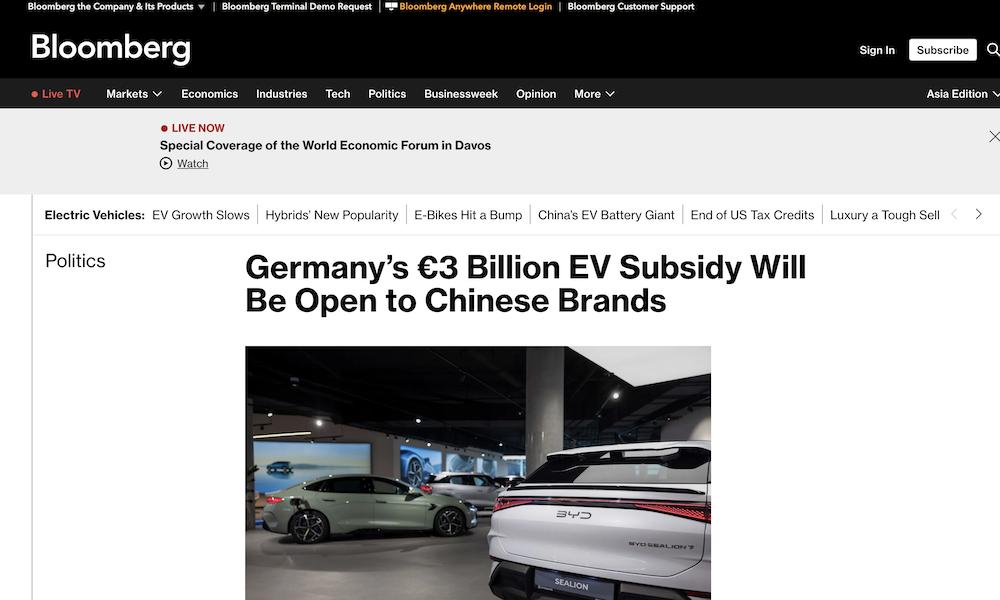
重磅利好,中国电车能领德国补贴了,两国为新能源出海开政策绿灯
3 6 Ke· 2026-01-21 01:39
Core Viewpoint - Recent policy changes in Germany and Canada are creating favorable conditions for Chinese electric vehicle manufacturers to expand internationally, particularly in the European and North American markets [1][2][5]. Group 1: Germany's Policy Changes - The German government has announced a €3 billion (approximately ¥24.5 billion) subsidy plan for electric vehicles, providing up to €6,000 (approximately ¥49,000) for households purchasing new electric cars, which is open to all manufacturers, including Chinese brands [1][2]. - This subsidy aims to boost electric vehicle sales and support the automotive industry after a significant drop in demand following the end of previous subsidy programs [5]. - The German Federal Environment Minister emphasized the need to embrace competition rather than impose restrictions, indicating a welcoming stance towards Chinese automotive manufacturers [5]. Group 2: Canada's Policy Adjustments - Canadian Prime Minister Justin Trudeau announced the cancellation of a 100% tariff on Chinese electric vehicles and introduced an annual quota of 49,000 vehicles that will benefit from a 6.1% most-favored-nation tariff rate [1][8]. - This quota corresponds to the export volume from China to Canada before the imposition of additional tariffs, with expectations for gradual increases over the years [10]. - Trudeau highlighted China's undeniable advantages in the electric vehicle sector, aiming to learn from innovative partners to enhance Canada's competitive automotive industry [10]. Group 3: Export Growth of Chinese Automakers - In 2025, China's total automobile exports are projected to reach 8.32 million units, marking a 30% year-on-year increase, continuing a five-year growth trend [11]. - The export value is expected to grow from $34.5 billion (approximately ¥240.1 billion) in 2021 to $142.4 billion (approximately ¥991 billion) in 2025, reflecting a 21% increase [11]. - Notably, the export volume of new energy vehicles is anticipated to double, reaching 2.615 million units in 2025, with significant contributions from major automakers like BYD and Chery [11][16]. Group 4: Performance of Major Chinese Automakers - Chery is expected to lead in export volume in 2025, with 1.34 million units, while BYD's exports are projected to reach 1.05 million units, a 144% increase from the previous year [16][18]. - SAIC Group is also set to export 950,000 units, leveraging its joint ventures and brand portfolio [18]. - New entrants like Leap Motor and Xpeng are showing remarkable growth, with exports increasing by 600% and 150%, respectively, indicating a strong competitive presence in the international market [19][20]. Group 5: Industry Implications - The evolving international landscape for Chinese automakers signifies a historic shift from "bringing in" to "going out," enhancing the global influence of Chinese automotive brands [21]. - The advancements in technology, such as smart cabins and battery innovations, are contributing to the transformation of the global automotive industry [21]. - The current complex international environment and restructuring of the global automotive landscape suggest that Chinese automotive exports are likely to maintain a robust trajectory, becoming a key driving force in global mobility transformation [21].