
GEELY AUTO(00175)

Search documents
港股开盘:恒指涨0.62%、科指涨0.85%,科网股、芯片股走高,创新药概念股活跃,黄金股回调
Jin Rong Jie· 2026-01-22 01:30
Market Overview - The Hong Kong stock market opened higher on January 22, with the Hang Seng Index rising by 0.62% to 26,750.51 points, the Hang Seng Tech Index increasing by 0.85% to 5,795 points, and the National Enterprises Index up by 0.55% to 9,173.54 points [1] - Major tech stocks mostly rose, with Alibaba up 1.72%, Tencent Holdings up 0.33%, JD Group up 0.98%, and Xiaomi Group up 0.9% [1] - Chip stocks opened high, with Zhaoyi Innovation rising over 7% [1] - The innovative drug concept was active, with WuXi Biologics rising over 1% [1] - Gold stocks generally fell, with Shandong Gold down over 2% [1] - Longqi Technology's IPO on the Hong Kong stock market saw a nearly 13% increase on its first day [1] Company News - Shanghai Electric (02727.HK) expects a net profit of RMB 1.1 billion to RMB 1.32 billion for 2025, an increase of approximately 47% to 76% year-on-year [2] - Kingdee International (00268.HK) anticipates total revenue of approximately RMB 6.95 billion to RMB 7.05 billion for 2025, a year-on-year growth of about 11.1% to 12.7% [2] - Beijing Machinery Electric (00187.HK) expects a net loss of RMB 46 million to RMB 55.2 million for 2025, primarily due to intensified international trade frictions affecting its gas storage and transportation export business [2] - Chow Tai Fook (01929.HK) reported a retail value growth of 17.8% for the three months ending December 31, 2025, with mainland China retail value increasing by 16.9% [2] - Zai Lab (09911.HK) anticipates a cumulative download of approximately 970 million for its social business by 2025, a year-on-year increase of about 5.9% [2] Strategic Developments - Ruiri Medical Technology (01696.HK) signed a letter of intent for cooperation with Stryker Medical to establish localized production in China [3] - Cathay Pacific (00293.HK) and Hong Kong Express expect to carry over 36 million passengers in 2025, a year-on-year increase of 27% [4] - Shenyang Public Development (00747.HK) has initiated edge computing infrastructure and service business [5] - Flat Glass Group (06865.HK) plans to absorb and merge with Zhongda Quartz Development [6] Share Buybacks - Xiaomi Group (01810.HK) repurchased 7 million shares for HKD 248 million at prices between HKD 35.22 and HKD 35.48 [7] - Pop Mart (09992.HK) repurchased 500,000 shares for HKD 96.49 million at prices between HKD 191.1 and HKD 194.9 [8] - Sunny Optical Technology (02382.HK) repurchased 970,000 shares for HKD 61.39 million at prices between HKD 62.30 and HKD 63.95 [9] - Geely Automobile (00175.HK) repurchased 2.376 million shares for HKD 39.62 million at prices between HKD 16.62 and HKD 16.81 [10] Financial Instruments - Huaneng International Power (00902.HK) completed the issuance of RMB 2 billion medium-term notes [11] - CICC (03908.HK) plans to issue up to RMB 5 billion in bonds for technology innovation companies [12] Institutional Insights - Dongwu Securities noted that despite a general reduction in the Fed's interest rate cut expectations in overseas markets, domestic investors remain optimistic [13] - Orient Securities highlighted that recent U.S. measures against Venezuela and Greenland have increased geopolitical risks, supporting gold prices [14] - Zheshang Securities suggested that the humanoid robot sector has formed an ecological closed loop, recommending attention to component suppliers and undervalued transformation targets [14] - CITIC Securities indicated that new policies from the National Medical Insurance Administration will accelerate the promotion of surgical robots in China [14]

吉利银河V900上市
Mei Ri Shang Bao· 2026-01-21 23:26
Group 1 - The core product launched is the Galaxy V900, an "AI all-scenario family flagship MPV," with a limited price range of 269,800 to 329,800 yuan [2] - The Galaxy V900 boasts a 91.8% usable space rate, the highest globally, with an effective interior length of 3.97 meters, the longest in its class [2] - The vehicle features a smart dual-motor all-wheel drive system, delivering a peak power of 340 kW and a peak torque of 523 N·m, achieving a 0-100 km/h acceleration in 6.5 seconds [2] Group 2 - The Galaxy Flyme Auto2 is an industry-leading next-generation AI smart cockpit, providing smooth operation and powered by a strong AI model [3] - The AI emotional intelligence agent, Eva, has capabilities for emotional recognition and memory, allowing it to proactively understand user needs [3] - The vehicle supports over 300 types of parking scenarios with a high success rate of over 99%, making it user-friendly for both novice and busy drivers [3]

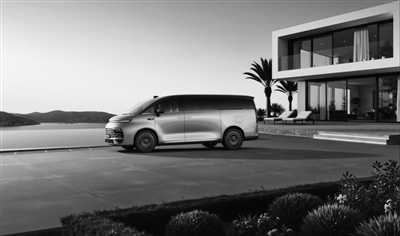
吉利银河V900上市,空间、定价是大杀器
Nan Fang Du Shi Bao· 2026-01-21 21:26
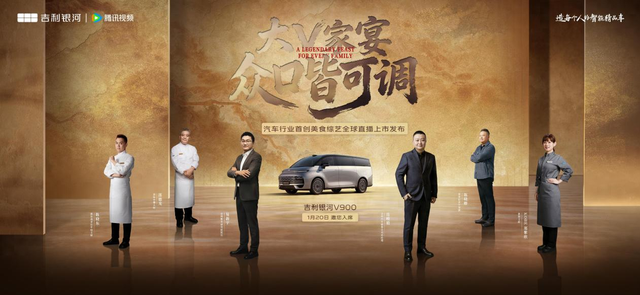
作为吉利银河豪华V系列首发之作, "AI全场景家庭旗舰MPV"吉利银河V900已正式上市。新车共推出3 款车型,上市限时指导价 26.98万-32.98万元。吉利银河V900主打"众口皆可调"理念,让每位驾乘人员 都不需要妥协。 该车拥有91.8%得房率,车内有效长度达到3.97米。在行业尺寸最紧凑的 "超级AI增程系统" 加持下,采 用"叠竖"布局的银河V900为前舱省下150mm纵向空间,实现了超1000mm的二排纵向空间,以及无需调 整前排座位,可同时享有超1000mm的三排纵向空间,200mm的二排中央通道也是同级最宽。在此基础 上,银河V900的后备箱空间同样达到1100L,可容纳15个20寸行李箱。 银河V900提供了11层云感SPA座椅,Nappa真皮、一二排通风、 加热、按摩均配齐,三排可通风、加 热,可电动调节靠背。在远途出行或家庭露营时,27扬声器Flyme Sound无界之声系统配合后排娱乐巨 幕,可以打造沉浸式移动影音厅;-6℃~50℃的超宽温域冷暖箱,可以让车上成员享受到冰镇饮品及温 热汤食。 银河V900全系标配智能双电机四驱系统,可输出340kW峰值功率与523N·m 峰值扭矩, ...
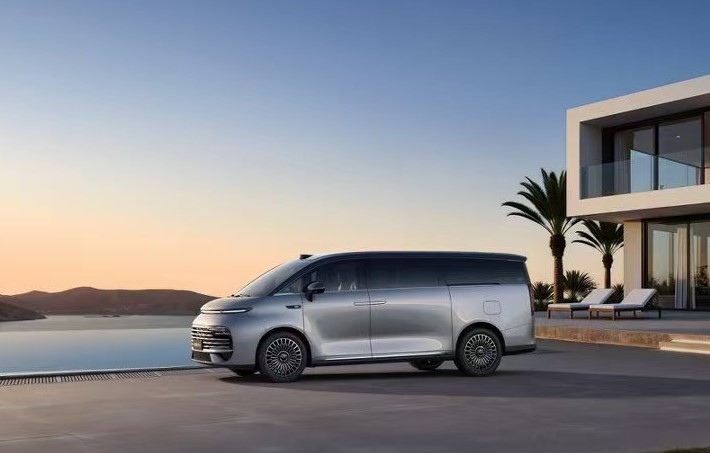
韩面板大厂宣布成功打入极氪9X :供应3款车载OLED屏
Xin Lang Cai Jing· 2026-01-21 12:42
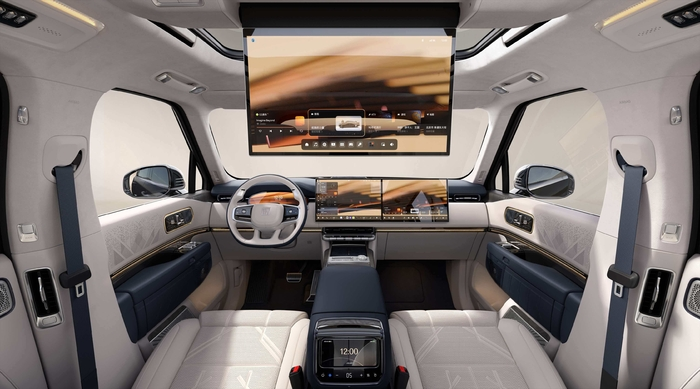
Core Insights - Samsung Display will supply OLED panels for ZEEKR's flagship SUV model, the ZEEKR 9X, marking an expansion into the Chinese market after focusing on the European high-end automotive sector [1][5]. Group 1: Product Details - The ZEEKR 9X features a 16-inch Central Information Display (CID) and a Passenger Information Display (PID), designed to function as a single large screen while also allowing independent use [3][7]. - The 17-inch Rear Seat Entertainment (RSE) screen, developed in collaboration with ZEEKR, can move up to 88 centimeters between the second and third rows, enhancing viewing angles for rear passengers [3][7]. Group 2: Market Expansion - Samsung Display has recently extended its market focus to China, adding partnerships with ZEEKR and other companies, and will supply OLED for the ZEEKR MPV 009 model in 2024 [4][8]. - In the automotive display market, OLED's share was only 6.1% last year but is projected to rise to 20.7% by 2030, with global sales reaching $860.17 million, of which Samsung Display accounted for $577.15 million, representing a 67.1% market share [4][8]. Group 3: Future Outlook - The head of Samsung Display's automotive business stated the company will continue to introduce high-performance products with differentiated value and strengthen partnerships with global automotive clients to lead the growth of the automotive OLED market [4][8].
英国要恢复疫情前市场规模?中国新车加速进程
Guan Cha Zhe Wang· 2026-01-21 10:38
Group 1 - The UK automotive market is attracting attention from Chinese manufacturers due to the lack of domestic automakers targeting the mass market and the absence of tariffs on Asian electric vehicle imports [1][3] - The UK automotive market has not yet recovered to its pre-pandemic level of 2.5 million vehicles annually, and the entry of Chinese brands is expected to accelerate this recovery [1] - Chinese brands, led by SAIC's MG, doubled their market share in the UK to 10% last year, with BYD and Chery increasing their shares significantly in December [3][5] Group 2 - New entrants such as Geely, Changan, Xpeng, and Leap Motor have entered the UK market since 2023, with Geely's premium electric brand targeting the UK after entering 12 European markets [3] - BYD plans to introduce its high-end brand Tengshi, while Chery may launch its new energy brand Lepas in the UK [5] - The UK market is projected to see Chinese brands capture 20% of the market share by 2028, with plans to offer not only electric vehicles but also fuel and hybrid models [5]




银河V900上市:体系化竞争下的“吉利答案”
Xin Lang Cai Jing· 2026-01-21 10:20
Core Insights - The Chinese MPV market in 2026 is no longer a blue ocean, with multiple new models entering the market, leading to intense competition and a shift from a single model dominance to a more diversified landscape [1] - The focus of new vehicle competition has shifted from merely having more features to the maturity of systems and stability of user experience, as consumers now evaluate vehicles based on system synergy, all-scenario coverage, and long-term usage costs [1] Product Overview - The Geely Galaxy V900 was officially launched on January 20, featuring a price range from 269,800 to 329,800 yuan, and aims to address diverse family needs through a narrative approach that resonates with consumers [1][2] - The V900 is positioned as an "AI all-scenario family flagship MPV," offering three models and emphasizing a balance of comfort and control for all passengers [2] - The vehicle boasts a high thermal efficiency of 47.26% and a comprehensive range of 1,220 kilometers, achieved through its innovative Super AI range extension system [2] Technical Features - The V900's chassis is professionally tuned by the Lotus team, showcasing the integration of global R&D resources within Geely [3] - The vehicle exceeds standard safety tests, including the industry's first "super national standard devil triple collision" test, and features 11 airbags, the highest in the global market [4] - The V900 incorporates advanced intelligent driving capabilities, supporting nationwide highway and urban navigation assistance, and can efficiently park in over 300 types of parking spaces [4] Strategic Positioning - The launch of the V900 marks a significant step in Geely's "One Geely" strategy, which aims to enhance operational efficiency and reduce resource waste through brand integration [6] - The V900 is built on the GEA Evo global intelligent new energy flagship architecture, sharing core technologies across Geely's brands, allowing it to offer high product value at a competitive price [6] - The Galaxy brand achieved over 1.23 million annual sales in 2025, a 150% year-on-year increase, providing a strong foundation for the V900's market entry [6] Industry Trends - The introduction of the V900 reflects a broader industry shift from electrification to intelligentization, with a focus on AI-driven vehicle capabilities [8] - The competition among mainstream automakers is evolving from isolated breakthroughs to a more systematic approach encompassing platform architecture, supply chain management, and multi-brand collaboration [8] - Geely has set an ambitious sales target of 3.45 million units for 2026, with 2.22 million of those being new energy vehicles, representing 64% of total sales, demonstrating confidence in its systematic capabilities [8]
构建全场景产品矩阵 吉利银河V900上市
Yang Shi Wang· 2026-01-21 09:21
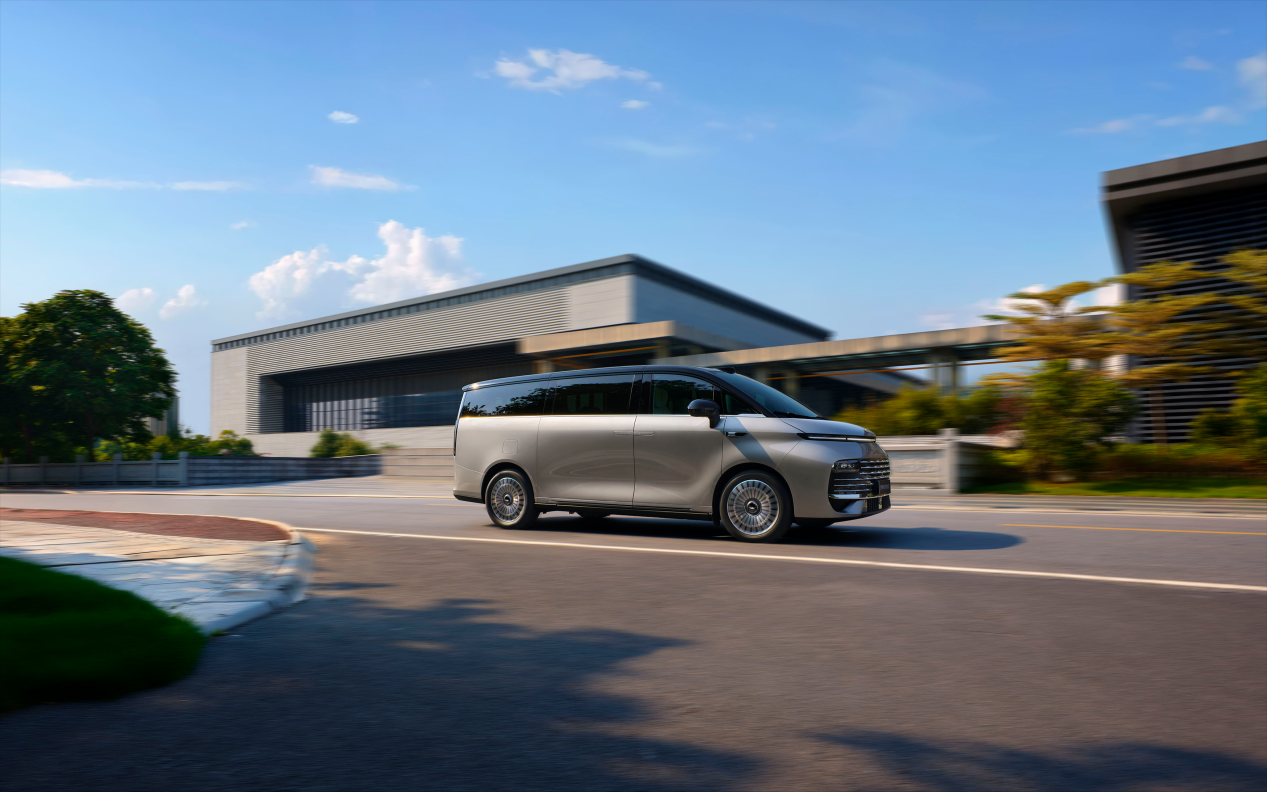
1月20日,吉利银河豪华V系列首款车型——"AI全场景家庭旗舰MPV"——吉利银河V900正式上市,共推出3个车型,上市限时指导价为26.98万元-32.98 万元。 新车以"国际审美,东方表达"为设计理念,前脸采用「水韵金晖」格栅,大灯融入「拱桥映月」设计元素,在全球化美学中融入东方意蕴。 银河V900在空间布局上实现多项突破,车内有效长度达到3.97米,得房率达91.8%。通过"叠竖"布局与紧凑的超级AI增程系统,车辆实现了三个超 1000mm:二排纵向空间超1000mm、三排纵向空间超1000mm,以及1100L后备箱容积,可容纳15个20寸行李箱。此外,200mm的二排中央通道便于车内通 行与照顾家人。 动力方面,银河V900全系标配智能双电机四驱系统,可输出340kW峰值功率与523N·m峰值扭矩,零百成绩6.5秒,其AI数字底盘,搭载了主动魔毯预 瞄、空气悬挂、CCD连续可变阻尼减振器及CST 2.0全速域舒适制动系统。其底盘调校由路特斯团队完成,旨在提升驾驶质感与操控信心。 安全上,银河V900采用"星甲车身"设计,高强度钢占比76.6%,局部采用2000MPa军工级钢材。车辆还配备了133mm ...
吉利汽车(00175.HK)1月21日耗资3962.1万港元回购237.6万股
Ge Long Hui· 2026-01-21 08:43
Group 1 - The core point of the article is that Geely Automobile announced a share buyback plan, spending HKD 39.621 million to repurchase 2.376 million shares at a price range of HKD 16.62 to HKD 16.81 per share [1]
吉利汽车(00175)1月21日斥资3962.09万港元回购237.6万股
智通财经网· 2026-01-21 08:40
Group 1 - The core point of the article is that Geely Automobile announced a share buyback plan, intending to repurchase 2.376 million shares at a cost of HKD 39.6209 million on January 21, 2026 [1] Group 2 - The company is actively engaging in share repurchase, which may indicate confidence in its future performance and an effort to enhance shareholder value [1] - The specific number of shares to be repurchased is 2.376 million, reflecting a strategic move to manage its capital structure [1] - The total expenditure for the buyback is approximately HKD 39.6209 million, showcasing the company's commitment to returning capital to shareholders [1]
吉利汽车1月21日斥资3962.09万港元回购237.6万股
Zhi Tong Cai Jing· 2026-01-21 08:40
Core Viewpoint - Geely Automobile (00175) announced a share buyback plan, investing HKD 39.62 million to repurchase 2.376 million shares on January 21, 2026 [1] Group 1 - The company will spend HKD 39.62 million for the buyback [1] - A total of 2.376 million shares will be repurchased [1] - The buyback is scheduled for January 21, 2026 [1]