
SMIC(00981)

Search documents
晶圆代工、存储涨价,珂玛科技、有研硅等走强,半导体设备ETF(561980)本周四连阳
2 1 Shi Ji Jing Ji Bao Dao· 2025-12-26 03:10
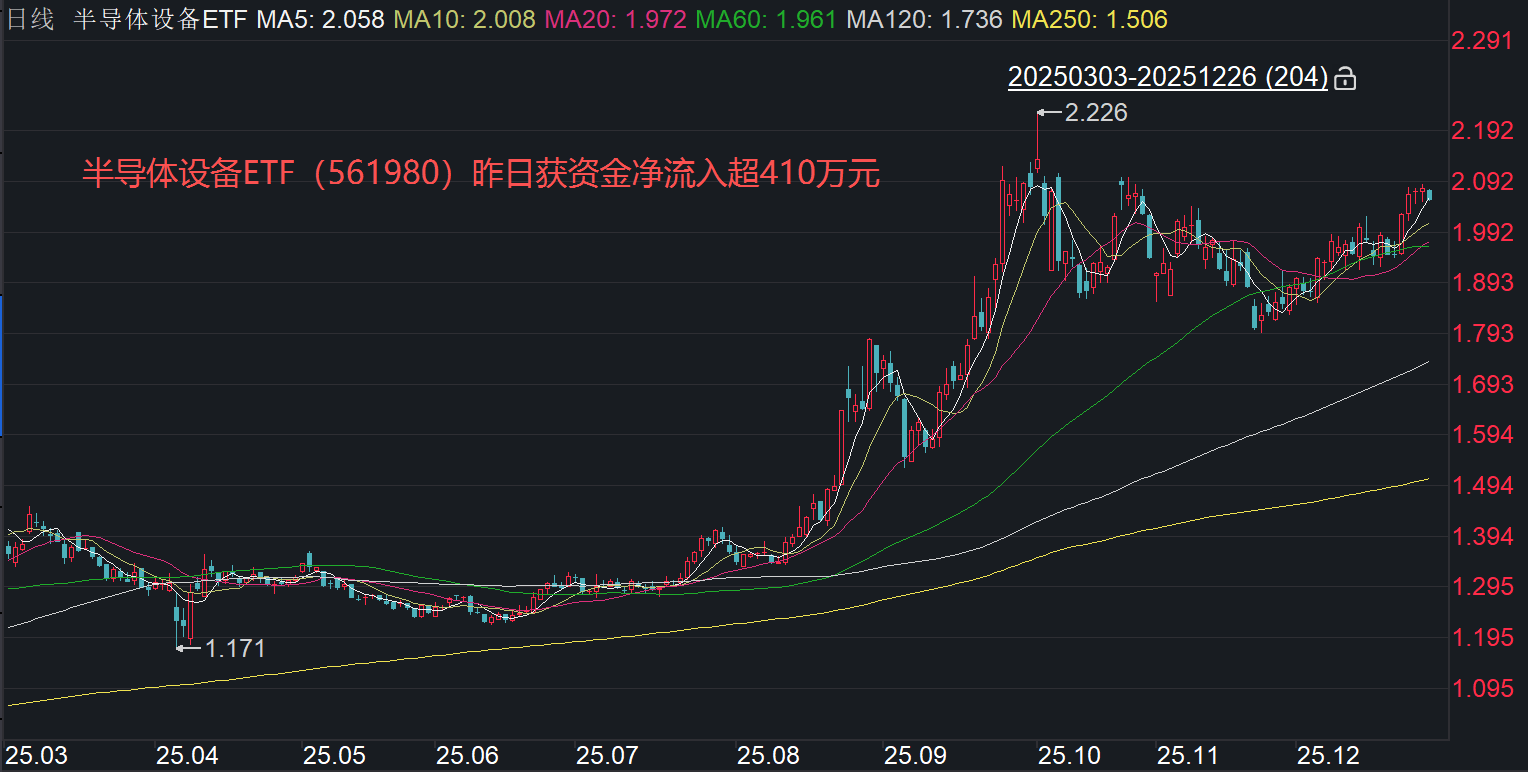
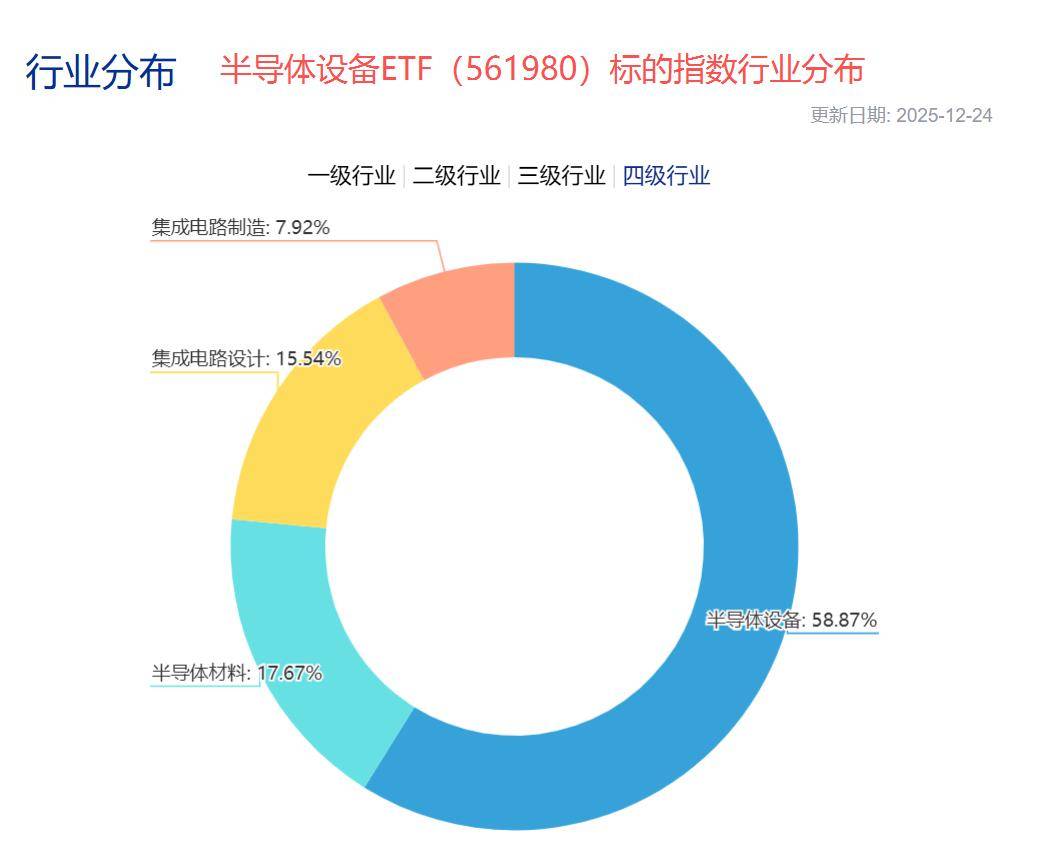
Group 1 - Semiconductor foundries are set to initiate a new round of price increases, with SMIC notifying downstream customers of a price hike of approximately 10% focused on the 8-inch BCD process platform [1][3] - The storage price surge is spreading, with major suppliers like Samsung and SK Hynix raising HBM3E prices by nearly 20% for the upcoming year [1] - The semiconductor equipment ETF (561980) has recorded four consecutive days of gains, although it experienced mixed performance among constituent stocks, with some companies like Kema Technology and Yiyuan Silicon rising over 2% [1] Group 2 - Open Source Securities highlights that the supply-side capacity gap, combined with growing demand from AI and other sectors, signals an upward price cycle for semiconductors, with foundry prices and storage chips beginning to rise [3] - The high capacity utilization rates of foundries like SMIC and Hua Hong are driven by strong demand from industries such as 5G, AI, and new energy [3] - According to Galaxy Securities, the contract prices for Server DRAM are expected to rise by 18-23% in Q4 2025, driven by global cloud service providers expanding data center capacities [5] Group 3 - The semiconductor equipment ETF (561980) tracks the China Securities Semiconductor Index, with over 54% of its components related to equipment, and more than 72% focused on semiconductor equipment, materials, and integrated circuit design [4] - The top ten companies in the index, including key players like Zhongwei Company and North Huachuang, account for nearly 80% of the index's concentration [4] - The semiconductor equipment sector is considered the cornerstone of the semiconductor industry, with significant growth opportunities anticipated due to the expansion of storage and domestic production capabilities [5]



芯片50ETF(516920)开盘跌0.48%,重仓股中芯国际跌0.41%,寒武纪跌1.32%
Xin Lang Cai Jing· 2025-12-26 01:39
Core Viewpoint - The Chip 50 ETF (516920) opened at a decline of 0.48%, indicating a downward trend in the semiconductor sector on December 26 [1] Group 1: ETF Performance - The Chip 50 ETF (516920) opened at 1.035 yuan, reflecting a decrease of 0.48% [1] - Since its establishment on July 27, 2021, the fund has achieved a return of 3.96%, with a one-month return of 8.26% [1] Group 2: Major Holdings Performance - Key stocks within the Chip 50 ETF include: - SMIC (中芯国际) down 0.41% - Cambricon (寒武纪) down 1.32% - Haiguang Information (海光信息) down 0.38% - Northern Huachuang (北方华创) down 0.23% - Lattice Semiconductor (澜起科技) down 0.71% - GigaDevice (兆易创新) down 0.45% - OmniVision (豪威集团) up 0.04% - Chipone (芯原股份) down 1.21% - JCET (长电科技) down 0.46% [1]




张汝京回国创办中芯国际获家人支持,母亲坚守成最大动力
Xin Lang Cai Jing· 2025-12-25 16:20
Core Viewpoint - The founder of the semiconductor industry, Zhang Rujing, has returned to China to establish SMIC (Semiconductor Manufacturing International Corporation), motivated by the support from his mother and partner, with his mother's steadfastness being a significant driving force [2] Group 1 - Zhang Rujing's return to China is marked by the establishment of SMIC, highlighting a personal and emotional connection to his roots [2] - The support from family, particularly his mother's daily prayers for China, emphasizes the personal motivations behind the company's founding [2]
AI需求井喷引爆半导体涨价周期,半导体设备ETF(561980)午后走强
Sou Hu Cai Jing· 2025-12-25 06:46
Core Viewpoint - The semiconductor industry is experiencing a new wave of price increases driven by rising demand, particularly from AI applications, and supply-side capacity shortages [2][3]. Group 1: Price Increases - Semiconductor companies such as SMIC and GlobalFoundries have issued price increase notices to downstream customers, primarily focusing on the 8-inch BCD process platform with an increase of around 10% [3]. - The NAND price index has surged by 173% and the DRAM price index by 169% since the end of July, with expectations of further increases in DDR5 RDIMM prices by over 40% and eSSD prices by 20-30% in Q1 2026 [3]. Group 2: Market Growth - According to SEMI, global semiconductor manufacturing equipment sales are projected to reach $133 billion in 2025, marking a 13.7% year-on-year increase, with continued growth expected in the following years, reaching $145 billion in 2026 and $156 billion in 2027 [4]. - The semiconductor equipment ETF (561980) tracks an index where nearly 60% is composed of equipment, and over 90% is focused on the upstream sectors of the semiconductor industry, indicating significant potential for domestic substitution [4]. Group 3: Investment Opportunities - The semiconductor equipment ETF has a strong focus on leading companies such as Zhongwei Company, North Huachuang, and Cambrian, with the top ten holdings accounting for nearly 80% of the index, showcasing high elasticity characteristics [7]. - As of December 24, the index has seen a year-to-date increase of over 65%, outperforming other mainstream semiconductor indices, suggesting it may have greater resilience in the upcoming semiconductor upcycle [7].
中芯国际涨价10%
Xin Lang Cai Jing· 2025-12-25 05:33
Core Viewpoint - Semiconductor company SMIC has implemented a price increase of approximately 10% on certain capacities, which is expected to be executed soon, further intensifying market tension [1][6]. Group 1: Reasons for Price Increase - The price increase is driven by a surge in demand for mobile applications and AI, leading to a significant rise in chip demand across various sectors, including industrial control and automotive electronics [6][10]. - Rising raw material costs due to global supply chain constraints are also a key factor necessitating price adjustments by wafer fabs to maintain profitability [6][10]. - Capacity adjustments by industry giants like TSMC, which plans to consolidate 8-inch capacity and shut down some production lines by the end of 2027, have heightened market price expectations [6][10]. Group 2: Capacity Utilization Rates - SMIC reported a capacity utilization rate of 95.8% in Q3, up from 92.5% in Q2, indicating a continued state of supply-demand imbalance [2][7]. - Huahong's overall capacity utilization rate reached 109.5% in Q3, reflecting strong demand and operational efficiency [8][9]. Group 3: Industry Impact - The price increase by SMIC is expected to reshape the competitive landscape of the semiconductor industry, particularly as demand for computing power continues to rise with the explosion of AI applications [9][10]. - The high operational load on semiconductor companies not only tests their production capabilities but also supports price increases, benefiting semiconductor equipment manufacturers [9][10]. - Companies like TuoJing Technology and WeiDao Nano are positioned to benefit from increased orders and performance growth due to the expansion of wafer fab capacities and advancements in process technology [10].

昨夜今晨全球大公司动态 | 融创中国完成境内外债务全面重组;中芯国际确认涨价
Sou Hu Cai Jing· 2025-12-25 01:50
Group 1: Company Developments - Sunac China has completed a comprehensive debt restructuring, with approximately $9.6 billion in debt fully released or waived, becoming the first large real estate company to achieve this [2] - ByteDance plans to invest 160 billion yuan (approximately $23 billion) in capital expenditures for AI development by 2026, increasing from 150 billion yuan this year [3] - Haier Smart Home is transferring 49% of its stake in Haier India to Bharti Group and Warburg Pincus, while retaining a 49% stake and maintaining control over core operations [4] - BP has agreed to sell a 65% stake in its Castrol lubricants business to Stonepeak Partners, with the overall valuation of the business at $10.1 billion [7] Group 2: Industry Trends - SMIC has announced a price increase of around 10% for its 8-inch BCD process, driven by high demand for AI infrastructure and supply shortages due to TSMC's shift to high-end processes [4] - BYD's sales in Europe surged over twofold, with new car registrations rising from 4,821 units last year to 16,158 units in November [6] - The global whiskey market has seen a decline in sales by 2.5% in the first half of 2025, leading to excess inventory and production cuts among distilleries [8]

开源证券:半导体释放涨价信号 晶圆厂、存储、模拟有望进入价格上行期
智通财经网· 2025-12-25 01:47
Group 1: Semiconductor Industry Overview - The semiconductor industry is experiencing a price uptrend driven by a surge in AI demand and supply-side capacity shortages [1][2] - Foundries like SMIC and Hua Hong are maintaining high capacity utilization rates, with SMIC's utilization reaching 95.8% and Hua Hong at 109.5% [2] - Price increases are being implemented, particularly in the 8-inch BCD process, with a 10% hike announced by SMIC and World Advanced [2] Group 2: Memory Market Dynamics - The NAND price index has increased by 173% and the DRAM price index by 169% since late July [3] - There is a significant shortage of NAND, with some manufacturers indicating inventory levels that will only last until Q1 2026 [3] - Companies like Beijing Junzheng and Zhaoyi Innovation are adjusting prices for storage and computing chips, with expectations of significant revenue growth in niche DRAM products by H2 2025 [3] Group 3: Analog Chip Market Trends - Major overseas companies like ADI and Texas Instruments have initiated price increases, with ADI planning an average hike of 15% starting February 2026 [4] - The demand for high-power and high-current analog chips is being driven by the recovery in industrial control and automotive sectors, as well as AI data centers [4] - Domestic analog chip manufacturers are expected to benefit from rising demand and prices as the market continues to recover [4] Group 4: Beneficiary Companies - Beneficiary companies in the foundry sector include SMIC and Hua Hong [4] - In the memory sector, companies such as Jiangbolong, Demingli, and Zhaoyi Innovation are highlighted [4] - For the analog sector, companies like Shengbang Technology, Naxin Micro, and Aiwai Technology are noted as potential beneficiaries [4]
芯片ETF(159995)开盘涨0.17%,重仓股寒武纪跌0.84%,中芯国际跌0.33%
Xin Lang Cai Jing· 2025-12-25 01:39
Core Viewpoint - The chip ETF (159995) opened with a slight increase of 0.17%, indicating a stable market performance for semiconductor-related investments [1] Group 1: ETF Performance - The chip ETF (159995) opened at 1.752 yuan [1] - The ETF's performance benchmark is the National Securities Semiconductor Chip Index return rate [1] - Since its establishment on January 20, 2020, the ETF has achieved a return of 74.80%, with a recent one-month return of 9.46% [1] Group 2: Major Holdings Performance - Major holdings in the chip ETF include: - Cambrian (寒武纪) down 0.84% - SMIC (中芯国际) down 0.33% - Haiguang Information (海光信息) up 0.02% - Northern Huachuang (北方华创) down 0.23% - Lanke Technology (澜起科技) up 0.16% - Zhaoyi Innovation (兆易创新) down 0.49% - OmniVision (豪威集团) down 0.33% - Changdian Technology (长电科技) up 0.11% - Unisoc (紫光国微) down 0.05% [1]
444股获融资买入超亿元,中际旭创获买入27.26亿元居首
Mei Ri Jing Ji Xin Wen· 2025-12-25 01:30
Core Viewpoint - On December 24, 3754 stocks in the A-share market received financing funds, with 444 stocks having a buy amount exceeding 100 million yuan [1] Group 1: Financing Buy Amount - The top three stocks by financing buy amount were Zhongji Xuchuang, Xinyi Sheng, and Shenghong Technology, with buy amounts of 2.726 billion yuan, 2.318 billion yuan, and 2.074 billion yuan respectively [1] - Seven stocks had financing buy amounts accounting for over 30% of the total transaction amount on that day [1] Group 2: Financing Buy Proportion - The stocks with the highest financing buy amount proportion relative to total transaction amount were Guannong Co., Tianma Zhikong, and Hanbang Technology, with proportions of 42.81%, 36.84%, and 35.14% respectively [1] Group 3: Net Financing Buy Amount - A total of 43 stocks had a net financing buy amount exceeding 100 million yuan [1] - The top three stocks by net financing buy amount were Zhaoyi Innovation, Tianji Co., and SMIC, with net buy amounts of 399 million yuan, 397 million yuan, and 349 million yuan respectively [1]


股市异动升波,债市?短分化
Zhong Xin Qi Huo· 2025-12-25 00:43
1. Report Industry Investment Rating - The report does not provide an overall industry investment rating. However, for different financial derivatives: - Stock index futures: The outlook is "volatile", and the recommended operation is "Dividend ETF + IC long positions". [6] - Stock index options: The outlook is "volatile", and the recommended operation is a covered strategy. [6] - Treasury bond futures: The outlook is "volatile". Recommended strategies include trend strategy (volatile), hedging strategy (focus on short - selling hedging at low basis levels), basis strategy (appropriately focus on basis widening), and curve strategy (the curve may remain steep). [6][7] 2. Core Viewpoints of the Report - Stock index futures experienced high - volatility fluctuations in the afternoon, and their sustainability is restricted by trading volume. Stock index option implied volatility rebounded due to positive sentiment. The long and short - end trends of the main treasury bond futures contracts diverged. [1][2][3] 3. Summary by Relevant Catalogs Market Views - **Stock Index Futures**: On Wednesday, the Shanghai Composite Index fluctuated and closed up with trading volume basically unchanged. The intraday change occurred in the afternoon, with small - cap stock volatility surging. The catalyst might be SMIC's 10% price increase for some production capacities. Large - cap stocks are more likely to receive incremental funds in the medium - term. Near the end of the year, overall upward movement is restricted by trading volume. It is recommended to adopt a defensive allocation with high - dividend and price - increase chains as the main lines, and large - cap stocks are preferred over small - cap stocks. [1][6] - **Stock Index Options**: On Wednesday, the equity market rose with shrinking volume. Option implied volatility rose rapidly in the afternoon and most varieties' implied volatility fell at the end of the session. The market layout may favor large - cap stocks. The total option trading volume increased by 26.57%. The market hedging structure may shift from selling calls to buying puts. A covered strategy can be continued to increase returns. [2][6] - **Treasury Bond Futures**: The long and short - end main futures contracts showed a trend of opening low and rising oscillating. Morning fund tightening led to an opening low, while improved sentiment in the market might be related to expectations of increased central bank bond purchases and a higher probability of a reserve - requirement cut. The central bank will conduct a 400 - billion - yuan MLF operation on the 25th, with a net injection of 100 billion yuan. In the short - term, the fund situation is relatively loose, which is beneficial for the short end, while the long end may fluctuate. [3][6][7] Economic Calendar - On December 22, 2025, China's 1 - year and 5 - year loan prime rates (LPR) remained unchanged at 3% and 3.5% respectively. - On December 23, the initial quarterly - adjusted annualized GDP growth rate in the third quarter of the United States was 4.3%, higher than the forecast of 3.2%. - On December 24, the seasonally - adjusted initial jobless claims in the United States on December 20 were 2.14 million, lower than the previous value and forecast of 2.24 million. [8] Important Information and News Tracking - **Real Estate Restrictions**: Beijing optimized real - estate policies, including relaxing non - Beijing household purchase conditions and supporting multi - child family housing needs. The minimum down - payment ratio for second - home provident fund loans was reduced from 30% to 25%. [9] - **MLF**: On December 25, 2025, the People's Bank of China will conduct a 400 - billion - yuan MLF operation. [9] - **Semiconductor**: SMIC and VIS announced a 10% price increase for the 8 - inch BCD process platform, possibly due to high demand for power chips in AI servers. [10] - **Foreign Investment**: The 2025 version of the "Catalogue of Industries Encouraging Foreign Investment" will be implemented on February 1, 2026, aiming to attract more foreign investment in specific fields and regions. [10] Derivatives Market Monitoring - The report mentions the monitoring of stock index futures, stock index options, and treasury bond futures data, but specific data details are not provided in the content for a comprehensive summary. [11][15][27]