LENOVO GROUP(00992)

Search documents
联想百应智能体宣布深度接入阿里通义万相2.6视频生成模型
Huan Qiu Wang· 2025-12-18 06:14
Core Insights - Lenovo's Baiying Intelligent Agent has announced the deep integration of Alibaba's Tongyi Wanshang 2.6 video generation model, marking a significant advancement in AI-driven video production capabilities [1][3] Group 1: Technology Upgrade - The Tongyi Wanshang 2.6 model has undergone comprehensive upgrades for professional film production and image creation, supporting features such as audio-visual synchronization, multi-camera generation, and sound-driven capabilities [3] - This upgrade represents a natural continuation of Lenovo's technological optimization and ecosystem layout, transitioning from a "responsive assistant" to a "collaborative partner" since the release of version 2.0 [3] Group 2: AI Marketing System - The integration of the Tongyi Wanshang 2.6 model enables Lenovo's Baiying Intelligent Agent to establish a dual-engine AI marketing system focused on "video creation + light customization," allowing enterprises to achieve professional-level video production and marketing capabilities in a lightweight manner [3] - This upgrade is designed to meet the marketing needs of small and medium-sized enterprises by providing low-cost, high-efficiency, and high-quality solutions, facilitating zero-threshold video creation and light customization capabilities [3]



押注全球算力第三极:英伟达、xAI、联想沙特投资进入收获期
Ge Long Hui· 2025-12-18 05:50
Core Insights - Saudi Arabia is transforming into the world's third-largest computing hub, following the US and China, as part of its "Vision 2030" strategy aimed at diversifying its economy beyond oil dependency [2][16] - The country is investing heavily in high-performance computing and advanced technology, attracting global tech giants like NVIDIA, AMD, Amazon AWS, xAI, and Microsoft to establish partnerships and projects in the region [2][6] Investment and Infrastructure - The Saudi Public Investment Fund (PIF) is the driving force behind the AI transformation, acting as both a fund provider and a major customer [4] - PIF's subsidiaries, Alat and Humain, are focused on building a dual-driven system of manufacturing and computing capabilities, with Alat concentrating on hardware and Humain on AI technology and infrastructure [4][5] - A notable collaboration includes a $2 billion partnership with Lenovo to establish a server manufacturing facility in Riyadh, expected to produce millions of devices annually by 2026 [4][10] Strategic Partnerships - Major tech companies are entering the Saudi market, with NVIDIA planning to build an AI factory utilizing advanced GPUs, and AWS investing over $5 billion to create an "AI Zone" data center [6][7] - The partnerships aim to develop AI infrastructure and applications, including Arabic language models, enhancing Saudi Arabia's position in the global AI landscape [7][14] Economic Impact - The AI sector is projected to significantly contribute to Saudi Arabia's GDP, with estimates suggesting it could account for 12.4% of the GDP by 2030, translating to a substantial economic impact of $320 billion across the MENA region [14][15] - The region's IT spending is expected to reach $169 billion by 2026, indicating a robust growth trajectory as countries like Saudi Arabia and the UAE transition from traditional energy economies to AI powerhouses [15][16] Market Expansion and Diversification - Lenovo aims to increase its revenue from the Middle East to approximately $6 billion, reflecting the strategic importance of the region for tech giants seeking growth opportunities amid saturated traditional markets [13][15] - The establishment of a comprehensive AI ecosystem in Saudi Arabia, covering computing infrastructure, AI models, and industry applications, is creating a new cluster effect for global tech companies [15][16]


午评:港股恒指跌0.44% 科指跌1.26% 科网股普跌 锂电池板块走弱 航空股逆势走强
Xin Lang Cai Jing· 2025-12-18 04:01
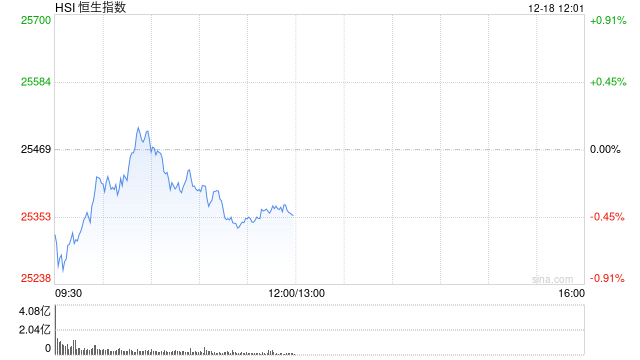
Market Overview - The Hong Kong stock market indices experienced a collective decline, with the Hang Seng Index falling by 0.44% to 25,357.69 points, the Hang Seng Tech Index dropping by 1.26%, and the State-Owned Enterprises Index decreasing by 0.6% [1][8]. Sector Performance Technology Sector - Technology stocks saw widespread declines, with Xiaomi dropping over 3%, Lenovo down more than 2%, and both Baidu and Alibaba falling over 1% [1][9]. Aviation Sector - Aviation stocks continued their upward trend, highlighted by Beijing Capital International Airport's shares rising over 7%. The new round of duty-free tenders at major airports, including Shanghai Pudong and Hongqiao, as well as Beijing Capital, will introduce foreign participants [2][11]. Lithium Battery Sector - Lithium battery stocks faced significant declines, with CATL (Contemporary Amperex Technology Co., Limited) falling over 3%. Morgan Stanley has raised its global lithium demand forecast for 2030 to 3.5 million tons, indicating a potential supply-demand gap of 4-7% in the medium term, which could push lithium carbonate prices to $18,000 by the end of next year, a 33% increase from current spot prices [3][12]. New Consumption Sector - New consumption concept stocks weakened, with Pop Mart dropping over 2%. The Ministry of Commerce and other departments issued a notice to strengthen the collaboration between commerce and finance to boost consumption, emphasizing the cultivation of new consumption models [5][13].


存储器涨价预期强 手机笔电开年要调价
Shen Zhen Shang Bao· 2025-12-17 17:33
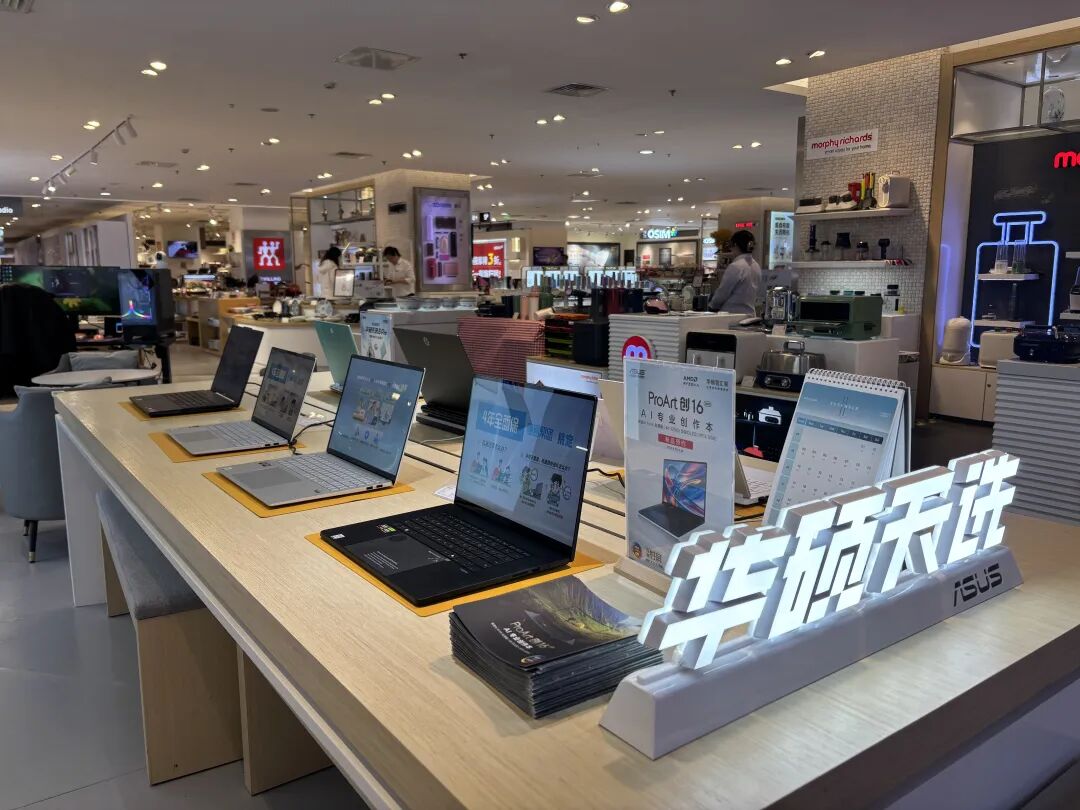
Core Insights - The consumer electronics market, particularly smartphones and laptops, is facing a new wave of price increase expectations due to anticipated significant rises in memory prices in Q1 2026, leading to cost pressures on global terminal products [3][7] - Major brands are likely to adjust product prices and specifications, with sales forecasts being revised downward, resulting in resource advantages concentrating among a few leading brands [3][7] Price Adjustments and Promotions - Despite strong price increase expectations, major consumer electronics brands are implementing significant discounts to maintain market interest, such as Apple's recent price cut on iPhone 17 Pro models shortly after their release [4] - Lenovo has also offered substantial discounts on older models, with reductions reaching up to 9,200 yuan for certain products [4] - Xiaomi's Redmi Book Pro 16 and K90 series have seen price reductions, with the former being offered at 6,499 yuan after a discount from 6,799 yuan [5] Market Dynamics and Cost Structure - TrendForce indicates that the impact of memory components on the bill of materials (BOM) cost for smartphones and PCs is rapidly increasing, necessitating a reevaluation of pricing strategies by brands like Apple [7] - Android brands, which typically target the mid-to-low price market, will likely need to raise new product prices and adjust old product pricing or supply cycles due to rising memory costs [7][8] - The high-end lightweight laptop segment is expected to experience the most significant price pressure due to the integration of mobile DRAM on motherboards, limiting cost control options [7][8] Consumer Behavior and Market Outlook - TrendForce suggests that consumers may not need to rush to purchase devices in anticipation of price increases, as there is still inventory support for profitability in the consumer laptop market [8] - However, a long-term trend towards specification reductions or price adjustments is expected, with a notable pricing adjustment period anticipated in the PC market by Q2 2026 [8]


笔记本电脑,要涨价!
Zhong Guo Zheng Quan Bao· 2025-12-17 14:55
Core Viewpoint - Major PC manufacturers, including Dell and Lenovo, are expected to raise product prices due to the increase in storage chip prices, impacting the overall cost structure of PCs and related devices [1][3]. Group 1: Price Increase Trends - Dell plans to increase prices for its commercial computers by 10% to 30% starting December 17, driven by rising memory costs [3]. - Lenovo's CFO indicated that price increases are inevitable by 2026 due to the overall rise in memory prices [4]. - Sales personnel reported that the price of a 16GB Samsung 5th generation memory module has surged from over 380 yuan in September to around 899 yuan recently [3]. Group 2: Market Dynamics and Strategies - The global terminal products are facing cost challenges, leading to necessary adjustments in pricing and specifications for smartphones and laptops [3]. - Companies are adopting various strategies, such as contracts and stockpiling, to secure memory supply and mitigate the impact of price hikes [4]. - The demand for high-capacity memory is increasing due to the rise of AI-driven computing, necessitating a reevaluation of pricing models based on performance value and memory capacity [5]. Group 3: Industry Responses - Asus and Acer executives have indicated that they will adjust product offerings and prices in response to market dynamics [5]. - TrendForce's report suggests that the PC market will enter a significant price adjustment period by the second quarter of 2026 [3].

全球算力版图第三极:沙特AI热潮中的联想样本
Ge Long Hui· 2025-12-17 06:53
Group 1: Game Industry Developments - Ubisoft has released a significant free update for the popular action-adventure game "Assassin's Creed," featuring the DLC "Valley of Memory," which is available for all main game players to download [1] - The DLC is set in the 9th century AlUla oasis in Saudi Arabia, where the protagonist Basim and his friend Dervis search for Basim's long-lost father, Ishaq, amidst a landscape filled with thieves, secrets, and ancient relics [1] - The development of this DLC received funding from Saudi Arabia's Public Investment Fund (PIF), which has invested $38 billion in the gaming sector through its subsidiary Savvy Games Group [1] Group 2: Saudi Arabia's Investment Strategy - Saudi Arabia is making substantial investments in the gaming industry, with the sector now valued higher than their film, streaming, and music industries combined [1] - PIF is leading a consortium to privatize Electronic Arts (EA) for $55 billion, marking the largest investment by Saudi Arabia to date [2] - The Saudi Crown Prince Mohammed bin Salman aims to position the country as a key player in the global tech landscape, aspiring to become a "third pole" in computing and energy [2] Group 3: Technology and AI Infrastructure - Saudi Arabia is transforming from an oil-dependent economy to a tech investment hub, attracting major tech companies like Nvidia, AMD, and Google to establish AI data centers and hardware manufacturing [8] - The region's low energy costs, particularly for natural gas and oil, make it an ideal location for large-scale data centers and AI computing clusters [9] - The PIF plans to invest $100 billion in developing local electronic and industrial technologies, with partnerships like that of Lenovo being a significant part of this strategy [9] Group 4: Lenovo's Strategic Moves - Lenovo has established a new manufacturing base in Riyadh, covering approximately 200,000 square meters, expected to start production in 2026, focusing on locally manufactured computers and servers [6] - This partnership with PIF's Alat is seen as a key step in diversifying Saudi Arabia's economy and enhancing its role in the global tech supply chain [6] - Lenovo's collaboration aims to train local talent, with plans for 100 Saudi graduates to receive immersive training in engineering, technology, and manufacturing [9] Group 5: Market Opportunities and Challenges - The demand for hardware in the Middle East is projected to grow explosively due to the construction of AI computing centers and data centers, providing significant opportunities for companies like Lenovo [13] - The partnership with Saudi Arabia allows Lenovo to secure stable hardware procurement orders from government and PIF-related projects, ensuring a continuous flow of business [13] - The Middle East's stable energy structure and strong financial capabilities present natural advantages for tech companies looking to diversify their manufacturing bases [16]
联想天禧个人超级智能体:引领AI从工具到智能伙伴的范式变革
Huan Qiu Wang· 2025-12-17 04:42
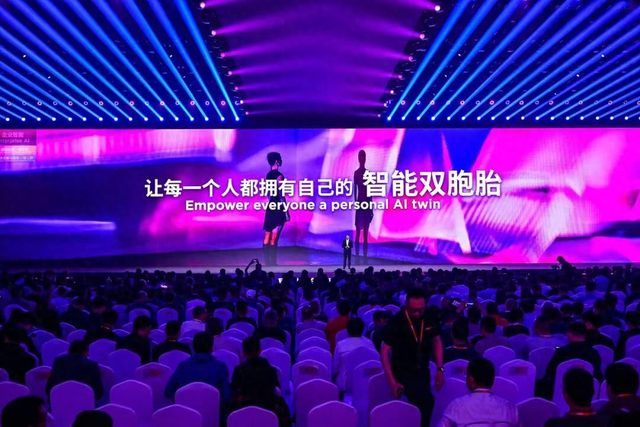
Core Insights - Lenovo's Tianxi Personal Super Intelligent Agent represents a significant advancement in the "hybrid AI" strategy, evolving AI from a passive tool to an intelligent partner with perception, cognition, and autonomous action capabilities [1][2] - The agent is built on a "cloud-edge integrated" architecture, featuring three technological pillars: reasoning acceleration engine, Super Connectivity 3.0, and a trusted security platform, facilitating a revolutionary interaction shift from "people finding services" to "services finding people" [1][2] - The market response has been positive, with the agent being fully integrated into Lenovo's AI PCs and smartphones, receiving international awards and recognition for its role in promoting AI adoption and ecosystem integration [1][2] Industry Context - The global AI landscape is transitioning from technological breakthroughs to widespread application, highlighting a gap between the powerful capabilities of general large models and the fragmented, high-threshold user experiences [1][2] - Lenovo's proactive approach to "hybrid AI" aims to bridge this gap, positioning it as a necessary path for AI proliferation [2] Technological Advancements - The Tianxi AI 3.5 version has achieved three major upgrades: true personalization, enhanced action capabilities, and seamless multi-device experiences [6][7] - True personalization is enabled by "always-on proactive memory" and "holistic personal knowledge management," allowing the agent to integrate user interactions across devices and time [6] - The leap in action capabilities allows the agent to autonomously manage complex tasks, coordinating various applications and systems to deliver comprehensive solutions [7] - The seamless experience across devices is facilitated by Super Connectivity 3.0, enabling intuitive cross-device interactions [7] Ecosystem Development - Lenovo has built a vast open ecosystem around the Tianxi intelligent agent, incorporating over 5,000 intelligent agents and AI applications across various life, work, and learning scenarios [8] - The Tianxi platform is designed to evolve through five stages, currently progressing towards creating a personalized, trustworthy, and deeply collaborative "AI Twin" for users [8] Practical Applications - The Tianxi intelligent agent is transforming productivity and user experiences through interfaces like "AI Sui Xin Window," "AI Ling Long Platform," and "AI Ru Ying Frame," automating tasks for knowledge workers and enhancing daily life for general users [9] - Specific products, such as the Lenovo YOGA Pad Pro 14.5 AI and the moto razr 60 Ultra, showcase the practical applications of AI in creative and travel contexts [9] Market Validation - The Tianxi intelligent agent has received recognition from industry authorities, including the "Leading Achievement in Digital Intelligence Application" award from the Global Digital Economy Alliance [11] - Lenovo's AI PCs and smartphones have seen significant sales growth, with over 1 million units sold in the previous fiscal year, indicating strong market demand [12] - Initiatives like the "Super AI Elite Challenge" aim to foster innovation among young developers, further enhancing the platform's ecosystem and potential for future growth [14]
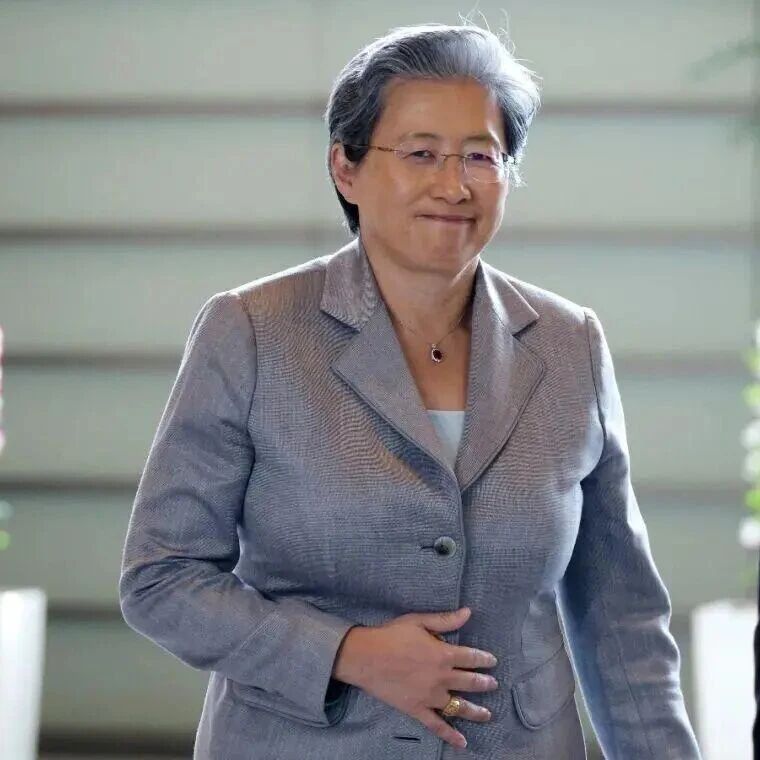
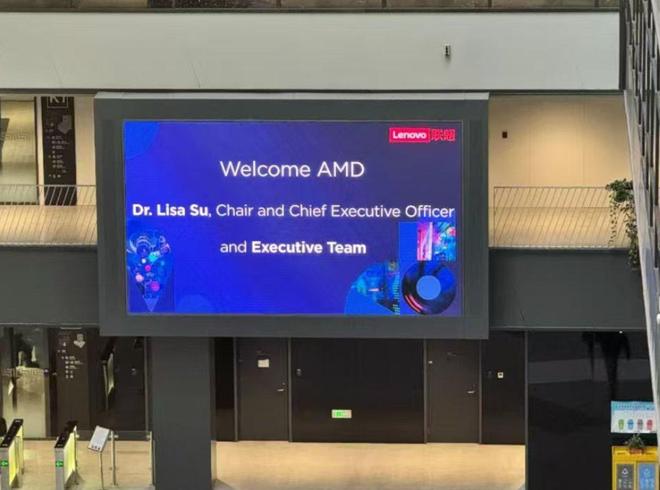
AMD总裁苏姿丰造访联想!
国芯网· 2025-12-17 04:41
Core Viewpoint - The article highlights the ongoing collaboration between AMD and Lenovo, focusing on advancements in AI technology and the semiconductor industry, emphasizing the importance of these partnerships for future innovations [2][4]. Group 1: AMD and Lenovo Collaboration - AMD's CEO, Lisa Su, visited Lenovo's global headquarters in Beijing, showcasing a continued partnership aimed at enhancing AI capabilities [2]. - This visit marks a recurring interaction, with previous collaborations announced in March 2025, particularly in the AI PC and AI server sectors [4]. - Lenovo is set to host a technology innovation conference on January 6, 2026, in Las Vegas, where it will unveil new AI products and services, with notable attendees including NVIDIA's CEO and AMD's CEO [4].

中美芯片政策松动之际,苏姿丰带队低调访华
Tai Mei Ti A P P· 2025-12-17 02:16
Core Viewpoint - AMD's CEO, Lisa Su, is visiting China to explore new opportunities amid a recent easing of U.S. chip export restrictions, indicating a strategic move to strengthen partnerships in the Chinese market [2][5]. Group 1: AMD's Visit and Partnerships - Lisa Su and her executive team visited Lenovo's headquarters in Beijing, marking a significant engagement with a key partner in China [2]. - The visit included a tour of Lenovo's latest products, including humanoid robots, showcasing the collaborative spirit between the two companies [2]. - This visit is notably more subdued compared to Su's previous high-profile trip to China in March, reflecting a shift in approach [2][3]. Group 2: U.S.-China Chip Export Policies - The U.S. government previously imposed export restrictions on companies like AMD and NVIDIA, requiring licenses for chip sales to China, which has impacted their revenue streams [5][6]. - Recent developments suggest a potential easing of these restrictions, with proposals for chip manufacturers to pay a tax on sales to China in exchange for export licenses [5][6]. - AMD's revenue from China is projected to account for 24% of its total revenue in 2024, highlighting the importance of the Chinese market for the company [5]. Group 3: Competitive Landscape - AMD's MI308 chip has received an export license but has not yet been shipped to China, raising questions about its market potential amid increasing competition from domestic Chinese chips [6]. - NVIDIA's market share in China has drastically dropped from 95% to 0%, indicating a significant shift in the competitive landscape for AI chips [5][6]. - The urgency for AMD to capture market share from NVIDIA is heightened by the evolving regulatory environment and the growing strength of local competitors [6].
智通港股沽空统计|12月17日
智通财经网· 2025-12-17 00:21
Group 1 - The core point of the news highlights the top short-selling ratios and amounts for various companies, indicating significant market activity and investor sentiment towards these stocks [1][2]. Group 2 - The top three companies with the highest short-selling ratios are New World Development Co. (80016), Anta Sports (82020), and JD Health (86618), all at 100.00% [1][2]. - The companies with the highest short-selling amounts are Alibaba (09988) at 3.027 billion, Xiaomi (01810) at 1.338 billion, and Tencent (00700) at 1.136 billion [1][2]. - The highest deviation values in short-selling are led by SenseTime (80020) at 37.00%, followed by Yum China (09987) at 26.80%, and JD Health (86618) at 25.81% [1][2].