BYD(01211)

Search documents
观澜亭|不止销冠之争:吉利反超比亚迪,中国汽车进入“综合比拼”阶段
Da Zhong Ri Bao· 2026-02-02 14:15
Core Insights - In January 2026, Geely Auto achieved sales of 270,200 units, marking a significant year-on-year and month-on-month growth, surpassing BYD to become the sales champion, disrupting the previous competitive landscape in the new energy vehicle sector [1] - Geely's success is attributed to a three-dimensional strategy of "multi-brand synergy, deep technological investment, and global layout," indicating a shift in the Chinese automotive industry towards quality competition and global expansion [1] - The sales performance of Geely's new energy segment, which reached 124,000 units in January, reflects the effectiveness of its product matrix, including brands like Zeekr, Galaxy, and Lynk & Co [1] Industry Trends - The automotive market is experiencing a structural transformation, with traditional brands facing challenges in their transition to new energy, while new entrants and tech companies are gaining traction [4][5] - BYD's temporary loss of market leadership highlights the misalignment between product cycles and market demand, as the company aims to increase overseas sales to 1.3 million units by 2026, a 24% increase from 2025 [4] - The overall retail market for narrow passenger vehicles saw a month-on-month decline of 20.4% in January, indicating underlying pressures despite some companies reporting growth [5][6] Competitive Landscape - GAC Group reported an 18.47% year-on-year growth through its dual business unit structure, demonstrating the importance of organizational adaptation to the new energy transition [5] - New players like Xiaomi Auto and Huawei's Aito brand are showing significant growth, emphasizing the viability of the "tech company + car manufacturer" collaboration model [5] - The competition is shifting from quantity to quality, focusing on who can produce better vehicles, build superior ecosystems, and gain global market recognition [6]




汽车图谱|1月车市调整:上汽销量居首 吉利逆势增长
Xin Jing Bao· 2026-02-02 13:58
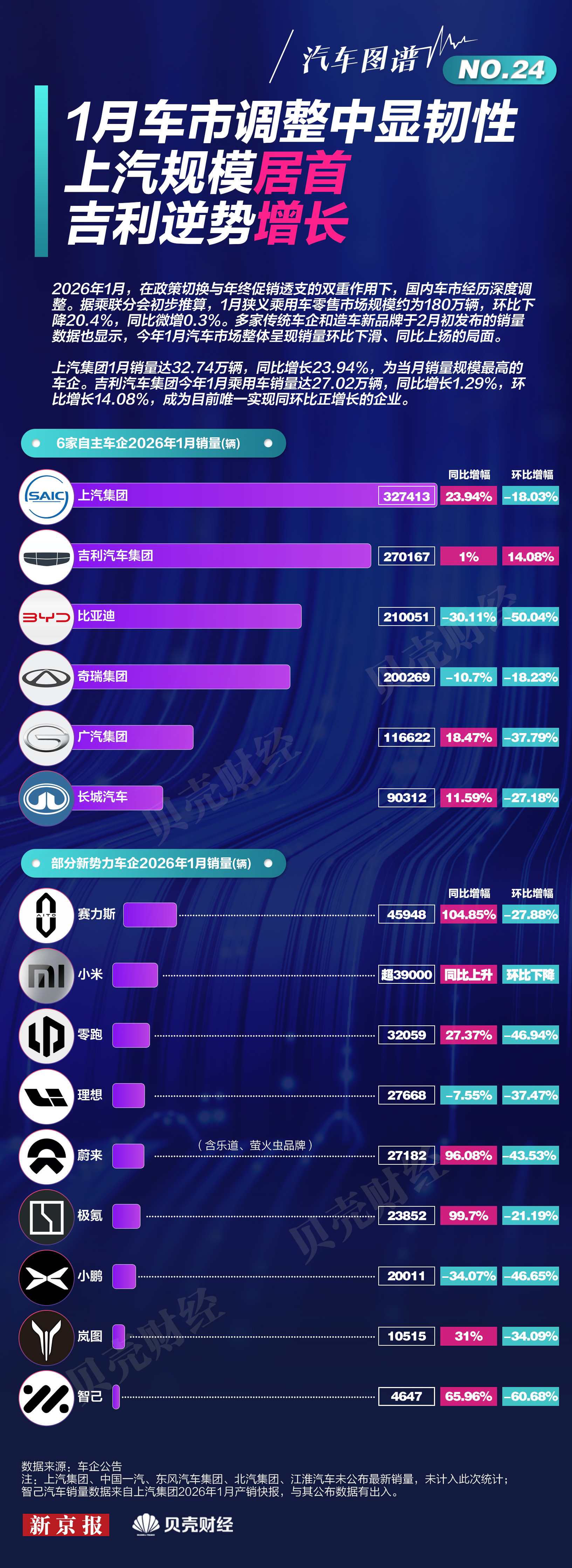
Group 1 - The domestic automotive market experienced a significant adjustment in January 2026, with a retail market size of approximately 1.8 million vehicles, a month-on-month decline of 20.4%, and a year-on-year increase of 0.3% [1] - SAIC Motor Corporation achieved the highest sales in January with 327,400 vehicles sold, representing a year-on-year growth of 23.94% [1] - Geely Automobile Group reported sales of 270,200 vehicles in January, with a year-on-year increase of 1.29% and a month-on-month increase of 14.08%, making it the only company with positive growth in both metrics [1] Group 2 - BYD's total sales in January were approximately 210,000 vehicles, with a significant overseas market growth where sales exceeded 100,000 units, marking a year-on-year increase of 51.47% [1] - Chery Group's total sales across five brands exceeded 200,000 vehicles in January, reflecting a year-on-year decline of 10.7% [2] - GAC Group's sales reached 116,600 vehicles in January, showing a year-on-year increase of 18.47% [2] Group 3 - New energy vehicle companies showed strong growth, with Seres, Zeekr, and NIO achieving year-on-year sales increases of 104.85%, 99.7%, and 96.08% respectively [2][4] - Xiaomi Automobile delivered over 39,000 vehicles in January, surpassing Leap Motor for the first time [2] - The overall performance of new energy vehicle companies indicates a robust growth trend despite challenges faced by traditional automakers [2][4]


汽车图谱㉔|1月车市调整:上汽销量居首,吉利逆势增长
Bei Ke Cai Jing· 2026-02-02 13:57
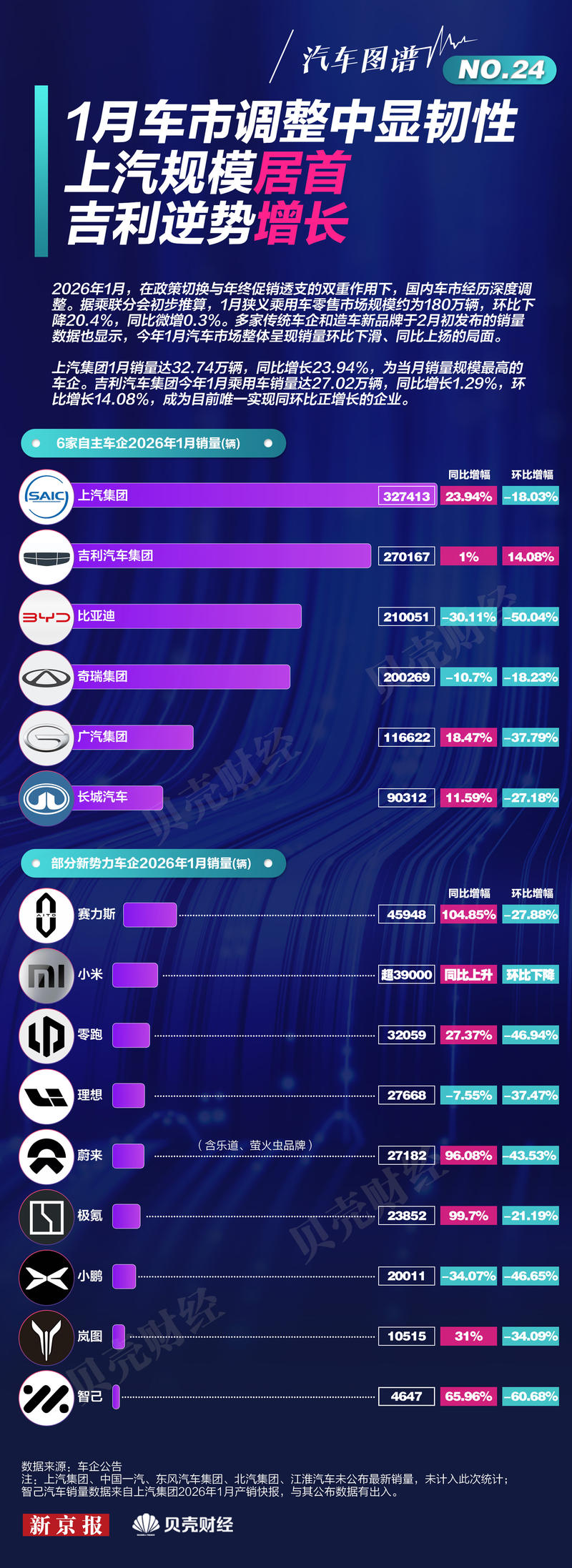
Group 1 - In January 2026, the domestic automotive market experienced a significant adjustment due to policy changes and year-end promotions, with retail market size for narrow passenger vehicles estimated at approximately 1.8 million units, a month-on-month decrease of 20.4% and a year-on-year increase of 0.3% [1] - SAIC Group achieved the highest sales in January with 327,400 units, representing a year-on-year growth of 23.94% [1] - Geely Automobile Group reported passenger vehicle sales of 270,200 units in January, showing a year-on-year increase of 1.29% and a month-on-month increase of 14.08%, making it the only company with positive growth in both comparisons [1] Group 2 - BYD's total sales in January were approximately 210,000 units, with over 100,000 units sold in overseas markets, marking a year-on-year growth of 51.47% in international sales [1] - Chery Group's total sales across five brands exceeded 200,000 units in January, reflecting a year-on-year decline of 10.7% [2] - GAC Group's sales reached 116,600 units in January, with a year-on-year increase of 18.47%, and its newly formed brands, Aion and Trumpchi, reported significant growth of 171.63% and 51.06% respectively [2] Group 3 - Great Wall Motors sold over 90,000 units in January, achieving a year-on-year growth of 11.59% [2] - Among new energy vehicle manufacturers, Xiaomi Auto delivered over 39,000 units in January, surpassing Leap Motor for the first time [2] - Other new energy vehicle companies such as Seres, Zeekr, and NIO reported year-on-year sales growth of 104.85%, 99.7%, and 96.08% respectively, indicating strong performance in the high-growth segment [2]
1月车市大震荡!8家汽车大集团最新销量出炉
Bei Jing Ri Bao Ke Hu Duan· 2026-02-02 13:48
Group 1: Overall Market Performance - In January 2026, major domestic automotive groups reported strong sales performance, with several companies achieving year-on-year growth in sales [2][5][19] - SAIC Motor Corporation sold 327,413 vehicles in January, marking a 23.9% increase year-on-year [5] - Geely Automobile's sales reached 270,167 units, a 1% increase year-on-year, with a 14% month-on-month growth [8] Group 2: Brand-Specific Performance - SAIC's self-owned brands accounted for 65.3% of total sales, with a 39.6% increase in sales of self-owned brands [5] - Geely's new energy vehicle sales reached 124,252 units, representing 46% of total sales, with a year-on-year growth of approximately 3% [8][9] - BYD's total new energy vehicle sales were 210,051 units, a decline of 30.11% year-on-year, but overseas sales surged by 51.47% [12] Group 3: Export and Overseas Market Growth - Chery Group maintained its position as the top exporter of Chinese automobiles, with exports reaching 119,605 units, a year-on-year increase of 48.1% [15] - SAIC's overseas sales reached 105,000 units, a 51.7% increase year-on-year, highlighting the growing importance of international markets [6] - BYD's overseas market expansion is becoming a significant growth driver, with nearly half of its total sales coming from exports [12] Group 4: Future Outlook and Strategies - Geely plans to launch 1-2 new products each quarter in 2026, aiming for an annual sales target of 3.45 million units [9] - GAC Group has set ambitious overseas sales targets for 2026, aiming for 250,000 units, with a goal of reaching 100,000 units in the Asia-Pacific market by 2027 [19] - Dongfeng Motor plans to introduce five new models in 2026 to support its growth in the new energy sector [24]

卖车赚不过卖电池?多家动力电池厂业绩预喜
Di Yi Cai Jing· 2026-02-02 13:42
Group 1 - The core viewpoint is that battery suppliers are becoming more profitable than automakers in the automotive industry, with significant profit forecasts for companies like Ruipu Lanjun and Guoxuan High-Tech [2] - Ruipu Lanjun expects a net profit of approximately 630 million to 730 million yuan in 2025, recovering from a net loss of 1.353 billion yuan in 2024, driven by increased sales volume and improved capacity utilization [2] - Guoxuan High-Tech anticipates a net profit of 2.5 billion to 3 billion yuan in 2025, representing a year-on-year growth of 107.16% to 148.59% [2] Group 2 - The profitability of the battery industry has improved significantly compared to automakers, with CATL's net profits for 2023, 2024, and the first three quarters of 2025 being 44.121 billion, 50.745 billion, and 49 billion yuan respectively [2] - BYD's net profits during the same period are 30.041 billion, 40.254 billion, and 23.333 billion yuan, highlighting a clear disparity in profitability between battery suppliers and automakers [2] - In the automotive industry, the sales profit margin is projected to be only 4.1% in 2025, down from 4.3% at the end of 2024, with a significant drop to 1.8% in December 2025, indicating ongoing pressure on profitability [3]


告别“车主喊贵、险企喊亏”?这家财险首次全年扭亏、年赚近亿
2 1 Shi Ji Jing Ji Bao Dao· 2026-02-02 13:08
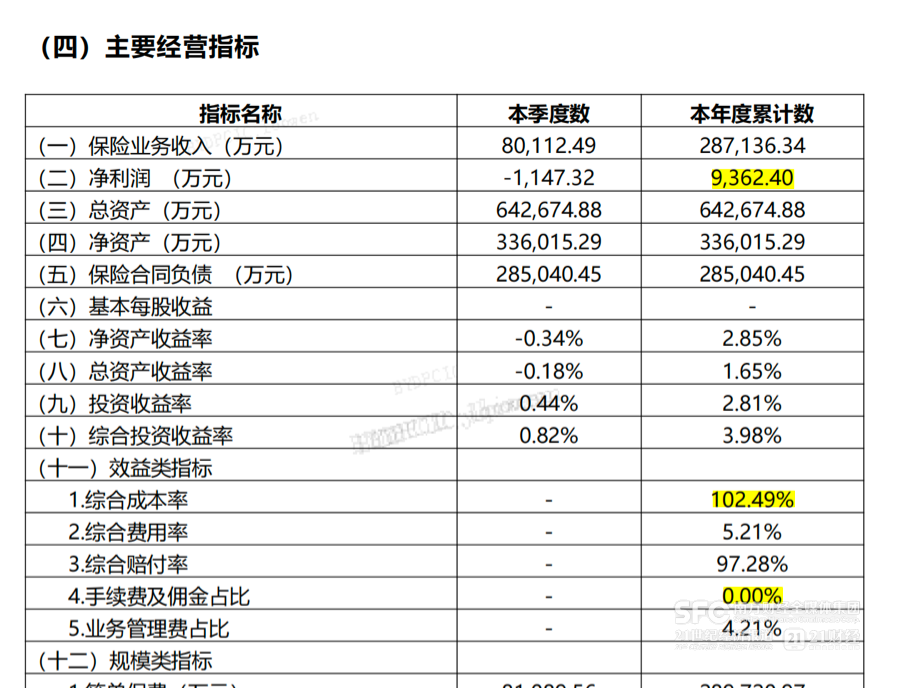
Core Viewpoint - Shenzhen BYD Property Insurance Co., Ltd. (BYD Insurance) reported its first annual profit in 2025, with net profit rising from a loss of 169 million yuan in 2024 to 93.62 million yuan in 2025, indicating a significant turnaround in performance [1][3]. Financial Performance - BYD Insurance's insurance business revenue doubled in 2025, reaching 1.351 billion yuan, driven by the expansion of its direct sales channel for auto insurance [3]. - The company's total assets stood at 642.67 million yuan, with net assets of 336.02 million yuan [2]. - The comprehensive cost ratio improved significantly from 308.81% in 2024 to 102.49% in 2025, while the comprehensive expense ratio dropped from 74.88% to 5.21% [3][4]. Industry Context - The overall insurance industry is experiencing a reduction in the "car owners complain about high costs, insurers report losses" dilemma, with leading insurers like China Pacific Insurance and Ping An achieving underwriting profitability in their new energy vehicle insurance businesses [1][8]. - The improvement in the industry is attributed to technological advancements, data accumulation, and regulatory guidance [8][10]. Risk and Capital Adequacy - BYD Insurance's solvency ratios showed significant fluctuations, with the comprehensive solvency adequacy ratio dropping to 589.95% in Q4 2025, although still above regulatory standards [6]. - The decline in solvency ratios is primarily due to a substantial increase in minimum capital requirements, which rose by 108.06%, outpacing the actual capital growth of 4.52% [6][7]. Market Dynamics - The insurance market for new energy vehicles is evolving, with companies like Tesla and NIO entering the insurance space, although some, like Fabao Tianxing Insurance, are still reporting losses [8][9]. - Despite improvements, the overall industry has not fully escaped underwriting losses, and insurers face challenges due to a mismatch between pricing and risk [10][11].
开年就迎“大逆转”:小米反超零跑,蔚来快追平理想,新造车1月环比暴跌
3 6 Ke· 2026-02-02 13:02
Core Insights - The automotive industry faced a significant downturn at the beginning of 2026, with many companies reporting disappointing sales figures compared to December 2025, despite some year-on-year growth due to low bases from the previous year [1][4][6] - The market is experiencing a reshuffling, with new entrants like AITO and Xiaomi gaining traction while established players like Li Auto and Xpeng are struggling [3][12][20] Group 1: Market Performance - January 2026 saw a 28% year-on-year decline in retail sales of passenger vehicles, with a 37% drop compared to December 2025 [6] - The new energy vehicle (NEV) market specifically experienced a 16% year-on-year decline and a 52% month-on-month decline [6] - AITO led the new energy vehicle segment with a delivery of 40,016 units, marking a significant year-on-year increase of 83% [13] Group 2: Company-Specific Performance - Xiaomi and AITO both reported over 39,000 units delivered in January, while Li Auto and Xpeng fell below the 30,000 mark [3][15] - Li Auto's deliveries were 27,668 units, showing a 37% month-on-month decline and an 8% year-on-year decline due to battery supply issues [20][22] - NIO delivered 27,182 units, a 96.1% year-on-year increase but a 43% month-on-month decline, with the new ES8 model being a key contributor [22][23] Group 3: Competitive Strategies - Companies are responding to market pressures by adjusting pricing strategies, with BMW reducing prices on 31 models and some brands offering zero-interest loans [6][7] - AITO and Xiaomi are launching new financial purchase plans to stimulate sales, including low-interest financing options [11][23] - The competitive landscape is intensifying, with companies like Geely and BYD also adjusting their strategies to maintain market share [26][28] Group 4: Traditional Automakers - Geely emerged as the top-selling automaker in January 2026 with 270,000 units sold, surpassing BYD's 210,000 units [26][28] - BYD's sales dropped by 30.11% year-on-year, with a significant 50.04% decline from December 2025 [28][30] - Chery and Great Wall Motors also reported declines, with Chery's sales at 200,269 units and Great Wall's at 90,312 units, reflecting broader market challenges [33][35]





比亚迪又一全新子品牌官宣!
Xin Lang Cai Jing· 2026-02-02 12:27
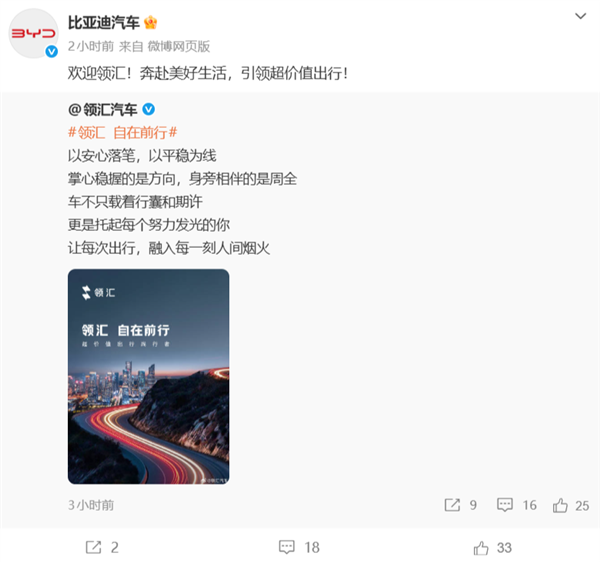
Group 1 - BYD officially announced the launch of its fourth sub-brand "Linghui," following Fangchengbao, Tengshi, and Yangwang [1][9] - The Linghui brand will focus on B-end markets, specifically targeting ride-hailing, taxi, and corporate vehicle services, distinguishing itself from the personal passenger vehicle market [3][11] - The Ministry of Industry and Information Technology recently published a list of new vehicle products, which includes four models under the Linghui brand: Linghui e5, e7, e9 (all pure electric vehicles), and M9 (a plug-in hybrid) [5][13] Group 2 - The four new models are not entirely new designs but are iterations of existing models from BYD's Dynasty and Ocean series [6][13] - The Linghui e9 is based on the BYD Han DM-i, the e7 is derived from the BYD Hai Si 07EV, the e5 corresponds to the Qin PLUS EV, and the M9 is based on the BYD Xia [6][13] - According to BYD's official data, the company expects to achieve cumulative sales exceeding 4.6 million units by 2025, reflecting a year-on-year growth of 7.73% [6][13]
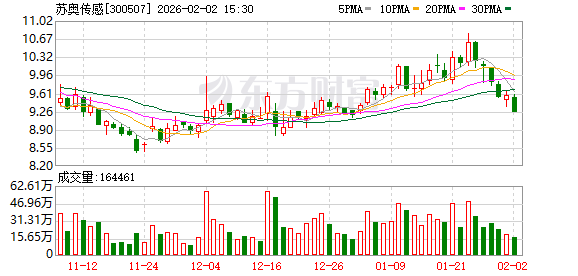
苏奥传感:公司目前与比亚迪、蔚来、小鹏、理想等多家新能源汽车企业建立了长期战略合作伙伴关系
Zheng Quan Ri Bao· 2026-02-02 12:16
Group 1 - The company, Suoao Sensor, has established long-term strategic partnerships with several major electric vehicle manufacturers, including BYD, NIO, Xpeng, and Li Auto [2] - The company is also engaged in project collaborations with the first-tier supply chain market [2]

1月30日【港股Podcast】恆指、寧德時代、快手、紫金礦業、比亞迪股份、 友邦保險
Ge Long Hui· 2026-02-02 12:11
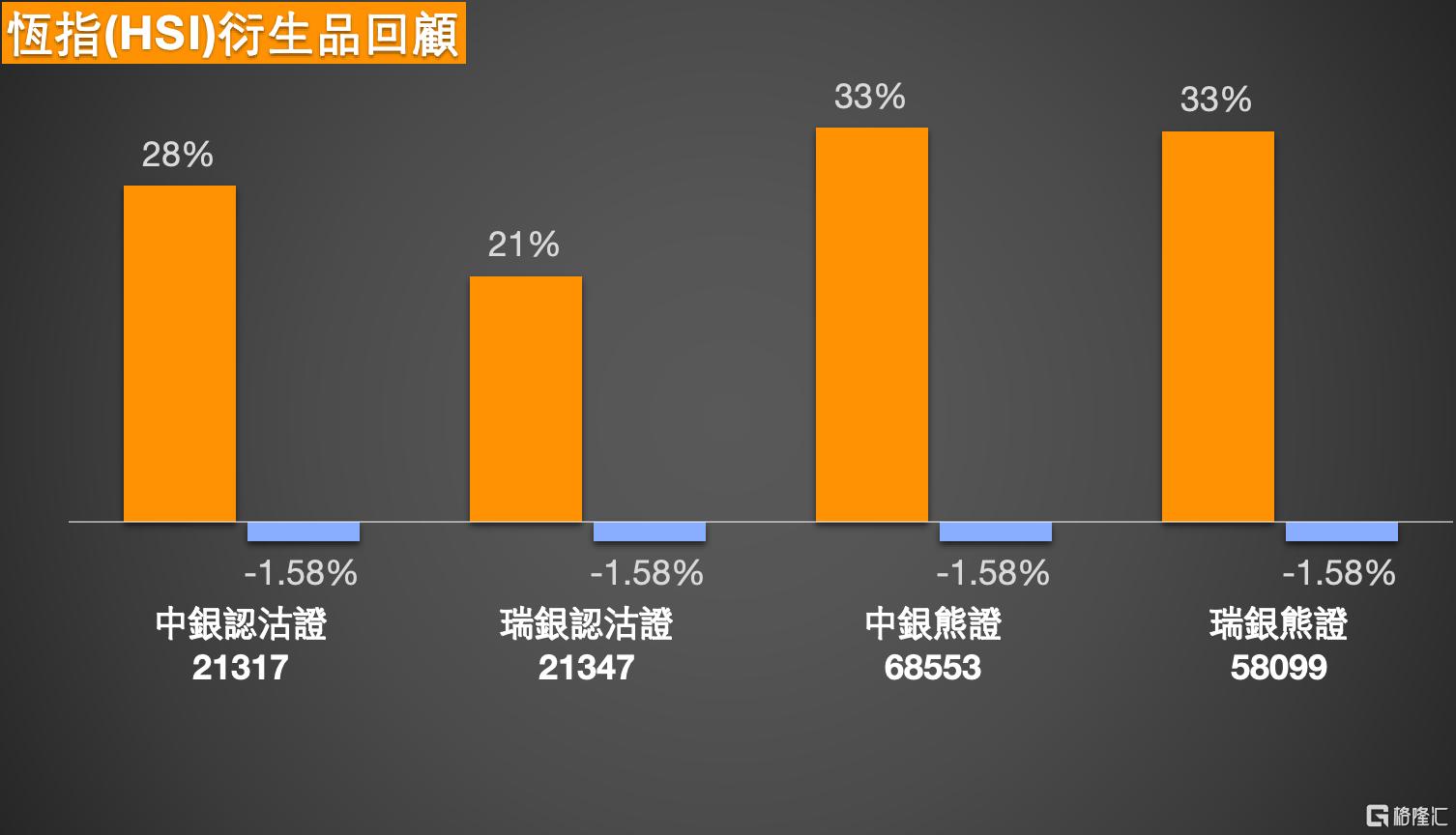
Group 1: Hang Seng Index (HSI) - The Hang Seng Index experienced a significant pullback after reaching a recent high of 28,000 points, closing around 27,300 points on January 30, with a decrease in trading volume compared to previous days but still at a relatively high level [2] - Investors are divided on the market outlook, with some viewing the pullback as a buying opportunity, while others are cautious about short-term volatility and are considering bear certificates [2] - Technical indicators show a bearish short-term signal with 9 sell signals and 6 buy signals, suggesting market sentiment is under pressure [2] Group 2: Contemporary Amperex Technology Co., Limited (CATL) - On January 30, CATL's stock price rose against the market trend, closing at 491 HKD, approaching the 500 HKD mark, with increased trading volume but still below the high levels seen in November [9] - Investors are focused on whether CATL can break through the 500 HKD level, with some looking at call options with a strike price of 629.38 HKD [9] - Technical indicators are neutral, with no clear direction for price movement, and resistance levels are set at 511 HKD and 520 HKD if the 500 HKD mark is surpassed [9] Group 3: Kuaishou Technology (Kuaishou) - Kuaishou's stock price adjusted to close at 80.15 HKD, maintaining the 80 HKD support level, with discussions on the potential to challenge the 90 HKD mark [15] - Technical indicators show a slight advantage for sell signals, indicating upward pressure, with resistance at 84.5 HKD and further at 86.8 HKD [15] - Investors interested in Kuaishou's bull certificates are advised to select products with a redemption price around 70 HKD or lower to mitigate risks [16] Group 4: Zijin Mining Group Co., Ltd. - Zijin Mining's stock price saw significant volatility, closing at 41.9 HKD, with a trading volume reaching a two-month high, indicating a technical pullback [22] - Investors remain optimistic about Zijin Mining, considering the recent drop as a short-term correction, with 38 HKD being a potential entry point [22] - Technical indicators show a slight predominance of sell signals, with key support at 38.5 HKD and further support at 36.3 HKD [22] Group 5: BYD Company Limited - BYD's stock price recorded a notable decline, closing at 97.75 HKD, having fallen below the middle line of the Bollinger Bands [28] - Technical indicators suggest a short-term support level at 94.6 HKD, with further support at 91.3 HKD, and resistance at 101.5 HKD [28] - Investors looking to position in BYD's bear certificates are recommended to choose products with a redemption price above 105 HKD to avoid risks associated with price rebounds [28] Group 6: AIA Group Limited - AIA's stock price fluctuated moderately, closing at 90.35 HKD, above the upper line of the Bollinger Bands, with increased trading volume [35] - Investors are optimistic about AIA's potential to challenge the 100 HKD mark, with technical indicators showing a slight predominance of sell signals [35] - Resistance levels are set at 92.6 HKD and 96.8 HKD, which need to be surpassed for a potential move towards the 100 HKD level [35]