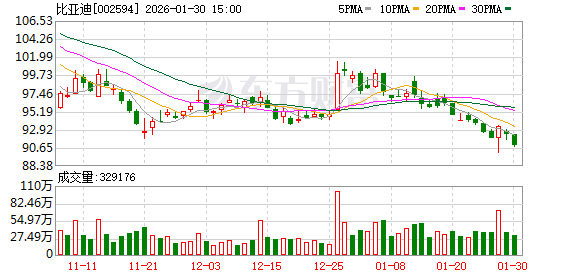
BYD(01211)

Search documents
智通港股通资金流向统计(T+2)|2月2日
智通财经网· 2026-02-01 23:35
Core Insights - Tencent Holdings (00700), Pop Mart (09992), and China Life (02628) ranked as the top three stocks for net inflow of southbound funds, with net inflows of 1.207 billion, 742 million, and 566 million respectively [1] - The top three stocks for net outflow of southbound funds were the Yingfu Fund (02800), Alibaba-W (09988), and Zijin Mining (02899), with net outflows of -2.595 billion, -950 million, and -858 million respectively [1] - In terms of net inflow ratio, Southern East Selection (03441), China Traditional Chinese Medicine (00570), and Baiaosaitu-B (02315) led the market with ratios of 51.51%, 44.99%, and 44.77% respectively [1] Net Inflow Rankings - Tencent Holdings (00700) had a net inflow of 1.207 billion, representing a 7.63% increase, closing at 621.000 (+2.31%) [2] - Pop Mart (09992) saw a net inflow of 742 million, with a net inflow ratio of 14.21%, closing at 231.400 (+7.03%) [2] - China Life (02628) recorded a net inflow of 566 million, with a net inflow ratio of 16.39%, closing at 35.180 (+3.17%) [2] Net Outflow Rankings - Yingfu Fund (02800) experienced the highest net outflow of -2.595 billion, with a net outflow ratio of -7.92%, closing at 28.040 (+2.64%) [2] - Alibaba-W (09988) had a net outflow of -950 million, with a net outflow ratio of -5.41%, closing at 173.500 (+2.12%) [2] - Zijin Mining (02899) faced a net outflow of -858 million, with a net outflow ratio of -12.94%, closing at 44.760 (+3.13%) [2] Net Inflow Ratio Rankings - Southern East Selection (03441) led with a net inflow ratio of 51.51%, with a net inflow of 6.9271 million, closing at 11.410 (+1.42%) [3] - China Traditional Chinese Medicine (00570) followed with a net inflow ratio of 44.99%, with a net inflow of 42.7833 million, closing at 2.090 (-4.57%) [3] - Baiaosaitu-B (02315) had a net inflow ratio of 44.77%, with a net inflow of 44.5882 million, closing at 47.000 (+9.35%) [3] Net Outflow Ratio Rankings - Guangshen Railway (00525) had the highest net outflow ratio of -57.47%, with a net outflow of -8.3198 million, closing at 2.250 (+1.35%) [3] - Huaxin Building Materials (06655) followed with a net outflow ratio of -54.93%, with a net outflow of -26.9041 million, closing at 20.020 (+1.16%) [3] - Kunlun Energy (00135) recorded a net outflow ratio of -53.60%, with a net outflow of -100 million, closing at 8.020 (+0.88%) [3]






英媒:中国创新速度重塑全球汽车制造业
Huan Qiu Wang Zi Xun· 2026-02-01 23:05
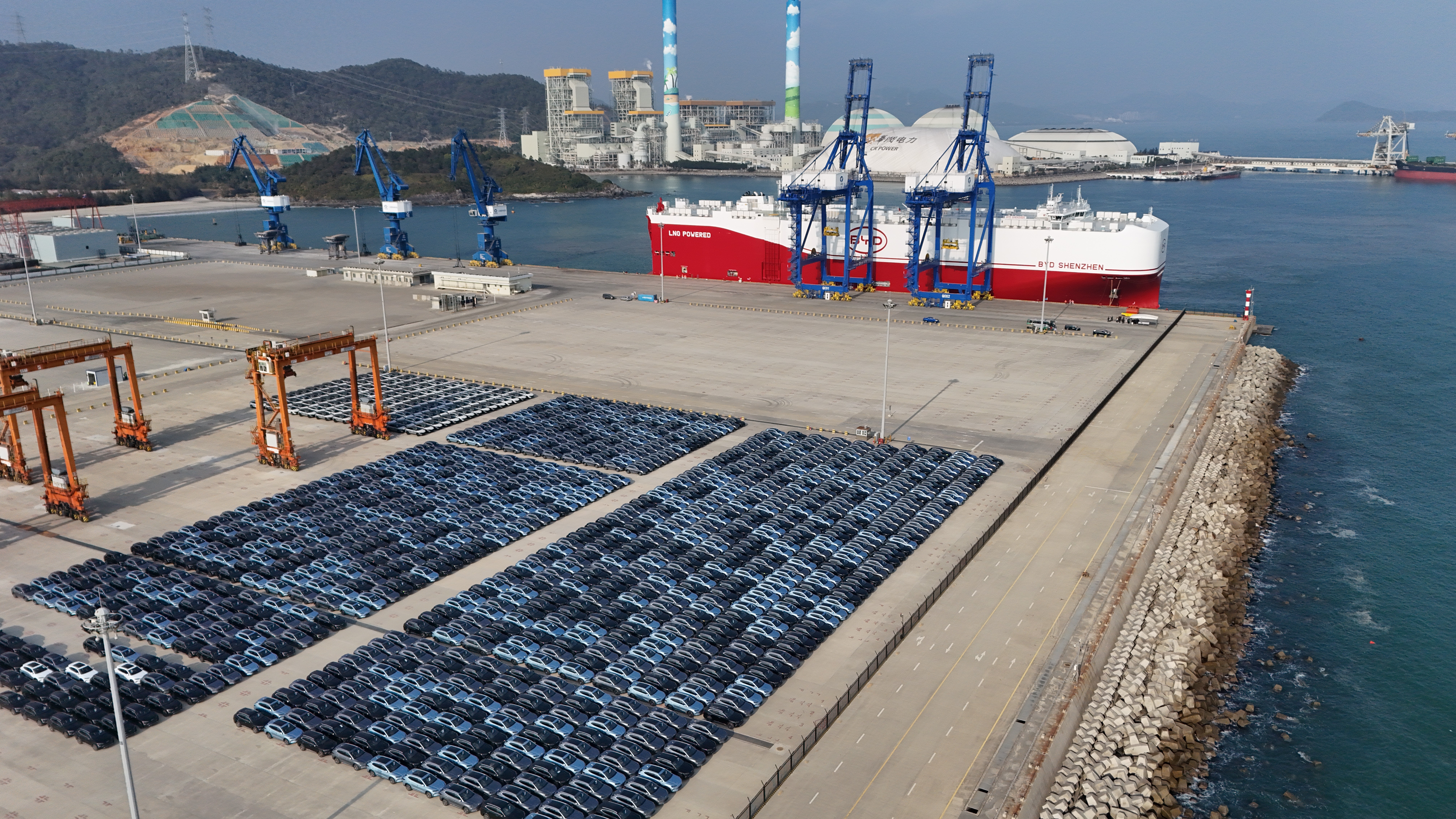
Group 1 - The core idea of the articles is that "Chinese speed" is reshaping the global automotive manufacturing industry, with local Chinese companies leading in technology adoption and product development speed, particularly in the electric vehicle sector [1][2] - Traditional automakers are facing intense competition from local manufacturers in China, which has become the largest market for rapid application of new technologies [1] - Chinese companies, such as BYD, can develop and launch new models in as little as 18 months, compared to the typical 5-year timeline for new products in the US, Europe, and Japan [1] Group 2 - The "Chinese speed" concept is also evident in the European adaptation of Chinese vehicles, with companies like Chery quickly modifying their models to meet local market expectations [2] - Geely's new brand Zeekr utilizes artificial intelligence to select potential components from 20 years of design and development, rather than creating entirely new models [2] - BYD's vertical integration is significantly higher than that of Western manufacturers, with 75% of its components produced in-house, contrasting with the trend of Western companies selling off their component businesses [2]

向新、向绿、向智能——电力数据折射深圳经济高质量发展新动向
Xin Hua She· 2026-02-01 16:44
Group 1 - The core viewpoint of the article highlights Shenzhen's significant transformation towards high-quality development, focusing on new, green, and intelligent initiatives, as evidenced by various electricity consumption statistics and the growth of the automotive industry [1][5][6] - In 2025, Shenzhen's automotive manufacturing electricity consumption increased by 23.98%, while traditional high-energy-consuming manufacturing saw a decline of 3.56%. BYD's sales of new energy vehicles reached 4.602 million units, a growth of 7.73%, with pure electric vehicle sales increasing by 27.86% to 2.2567 million units [1][5] - The overall electricity consumption in Shenzhen reached 127.215 billion kilowatt-hours in 2025, marking a growth of 4.71%, with the secondary industry growing by 2.28% and the tertiary industry by 7.24% [5][6] Group 2 - The "20+8" industrial cluster strategy in Shenzhen is flourishing, with electricity consumption in the pharmaceutical manufacturing, computer communication equipment manufacturing, and instrumentation manufacturing sectors growing by 6.57%, 8.87%, and 9.20%, respectively [6] - The construction of over 1,000 supercharging stations has led to a 16.22% increase in electricity consumption for charging stations, reaching 6.942 billion kilowatt-hours, which accounts for nearly 15% of the tertiary industry's electricity consumption [12] - In 2025, the information transmission, software, and IT service sectors saw a 27.07% increase in electricity consumption, with data center electricity consumption reaching 3.454 billion kilowatt-hours, a growth of 14.92% [12][15]

未来的机会在这里!任泽平带你看前沿科技
泽平宏观· 2026-02-01 16:05
以下文章来源于泽平宏观商学 ,作者泽平宏观商学 泽平宏观商学 . 前沿科技企业实战研学 读万卷书行万里路 2025 年 12 月 用心打造最有品质的实战研学。读万卷书,行万里路。把教室搬到世界上最优秀的企业, 请最优秀的企业家和科学家讲课。顺势而为,把握机遇。正心正念,坚持做长期正确的 事! 我们期待与更多的企业家朋友们携手同行,共赴 2026 实战研学之旅! 泽 ZEP 平 INGM 宏 ACR 观 O RE 商 SEAR 学 CH 1-6月日程安排 · 2月27日 北京 国内头部智驾科技企业 人形机器人 年研学安 型成 11月4日-11日 洛杉矶、拉斯维加斯、旧金山 CES、英伟达、特斯拉 谷歌、罗宾汉、playground 斯坦福大学、伯克利大学 8 武汉 黑芝麻智能、聚芯微电子 小马智行、晶科电子 2026年12月 & 广州 芯粤能、芯聚能 极免速递、中天科技集团、 2026年12月 万信达集团总部、Tokopedia、 8 东南亚 Surya cipta工业园、印尼商会 投资部 澳门百科 句儿 - *行程安排会因实际情况有所微调,请以实际出行为 我们 「是谁」 About us "走进中国科创心脏 ...



蔚来、极氪翻倍!造车新势力1月销量公布
DT新材料· 2026-02-01 16:05
【DT新材料】 获 悉 , 2月1日, 比亚迪 以及造车新势力零跑、理想、蔚来和小鹏先后发布1月交付量。主要的原因可能是年初是传统的市场淡季, 再叠加去年底免征车辆购置税政策的截止,提前透支了一部分需求,导致今年市场大盘下滑幅度整体比较大。当然也有逆势上涨的企业。 比亚迪 ,1月份新能源汽车销量210051辆,乘用车销量205518辆,1月出口新能源汽车合计100482辆。 | | | | 产量 | | | | | 销量 | | | | --- | --- | --- | --- | --- | --- | --- | --- | --- | --- | --- | | 项目类别 | 本月 | 去年同期 | 本年累计 | 去年累计 | 累计同比 | 本月 | 去年同期 | 本年累计 | 去年累计 | 累计同比 | | 新能源汽车 | 232, 358 | 327,864 | 232, 358 | 327.864 | -29. 13% | 210, 051 | 300, 538 | 210, 051 | 300, 538 | -30. 11% | | -乘用车 | 227.835 | 323,811 | 227 ...



比亚迪1月销量21.01万辆,同比下降30.67%
Ju Chao Zi Xun· 2026-02-01 15:10
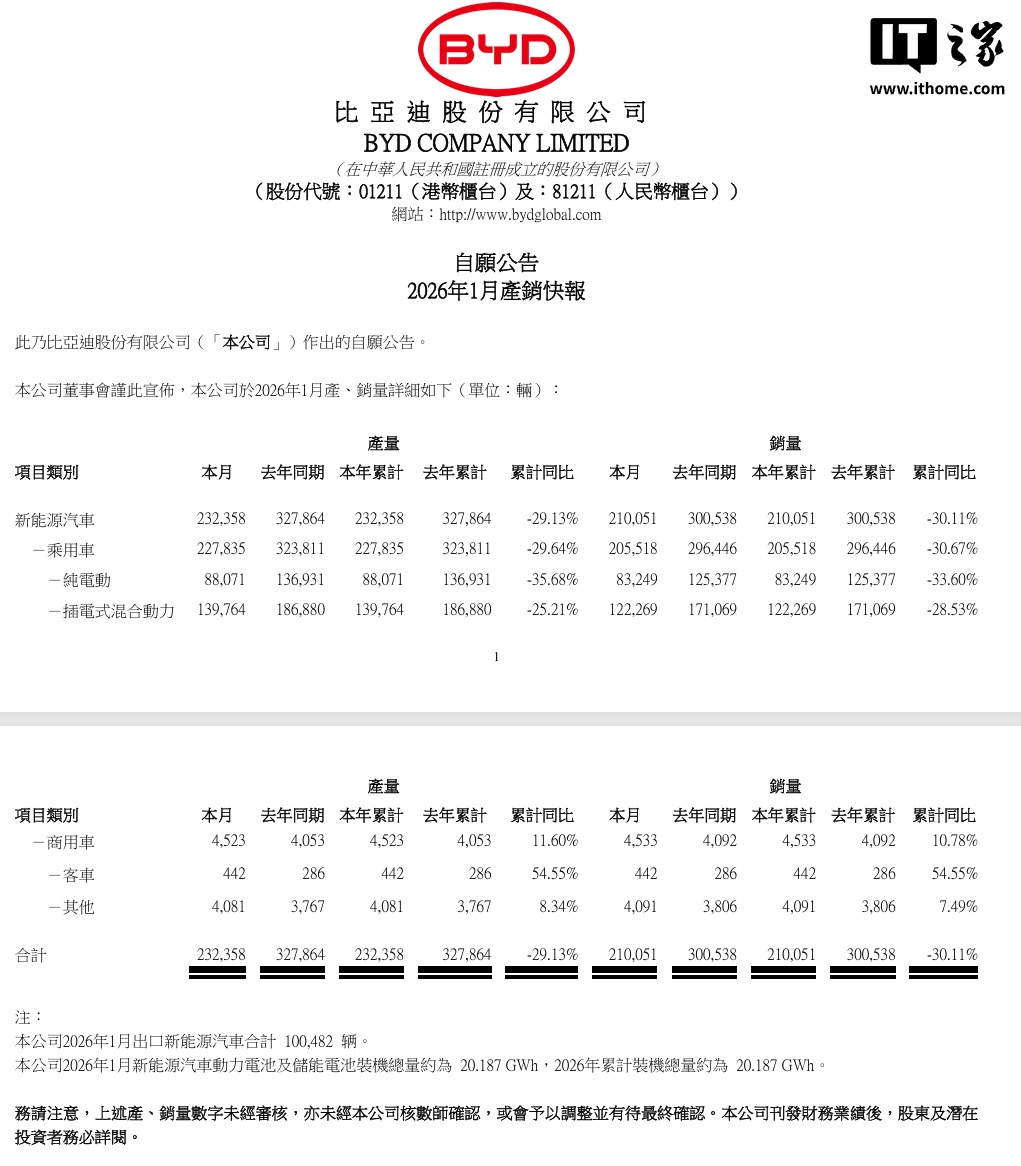
Core Insights - In January 2026, the company reported a production of 232,358 new energy vehicles (NEVs) and sales of 210,051 units, with cumulative production and sales figures matching the monthly data [2][3] - Compared to the same period last year, the production of NEVs decreased by 29.13% and sales dropped by 30.11% [2][3] Production and Sales Breakdown - Total NEV production in January 2026 was 232,358 units, down from 327,864 units in January 2025, reflecting a year-on-year decline of 29.13% [3] - Total NEV sales for January 2026 were 210,051 units, compared to 300,538 units in January 2025, marking a decrease of 30.11% [3] - Passenger vehicle sales were 205,518 units, a decline of 30.67% year-on-year [2][3] - Within the passenger vehicle segment, pure electric vehicle sales were 83,249 units, down 33.6% from the previous year, while plug-in hybrid vehicle sales were 122,269 units, a decrease of 28.53% [2][3] - Commercial vehicle sales reached 4,533 units, showing a year-on-year increase of 10.78%, with bus sales rising significantly by 54.55% to 442 units [2][3] Export and Battery Installation - The company exported a total of 100,482 NEVs in January 2026 [3] - The total installed capacity of power batteries and energy storage batteries for the month was approximately 20.187 GWh [3]
2026年1月车企成绩单出炉:小米交付超3.9万台,登顶新势力榜首,雷军有大动作!车市打响“金融战”:低首付,零利息
Mei Ri Jing Ji Xin Wen· 2026-02-01 14:41
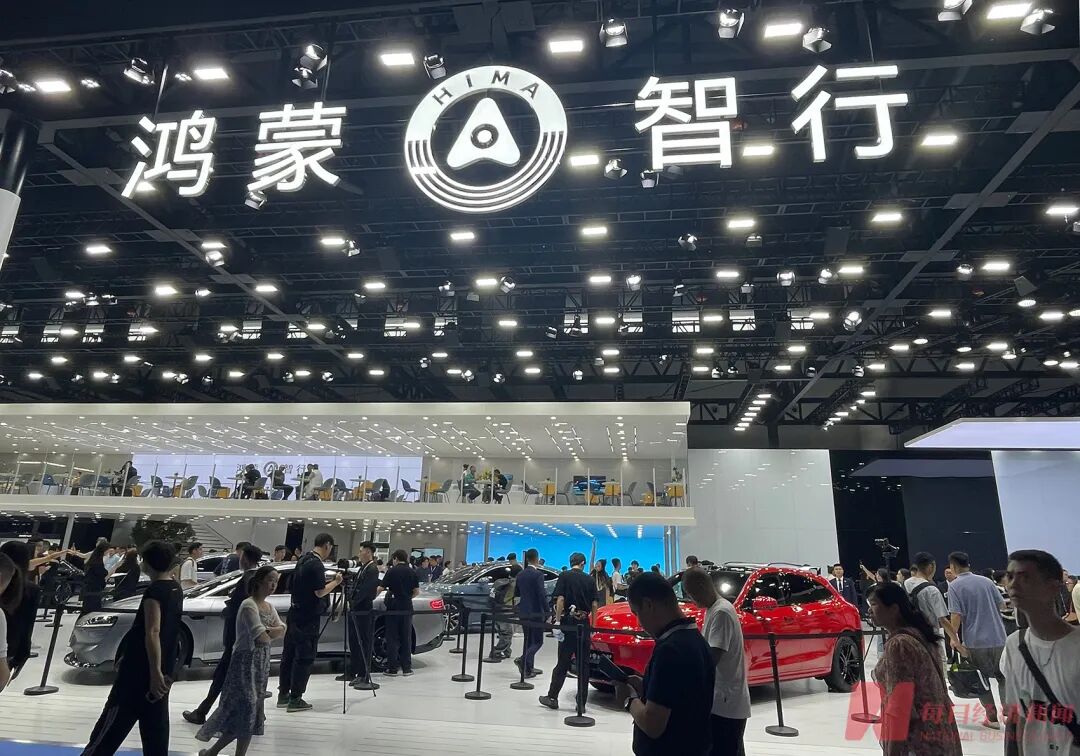
Core Insights - In January 2026, major automotive companies reported their sales data, showing a clear division among brands, with new energy vehicles driving growth [1][2][4] - BYD sold approximately 210,000 new energy vehicles in January 2026, while Hongmeng Zhixing reported a delivery of 57,900 units, marking a year-on-year increase of 65.6% [1][2] - Xiaomi Auto delivered over 39,000 vehicles in January, a decrease of 22% from December 2025, with a target of 550,000 units for the year [2][4] - Li Auto and XPeng reported deliveries of approximately 27,700 and over 20,000 units respectively, with XPeng experiencing a year-on-year decline of 34% [4][8] Company Performance - BYD's January sales reached about 210,000 units, indicating strong performance in the new energy sector [1] - Hongmeng Zhixing's main model, the Wenjie, contributed significantly with over 40,000 units delivered, reflecting an 83% year-on-year growth [1] - Xiaomi Auto's sales were impacted by the transition phase of its SU7 model, with the YU7 being the primary model delivered [2] - Li Auto's sales were approximately 27,700 units, while XPeng's deliveries fell to over 20,000 units, showing a significant decline [4][8] Market Trends - The overall automotive market in January 2026 is expected to see retail sales of around 1.8 million units, reflecting a month-on-month decline of 20.4% but a slight year-on-year increase of 0.3% [4][12] - The late timing of the Chinese New Year in 2026 contributed to a higher number of working days compared to the previous year, influencing sales dynamics [4][12] - Financial incentives such as long-term low-interest financing plans have been introduced by several companies, including NIO and Xiaomi, to stimulate demand [10][11]



比亚迪 1 月新能源汽车销量超 21 万辆同比下滑 30.11%,出口超 10 万辆
Xin Lang Cai Jing· 2026-02-01 14:27
Core Insights - BYD reported a total export of 100,482 new energy vehicles in January 2026, along with a total installed capacity of approximately 20.187 GWh for new energy vehicle power batteries and energy storage batteries [1]. Production and Sales Summary - Total production of new energy vehicles in January was 232,358 units, a decrease of 29.13% compared to the same month last year [3]. - Passenger vehicle production was 227,835 units, down 29.64% year-on-year [3]. - Pure electric vehicle production reached 88,071 units, reflecting a significant decline of 35.68% compared to the previous year [3]. - Plug-in hybrid vehicle production was 139,764 units, showing a decrease of 25.21% year-on-year [3]. - Commercial vehicle production was 4,523 units, an increase of 11.60% compared to the same month last year [3]. - Bus production was 442 units, marking a substantial increase of 54.55% year-on-year [3]. - Other vehicle production totaled 4,081 units, up by 8.34% compared to the previous year [3].
“新王”诞生!比亚迪,大跌!雷军,大动作
Zhong Guo Ji Jin Bao· 2026-02-01 13:57
Core Viewpoint - The competition landscape in the Chinese automotive market has shifted in January, with Xiaomi emerging as the new leader among new energy vehicle manufacturers, while BYD faces significant declines in domestic sales [2][4]. Group 1: BYD's Performance - BYD reported a total sales volume of 210,051 units in January, marking a year-on-year decline of 30.11% and a month-on-month decline of 50.04% [2][5]. - The domestic sales of BYD reached 109,600 units in January, down 53.22% year-on-year and down 61.85% month-on-month [6]. - The decline in BYD's domestic sales is attributed to the reduction in the new energy vehicle purchase tax, which has impacted sales strategies [7]. Group 2: Competitors' Performance - Xiaomi's vehicle deliveries exceeded 39,000 units in January, surpassing Leap Motor for the first time and becoming the monthly sales champion among new energy vehicle manufacturers [4][12]. - Other competitors like Seres, NIO, and Lantu reported significant year-on-year growth in January, with increases of 104.85%, 96.08%, and 31.29% respectively [4]. - Geely's new energy and fuel vehicle sales both saw growth in January, with 124,252 units and 145,900 units sold respectively, showcasing a dual strategy that BYD lacks [8]. Group 3: Financial Strategies - Several automotive companies, including Xiaomi, have introduced long-term low-interest financing options to stimulate sales amid declining subsidies [16][17]. - The introduction of these financing plans is seen as a strategic response to counteract the effects of subsidy reductions and to alleviate consumer purchasing pressure [18].
“新王”诞生!比亚迪 大跌!雷军 大动作
Zhong Guo Ji Jin Bao· 2026-02-01 13:52
Core Viewpoint - The competition landscape in the automotive industry has shifted in January, with Xiaomi emerging as a new leader, while BYD faces significant domestic sales challenges [2][5]. Group 1: BYD's Performance - BYD reported a total sales volume of 210,051 units in January, representing a year-on-year decline of 30.11% and a month-on-month decline of 50.04% [4][7]. - The domestic sales of BYD reached 109,600 units in January, down 53.22% year-on-year and 61.85% month-on-month, indicating a continuous downward trend since October 2025 [7]. - The reduction in the new energy vehicle purchase tax from full exemption to 5% may have significantly impacted BYD's January sales [4][5]. Group 2: Competitors' Performance - Xiaomi's vehicle deliveries exceeded 39,000 units in January, surpassing Leap Motor for the first time, marking it as the monthly sales champion among new car manufacturers [5][11]. - Other companies like Seres, NIO, and Lantu reported significant year-on-year growth in January, with increases of 104.85%, 96.08%, and 31.29% respectively [5]. - Geely's new energy and fuel vehicle sales both grew in January, with 124,252 and 145,900 units sold respectively, showcasing a dual strategy that BYD lacks [7][10]. Group 3: Financial Strategies - Several automakers, including NIO and Xiaomi, have introduced long-term low-interest financing options to stimulate sales amid declining subsidies [17]. - Xiaomi's financing plan offers a starting down payment of 99,900 yuan and monthly payments as low as 1,931 yuan, aiming to attract more customers [17]. - The recent policy changes extending the personal consumption loan subsidy until the end of 2026 may further influence the competitive landscape by easing consumer purchasing pressure [17].