
BYD(01211)

Search documents
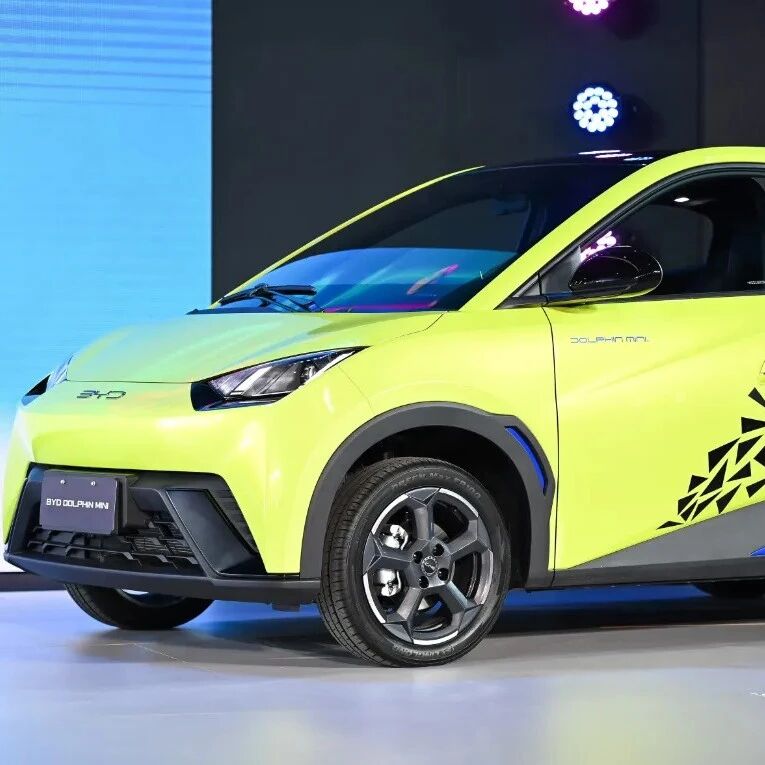
比亚迪Dolphin Mini 登顶巴西2月销冠;Meta智能眼镜曝隐私风险丨Going Global
创业邦· 2026-03-08 10:34
Core Insights - The article highlights significant developments in the global expansion of various companies, focusing on their growth metrics, market strategies, and challenges faced in international markets [2][3]. Group 1: SHEIN's Growth in the EU - SHEIN reported a monthly active user count of 156 million in the EU, marking an increase of over 10 million users, with a growth rate of 6.9% compared to the previous period [5][6]. - France leads in user distribution with 28.2 million, followed by Spain (27.3 million) and Italy (25 million), while Germany remains the largest revenue contributor [5]. - The overall growth rate has slowed from 11.6% to 6.9%, indicating potential market saturation or increased competition [6]. Group 2: Middle East Tensions Impacting E-commerce - Due to escalating tensions in the Middle East, delivery times for e-commerce platforms like Temu and Amazon have significantly increased, with Temu's delivery time extending from 15 to 20 days [7]. - The region's online retail sales have been growing at an annual rate of approximately 11%, with projections estimating the market size to reach $57 billion by 2026 [7]. Group 3: BYD's Success in Brazil - BYD's Dolphin Mini became the best-selling vehicle in Brazil in February 2026, with sales of 4,100 units, marking the first time an electric vehicle topped monthly retail sales [11]. - BYD aims to become the leading brand in Brazil's light passenger vehicle market by 2030, having sold over 170,000 electric and hybrid models since entering the market [12]. Group 4: Tencent Cloud's Expansion in Europe - Tencent Cloud announced the addition of a third availability zone in Frankfurt, Germany, set to open in Q2 2026, enhancing its digital infrastructure in Europe [14][15]. - The company has experienced double-digit growth in international business for three consecutive years, with plans to double its overseas customer base by 2025 [14]. Group 5: Tuya Smart's Developer Growth - Tuya Smart reported a total revenue of $321.8 million for 2025, with a year-on-year growth of approximately 7.8% [16]. - The number of registered developers exceeded 1.8 million, reflecting a growth of 36.8% compared to the previous year [16]. Group 6: CATL and Rio Tinto Collaboration - CATL signed a memorandum of understanding with Rio Tinto to collaborate on electrification strategies, supply chain sustainability, and circular economy practices [19][20]. - The partnership aims to leverage CATL's battery technology to enhance Rio Tinto's mining operations and explore sustainable resource development [20]. Group 7: Jasmine Milk's Expansion in Singapore - Jasmine Milk opened its first store in Singapore, marking its entry into Southeast Asia, with plans for further expansion in the region [21][22]. - The brand focuses on direct sales and high-quality products rather than franchise models, aiming for deep localization in core markets [22]. Group 8: Meta's Privacy Concerns - Meta's smart glasses have been reported to pose privacy risks, as user interactions with AI may be reviewed by third-party data annotators [26]. - The company stated that users are informed about data usage in their service terms, but concerns about user awareness and consent remain [26]. Group 9: Apple's Collaboration with Google - Apple plans to utilize Google's data centers to run a new version of Siri powered by the Gemini model, indicating a deepening partnership in AI [28]. - The new Siri is expected to launch later this year, with Apple relying on Google's infrastructure to handle increased AI usage demands [28].


电力设备行业周报:欧洲天然气价格再度大涨,比亚迪举办第二代刀片电池暨闪充技术发布会
GOLDEN SUN SECURITIES· 2026-03-08 08:24
Investment Rating - The report does not explicitly state an investment rating for the industry Core Insights - The report highlights significant price fluctuations in the photovoltaic sector, with upstream material prices declining while component prices are rising, indicating a complex market dynamic [15][16][17] - European natural gas prices have surged, prompting a shift towards wind and solar energy as alternative power sources, particularly in the EU [18][20] - The hydrogen energy sector is set to receive increased policy support during the "14th Five-Year Plan" period, with a target of over 250,000 tons/year of renewable hydrogen production capacity by the end of 2025 [22] - The energy storage market has seen a substantial increase in installed capacity, with a 182% year-on-year growth in power and a 472% increase in capacity in early 2026 [23] - The electric vehicle sector is witnessing advancements in battery technology, particularly with BYD's second-generation blade battery, which offers improved energy density and charging speed [24] Summary by Sections 1. New Energy Generation 1.1 Photovoltaics - Upstream material prices have shown a downward trend, while component prices have increased, with N-type G10L monocrystalline silicon wafer prices averaging 1.07 RMB/piece, down 2.73% [15][16] - The report emphasizes the importance of supply-side reforms and technological advancements, highlighting companies like Tongwei Co., Xiexin Technology, and LONGi Green Energy as key players [17] 1.2 Wind Power & Grid - European natural gas prices have increased by 40%, leading to a potential acceleration in the transition to wind energy as a substitute for coal and gas [18][20] - The report suggests focusing on companies involved in offshore wind, such as Goldwind Technology and Tianjun Wind Power, as well as those in the cable and component sectors [19] 1.3 Hydrogen & Energy Storage - The hydrogen sector is expected to grow significantly, with a focus on leading companies like Longi Green Energy and Sunshine Power [22] - Energy storage installations reached 9.51 GW/24.18 GWh in early 2026, marking a substantial increase in capacity [23] 2. Electric Vehicles - BYD's new blade battery technology significantly enhances energy density and charging speed, with the potential for a 1036 km range on the Tengshi Z9GT model [24] - The report anticipates continued demand in the battery sector, with companies like Ningde Times and Penghui Energy highlighted as key players [25]
5分钟充电至70%,比亚迪重塑世界能源格局?
Sou Hu Cai Jing· 2026-03-08 08:12
Group 1 - BYD has announced a revolutionary breakthrough with its second-generation blade battery, allowing charging from 10% to 70% in just 5 minutes and to 97% in 10 minutes, even in extreme cold conditions [2][4] - This advancement effectively addresses the slow charging issue of electric vehicles, significantly reducing user anxiety regarding battery life and expanding the usability of electric cars in high-latitude regions [4] - The implications of this technology could lead to an accelerated penetration rate of electric vehicles, potentially surpassing 80% earlier than expected, and may signal a shift in the global energy landscape from a "petroleum hegemony" to a "diverse electric ecosystem" [4] Group 2 - The current dominance of oil in the U.S. hegemony is critical, with historical context provided on how oil has been used as a tool for economic control, particularly against the Soviet Union [6][10] - The transition towards alternative energy sources has been ongoing, with countries seeking to reduce their dependence on oil, which poses a threat to the "petroleum-dollar" system [13] - The rise of China's "Renminbi settlement" system is challenging the "dollar settlement" system, with significant increases in oil trade settled in Renminbi from countries like Saudi Arabia and Russia [15]

清华公布毕业生去向:出国比例仅8.5%,华为字节是最大赢家
量子位· 2026-03-08 04:26
Group 1 - The proportion of Tsinghua graduates pursuing further studies abroad is 8.5%, which is lower than the average of the past decade [2][24] - The employment rate in key domestic sectors exceeds 86%, maintaining above 80% for 16 consecutive years, with major companies hiring including Huawei, BYD, ByteDance, Tencent, and others [4] - The employment rate of Tsinghua graduates outside Beijing is 56.3%, consistently above 50% for 11 years, indicating a trend of graduates not solely remaining in Beijing or coastal developed areas [5][17] Group 2 - Major employment destinations for Tsinghua graduates include leading digital technology companies such as Huawei, Tencent, and Alibaba, which actively recruit on campus [7][8] - There is a significant increase in graduates entering advanced manufacturing and energy/defense sectors, with employment numbers in these areas growing by 11% year-on-year [11] - Tsinghua University plays a crucial role in guiding graduates towards key industries, organizing specialized recruitment events and activities focused on national defense and manufacturing [14][15] Group 3 - The number of graduates choosing to study abroad is declining, with only 8.5% of the 2025 cohort opting for this path, indicating a higher retention rate among those entering research and industry [24][27] - Technical positions are in high demand, particularly in AI, with major companies increasing their recruitment for these roles significantly [28][31] - Tsinghua graduates are increasingly entering the manufacturing, energy, and national defense sectors, reflecting a broader trend of top talent moving to areas of high demand [36][37]




比亚迪:信息点评 兆瓦闪充 直击补能痛点,驱动产品新周期-20260308
GUOTAI HAITONG SECURITIES· 2026-03-08 02:20
Investment Rating - The report maintains a "Buy" rating for BYD [2][6] Core Insights - The launch of the second-generation blade battery and flash charging technology addresses key pain points in energy replenishment and initiates a new vehicle cycle across all brands [2][12] - The second-generation blade battery achieves the fastest charging speeds globally, with 10%-70% charge in 5 minutes and 10%-97% in 9 minutes, while also improving performance in low-temperature conditions [12] - BYD plans to establish 20,000 flash charging stations by the end of 2026, enhancing its charging network coverage in urban and highway areas [12] - New models from all five brands will feature the "megawatt flash charging + second-generation blade battery," with various models set to launch soon [12] Financial Summary - Total revenue is projected to grow from 602.315 billion in 2023 to 1,296.117 billion in 2027, with a CAGR of approximately 20% [4] - Net profit attributable to shareholders is expected to increase from 30.041 billion in 2023 to 62.589 billion in 2027, reflecting a significant growth trajectory [4] - Earnings per share (EPS) is forecasted to rise from 3.29 in 2023 to 6.86 in 2027 [4] - The price-to-earnings (P/E) ratio is projected to decrease from 28.41 in 2023 to 13.64 in 2027, indicating potential valuation improvement [4] Market Data - The stock has a 52-week price range of 87.05 to 405.00 [7] - The total market capitalization is approximately 853.552 billion [7] - The company has a net asset value per share of 26.93, with a price-to-book (P/B) ratio of 3.5 [8]
比亚迪(002594):信息点评:\兆瓦闪充\直击补能痛点,驱动产品新周期
GUOTAI HAITONG SECURITIES· 2026-03-08 01:28
Investment Rating - The report maintains a "Buy" rating for BYD [2][6]. Core Views - The launch of the second-generation blade battery and flash charging technology addresses key pain points in energy replenishment and initiates a new vehicle cycle across all brands [2][12]. - The second-generation blade battery achieves a rapid charging speed, allowing 10%-70% charge in 5 minutes and 10%-97% in 9 minutes, significantly improving charging efficiency and performance in low-temperature conditions [12]. - BYD plans to establish 20,000 flash charging stations by the end of 2026, enhancing its charging network coverage in urban and highway areas [12]. - New models from all brands will feature the "megawatt flash charging + second-generation blade battery," with promotional offers to boost market penetration [12]. Financial Summary - Total revenue is projected to grow from 602.3 billion CNY in 2023 to 1,296.1 billion CNY in 2027, reflecting a compound annual growth rate (CAGR) of approximately 20% [4]. - Net profit attributable to shareholders is expected to increase from 30.0 billion CNY in 2023 to 62.6 billion CNY in 2027, with a notable growth of 80.7% in 2024 [4]. - Earnings per share (EPS) are forecasted to be 3.29 CNY in 2023, rising to 6.86 CNY by 2027 [4]. - The price-to-earnings (P/E) ratio is projected to decrease from 28.41 in 2023 to 13.64 in 2027, indicating improved valuation over time [4].
EV变局(1)比亚迪改写世界版图
日经中文网· 2026-03-08 00:35
Core Viewpoint - BYD is reshaping the global electric vehicle (EV) landscape, having surpassed Tesla in sales across over 20 countries in the past five years, and is projected to become the global leader in EV sales by 2025 [2][8]. Group 1: Sales Performance - BYD's sales in the UK surpassed Tesla for the first time in 2025, marking a significant milestone for the company [3]. - In 2025, BYD is expected to achieve the title of global EV sales leader, with a notable presence in 22 countries, including the UK, Hong Kong, and Singapore [8]. - The average price of BYD's passenger vehicles in China is projected to be 114,000 yuan in 2025, showcasing its competitive pricing strategy [8]. Group 2: Global Expansion Strategy - BYD has rapidly expanded its global sales, entering 113 countries and regions within four years since 2021, emphasizing the need for speed to outpace competitors [7]. - The company is pragmatically entering markets like Uruguay by initially focusing on commercial vehicles, establishing relationships with local governments and dealers [10]. - With the opening of the Qianhai Port in 2025, transportation times for goods from Asia to South America have been significantly reduced, facilitating BYD's market entry [10]. Group 3: Challenges and Market Dynamics - BYD faces challenges in the North American market, with plans for a new passenger vehicle factory in Mexico being canceled due to political pressures [11]. - The EU has implemented standards to exclude Chinese vehicles, creating additional barriers for BYD's expansion in Europe [13]. - Domestic sales in China are projected to decline by 10% in 2025, impacting overall performance and leading to a decrease in revenue for the first time in 21 quarters [11][15].
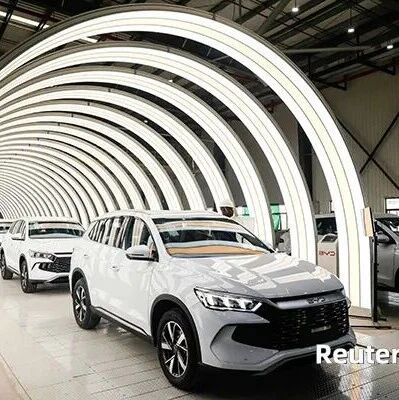
比亚迪公布国际专利申请:“极片、电芯单元、电池和用电设备”
Sou Hu Cai Jing· 2026-03-07 21:39
Group 1 - The core point of the article is that BYD has filed an international patent application for a technology related to battery components, indicating its ongoing innovation efforts in the battery sector [1] - The patent application number is PCT/CN2025/116213, with an international publication date set for March 5, 2026 [1] - In 2023, BYD has announced a total of 460 international patent applications, representing a significant increase of 467.9% compared to the same period last year [1] Group 2 - In the first half of 2025, BYD invested 29.596 billion yuan in research and development, which is a year-on-year increase of 50.84% [1]

今日新闻丨新款小鹏G6超级增程版上市,售价18.68万元!极狐与宁德时代巧克力换电正式合作!新款仰望U7/仰望U8/仰望U8L上市!
电动车公社· 2026-03-07 15:53
Group 1 - The new Xiaopeng G6 Super Extended Range version has been launched with a price of 186,800 yuan [1][2] - The design of the new Xiaopeng G6 largely follows the current model, featuring a seamless LED headlight and a slightly adjusted front and rear design [4] - The interior maintains a simple and stylish design with features like dual-layer soundproof glass and an 800V+5C supercharging platform [6] Group 2 - The Xiaopeng G6 is equipped with a 110kW 1.5T range extender and a 218kW motor, with a CLTC pure electric range of 430 km and a WLTC fuel consumption of 5.9L/100km [8] - Xiaopeng's super range extension technology is being integrated across its product line, offering a comprehensive range of over 1,700 km [10] Group 3 - Extreme Fox has announced a deep cooperation with CATL for "Chocolate Battery Swap," aiming to enhance user charging experiences with a 99-second full charge [11] - More models are joining the "battery swap family," indicating a growing trend in the industry towards efficient charging solutions [14] Group 4 - New models of Yangwang U7, U8, and U8L have been launched, with prices ranging from 658,000 to 1,300,000 yuan [15][17] - The Yangwang U7 features the second-generation blade battery and offers a range of 860 km to 1,006 km, while the U8 has a comprehensive range of 1,205 km [19] - The Yangwang U8L has upgraded safety and privacy features, enhancing data protection for users [21]



比亚迪公布国际专利申请:“极芯、电池、电池包和用电设备”
Sou Hu Cai Jing· 2026-03-07 14:54
Core Viewpoint - BYD has filed an international patent application for a technology related to "extreme core, battery, battery pack, and electrical equipment," indicating its ongoing innovation efforts in the battery sector [1] Group 1: Patent Application - The patent application number is PCT/CN2025/075814, with an international publication date set for March 5, 2026 [1] - This marks a significant step in BYD's commitment to expanding its intellectual property portfolio [1] Group 2: R&D Investment - In 2025, BYD has announced a total of 455 international patent applications, representing a 461.73% increase compared to the same period last year [1] - The company invested 29.596 billion yuan in research and development in the first half of 2025, which is a year-on-year increase of 50.84% [1]