
XIAOMI(01810)

Search documents
南向资金今日成交活跃股名单(1月16日)
Zheng Quan Shi Bao Wang· 2026-01-16 15:35
Market Overview - On January 16, the Hang Seng Index fell by 0.29%, with southbound funds totaling a transaction amount of HKD 110.94 billion, comprising HKD 55.52 billion in buying and HKD 55.42 billion in selling, resulting in a net buying amount of HKD 0.94 million [1] Southbound Trading Activity - The southbound trading through Stock Connect (Shenzhen) recorded a total transaction amount of HKD 41.37 billion, with buying at HKD 20.23 billion and selling at HKD 21.14 billion, leading to a net selling amount of HKD 0.91 billion [1] - Conversely, the Stock Connect (Shanghai) saw a total transaction amount of HKD 69.57 billion, with buying at HKD 35.29 billion and selling at HKD 34.28 billion, resulting in a net buying amount of HKD 1.00 billion [1] Active Stocks - Alibaba-W had the highest transaction amount among southbound funds, totaling HKD 69.52 billion, followed by SMIC and Tencent Holdings with transaction amounts of HKD 57.02 billion and HKD 56.66 billion, respectively [1] - In terms of net buying, SMIC led with a net buying amount of HKD 10.84 billion, with a closing price increase of 2.39%. Xiaomi Group-W followed with a net buying of HKD 8.67 billion, while Hua Hong Semiconductor had a net buying of HKD 5.85 billion [1] - The stock with the highest net selling was China Mobile, with a net selling amount of HKD 10.74 billion and a closing price decrease of 0.62%. Other notable net sellers included Alibaba Health and CNOOC, with net selling amounts of HKD 4.62 billion and HKD 1.08 billion, respectively [1] Continuous Net Buying - Among the stocks, SMIC, Xiaomi Group-W, and Hua Hong Semiconductor were listed as active stocks in both Stock Connect (Shenzhen) and (Shanghai), with SMIC having a total transaction amount of HKD 57.02 billion and a net buying of HKD 10.84 billion [2] - Tencent Holdings and Alibaba-W have seen continuous net buying for 8 days and 5 days, respectively, with Tencent Holdings having the highest net buying amount of HKD 96.85 billion, followed by Alibaba-W with HKD 44.24 billion [2]





小米集团-W(01810.HK)1月16日回购2.19亿港元,年内累计回购14.60亿港元
Zheng Quan Shi Bao Wang· 2026-01-16 15:14
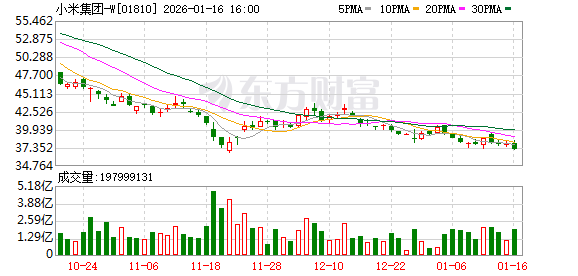
Group 1 - The core point of the article is that Xiaomi Group-W has been actively repurchasing its shares, with a total of 5.90 million shares bought back on January 16 at a price range of HKD 37.080 to HKD 37.200, amounting to HKD 219 million [2] - The stock has seen a decline of 4.23% during the period of these repurchases, indicating a potential market reaction to the company's buyback strategy [2] - Since January 13, the company has conducted share buybacks for four consecutive days, totaling 17.80 million shares and a cumulative amount of HKD 670 million [2] Group 2 - Year-to-date, Xiaomi Group-W has completed nine buyback transactions, repurchasing a total of 38.35 million shares for a total expenditure of HKD 1.46 billion [3] - A detailed breakdown of the buyback activities shows varying prices and amounts, with the highest buyback price recorded at HKD 39.320 on January 5 [3] - The buyback activities reflect the company's strategy to support its stock price amidst market fluctuations, as evidenced by the stock's performance during the buyback period [3]

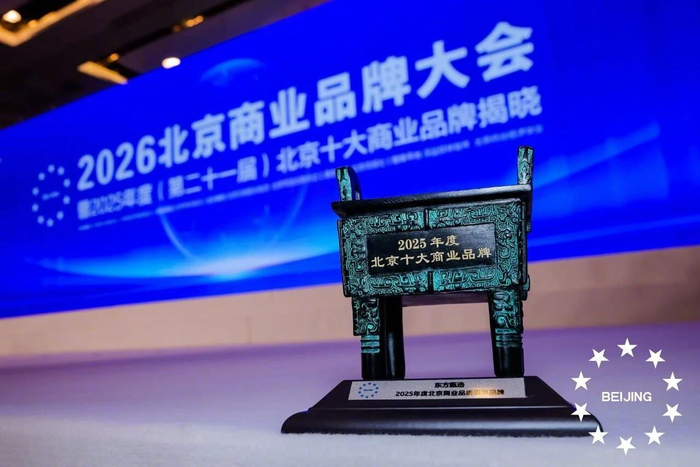
创新、跨界、融合,2025年度北京十大商业品牌揭晓
Bei Jing Shang Bao· 2026-01-16 15:00
Core Insights - The 2026 Beijing Commercial Brand Conference and the announcement of the "2025 Top Ten Commercial Brands in Beijing" took place, focusing on the theme of "New Demand, New Supply" [2] - The event highlighted the importance of quality, taste, and branding in the development of Beijing's commercial landscape, emphasizing that successful brands must maintain quality and innovate to stand out in a competitive market [4][6] - The conference underscored the shift in consumer focus from production capacity to understanding market needs and stimulating demand, creating new opportunities for brands [6][8] Group 1: Brand Recognition - The "2025 Top Ten Commercial Brands in Beijing" includes notable brands such as Beijing Daoxiangcun, Beijing Huatian, and JD.com, representing the highest level of commercial development in the city [13][14] - These brands span various sectors, including shopping centers, dining, e-commerce, and traditional brands, showcasing their role as leaders in driving sustainable commercial growth in Beijing [14] Group 2: Subcategories and Special Awards - In addition to the main list, four subcategories were established: "Beijing Commercial Quality Service Brands," "Beijing Commercial Model Innovation Brands," "Beijing Commercial Craftsmanship Brands," and "Beijing Commercial New Star Brands" [16] - The "Beijing Commercial Quality Service Brands" list includes brands like 58 Tongcheng and Haidilao, recognized for their exceptional service quality [19] - The "Beijing Commercial Model Innovation Brands" features brands such as Sam's Club and Xibei, which are noted for their innovative business models that enhance industry quality [23] Group 3: Industry Trends and Insights - The conference highlighted the importance of expanding domestic demand as a key driver for economic growth, with consumer spending contributing 53.5% to economic growth in the first three quarters of 2025, an increase of 9% from the previous year [8] - The role of commercial brands in urban development was emphasized, with brand innovation being a new benchmark for market vitality [10] - The establishment of the Fashion and Trendy Toy Professional Committee aims to promote the trendy toy industry and enhance consumer engagement in cultural consumption [51][53] Group 4: Cross-Industry Collaboration - The launch of the Beijing Cultural, Commercial, Tourism, and Sports Cross-Industry Cooperation Information Release Platform aims to facilitate collaboration across various sectors, enhancing resource sharing and market innovation [57] - The platform will support efficient project releases and cooperation, contributing to the overall enhancement of consumption levels and industrial innovation in the capital [57]



美股盘前丨纳指期货涨0.46% 国际贵金属价格走低
Sou Hu Cai Jing· 2026-01-16 13:35
Company News - Italy has launched an investigation into Microsoft, accusing the company of "misleading and coercive" sales practices related to its games [1] - Huawei and Xiaomi have been included in Apple's trade-in program for iPhones [1] - Tesla has applied for the trademark "Tesla Smart" in China [1] - JPMorgan executives anticipate a fruitful year for mergers and acquisitions, planning to hire more personnel across Europe [1]



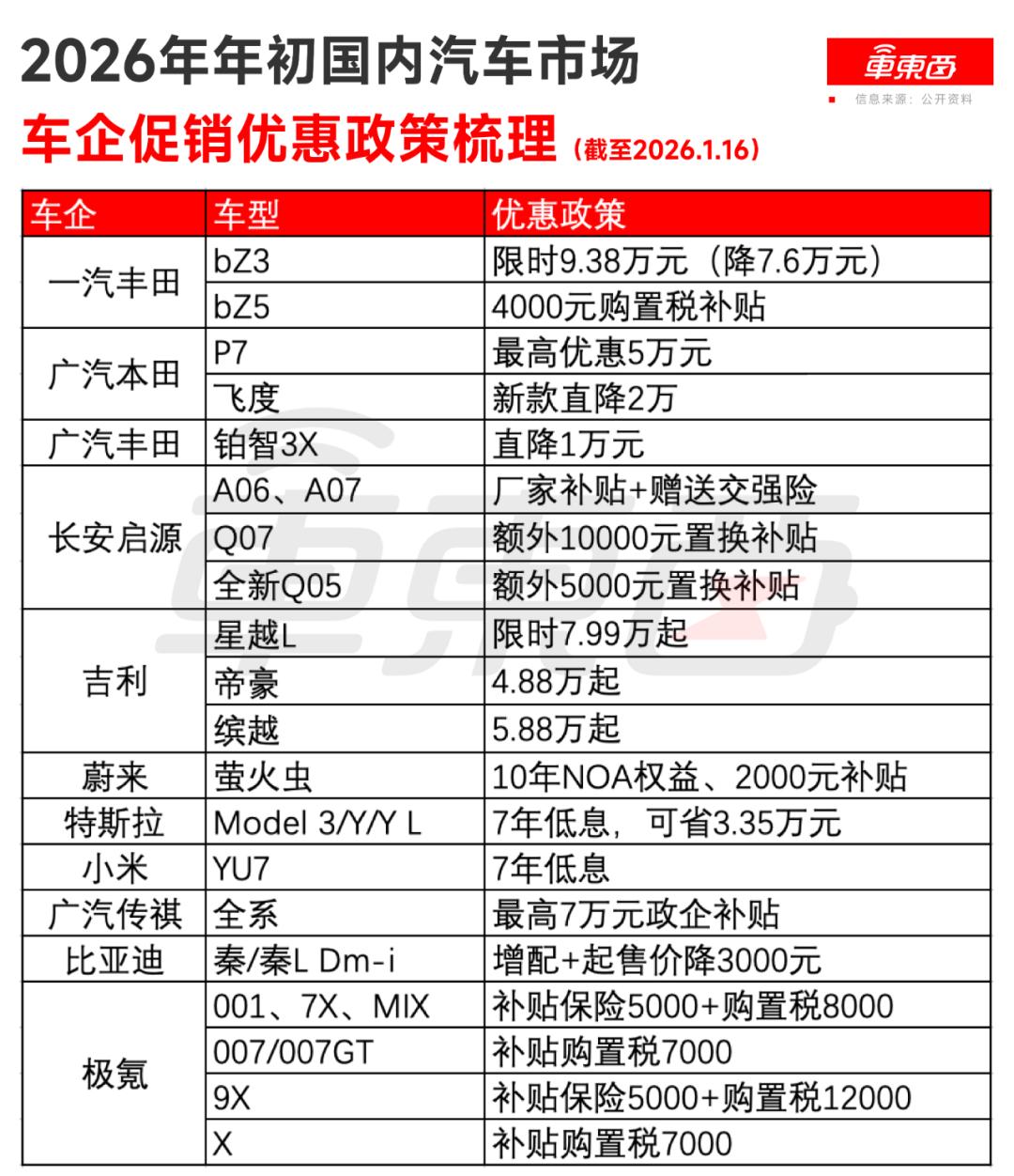
超20款车光速调价,丰田“自杀式”反击,2026价格战再升级
3 6 Ke· 2026-01-16 12:53
Core Viewpoint - The automotive industry is experiencing an intense price war initiated by luxury brands, leading to significant price reductions across various models from multiple manufacturers, creating a new wave of discounts in the market [1][6]. Group 1: Price Reductions and Promotions - BMW has initiated a price drop of up to 300,000 yuan, prompting over 10 automakers to follow suit with more than 20 mainstream models participating in the price reduction trend [1]. - Geely's Emgrand is now priced at 48,800 yuan, while the new Honda Fit has seen a price cut of 20,000 yuan, setting a new low at 66,800 yuan [1][13]. - Toyota's bZ3 electric sedan has been drastically reduced to 93,800 yuan, a decrease of 76,000 yuan, representing a nearly 45% drop from its previous price [9]. Group 2: Competitive Strategies - The competition has escalated with joint efforts from joint venture brands, particularly Japanese automakers, who are adopting aggressive pricing strategies to reclaim market share [7]. - Various automakers are employing a combination of subsidies, enhanced features, and financing options to attract buyers, rather than relying solely on price cuts [20][30]. - NIO's Firefly brand is offering cash subsidies along with a 10-year NOA (Navigation on Autopilot) free usage right, showcasing a strategic approach to enhance customer value [32]. Group 3: Market Dynamics and Consumer Impact - The price war has led to a significant reduction in the entry price for electric vehicles, making them more accessible to consumers [9][19]. - The automotive market is witnessing a shift where companies are not just competing on price but also on the value offered through financing and additional features, which may lead to a more sustainable competitive environment [37]. - The ongoing promotions and price adjustments are expected to drive sales ahead of the Chinese New Year, indicating a strategic push by manufacturers to maximize order volumes during this peak season [37].





内存疯涨,买车要多掏腰包?
3 6 Ke· 2026-01-16 12:36
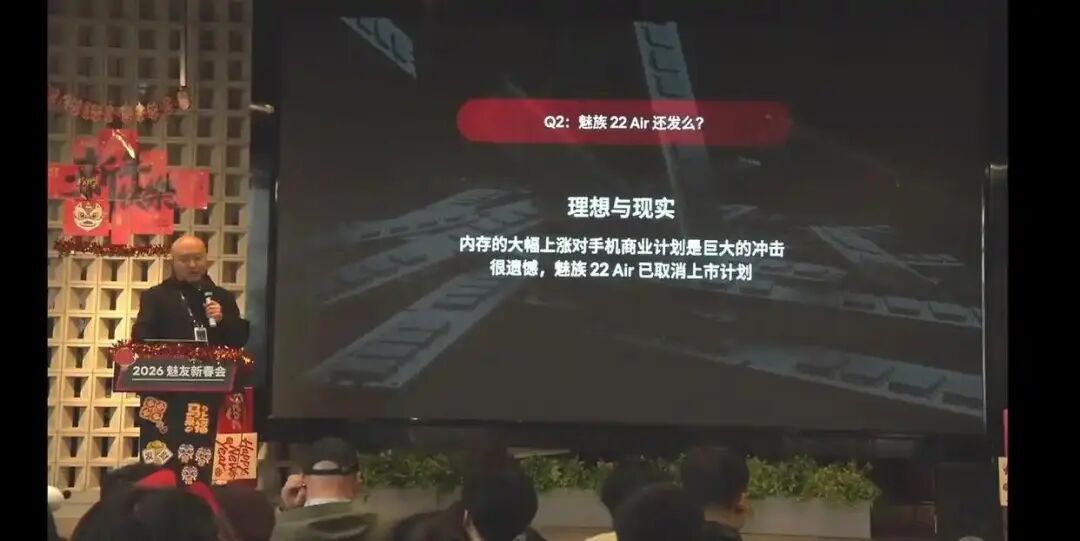
Group 1 - The price of memory chips has surged dramatically, with 16GB DDR4 memory increasing by 1800% and DDR5 by 500% compared to last year [1][3] - The automotive industry is facing significant cost pressures due to rising memory prices, with estimates suggesting that the memory cost for a car priced around 300,000 yuan has increased by 2,000 to 4,000 yuan [3][5] - Car manufacturers may respond to rising memory costs by either increasing prices or reducing features without lowering prices, leading to a potential decline in consumer experience [5][6] Group 2 - The primary driver behind the skyrocketing memory prices is the AI industry, which requires significantly more memory for training large models, diverting production away from standard memory used in consumer electronics and vehicles [6][7] - Major memory manufacturers like Samsung and SK Hynix have seen their stock prices soar, with Micron Technology's stock projected to increase by 240% by 2025 [7][9] - Domestic companies like Changxin Technology are emerging as potential players in the memory market, but they currently only meet a fraction of domestic demand, with China consuming nearly 40% of global memory but producing less than 10% [9][11] Group 3 - The current memory crisis resembles the previous chip shortage, where the focus was on basic components rather than advanced chips, indicating a supply chain issue that may persist [6][12] - Consumers looking to purchase vehicles may want to wait for potential price adjustments or take advantage of current pricing before manufacturers adjust for increased costs [13]


盘点2025:让车企走下坡路的九大“致命伤”
3 6 Ke· 2026-01-16 12:12
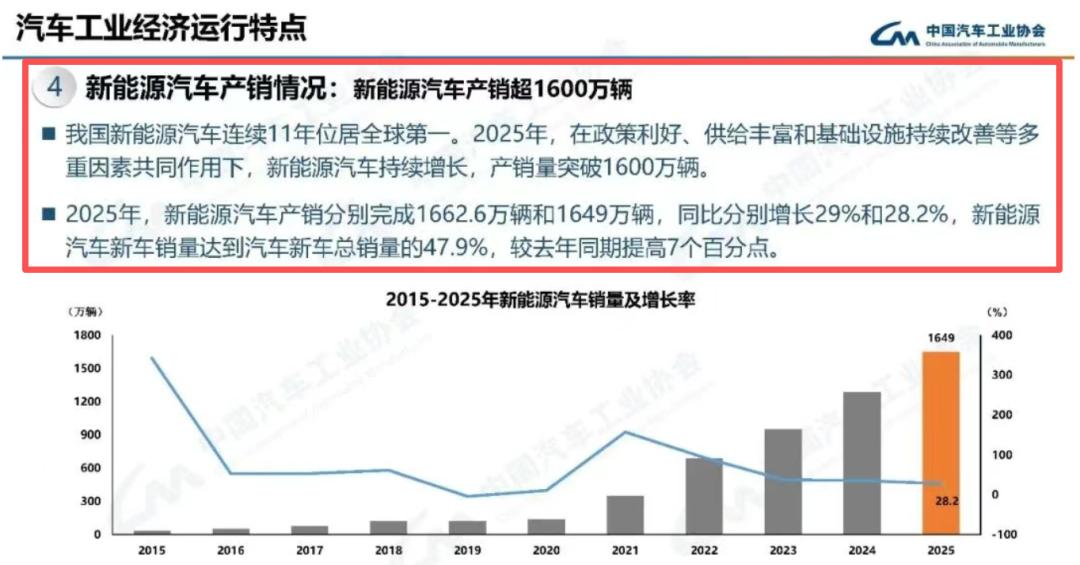
Core Insights - The Chinese electric vehicle (EV) market saw record production and sales in 2025, with 16.626 million units produced and 16.49 million units sold, marking a year-on-year growth of 29% and 28.2% respectively, maintaining its position as the global leader for 11 consecutive years [1][3] - A significant industry reshuffle is underway, with previously dominant brands experiencing declines, highlighting that success now hinges on minimizing errors rather than just speed [3][4] Group 1: Market Dynamics - The rapid evolution of the EV market has led to increased competition, with companies like Li Auto facing challenges due to slow product line updates, resulting in lost market share [4][9] - Competitors have surpassed Li Auto in key metrics such as electric range and technology, prompting Li Auto to accelerate its product upgrade cycle from four years to two [9][10] Group 2: Quality Control Issues - Manufacturing quality issues, such as the "spray powder" problem affecting BYD vehicles, have led to customer dissatisfaction and complaints, indicating potential weaknesses in quality control and supply chain management [10][11][14] - These quality concerns can erode brand loyalty and consumer trust, as they directly impact user experience [14] Group 3: Marketing and Trust - Some companies are engaging in "small print marketing," which obscures critical information and can lead to trust erosion among consumers, as seen with Xiaomi's SU7 [15][18] - The practice of reducing vehicle configurations without proper disclosure has resulted in significant backlash, particularly for XPeng's G6 model, leading to a sharp decline in brand reputation [18][22] Group 4: Design and Consumer Perception - Controversial design choices, such as those made for the Li Auto MEGA, have sparked public debate and negatively affected sales and brand image [23][25] - A disconnect between innovative design and consumer expectations can lead to adverse market reactions [25] Group 5: Supply Chain and Financial Health - The financial struggles of companies like Nezha, which reported a mere 15.45 million yuan in cash against debts exceeding 26 billion yuan, highlight the risks of aggressive expansion without solid financial foundations [30][32] - Poor supplier choices can lead to significant reputational damage, as seen with Zeekr's "zero self-ignition" claim being undermined by safety incidents [33][35] Group 6: Product Recalls and Safety - Major recalls due to safety issues, such as those affecting Xiaomi and BYD, underscore the importance of rigorous product testing and quality assurance [36][39] - Recalls not only incur financial costs but also severely damage brand reputation and consumer confidence [39] Group 7: Competitive Landscape - The EV industry is evolving into a comprehensive competition encompassing strategic stability, technological innovation, honest marketing, and robust supply chain management [39] - Companies that respect manufacturing principles and maintain a focus on user value are more likely to succeed in this challenging environment [39]


小米于1月16日以2.191亿港元回购590万股B类股票。
Jin Rong Jie· 2026-01-16 11:19
本文源自:金融界AI电报 小米于1月16日以2.191亿港元回购590万股B类股票。 ...
小米集团:“人家车全生态”,小米要打高端局
Zheng Quan Ri Bao· 2026-01-16 11:06
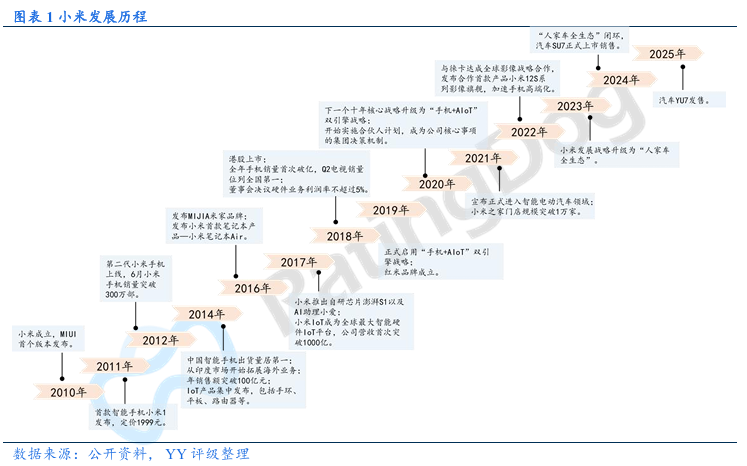
Core Viewpoint - Xiaomi Group is a leading consumer electronics and smart manufacturing company in China, known for its "extreme cost-performance" strategy. The company is pushing for a high-end transformation, with the launch of its electric vehicle, the Xiaomi SU7, in 2024, marking a significant step in its "home, car, and ecosystem" strategy [1]. Group 1: Company Overview - Xiaomi's business model is described as a "triathlon," focusing on market expansion through cost-effective hardware, profit generation via high-margin internet services, and enhanced sales efficiency through a new retail model that integrates online and offline channels [1]. - The company has established a stable user base, with its internet services primarily driven by advertising and value-added services [2]. Group 2: Smartphone Segment - Smartphones are Xiaomi's core products, with a strong competitive position in emerging markets. The company is transitioning from a low-cost to a high-end market strategy, including collaborations with Leica for high-end imaging and the development of its own 3nm smartphone chip, expected to launch in 2025 [2]. - Despite the growth in average selling price (ASP) for high-end smartphones, Xiaomi's ASP remains lower than that of domestic competitors like Samsung and Vivo, indicating a need for further brand elevation [2]. Group 3: IoT and Consumer Products - Xiaomi is a global leader in the smart IoT platform, with a product ecosystem structured as "1+4+N." The synergy between its various business segments is expected to enhance overall performance [3]. - The company faces competition in the home appliance sector, particularly from leading brands, and may encounter growth pressures due to the reduction of government subsidies [3]. Group 4: Smart Automotive - Xiaomi entered the smart electric vehicle market in 2021, and the SU7 has quickly become a bestseller due to its high configuration, competitive pricing, and brand influence. However, challenges such as supply chain rigidity and increasing market competition are present [3]. - Concerns regarding the safety of autonomous driving features and the overall driving experience of Xiaomi vehicles have been raised, necessitating further validation of their technology [3]. Group 5: Financial Analysis - The company's revenue has seen rapid growth in recent years, driven by its high-end transformation and automotive business expansion. Gross margins are on the rise, indicating improved profitability [4]. - Xiaomi's R&D expenses have significantly increased, but remain at a reasonable proportion of revenue. The company maintains a healthy cash flow and liquidity position, with a debt-to-asset ratio around 50% [4].
小米集团-W1月16日耗资约2.19亿港元回购590万股
Zhi Tong Cai Jing· 2026-01-16 11:06
Group 1 - The company, Xiaomi Group-W (01810), announced a share buyback plan, intending to repurchase approximately 5.9 million shares at a cost of about HKD 219 million [1]