XIAOMI(01810)

Search documents
2025年第53周:数码家电行业周度市场观察
艾瑞咨询· 2026-01-16 00:05
Group 1 - The core viewpoint of the article emphasizes the importance of data quality over algorithms in determining the effectiveness of AI applications in businesses [3][4] - The report "2025 China High-end Home Appliance Market Trends and Innovation Insights" highlights the growth of the high-end market driven by consumer upgrades, with a retail market growth of 10.2% year-on-year [5] - The logistics industry is expected to undergo a transformation by 2025, with a market size projected to reach 965.5 billion yuan, driven by AI and large model technologies [7] Group 2 - The medical AI sector is projected to grow rapidly, with the market size expected to reach 16.4 billion yuan in 2024 and 35.3 billion yuan by 2030, despite facing commercialization challenges [6] - The smartphone market is experiencing a dichotomy, with AI smartphones expected to account for 15% of global shipments in 2024, while the overall market faces extended replacement cycles [11] - The retail industry is undergoing a historic transformation, with AI technology becoming crucial for optimizing supply chain decisions and enhancing marketing precision [12] Group 3 - The humanoid robot industry is anticipated to see significant production increases, with companies planning annual capacities of 100,000 to 1 million units, despite potential mismatches in demand [13] - The L3 autonomous driving era is officially beginning, with regulatory approvals for L3 vehicles, shifting the focus from technology to safety standards and competitive advantages [14] - The AI glasses market is witnessing a surge in interest from major companies, with various product categories emerging, although challenges such as high return rates and technical maturity remain [15][16] Group 4 - The robot industry is experiencing a wave of IPO applications, with over 50 billion yuan in financing in the first three quarters of 2025, despite facing high costs and profitability challenges [19][20] - Xiaomi plans to invest approximately 400 billion yuan in R&D by 2026, focusing on core technologies such as chips and AI [31] - The consumer-grade robotics market is entering a new phase with the launch of autonomous robots, indicating a shift towards integrating intelligent technology into daily life [33]



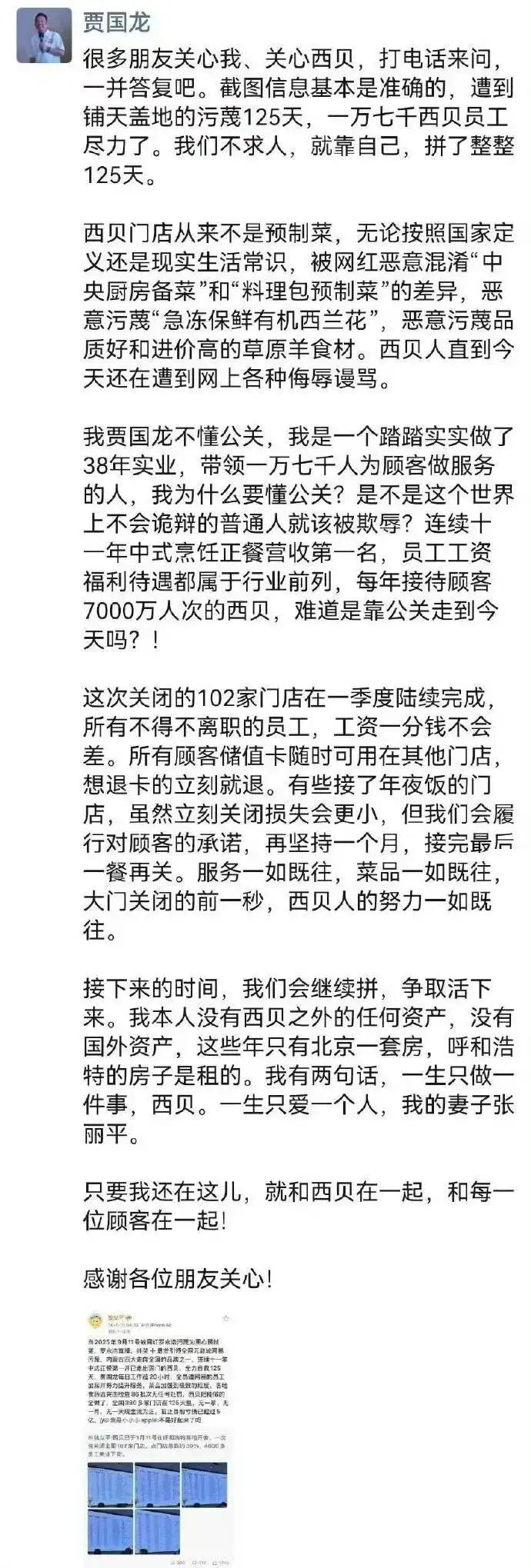
8点1氪丨西贝关店102家,贾国龙最新发声;爱马仕客服回应一个悠悠球售价超1.8万;霸王茶姬及创始人起诉网民,公司回应
3 6 Ke· 2026-01-16 00:05
Group 1 - The People's Bank of China indicates there is still room for interest rate cuts this year, with the current average reserve requirement ratio at 6.3% [6] - Xiaomi launches a 7-year low-interest car purchase policy for its new electric SUV, with monthly payments starting at 2,593 yuan [10] - The Philippines announces visa-free entry for Chinese citizens starting January 16, 2026, allowing a stay of up to 14 days [10] Group 2 - Xunlei restarts litigation against former CEO Chen Lei, claiming he secretly siphoned off company assets, seeking 200 million yuan in damages [10] - Golden Dragon Fish plans to transfer 50% stakes in its Shanghai and Kunshan subsidiaries to Mars China for a total consideration of 60 million USD [11] - SF Express and Jitu Express announce a strategic mutual shareholding agreement, with a total investment amounting to 8.3 billion HKD [8] Group 3 - Wang's Restaurant announces the closure of 102 stores, representing 30% of its total outlets, while ensuring all employees will receive their wages and customers can refund their prepaid cards [1] - The luxury brand Hermès responds to the controversy over an 18,000 yuan yo-yo, stating it is a new product with thoughtful design [4] - The Louvre Museum increases ticket prices for non-European Economic Area visitors by approximately 45% to fund infrastructure upgrades [13] Group 4 - KKR completes fundraising of 2.5 billion USD for a private credit fund focused on high-quality credit assets in the Asia-Pacific region [21] - TSMC forecasts Q1 2026 revenue between 34.6 billion to 35.8 billion USD, indicating a 4.4% quarter-over-quarter increase [17] - Li Ning reports a low single-digit decline in retail sales for the fourth quarter, with a total of 6,091 sales points in China [18]




智通港股通资金流向统计(T+2)|1月16日
智通财经网· 2026-01-15 23:34
Group 1 - The top three companies with net inflows of southbound funds are Alibaba-W (09988) with 1.05 billion, Tencent Holdings (00700) with 752 million, and Pop Mart (09992) with 678 million [1] - The top three companies with net outflows of southbound funds are SMIC (00981) with -836 million, China Mobile (00941) with -729 million, and Meituan-W (03690) with -378 million [1] - In terms of net inflow ratios, Jiangsu Ninghu Expressway (00177) leads with 53.75%, followed by Cheung Kong Infrastructure Group (01038) at 52.00%, and Mao Geping (01318) at 48.07% [1] Group 2 - The top ten companies by net inflow include Alibaba-W (09988) with 1.05 billion and a closing price of 159.90 (+3.63%), Tencent Holdings (00700) with 752 million and a closing price of 627.50 (+0.72%), and Pop Mart (09992) with 678 million and a closing price of 191.30 (-2.89%) [2] - The top ten companies by net outflow include SMIC (00981) with -836 million and a closing price of 74.45 (-1.13%), China Mobile (00941) with -729 million and a closing price of 80.95 (-0.25%), and Meituan-W (03690) with -378 million and a closing price of 104.90 (-0.10%) [2] - The top three companies by net inflow ratio also include Baiaosaitu-B (02315) at 46.69% and Wei Long Delicious (09985) at 45.51% [3] Group 3 - The top three companies by net outflow ratio include Southern Hong Kong Stock Connect (03432) at -100.00%, E Fund Hang Seng ESG (03039) at -93.75%, and Country Garden Services (06098) at -58.59% [3] - The data reflects the net inflow and outflow trends in the Hong Kong stock market, indicating investor sentiment towards specific companies [1][2][3]




瑞银:中国AI大模型性价比优势明显
Huan Qiu Shi Bao· 2026-01-15 22:42
Group 1 - UBS reports that the allocation of the top 40 international investment institutions to China is at a new high since 2023, with expectations for further increases in attractiveness by 2026 [1] - The surge in interest from foreign investors is driven by the AI theme, particularly following the success of the DeepSeek model launched in early 2025, leading to a reevaluation of Chinese assets [1] - The Hong Kong stock market is projected to lead global IPO financing in 2025, with significant increases in capital inflow attributed to technological innovations and market reforms [1] Group 2 - UBS highlights that the Hong Kong market's ability to support large-scale financing, such as BYD and Xiaomi raising approximately $5.6 billion and $5.3 billion respectively, is due to its robust market environment [2] - Chinese AI companies are receiving high levels of capital attention, with foreign funds continuing to invest despite significant stock price increases, indicating a lower probability of an AI bubble compared to the U.S. [2] - Chinese leading AI firms are primarily funded by their own cash flows, resulting in sustainable financial health, with projected capital expenditures for top internet companies in China reaching approximately 400 billion RMB by 2025 [2] Group 3 - The rapid iteration of models in China's technology sector is expected to continue, narrowing the gap with the U.S. in advanced model capabilities by 2026 [3] - Chinese models are characterized by high cost-effectiveness, which is anticipated to maintain their global leadership and facilitate more Chinese models entering international markets [3]
70多个国家和地区的访客打卡小米汽车工厂背后,“中国智造”如何赢得世界瞩目?
Huan Qiu Shi Bao· 2026-01-15 22:42
Core Viewpoint - The Xiaomi automobile factory in Beijing has become a global attraction, showcasing advanced manufacturing capabilities and innovation in the electric vehicle sector, reflecting China's rapid industrial growth and technological prowess [1][9]. Group 1: Factory Features and Innovations - The factory produces a new car every 76 seconds, utilizing highly automated processes and advanced robotics, which has impressed international visitors [1][9]. - Key features include a large die-casting machine with a clamping force of 9,100 tons that can create 72 parts in just 120 seconds, and hundreds of robotic arms working collaboratively in the production area [1][9]. - The factory employs AI technology for non-destructive testing, achieving a detection accuracy of over 99.9%, significantly faster than traditional manual methods [8]. Group 2: Visitor Impressions - International students from Columbia University expressed amazement at the innovative manufacturing processes and the speed of production, highlighting the experience as a significant educational opportunity [2][4]. - Diplomats and business leaders from various countries noted the high efficiency, aesthetic design, and performance of the vehicles, with some expressing interest in introducing Xiaomi cars to their home markets [5][6]. - The factory has hosted over 30 diplomats and business representatives from 18 countries, who were impressed by the technological advancements and potential for collaboration [5][7]. Group 3: Global Impact and Recognition - The rise of Xiaomi's factory is seen as a representation of China's capabilities in the electric vehicle industry, with the country being recognized as a global leader in this sector [4][10]. - Data indicates that from January to November 2025, China's exports of new energy vehicles reached 2.315 million units, marking a year-on-year increase of 102.9% [9]. - The factory's success is viewed as a case of "open defeating protectionism," showcasing China's commitment to innovation and sustainable development in the automotive industry [10][11].
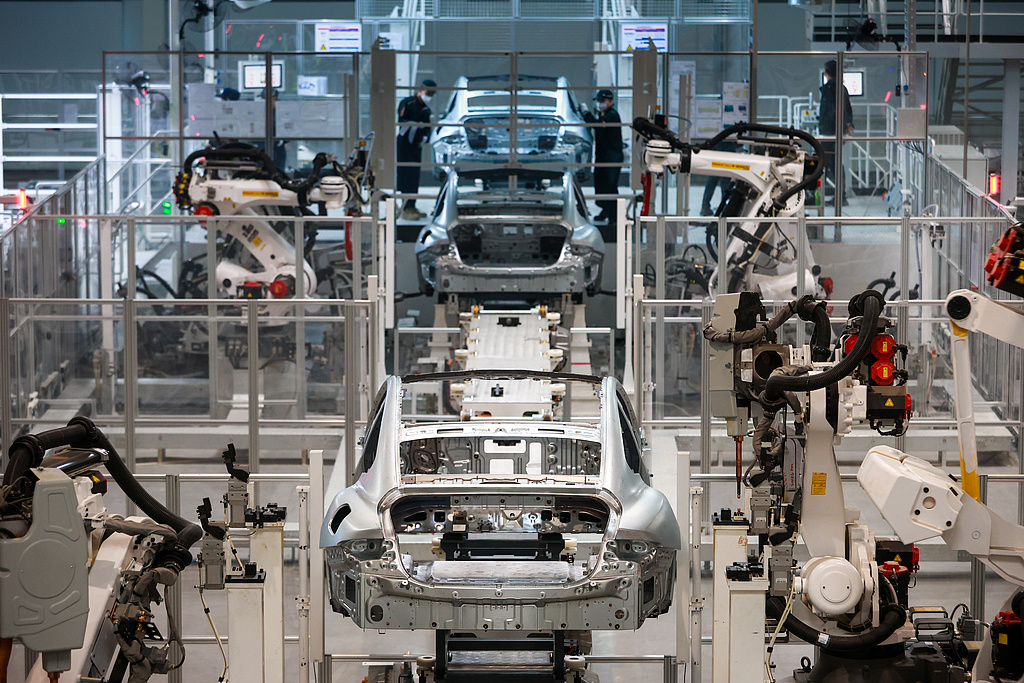
2026年销量目标现分化: 传统车企稳健推进 新势力冲刺高增长
Zhong Guo Zheng Quan Bao· 2026-01-15 21:12
Core Insights - The automotive market in 2026 is characterized by significant differentiation in sales targets among major car manufacturers, with a total target exceeding 21.55 million units, approximately 63% of the 2025 domestic sales volume [1] - Traditional automakers are focusing on stable growth rates of 10% to 30%, while new entrants and cross-industry brands are setting aggressive targets of 34% to 67.5%, indicating a strong push for market share [1] Summary by Company - **Geely**: Set a sales target of 3.45 million units for 2026, a 14% increase from 2025, with a focus on 2.22 million units of new energy vehicles (NEVs), achieving a penetration rate of 64.3% [1] - **Chery**: Aims for 3.2 million units, a 14.03% increase from 2025's 2.81 million units, with plans to launch 17 key models [2] - **Dongfeng Group**: Targets 3.25 million units, a 30% increase from 2025, with 1.7 million NEVs and 600,000 units for export [2] - **Great Wall Motors**: Sets a more conservative target of 1.8 million units, a 36% increase from 2025's 1.32 million units [2] - **Leap Motor**: Aims for 1 million units, a 67.5% increase from 2025's 596,600 units, leveraging core technology and a competitive parts system [2] - **Xiaomi**: Targets 550,000 units, a 34% increase from 2025's 410,000 units, emphasizing a stable expansion strategy [3] - **NIO**: Plans for a sales range of 456,000 to 489,000 units, maintaining a growth rate of 40% to 50% [3] - **GAC Toyota**: Sets a conservative target of 800,000 units, a 3.6% increase from 2025 [3] - **SAIC Volkswagen**: Aims for 1 million units, maintaining 2025 levels, with plans for 7 new NEV models [3] Market Dynamics - The automotive industry is shifting from incremental expansion to competition within existing market shares, with varying growth rates reflecting companies' strategies and market conditions [4] - Traditional automakers are generally targeting growth rates between 13% and 30%, with NEV sales growth rates significantly higher, indicating a consensus on NEVs as the main growth driver [4] - New energy vehicle sales targets are notably higher than overall sales targets, with Geely and Changan targeting 32% and 26.2% growth rates respectively [4] Strategic Considerations - The high growth targets set by new entrants are driven by the need for scale to improve cash flow and profitability, but achieving these targets will require strong organizational capabilities [5] - Key factors influencing the achievement of sales targets include the rollout of new energy products, success in overseas markets, and the overall capability of the companies [6] - The industry is expected to see a 4.3% growth in exports, with companies like BYD targeting 1.5 to 1.6 million units for overseas sales [6]





传统车企稳健推进 新势力冲刺高增长
Zhong Guo Zheng Quan Bao· 2026-01-15 20:48
Core Insights - The automotive market in 2026 is characterized by significant differentiation in sales targets among major car manufacturers, with a total target exceeding 21.55 million units, approximately 63% of the 2025 domestic sales volume [1] - Traditional automakers are focusing on stable growth rates of 10% to 30%, while new entrants and cross-industry brands are setting aggressive targets ranging from 34% to 67.5%, indicating a strong push for market share [1] Summary by Company - Geely aims for a sales target of 3.45 million units in 2026, a 14% increase from 2025, with a focus on 2.22 million units of new energy vehicles, achieving a penetration rate of 64.3% [1] - Chery targets 3.2 million units, a 14.03% increase from 2025, with plans to launch 17 key models focusing on electrification and intelligence [2] - Dongfeng Group sets an ambitious target of 3.25 million units, a 30% increase from 2025, with a focus on 1.7 million new energy vehicles and 600,000 exports [2] - Great Wall Motors adopts a more cautious approach with a target of 1.8 million units, reflecting a 36% increase from 2025 [2] - Leap Motor aims for 1 million units, a 67.5% increase, building on a strong 2025 performance of 596,600 units [2] - Xiaomi targets 550,000 units, a 34% increase, emphasizing a production strategy driven by orders [3] - NIO sets a sales target range of 456,000 to 489,000 units, maintaining a growth rate of 40% to 50% [3] - GAC Toyota's target is 800,000 units, a modest 3.6% increase, while SAIC Volkswagen aims for 1 million units, maintaining its 2025 target [3] Market Dynamics - The differentiation in sales targets reflects a shift from incremental expansion to competition within existing market shares, with the difficulty of achieving these targets closely tied to each company's base, product layout, and systemic capabilities [4] - Traditional automakers are generally targeting growth rates between 13% and 30%, with a notable emphasis on new energy vehicle sales growth, which is significantly higher than overall growth targets [4] - New energy vehicles are recognized as the main growth engine, with companies like Geely and Changan setting ambitious growth targets for their new energy vehicle sales [4] - The aggressive targets set by new entrants are seen as a response to the need for scale, cash flow improvement, and valuation support, although they face challenges in converting scale into systemic strength [5] Key Factors for Target Achievement - The success of sales targets hinges on three main dimensions: the rollout of new energy products, effectiveness in overseas market expansion, and the overall systemic support capabilities of the companies [5] - Companies like Geely and Changan are expected to achieve their targets due to stable completion rates and robust channel layouts, while some joint venture brands may face risks of market share erosion despite conservative targets [5]

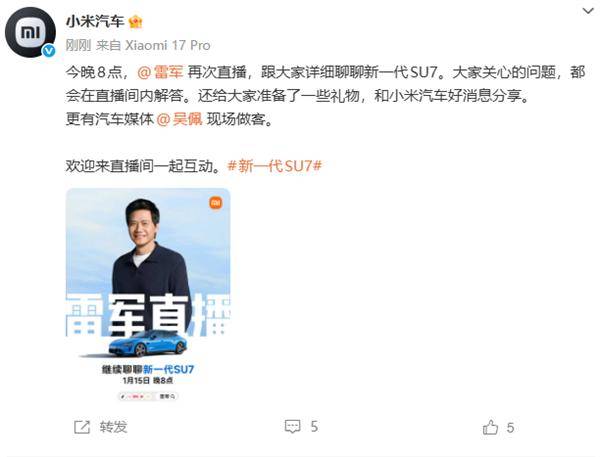
雷军宣布今晚将再次直播 聊聊新一代小米SU7
Sou Hu Cai Jing· 2026-01-15 19:02
Core Viewpoint - Xiaomi's CEO Lei Jun will host a highly anticipated live stream to discuss the new generation SU7 and share positive news about Xiaomi's automotive developments [1][3] Group 1: Live Stream Details - The live stream is scheduled for tonight at 20:00 and will feature Lei Jun addressing various audience questions [1] - This will be Lei Jun's third live stream in 2026, indicating a commitment to engaging with the audience [3] Group 2: Special Guests and Content - The live stream will include special guest Wu Pei, a seasoned automotive media personality, who will provide unique insights based on his industry experience [3] - Dr. Chen Guang, head of HAD, will also participate to discuss the latest advancements in Xiaomi's assisted driving system, showcasing the company's innovations in smart driving technology [3]
雷军直播中爆料新一代SU7:预计4月正式上市
Xin Lang Cai Jing· 2026-01-15 16:20
Core Insights - Xiaomi's SU7 model is projected to be the best-selling sedan priced over 200,000 in 2025, while the YU7 has achieved the highest sales in the mid-to-large SUV category for five consecutive months since its launch six months ago [1] - Xiaomi has reached a milestone of 500,000 vehicle deliveries, expressing gratitude to its customers for their support [1] - A promotional financing plan for the YU7 and first-generation SU7 will be available from January 16, 2026, offering low-interest rates and various payment options [1] Group 1: Product Development and Features - The new generation SU7 is currently undergoing road testing, with a call for users to share photos of the test vehicles [1] - Xiaomi's automotive division has over 1,800 personnel focused on smart driving, with R&D centers established in Beijing, Shanghai, and Wuhan [2] - The recently released Xiaomi HAD enhanced version has received positive feedback, incorporating reinforcement learning algorithms and world models [2] Group 2: New Generation SU7 Specifications - The new generation SU7 will feature various wheel sizes, including 19-inch, 20-inch, and 21-inch options, with upgraded designs [3] - The vehicle will be available in nine colors, including new exclusive colors alongside classic options from the previous generation [3] - Interior upgrades include new color options, a redesigned dashboard layout, and enhanced ambient lighting [3] - The new generation SU7 boasts significant improvements in battery technology, with the Pro version achieving a CLTC range of 902 km and higher voltage for better charging efficiency [3][4] Group 3: Performance Enhancements - The V6sPlus super motor has seen a 1.5% increase in overall efficiency, with power output improvements for both standard and Max versions [4] - The new generation SU7 is heavier due to safety and performance upgrades, but these enhancements do not compromise its range or driving performance [4] - The vehicle will include advanced safety features with full lidar and radar systems, enhancing the performance of its driving assistance capabilities [4] - The new generation SU7 is expected to officially launch in April, with final specifications to be confirmed through official channels [4]
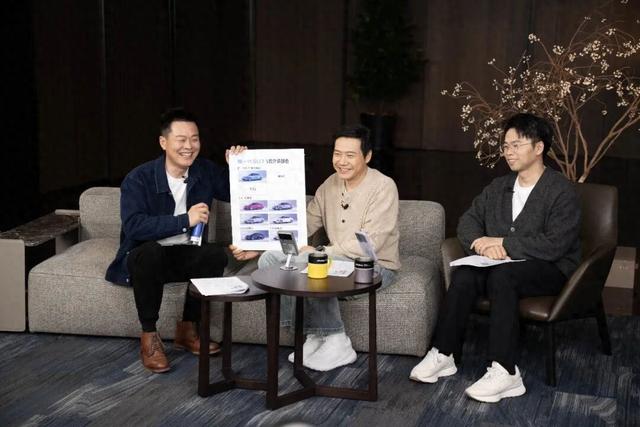
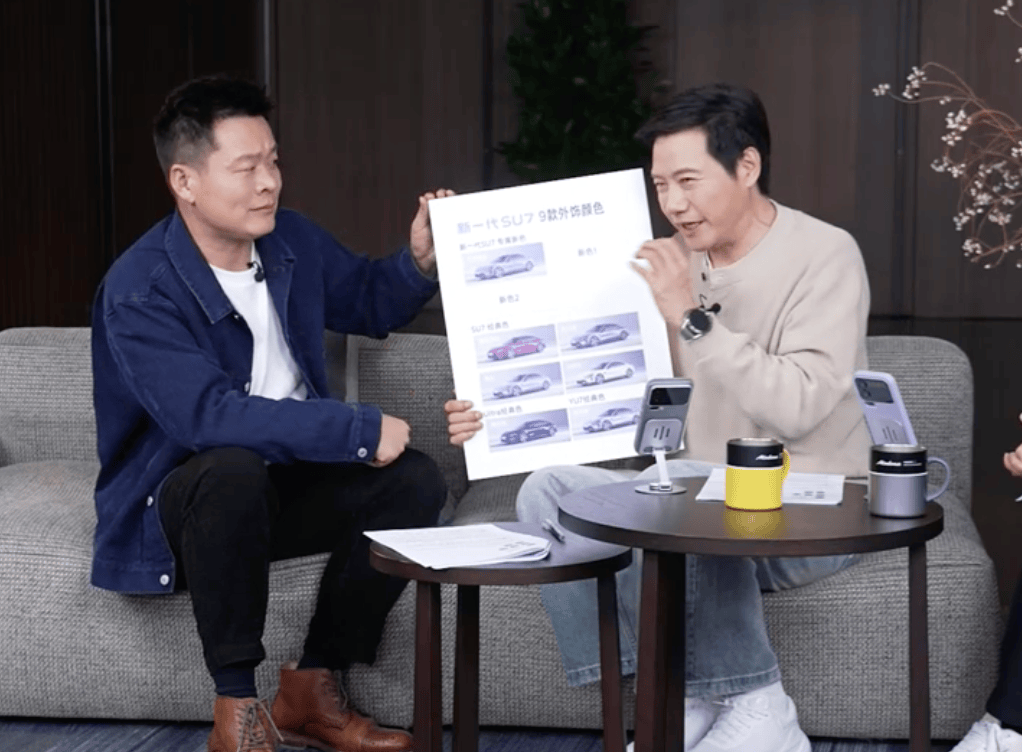
雷军:蓝色是SU7的幸运色,绿色是YU7的幸运色
Sou Hu Cai Jing· 2026-01-15 15:20
Group 1 - The core viewpoint of the article is that Lei Jun discussed the new generation SU7 during a live stream, highlighting the popularity of the "Capri Blue" color choice, which received nearly three times the votes compared to "Gulf Blue" in an online survey [1] - The new generation SU7 will feature three color options, with "Capri Blue" being selected to appeal to a segment of consumers while avoiding widespread dislike [1] - Lei Jun mentioned that blue is the lucky color for SU7, while green is designated as the lucky color for YU7 [1] Group 2 - The new generation Xiaomi SU7 will offer six wheel designs, including new options such as the diamond wheel for 19 inches and the sharp blade wheel for 20 inches [3] - Other wheel options for the 20-inch category include the plum blossom wheel and the rice-shaped wheel, while the 21-inch category features the sports wheel and the double-layer forged plum blossom wheel [3]