XIAOMI(01810)

Search documents
曾被吐槽“智障”的AI智能锁,快被年轻人玩坏了
3 6 Ke· 2026-01-04 09:29
Group 1 - The core idea of the article is the transformation of smart locks from being criticized as "artificial intelligence disabilities" to becoming essential components of smart home ecosystems, driven by technological advancements and consumer demand for convenience and security [36] - The smart lock market in China is experiencing significant growth, with a penetration rate of over 40% in first-tier cities by 2025, and the global smart door lock market is projected to reach $2.77 billion in 2024, growing to $8.1 billion by 2030 [3][10] - Major companies like Xiaomi, Huawei, and Haier are heavily investing in the smart lock sector, leading to intense competition and a "red ocean" market environment [3][14] Group 2 - The evolution of smart locks has led to advanced features such as AI capabilities, biometric recognition, and seamless integration with other smart home devices, enhancing user experience [5][15] - The first batch of smart lock users is entering a 5-7 year replacement cycle, creating a dual opportunity for both replacement and new market penetration [14] - Smart locks are becoming the "first entry point" in smart homes, with companies like Huawei positioning their products as integral to their broader smart home ecosystems [15][17] Group 3 - The article highlights the importance of security and reliability in smart locks, noting that despite advancements, there have been incidents of malfunction and security breaches, raising consumer concerns [29][31] - Companies are focusing on improving biometric recognition technologies, such as palm vein recognition, to address issues with traditional fingerprint locks and enhance security [24][28] - Data privacy is a significant concern, as many smart locks store sensitive user information, and inadequate data encryption could lead to privacy breaches [34]




美“斩杀线”引爆热搜!年薪45万美金程序员失业半年露宿街头;罗永浩豆包互怼上热榜!雷军直播拆小米YU7回应传闻 | Q资讯
Sou Hu Cai Jing· 2026-01-04 09:27
Group 1 - The term "slaughter line" has gained popularity on social media, highlighting the harsh reality of financial crises leading to homelessness in the U.S. [1][2][4] - Many Silicon Valley engineers have faced bankruptcy due to unexpected events like job loss or illness, with some high-earning professionals becoming homeless within months [2][4] Group 2 - Xiaomi's CEO Lei Jun conducted a live stream where he disassembled a new Xiaomi YU7 to address various online concerns about the product [7][8] - The live stream was initially delayed due to Lei Jun's illness but became significant as it was the first major live event of 2026 [7] Group 3 - Lenovo's CEO Yang Yuanqing and NVIDIA's CEO Jensen Huang discussed a new collaboration focused on "hybrid AI" during a conversation ahead of CES 2026 [8][9] - They identified two key trends in AI development: enterprise-level AI as a core battleground and the integration of AI into various sectors of the economy [8][9] Group 4 - Baidu plans to spin off its AI chip subsidiary Kunlun and has submitted a listing application to the Hong Kong Stock Exchange, with an estimated valuation of at least $3 billion [13][15] - The spin-off aims to enhance Kunlun's market image and attract investors focused on AI computing chips and related systems [15] Group 5 - A new regulation on green product certification in China has been introduced, marking a significant shift towards comprehensive regulation of the certification process [16] - The updated guidelines cover 122 product categories, including electronics and packaging, and aim to standardize the certification process [16] Group 6 - The company "Moon's Dark Side" has completed a $500 million Series C funding round, raising its valuation to $4.3 billion [17][18] - The funding will be used to expand graphics card production and accelerate the training and development of its K3 model [17] Group 7 - OpenAI is at a critical juncture in 2026, needing to demonstrate a sustainable business model after years of rapid growth and significant funding [20] - Investors are shifting from a phase of leniency to demanding clear profitability pathways from OpenAI [20] Group 8 - Cloud Leopard Intelligent has initiated its IPO process, aiming to become the first domestic DPU (Data Processing Unit) stock in China [30][33] - The company specializes in cloud computing and DPU solutions, with a valuation exceeding 14 billion yuan as of late 2025 [33] Group 9 - Meta has acquired the AI application company Manus for several billion dollars, marking its third-largest acquisition to date [33][34] - Manus, which was previously valued at $2 billion, is known for its AI agent product that automates complex tasks based on simple user instructions [34][35]





雷军回应“小字营销”:是行业陋习,确实要改,内部已要求用大字
Sou Hu Cai Jing· 2026-01-04 09:15
Group 1 - The core message of the news is that Xiaomi's CEO Lei Jun and other executives addressed negative criticisms regarding Xiaomi's marketing practices, particularly concerning the use of small print in promotional materials [1][3] - Xiaomi's public relations manager Xu Jieyun acknowledged that the use of small print has been a common practice in the industry, primarily for legal compliance, but recognized that it has led to misunderstandings about the company's marketing integrity [3] - Starting from November, Xiaomi has committed to using larger print in its marketing materials to ensure clarity and transparency for consumers, responding to public criticism [3] Group 2 - Lei Jun emphasized that the use of small print is an industry issue and that Xiaomi will immediately rectify this practice, asserting that misinterpretations of compliance measures as false marketing are significant misunderstandings [3]
被故意抹黑攻击!雷军直播回应多个质疑
Sou Hu Cai Jing· 2026-01-04 08:57
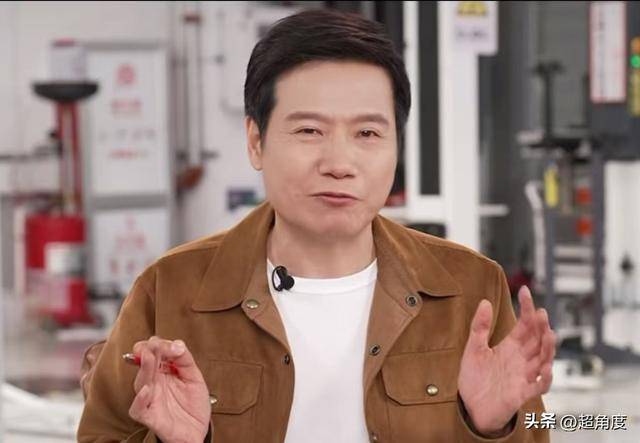
Core Viewpoint - Xiaomi's founder and CEO Lei Jun addressed various challenges faced by the company, particularly regarding negative online sentiment and misinformation about its automotive division during a live stream event, while also outlining delivery targets for the upcoming year [1][3][7]. Group 1: Delivery and Performance - Lei Jun shared the delivery status of Xiaomi's Yu7 car over the past year and set new delivery goals for 2025 [1]. - The company has faced significant online criticism, being labeled as one of the most attacked car manufacturers since the launch of its automotive line [7]. Group 2: Response to Online Criticism - Xiaomi's public relations manager, Xu Jieyun, indicated that the negative labeling of the company, such as "Green Belt War God," is a result of malicious editing and targeted attacks [3]. - The legal department has evaluated 16,465 instances of online sentiment since 2025, monitoring 231 accounts and filing civil lawsuits against 92 malicious accounts [3]. Group 3: Legal Actions and Support for Users - Xiaomi has initiated 35 lawsuits to support car owners who have faced unwarranted online attacks, demonstrating a commitment to protecting its customers [3]. - Lei Jun encouraged users to report any attacks they face, assuring them that the company will assist in their defense [7]. Group 4: Industry Practices and Marketing - Lei Jun acknowledged the issue of "small print marketing" as a common industry practice and committed to improving transparency in Xiaomi's marketing strategies [10]. - The company aims to clarify that compliance-related practices should not be misconstrued as false advertising, emphasizing the importance of user perception [10].
雷军终于承认:小字是行业陋习!小米现在开始立马整改
Sou Hu Cai Jing· 2026-01-04 08:57
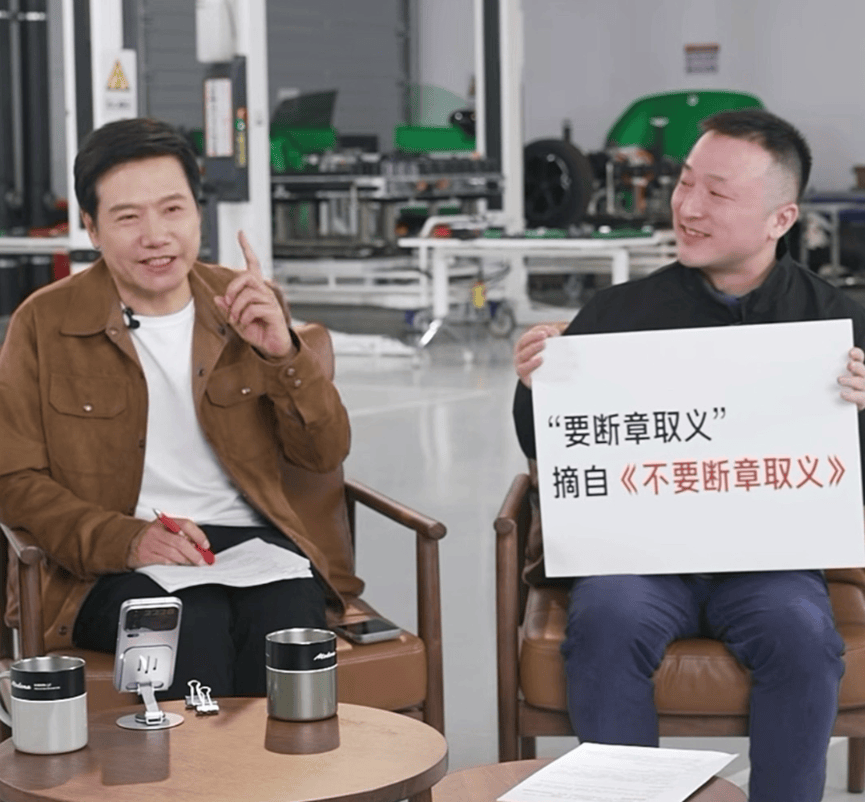
Core Viewpoint - Xiaomi's CEO Lei Jun emphasized the importance of product quality during a live stream, showcasing the Xiaomi YU7 and encouraging transparency in product reviews [1] Group 1: Product Quality and Transparency - The materials used in the Xiaomi YU7 are solid, with room for improvement in tuning and intelligent driving features, but overall quality is commendable for its price range [3] - The live stream included a Q&A session where Xiaomi executives addressed various controversies surrounding the brand, particularly regarding small print in promotional materials [5][12] Group 2: Marketing Practices and Industry Standards - Xiaomi's promotional materials have faced scrutiny for using small print disclaimers that may mislead consumers, a common practice in the industry [9][15] - The company acknowledged the issue and committed to using larger text in future marketing materials to avoid misunderstandings, recognizing that small print can be perceived as exaggeration [12][17]
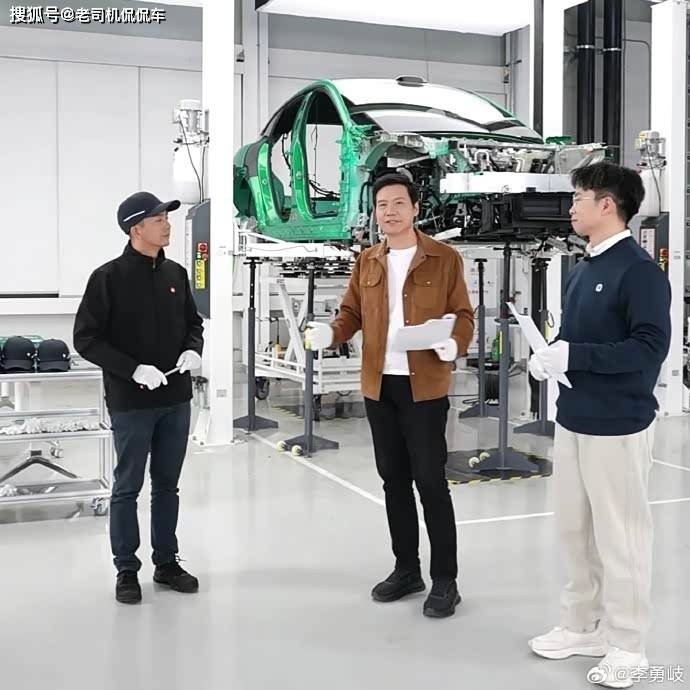
雷军直播拆车,直面“小字营销”“绿化带战神”质疑
3 6 Ke· 2026-01-04 08:26
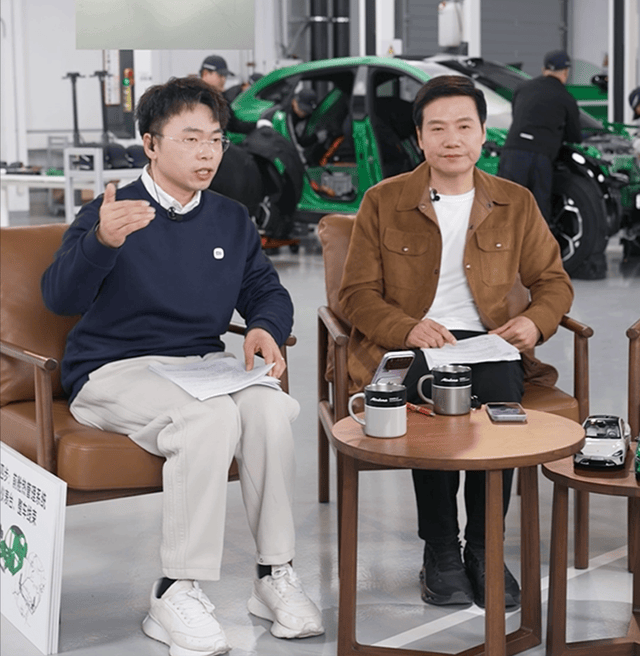
Core Viewpoint - Xiaomi's founder and CEO Lei Jun held a live stream on January 3, showcasing the Xiaomi YU7 car and addressing various controversies surrounding Xiaomi's automotive division, while announcing ambitious delivery targets for the coming years [1][2][9]. Group 1: Product Launch and Performance - The Xiaomi YU7, the company's second car, achieved over 200,000 pre-orders within 3 minutes and 289,000 within 1 hour of its launch [1]. - In the first six months since its launch, the YU7 has delivered over 150,000 units, which is 2.3 times the delivery of the SU7 during the same period [1]. - Xiaomi's total delivery target for 2025 is set at over 410,000 units, exceeding the initial goal of 300,000 units, which was later raised to 350,000 [1][3]. Group 2: Controversies and Responses - Lei Jun addressed seven major controversies regarding Xiaomi cars, including issues related to marketing and performance claims, stating that the past six months of criticism have been overwhelming [2][9]. - The company faced backlash over the term "green belt warrior," which was attributed to malicious editing of videos, leading to personal attacks on car owners [10]. - Xiaomi clarified that the claim of "1300 kilometers on a single charge" was misrepresented, emphasizing that it was based on real testing conditions [12]. Group 3: Safety and Technology Features - The YU7 features a high-end braking system with fixed calipers, which provide greater braking force and include a four-layer redundancy system for safety [4]. - The car's advanced driver assistance system (ADAS) will see enhancements with the introduction of HAD version in November 2025, improving acceleration, braking, and safety capabilities [6][7]. - The company demonstrated the YU7's performance in a 25% offset collision test, explaining its design strategy to minimize damage and protect passengers [8]. Group 4: Marketing Practices - Lei Jun acknowledged that the use of small print in marketing materials is an industry norm but committed to improving transparency by using larger fonts for important information [15]. - The company aims to address criticisms regarding its marketing practices and has already begun implementing changes to enhance clarity in communications [15].

雷军新年首播拆解YU7,正面回应小字营销、绿化带战神、7000法务等网络争议
Sou Hu Cai Jing· 2026-01-04 08:23
Core Viewpoint - The live broadcast by Lei Jun and Xiaomi executives addressed recent controversies surrounding the company, including issues related to product marketing and safety concerns regarding Xiaomi's vehicles [1][3]. Group 1: Product Safety and Technology - The live broadcast showcased Xiaomi's automotive technology, including the integrated die-casting and thermal management systems of the Xiaomi YU7 [3]. - Xiaomi's engineers explained the safety redundancy of the car door locks, which are equipped with three power sources and mechanical controls to ensure functionality in extreme conditions [3]. Group 2: Marketing Controversies - Lei Jun denied the existence of a "7000 legal team," calling it an unfounded rumor [3]. - Regarding the "small font marketing" issue, Lei Jun acknowledged the criticism and stated that Xiaomi would improve the clarity of product annotations in the future [3]. - The company responded to the "Green Belt Warrior" controversy, attributing it to malicious editing and labeling by individuals with ulterior motives [5]. Group 3: Performance Claims - Lei Jun addressed the criticism regarding the claim of "charging only once for 1300 kilometers," clarifying that the statement was based on actual performance and not an exaggeration [5]. - The company defended its claim of stopping from 200 km/h, explaining that it was intended to demonstrate the braking performance of the Xiaomi SU7 Ultra [7]. Group 4: Sales Performance and Future Goals - Xiaomi reported delivering 410,000 vehicles in 2025 and set a target of 550,000 for 2026, with plans to launch four new models, including updated versions of the SU7 [11].

雷军跨年直播的“防御与进攻”:在流量漩涡中重构小米的舆论场
Sou Hu Cai Jing· 2026-01-04 08:06
Core Viewpoint - The New Year's live stream by Lei Jun was not just a celebration but a strategic response to various criticisms surrounding Xiaomi, particularly regarding its automotive ventures and brand reputation [2] Group 1: Public Relations and Brand Image - Xiaomi faces significant public scrutiny and negative commentary, including rumors and exaggerated claims about its operations and products [2][5] - Lei Jun expressed personal frustration over false narratives, highlighting the challenges of managing public perception in the current digital landscape [2] - The company acknowledges the existence of malicious public relations tactics and aims to combat them while also addressing industry practices that contribute to misinformation [5][7] Group 2: Product Development and Technical Competitiveness - Lei Jun presented detailed technical insights about Xiaomi's automotive technology, aiming to establish a competitive edge against rivals like Tesla [8][10] - The company emphasized the strength of its materials and safety features, showcasing data that positions its products favorably in terms of performance metrics [10][12] - Xiaomi's commitment to innovation is reflected in its focus on research and development, with Lei Jun asserting that the company's core competitiveness lies in its engineering capabilities rather than just marketing [12] Group 3: Future Goals and Market Strategy - Xiaomi set ambitious delivery targets for its automotive division, aiming for 410,000 units in 2025 and 550,000 units in 2026, indicating a shift towards large-scale competition [12][13] - The company is aware that as it scales, any minor quality issues could be magnified by public scrutiny, prompting a call for fair treatment from consumers [12][13] - Lei Jun's personal commitment to the automotive business and his proactive approach to addressing challenges reflect a determination to enhance Xiaomi's market position [13]
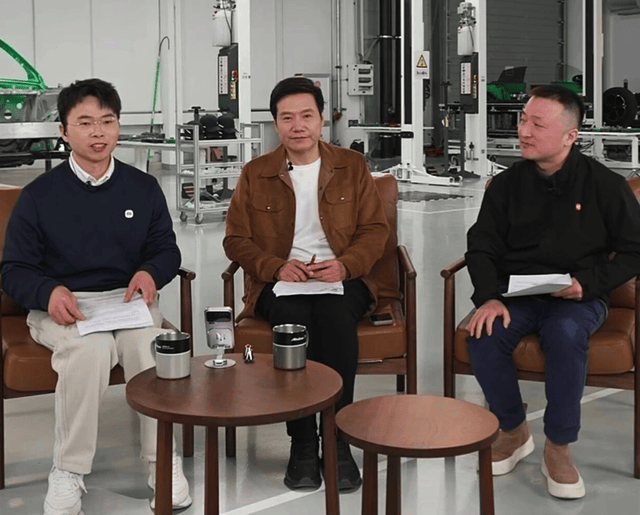
雷军直播回应1300公里只充一次电被曲解:还原真相并呼吁网络理性
Sou Hu Cai Jing· 2026-01-04 07:20
直播过程中,雷军播放了最初被剪辑传播的视频原始片段,画面清晰显示其原话为:"我开的是YU7标准版,标准版这个1300公里中间只充了一次电。"他 进一步解释,此次测试所用车型在CLTC工况下的官方续航里程为835公里,该数据依据国家标准测定,并非个人主观夸大。整个行程均为高速公路,平均 车速超过100公里/小时,在此条件下实现满电出发、中途仅充电一次完成长途驾驶,表现超出预期,因此他出于分享目的提及该体验,但"中间"二字被人 为删除,致使语义彻底改变,被误读为"一箱电跑1300公里"的误导性宣传。 2026-01-04 14:00:45 作者:狼叫兽 1月4日,小米集团创始人、董事长兼首席执行官雷军在一场以车辆拆解为主题的直播活动中,就近期网络广泛传播的"1300公里只充一次电"说法作出公开 说明。他指出,相关言论被部分自媒体刻意截取、曲解,导致公众误解,实际情况与其原意存在显著偏差。 雷军强调,所谓"1300公里只充一次电"并非指车辆单次充电可行驶1300公里,而是描述其驾驶小米YU7标准版从北京至上海的实际测试过程——全程约 1300公里,途中仅补电一次的真实体验。为证明所述属实,他在直播中展示了完整的行车 ...

雷军直播拆车,在线辟谣,给其它车企打了个样
Sou Hu Cai Jing· 2026-01-04 07:01
这几年,很多人和很多企业,都喜欢搞跨年直播晚会。 小米也赶了一回时髦,也搞了一个直播,不过原来计划是跨年直播的,后来因为雷军感冒了,延迟到了 1月3日。 这个直播搞了4个多小时,说真的,如果雷军真的感冒了,这么长时间,真顶不住。 比如「绿化带战神」、「小米汽车一撞就掉轮子」、「200 公里时速瞬间刹停」、「1300 公里行程只充 一次电」等,一一进行了回应。 此外对于和车本身无直接关系的「小字营销」、「7000 法务」热点,也进行了辟谣。最后雷军称欢迎 所有机构们来拆小米的汽车,不过呼吁大家"说公道话,不要为了流量故意夸大或找茬"。 很多人称,这个直播拆车,远比新车发布会更精彩,因为不再是冷冰冰的介绍,而是拆开来给你看具体 的零件、用料等,更为真实。 在拆车过程中,雷军给大家介绍了地盘用料、悬架结构、门锁系统安全冗余设计、防撞梁、小电瓶等 等。 整个过程中,也没有什么花里胡哨的营销、吹牛、包装,就是把整个汽车中的那些硬核指标,通过拆解 零件的方式,一个一个的展现在大家面前。 另外,在直播中,雷军也回应了很多网上的热点,进行了辟谣。 有意思的是,这个直播,不是搞什么新品发布会,也不搞什么晚会,以及年度总结,给大 ...