
XIAOMI(01810)

Search documents
Omdia:2025年第四季度,传音继续稳坐 “非洲机王” 的地位,非洲智能手机市场增长14%,入门级市场承压或预示2026年格局重整
Canalys· 2026-03-05 02:17
Core Insights - The African smartphone market is expected to end 2025 strongly, with Q4 shipments increasing by 14% year-on-year to 23.1 million units, driven by expanding financing options and stable currencies in East, West, and Southern Africa [2] - In 2025, total smartphone shipments in Africa are projected to reach 84.4 million units, a 13% increase, marking the strongest recovery since 2021, as delayed upgrade demands are released and channel inventories stabilize [2] Market Performance - Sub-Saharan Africa outperformed North Africa in Q4 2025, with South Africa showing a 38% growth, primarily due to strong prepaid business, while Nigeria grew by 25% thanks to affordable 4G smartphones [4] - In North Africa, Egypt saw a 22% increase, benefiting from local manufacturing and competitive product offerings from brands like Samsung and Xiaomi [4] Brand Analysis - Transsion maintained a leading market share of 44% but experienced a slowdown in growth to 3% due to price pressures in the ultra-low segment, while Samsung achieved a 27% growth, its best performance since Q4 2021 [5] - Xiaomi grew by 12% due to improved channel execution and localized product strategies, while Honor and OPPO also reported significant growth, with Honor expanding into new markets [5] Future Outlook - The African smartphone market is expected to enter a correction phase in 2026, with a projected 23% decline in shipments, as rising costs may lead to delayed upgrades among prepaid users [8] - The core challenge for 2026 will be maintaining product affordability in a cost-constrained environment while managing channel inventory effectively [8]




全球大公司要闻 | 英伟达排除千亿美元投资OpenAI可能性
Wind万得· 2026-03-05 02:00
Group 1 - Nvidia's CEO Jensen Huang stated that the company's recent $30 billion investment in OpenAI may be its last before the company goes public, with an IPO expected by the end of the year [2] - Huang also mentioned that the $10 billion investment in Anthropic might be the final one, and the previously announced $100 billion investment opportunity may not be on track [2] Group 2 - Moderna agreed to pay up to $2.25 billion to resolve patent disputes related to its COVID-19 vaccine, concluding ongoing legal controversies [3] - Samsung Electronics raised its first-quarter DRAM contract price increase from 70% to 100%, and plans to negotiate with Tesla to boost AI6 chip production, with an additional monthly demand of 24,000 wafers [3] - Alibaba's Qwen model technology head Lin Junyang announced his resignation, raising questions about his future with the company, while CEO Wu Yongming emphasized Qwen as a top priority during a communication meeting [3] Group 3 - Huawei's ICT BG CEO Yang Chaobin announced the official start of 6G standardization work, with the first 3GPP standard version not expected to be frozen before March 2029 [5] - Xiaomi plans to launch a new smartphone processor chip annually, with founder Lei Jun submitting proposals related to "AI+" and new productive forces at the National People's Congress [5] - ByteDance announced the pricing for its Seedance 2.0 video generation service at $1 per second, furthering the commercialization of generative AI applications [5] Group 4 - Apple released a budget MacBook Neo featuring the A18 Pro chip, starting at $599, while iOS 18.7.6 was officially released [8] - Meta plans to develop its own AI training chips and establish a new AI engineering department to accelerate superintelligence research [8] - Microsoft assisted in dismantling a global hacker service platform and is expected to launch Windows 12 this year, integrating AI deeply [8] Group 5 - Tesla's procurement executives plan to visit Samsung Electronics to discuss significantly increasing AI6 chip production capacity, with additional demand reaching 24,000 wafers per month [9] - Morgan Stanley announced a layoff of about 3%, affecting 2,500 employees across various departments [10] - Ross Stores reported strong fourth-quarter results, with same-store sales growth of 9% exceeding expectations, and a record sales figure of $6.64 billion [10] Group 6 - Honda announced plans to import pure electric vehicles produced in China to Japan, marking the first instance of a Japanese automaker selling Chinese-made EVs domestically [12] - SK Hynix is advancing new HBM packaging technology to meet Nvidia's demands, competing with Samsung for high-end memory market share [12] - LG Electronics is set to maintain its position as the global leader in OLED TV market share for the 13th consecutive year in 2025 [12]




越骂越火?山姆一冰块卖37.9元,多门店已售罄!网友吵翻天;一秒1块钱,Seedance2.0生成视频价格公布;拼多多一招商经理受贿208万被抓
雷峰网· 2026-03-05 00:29
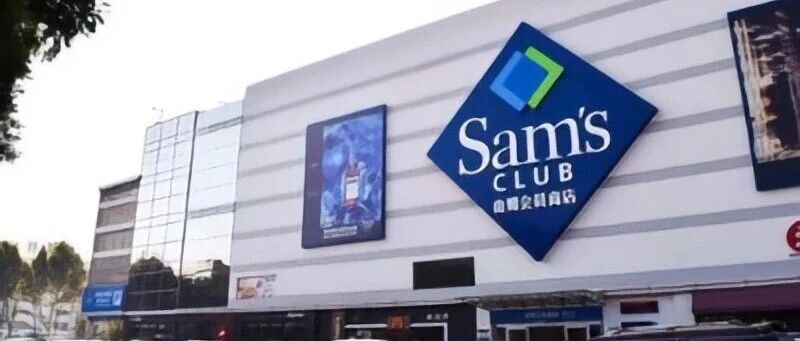
Group 1 - The article discusses the controversy surrounding a high-priced ice product sold at Sam's Club, which has sparked intense debate among consumers regarding its value and pricing strategy [4][6] - The product, "Farmer Spring Pure Transparent Ice 1.38kg," is priced at 37.9 yuan, leading to comparisons with similar products from competitors, which are significantly cheaper [6] - The ongoing debate has resulted in increased demand, with reports of the product selling out in many locations and even being resold at a premium [4][6] Group 2 - Pinduoduo's manager was sentenced to three years and five months for accepting bribes totaling over 2.08 million yuan, including a Rolex watch [9][10][11] - The court found that the manager exploited his position to benefit merchants on the platform, leading to significant legal repercussions [10][11] Group 3 - ByteDance's Seedance 2.0 pricing has been announced, with costs averaging 1 yuan per second for video generation, reflecting a competitive pricing strategy in the AI video generation market [5][12] - The service offers two pricing tiers based on video input, with the inclusion of video editing resulting in a higher cost due to increased computational requirements [12] Group 4 - Aion M9 has achieved over 280,000 units delivered, claiming top rankings in sales, quality, safety, reputation, and resale value in the luxury SUV segment [15][16] - The company aims to sell an additional 1 million units within two years, targeting a total of 2 million units sold [16] Group 5 - Alibaba's Qwen AI model team is undergoing a restructuring, with the core leader stepping down, which has raised questions about the future direction of the project [19][20] - The company emphasizes that this change is part of a broader team expansion rather than a contraction, aiming to enhance resource allocation [20] Group 6 - GPU manufacturer Muxi expects a first-quarter loss of 90.76 million to 182 million yuan, despite projected revenue growth of 24.84% to 87.26% year-on-year [21] - The company is focusing on innovation and market expansion in the high-performance GPU sector, driven by the rapid growth of the AI industry [21] Group 7 - The robotics company Dajie has completed a multi-million D round of financing, which will be used to enhance its technology and expand into strategic emerging sectors [22] - The funding will support advancements in industrial intelligence and market penetration in key industries such as energy and aerospace [22] Group 8 - Xiaomi's robots have been operational in its automotive factory, achieving a 90.2% success rate in a specific task, showcasing advancements in robotics technology [26] - The company plans to scale up the deployment of humanoid robots in its factories over the next five years [26] Group 9 - GAC Honda is undergoing internal restructuring amid a significant drop in sales, with February sales down 68.93% year-on-year [28] - The company is adjusting its marketing and operational strategies to address the declining performance [28] Group 10 - The semiconductor industry has made a breakthrough in observing internal chip defects, which could enhance the reliability of high-performance chips [46] - This advancement is expected to aid in the debugging and optimization processes within semiconductor manufacturing [46] Group 11 - Qingwei Intelligent has initiated its IPO process, potentially becoming the first publicly listed company focused on reconfigurable chips in China [49][50] - The company has achieved significant sales milestones, with over 30 million units shipped, indicating strong market demand for its products [50] Group 12 - RuiXiang Intelligent has successfully passed the IPO review, focusing on smart manufacturing in the flexible printed circuit board sector [51][52] - The company has demonstrated steady revenue growth, with a compound annual growth rate of 33.80% over the past three years [52]


早报 | 美防长称美伊冲突或持续八周或更长;委员建议废除劳务派遣制度;苹果MacBook Neo来了;特朗普正式提名美联储主席
虎嗅APP· 2026-03-05 00:19
Group 1 - Iran has identified several candidates for the Supreme Leader position, with a temporary committee set to exercise the leader's powers until a new leader is elected [2][3] - Israel has issued a warning that any new Supreme Leader who opposes Israel and the U.S. will be targeted for elimination [3] - The U.S. Defense Secretary stated that the conflict between the U.S. and Iran could last for eight weeks or longer, while Iran denied reports of seeking negotiations with the U.S. [4] Group 2 - Russia's President Putin suggested that Russia might proactively cut off gas supplies to Europe, citing rising energy prices and the EU's plans to ban Russian gas imports [5] - The Iranian military successfully attacked Israeli defense installations, destroying seven radar systems, which has left the U.S. and Israel at a disadvantage in the region [7][8] Group 3 - Morgan Stanley plans to cut approximately 3% of its workforce, affecting various departments, including investment banking and asset management, due to performance-related reasons and changes in business priorities [14] - Xiaomi announced plans to upgrade its self-developed SOC chips annually and is preparing to launch an independent AI assistant for international markets, aiming to create a competitive edge in technology [15] Group 4 - Nvidia's CEO indicated that the recent $30 billion investment in OpenAI might be the last before the company goes public, and he expressed skepticism about a previously announced $100 billion infrastructure deal [16] - China Merchants Industry announced that the recent export ban on lithium from Zimbabwe will have a limited impact on its operations, as it maintains sufficient domestic raw material inventory [25][26]



多路资金大举抄底恒生科技!什么信号?
券商中国· 2026-03-04 23:28
Core Viewpoint - The Hong Kong stock market, particularly the Hang Seng Technology Index, has experienced significant declines, with a nearly 30% drop since October last year, despite ongoing buying interest from various funds [2][3]. Group 1: Market Performance - The Hang Seng Technology Index has seen a 12.45% decline year-to-date, with individual stocks like Kingdee International dropping nearly 30% and others like Ctrip, Meituan, Xiaopeng Motors, and Tencent Music falling over 20% [3]. - The overall decline of the Hang Seng Index has exceeded 27% since its peak on October 3 of the previous year, with many fund managers expressing that the recent drop was beyond their expectations [3]. Group 2: Investment Trends - Despite the market downturn, there has been a strong influx of capital into the Hang Seng Technology sector, primarily from three sources: southbound funds, company buybacks, and cross-border ETFs [5]. - Southbound funds have shown resilience, with 27 out of 36 trading days this year recording net inflows, totaling HKD 181.8 billion [5][6]. - Major companies like Tencent and Alibaba have seen significant increases in their holdings from southbound funds, with Tencent's market value held by these funds exceeding HKD 540 billion [6]. Group 3: Valuation and Future Outlook - The current rolling price-to-earnings ratio of the Hang Seng Technology Index is at 20.09, which is below the historical average, indicating a potential undervaluation compared to tech stocks in the US, Japan, and South Korea [7]. - Fund managers believe that the negative sentiment has largely been priced in, and there is an expectation of a rebound in earnings growth, with projected EPS growth exceeding 40% for 2026 [7][8]. - The anticipated exit of external pressures and a return to focus on intrinsic growth within the industry could support a recovery in the Hang Seng Technology Index [8].


【重磅深度】2026年智驾平权之车企智驾方案梳理
东吴汽车黄细里团队· 2026-03-04 15:36
Investment Recommendations - The current investment suggestion for the smart automotive sector is to maintain a strong outlook on the L4 RoboX theme for 2026, favoring B-end software over C-end hardware [2][6] - Preferred H-shares include Xpeng Motors, Horizon Robotics, Pony.ai, WeRide, Cao Cao Mobility, and Black Sesame Intelligence; A-shares include Qianli Technology, Desay SV, and Jingwei Hirain [2][6] Downstream Application Dimensions - Robotaxi perspective includes: 1. Integrated model: Tesla and Xpeng Motors 2. Technology providers + operational sharing model: Horizon, Baidu, Pony.ai, WeRide, and Qianli Technology 3. Transformation of ride-hailing/taxi services: Didi, Cao Cao Mobility, Ruqi Mobility, public transport, and Jinjiang Online [2][6] - Robovan perspective includes Desay SV and Jiushi Intelligent/New Stone Technology [2][6] - Other autonomous vehicle perspectives include mining trucks (e.g., HiDi Intelligent Driving), ports (e.g., Jingwei Hirain), sanitation vehicles (e.g., Yingfeng Environment), and buses (e.g., WeRide) [2][6] Upstream Supply Chain Dimensions - B-end autonomous vehicle OEMs include BAIC BluePark, GAC Group, Jiangling Motors, and Tongli Co. - Key upstream suppliers include: 1. Testing services (China Automotive Research and China Automotive Industry Corporation) 2. Chips (Horizon Robotics and Black Sesame Intelligence) 3. Domain controllers (Desay SV, Jingwei Hirain, Joyson Electronics, Huayang Group, and Coboda) 4. Sensors (Sunny Optical Technology, Hesai, and Suteng Juchuang) 5. Steer-by-wire chassis (Bertel and Nexperia) 6. Lighting (Xingyu Co.) 7. Glass (Fuyao Glass) [2][6] Mainstream Automakers' Autonomous Driving Strategies - A detailed comparison of major domestic automakers' autonomous driving strategies shows various approaches, including self-research and external supply partnerships, with notable collaborations with companies like Huawei, Momenta, and Horizon [4][5][20][21][30][32][39][40] - Chery's strategy includes a mixed model of multiple external algorithm suppliers and self-research platforms, with significant investments in partnerships [28][29] - Geely's integration of its autonomous driving team into Qianli Technology aims to streamline operations and enhance technological capabilities [20][22][23] BYD's Autonomous Driving Development - BYD's "Tianshen Eye" system has evolved to version 5.0, featuring advanced capabilities such as automatic emergency steering and braking, with a focus on enhancing user safety and efficiency [15][16] - The company emphasizes a dual approach of self-research and external collaboration, maintaining a significant investment in autonomous driving technology [10][14][47] Xiaomi's Strategic Investment in Autonomous Driving - Xiaomi has adopted a phased approach to its autonomous driving strategy, transitioning from strategic investments to full-scale self-research and development, with a significant increase in team size and R&D investment [47][48]




小米新手机海外定价1.6万元对标苹果
21世纪经济报道· 2026-03-04 12:39
Core Viewpoint - The article highlights Xiaomi's strategic focus on high-end product offerings and the integration of AI technologies across its product lines, aiming to enhance user experience and maintain competitiveness in the global market. Group 1: High-End Product Strategy - Xiaomi's recent product launch, the "Leitz Phone" version of the Xiaomi 17 Ultra, marks its entry into the ultra-high-end market, with prices reaching up to 1.6 million yuan in China and 1999 euros in Europe [3][4] - The company aims to push its pricing strategy beyond 6000 yuan, targeting the 8000 yuan and above segment, indicating confidence in competing directly with Apple and Samsung in the high-end market [3][4] - Xiaomi's internal assessment considers 600 euros as the starting point for high-end products in overseas markets, with a clear strategy to penetrate the 1000 euros and above segment [3][4] Group 2: Impact of Storage Costs - The article discusses the significant rise in storage prices, with predictions of a 12.9% decline in global smartphone shipments by 2026, while average selling prices (ASP) are expected to increase [4][5] - Xiaomi's strategy to focus on high-end products is seen as a buffer against the rising costs of memory, which are projected to continue increasing until the end of 2027 [5][6] - The company maintains a strong position as the third-largest smartphone manufacturer globally, leveraging its relationships with major storage suppliers to navigate price negotiations and supply stability [5][6] Group 3: AI Integration - AI is positioned as a central theme in Xiaomi's product offerings, with demonstrations of enhanced imaging, voice assistance, and smart home integration at the MWC [6][7] - The company emphasizes its unique advantage in having a vast ecosystem of over 1 billion IoT devices, which provides a rich data environment for AI applications [7][8] - Xiaomi's approach to AI is described as moving from a focus on model parameters to embedding AI capabilities into real-world applications, enhancing user interaction with devices [7][8] Group 4: Global Expansion and Future Plans - Xiaomi plans to integrate its chip, operating system, and AI model capabilities into a single product by the end of the year, indicating a move towards a more comprehensive technology stack [10][11] - The company is also investing in robotics, with robots currently being tested in production lines, showcasing a commitment to innovation and efficiency [10][11] - Xiaomi's strategy for global expansion includes a phased approach to entering international markets, particularly Europe, with plans to sell cars by 2027 [11][12]
2026年智驾平权之车企智驾方案梳理
Soochow Securities· 2026-03-04 12:24
Investment Rating - The report maintains a positive outlook on the smart automotive sector, particularly emphasizing the L4 RoboX theme for 2026 [4] Core Insights - The report suggests a preference for B-end software companies over C-end hardware companies, recommending specific stocks in both H-shares and A-shares [4] - It highlights various downstream application perspectives, including Robotaxi and Robovan, and identifies key players and their business models [4] - The report also discusses upstream supply chain opportunities, including core suppliers and manufacturing partners [4] Summary by Sections Mainstream Automotive Companies' Smart Driving Technology Solutions - The report provides a comprehensive overview of the smart driving strategies of major automotive companies, detailing their partnerships and technology approaches [5][6][7][15][22][24][30][33] - Companies like BYD, Geely, Chery, and Great Wall are noted for their mixed strategies of self-research and external collaboration, with specific technology and supplier partnerships outlined [7][15][22][24][30][33] BYD's Smart Driving Strategy - BYD has shifted its smart driving approach from standard configuration to a pay-per-use model, emphasizing self-research while maintaining partnerships with algorithm companies [7][8] - The company has launched the "Tianshen Eye 5.0" system, which features advanced capabilities such as emergency steering and obstacle avoidance [12][13] Geely's Smart Driving Team Integration - Geely has completed the integration of its smart driving team under the "Qianli Zhijia" brand, focusing on enhancing its autonomous driving capabilities [15][17][19] - The company has established a structured approach to its smart driving solutions, offering multiple versions with varying hardware and software capabilities [19] Chery's Smart Driving Development - Chery has introduced the "Falcon Smart Driving" strategy, which includes multiple versions of its smart driving system, aiming for comprehensive coverage across various scenarios [22][23] - The company has also consolidated its smart driving R&D teams to enhance efficiency and innovation [22][23] Great Wall's Smart Driving Solutions - Great Wall has adopted a dual approach of self-research and external collaboration, with a focus on enhancing its computing power and algorithm capabilities [26][29] - The company has developed a tiered computing platform to support various levels of autonomous driving features [26][29] Changan's Smart Driving Framework - Changan has implemented a strategy that combines procurement from Huawei with its own smart driving research, aiming for a comprehensive autonomous driving solution [32][33] Other Companies' Strategies - The report also covers the smart driving strategies of other companies such as SAIC, GAC, and Leap Motor, highlighting their partnerships and technological advancements [33][36][38]
如何看小米人形机器人的“进厂时刻”?
机器人大讲堂· 2026-03-04 09:13
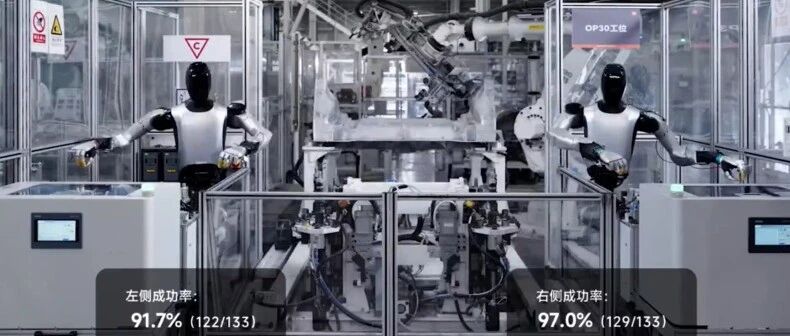
Core Viewpoint - The article discusses Xiaomi's humanoid robot's first successful operation in a real automotive production line, highlighting the challenges and implications of its 90.2% success rate in a complex assembly task [1][5][30]. Group 1: Robot Performance and Challenges - Xiaomi's humanoid robot achieved a 90.2% success rate in a task involving the installation of self-tapping nuts, which is a critical and complex operation in automotive manufacturing [5][6]. - The automotive industry typically requires a success rate of 99.5% or higher for assembly tasks, indicating that the current performance of the robot is below industry standards [6][8]. - The robot's operation involved multiple complex actions, including grabbing, aligning, and placing the nuts, which are complicated by factors such as random positioning and environmental disturbances [3][8]. Group 2: Technological Innovations - Xiaomi's approach utilizes a data-driven control system, moving away from traditional rule-based programming to a more autonomous model that allows the robot to learn and adapt in real-time [10][11]. - The robot employs a dual architecture with a "brain" for understanding tasks and a "small brain" for executing actions, which enhances its ability to respond to dynamic environments [13][14]. - The integration of tactile feedback allows the robot to adjust its actions based on touch, compensating for visual limitations caused by environmental factors [16]. Group 3: Future Directions and Recommendations - Xiaomi aims to improve the robot's performance from 90.2% to 99.5% by accumulating more operational data and addressing specific failure scenarios encountered during production [18][22]. - The company has proposed three recommendations to enhance the industrial application of humanoid robots, including improving operational stability, expanding usage scenarios, and establishing safety standards [30]. - The article emphasizes that the journey towards industrializing embodied intelligence is just beginning, requiring extensive real-world data collection and iterative improvements [27][29].
小米集团-W:25Q4 业绩前瞻:汽车全年经营层面盈利,存储成本压力逐步体现-20260304
GUOTAI HAITONG SECURITIES· 2026-03-04 05:45
Investment Rating - The report maintains a "Buy" rating for Xiaomi Group (1810.HK) with a target price adjusted to HKD 42.7 [7][15]. Core Insights - The report highlights that the storage price surge is currently impacting Xiaomi's short-term profitability, but the long-term ecosystem value driven by multi-device synergy is promising [3]. - The financial forecasts for Xiaomi's revenue and adjusted net profit have been revised downwards for FY2025E-FY2027E, reflecting a more cautious outlook due to market conditions [15]. Financial Summary - **Revenue Forecast (in million RMB)**: - 2023: 270,971 - 2024: 365,932 (+35.0%) - 2025E: 457,062 (+24.9%) - 2026E: 511,216 (+11.8%) - 2027E: 595,885 (+16.6%) [5] - **Gross Profit and Margin**: - 2023: Gross Profit 57,477, Margin 21.2% - 2024: Gross Profit 76,564, Margin 20.9% - 2025E: Gross Profit 101,281, Margin 22.2% - 2026E: Gross Profit 107,773, Margin 21.1% - 2027E: Gross Profit 131,879, Margin 22.1% [5] - **Adjusted Net Profit**: - 2023: 19,273 (+126.3%) - 2024: 27,235 (+41.3%) - 2025E: 38,186 (+40.2%) - 2026E: 34,040 (-10.9%) - 2027E: 46,178 (+35.7%) [5] Business Segments Overview - **Smartphones**: The report anticipates a decline in smartphone shipments in Q4 2025, with an expected volume of 37.8 million units, down 11.4% year-on-year, primarily due to a contraction in the Indian market [15]. - **Automotive**: Xiaomi's automotive segment is projected to achieve operational profitability in 2025, with Q4 deliveries exceeding 140,000 units. The report notes a slight decline in average selling price (ASP) due to promotional activities [15]. - **IOT and Internet Services**: IOT revenue is expected to decline by 26% year-on-year in Q4 2025, while internet services are projected to grow by 4.7% [15]. Valuation Methodology - The report employs a Sum-of-the-Parts (SOTP) valuation method, assigning a PE of 20x for core businesses (smartphones, IOT, internet) and a PS of 2.4x for the automotive segment, reflecting Xiaomi's competitive advantages in supply chain management and brand strength [15][19].