XIAOMI(01810)

Search documents
小米集团-W(01810):25Q4 业绩前瞻:汽车全年经营层面盈利,存储成本压力逐步体现
GUOTAI HAITONG SECURITIES· 2026-03-04 05:09
Investment Rating - The report maintains a "Buy" rating for Xiaomi Group (1810.HK) with a target price adjusted to HKD 42.7 [7][15]. Core Insights - The report highlights that the storage price surge is currently impacting Xiaomi's short-term profitability, but the long-term ecosystem value driven by multi-device synergy is promising [3]. - The financial forecast for Xiaomi shows a projected revenue increase from RMB 270.971 billion in 2023 to RMB 595.885 billion by 2027, with a compound annual growth rate (CAGR) of approximately 16.6% [5][15]. - Adjusted net profit is expected to rise from RMB 19.273 billion in 2023 to RMB 46.178 billion in 2027, reflecting a significant growth trajectory [5][15]. Financial Summary - **Revenue Forecast**: - 2023: RMB 270.971 billion - 2024: RMB 365.932 billion (+35.0%) - 2025E: RMB 457.062 billion (+24.9%) - 2026E: RMB 511.216 billion (+11.8%) - 2027E: RMB 595.885 billion (+16.6%) [5] - **Gross Profit**: - 2023: RMB 57.477 billion - 2024: RMB 76.564 billion - 2025E: RMB 101.281 billion - 2026E: RMB 107.773 billion - 2027E: RMB 131.879 billion [5] - **Adjusted Net Profit**: - 2023: RMB 19.273 billion - 2024: RMB 27.235 billion (+41.3%) - 2025E: RMB 38.186 billion (+40.2%) - 2026E: RMB 34.040 billion (-10.9%) - 2027E: RMB 46.178 billion (+35.7%) [5] Business Segments - **Smartphones**: - Expected shipment of 37.8 million units in Q4 2025, a year-on-year decrease of 11.4%, primarily due to a contraction in the Indian market [15]. - Anticipated gross margin decline to approximately 8.2% in Q4 2025 due to storage cost pressures [15]. - **Automotive**: - Q4 2025 deliveries are projected to exceed 140,000 units, with expectations of achieving operational profitability for the full year [15]. - The automotive segment is expected to see a significant product launch period in 2026, which may enhance demand [15]. - **IOT and Internet Services**: - IOT revenue is expected to decline by 26% year-on-year to RMB 23 billion in Q4 2025, while internet services are projected to grow by 4.7% to RMB 9.8 billion [15]. Valuation Methodology - The report employs a Sum-of-the-Parts (SOTP) valuation method, assigning a price-to-earnings (PE) ratio of 20x for core businesses (smartphones, IOT, internet) and a price-to-sales (PS) ratio of 2.4x for the automotive segment [15][19].
雷军:建议智能驾驶内容进驾考
21世纪经济报道· 2026-03-04 03:10
Group 1 - The core viewpoint of the article emphasizes the importance of humanoid robots in smart manufacturing and the establishment of a traffic safety civilization system in the era of smart cars [1][5] Group 2 - Humanoid robots are seen as a significant future direction in industry, with predictions indicating that China's humanoid robot shipments may exceed 2.6 million units by 2035, leading to a market size exceeding 140 billion yuan, potentially reaching a trillion-level scale in the long term [3] - To promote the application of humanoid robots in smart manufacturing, it is suggested to accelerate the resolution of engineering application challenges, aiming for a mean time between failures (MTBF) of over 10,000 hours and a task success rate exceeding 99% by 2027 [3][4] - There is a call to expand the application scenarios for humanoid robots, encouraging factories to provide more production positions and support the deployment of humanoid robots in specific production lines [4] - The establishment of safety standards for humanoid robots is crucial, including the implementation of unique coding for humanoid robots to ensure safety during production and operation [4] Group 3 - The rapid development of intelligent driving technology in China presents new challenges to traditional traffic safety systems, necessitating updates in driver training to align with new technologies [6] - Recommendations include accelerating the establishment of intelligent automotive technology standards and optimizing driving assessment projects to incorporate intelligent driving elements [6][7] - There is a need for a multi-party collaborative governance system to enhance traffic safety in the era of intelligent driving, including the integration of L2 level assistance driving into traffic violation penalties [7] - Strengthening public awareness and education on intelligent driving is essential to foster a new culture of safe driving that aligns with the development of smart connected vehicles [7]


朝闻国盛:配置盘主导的债市会如何演进?
GOLDEN SUN SECURITIES· 2026-03-04 00:50
Group 1: Fixed Income Market Analysis - The report discusses the current market environment focusing on the stability of allocation demand and the pace of trading positions. Long-term bonds are experiencing narrow fluctuations, with slow recovery on the fund liability side, limiting the space for brokers to engage in wave trading. The lack of trading momentum means that allocation demand is not expected to see significant short-term increases [3]. - It is essential to monitor the sustainability of allocation demand, with the bank's loan-to-deposit ratio being a core factor in maintaining bond allocation demand. Additionally, the pace of recovery on the trading side will influence fund accumulation, which could lead to rapid market movements if trading positions increase [3]. - If trading positions are increased, it may lead to a downward breakthrough in long-term bonds, with expectations for short- to medium-term credit bond yields to decline rapidly, while credit spreads remain low. However, recovery in long- and ultra-long credit bonds will depend on the restoration of market sentiment [3]. Group 2: Banking Sector Insights - The People's Bank of China and the National Financial Regulatory Administration have released the list of systemically important banks for 2025, with Zhejiang Commercial Bank being newly included in the first group. Additionally, Industrial Bank has been moved from the third group to the second group, while other banks' groupings remain unchanged [4]. - The assessment of systemically important banks is based on quantitative evaluations of scale, interconnectedness, substitutability, and complexity, with asset balance being a significant factor influencing group classification. The adjustments reflect differences in asset growth rates, which are critical drivers for changes in bank groupings [4]. - Newly included Zhejiang Commercial Bank will need to comply with a 0.25% additional capital requirement, promoting better management and capital replenishment capabilities. For Industrial Bank, the reduction in additional capital requirements from 0.75% to 0.5% may provide more capital space to support credit issuance and profit recovery [4]. Group 3: Xiaomi Group Analysis - Xiaomi Group is positioned in the high-end market, which may help mitigate storage cost pressures. The company anticipates delivering over 410,000 vehicles in 2025, with ongoing iterations in AI models and applications [7]. - Revenue projections for Xiaomi Group from 2025 to 2027 are estimated at 457.8 billion, 541.8 billion, and 644.4 billion yuan, respectively, with non-GAAP net profits expected to be approximately 38.6 billion, 37 billion, and 45 billion yuan [7]. - The report assigns a target price of 47 HKD to Xiaomi Group, maintaining a "buy" rating, as the company is expected to maintain relative competitiveness despite short-term industry disruptions [7]. Group 4: Weixing Co., Ltd. Analysis - Weixing Co., Ltd. has reported a projected 8.4% decline in net profit for 2025 due to increased financial expenses, with revenue expected to grow by 2.41% to 4.787 billion yuan. The fourth quarter of 2025 is projected to show a revenue increase of approximately 6% but a net profit decline of 24% [8]. - As a leading global supplier, Weixing's continuous improvement in product R&D and smart manufacturing capabilities is expected to create core competitive barriers. Future net profits for 2026 and 2027 are projected to be 7.01 billion and 7.86 billion yuan, respectively, with a current price-to-earnings ratio of 17 times for 2026 [8].

小米集团-W:行业环境波动,持续高端化探索-20260304
GOLDEN SUN SECURITIES· 2026-03-04 00:24
Investment Rating - The report maintains a "Buy" rating for Xiaomi Group [3][5] Core Views - The report highlights that Xiaomi's smartphone shipments in Q4 2025 were approximately 37.8 million units, a year-on-year decline of 11.4%, with a market share of 11.2%, placing it among the top three globally [1] - Xiaomi's high-end product strategy is expected to mitigate the pressure from rising storage costs, with the Xiaomi 17 series achieving strong sales [1] - The automotive segment is projected to deliver over 410,000 units in 2025, with a target of 550,000 units for 2026, indicating a positive growth trajectory [2] - The report anticipates Xiaomi's revenue for 2025-2027 to be 457.8 billion, 541.8 billion, and 644.4 billion CNY respectively, with non-GAAP net profits of approximately 38.6 billion, 37 billion, and 45 billion CNY [3][4] Financial Summary - Revenue for 2023 is projected at 270.97 billion CNY, with a year-on-year growth rate of -3%, followed by 365.91 billion CNY in 2024, representing a 35% increase [4][12] - Non-GAAP net profit is expected to rise from 19.27 billion CNY in 2023 to 38.58 billion CNY in 2025, reflecting a growth rate of 42% [4][12] - The gross margin is forecasted to be 21.2% in 2023, slightly decreasing to 20.5% by 2027 [12][11] - The report projects a decline in smartphone gross margin to over 8% in Q4 2025 due to increased storage costs [1] Market Position - Xiaomi's market share in the Chinese smartphone market is 13.2%, ranking it among the top five [1] - The company is focusing on high-end market penetration, with the Xiaomi 17 Pro Max achieving significant sales within the premium segment [1] - The automotive and AI innovation sectors are expected to contribute positively to Xiaomi's profitability as delivery volumes increase [2]
Omdia:2025年,欧洲智能手机出货量下滑1%,苹果和荣耀创下市场份额历史新高
Canalys· 2026-03-04 00:03
Core Insights - The European smartphone market is projected to decline by 1% in 2025, reaching 134.2 million units, influenced by weak demand and new regulations on eco-design and USB-C [2] Group 1: Market Performance - Samsung remains the largest smartphone manufacturer in Europe, with a slight increase in shipments to 46.6 million units, benefiting from the strong performance of the Galaxy A16 and A56 models [4] - Apple’s shipments are expected to grow by 6% to 36.9 million units in 2025, achieving a record market share of 27%, driven by the popularity of the iPhone 16 series [4] - Xiaomi holds a 16% market share, with shipments declining by 1% to 21.8 million units, primarily relying on its Redmi series [4] - Motorola's shipments decreased by 5% to 7.7 million units, but it experienced a strong recovery in the second half of 2025 [5] - Honor entered the top five smartphone manufacturers in Europe for the first time, with a 4% increase in shipments to 3.8 million units, focusing on its affordable X series [5] Group 2: Competitive Landscape - The combined market share of the top five smartphone manufacturers continues to rise, indicating the importance of scale for long-term success in Europe [8] - Despite the concentration of market share among leading manufacturers, intense competition persists across all markets, necessitating differentiation and effective customer engagement strategies [8] - Emerging brands like vivo, Nothing, and Fairphone have achieved significant growth, demonstrating that opportunities exist even in a mature and competitive market [8] Group 3: Future Outlook - Concerns regarding memory prices may pose challenges for the European smartphone market in 2026, with the region accounting for 10.8% of global smartphone shipments in 2025 [10] - Leading manufacturers are expected to be more resilient due to their scale and price range coverage, while finding the right balance across different regions will be crucial for most companies [10] - The high-end market in Europe remains attractive for many manufacturers, despite the challenges of expanding smartphone business in the region [10]


小米集团-W(01810):行业环境波动,持续高端化探索
GOLDEN SUN SECURITIES· 2026-03-03 13:40
Investment Rating - The report maintains a "Buy" rating for Xiaomi Group [3][5] Core Views - The report highlights that Xiaomi's smartphone shipments in Q4 2025 were approximately 37.8 million units, a year-on-year decline of 11.4%, with a market share of 11.2%, placing it among the top three globally [1] - Xiaomi's high-end product strategy is expected to mitigate the pressure from rising storage costs, with the Xiaomi 17 series achieving strong sales [1] - The automotive segment is projected to deliver over 410,000 units in 2025, with a target of 550,000 units for 2026, indicating a positive growth trajectory [2] - The report anticipates Xiaomi's revenue for 2025-2027 to be 457.8 billion, 541.8 billion, and 644.4 billion CNY respectively, with non-GAAP net profits of approximately 38.6 billion, 37 billion, and 45 billion CNY [3][4] Financial Summary - Revenue for 2023 is projected at 270.97 billion CNY, with a year-on-year growth rate of -3%, followed by 365.91 billion CNY in 2024, representing a 35% increase [4][12] - Non-GAAP net profit is expected to rise from 19.27 billion CNY in 2023 to 38.58 billion CNY in 2025, reflecting a growth rate of 42% [4][12] - The report forecasts a decline in smartphone gross margin to over 8% in Q4 2025 due to increased storage costs, despite an overall positive contribution from product structure optimization [1][3] Market Position - Xiaomi's market share in the Chinese smartphone market is reported at 13.2%, ranking it among the top five [1] - The company is recognized as a leader in the industry, with a strong focus on high-end product offerings, which is expected to enhance its competitive position in the long term [3]
小米集团(01810) - 翌日披露报表
2026-03-03 10:48
公司名稱: 小米集团 (於開曼群島註冊成立以不同投票權控制的有限公司) 呈交日期: 2026年3月3日 如上市發行人的已發行股份或庫存股份出現變動而須根據《香港聯合交易所有限公司(「香港聯交所」)證券上市規則》(「《主板上市規則》」)第13.25A條 / 《香港聯合交易所有限公司GEM證券 上市規則》(「《GEM上市規則》」)第17.27A條作出披露,必須填妥第一章節 。 | 第一章節 | | | | | | | | | | --- | --- | --- | --- | --- | --- | --- | --- | --- | | 1. 股份分類 | 不同投票權架構公司普通股 | 股份類別 | B | | 於香港聯交所上市 | 是 | | | | 證券代號 (如上市) | 01810 | 說明 | | | | | | | | 多櫃檯證券代號 | 81810 | RMB 說明 | | | | | | | | A. 已發行股份或庫存股份變動 | | | | | | | | | | | | | 已發行股份(不包括庫存股份)變動 | | 庫存股份變動 | | | | | 事件 | | 已發行股份(不包括庫存股份) ...
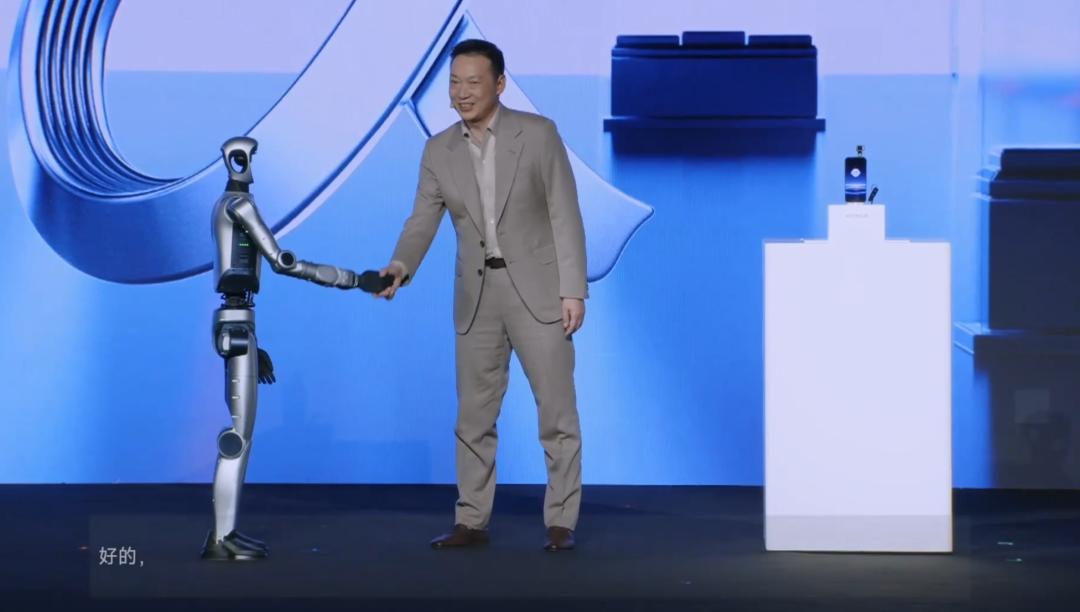
荣耀机器人“太空步”秀巴展,小米机器人上岗汽车工厂,小鹏升级自动驾驶,比亚迪颠覆技术,谁会走得更远?
3 6 Ke· 2026-03-03 09:59
Core Viewpoint - The technology industry is increasingly characterized by cross-industry collaboration, particularly in the robotics sector, where major players from various fields are entering the market, driven by advancements in AI and robotics technology [2][4]. Group 1: Robotics Market Trends - The robotics market is expected to see significant growth, with companies like Yushu Technology, ZhiYuan Robotics, and others becoming key players following their successful launches in 2025 [2]. - The 2026 Spring Festival Gala featured performances incorporating robots, further boosting interest and investment in the robotics market [2]. - Industry leaders from various sectors, including mobile, automotive, and internet, are predicted to join the robotics market, indicating a competitive landscape [2][4]. Group 2: Company Innovations - Honor launched its humanoid robot, marking its entry into the consumer humanoid robotics market, and aims to integrate smartphone technology with robotics for enhanced user experience [4][6]. - Xiaomi has begun deploying its humanoid robots in automotive manufacturing, showcasing practical applications of robotics in production environments [10][15]. - Xiaopeng Motors announced the upcoming release of its second-generation VLA model, aimed at achieving fully autonomous driving within the next 1-3 years, with plans for global testing and deployment [18][20]. Group 3: Upcoming Developments - BYD is set to unveil a "disruptive technology" on March 5, 2026, with expectations that it may involve advancements in battery technology or smart driving [21]. - Predictions suggest that BYD may also introduce new robotics products based on its electric vehicle technology [24].


小米虚假宣传案大反转,全网炸锅了!
商业洞察· 2026-03-03 09:22
Core Viewpoint - The article discusses the legal resolution of a dispute involving Xiaomi's "hole version" car hood, highlighting the implications for consumer trust and corporate responsibility in marketing practices [3][4][21]. Summary by Sections Background of the Dispute - The dispute began in February 2025 when Xiaomi launched the SU7 Ultra with a carbon fiber hood priced at 42,000 yuan, marketed as having "racing-level features" [7]. - Initial consumer expectations were set high by Xiaomi's promotional statements, including comments from CEO Lei Jun about performance upgrades [7][8]. Consumer Reactions and Legal Actions - After receiving the product, consumers found discrepancies between the advertised features and the actual performance, leading to feelings of being misled [9][10]. - Xiaomi's response included acknowledging unclear communication and offering compensation, which consumers deemed insufficient compared to the high cost of the optional hood [11][10]. Court Ruling - The court ruled in favor of Xiaomi, stating three main points: 1. A third-party report confirmed the hood's aerodynamic benefits, countering claims of it being merely decorative [14]. 2. The court noted the essential differences between the production model and the prototype, indicating consumers should have been aware of these distinctions [14]. 3. The promotional statements did not constitute binding contractual obligations, as the purchase agreement lacked specific performance metrics [14][15]. Implications for Xiaomi and the Industry - The ruling is significant but only the first of its kind, with other similar cases pending in different jurisdictions [16]. - Despite the legal victory, the incident has raised concerns about consumer trust and the need for companies to balance marketing effectiveness with product reality [20][21]. - Xiaomi's future success in the electric vehicle market will depend on learning from this experience and maintaining transparent communication with consumers [20][21]. Future Outlook - Xiaomi plans to accelerate its electric vehicle initiatives, with six new models expected in 2026, covering a price range of 200,000 to 550,000 yuan [17]. - The company has prepared its Beijing factory for a production capacity exceeding 600,000 units annually, indicating ambitious growth plans [19].

全球内存持续大涨价:谁家欢喜,谁家愁?
格隆汇APP· 2026-03-03 09:19
Core Viewpoint - The article discusses a significant price increase in the mobile phone and PC markets, driven by rising costs in the upstream memory chip market, leading to a restructuring of profit distribution within the consumer electronics industry [1][2][5]. Group 1: Price Increases in Consumer Electronics - Major smartphone manufacturers like OPPO, vivo, and Xiaomi are implementing price increases starting from March, with new models seeing price hikes of at least 100 yuan, and flagship models increasing by 2000-3000 yuan, marking the largest collective price adjustment in five years [1]. - PC manufacturers such as Lenovo, HP, and Dell have also initiated multiple rounds of price increases, with adjustments ranging from 500 to 1500 yuan, reflecting the broader trend in consumer electronics [2]. Group 2: Upstream Memory Chip Market Dynamics - The global DRAM contract prices have surged by 90%-95% since Q1 2026, with DDR4 8Gb spot prices skyrocketing from 3.2 USD to 15 USD, a cumulative increase of 369% [6][8]. - The price of NAND flash memory has also reached historical highs, with the average contract price for DDR4 8Gb rising from 1.45 USD at the beginning of 2025 to 17 USD by February 2026 [8]. - The memory chip supply is being heavily impacted by the explosive demand for AI computing, leading manufacturers to shift production capacity from consumer-grade chips to high-bandwidth memory (HBM) and server memory [11][13]. Group 3: Impact on Downstream Companies - The rising memory prices have significantly increased the cost structure for downstream manufacturers, with memory chips now accounting for 20%-35% of the total material cost in smartphones, up from the typical 10%-15% [31]. - Companies like Transsion Holdings are forecasting a 54.11% decline in net profit for 2025 due to rising component costs, indicating the financial strain on consumer electronics firms [32]. - The ongoing price increases may lead to further profit erosion for consumer electronics companies, especially if the price hikes continue into 2026 and beyond [32]. Group 4: Market Winners and Losers - The memory chip manufacturers are experiencing substantial profit increases, with DRAM price hikes leading to gross margins rising from loss levels to between 50%-70% for leading firms [21]. - Companies like Micron Technology have seen stock prices increase by over 600% since April 2025, with significant revenue growth driven by HBM demand [24]. - Conversely, the consumer electronics sector is facing intense pressure, with many companies struggling to pass on costs to consumers due to competitive market conditions [30][35]. Group 5: Historical Context and Future Outlook - The current memory price surge is reminiscent of the 2016-2018 cycle, which led to a significant market shakeout, particularly affecting smaller manufacturers unable to cope with rising costs [39][40]. - The ongoing cycle, driven by AI demand, is expected to last longer and exert more pressure on downstream companies compared to previous cycles, with potential for accelerated market consolidation [41].