MEITUAN(03690)

Search documents
马斯克获准“万亿薪酬”方案;小鹏剪开机器人外衣破“真人”质疑;谷歌计划将TPU数据中心搬上太空|本周AI要闻汇总
36氪· 2025-11-08 09:07
Group 1 - Xiaopeng showcased its new humanoid robot IRON, featuring a highly biomimetic design and advanced technologies such as Turing AI chips and solid-state battery technology, addressing public skepticism by revealing its mechanical structure [2] - The Kimi K2 Thinking model was released, demonstrating significant improvements in AI reasoning and problem-solving capabilities, achieving a 44.9% SOTA score in "human's last exam" and outperforming OpenAI's ChatGPT in understanding user needs without explicit instructions [3] - Meituan launched the LongCat official app, which supports multimodal capabilities including online search and voice calls, with plans to add video calls and other features soon [3] Group 2 - Rokid and BOLON announced a collaboration to release AI-powered smart glasses, emphasizing lightweight design and high performance with features like voice control and real-time translation [4] - Yushu Technology introduced a full-body remote operation platform, allowing users to control robots for household tasks like washing dishes and cleaning [4] - Amazon launched the Kindle Translate AI translation service, currently in testing, aimed at helping authors automatically translate their works to reach a broader audience [4] Group 3 - WeChat Pay integrated three new AI features to assist small businesses, including automatic payment collection and promotional content optimization [5] - Microsoft announced the formation of a super-intelligent team to develop AI models that surpass human performance, aiming to reduce reliance on OpenAI technology [6] - OpenAI's CEO stated the company would not seek government assistance in case of financial difficulties, emphasizing confidence in market competition [6] Group 4 - Apple is nearing a deal with Google to pay approximately $1 billion annually for the use of Google's Gemini AI model to enhance Siri, marking a significant shift in its technology strategy [7] - Google is in talks to deepen its investment in AI startup Anthropic, which could raise its valuation to over $350 billion [7] - Google announced the "Sun Catcher Project," aiming to build large-scale AI data centers in space to address energy demands for AI development [8] Group 5 - Tesla shareholders approved a record-breaking compensation plan for CEO Elon Musk, potentially valuing him at nearly $1 trillion, contingent on achieving specific growth targets [8] - Meta's charitable organization, led by Mark Zuckerberg and Priscilla Chan, is restructuring to focus more on AI and scientific research [9][10] - Perplexity is partnering with Snap to integrate its AI search functionality into Snapchat, paying $4 billion for the collaboration [10] Group 6 - Global bond issuance reached a record high of $5.94 trillion in 2025, driven by AI project funding and a resurgence in M&A activity [11] - OpenAI and Amazon Web Services announced a strategic partnership worth $38 billion to enhance OpenAI's computational capabilities [11] - The AI trading competition RockAlpha showed strong performance from domestic models, with Doubao leading the rankings [12] Group 7 - A court in Shanghai ruled that AI prompt words do not constitute copyrightable works, dismissing a lawsuit from an art creation company [13] - Iceland is launching a national AI education pilot in collaboration with Anthropic, providing teachers with access to AI tools for personalized learning [14] - A new bipartisan bill in the U.S. requires companies to report job impacts related to AI, aiming to clarify AI's effects on the labor market [14]








智通ADR统计 | 11月8日
智通财经网· 2025-11-07 23:47
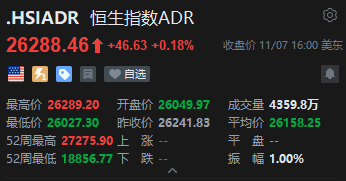
Market Overview - US stock indices showed mixed performance on Friday, with the Hang Seng Index ADR rising to 26,288.46 points, an increase of 46.63 or 0.18% compared to the Hong Kong close [1]. Major Blue-Chip Stocks - HSBC Holdings closed at 110.854 HKD, up 0.78% from the Hong Kong close; Tencent Holdings closed at 633.674 HKD, down 0.05% [2]. Stock Performance Summary - Tencent Holdings (00700) latest price: 634.000 HKD, down 10.000 HKD (-1.55%); ADR price: 81.480 USD [3] - Alibaba Group (09988) latest price: 160.100 HKD, down 4.900 HKD (-2.97%); ADR price: 166.340 USD [3] - HSBC Holdings (00005) latest price: 110.000 HKD, down 0.700 HKD (-0.63%); ADR price: 71.270 USD [3] - Xiaomi Group (01810) latest price: 42.240 HKD, down 1.200 HKD (-2.76%); ADR price: 27.000 USD [3] - AIA Group (01299) latest price: 81.500 HKD, up 0.300 HKD (0.37%); ADR price: 42.190 USD [3] - Meituan (03690) latest price: 102.000 HKD, down 1.300 HKD (-1.26%); ADR price: 26.270 USD [3] - JD.com (09618) latest price: 124.000 HKD, down 2.900 HKD (-2.29%); ADR price: 31.790 USD [3] - Kuaishou Technology (01024) latest price: 68.250 HKD, down 4.300 HKD (-5.93%); ADR price: 1.850 USD [3]



港股通成交活跃股追踪 协鑫科技近一个月首次上榜
Zheng Quan Shi Bao Wang· 2025-11-07 14:39
Core Insights - On November 7, GCL-Poly Energy made its debut on the Hong Kong Stock Connect active trading list for the first time in a month [1] - The total trading volume of active stocks on the Hong Kong Stock Connect reached HKD 335.36 billion, accounting for 34.00% of the day's total trading amount, with a net buying amount of HKD 15.34 billion [1] - Alibaba-W led the trading volume with HKD 70.80 billion, followed by Xiaomi Group-W and SMIC with HKD 40.78 billion and HKD 39.03 billion respectively [1] Trading Activity Summary - GCL-Poly Energy had a trading volume of HKD 17.16 billion on the day, with a net sell of HKD 0.97 billion, and its stock price increased by 6.52% [1] - The most frequently listed stocks in the past month were Alibaba-W and Huahong Semiconductor, each appearing 21 times, indicating strong interest from Hong Kong Stock Connect funds [1] - Other notable stocks included Tencent Holdings with a trading volume of HKD 35.80 billion and a net sell of HKD 4.72 billion, and Xiaomi Group-W with a trading volume of HKD 40.78 billion and a net buy of HKD 9.67 billion [1]


11月7日南向资金净买入75.23亿港元
Zheng Quan Shi Bao· 2025-11-07 14:36
Group 1 - The Hang Seng Index fell by 0.92% to close at 26,241.83 points on November 7, with a total net inflow of southbound funds through the Stock Connect amounting to 7.523 billion HKD [1] - The total trading volume for the Stock Connect on November 7 was 98.647 billion HKD, with a net buying amount of 7.523 billion HKD [1] - In the Shanghai Stock Connect, the trading volume was 59.567 billion HKD with a net buying of 3.686 billion HKD, while in the Shenzhen Stock Connect, the trading volume was 39.080 billion HKD with a net buying of 3.837 billion HKD [1] Group 2 - In the Shanghai Stock Connect, Alibaba-W had the highest trading volume at 4.032 billion HKD, followed by Xiaomi Group-W and Tencent Holdings with trading volumes of 2.699 billion HKD and 2.333 billion HKD respectively [2] - The stock with the highest net buying amount was China National Offshore Oil Corporation, with a net buying of 764 million HKD, closing up by 1.44% [1][2] - Tencent Holdings had the highest net selling amount at 554 million HKD, closing down by 1.55% [1][2]
南向资金今日成交活跃股名单(11月7日)





Zheng Quan Shi Bao Wang· 2025-11-07 14:32
Market Overview - On November 7, the Hang Seng Index fell by 0.92%, with total southbound trading amounting to HKD 986.47 billion, including buy transactions of HKD 530.85 billion and sell transactions of HKD 455.62 billion, resulting in a net buy of HKD 75.23 billion [1] Southbound Trading Details - The southbound trading through Stock Connect (Shenzhen) had a total trading amount of HKD 390.80 billion, with buy transactions of HKD 214.58 billion and sell transactions of HKD 176.22 billion, leading to a net buy of HKD 38.37 billion [1] - The southbound trading through Stock Connect (Shanghai) had a total trading amount of HKD 595.67 billion, with buy transactions of HKD 316.27 billion and sell transactions of HKD 279.40 billion, resulting in a net buy of HKD 36.86 billion [1] Active Stocks - Alibaba-W had the highest trading amount among southbound stocks, totaling HKD 70.80 billion, followed by Xiaomi Group-W and SMIC with trading amounts of HKD 40.78 billion and HKD 39.03 billion, respectively [1] - In terms of net buying, Xiaomi Group-W led with a net buy of HKD 9.67 billion, while CNOOC and Hua Hong Semiconductor followed with net buys of HKD 7.64 billion and HKD 6.06 billion, respectively [1] - Tencent Holdings experienced the highest net sell amount of HKD 4.72 billion, with its stock price declining by 1.55%, while Alibaba-W and Kuaishou-W faced net sells of HKD 3.62 billion and HKD 2.95 billion, respectively [1] Continuous Net Buying - Xiaomi Group-W was the only stock to receive continuous net buying from southbound funds for more than three days, achieving a total net buy of HKD 51.95 billion over eight days [2]
京东、美团等8家平台企业发起食品安全管理自律公约
Zhong Guo Qing Nian Bao· 2025-11-07 13:54
Core Points - The article discusses the signing of a self-discipline convention for food safety management by eight major online food trading platforms in China, aimed at enhancing food safety and responsibility [1][2] - The convention emphasizes the importance of platform enterprises in ensuring food safety and outlines specific measures to address current food safety risks [1] Group 1: Self-Discipline Convention - Eight online food trading platforms, including JD.com, Meituan, Pinduoduo, Douyin, Xiaohongshu, Taobao, WeChat Mini Programs, and Kuaishou, have jointly signed a self-discipline convention for food safety management [1] - The convention focuses on six key areas: implementation of food safety management systems, verification of qualifications for food producers and sellers, monitoring of food sales behaviors, sharing of a "blacklist" for non-compliant entities, collaborative law enforcement, and proactive social supervision [1] Group 2: Specific Measures - Platforms will utilize various verification methods, including government data checks, video verification, and on-site confirmations to assess the qualifications of food sellers [1] - Advanced technologies such as artificial intelligence and big data will be employed to monitor food labeling, promotional activities, and consumer reviews comprehensively [1] - A collaborative "blacklist" system will be established to prevent non-compliant entities from re-entering the market under different accounts, promoting information sharing and cross-platform restrictions [1]


京东、美团、拼多多......市场监管总局指导8家平台企业发起食品安全管理自律公约
第一财经· 2025-11-07 12:34
Core Viewpoint - The article discusses the launch of a self-discipline convention for food safety management among major online food trading platforms in China, aimed at enhancing food safety responsibilities and creating a secure online food consumption environment [1][2]. Group 1: Self-Discipline Convention - The convention is initiated by eight major online food trading platforms including JD.com, Meituan, Pinduoduo, Douyin E-commerce, Xiaohongshu, Taobao, WeChat Mini Store, and Kuaishou E-commerce [1]. - It focuses on addressing current food safety risks in online transactions and emphasizes self-regulation among platform enterprises [2]. Group 2: Key Measures - The convention outlines six key areas for food safety management: implementation of food safety management systems, verification of qualifications for food producers and sellers, monitoring of sales behaviors, sharing of a "blacklist," collaborative law enforcement, and acceptance of social supervision [2]. - Specific measures include using government data verification, video verification, and on-site confirmations to ensure the authenticity of qualification information [2]. - Platforms will utilize AI and big data to monitor food labels, promotional activities, and consumer reviews, taking action against violations such as false advertising and illegal sales [2]. Group 3: Blacklist and Reporting Mechanism - A collaborative "blacklist" system will be established to prevent food producers and sellers from re-entering the market under different accounts, promoting information sharing and cross-platform restrictions [2]. - A convenient complaint and reporting mechanism will be set up, allowing users to report food safety violations easily, with platforms required to address these reports promptly [2]. Group 4: Regulatory Oversight - The State Administration for Market Regulation will supervise and guide platform enterprises to strengthen their awareness of food safety responsibilities through inspections, administrative guidance, and accountability discussions [2].
电商巨头激战“最后一公里”,便利店形态迎来数字化革命
Cai Jing Wang· 2025-11-07 11:21
Core Insights - The competition in the instant retail market is intensifying, with major players like Taobao, Meituan, and JD entering the convenience store sector to capitalize on the growing demand for rapid delivery services [1][4][6] Group 1: Market Dynamics - Instant retail is experiencing rapid growth, with a double-digit increase in transaction volume reported in the first eight months of the year, expanding from fresh produce and dining to categories like electronics, clothing, and cosmetics [4][6] - Taobao's new convenience store brand, "Taobao Convenience Store," launched on November 1, aims to provide 24-hour service with a 30-minute delivery promise, while Meituan is expanding its "Lightning Warehouse" model across various categories [1][2] - JD has already established 1,500 convenience store locations, focusing on "hourly" and "minute" delivery services, leveraging its robust logistics and supply chain capabilities [3][5] Group 2: Business Models - Taobao's approach involves a brand authorization model, allowing merchants to use its brand while retaining ownership of their store assets, supported by a digital supply chain [2][5] - Meituan's "Lightning Warehouse" model, initiated in 2020, has grown to over 50,000 locations, focusing on community-based operations with a delivery radius of 3-5 kilometers [2][6] - JD's strategy includes deep collaboration with offline supermarkets and convenience stores, enhancing its "hourly" and "minute" delivery services through a network of physical locations [3][5] Group 3: Competitive Landscape - The entry of major players into the convenience store market is driven by the exhaustion of online traffic growth and the need for stable, predictable customer access through physical locations [3][6] - The competition is expected to intensify, with Meituan aiming to exceed 100,000 Lightning Warehouses by 2027 and Taobao planning to invest 2 billion yuan in expanding its convenience store network [6][7] - The operational complexities of running physical stores, including site selection and supply chain management, pose significant challenges for these companies [7][8] Group 4: Future Outlook - The competition among e-commerce giants in the convenience store sector reflects the potential of the instant retail market and the digital transformation of consumer habits [8] - As competition heats up, companies may need to shift focus from scale to efficiency optimization to address profitability challenges and improve service quality [8]
智通港股通活跃成交|11月7日
智通财经网· 2025-11-07 11:02
Core Insights - On November 7, 2025, Alibaba-W (09988), Xiaomi Group-W (01810), and Tencent Holdings (00700) were the top three companies by trading volume in the southbound trading of the Stock Connect, with trading amounts of 4.032 billion, 2.699 billion, and 2.333 billion respectively [1] - In the Shenzhen-Hong Kong Stock Connect, Alibaba-W (09988), SMIC (00981), and Xiaomi Group-W (01810) also ranked as the top three, with trading amounts of 3.048 billion, 1.652 billion, and 1.379 billion respectively [1] Southbound Trading Highlights - **Top Active Companies in Southbound Trading (Shanghai-Hong Kong)** - Alibaba-W (09988): Trading amount of 4.032 billion, net buying of +0.303 billion [2] - Xiaomi Group-W (01810): Trading amount of 2.699 billion, net buying of +0.668 billion [2] - Tencent Holdings (00700): Trading amount of 2.333 billion, net selling of -0.554 billion [2] - **Top Active Companies in Southbound Trading (Shenzhen-Hong Kong)** - Alibaba-W (09988): Trading amount of 3.048 billion, net selling of -0.664 billion [2] - SMIC (00981): Trading amount of 1.652 billion, net buying of +0.227 billion [2] - Xiaomi Group-W (01810): Trading amount of 1.379 billion, net buying of +0.298 billion [2]
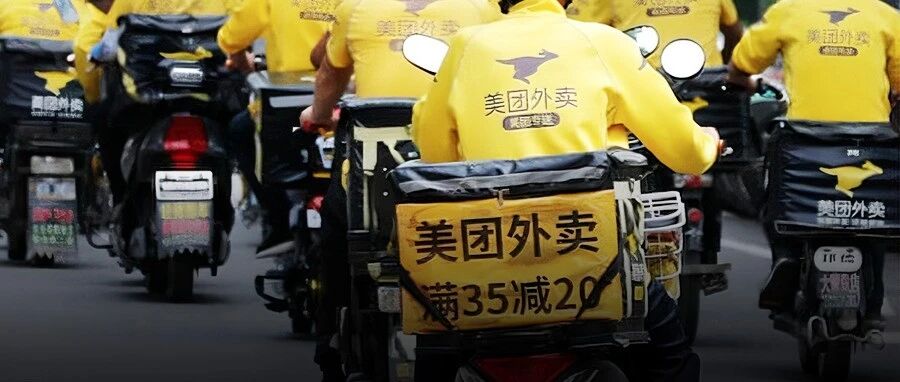
你看不上的外卖骑手,很可能是城市里的“准中产”
市值风云· 2025-11-07 10:09
Core Viewpoint - The article discusses the transformation of food delivery riders into a more respected and secure profession, highlighting the establishment of a comprehensive and flexible social security system that enhances their job stability and dignity [1][29]. Group 1: Employment Trends - The perception of "middle class" is evolving, with food delivery riders emerging as a new group of "quasi-middle class" individuals, earning an average monthly income exceeding 7,000 yuan and an hourly wage of 33.6 yuan, which is 40% higher than that of construction workers [4][5]. - As of July 2025, the number of food delivery riders in China surpassed 14 million, indicating a significant growth in this employment sector [8]. Group 2: Social Security Initiatives - Meituan has initiated a nationwide social security subsidy for riders, covering millions, with a 50% subsidy for those who meet the criteria [8][17]. - The social security framework acknowledges the unique employment relationship of riders, allowing for a more tailored approach to their benefits [15][33]. Group 3: Rider Welfare Programs - Meituan's welfare programs include various forms of support such as occupational injury insurance, educational funds for riders' children, and meal subsidies, which collectively enhance the riders' quality of life [20][23][25]. - The company has established over 52,000 rider rest stations nationwide, providing essential services like drinking water and charging facilities [25]. Group 4: Global Context and Comparisons - The article contrasts Meituan's approach with international attempts to regulate gig economy workers, noting that many foreign models have failed due to their rigid structures [31][32]. - Meituan's model is characterized by inclusivity and voluntary participation, setting transparent rules that empower riders to make their own choices [33][34].