MEITUAN(03690)

Search documents
网经社陈礼腾:美团构建的骑手保障体系是一个多层次、全方位的网络
Sou Hu Cai Jing· 2025-11-05 05:07
Core Viewpoint - Meituan has officially announced the nationwide coverage of rider pension insurance subsidies, marking a significant development in the welfare protection for delivery riders in the industry [1] Summary by Relevant Sections Welfare Protection Network - Meituan has established a multi-tiered welfare protection network covering all riders, which includes participation in the "New Employment Form Occupational Injury Protection" pilot program since July 2022, expanding to 17 provinces this year [1][4] - As of September 2023, Meituan has paid over 2 billion yuan in insurance premiums, covering 13 million riders [1] Timeline of Initiatives - The timeline of Meituan's initiatives includes the start of pilot programs in 2021, the introduction of pension insurance subsidies in 2024, and the nationwide rollout of these subsidies by October 27, 2025, two months ahead of schedule [5][6] Innovative Aspects of the Protection System - The rider protection system includes basic guarantees such as pension subsidies, occupational injury insurance, and accidental injury insurance, which address the fundamental social security needs of riders [7][9] - Advanced protections include serious illness care, educational funds for children, and vocational training funds, marking the first time such benefits cover all riders and their families [7][9] - Additional work benefits include meal provisions, annual free experiences, travel subsidies, and health screenings for female riders [7][9] Flexibility and Inclusivity - The Meituan plan is characterized by its inclusivity, covering all types of riders across the industry without restrictions on qualifications, locations, or working hours [10][11] - Riders can choose their insurance locations, and the subsidy payment process has been optimized for convenience, reflecting the flexible nature of their work [10] Comparison with Competitors - Compared to competitors like JD and Ele.me, Meituan's pension insurance subsidies are available to all riders nationwide, while JD focuses on full-time riders and Ele.me on its own platform riders [11] - Meituan's approach is designed to ensure comprehensive coverage without imposing limitations on the type or duration of work [11] Industry Impact - The establishment of this welfare system positions riders as a more formal profession, enhancing their occupational security and setting a higher standard for welfare among blue-collar and flexible employment groups [12]


饿了么,退场?
Sou Hu Cai Jing· 2025-11-05 03:34
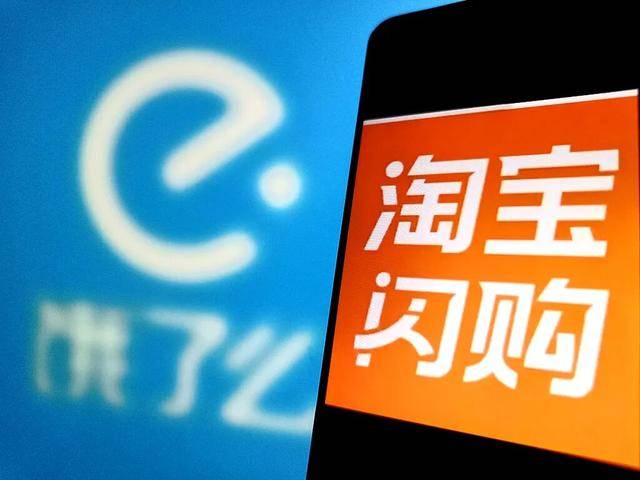
Core Viewpoint - The recent rebranding of Ele.me to "Taobao Flash Purchase" indicates a strategic shift in Alibaba's approach to the food delivery and instant retail market, suggesting that Ele.me may be transitioning to a backend service provider role as competition intensifies with Meituan and other players in the instant retail space [1][8][11]. Group 1: Market Dynamics - The competition in the food delivery sector has evolved, with Alibaba's Taobao Flash Purchase emerging as a primary competitor rather than Ele.me, which has historically focused on food delivery [3][5]. - Taobao Flash Purchase has rapidly gained market share, achieving a daily order volume of 1.2 billion within a few months of its launch, significantly impacting Meituan's market share [4][6]. - The overall market share dynamics have shifted, with Ele.me's share declining to around 25% after being acquired by Alibaba, while Taobao Flash Purchase aims to capture a significant portion of the market [5][6]. Group 2: Strategic Implications - The rebranding to Taobao Flash Purchase is seen as a move to unify brand recognition and integrate Ele.me's logistics network into Alibaba's broader e-commerce ecosystem, enhancing competitive strength against Meituan and JD in the instant retail sector [8][11]. - Analysts suggest that the focus is shifting from traditional food delivery to a more comprehensive instant retail ecosystem, emphasizing supply chain responsiveness and cross-platform collaboration [8][11]. - The timing of the rebranding aligns with the upcoming "Double 11" shopping festival, aiming to leverage consumer interest and drive traffic to the new platform [11].
智通港股通持股解析|11月5日





智通财经网· 2025-11-05 00:33
Core Insights - The top three companies by Hong Kong Stock Connect holding ratios are China Telecom (71.17%), COSCO Shipping Energy (70.06%), and GCL-Poly Energy (69.25%) [1][2] - The largest increases in holdings over the last five trading days were seen in the Tracker Fund of Hong Kong (+56.53 billion), Hang Seng China Enterprises (+19.83 billion), and Meituan-W (+17.13 billion) [1][2] - The largest decreases in holdings were recorded for Tencent Holdings (-18.04 billion), ZTE Corporation (-6.76 billion), and Innovent Biologics (-6.70 billion) [1][3] Group 1: Hong Kong Stock Connect Holding Ratios - China Telecom (00728) has a holding ratio of 71.17% with 9.878 billion shares [2] - COSCO Shipping Energy (01138) has a holding ratio of 70.06% with 908 million shares [2] - GCL-Poly Energy (01330) has a holding ratio of 69.25% with 280 million shares [2] Group 2: Recent Increases in Holdings - Tracker Fund of Hong Kong (02800) saw an increase of +56.53 billion in holdings, with a change of +21.71 million shares [2] - Hang Seng China Enterprises (02828) increased by +19.83 billion, with a change of +2.12 million shares [2] - Meituan-W (03690) increased by +17.13 billion, with a change of +1.71 million shares [2] Group 3: Recent Decreases in Holdings - Tencent Holdings (00700) experienced a decrease of -18.04 billion, with a change of -2.86 million shares [3] - ZTE Corporation (00763) saw a decrease of -6.76 billion, with a change of -2.09 million shares [3] - Innovent Biologics (01801) decreased by -6.70 billion, with a change of -0.77 million shares [3]
智通港股沽空统计|11月5日
智通财经网· 2025-11-05 00:22
Core Insights - The article highlights the short-selling ratios and amounts for various companies, indicating significant market sentiment towards these stocks [1][2]. Short-Selling Ratios - Anta Sports (82020) and Li Ning (82331) have the highest short-selling ratios at 100.00% [2] - JD Group (89618) follows closely with a short-selling ratio of 96.92% [2] - Other notable companies with high short-selling ratios include China Resources Beer (80291) at 89.92% and BYD Company (81211) at 85.03% [2] Short-Selling Amounts - Tencent Holdings (00700) leads in short-selling amount with 1.899 billion [2] - Alibaba (09988) and Xiaomi Group (01810) follow with short-selling amounts of 1.757 billion and 1.397 billion respectively [2] - Other companies in the top short-selling amounts include Baidu (09888) at 1.141 billion and Pop Mart (09992) at 0.888 billion [2] Deviation Values - JD Group (89618) has the highest deviation value at 42.75%, indicating a significant difference from its average short-selling ratio over the past 30 days [2] - Other companies with high deviation values include QuanFeng Holdings (02285) at 38.67% and BYD Company (81211) at 29.23% [2] - The deviation value reflects the current short-selling ratio compared to the average over the last 30 days, providing insight into market sentiment [3]



智通ADR统计 | 11月5日




Xin Lang Cai Jing· 2025-11-04 22:50
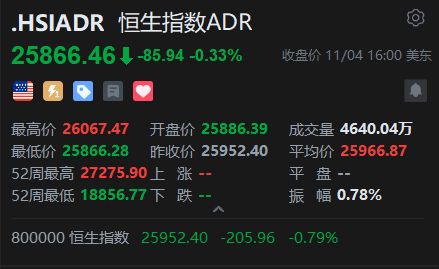
Market Overview - The US stock market indices collectively declined on Tuesday, with the Hang Seng Index ADR falling to 25,866.46 points, down by 85.94 points or 0.33% compared to the Hong Kong close [1]. Company Performance - Major blue-chip stocks mostly experienced declines, with HSBC Holdings closing at HKD 108.602, up by 0.56% compared to the Hong Kong close, while Tencent Holdings closed at HKD 623.88, down by 0.81% [3]. - Tencent Holdings saw a decrease of HKD 5.12 or 0.81% in its ADR price, closing at HKD 623.88 [4]. - Alibaba Group's ADR fell by HKD 4.20 or 2.57%, closing at HKD 159.00 [4]. - Xiaomi Group's ADR dropped by HKD 1.30 or 2.91%, closing at HKD 43.42 [4]. - AIA Group's ADR decreased by HKD 0.30 or 0.38%, closing at HKD 79.62 [4]. - NetEase's ADR fell by HKD 3.40 or 1.54%, closing at HKD 216.80 [4]. - Ctrip Group's ADR declined by HKD 4.50 or 0.81%, closing at HKD 548.50 [4]. - BYD's ADR decreased by HKD 2.00 or 2.02%, closing at HKD 97.10 [4]. - The Hong Kong Stock Exchange's ADR fell by HKD 3.20 or 0.75%, closing at HKD 425.60 [4].
热门中概股多数下跌,纳斯达克中国金龙指数跌2.05%
Mei Ri Jing Ji Xin Wen· 2025-11-04 21:16
Core Viewpoint - The majority of popular Chinese concept stocks experienced a decline, with the Nasdaq Golden Dragon China Index dropping by 2.05% on November 5th [1] Company Performance - WeRide (文远知行) saw a preliminary drop of 13.7% [1] - Pony.ai (小马智行) fell by 11.2% [1] - Xiaomi's American Depositary Receipts (ADR) decreased by 4.7% [1] - Xpeng (小鹏), NIO (蔚来), TSMC (台积电), Meituan (美团 ADR), and Li Auto (理想) all dropped over 3% [1]


南向资金与上市公司回购给力 港股仍有上行空间
Zhong Guo Zheng Quan Bao· 2025-11-04 20:17
Core Insights - Southbound capital has significantly increased its holdings in the Hong Kong stock market, marking it as the largest source of incremental funds this year, with a cumulative net inflow exceeding 1.27 trillion HKD, a historical high [1][4] - The Hong Kong stock market has performed well this year, with the Hang Seng Index and Hang Seng Tech Index rising over 29% and 30% respectively as of November 4 [1][6] - Despite recent market fluctuations, analysts believe that the Hong Kong market is primarily driven by liquidity, with potential for substantial upward movement in the medium to long term [1][7] Southbound Capital Inflows - As of November 4, 2023, southbound capital has recorded a cumulative net inflow of 12,753.21 billion HKD this year, more than double the amount from the same period in 2024, with a single-day record inflow of 358.76 billion HKD on August 15 [1][4] - In 198 trading days this year, there were net inflow days on 166 occasions, accounting for over 80% [1] - Monthly net inflows have consistently exceeded 110 billion HKD in several months, including January through April, July, August, and September [1] Holdings and Sector Preferences - As of November 3, 2023, southbound capital held 5,525.19 billion shares, an increase of 867.34 billion shares since the beginning of 2025, with a market value of 6.29 trillion HKD, up 2.71 trillion HKD [2] - The financial, information technology, and consumer discretionary sectors have the highest holdings, valued at 15,135.25 billion HKD, 13,086.04 billion HKD, and 8,918.34 billion HKD respectively [2] - Major stock holdings include Tencent Holdings over 650 billion HKD, Alibaba-W over 360 billion HKD, and several banks and energy companies exceeding 200 billion HKD [2] Recent Buying Trends - The most significant increases in holdings this year have been in China Construction Bank, Bank of China, and other major banks, with increases of 68.96 billion shares, 52.02 billion shares, and 50.27 billion shares respectively [3] - In the past month, the financial, energy, and communication services sectors saw the highest net buying amounts, with 255.73 billion HKD, 112.20 billion HKD, and 95.67 billion HKD respectively [4] Company Buybacks - As of November 3, 2023, Hong Kong-listed companies have repurchased over 1,460 billion HKD worth of shares, with 239 companies participating in buybacks this year [5] - Tencent Holdings leads in buyback scale with 609.65 billion HKD, followed by HSBC and AIA with 302.57 billion HKD and 176.93 billion HKD respectively [5] - The buyback trend is particularly strong in the technology and financial sectors, with notable increases in consumer companies as well [5] Market Performance and Outlook - The Hong Kong stock market has shown strong performance this year, with all industry sectors experiencing gains, particularly materials, healthcare, and information technology [6] - The Hang Seng Index's rolling P/E ratio has increased from 8.96 to 11.89, indicating a potential for valuation recovery [6] - Analysts suggest that the market may continue to experience fluctuations in the short term but has significant upward potential in the medium to long term due to favorable liquidity conditions and ongoing capital inflows [7]



港股通11月4日成交活跃股名单
Zheng Quan Shi Bao Wang· 2025-11-04 16:24
Core Insights - The Hang Seng Index fell by 0.79% on November 4, with southbound trading totaling HKD 1000.97 billion, including HKD 549.64 billion in buying and HKD 451.32 billion in selling, resulting in a net inflow of HKD 98.32 billion [1] Trading Activity - The most actively traded stock by southbound funds was Alibaba-W, with a total trading amount of HKD 74.27 billion, followed by SMIC and Xiaomi Group-W with HKD 42.55 billion and HKD 36.09 billion respectively [1] - In terms of net buying, China National Offshore Oil Corporation (CNOOC) led with a net inflow of HKD 10.46 billion, while Xiaomi Group-W and China Mobile had net inflows of HKD 10.02 billion and HKD 7.53 billion respectively [1] - The stocks with the highest net selling were Alibaba-W, with a net outflow of HKD 8.68 billion, followed by Sunny Optical Technology and SMIC with net outflows of HKD 3.25 billion and HKD 2.34 billion respectively [1] Continuous Net Buying/Selling - Among the stocks, CNOOC and Xiaomi Group-W were notable for continuous net buying, with Xiaomi Group-W having a total net inflow of HKD 29.15 billion over five days, and CNOOC with HKD 26.49 billion over four days [2] - Conversely, SMIC, Alibaba-W, and Tencent Holdings experienced continuous net selling, with total net outflows of HKD 23.26 billion, HKD 21.89 billion, and HKD 21.63 billion respectively [2]

港股通净买入98.32亿港元
Zheng Quan Shi Bao Wang· 2025-11-04 16:21
Market Overview - On November 4, the Hang Seng Index fell by 0.79%, closing at 25,952.40 points, while southbound funds through the Stock Connect recorded a net purchase of HKD 9.832 billion [1] Trading Activity - The total trading volume for the Stock Connect on November 4 was HKD 100.097 billion, with a net purchase of HKD 9.832 billion. Specifically, the Shanghai Stock Connect had a trading volume of HKD 61.300 billion and a net purchase of HKD 5.202 billion, while the Shenzhen Stock Connect had a trading volume of HKD 38.796 billion and a net purchase of HKD 4.631 billion [1] Active Stocks - In the Shanghai Stock Connect, Alibaba-W had the highest trading volume at HKD 44.666 billion, followed by SMIC and Xiaomi Group-W with trading volumes of HKD 26.778 billion and HKD 22.200 billion, respectively. In terms of net buying, Xiaomi Group-W led with a net purchase of HKD 0.908 billion, despite its closing price dropping by 2.91%. Conversely, Alibaba-W experienced the highest net selling at HKD 0.586 billion, with a closing price decline of 2.57% [1] Shenzhen Stock Connect Highlights - In the Shenzhen Stock Connect, Alibaba-W also topped the trading volume with HKD 29.600 billion, followed by Tencent Holdings and SMIC with trading volumes of HKD 17.460 billion and HKD 15.760 billion, respectively. Tencent Holdings saw the highest net purchase of HKD 0.379 billion, with a slight closing price increase of 0.16%. The stock with the highest net selling was Sunny Optical Technology, which had a net selling amount of HKD 0.325 billion, closing down by 4.59% [2]

饿了么与淘宝闪购,阿里更需要谁
Bei Jing Shang Bao· 2025-11-04 15:01
Core Insights - The competition in the instant retail market is intensifying this year, with major players like Taobao Flash Purchase, Meituan, and JD engaging in rapid "minute-level" races to capture market share [1] - The controversy surrounding the potential renaming of Ele.me to Taobao Flash Purchase highlights the aggressive market presence and strategy of Taobao Flash Purchase in the instant retail sector [1][2] Group 1: Business Integration and Strategy - Ele.me, as Alibaba's leading food delivery service, and Taobao Flash Purchase are collaborating to enhance their market presence, leveraging each other's supply chain resources [1][4] - Alibaba's organizational restructuring, which includes integrating Ele.me and Fliggy into its China e-commerce business group, signifies a strategic shift towards a comprehensive consumer platform [4][5] - The collaboration between Ele.me and Taobao Flash Purchase has led to a significant increase in daily orders for Taobao Flash Purchase, surpassing 60 million orders [4] Group 2: Market Expansion and Product Offering - Taobao Flash Purchase has rapidly expanded its offerings beyond food and daily necessities to include beauty and apparel products, reflecting a broader market strategy [7] - The integration of offline and online resources has resulted in a substantial increase in non-food orders, with over 130 million non-food orders recorded, accounting for more than 16% of total daily orders [7] - The launch of "Taobao Convenience Store" aims to provide a comprehensive range of products with a promise of 30-minute delivery, enhancing the instant retail experience [8] Group 3: Competitive Landscape - The competition among instant retail platforms has escalated, with both Taobao Flash Purchase and Meituan achieving daily order volumes of 120 million, indicating a fierce battle for market dominance [6][8] - The integration of instant retail services into Alibaba's broader e-commerce strategy aims to meet consumer demand for a wider variety of products delivered quickly, moving beyond traditional food delivery [8][9] - Membership systems are being strengthened to enhance consumer loyalty, with Alibaba's Taobao boasting over 100 million platinum members who exhibit high purchasing frequency [9]