
CICC(03908)

Search documents
“汇金系”券商合并方案出炉,将成为行业第四家总资产万亿券商
Huan Qiu Wang· 2025-12-18 01:00
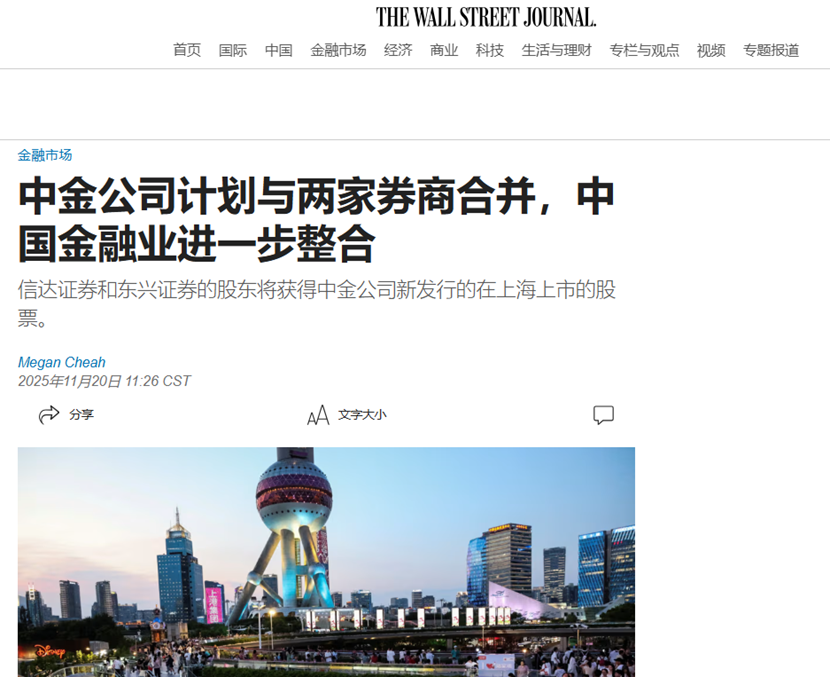
【环球网财经综合报道】12月17日晚间,中金公司(601995.SH、03908.HK)与东兴证券(601198.SH)、信达证券 (601059.SH)同步披露重大资产重组预案,备受业界关注"汇金系"券商合并迎来重大进展,并拟于12月18日复牌。 本次交易后,中金公司将实现跨越式发展,预计总资产规模超万亿元,也标志着三家券商合并后,诞生行业第四家总 资产万亿券商。 公开信息披露显示,中金公司作为吸收合并的存续主体,换股价格为36.91元/股,被吸收合并方东兴证券换股价格为 16.14元/股,信达证券换股价格为19.15元/股;中金公司预计将新发行A股约30.96亿股,定价有利于平衡各方股东利 益。 《华尔街日报》此前撰文提到,中国证监会在2024年3月表示,计划在未来五年内帮助10家证券公司引领行业发展, 并希望到2035年打造两到三家具有全球影响力的券商。花旗集团分析师张卓佳和Calvin Leung在一份报告中表示,这 三家总部位于北京的公司的三方合并,将会缔造一个"具有市场领先地位的巨型券商"。 亦有分析人士表示,通过本次重组,中金公司将与东兴证券、信达证券在战略层面深度协同,实现资源整合与资本实 力 ...



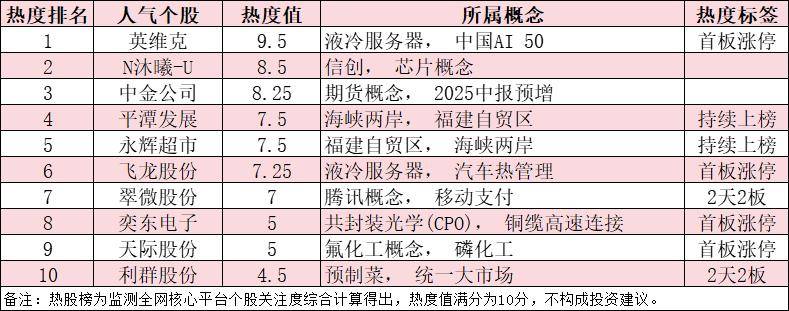
今日十大热股:英维克、沐曦领衔液冷AI概念,中金公司重组复牌,海峡两岸题材持续发酵
Sou Hu Cai Jing· 2025-12-18 00:59
Core Viewpoint - A-shares experienced a collective rise on December 17, with the ChiNext Index leading at a 3.39% increase, and a trading volume of 1.81 trillion yuan, reflecting a significant increase of approximately 869.76 billion yuan compared to the previous trading day [1] Group 1: Market Performance - The main indices of A-shares collectively rose, with the ChiNext Index leading the gains at 3.39% [1] - The total trading volume in the Shanghai and Shenzhen markets reached 1.81 trillion yuan, an increase of about 869.76 billion yuan from the previous trading day [1] - Net inflow of main funds was 25.19 billion yuan, with significant inflows into sectors like communication equipment and electronic components, while the aerospace sector saw the largest net outflow [1] Group 2: Hot Stocks - The top ten popular stocks included Yingweike, N Muxi-U, Zhongjin Company, Pingtan Development, Yonghui Supermarket, Feilong Co., Cuiwei Co., Yidong Electronics, Tianji Co., and Liqun Co. [1] - Yingweike gained attention due to its focus on liquid cooling technology, driven by the increasing demand for AI computing power [3] - N Muxi-U's popularity stems from its strong position in the GPU field and its full-stack GPU technology, which has seen significant orders in AI computing scenarios [3] - Zhongjin Company's rise is attributed to a major asset restructuring event involving a merger with Dongxing Securities and Xinda Securities, which has garnered market attention [3] Group 3: Sector Insights - Pingtan Development benefits from policy expectations and market speculation related to cross-strait integration, positioning it as a key player in this area [4] - Yonghui Supermarket's rise reflects its transformation efforts and favorable factors, including the growth of the prepared food sector and supportive policies for retail innovation [4] - Feilong Co. has gained market attention due to its advancements in both liquid cooling servers and automotive thermal management, with significant orders boosting its performance [4] - Cuiwei Co. is recognized for its alignment with digital economy trends through its acquisition of Haike Rongtong, enhancing its third-party payment business [5] - Yidong Electronics has seen increased interest due to its developments in high-growth technology sectors, including optical communication components and liquid cooling solutions [5]
中泰期货晨会纪要-20251218
Zhong Tai Qi Huo· 2025-12-18 00:57
Report Industry Investment Ratings No relevant information provided. Core Views of the Report - The A-share market showed a strong rebound, with the Shanghai Composite Index rising 1.19% to 3870.28 points, the Shenzhen Component Index rising 2.4%, and the ChiNext Index rising 3.39%. The market turnover reached 1.83 trillion yuan. [14] - The prices of steel and ore are expected to be volatile in the short term with limited rebound space, and a bearish approach is recommended in the medium to long term. [18][19] - The prices of coking coal and coke are expected to be volatile in the short term, and the 05 contract may have a phased rebound opportunity but with limited space and strength. [20] - For iron alloys, a bullish approach is recommended for ferrosilicon in the medium term, while a bearish approach is recommended for silicomanganese. [21][22] - For soda ash, a wait-and-see approach is recommended, while for glass, a bullish approach can be considered after the market sentiment stabilizes. [23] - For zinc, short positions are recommended as the price is expected to decline after the macro positive factors fade. [25] - For lead, it is recommended to hold short positions as the fundamentals are weak. [27] - For lithium carbonate, although the short-term fundamentals show signs of weakening, the medium to long-term demand is positive, and buying opportunities during corrections can be considered. [28] - For industrial silicon, it is expected to be volatile in the short term, and there may be some opportunities to repair the valuation. [31] - For polysilicon, the spot price is expected to remain strong, supporting the futures price to run strongly under the expectation of the anti-involution policy. [32] - For cotton, the price is expected to be volatile in the short term, and the long-term price is expected to rise due to the expected reduction in supply. [34][35] - For sugar, the price is expected to decline in a volatile manner, and a wait-and-see approach is recommended. [37] - For eggs, a bearish approach is recommended for the near-term contracts, while a wait-and-see approach is recommended for the far-term contracts. [39] - For apples, the price is expected to be volatile. [41] - For corn, a bearish approach is recommended for the far-term contracts, and a reverse spread opportunity can be considered. [42] - For red dates, a wait-and-see approach is recommended, and the market performance during the consumption peak season should be closely monitored. [43] - For live pigs, a bearish approach is recommended for the near-term contracts as the supply is strong and the demand is weak. [44] - For crude oil, the short-term rise driven by geopolitical factors is limited, and the price is expected to decline in the medium term due to the oversupply. [46][47] - For fuel oil, the price will follow the movement of crude oil prices, and the short-term trading focus is on geopolitical factors. [48] - For plastics, a bearish approach is recommended as the supply pressure is large and the demand is weak. [49] - For rubber, a short-term bullish approach can be considered during corrections, and the ru-nr spread strategy can be temporarily stopped for profit. [50] - For synthetic rubber, the price is expected to be strong due to cost and device factors, but chasing the rise should be cautious. [51] - For methanol, a bullish approach can be considered for the far-term contracts after the inventory is smoothly reduced, while a bullish approach is recommended for the near-term contracts. [52][53] - For caustic soda, a bullish approach is recommended as the futures price is strong. [54] - For asphalt, the price fluctuation is expected to increase, and the focus is on the price bottom after the winter storage game. [55] - For the polyester industry chain, a positive spread strategy can be considered for PX and PTA 5-9 contracts. [56] - For liquefied petroleum gas (LPG), the price is expected to be weak as the supply is abundant and the demand is poor. [57][58] - For pulp, a wait-and-see approach is recommended, and a short call option strategy can be considered for the 03 contract. [58] - For logs, the price is expected to be under pressure as the fundamentals are weak. [59] - For urea, the Indian urea tender has a positive impact on the near-term sentiment, but the impact on the 05 contract is expected to be weak. [60] Summaries Based on Relevant Catalogs Macro News - CICC plans to absorb and merge Dongxing Securities and Cinda Securities, and the three companies' stocks will resume trading on December 18. After the merger, CICC will become the fourth securities firm with total assets exceeding 1 trillion yuan. [10] - The global silver market has witnessed a historic rally, with the spot silver price breaking through $65 and $66 per ounce on December 17, approaching $67 per ounce. The year-to-date increase is about 130%, twice the increase of gold futures. [10] - In the first year of the 15th Five-Year Plan, a moderately loose monetary policy is needed to promote economic growth and price recovery. Market institutions generally expect a 0.5 percentage point reduction in the reserve requirement ratio and a 0.1 percentage point reduction in the interest rate next year. [10] - From January to November this year, the national fiscal revenue was 20.05 trillion yuan, a year-on-year increase of 0.8%. The national tax revenue was 16.48 trillion yuan, an increase of 1.8%, and the securities transaction stamp duty revenue was 185.5 billion yuan, an increase of 70.7%. [11] - China has achieved a breakthrough in invasive brain-computer interface clinical trials, successfully realizing the control of intelligent wheelchairs and robotic dogs with thoughts. [11] - BYD has launched a full-scale internal test of L3-level autonomous driving in Shenzhen, completing over 150,000 kilometers of actual road verification. [11] - CATL's new energy power battery PACK production line for humanoid embodied intelligent robots has been put into operation, marking a milestone in the application of embodied intelligence in the manufacturing industry. [11] - US President Trump has ordered a "full and complete blockade" of all sanctioned oil tankers entering and leaving Venezuela and declared the Venezuelan government a "foreign terrorist organization." [12] - Federal Reserve Governor Waller said that the Fed still has 50 to - 100 basis points of room for interest rate cuts, but there is no need for drastic action based on the current economic outlook. [12] Macro Finance - **Stock Index Futures**: A focus on the sustainability of liquidity repair is recommended. If it materializes, the index may strengthen. The A-share market rebounded strongly, with the Shanghai Composite Index rising 1.19% to 3870.28 points, the Shenzhen Component Index rising 2.4%, and the ChiNext Index rising 3.39%. The market turnover reached 1.83 trillion yuan. [14] - **Treasury Bond Futures**: Medium - and short - term bonds have certain odds and are expected to be volatile and strong. The funds are in a balanced and loose state, and the funds rate is stable. The 11 - month macro - economic data showed a decline in most indicators except for the stable unemployment rate. [15] Black Metals - **Steel and Ore**: The policy is relatively mild without strong stimulus. The demand for building materials is weak, while the demand for rolled products is improving. The supply of steel mills is expected to decline, and the inventory is still at a high level compared to last year. The cost is expected to decrease. A short - term volatile and medium - to long - term bearish approach is recommended. [18][19] - **Coking Coal and Coke**: The price is expected to be volatile in the short term. The coal production is expected to be restricted in the short term, and the demand for raw materials from steel mills is weakening. The 05 contract may have a phased rebound opportunity but with limited space and strength. [20] - **Ferroalloys**: A bullish approach is recommended for ferrosilicon in the medium term, while a bearish approach is recommended for silicomanganese. The supply of ferrosilicon is expected to decrease, while the supply of silicomanganese is expected to increase. [21][22] - **Soda Ash and Glass**: For soda ash, a wait - and - see approach is recommended. For glass, a bullish approach can be considered after the market sentiment stabilizes. The supply of soda ash is recovering, while the supply of glass is expected to be reduced. [23] Non - ferrous Metals and New Materials - **Zinc**: The price is expected to decline after the macro positive factors fade. The domestic inventory has decreased, and the price is affected by the Fed's policy and geopolitical factors. [25][26] - **Lead**: A bearish approach is recommended as the fundamentals are weak. The production of electrolytic lead has decreased, and the market for recycled lead is inactive. [27] - **Lithium Carbonate**: Although the short - term fundamentals show signs of weakening, the medium - to long - term demand is positive, and buying opportunities during corrections can be considered. The supply is expected to shift from surplus to balance or shortage. [28][30] - **Industrial Silicon**: It is expected to be volatile in the short term, and there may be some opportunities to repair the valuation. The supply may be affected by environmental protection in Xinjiang and the price of coking coal. [31] - **Polysilicon**: The spot price is expected to remain strong, supporting the futures price to run strongly under the expectation of the anti - involution policy. The price is affected by the establishment of the platform company and the supply - reduction expectation. [32] Agricultural Products - **Cotton**: The price is expected to be volatile in the short term, and the long - term price is expected to rise due to the expected reduction in supply. The supply is currently abundant, but the demand for pre - holiday replenishment and the expected reduction in planting area support the price. [34][35] - **Sugar**: The price is expected to decline in a volatile manner, and a wait - and - see approach is recommended. The global sugar supply is expected to be in surplus, and the new sugar supply is increasing. [37] - **Eggs**: A bearish approach is recommended for the near - term contracts, while a wait - and - see approach is recommended for the far - term contracts. The supply of laying hens is expected to decline, but the inventory is still high, and the demand is seasonal. [39] - **Apples**: The price is expected to be volatile. The出库 of apples is slow, and the market demand is weak due to the high price and the substitution of citrus fruits. [41] - **Corn**: A bearish approach is recommended for the far - term contracts, and a reverse spread opportunity can be considered. The supply - demand mismatch is being alleviated, and the far - term supply pressure is increasing. [42] - **Red Dates**: A wait - and - see approach is recommended, and the market performance during the consumption peak season should be closely monitored. The market is currently stable, and the future performance depends on the consumption demand and inventory reduction. [43] - **Live Pigs**: A bearish approach is recommended for the near - term contracts as the supply is strong and the demand is weak. The supply is expected to increase at the end of the month, and the demand increase during the double festivals is limited. [44] Energy and Chemicals - **Crude Oil**: The short - term rise driven by geopolitical factors is limited, and the price is expected to decline in the medium term due to the oversupply. The situation in Venezuela has led to a short - term increase in the price, but the long - term impact is limited. [46][47] - **Fuel Oil**: The price will follow the movement of crude oil prices, and the short - term trading focus is on geopolitical factors. The supply is abundant, and the demand is weak. [48] - **Plastics**: A bearish approach is recommended as the supply pressure is large and the demand is weak. The upstream production is in deficit, but there is no strong driving force for a significant rebound. [49] - **Rubber**: A short - term bullish approach can be considered during corrections, and the ru - nr spread strategy can be temporarily stopped for profit. The cost is supportive, and the price is affected by synthetic rubber. [50] - **Synthetic Rubber**: The price is expected to be strong due to cost and device factors, but chasing the rise should be cautious. The price is affected by the price of butadiene and the downstream procurement sentiment. [51] - **Methanol**: A bullish approach can be considered for the far - term contracts after the inventory is smoothly reduced, while a bullish approach is recommended for the near - term contracts. The supply is affected by the shutdown of Iranian plants, and the demand is increasing. [52][53] - **Caustic Soda**: A bullish approach is recommended as the futures price is strong. The spot market of 32% caustic soda is improving, and the short - selling positions are actively leaving the market. [54] - **Asphalt**: The price fluctuation is expected to increase, and the focus is on the price bottom after the winter storage game. The price is affected by the geopolitical situation and the winter storage expectation. [55] - **Polyester Industry Chain**: A positive spread strategy can be considered for PX and PTA 5 - 9 contracts. The price is mainly driven by cost and market sentiment, and the supply - demand drive is limited. [56] - **Liquefied Petroleum Gas**: The price is expected to be weak as the supply is abundant and the demand is poor. The geopolitical premium has limited impact, and the price is prone to decline. [57][58] - **Pulp**: A wait - and - see approach is recommended, and a short call option strategy can be considered for the 03 contract. The inventory is decreasing, and the market sentiment is improving. [58] - **Logs**: The price is expected to be under pressure as the fundamentals are weak. The inventory is expected to increase, and the spot price is under pressure. [59] - **Urea**: The Indian urea tender has a positive impact on the near - term sentiment, but the impact on the 05 contract is expected to be weak. The spot price is stable, and the futures price is strong in the near term. [60]

中金公司12月18日起复牌
Zhi Tong Cai Jing· 2025-12-18 00:57
中金公司(601995)(03908)发布公告,该公司股份将于2025年12月18日上午九时正起恢复买卖。 ...
中金公司(03908)12月18日起复牌
智通财经网· 2025-12-18 00:54
智通财经APP讯,中金公司(03908)发布公告,该公司股份将于2025年12月18日上午九时正起恢复买卖。 ...
兆易创新通过港交所聆讯 中金公司、华泰国际为联席保荐人
Zheng Quan Shi Bao Wang· 2025-12-18 00:53
Core Viewpoint - The company, Zhaoyi Innovation (603986), is undergoing a listing hearing on the Hong Kong Stock Exchange, with China International Capital Corporation (601995) and Huatai International serving as joint sponsors [1] Company Overview - Zhaoyi Innovation is an integrated circuit design company that operates on a fabless model, focusing on chip design and research and development while outsourcing manufacturing to external partners [1] - The company's main products include Flash (NOR Flash, niche DRAM), microcontrollers (MCU), analog chips, and sensor chips, which are widely used in consumer electronics, automotive, industrial applications, personal computers, servers, IoT, and network communications [1] Market Position - According to Frost & Sullivan data, Zhaoyi Innovation ranks second globally in NOR Flash and first in mainland China, holding a global market share of 18.5% [1] - The company ranks sixth globally in single-layer NAND Flash and first in mainland China, with a global market share of 2.2% [1] - In niche DRAM, Zhaoyi ranks seventh globally and second in mainland China, with a market share of 1.7% [1] - The MCU segment sees the company ranked eighth globally and first in mainland China, with a market share of 1.2% [1] - In fingerprint sensor chips, Zhaoyi ranks second in mainland China, with a market share of approximately 10% [1]

中金公司(03908.HK)今早复牌
Ge Long Hui· 2025-12-18 00:46
格隆汇12月18日丨中金公司(03908.HK)发布公告,该公司的H股份将于今天(18/12/2025)上午九时正起恢 复买卖。因此,与该公司有关的所有债券和结构性产品亦将同时恢复买卖。 ...
中金收购东兴、信达方案出炉,今日复牌;海南自贸港全岛封关……盘前重要消息一览
证券时报· 2025-12-18 00:40
Group 1 - Hainan Free Trade Port officially launched full island closure operations on December 18, marking a significant step in China's commitment to high-level opening-up and building an open world economy [2] - From January to November, the national general public budget revenue reached 200,516 billion yuan, a year-on-year increase of 0.8%, with tax revenue at 164,814 billion yuan, up 1.8% [2] - The State Council's six departments released guidelines for clean and efficient coal utilization, encouraging enterprises to upgrade projects and eliminate outdated capacities within a three-year timeframe [3] Group 2 - On December 17, lithium carbonate main contract prices surged, with a peak increase of 8.84%, closing at 108,620 yuan/ton, marking an 84.1% increase from the year's low [4] - The State Administration for Market Regulation indicated that requiring merchants to offer "the lowest price online" may constitute abuse of market dominance or monopolistic behavior [5] - The National Development and Reform Commission and the National Energy Administration announced the establishment of a nationwide unified electricity market evaluation system focusing on market operation effects and competition levels [6] Group 3 - China International Capital Corporation, Dongxing Securities, and Xinda Securities disclosed major asset restructuring plans and are set to resume trading on December 18 [7] - China Zhongtie plans to repurchase A-shares worth between 1 billion and 2 billion yuan [10] - Shanghai Airport signed a contract for the transfer of duty-free store operating rights [11] - China CRRC signed contracts totaling 533.1 billion yuan recently [12] - Meike Home is planning to acquire control of Wande, leading to a stock suspension [13]
中金公司换股吸收合并东兴、信达方案出炉 “中金三合一”今日复牌
Shen Zhen Shang Bao· 2025-12-18 00:34
【深圳商报讯】(记者 陈燕青)12月17日晚间,中金公司(601995)与东兴证券(601198)、信达证 券(601059)同步披露重大资产重组预案,中金公司换股吸收合并两家公司迎来重大进展,拟于12月18 日复牌。 根据交易预案,本次交易定价以各方董事会决议公告日前20个交易日均价作为基准价格,吸收合并方中 金公司作为存续主体,换股价格为36.91元/股,被吸收合并方东兴证券换股价格为16.14元/股,信达证 券换股价格为19.15元/股。该交易方案充分体现了两家公司资产价值,并有利于平衡各方股东利益。 通过本次重组,合并后公司将形成一个覆盖"机构与零售""国际与国内""标准化与特色化"的全方位服务 体系。 本次交易后,中金公司将实现跨越式发展,预计总资产规模超万亿元,营业收入跻身行业前列。 ...
四大证券报精华摘要:12月18日
Zhong Guo Jin Rong Xin Xi Wang· 2025-12-18 00:26
Group 1 - Multiple money market funds in China have recently announced purchase limits, with a cap of only 10,000 yuan, to prevent arbitrage activities despite regulatory efforts [1] - The average annualized yield for several money market funds has dropped below 1%, prompting fund companies to implement purchase limits to protect existing investors [1] - The quantitative private equity industry is expected to see a full recovery by 2025, driven by active trading volumes and the structural market environment, with AI technology reshaping the competitive landscape [1] Group 2 - The Ministry of Finance reported that stamp duty revenue reached 404.4 billion yuan from January to November, a year-on-year increase of 27%, with securities transaction stamp duty rising by 70.7% to 185.5 billion yuan [2] - The overall public budget revenue for the same period was 20.05 trillion yuan, reflecting a growth of 0.8% year-on-year, with tax revenue increasing by 1.8% to 16.48 trillion yuan [2] - Key sectors such as equipment manufacturing and modern services showed strong tax performance, with notable growth in the computer and communication equipment manufacturing sector at 14.1% [2] Group 3 - The recent adjustment in the Hong Kong stock market has led to a surge in public fund issuance, with several new funds announcing early closures to capitalize on market corrections [5] - The rapid fundraising and swift investment strategies indicate a strong belief in the current market's value, with many funds aiming to take advantage of the downturn [5] - The lithium carbonate futures on the Dalian Commodity Exchange saw significant increases, with the main contract nearing 110,000 yuan per ton, positively impacting the A-share lithium mining sector [5] Group 4 - The A-share market has experienced a notable structural trend this year, with private equity quantitative long strategies achieving an average excess return of over 17% [7] - The National Social Security Fund is increasing investments in technology innovation sectors, with significant share increases in companies like Hangyang Co., Jinpeng Technology, and AVIC Optical [7] - The recent major asset restructuring plan by CICC involves a share swap merger with Dongxing Securities and Xinda Securities, marking a significant development in the securities industry [8]