
MICROSOFT(04338)

Search documents
进一步摆脱微软依赖 OpenAI与AWS官宣380亿美元战略合作
Zhong Guo Jing Ying Bao· 2025-11-04 06:58
Core Insights - Amazon Web Services (AWS) and OpenAI have announced a strategic partnership worth $38 billion over seven years to provide cloud computing resources for OpenAI's large model training and online inference [1][2] - The collaboration aims to enhance the computational ecosystem for next-generation intelligent technologies, with AWS providing significant infrastructure support [1] Group 1: Partnership Details - The agreement allows OpenAI to utilize hundreds of thousands of NVIDIA's latest GB200/GB300 series GPUs, with the capability to scale up to millions of CPUs [1] - AWS has developed a new AI cluster architecture to facilitate dynamic resource allocation for training and inference tasks, particularly benefiting "Agentic" research [1] - The infrastructure deployment is expected to be completed by the end of 2026, with plans for expansion in 2027 and beyond to accommodate future growth [1] Group 2: Industry Implications - This partnership is seen as a strategic move for OpenAI to reduce its reliance on Microsoft, as it previously depended heavily on Microsoft Azure for computing power [2] - The $38 billion deal represents approximately 5% to 7% of AWS's projected revenue over the next seven years, indicating a strong commitment to AI infrastructure [2] - The collaboration is expected to intensify competition among cloud service providers in the AI computing space, elevating the global AI arms race [2]

微软将在阿联酋投资79亿美元大幅扩展AI数据中心容量
Sou Hu Cai Jing· 2025-11-04 06:53
Core Insights - Microsoft plans to significantly expand its data center footprint in the UAE through partnerships with local companies, announcing a total investment exceeding $15 billion [2][5] - The company has partnered with Group42, committing over $7.3 billion, with more than half allocated to capital expenditures for data center infrastructure [2] - The investment will enhance local data center computing capacity to the equivalent of 81,900 H100 chips, nearly quadrupling its current capabilities [2] Investment Details - The new investment in the UAE amounts to $7.9 billion, which will be used to upgrade data center infrastructure [2] - Microsoft has received approval from the U.S. Department of Commerce for the export of new GPUs to the UAE, including the advanced GB300 super chip [3] - The infrastructure investment is expected to incur $2.4 billion in local operating expenses and sales costs [3] Collaboration with Lambda Labs - Microsoft has engaged in a partnership with Lambda Labs to build AI infrastructure worth several billion dollars, involving thousands of GPUs [3][5] - Lambda's cloud platform reportedly contains over 250,000 GPUs, and the company raised $480 million from a consortium including NVIDIA [3] Previous Partnerships - Microsoft previously signed a similar AI infrastructure agreement with CoreWeave, expecting to invest $10 billion on that platform by the end of the century [4][5]



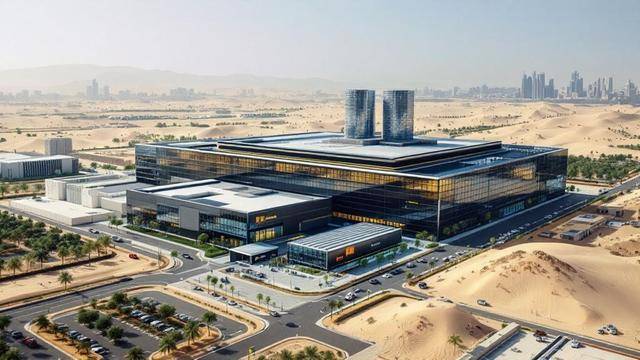
微软宣布大力投资阿联酋AI项目
Xin Hua She· 2025-11-04 06:08
Core Insights - Microsoft announced a total investment of $15.2 billion in artificial intelligence (AI) and related projects in the UAE [1] Investment Details - From 2023 to the end of this year, Microsoft plans to invest over $7.3 billion in the UAE, which includes a $1.5 billion equity investment in G42 Group and over $4.6 billion in capital expenditures for AI and cloud data centers [1] - From early 2026 to the end of 2029, Microsoft will continue to invest more than $7.9 billion in related projects in the UAE [1] AI Utilization in UAE - A report from Microsoft indicates that the UAE ranks first globally in AI utilization per capita, with 59.4% of the population using generative AI, surpassing Singapore's 58.6% [1] Collaboration with ADNOC - Microsoft signed an agreement with the Abu Dhabi National Oil Company (ADNOC) to jointly develop and deploy AI applications, aiming to promote smart transformation in the energy sector [1] - Under the agreement, Microsoft will provide AI tools and employee training programs to ADNOC, and both parties will explore establishing a joint innovation ecosystem to develop transformative smart solutions for the energy industry [1]
微软要求员工必须与AI协作微软大规模裁员后重启招聘
Jin Rong Shi Bao· 2025-11-04 03:47
Core Insights - Microsoft CEO Satya Nadella announced that the company may restart hiring within the next year, contingent on existing employees learning to collaborate with artificial intelligence [1] - Employees are required to master skills such as issuing precise commands to AI, reviewing and optimizing AI outputs, and focusing more on strategic decision-making, creative thinking, and solving complex problems [1] - Microsoft has heavily invested in AI over the past year and has conducted multiple rounds of layoffs, the most recent being in July, where approximately 9,000 employees were laid off [1] - The current workforce of Microsoft stands at 219,000 employees [1]
当微软CEO说“电力不足可能导致芯片堆积”时,他和Altman都不知道AI究竟需要多少电
Hua Er Jie Jian Wen· 2025-11-04 03:29
Core Insights - The focus of the AI competition is shifting from computing power to electricity, with industry leaders acknowledging the uncertainty surrounding future energy consumption for AI [1][2] - Microsoft CEO Satya Nadella highlighted that the biggest challenge is not chip shortages but rather the availability of power and the construction of data centers near power sources [1][2] - OpenAI CEO Sam Altman emphasized the industry's strategic dilemma due to the unknown energy demands of AI, suggesting a potential exponential growth in energy needs [3][4] Group 1: Bottleneck Shift - The bottleneck in AI deployment has shifted from acquiring advanced GPUs to securing sufficient electricity, as companies face challenges when chips cannot be powered [2] - The demand for electricity in data centers has surged in the past five years, outpacing the capacity planning of utility companies [2] Group 2: Energy Demand Uncertainty - There is significant uncertainty regarding the energy requirements for AI, with both Altman and Nadella admitting that no one knows the exact needs [3] - Altman proposed a scenario where if the cost of AI units decreases exponentially, the resulting demand could be staggering, potentially leading to a situation where efficiency gains stimulate far greater usage [3] Group 3: Energy Strategy Dilemma - Industry leaders face a dilemma in energy strategy, as investing in expensive energy contracts could lead to losses if cheaper energy sources become available [4] - Companies risk being burdened with idle power plants if AI efficiency exceeds expectations or demand growth falls short [4] Group 4: Solutions and Innovations - Tech companies are exploring solutions such as solar energy, which offers faster deployment and lower costs compared to traditional natural gas plants [5] - Solar photovoltaic technology shares similarities with the semiconductor industry, allowing for modular and rapid assembly to meet power needs [5] - The rapid pace of market demand changes poses a continuous challenge for companies in balancing computing power, data centers, and electricity [5]
微软(MSFT.US)豪掷数十亿美元牵手Lambda 数万块英伟达(NVDA.US)GPU加码AI军备竞赛
Zhi Tong Cai Jing· 2025-11-04 02:57
Core Insights - Lambda and Microsoft have announced a multi-billion dollar agreement to enhance the infrastructure needed for the AI boom, deploying NVIDIA GPU-supported computing resources [1] - Microsoft will deploy "tens of thousands" of NVIDIA GPUs, including the latest GB300NVL72 system, as part of the agreement [1] - The partnership between Lambda and Microsoft has been ongoing for over eight years, marking a significant step in their relationship [1] - Microsoft also announced a separate agreement to export some NVIDIA GPUs to the United Arab Emirates as part of a $15 billion investment plan in the country by 2029 [1]
摆脱微软依赖:OpenAI与亚马逊云服务达成380亿美元算力采购协议
Huan Qiu Wang· 2025-11-04 02:45
Core Insights - OpenAI has signed a significant computing resource procurement agreement with Amazon Web Services (AWS) worth up to $38 billion, marking a strategic move to reduce reliance on Microsoft and diversify its technology ecosystem [1][2] Group 1: Agreement Details - The agreement will enable OpenAI to immediately start deploying workloads on AWS infrastructure, initially utilizing hundreds of thousands of NVIDIA high-performance GPUs in the U.S. to build computing clusters [2] - OpenAI plans to continuously expand its resource scale over the coming years to meet the growing demands for model training and inference [2] Group 2: Strategic Implications - This partnership is seen as a key signal of OpenAI's shift towards "de-singleization," moving away from its long-standing deep collaboration with Microsoft, which has been a core investor and provided computing support through its Azure cloud platform [2] - The initial deployment of NVIDIA GPU clusters will focus on supporting OpenAI's multimodal large model development and real-time inference services, indicating the company's ambition for commercializing AI technology [2] Group 3: Industry Context - As the global AI industry expands into high-computing demand scenarios such as autonomous driving, robotics, and medical diagnostics, the reliance on infrastructure is expected to continue rising, positioning this collaboration as a potential new paradigm for resource integration in the industry [2]
印度最大线上券商母公司启动IPO,估值或达70亿美元!印度版的Robinhood,Groww得到了微软首席执行官纳德拉的支持
Ge Long Hui· 2025-11-04 02:42
Core Points - Billionbrains Garage Ventures, the parent company of India's largest online brokerage Groww, is set to launch its IPO subscription on Tuesday, aiming to raise up to ₹66.3 billion (approximately $747 million) [1] - The stock is expected to be priced between ₹95 and ₹100 per share, which would value the company at around $7 billion if priced at the upper limit [1] - The shares are anticipated to start trading on November 12, coinciding with a booming IPO market in India, which recently recorded a historic high in October [1] - Groww, often referred to as the Indian version of Robinhood, has seen a surge in its customer base, reaching nearly 12 million active users as of September [1] - At the upper price range, Groww's valuation is approximately 30 times its earnings for the fiscal year ending in March [1]

创业板人工智能ETF华夏(159381)连续5日吸金近1.96亿元,微软宣布79亿美元算力投资
Mei Ri Jing Ji Xin Wen· 2025-11-04 01:51
Group 1 - A-shares experienced a positive start on the first trading day of November, with sectors like optical modules CPO and AI computing rebounding in the afternoon [1] - The enthusiasm for capital allocation in computing power has surged, with the AI ETF on the ChiNext market attracting nearly 196 million yuan in the last five trading days, while the largest 5G communication ETF received a net subscription of 370 million yuan [1] - Microsoft announced a significant investment of over 7.9 billion USD in the UAE over the next four years to build data centers, develop cloud computing, and strengthen local teams, aiming to position the UAE as a global tech hub [1] Group 2 - The ChiNext AI ETF (Hua Xia, 159381) tracks the ChiNext AI Index and focuses on companies in the AI sector, with optical module CPO accounting for 51.8% of its weight [2] - The top three weighted stocks in the ETF are Zhongji Xuchuang (20.95%), Xinyi Sheng (20.42%), and Tianfu Communication (5.39%) [2] - The ETF has a low overall fee rate of only 0.20%, making it the lowest among its peers [2]
微软CEO掀开美国AI遮羞布?GPU堆仓库,没有电力供应,就是废铁
Sou Hu Cai Jing· 2025-11-04 01:47
Group 1 - The core argument is that the competition in AI is fundamentally about energy supply rather than just advanced AI chips, with the U.S. facing significant challenges in electricity generation and distribution compared to China [10] - The U.S. has restricted companies like NVIDIA from selling advanced AI chips to China to maintain its competitive edge in AI technology [1] - Major projects like the Stargate initiative, which aims to invest $500 billion in AI infrastructure over four years, highlight the U.S. commitment to advancing AI [1] Group 2 - Microsoft CEO Satya Nadella pointed out that the AI industry is currently hindered by a lack of sufficient electricity to power GPUs, leading to many GPUs being unused [3] - Experts emphasize that the ultimate competition in AI will revolve around energy resources, as both AI chips and intelligent systems require vast amounts of power [5] - The U.S. electricity grid is aging and unable to meet increasing demands, while China's electricity generation capacity is more than double that of the U.S. and is rapidly improving [7][8]
