
NONGFU SPRING(09633)

Search documents
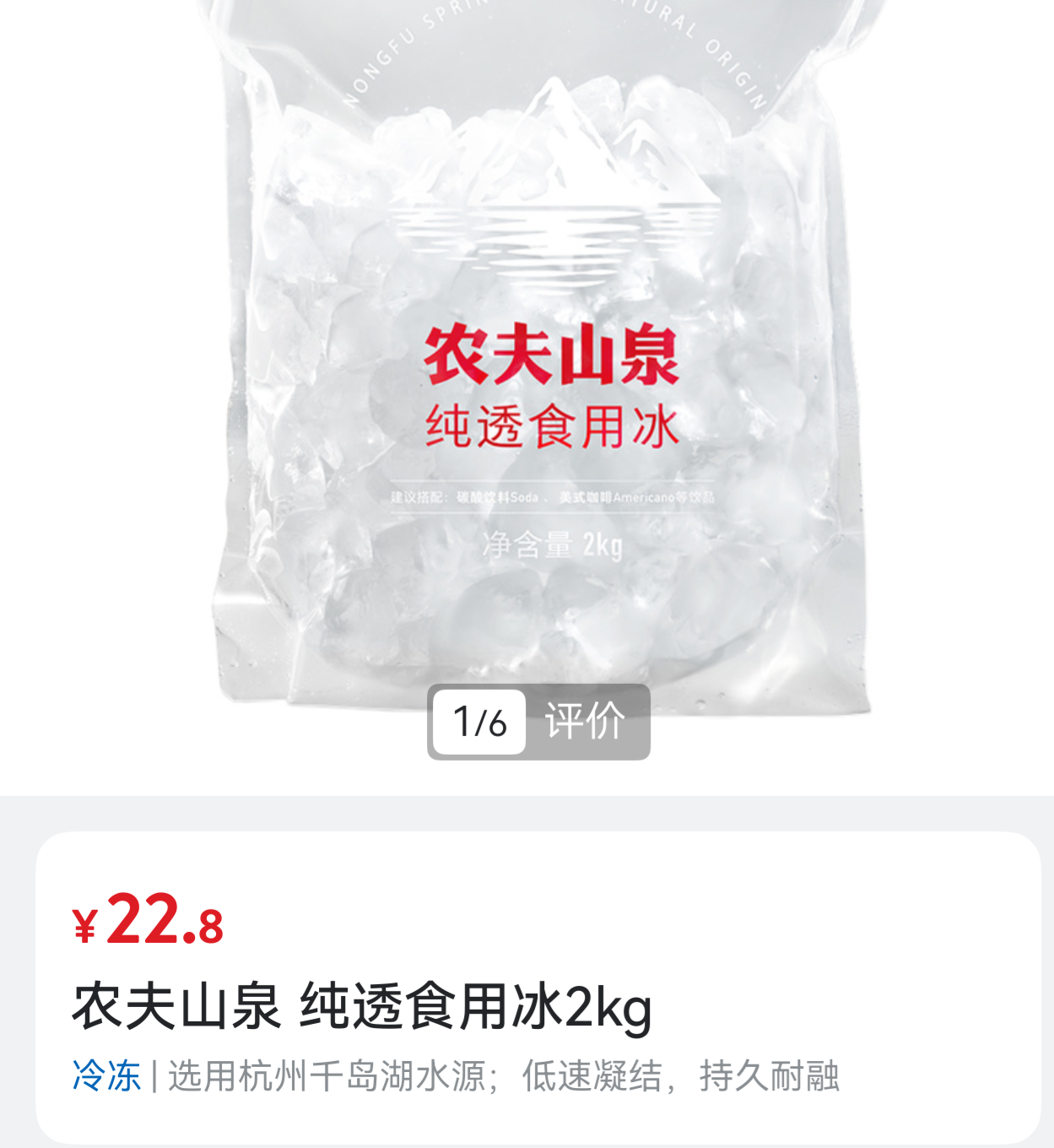
山姆2公斤冰块卖22.8元,网友吵翻了!卖冰成本揭秘→
第一财经· 2025-07-08 08:37
Core Viewpoint - The article discusses the pricing of "Nongfu Spring Pure Transparent Edible Ice" sold at Sam's Club, highlighting consumer reactions to its high price compared to bottled water, and explores the reasons behind the pricing structure of ice products in the market [1][2]. Pricing Analysis - The price of 2 kg of ice is set at 22.8 yuan, which translates to approximately 5.7 yuan per 500 ml bottle of water, indicating a significant markup compared to the cost of bottled water [1]. - Consumers have mixed feelings about the price, with some finding it convenient as it saves the hassle of making ice at home, while others question the value [1]. Production and Cost Factors - The ice is a custom product for Sam's Club, produced using a special slow-freezing technique that takes 24 to 32 hours, resulting in a 20% slower melting rate compared to regular ice [2]. - The higher cost of ice compared to water is attributed to increased expenses in labor, electricity, storage, and transportation, especially under cold chain conditions [2][4]. - Different types of ice have varying cost structures, with "bar ice" being more expensive due to higher labor costs (over 50% of total costs) and requiring more complex production processes [3][4]. Market Trends - The demand for ice products is on the rise, with a reported 300% growth in ice cup sales over two consecutive years, and an average annual consumption of 48 ice cups per person in first-tier cities [4].


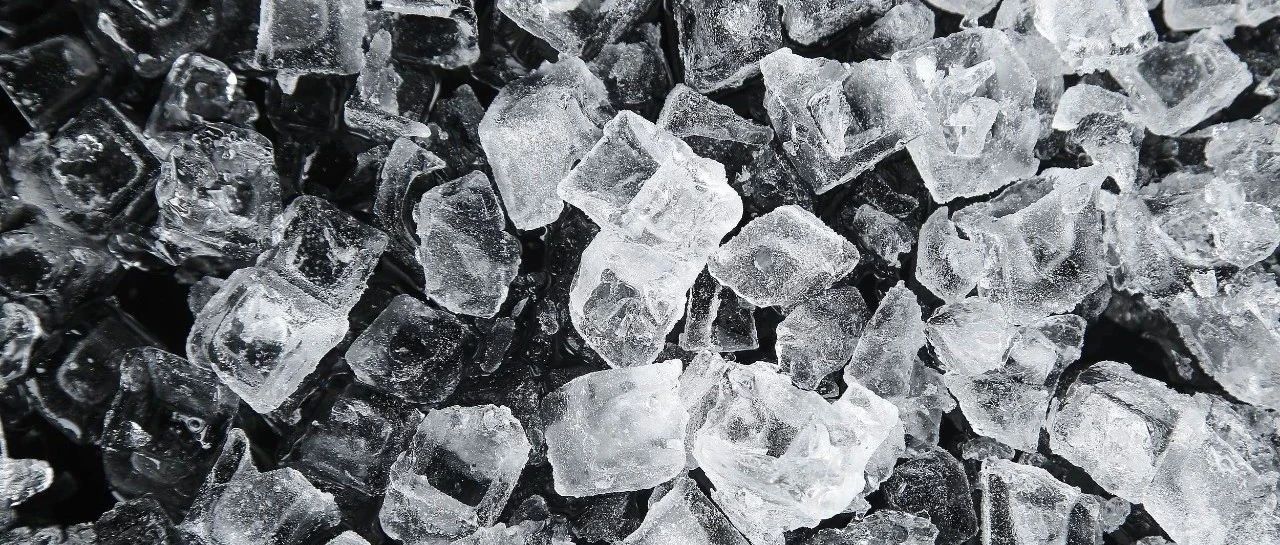
山姆2公斤冰块卖22.8元引争议,卖冰成本高吗
Di Yi Cai Jing· 2025-07-08 07:44
Group 1 - The price of ice is significantly higher than that of water due to increased costs in labor, electricity, storage, and transportation, along with any special production process fees [1][8] - Consumers have noted that the "Farmer Spring Pure Transparent Edible Ice" sold at Sam's Club is priced at 22.8 yuan for 2 kilograms, which is equivalent to approximately 5.7 yuan per 500ml bottle of water [1] - The ice blocks are marketed as having a slower melting rate compared to homemade ice, which is a selling point for consumers [1][6] Group 2 - The ice blocks are produced using a special freezing technique that takes 24 to 32 hours, resulting in a 20% slower melting rate compared to standard ice [6] - Market research indicates that the price of ice blocks generally ranges from 1 to 3 times the price of the same weight of drinking water [2] - The cost structure of ice production varies, with "bar ice" being more expensive due to higher labor costs, while "machine ice" is cheaper, primarily due to lower electricity and storage costs [8] Group 3 - The demand for ice products is increasing, with a reported 300% growth in ice cup sales over the past two years, and urban consumers in first-tier cities consuming an average of 48 ice cups annually [9]

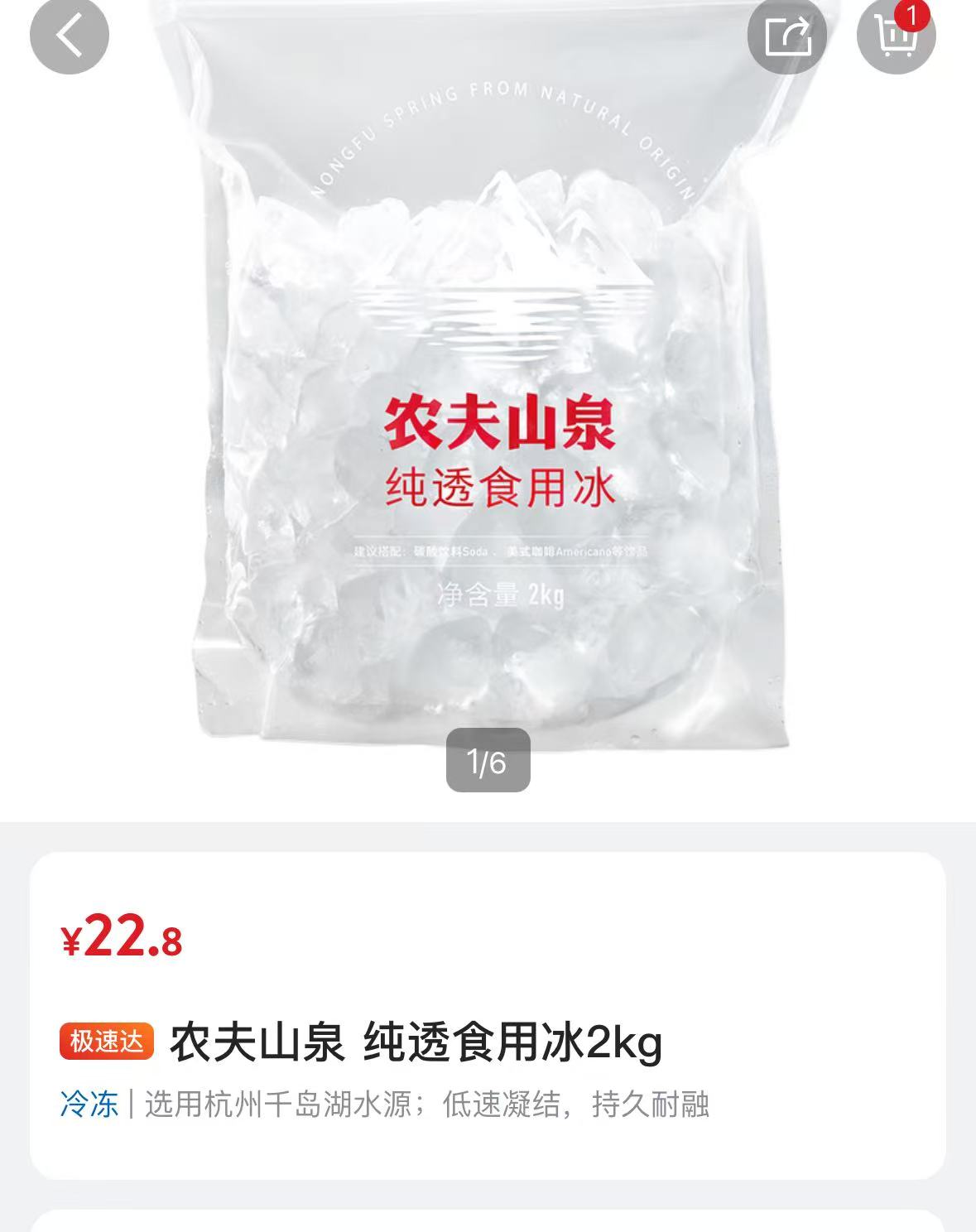
山姆卖22.8元一袋农夫山泉冰块成今夏头号价格刺客,“艾莎公主亲自给我冻吗?”
3 6 Ke· 2025-07-08 07:36
Core Insights - The rising prices of ice products, such as those from Nongfu Spring, are attributed to the sourcing of water and the specialized freezing processes used, which significantly increase production costs [1][3][13] - The trend of high-priced ice products is not limited to Nongfu Spring; convenience stores like 7-Eleven and Lawson are also selling ice cups at prices comparable to beverages, indicating a broader market trend [1][5][12] Pricing and Cost Structure - Nongfu Spring's ice bag, weighing 2kg, is priced at 22.8 yuan, which translates to 5.7 yuan per 500ml of ice, highlighting a significant markup compared to regular bottled water [1][3] - The production of ice cups involves higher costs due to packaging, storage, and transportation, which can account for over 50% of the total cost [13][17] - The commercial ice-making process, which includes longer freezing times and the use of purified water, contributes to the higher prices of ice products compared to homemade ice [13][17] Market Trends - The demand for ice products has surged, with manufacturers like "Ice Power" seeing sales of ice cups increase from 1 million to 50 million cups in just one year [12] - Innovative ice products, such as uniquely shaped ice balls, command even higher prices, with some starting at 8 yuan, reflecting a trend towards premiumization in the ice market [6][10] - The introduction of low-cost ice options, such as 1 yuan ice cups by brands like Guming, has created a competitive landscape, leading to high demand and rapid sellouts [12][20]
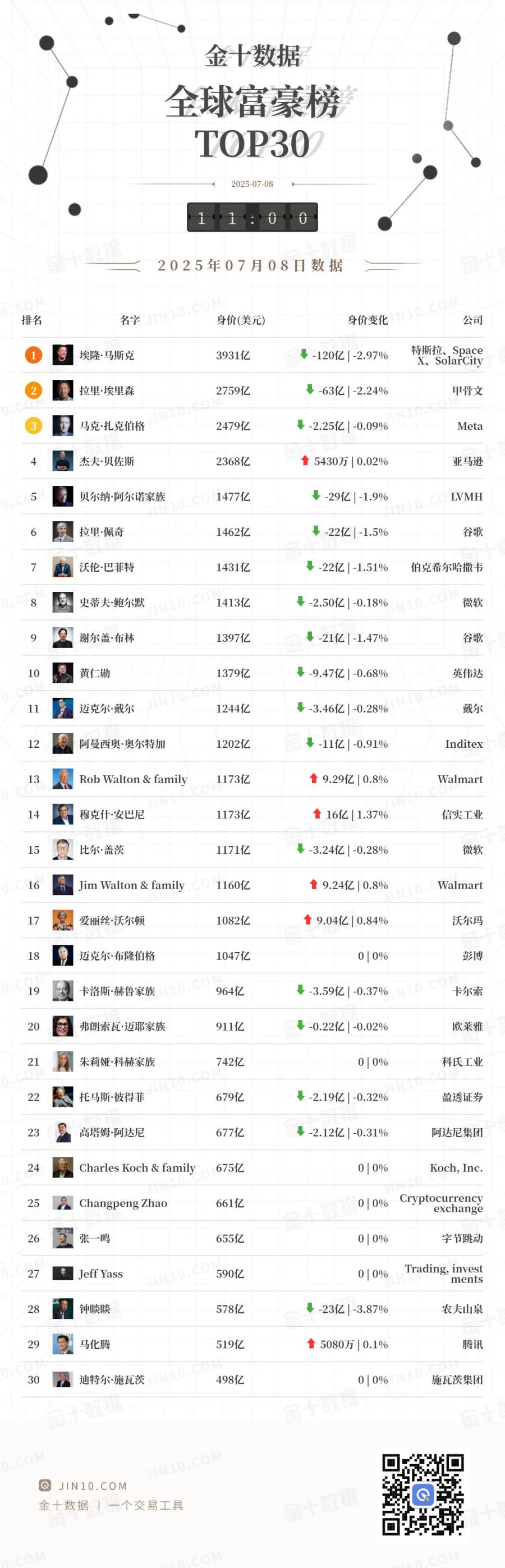
金十图示:2025年07月08日(周二)全球富豪榜




news flash· 2025-07-08 03:04
Summary of Key Points Core Viewpoint - The article presents a ranking of the world's wealthiest individuals, highlighting their net worth, changes in wealth, and associated companies. Group 1: Wealth Rankings - Elon Musk leads the list with a net worth of $393.1 billion, experiencing a decrease of $12 billion or 2.97% [1] - Larry Ellison ranks second with a net worth of $275.9 billion, down by $6.3 billion or 2.24%, associated with Oracle [1] - Mark Zuckerberg is third with a net worth of $247.9 billion, showing a slight decrease of $2.25 million or 0.09%, linked to Meta [1] - Jeff Bezos follows in fourth place with a net worth of $236.8 billion, with a minor increase of $15.43 million or 0.02%, from Amazon [1] - The fifth position is held by Bernard Arnault's family with a net worth of $147.7 billion, down by $2.9 billion or 1.9%, related to LVMH [1] Group 2: Additional Notable Figures - Larry Page is sixth with a net worth of $146.2 billion, decreasing by $2.2 billion or 1.5%, associated with Google [1] - Warren Buffett ranks seventh with a net worth of $143.1 billion, down by $2.2 billion or 1.51%, linked to Berkshire Hathaway [1] - Steve Ballmer is eighth with a net worth of $141.3 billion, experiencing a decrease of $250 million or 0.18%, from Microsoft [1] - Sergey Brin is ninth with a net worth of $139.7 billion, down by $2.1 billion or 1.47%, also associated with Google [1] - Jensen Huang ranks tenth with a net worth of $137.9 billion, decreasing by $947 million or 0.68%, linked to NVIDIA [1] Group 3: Further Rankings - Michael Dell is eleventh with a net worth of $124.4 billion, down by $346 million or 0.28%, associated with Dell [3] - Amancio Ortega is twelfth with a net worth of $120.2 billion, decreasing by $1.1 billion or 0.91%, linked to Inditex [3] - Rob Walton & family and Mukesh Ambani are tied for thirteenth with net worths of $117.3 billion, with Ambani seeing an increase of $1.6 billion or 1.37% from Reliance Industries [3] - Bill Gates ranks fifteenth with a net worth of $117.1 billion, down by $324 million or 0.28%, associated with Microsoft [3] - The Walton family members, Jim Walton and Alice Walton, rank sixteenth and seventeenth respectively, with net worths of $116.0 billion and $108.2 billion, both showing slight increases [3]
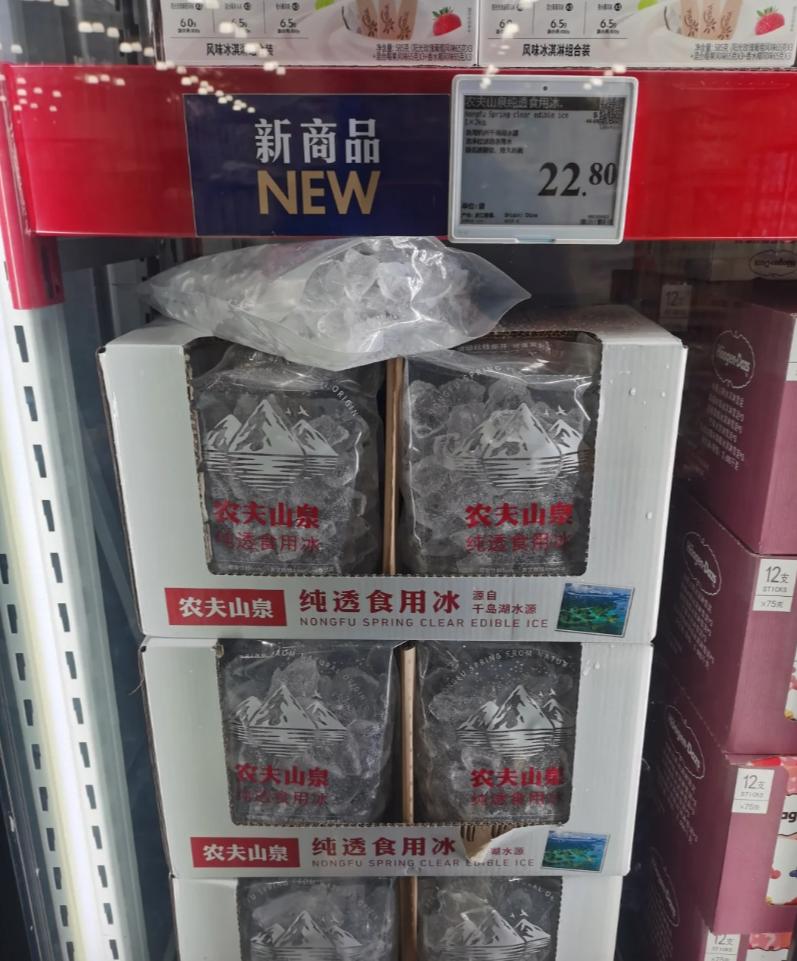
山姆2公斤冰块卖22.8元引争议,客服:制作工艺特殊
Xin Lang Cai Jing· 2025-07-08 01:38
Core Viewpoint - The recent pricing of "Farmer Spring Pure Transparent Edible Ice" at Sam's Club has sparked significant consumer debate regarding its perceived high cost, leading to discussions on social media platforms [1] Pricing Analysis - The 2 kg ice block is priced at 22.8 yuan, which some consumers argue is excessive, equating to approximately 5.7 yuan per 500 ml bottle of water needed to freeze the ice [3] - Comparatively, other retailers offer edible ice at lower prices, with 5 kg priced at 48 yuan (9.6 yuan per kg) and a 1920 g cup of edible ice priced at 65.56 yuan (approximately 34 yuan per kg), suggesting that Sam's pricing is in the mid-range [3] Product Features - The ice is a custom product for Sam's Club, developed through a unique freezing process that takes 24 to 32 hours, resulting in a 20% slower melting rate compared to standard ice, making it suitable for prolonged cooling in summer [4] - The product is sourced from the QianDao Lake in Hangzhou and is marketed for its quality and durability [4] Consumer Feedback - Some consumers have praised the ice for its quality and value, noting its superior melting speed compared to homemade ice [4] - However, there are complaints regarding quality control, with reports of discoloration and potential impurities in the ice [4][5] - Sam's Club has acknowledged the negative feedback and committed to addressing the quality concerns raised by customers [5] Company Background - Sam's Club is a membership-based retail store under Walmart, which is ranked among the Fortune Global 500 companies, operating over 800 locations worldwide [5]
钟睒睒十年捐400亿创办钱塘大学,2025年启动
Sou Hu Cai Jing· 2025-07-07 01:04
Core Viewpoint - The recent announcement by Zhong Shanshan, founder of Nongfu Spring, to invest 40 billion yuan in establishing Qiantang University over the next decade has stirred significant interest in both the education and business sectors, highlighting a trend of entrepreneurs engaging in higher education initiatives [2][3][7]. Group 1: Investment and Strategic Intent - Zhong Shanshan's commitment of 40 billion yuan is equivalent to the total net profit of Nongfu Spring over the past five years, indicating a substantial investment in education [3][17]. - The establishment of Qiantang University aims to contribute to knowledge expansion and scientific innovation, focusing on both basic research and technology application [4][14]. - The collaboration between Zhong Shanshan and the Hangzhou government aligns with the city's goal of becoming an "innovation-driven city," enhancing its competitive edge in the Yangtze River Delta technology innovation circle [6][14]. Group 2: Comparison with Other Entrepreneurial Universities - Other entrepreneurs, such as Cao Dewang and Yu Renrong, are also investing heavily in education, with Cao Dewang pledging 10 billion yuan for Fuyou University and Yu Renrong committing 30 billion yuan for Dongfang University [2][8]. - Fuyou University focuses on addressing the manufacturing sector's needs, while Dongfang University emphasizes foundational research and cutting-edge technology, showcasing different educational approaches among these new institutions [10][15][16]. - The varying educational models—Cao's "public-private partnership," Zhong's "enterprise foundation and government cooperation," and Yu's "entrepreneur-led" model—reflect diverse strategies in addressing educational needs [18]. Group 3: Educational Philosophy and Goals - Zhong Shanshan's personal experiences with education drive his commitment to establishing Qiantang University, emphasizing the transformative power of knowledge [3][4]. - The university's dual focus on scientific research and technology transfer aims to create a robust innovation engine for Zhong's business empire, particularly in health and biotechnology sectors [4][6]. - The ambition to attract top talent and foster a research-oriented environment is evident in the plans for Qiantang University, which aims to recruit over 500 leading talents and 15 top-tier researchers annually [6][14].


中国公司收购「英国版lululemon」; 奢侈品行业或进一步恶化;胖东来上半年销售额超117亿|品牌周报
3 6 Ke· 2025-07-06 13:53
Group 1: Acquisition and Business Expansion - Baozun has completed the acquisition of the UK high-end yoga wear brand Sweaty Betty's business in China, marking its third international brand acquisition after Gap and Hunter [1] - Sweaty Betty, founded in 1998, is known for its stylish yoga pants and has a price range of 750 to 1180 RMB, slightly higher than some core products of lululemon [1] - The acquisition will be managed by the same team responsible for Gap and Hunter, indicating Baozun's strategy of leveraging local design and supply chain capabilities to restructure overseas brands' operations in China [1] Group 2: Financial Performance - Baozun's Q1 2025 revenue reached 284 million USD, reflecting a year-on-year increase of 3.27% [2] - Armani Group reported a 6% decline in annual revenue to 2.3 billion euros for 2024, with a significant drop in operating profit by nearly 69% to 67 million euros [4] - LVMH and Kering are dragging down the luxury sector, with a projected 3% decline in organic sales for Q2 2025, worsening from a 1% decline in Q1 [3] Group 3: Market Trends and New Products - The luxury goods market is facing increased pressure due to currency fluctuations and decreased purchasing power among tourists from China and the US [3] - Color Wow, a US haircare brand, has been acquired by L'Oréal, with its sales estimated to be slightly above 300 million USD [5][6] - HOKA ONE ONE launched the new Rocket X 3 racing shoes, featuring advanced materials for improved performance [10] Group 4: Brand Developments - The Chinese high-end fragrance brand Wenxian has launched its seventh season of products, focusing on traditional Chinese scents [7] - Emis has opened its third pop-up store in Hangzhou, following successful openings in Shenzhen and Chengdu, targeting a younger demographic [13] - Kappa's parent company, China Dongxiang, reported a revenue decline of 3.7% to 1.68 billion RMB but achieved profitability with a net profit of 207 million RMB [23]


中国公司收购「英国版lululemon」; 奢侈品行业或进一步恶化;胖东来上半年销售额超117亿|品牌周报
36氪未来消费· 2025-07-06 11:33
Group 1: Company Acquisitions and Performance - Baozun has acquired the China operations of the UK high-end yoga wear brand Sweaty Betty, marking its third international brand acquisition after Gap and Hunter [2] - Sweaty Betty, founded in 1998, is known for its stylish yoga pants and has a price range of 750 to 1180 RMB, slightly higher than some core products of lululemon [2] - In Q1 2025, Baozun reported a revenue of 284 million USD, a year-on-year increase of 3.27% [2] - LVMH and Kering are dragging down the luxury goods sector, with a projected 3% decline in organic sales in Q2 2025, worsening from a 1% decline in Q1 [3] - Armani's revenue fell by 6% to 2.3 billion euros in 2024, with a significant drop in operating profit by nearly 69% [6] Group 2: Market Trends and Challenges - The luxury goods market is facing increased pressure due to currency fluctuations and decreased purchasing power among tourists from China and the US [3][4] - Armani's performance in the Asia-Pacific region has declined, with its share dropping from 21% to 19% due to a slowdown in the Chinese market [6] - The overall luxury sector is experiencing a downturn, with major brands like LVMH and Kering contributing to the negative trend [3] Group 3: New Product Launches and Collaborations - L'Oréal has acquired the American haircare brand Color Wow, which has an estimated sales figure slightly above 300 million USD [8] - Lululemon has launched the 2025 "Summer Fun Challenge" to promote an active lifestyle [10] - HOKA ONE ONE has introduced the new Rocket X 3 racing shoe, featuring advanced materials for improved performance [18] Group 4: Retail and Market Expansion - The Chinese brand Yuanqi Forest has expanded its iced tea line into Indonesia, marking its second product line to enter the market [26] - Miniso's global flagship store in Shanghai achieved over 100 million RMB in sales within nine months, with IP series products accounting for 79.6% of sales [25] - The opening of the first store for Yuanji Cloud Dumplings in Thailand is planned, maintaining the original recipe without local modifications [27]
食品饮料行业周报:白酒价盘趋稳,关注景气兑现-20250706
SINOLINK SECURITIES· 2025-07-06 02:56
Investment Rating - The report maintains a cautious outlook on the liquor industry, suggesting a bottoming opportunity for investment in high-end liquor brands and potential cyclical recovery in beer and yellow wine sectors [2][11][12]. Core Insights - The liquor industry is experiencing pressure on sales due to external risks and a need for demand improvement, with expectations for the price of original box Feitian Moutai to stabilize around 2000 RMB [2][11]. - The beer industry is showing signs of stabilization with a recovery in dining demand and potential for high-frequency sales tracking, suggesting a favorable outlook for the upcoming peak season [3][12]. - The yellow wine sector is witnessing a trend towards premiumization and market promotion efforts by leading brands, indicating a shift in consumer preferences [3][13]. - The snack food industry remains robust, driven by channel expansion and new product penetration, with expectations for continued high growth in Q2 [3][12]. - The soft drink sector is seeing demand improvement driven by health-oriented and functional beverages, with a positive outlook for brands like Dongpeng Beverage and Nongfu Spring [4][14]. - The seasoning industry is stabilizing at a low point, with growth relying on structural upgrades and increased demand from the restaurant sector [5][15]. Summary by Sections Liquor Industry - Feitian Moutai's original box price is stable between 1900-1950 RMB, with expectations for a price stabilization around 2000 RMB [2][11]. - The industry is under pressure, but the market's expectations for short-term performance have been adequately priced in, suggesting a potential for recovery [12]. Beer Industry - The beer sector is expected to stabilize with a recovery in dining demand and increased focus on non-drinking channels [3][12]. - The industry is positioned for a favorable performance in the upcoming peak season, with anticipated steady mid-year earnings [3][12]. Yellow Wine Industry - The trend towards premiumization is becoming a consensus among leading brands, with increased marketing efforts and a focus on younger consumers [3][13]. Snack Food Industry - The snack food sector is maintaining high growth due to channel expansion and new product introductions, with Q2 performance expected to continue the positive trend [3][12]. Soft Drink Industry - The soft drink market is improving, driven by health and functional beverages, with brands like Dongpeng Beverage and Nongfu Spring expected to perform well [4][14]. Seasoning Industry - The seasoning sector is stabilizing, with growth dependent on structural upgrades and increased demand from the restaurant industry [5][15].



农夫山泉推出冰块产品 冰块生意为何成新风口?
Xin Lang Zheng Quan· 2025-07-04 08:24
Core Insights - The collaboration between Nongfu Spring and Sam's Club to launch "Pure Transparent Edible Ice" has unexpectedly become a consumer sensation, highlighting the competition for innovative consumption scenarios in the food and beverage industry [1] Pricing Strategy - The 2 kg bag of ice is priced at 22.8 yuan, emphasizing two main selling points: "sourced from the natural water of Qiandao Lake" and "24-32 hours of ultra-low-speed freezing process," which reportedly reduces melting speed by about 20% compared to traditional methods [2] - The pricing strategy shows a significant premium, as the ice is priced at four times that of bottled water, with consumer feedback indicating mixed reactions regarding its affordability [2] - Compared to competitors, Nongfu Spring's pricing is competitive, with similar products priced significantly lower, indicating a strategic positioning towards high-end consumers [2][3] Market Dynamics - The ice market is becoming increasingly competitive, with various players including traditional ice manufacturers, supermarkets, and beverage giants like Yili and Mengniu entering the space [3] - Nongfu Spring's advantage lies in its brand recognition and supply chain capabilities, as it invests in self-owned production lines to ensure quality control [3][4] Cost Structure - The cost structure of industrial ice production differs significantly from home ice-making, with substantial costs associated with water purification and energy consumption during the freezing process [3] - The packaging and cold chain logistics represent a significant portion of the total costs, with cold chain expenses accounting for over 50% of the total cost [3] Profitability Challenges - The profit margins in the ice business are extremely thin, with traditional ice manufacturers facing pressure from packaging, transportation, and labor costs [4] - Nongfu Spring's strategy of using larger packaging sizes helps to dilute the cost per unit, allowing for higher pricing [4] Future Market Potential - The ice market is projected to grow significantly, with a forecasted market size exceeding 63 billion yuan by 2026, driven by increasing consumer demand for ice products [5] - However, there are concerns regarding regulatory standards for ice products, as current regulations lack clarity on hygiene standards for freshly made ice [5][6] - Nongfu Spring's strategy appears to focus on creating a "consumption ecosystem" around ice products, aiming to enhance brand perception and drive sales of other beverages [6]