NIO(09866)

Search documents
开年就迎“大逆转”:小米反超零跑,蔚来快追平理想,新造车1月环比暴跌
3 6 Ke· 2026-02-02 13:02
Core Insights - The automotive industry faced a significant downturn at the beginning of 2026, with many companies reporting disappointing sales figures compared to December 2025, despite some year-on-year growth due to low bases from the previous year [1][4][6] - The market is experiencing a reshuffling, with new entrants like AITO and Xiaomi gaining traction while established players like Li Auto and Xpeng are struggling [3][12][20] Group 1: Market Performance - January 2026 saw a 28% year-on-year decline in retail sales of passenger vehicles, with a 37% drop compared to December 2025 [6] - The new energy vehicle (NEV) market specifically experienced a 16% year-on-year decline and a 52% month-on-month decline [6] - AITO led the new energy vehicle segment with a delivery of 40,016 units, marking a significant year-on-year increase of 83% [13] Group 2: Company-Specific Performance - Xiaomi and AITO both reported over 39,000 units delivered in January, while Li Auto and Xpeng fell below the 30,000 mark [3][15] - Li Auto's deliveries were 27,668 units, showing a 37% month-on-month decline and an 8% year-on-year decline due to battery supply issues [20][22] - NIO delivered 27,182 units, a 96.1% year-on-year increase but a 43% month-on-month decline, with the new ES8 model being a key contributor [22][23] Group 3: Competitive Strategies - Companies are responding to market pressures by adjusting pricing strategies, with BMW reducing prices on 31 models and some brands offering zero-interest loans [6][7] - AITO and Xiaomi are launching new financial purchase plans to stimulate sales, including low-interest financing options [11][23] - The competitive landscape is intensifying, with companies like Geely and BYD also adjusting their strategies to maintain market share [26][28] Group 4: Traditional Automakers - Geely emerged as the top-selling automaker in January 2026 with 270,000 units sold, surpassing BYD's 210,000 units [26][28] - BYD's sales dropped by 30.11% year-on-year, with a significant 50.04% decline from December 2025 [28][30] - Chery and Great Wall Motors also reported declines, with Chery's sales at 200,269 units and Great Wall's at 90,312 units, reflecting broader market challenges [33][35]






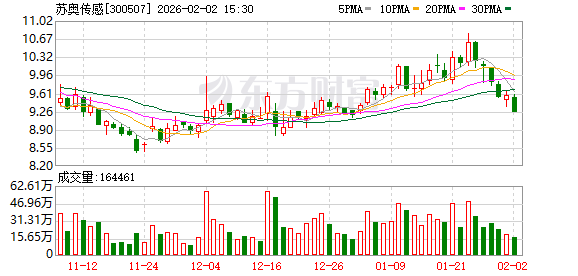
苏奥传感:公司目前与比亚迪、蔚来、小鹏、理想等多家新能源汽车企业建立了长期战略合作伙伴关系
Zheng Quan Ri Bao· 2026-02-02 12:16
Group 1 - The company, Suoao Sensor, has established long-term strategic partnerships with several major electric vehicle manufacturers, including BYD, NIO, Xpeng, and Li Auto [2] - The company is also engaged in project collaborations with the first-tier supply chain market [2]


汽车股股价悉数受挫 小鹏汽车-W(09868)跌9.21% 机构指1月新能源车销量承压
Xin Lang Cai Jing· 2026-02-02 11:01
Group 1 - The automotive stocks have faced significant declines, with Xpeng Motors down 9.21%, NIO down 6.47%, and BYD down 4.86% as of the report date [1] - A report from Kaiyuan Securities indicates that the domestic passenger car market is expected to remain flat year-on-year but will see a month-on-month decline in January 2026, with new energy vehicle sales under pressure and penetration rate dropping to approximately 44.4% [1] - The market is experiencing structural differentiation, with brands like AITO and Xiaomi achieving high growth through popular models, while pure electric brands like BYD are facing sales pressure [1] Group 2 - January is projected to be the last complete sales month before the Spring Festival, with retail sales expected to reach 1.8 million units, showing a year-on-year stability but a significant month-on-month decline [2] - The first week of January saw weak market performance with an average daily retail of 30,000 units, while the second week showed slight recovery with 50,000 units [2] - By the fourth week of January, retail sales are expected to peak at 120,000 units per day, driven by the implementation of subsidy policies and increased pre-holiday purchasing demand [2]
车企2026年首交卷,比想象中还“冷”的1月
Xin Lang Cai Jing· 2026-02-02 10:51
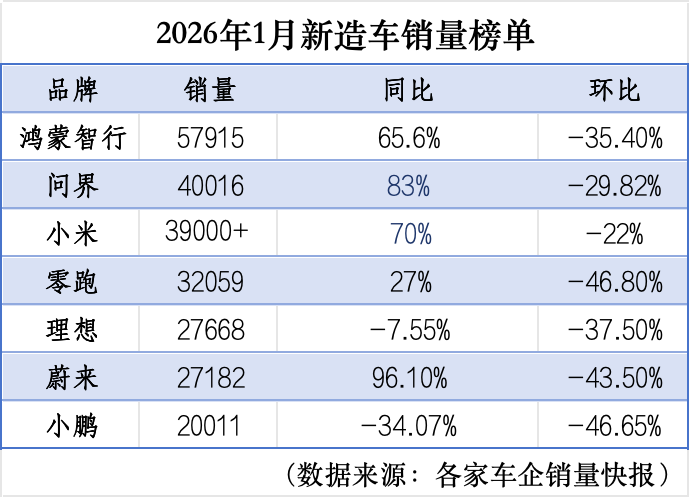
Core Insights - The January 2026 sales data for new energy vehicles indicates a significant reshuffling in the market, with some brands experiencing substantial growth while others face declines [1][2][25] - The overall market is characterized by a cautious outlook due to factors such as the reduction of purchase tax incentives and the impact of seasonal demand fluctuations [2][25][47] Sales Performance - Hongmeng Zhixing led the sales with 57,915 units, showing a year-on-year increase of 65.6% but a month-on-month decline of 35.4% [4][24] - Aiqi (问界) achieved sales of 40,016 units, marking an 83% year-on-year growth despite a 29.82% month-on-month drop [4][30] - Xiaomi's sales reached over 39,000 units, reflecting a 70% increase year-on-year but a 22% decrease from the previous month [4][30] - Li Auto (理想) sold approximately 27,668 units, down 7.55% year-on-year and 37.5% month-on-month [4][32] - NIO (蔚来) reported 27,182 units sold, a 96.1% year-on-year increase but a 43.5% decline from December [4][33] - Xpeng (小鹏) saw a significant drop with 20,011 units sold, down 34.07% year-on-year and 46.65% month-on-month [4][36] Market Dynamics - The total retail market for narrow passenger vehicles in January is estimated at around 1.8 million units, reflecting a 20.4% month-on-month decline but a slight 0.3% year-on-year increase [2][26] - The automotive market is experiencing a clear division, with some brands thriving while others struggle, indicating a competitive reshuffle [2][25][47] Strategic Responses - Companies are launching financial incentives to stimulate sales, such as long-term low-interest financing options, as a response to market pressures [21][47] - The industry is expected to face intensified competition as companies adapt to changing market conditions and consumer preferences [47] International Market Performance - Geely (吉利) achieved sales of 270,167 units in January, a 1% year-on-year increase and a 14% month-on-month rise, positioning it as the top domestic automaker [37][39] - BYD (比亚迪) sold 210,051 vehicles, with a notable 43.3% year-on-year growth in overseas sales, despite a 30.11% decline in domestic sales [40][41] - Chery (奇瑞) reported sales of 200,269 units, with significant contributions from its export market [41][42] Future Outlook - Geely plans to launch 1-2 new models each quarter in 2026, aiming for a total annual sales target of 3.45 million units [39] - The overall sentiment in the industry remains cautious, with expectations of continued volatility and competition in the coming months [47]

港股复盘 | 港股遭遇“黑色星期一” 恒生科技跌超3% 贵金属板块遭遇重挫
Mei Ri Jing Ji Xin Wen· 2026-02-02 08:49
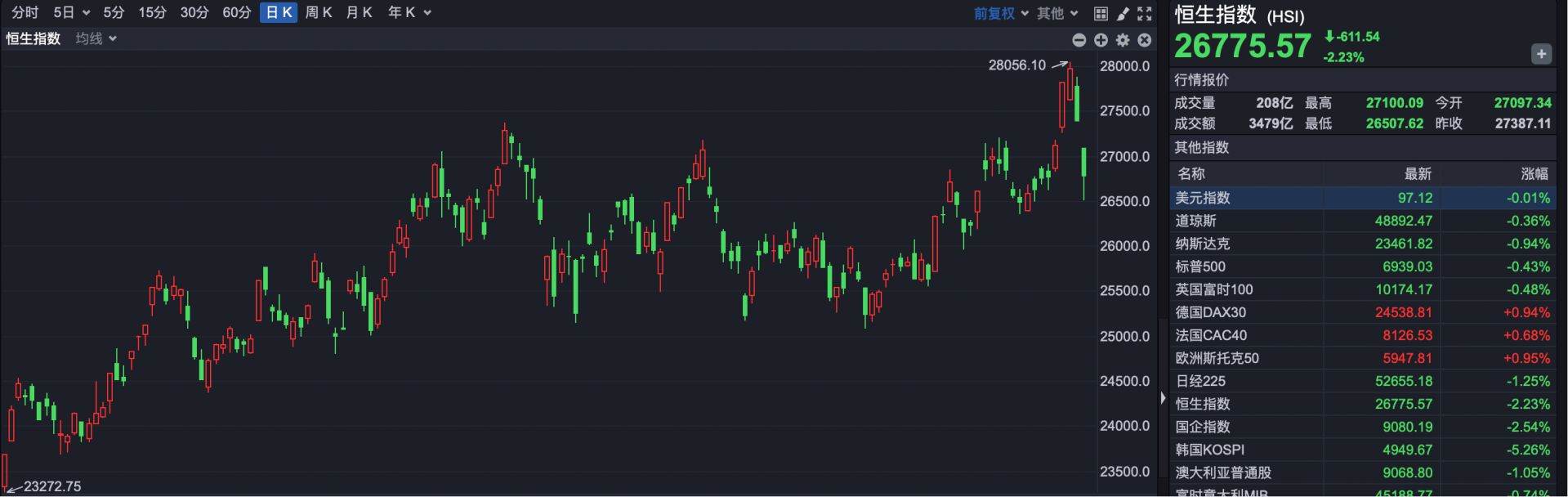
Market Overview - The Hong Kong stock market experienced a significant decline on February 2, with the Hang Seng Index closing at 26,775.57 points, down 611.54 points, representing a drop of 2.23% [1] - The Hang Seng Tech Index also fell, closing at 5,526.31 points, down 191.87 points, a decrease of 3.36% [2] Sector Performance - Precious metals stocks were notably affected, with Shandong Gold (HK01787) and Chifeng Jilong Gold Mining (HK06693) both dropping over 12%. Other companies like Lingbao Gold, Jiangxi Copper, and Zijing Mining also saw declines exceeding 9% [3] - In the automotive sector, Xpeng Motors (HK09868) fell by 6%, while NIO (HK09866) dropped over 4% [5] - Semiconductor stocks faced pressure, with Hua Hong Semiconductor declining by over 11% [7] Company Deliveries - In January 2026, major new energy vehicle manufacturers showed significant delivery disparities: Xpeng delivered 20,011 units, down 34.07% year-on-year and 46.65% month-on-month; Li Auto delivered 27,668 units, up 7.55% year-on-year but down 37.47% month-on-month; NIO delivered 27,200 units, a substantial increase of 96.1% year-on-year; and Seres saw a remarkable growth of 104.85% year-on-year with 45,900 units delivered [7] Investment Insights - Citigroup's latest commodity report indicated that current gold prices have significantly priced in future uncertainties, with expectations of short-term price increases but valuations reaching "extreme levels" [5] - Huatai Securities suggested that the current market pullback is a technical correction following rapid increases, with a focus on AI supply chains and semiconductor sectors for potential gains [11] - Morgan Stanley noted that the recent bull market has led to profit-taking ahead of the Lunar New Year, but geopolitical uncertainties may enhance the attractiveness of Chinese assets, predicting that the Hong Kong market could outperform A-shares in the short term [11]
2026车圈反思开局:我们犯了大错误
汽车商业评论· 2026-02-02 04:03
Group 1 - The automotive industry is reflecting on its challenges and opportunities as leaders like Li Shufu of Geely emphasize the importance of core values and technological innovation in navigating critical moments [9][10] - Oliver Blume, former CEO of Porsche, admits to significant strategic errors, particularly regarding the decision to fully electrify the Macan model, which has led to a product gap and financial losses for shareholders [14][15] - Xiaomi's CEO Lei Jun acknowledges the industry's issues with marketing practices and emphasizes the need for transparency and accountability in communications with consumers [17][19] Group 2 - NIO's founder Li Bin celebrates the production of the company's one millionth electric vehicle and outlines ambitious plans for expanding battery swap stations, while maintaining a focus on long-term growth and profitability [22][24] - Elon Musk expresses confidence in China's rapid advancements in AI and energy infrastructure, predicting that China will surpass the U.S. in power generation by three times by 2026 [26][27] - Zhu Hao, founder of Zhi Mi Technology, boldly claims that his company will create the world's first trillion-dollar ecosystem, aiming for a significant increase in market valuation over the next two decades [30][31] Group 3 - Renault's CEO François Provost advocates for a shift from volume-driven strategies to value-driven approaches in the Chinese automotive market, criticizing the detrimental effects of price wars [41] - Li Xiang of Li Auto announces a strategic pivot towards humanoid robotics and AI, emphasizing the need for innovation in product development and collaboration within the industry [44][46] - Huawei's executive Yu Chengdong expresses dissatisfaction with the current capabilities of the HarmonyOS cockpit, calling for improvements to meet user expectations [36][37]

恒科指跌3%
Xin Lang Cai Jing· 2026-02-02 03:12
Core Viewpoint - The Hong Kong stock market experienced a decline, with major indices falling significantly, particularly the Hang Seng Technology Index which dropped by 3% and the Hang Seng Index which fell by over 2% [1] Company Performance - Hua Hong Semiconductor saw a decline of over 10% in its stock price [1] - China Unicom's stock fell by more than 9% [1] - Xpeng Motors experienced a drop exceeding 8% [1] - China Telecom's shares decreased by over 7% [1] - NIO and BYD Company both saw declines of more than 5% [1]


蔚来汽车1月交付新车2.72万台,累计交付突破102万辆
Ju Chao Zi Xun· 2026-02-02 03:04
Core Insights - NIO reported a strong sales performance with 27,182 vehicles delivered in January 2026, marking a year-on-year growth of 96.1% [2] - The total cumulative deliveries have surpassed 1 million units, reaching 1,024,774 vehicles, solidifying NIO's position in the high-end electric vehicle market [2] - The new ES8 model celebrated its 60,000th owner within just 134 days of launch, indicating robust demand for large electric SUVs [2] Group 1: Sales Performance - NIO delivered 27,182 vehicles in January 2026, achieving a remarkable year-on-year growth of 96.1% [2] - The cumulative delivery milestone of 1,024,774 vehicles has been reached, officially crossing the 1 million mark [2] - The new ES8 model reached 60,000 deliveries in only 134 days, showcasing strong market demand [2] Group 2: Product and Technology - NIO continues to lead in technology upgrades with the rollout of the latest 1.4.0 version of its intelligent system across multiple models [2] - The new features include enhanced world model-assisted driving capabilities, promising a smarter and safer driving experience [2] Group 3: Financial and Service Initiatives - NIO introduced attractive financing options with a 7-year low-interest purchase plan, offering rates as low as 0.49% [3] - The company announced that its global battery swap network has surpassed 99 million swaps, expected to reach 100 million soon, reflecting user acceptance of the battery swap model [3]
1月车企销量排行
数说新能源· 2026-02-02 02:37
根据2026年2月1-2日各大车企发布的最新数据,2026年1月中国汽车市场销量排行如下: 车企集团销量排行(TOP 5) | 排名 | 车企集团 | 1月销量 | 同比变化 | 主要亮点 | | --- | --- | --- | --- | --- | | 1 | 吉利汽车集团 | 270,167辆 | +1% | 海外出口60,506辆,同比翻倍;新能源124,252辆 | | 2 | 比亚迪 | 210,051辆 | -30.11% | 出口100,482辆,同比+51.47%,蝉联新能源冠军 | | 3 | 奇瑞集团 | 200,269辆 | -10.72% | 出口11.96万辆,同比+48.1%,出口占比近60% | | 4 | 广汽集团 | 116,622辆 | +18.47% | 自主品牌超4.9万辆,同比+87.58% | | 5 | 长城汽车 | 90,312辆 | +11.59% | 海外销量40,278辆,同比+43.77% | | | 🚀 造车新势力销量排行(TOP 10) | | | | 排名 品牌 1月销量 同比变化 备注 1 问界(AITO) 40,016辆 +83% 鸿蒙智 ...



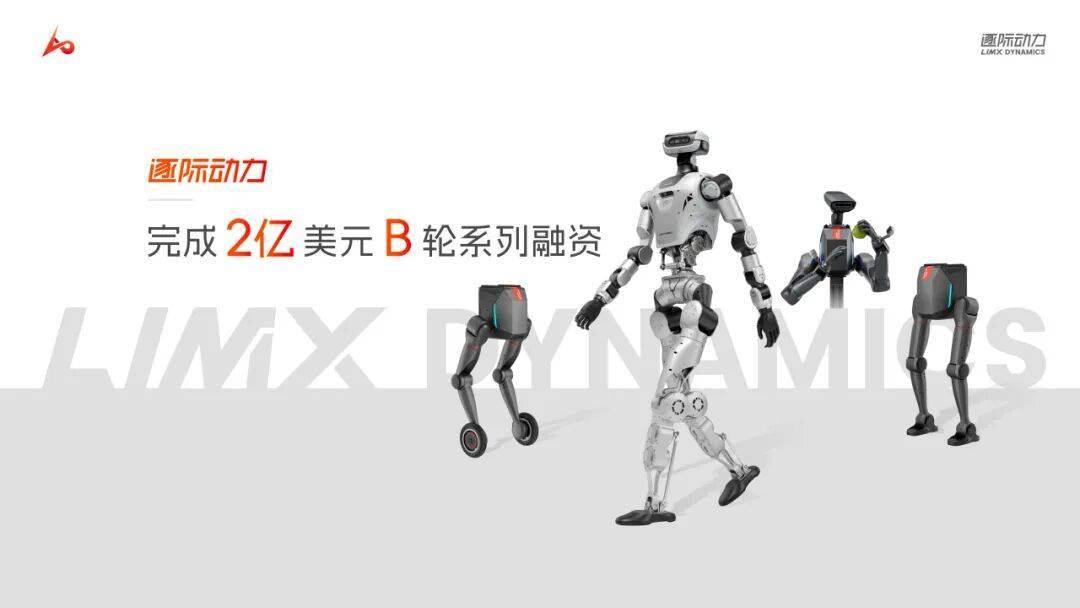
逐际动力完成2亿美元B轮融资,京东、蔚来资本等参投
Sou Hu Cai Jing· 2026-02-02 02:22
本轮融资由多家国内外机构投资人参与,包括阿联酋磊石资本(Stone Venture)、东方富海、基石资本、天创资本、广发信德、合肥创新投、国泰君安创 新投资、中信建投、唐兴资本、财鑫资本;战略产业投资人包括京东、中鼎股份、光洋股份、东土科技;老股东尚颀资本、彼岸时代、蔚来资本、明势创 投持续加码。 逐际动力称,将加大研发和市场投入。基于本体硬件设计和制造、小脑基础模型、具身 Agentic OS 三大核心能力,逐际动力聚焦具身智能大小脑融合核 心技术的突破,推动通用人形机器人和模块化基座机器人的原始创新,通过产品工程化与供应链生态体系建设,进一步拓展中国和全球市场。 IT之家 2 月 2 日消息,今日,逐际动力 LimX Dynamics 宣布完成 2 亿美元的 B 轮融资。 在过去两个月,逐际动力连续发布了两项关键产品和技术:多形态具身机器人 TRON 2 和具身智能体 OS 系统 LimX COSA。通过原创的模块化设计, TRON 2 支持多种形态的灵活组合,移动和操作能力一举两得,使开发者和行业用户能够根据不同应用场景快速构建合适的机器人形态,无需为单一任务 反复定制硬件。TRON 2 是一个可复用、 ...