NIO(09866)

Search documents
“光伏+交通”新范本,隆基与蔚来携手打造光储充换一体化项目
中国能源报· 2026-02-03 11:47
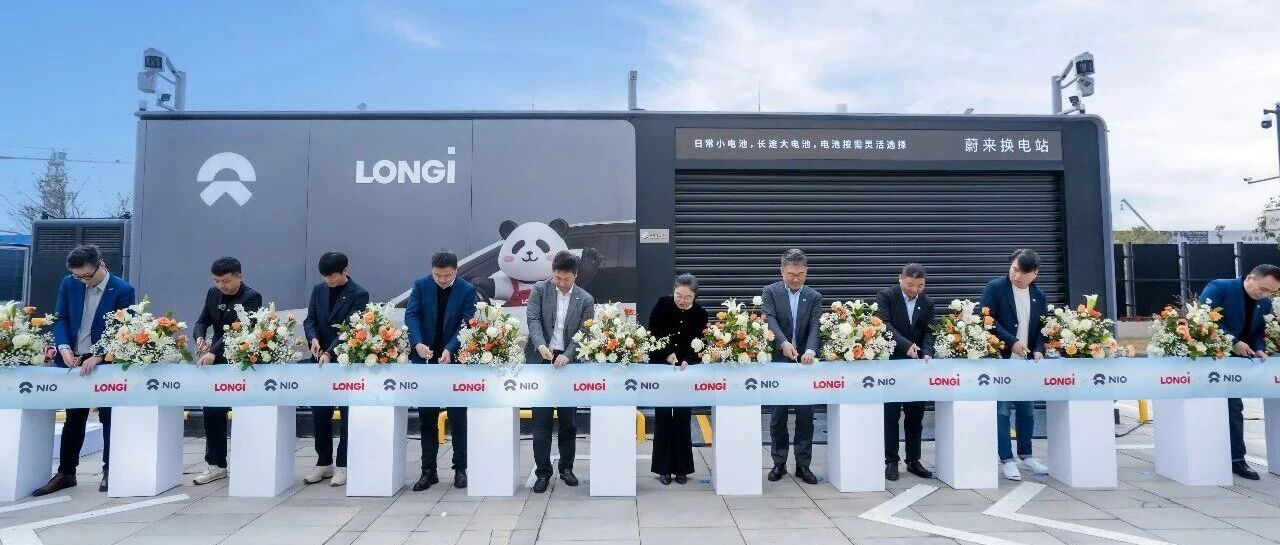
Core Viewpoint - The collaboration between Longi Green Energy and NIO aims to create an integrated energy solution that combines photovoltaic power generation, energy storage, and electric vehicle charging, contributing to low-carbon transportation and serving as a replicable model for sustainable energy systems [2][3][12]. Group 1: Project Overview - The "NIO Battery Swap Station | Longi Global Distributed R&D Center" project integrates photovoltaic canopies, walls, and noise barriers, creating a comprehensive energy system that alleviates grid pressure and meets user charging needs [3][5]. - The project features three photovoltaic facilities: a solar canopy, a solar wall, and a solar noise barrier, ensuring green and stable power supply while minimizing carbon emissions [3][5]. Group 2: Technological Innovations - The photovoltaic noise barrier combines high-efficiency solar components with noise reduction capabilities, providing a dual function of energy generation and traffic noise mitigation [5]. - The solar canopy employs patented installation technology and a dual-layer waterproof design, ensuring safety during extreme weather while converting parking spaces into efficient green energy stations [6]. Group 3: Strategic Implications - The successful first battery swap by the NIO ET9 at the new station signifies a complete link from green energy generation to high-end green transportation [8]. - The project is part of NIO's long-term strategy to build a nationwide clean energy network, promoting similar "solar-storage-charging" demonstration projects to enhance user experience and support carbon neutrality in transportation [10][12]. Group 4: Future Collaboration - Longi and NIO plan to deepen their collaboration to promote the integration of "photovoltaics + battery swapping + energy storage" in transportation networks and explore innovative projects related to grid interaction [12].



部分造车新势力1月交付数据丨鸿蒙智行57915台 小米、零跑超3万台
Cai Jing Wang· 2026-02-03 09:19
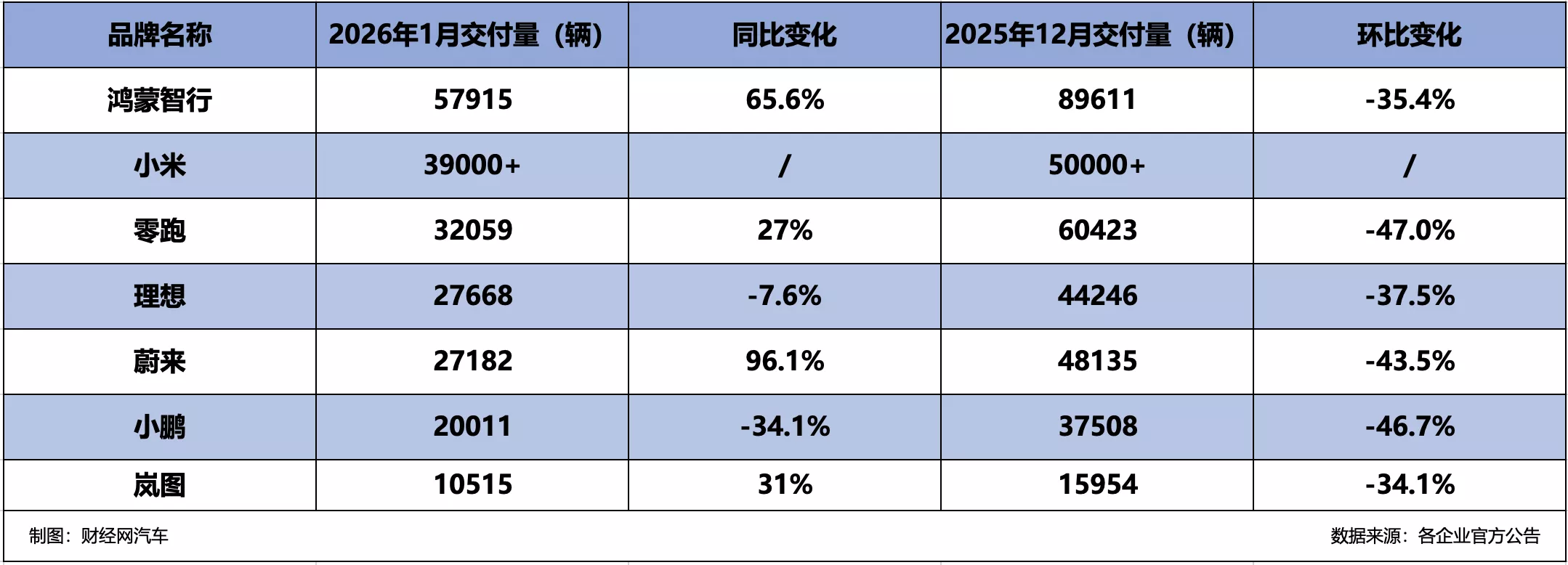
Core Insights - New energy vehicle companies in China reported mixed delivery results for January, with some experiencing significant growth while others faced declines in both year-over-year and month-over-month metrics [1][4]. Delivery Data Summary - Hongmeng Zhixing led the delivery rankings with 57,915 units, a year-over-year increase of 65.6% [5]. - Xiaomi delivered over 39,000 units, marking a 95% increase compared to January 2025 [5]. - Leap Motor delivered 32,059 units, a year-over-year increase of 27% but a month-over-month decline of 47% [5][6]. - Li Auto delivered 27,668 units, down 7.6% year-over-year and 37.5% month-over-month [7]. - NIO delivered 27,182 units, showing a 96.1% year-over-year increase but a 43.5% month-over-month decline [8]. - XPeng delivered 20,011 units, down 34.1% year-over-year and 46.7% month-over-month [10]. - Lantu delivered 10,515 units, a year-over-year increase of 31% [11]. Market Trends and Insights - The overall retail sales of passenger vehicles in China dropped by 28% year-over-year and 37% month-over-month, with new energy vehicles experiencing a notable decline [4]. - The penetration rate of new energy vehicles fell from 59.1% in December to 45.9% in January [4]. - A new energy vehicle company executive attributed the market downturn to the traditional off-peak season and the expiration of tax exemption policies, which led to demand being pulled forward [4][11].



1月车市环比多暴跌,出口成“救命稻草”
Xin Lang Cai Jing· 2026-02-03 04:12
Core Viewpoint - The automotive market in January 2026 showed a slight year-on-year increase but a significant month-on-month decline, primarily due to policy changes and demand exhaustion, with exports becoming a crucial growth driver for companies [1][22]. Group 1: Market Performance - The overall automotive market experienced a year-on-year increase but a month-on-month decline, with some companies facing drastic reductions in sales [1]. - The core reasons for the market's sluggish start include the reduction of the new energy vehicle purchase tax and a mismatch in demand due to the timing of the Spring Festival [1]. - Exports have emerged as a vital growth area for automotive companies, helping to offset domestic market fluctuations [1][6]. Group 2: Company Sales Data - BYD sold 210,100 vehicles in January, a year-on-year decline of 30.11% and a month-on-month decline of 50.04%, heavily impacted by the new energy vehicle tax policy [3][5]. - Geely's sales reached 270,200 units, showing a year-on-year increase of 1.29% and a month-on-month increase of 14.08%, with significant export growth [5][6]. - SAIC Group reported sales of 327,000 units, a year-on-year increase of 23.9%, with a notable increase in overseas sales [8]. Group 3: New Energy Vehicle Trends - The new energy vehicle market is facing challenges due to policy changes, leading to a cautious consumer sentiment [1][3]. - Companies are increasingly relying on exports to sustain growth in the new energy vehicle segment, as domestic competition intensifies [6][22]. Group 4: Competitive Strategies - Companies are engaging in aggressive promotional strategies, including long-term financing options and price reductions, to stimulate sales amid a cooling market [15][17]. - The automotive industry is shifting towards a more competitive landscape, focusing on comprehensive service offerings beyond just product pricing [17][22]. - Traditional luxury brands are facing pressure from the rise of domestic electric vehicle manufacturers, leading to significant price reductions to maintain market share [20][22].




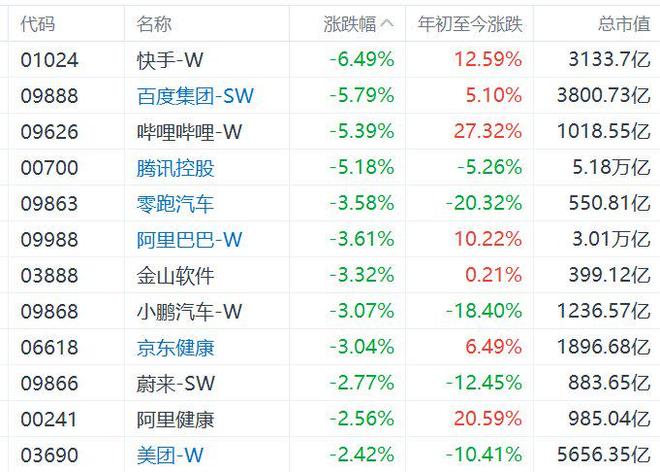
港股互联网巨头集体下挫,腾讯跌超5%





Xin Lang Cai Jing· 2026-02-03 02:53
Group 1 - The Hong Kong stock market saw a collective decline among major internet giants, with Kuaishou dropping over 6%, Baidu, Bilibili, and Tencent falling over 5%, Alibaba down over 3%, and Meituan decreasing over 2% [1] Group 2 - Kuaishou's stock decreased by 6.49%, with a year-to-date increase of 12.59%, and a total market capitalization of 313.7 billion [2] - Baidu Group's stock fell by 5.79%, with a year-to-date increase of 5.10%, and a total market capitalization of 3800.73 billion [2] - Bilibili's stock declined by 5.39%, with a year-to-date increase of 27.32%, and a total market capitalization of 1018.55 billion [2] - Tencent Holdings experienced a drop of 5.18%, with a year-to-date decrease of 5.26%, and a total market capitalization of 5.18 trillion [2] - Alibaba's stock fell by 3.61%, with a year-to-date increase of 10.22%, and a total market capitalization of 3.01 trillion [2] - Meituan's stock decreased by 2.42%, with a year-to-date decrease of 10.41%, and a total market capitalization of 5656.35 billion [2]
同比普涨、环比普跌,1月车企销量“开门红”成色不足
Jing Ji Guan Cha Wang· 2026-02-03 02:34
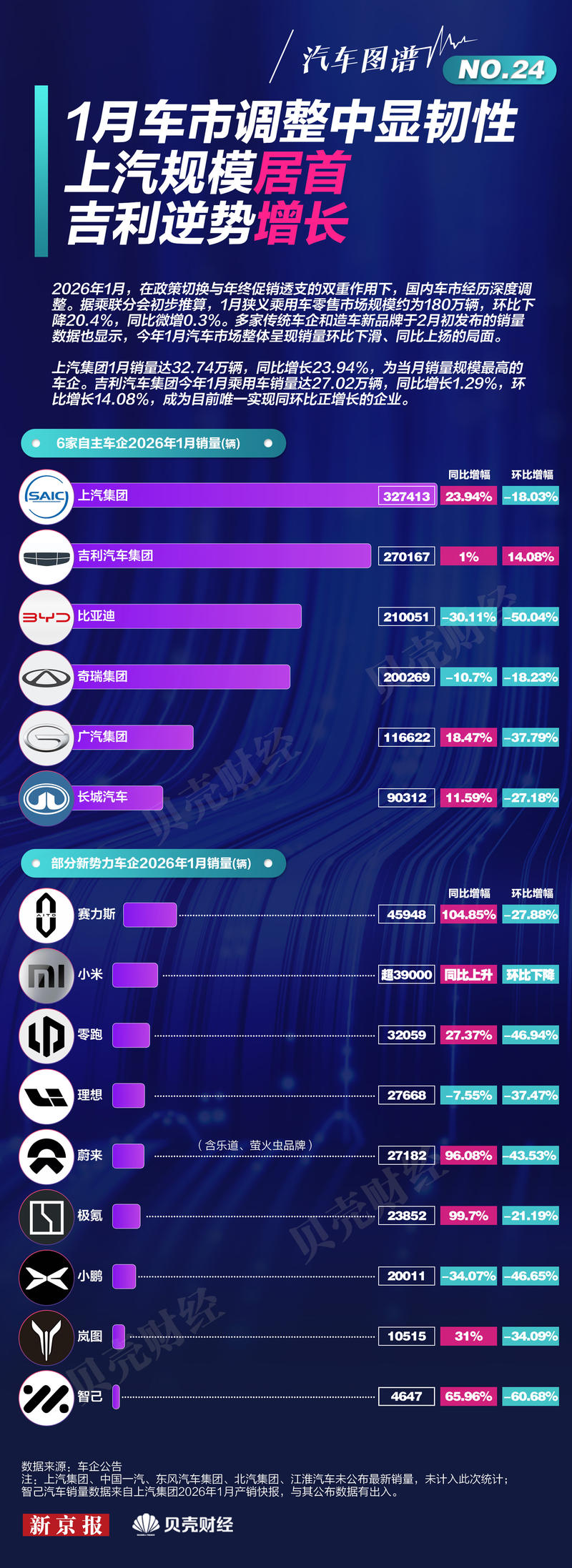
Core Insights - The automotive industry experienced a positive start in January 2026, with most companies reporting year-on-year sales growth, attributed to a low sales base from the previous year due to the Spring Festival occurring in January 2025 [2] - However, month-on-month sales showed a significant decline for most companies, primarily due to the end of full tax exemptions for new energy vehicles and the conclusion of various promotional policies that were in place at the end of 2025 [2] Company Performance - Geely's January sales reached 270,200 units, a year-on-year increase of 1.29% and a month-on-month increase of 14%. New energy vehicle sales accounted for 46% of total sales, with overseas exports growing by 121% year-on-year [3] - BYD sold 210,100 units in January, with overseas sales of 100,000 units showing a year-on-year growth of 43.3%. The brand's performance was strong across its various models [4] - Great Wall Motors reported sales of 90,300 units, a year-on-year increase of 11.59%, but a month-on-month decline of 27.18%. Overseas sales also grew by 43.77% [4] - Chery Group's sales were 200,300 units, down 10.72% year-on-year and 18.23% month-on-month. However, exports reached 119,600 units, marking a 48.1% increase [5] - GAC Group's sales totaled 116,600 units, up 18.47% year-on-year but down 37.79% month-on-month. The group's self-owned brands saw significant growth, particularly in overseas markets [5] - SAIC Group's passenger vehicle sales exceeded 78,000 units, a year-on-year increase of 9.8%, while Dongfeng Motor reported various brand performances, with some brands showing significant growth [6] New Energy and Emerging Brands - New energy vehicle sales are becoming increasingly significant, with companies like AITO, Xiaomi, and Leap Motor forming a new "first tier" in sales, while traditional players like NIO and Xpeng are now in the "second tier" [6][7] - AITO's sales reached approximately 40,000 units, a year-on-year increase of 83%, while Xiaomi's sales exceeded 39,000 units, showing strong growth compared to the previous year [7]

汽车早报|上汽集团1月整车销量32.74万辆蔚来旗下乐道品牌登陆海外市场
Xin Lang Cai Jing· 2026-02-03 00:37
Group 1: Regulatory and Market Trends - The Ministry of Industry and Information Technology of China has released a mandatory national standard for automotive door handle safety, effective from January 1, 2027 [1] - The China Automobile Dealers Association indicates that the automotive market will enter a phase of adjustment in February 2026, with a consumption index of 31.1 for January, and a predicted decline in sales due to multiple factors including the Spring Festival and tax changes [1] Group 2: Company Performance - SAIC Motor Corporation reported a total vehicle sales of 327,400 units in January 2026, a year-on-year increase of 23.94%, with 85,400 units being electric vehicles, up 39.73% [1] - Dongfeng Nissan announced a delivery of 45,984 vehicles in January 2026, reflecting a year-on-year growth of 5.4%, with the Tianlai Hongmeng model contributing 6,724 units, up 22% [2] - Dongfeng Honda's sales reached 31,377 units in January 2026, marking a 4.4% year-on-year increase, with the CR-V model achieving 19,141 units sold, up 36.4% [3] Group 3: New Ventures and Expansions - Geely Auto has established a new battery company in Baoji with a registered capital of 50 million RMB, focusing on battery manufacturing and sales [4] - NIO has launched its brand "Ladao" in Uzbekistan, marking its entry into the overseas market, with multiple models introduced, and plans to expand into the Americas with a partnership in Costa Rica [5] Group 4: Investment and Valuation - Waymo, a subsidiary of Alphabet, has completed a $16 billion financing round, achieving a post-money valuation of $126 billion, with significant investments from various venture capital firms [6] - Waymo's annual ride volume is projected to more than double to 15 million rides in 2025, with a cumulative total exceeding 20 million rides to date [6]
汽车及新能源汽车2025年产量升至全国首位 安徽全省一盘棋发力汽车产业(经济聚焦·关注汽车产业)
Ren Min Ri Bao· 2026-02-02 22:04
Core Viewpoint - Anhui Province is rapidly developing its automotive industry, particularly in the electric vehicle sector, aiming for a production target of 3.6865 million vehicles by 2025, with 1.7941 million being electric vehicles, both leading the nation [2][3]. Group 1: Industry Growth and Development - The automotive industry in Anhui has grown significantly, with production increasing from 1.161 million vehicles in 2020 to a projected 3.6865 million in 2025, moving from eighth to first in national rankings [3][4]. - The province has attracted seven major vehicle manufacturers and over 3,000 automotive parts companies, with total revenue from the automotive industry expected to exceed 1.5 trillion yuan in 2024, marking a growth of over 20% for two consecutive years [5][6]. Group 2: Government Support and Investment - The local government has played a crucial role in supporting the automotive industry, exemplified by a 7 billion yuan investment in NIO to stabilize its funding and attract other manufacturers like BYD and Volkswagen [5][6]. - The establishment of the "Automobile Office" by the Anhui Provincial Development and Reform Commission aims to provide comprehensive support for the automotive industry, enhancing market efficiency [6]. Group 3: Collaborative Innovation - A framework agreement was signed among major local car manufacturers, including Chery and NIO, to promote collaborative innovation in vehicle and key component development, resource sharing, and localized chip development [9]. - Chery has established a global network of R&D centers and invests approximately 20 billion yuan annually in research, focusing on engine efficiency and innovation [10].
自主品牌座次洗牌 新势力环比普降
Zhong Guo Zheng Quan Bao· 2026-02-02 20:45
Core Insights - The automotive market in China is showing a clear divide between traditional domestic brands, which are performing strongly, and new energy vehicle (NEV) startups, which are facing challenges. Traditional brands like SAIC, Geely, and Chery have reported over 20% year-on-year sales growth, while nine major NEV startups have experienced a collective decline in sales [1][4]. Traditional Domestic Brands Performance - SAIC Motor Corporation led the market with a total vehicle sales of 327,400 units in January, a year-on-year increase of 23.9%. The sales of its self-owned brands reached 214,000 units, up 39.6%, accounting for 65.3% of total sales [1][2]. - Geely Automobile sold 270,200 units, marking a 1% year-on-year increase and a 14% month-on-month increase. Its NEV sales reached 124,300 units, up 3%, making up 46% of total sales [2]. - Chery Group achieved sales of 200,300 units, with exports contributing significantly, totaling 119,600 units, a 48.1% increase year-on-year. The NEV segment also grew, with sales of 52,100 units [2][3]. - GAC Group reported a total sales volume of 116,600 units, an 18.47% increase year-on-year, driven by significant growth in its Aion and Trumpchi brands [3]. New Energy Vehicle Startups Challenges - The nine major NEV startups collectively faced a month-on-month sales decline ranging from 21.2% to 47.0%. However, six of these companies reported year-on-year growth, indicating a mixed performance [4][5]. - Leading brands like Hongmeng Zhixing and Xiaomi Auto reported significant year-on-year growth, with Hongmeng delivering 57,900 units (up 65.6%) and Xiaomi delivering over 39,000 units (up 70%) despite month-on-month declines [5]. - NIO and Zeekr emerged as strong performers with year-on-year growth exceeding 95%, with NIO delivering 27,200 units (up 96.1%) and Zeekr delivering 23,900 units (up 99.7%) [5][6]. Market Dynamics and Future Outlook - The automotive market is experiencing a temporary downturn due to factors such as policy changes and seasonal demand fluctuations. The inventory warning index for dealers was reported at 58.3%, indicating a supply-demand imbalance [4][6]. - Despite short-term challenges, industry experts believe the long-term growth trajectory for the NEV sector remains intact, with expectations for a recovery in sales as the market stabilizes post-policy transition and new products are launched [6].

蔚小理盘前走弱 1月交付环比均降超30%
Xin Lang Cai Jing· 2026-02-02 14:11
Core Viewpoint - The three major electric vehicle manufacturers, NIO, Xpeng, and Li Auto, experienced a decline in January delivery numbers compared to the previous month, indicating potential challenges in the market [1] Group 1: Company Performance - Li Auto delivered 27,668 vehicles in January, representing a year-on-year increase of 7.55% but a month-on-month decrease of 37.47% [1] - NIO delivered 27,182 vehicles in January, showing a significant year-on-year increase of 96.08%, yet a month-on-month decline of 43.53% [1] - Xpeng delivered 20,011 vehicles in January, which reflects a year-on-year decrease of 34.07% and a month-on-month decline of 46.65% [1]
汽车图谱|1月车市调整:上汽销量居首 吉利逆势增长
Xin Jing Bao· 2026-02-02 13:58
Group 1 - The domestic automotive market experienced a significant adjustment in January 2026, with a retail market size of approximately 1.8 million vehicles, a month-on-month decline of 20.4%, and a year-on-year increase of 0.3% [1] - SAIC Motor Corporation achieved the highest sales in January with 327,400 vehicles sold, representing a year-on-year growth of 23.94% [1] - Geely Automobile Group reported sales of 270,200 vehicles in January, with a year-on-year increase of 1.29% and a month-on-month increase of 14.08%, making it the only company with positive growth in both metrics [1] Group 2 - BYD's total sales in January were approximately 210,000 vehicles, with a significant overseas market growth where sales exceeded 100,000 units, marking a year-on-year increase of 51.47% [1] - Chery Group's total sales across five brands exceeded 200,000 vehicles in January, reflecting a year-on-year decline of 10.7% [2] - GAC Group's sales reached 116,600 vehicles in January, showing a year-on-year increase of 18.47% [2] Group 3 - New energy vehicle companies showed strong growth, with Seres, Zeekr, and NIO achieving year-on-year sales increases of 104.85%, 99.7%, and 96.08% respectively [2][4] - Xiaomi Automobile delivered over 39,000 vehicles in January, surpassing Leap Motor for the first time [2] - The overall performance of new energy vehicle companies indicates a robust growth trend despite challenges faced by traditional automakers [2][4]