
NIO(09866)

Search documents
蔚来今年将进入澳大利亚、新西兰市场
Guan Cha Zhe Wang· 2026-01-09 10:04
Core Viewpoint - NIO aims to expand its global market presence, targeting Australia and New Zealand by the second half of 2026, while also entering Thailand in March 2024 with its sub-brand Firefly [1][2][3]. Group 1: Global Expansion Plans - NIO plans to accelerate its global business expansion starting from the end of 2024, focusing on markets outside of Europe [3]. - The company has previously concentrated its international efforts in Europe but is now looking to diversify its market presence globally by 2026 [4]. Group 2: Product Launches and Market Strategy - NIO's Firefly brand will officially enter the Thai market in March 2024, marking a significant step in its overseas strategy [2]. - The launch of the first right-hand drive model at the Singapore Motor Show signifies NIO's commitment to expanding into right-hand drive markets, with Singapore being strategically important [5]. Group 3: Financial Performance and Goals - NIO has not yet achieved profitability but aims to reach breakeven by Q4 2025, with a target for overall profitability in 2026 [6]. - In Q3 of the previous year, NIO reported record revenue and gross margin, with cash reserves of 36.7 billion RMB, a significant increase, and a net loss of 3.48 billion RMB, which showed a narrowing trend year-on-year [6].

跨过100万台的蔚来,凭什么活下来?
Xin Lang Cai Jing· 2026-01-09 09:02
Group 1 - NIO delivered 48,135 vehicles in December 2025, marking a 54.6% year-on-year increase and setting a historical record [22] - In Q4 2025, NIO delivered 124,807 vehicles, a 71.7% increase year-on-year, also a historical high [22] - Total deliveries for 2025 reached 326,028 vehicles, representing a 46.9% year-on-year growth, achieving a historical record [22] Group 2 - NIO's founder and CEO, Li Bin, stated that the company has entered a new phase of rapid growth after overcoming challenges in early 2025 [6] - Li emphasized the need for strategic focus and resilience in the face of intensified competition in the smart electric vehicle industry [6][26] - The company aims for annual growth of 40-50% in the upcoming growth cycle [6][26] Group 3 - NIO's multi-brand strategy has been revitalized, with significant contributions from its sub-brands, including Ladao and Firefly, which have seen increasing sales [28][31] - The Ladao brand's L90 model and the new ES8 have been pivotal in driving sales, with Ladao achieving over 40,000 deliveries within four months [29][31] - The Firefly brand also saw sales surpass 7,000 units in December 2025, indicating a successful multi-brand approach [28][31] Group 4 - NIO's long-term R&D investments are beginning to yield results, enhancing product competitiveness and reducing costs through self-developed platforms and technologies [29][31] - The company is focusing on expanding into lower-tier markets with plans to open multi-brand "SKY" stores [31][32] - NIO has implemented a new operational mechanism (CBU) to improve efficiency and accountability across teams [32][34] Group 5 - Li Bin predicts that by 2030, the penetration rate of new energy vehicles will exceed 90%, with pure electric vehicles accounting for over 80% [34][36] - The market is shifting towards pure electric vehicles, with recent trends showing significant growth in this segment [36][41] - NIO's unique battery-as-a-service (BaaS) model offers tax benefits, potentially lowering the cost for consumers and mitigating price competition [41][42]

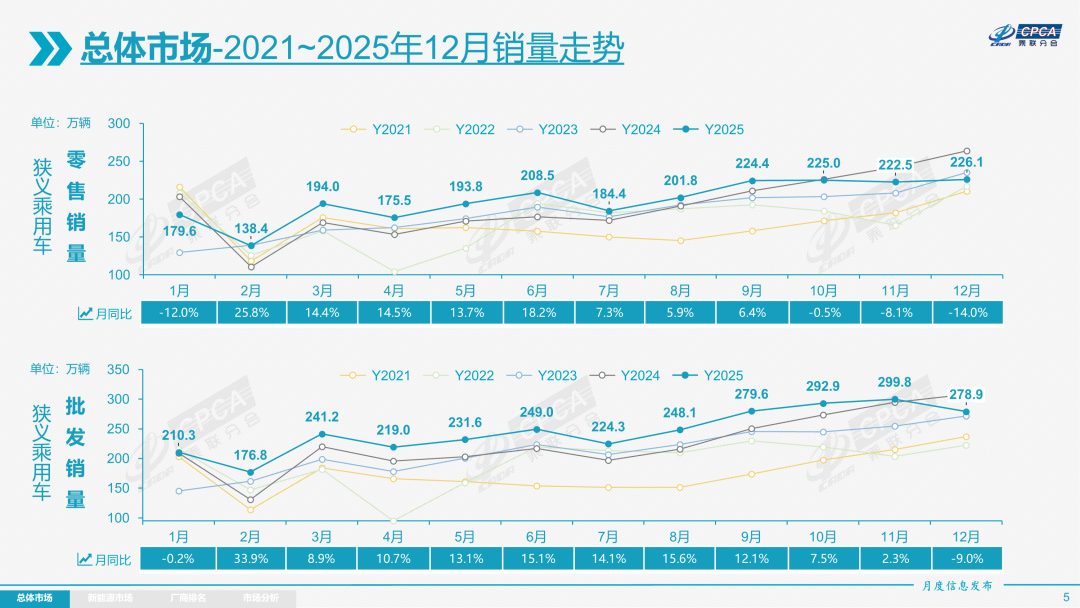
乘联分会:12月全国乘用车市场零售226.1万辆 同比下降14.0%
智通财经网· 2026-01-09 08:31
Core Insights - The overall retail sales of passenger cars in December 2025 reached 2.261 million units, a year-on-year decrease of 14.0% but a month-on-month increase of 1.6% [1] - Cumulative retail sales for the year amounted to 23.744 million units, reflecting a year-on-year growth of 3.8% [1] - The wholesale growth rate for passenger cars in 2025 is projected at 8.8%, with new energy vehicles (NEVs) expected to grow at 25.2%, meeting the growth expectations set for the "14th Five-Year Plan" [1] Market Performance - December's passenger car retail sales showed a significant decline in fuel vehicles, down 30% year-on-year, while pure electric vehicle sales increased by 2.5% [2] - The penetration rate of new energy vehicles in December reached 59.1%, indicating a shift towards a "new energy-dominated" market [2][11] - The retail share of domestic brands in December was 64.3%, a year-on-year increase of 2.2 percentage points [3] Production and Wholesale - Passenger car production in December was 2.791 million units, a year-on-year decrease of 4.6% [4] - December's wholesale volume for passenger cars was 2.789 million units, down 9.0% year-on-year [5] - The production of new energy vehicles in December reached 1.560 million units, a year-on-year increase of 7.6% [7] Export Trends - In December, the export of passenger cars (including complete vehicles and CKD) was 588,000 units, a year-on-year increase of 46.2% [4] - New energy vehicles accounted for 46.4% of total exports in December, up 15.6 percentage points from the previous year [4][13] - Cumulative exports of new energy vehicles for the year reached 2.422 million units, a growth of 86.2% [7] Inventory and Market Dynamics - The overall inventory in December decreased by 60,000 units, indicating proactive inventory reduction by manufacturers [6] - The market is experiencing a significant adjustment in consumer sentiment due to changes in trade-in policies and the expiration of tax exemptions for new energy vehicles [1][2] - The competitive landscape is shifting, with traditional manufacturers like Geely, Changan, and Great Wall showing improved market shares [3] Future Outlook - The January 2026 market is expected to benefit from a favorable production and sales environment, with a focus on the upcoming Spring Festival driving consumer demand [18] - The implementation of new policies aimed at promoting vehicle upgrades and trade-ins is anticipated to support market stability and growth in early 2026 [20] - The overall passenger car market is projected to maintain a stable trajectory, with a forecasted wholesale growth of 1% for 2026 [20]




定位新旗舰 蔚来ES9亮相工信部公告
Zhong Guo Zhi Liang Xin Wen Wang· 2026-01-09 05:07
Group 1 - The NIO ES9 has dimensions of 5365mm in length, 2029mm in width, and 1870mm in height, with a wheelbase of 3250mm and a top speed of 220km/h [1] - The total weight of the ES9 is 3490kg, with a curb weight of 2845kg, 2870kg, and 2915kg depending on the configuration [1] - The vehicle offers three tire specifications: 265/50R21, 275/45R22, and HL275/40R23, with front and rear track widths of 1730mm and 1758mm respectively [1] Group 2 - The ES9 features NIO's highest level of technological configuration, including the Tiangxing chassis system, which aims to provide users with a new SUV driving experience [3] - The vehicle is equipped with a visual perception system that automatically lowers the chassis based on the height of the parking garage for easier access [3]

李斌:蔚来不飘了
Zhong Guo Jing Ji Wang· 2026-01-09 00:32
Core Viewpoint - NIO's founder and CEO Li Bin emphasizes the company's commitment to becoming a more grounded and efficient organization, despite achieving significant milestones like the production of 1 million vehicles. He acknowledges the challenges ahead in a competitive automotive industry and stresses the importance of operational efficiency and execution [2][15]. Group 1: Company Performance and Strategy - NIO achieved a 47% year-on-year increase in vehicle sales, reaching 1 million units produced, but Li Bin describes the company as "weak" in the broader automotive market context [2][3]. - In Q4, NIO delivered 124,807 vehicles, a 71.7% increase year-on-year, with all three brands achieving record quarterly deliveries [3]. - The company aims for a delivery target of 326,028 vehicles in 2025, achieving a completion rate of 74%, which is lower compared to competitors like Leap Motor and Xpeng [3]. - Li Bin projects a stable growth rate of 40% to 50% annually without setting specific sales targets for 2026, focusing instead on operational efficiency [3][19]. Group 2: Operational Efficiency and Cost Management - NIO has entered its third development phase, focusing on improving operational efficiency and quality, which is crucial for survival in a competitive landscape [3][6]. - The company has implemented measures to reduce losses by 1.7 billion yuan and expects to achieve profitability in Q4, driven by increased deliveries of high-margin vehicles [8]. - Li Bin highlights the importance of internal management efficiency, emphasizing that every expense must be justified, which aligns with the company's long-term strategy [13][16]. Group 3: Technological Innovation and Infrastructure - NIO has invested over 65 billion yuan in R&D, focusing on core technologies and innovative manufacturing processes, which have enhanced product competitiveness and improved gross margins [11][12]. - The company plans to expand its battery swapping infrastructure significantly, aiming to add 1,000 new battery swap stations this year and ultimately establish over 10,000 stations by 2030 [21][22]. - NIO's commitment to a "chargeable, swappable, and upgradable" electric vehicle technology route has been a key factor in its growth and user adoption [12]. Group 4: Market Position and Future Outlook - Li Bin acknowledges that NIO remains a small player in the automotive industry, with only about 1% market share in China, and emphasizes the need to increase this share significantly [15]. - The company aims to maintain a steady growth trajectory, with expectations that the penetration rate of new energy vehicles in China will exceed 90% by 2030, with pure electric vehicles making up at least 80% of that [19]. - Li Bin believes that the automotive industry is entering a "finals" stage of competition, where only a few companies will dominate, but he is optimistic about the potential for multiple Chinese brands to succeed [23].
万科宣布郁亮辞职;王腾官宣创业,核心成员来自小米、华为;有变数!商务部回应审查Meta收购Manus;京东成立「变色龙业务部」丨雷峰早报
雷峰网· 2026-01-09 00:31
Group 1 - Alibaba's Taobao Flash Sale aims for market share growth with significant investment planned for 2026, focusing on high-value customers and non-food retail [4][5] - In Q4 2025, Taobao Flash Sale showed strong growth in GMV share and average order value, indicating a positive market position [4] - The strategy has sparked discussions among users, reminiscent of the competitive pricing seen during the "takeout war" in early 2025 [5] Group 2 - Former Xiaomi executive Wang Teng announced the establishment of a new company, "Today Yixiu," focusing on sleep health products, with a team primarily from Xiaomi and Huawei [7][9] - The company aims to address growing concerns about sleep and energy management, leveraging advancements in AI technology [7][9] Group 3 - The Chinese Ministry of Commerce is reviewing Meta's acquisition of AI platform Manus, assessing compliance with local laws regarding technology exports and cross-border mergers [11] - The acquisition, valued at $2 billion, is under scrutiny to ensure it does not violate export control regulations [11] Group 4 - Vanke's CEO Yu Liang has submitted his resignation due to retirement, marking the end of a significant era for the company [12][13] - Yu has been a pivotal figure in Vanke's history, leading the company through various phases of growth and challenges [13] Group 5 - XuanYuan Technology showcased its AI hardware at CES 2026, emphasizing the integration of AI agents with physical devices, with products priced at $22 [15][16] - The company aims to create personalized AI experiences while maintaining safety and precision in applications [15][16] Group 6 - JD.com has established a new "Chameleon Business Department" to develop AI toys for all age groups, with plans to launch new products in mid-January [18][19] - The company has made significant advancements in AI model technology, improving efficiency and reducing training costs [18][19] Group 7 - NIO plans to expand its international presence by entering the Australian and New Zealand markets in the second half of 2026, following its launch in Thailand [39][40] - The company aims to leverage its new "Firefly" brand for better market penetration in right-hand drive regions [39][40] Group 8 - Zhihui Technology, known as the "first stock of global large models," successfully listed on the Hong Kong Stock Exchange, achieving a market capitalization of approximately 57 billion HKD [29][30] - The company reported a significant increase in annual recurring revenue, indicating strong growth potential in its cloud-based services [31] Group 9 - Tesla plans to build a 2nm chip factory, challenging industry standards for cleanroom environments in semiconductor manufacturing [44][45] - CEO Elon Musk's ambitious vision includes producing advanced chips while maintaining a casual work environment [44][45] Group 10 - OpenAI has established a $50 billion employee stock incentive pool, reflecting its commitment to attracting and retaining top talent in the competitive AI landscape [51][52] - The company has seen rapid valuation growth, indicating strong market confidence in its future prospects [51][52]



陆家嘴财经早餐2026年1月9日星期五



Sou Hu Cai Jing· 2026-01-08 23:41
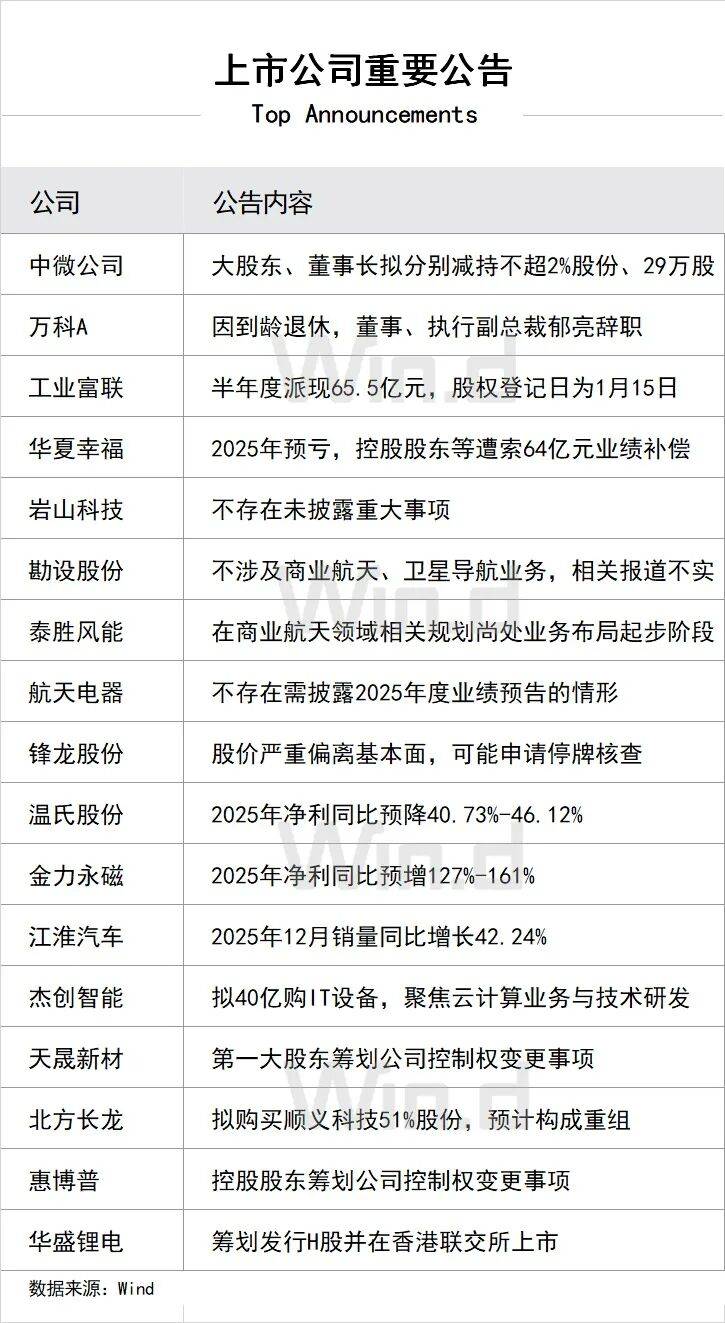
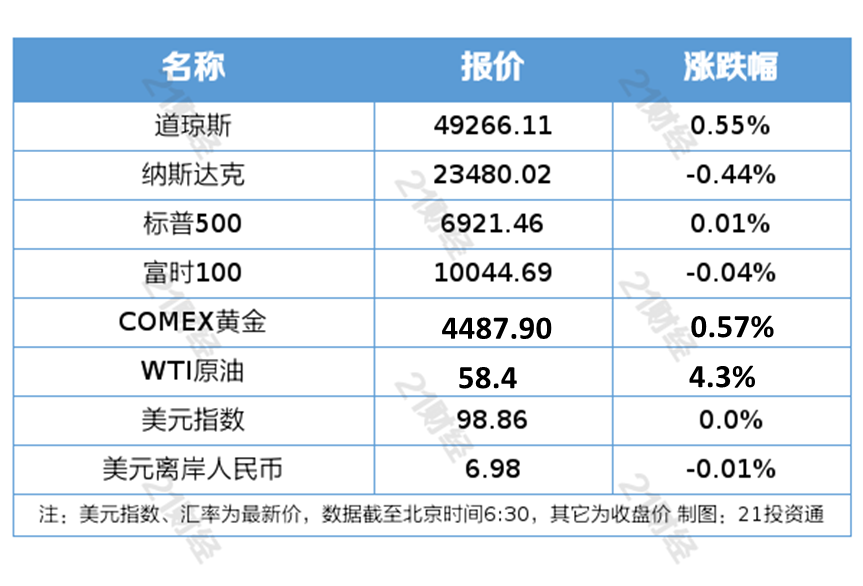
Group 1 - Two major energy state-owned enterprises, China Petroleum & Chemical Corporation and China Aviation Oil Group, announced a merger approved by the State Council, aiming to leverage advantages in refining integration and aviation fuel supply systems to reduce costs and promote high-quality development of the industry [1] - Vanke A announced that Yu Liang, a representative figure in the real estate sector, has retired after 35 years with the company, holding 739,490 shares valued at over 36 million yuan as of January 8 [1] - Gold has officially surpassed U.S. Treasury bonds for the first time in 30 years, becoming the largest reserve asset globally, with a value of $3.93 trillion compared to $3.88 trillion for U.S. Treasury bonds [1] Group 2 - The Ministry of Commerce held a press conference addressing recent hot topics, including the evaluation of Meta's $2 billion acquisition of AI platform Manus, which must comply with Chinese laws and regulations [2] - The Ministry of Finance expressed confidence in China's economic stability and invited the London Stock Exchange Group to deepen cooperation [2] - The U.S. government is pushing a bill to strengthen sanctions against Russia, which may affect countries like China, India, and Brazil in purchasing cheap Russian oil [2] Group 3 - Guangzhou has introduced a plan to build a strong advanced manufacturing city, focusing on five strategic industries including AI, semiconductors, and new energy [3] - The A-share market saw a slight decline, with the Shanghai Composite Index down 0.07% and the Shenzhen Component Index down 0.51%, while the total market turnover reached 2.83 trillion yuan [3] - The Hong Kong stock market experienced a drop, with the Hang Seng Index down 1.17%, while the "first global large model stock" Zhiyuan surged over 13% on its debut [3] Group 4 - The margin financing balance in the A-share market reached a historical high of 2.6047 trillion yuan, marking a significant increase of approximately 248 billion yuan in a single day [4] - Ping An Life announced its fourth stake increase in China Merchants Bank H-shares, holding 20% of the total share capital [4] - HSBC and Hang Seng Bank announced the approval of HSBC's proposal to privatize Hang Seng Bank, with shares expected to be delisted on January 27 [4] Group 5 - Bawang Tea Princess is considering an IPO in Hong Kong, with preliminary discussions with investment banks for a potential fundraising of several hundred million dollars [5] - Major announcements from listed companies include Vanke A's announcement of Yu Liang's resignation due to retirement and Industrial Fulian's semi-annual dividend distribution of 6.55 billion yuan [6] Group 6 - The market regulatory authority has warned major polysilicon companies against monopolistic practices, emphasizing the need for compliance in capacity management and pricing [7] - The Ministry of Industry and Information Technology held a meeting addressing irrational competition in the battery industry, calling for better capacity management [7] - The Chinese automotive market is experiencing a promotional wave at the start of the year, with several companies offering discounts to counteract the impact of new taxes on electric vehicles [7]
两大能源央企“巨无霸”官宣重组;商务部回应审查Meta收购Manus|南财早新闻
2 1 Shi Ji Jing Ji Bao Dao· 2026-01-08 23:22
Macro Economy - The Ministry of Commerce announced an evaluation of Meta's acquisition of the AI platform Manus, focusing on compliance with laws related to export control and foreign investment [2] - Guangzhou has introduced a plan to develop advanced manufacturing, emphasizing the cultivation of five strategic industries including AI, semiconductors, and new energy [2] - A meeting by the Ministry of Industry and Information Technology highlighted irrational competition in the battery industry, calling for capacity management and macroeconomic regulation to prevent overcapacity risks [2] - Recent geological surveys reported breakthroughs in chromium ore and unconventional oil and gas exploration in China [2] - The China Manned Space Engineering Office announced 86 new scientific projects for the space station in 2025, marking several firsts [2] Investment News - The A-share market's margin trading balance reached a historical high of 26,047 billion yuan, with a daily increase of approximately 24.8 billion yuan [4] - HSBC and Hang Seng Bank announced the approval of HSBC's privatization proposal for Hang Seng, with shares expected to be delisted on January 27 [4] - Gold has surpassed U.S. Treasury bonds to become the largest reserve asset globally, with a value of 3.93 trillion USD compared to 3.88 trillion USD for U.S. bonds [4] - The AI search market is experiencing significant changes, with Google Gemini's daily page views increasing by 24% to 56 million, while ChatGPT's views decreased by 9% to 178 million [4] - New stock issuance on the Shanghai and Shenzhen exchanges increased by 110% year-on-year, with first-day gains averaging 213% [5] Company Movements - A merger between China Petroleum & Chemical Corporation and China Aviation Oil Group has been approved, aiming to enhance supply chain efficiency and reduce costs [6] - Alibaba's Taobao Flash has stabilized at an average of 10 million non-food orders per day, with plans for increased investment to capture market share [6] - NIO plans to enter the Australian and New Zealand markets this year, with a launch in Thailand scheduled for March [6] - Industrial Fulian announced a cash dividend of 6.55 billion yuan for the first half of 2025, with the record date set for January 15, 2026 [7]





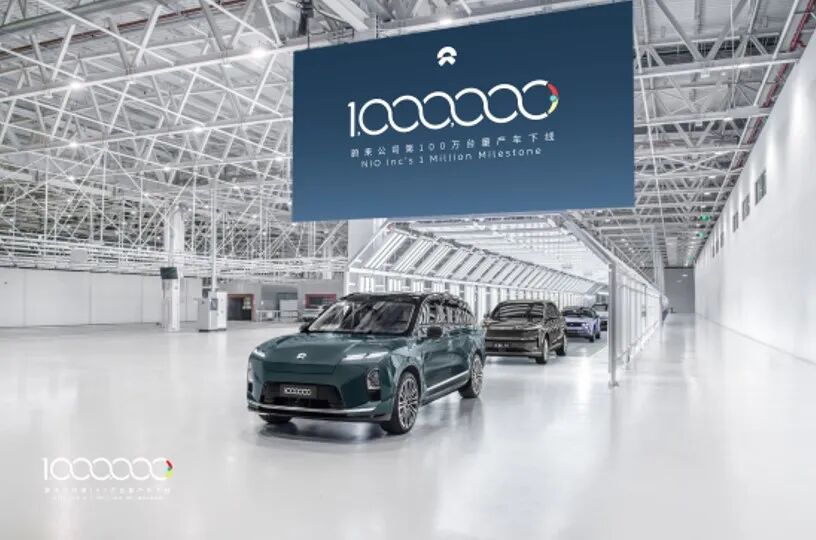
蔚来第100万辆量产车下线。公司供图
Zhong Guo Zheng Quan Bao - Zhong Zheng Wang· 2026-01-08 23:15
7 il 2 the first 9 VALUAL IQOOOOOO a and and Black it an 198 10 in in 图像 - AM The y 20 p n e S 3-1 ...
热门中概股多数上涨,纳斯达克中国金龙指数涨1.09%
Xin Lang Cai Jing· 2026-01-08 23:07
Group 1 - The Nasdaq Golden Dragon China Index increased by 1.09% on January 8 [1] - Key Chinese stocks saw significant gains, with GDS Holdings rising over 8% and Bilibili increasing by more than 6% [1] - Tencent Music and Alibaba both rose by over 5%, while other companies like Kingsoft Cloud and Xpeng Motors saw increases of over 3% [1] Group 2 - JD.com and Vipshop experienced gains of over 2%, while ZTO Express and Futu Holdings rose by more than 1% [1] - Ctrip and NetEase had slight increases, indicating a generally positive market sentiment for these companies [1] - Conversely, Baidu and Bawang Tea House fell by over 3%, with Manbang and NIO also experiencing declines of more than 1% [1]


