XPENG(09868)

Search documents
崔东树:8月乘用车零售增5% 轿车零售与SUV零售均较低
智通财经网· 2025-09-14 06:16
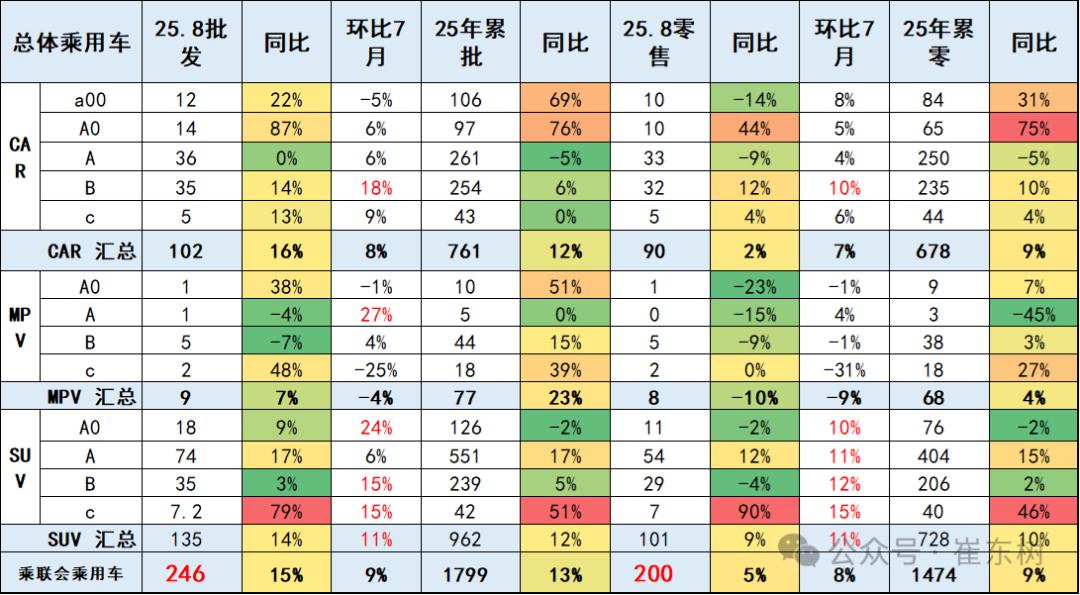
Core Insights - The retail growth of passenger cars in August 2025 is projected to be 5%, significantly lower than the 15% growth in wholesale [1] - The retail decline in August is attributed to high interest rates, limited rebates, and the suspension of subsidies [1] - C-class SUVs emerged as the main retail force in August, with strong performance in the high-end SUV segment [1] Passenger Car Market Overview - The overall wholesale volume for passenger cars in August 2025 reached 246,000 units, reflecting a 15% year-on-year increase [2] - The cumulative wholesale volume for the first eight months of 2025 is 1.799 million units, showing a 13% increase compared to the previous year [2] - Retail sales in August 2025 totaled 200,000 units, a 5% increase year-on-year, with a cumulative retail volume of 1.474 million units, up 9% [2] A00 Segment Performance - A00-class cars had a wholesale volume of 117,300 units in August 2025, with a year-on-year increase of 22% but a month-on-month decrease of 5% [5] - Retail sales for A00-class cars decreased by 14% year-on-year but increased by 8% month-on-month [5] - The cumulative wholesale volume for A00-class cars from January to August 2025 is 1.0575 million units, with a 69% year-on-year increase [5] A0 Segment Performance - A0-class cars achieved a wholesale volume of 140,000 units in August 2025, marking an 87% year-on-year increase and a 6% month-on-month increase [8] - Retail sales for A0-class cars increased by 44% year-on-year and by 5% month-on-month [8] - The cumulative wholesale volume for A0-class cars from January to August 2025 is 972,500 units, reflecting a 76% year-on-year increase [8] A-Class Segment Performance - A-class cars had a wholesale volume of 358,700 units in August 2025, with no year-on-year growth but a 6% month-on-month increase [13] - Retail sales for A-class cars decreased by 9% year-on-year but increased by 4% month-on-month [13] - The cumulative wholesale volume for A-class cars from January to August 2025 is 2.6134 million units, showing a 5% year-on-year decline [13] B-Class Segment Performance - B-class cars had a wholesale volume of 345,900 units in August 2025, reflecting a 14% year-on-year increase and an 18% month-on-month increase [19] - Retail sales for B-class cars increased by 12% year-on-year and by 10% month-on-month [19] - The cumulative wholesale volume for B-class cars from January to August 2025 is 2.5364 million units, with a 6% year-on-year increase [19] MPV Market Trends - B-class MPVs had a wholesale volume of 52,700 units in August 2025, a 7% year-on-year decline but a 4% month-on-month increase [23] - Retail sales for B-class MPVs decreased by 9% year-on-year and by 1% month-on-month [23] - C-class MPVs saw a wholesale volume of 21,200 units in August 2025, with a 48% year-on-year increase but a 25% month-on-month decline [23]



中国新能源汽车澳洲受指控,“维修权”究竟该归谁?
经济观察报· 2025-09-14 04:34
Core Viewpoint - The article discusses the challenges faced by consumers of electric vehicles (EVs) regarding high maintenance costs and limited repair options due to monopolistic practices by manufacturers, which contradicts the lower operational costs that attract consumers to EVs [1][6]. Group 1: Issues in EV Maintenance - Consumers are surprised by high maintenance and insurance costs for EVs, which are controlled by manufacturers, despite the lower operational costs that initially motivated their purchase [1][6]. - A report from the Australian Automotive Service and Repair Authority (AASRA) accuses five Chinese EV manufacturers of monopolistic practices by restricting access to independent repair services and withholding essential diagnostic software and technical data [2][8]. - The limited availability of authorized repair centers and parts leads to consumer frustration, as seen in the experience of an Australian industry worker who faced significant delays in repairs for a Chinese EV [2][3]. Group 2: Market Dynamics and Manufacturer Concerns - The high profit margins from after-sales services, particularly from the "three electric systems" (battery, motor, and electronic control), account for over 40% of EV manufacturers' after-sales profits, leading to reluctance in opening data to third-party repair services [6][8]. - The Chinese automotive industry faces scrutiny for its closed after-sales service model, which clashes with international regulations that require transparency and access for independent repair shops [9][10]. - The lack of penalties for Chinese EV manufacturers under existing regulations in China highlights a gap in enforcement compared to international standards, where violations can lead to significant fines [10][11]. Group 3: Future Directions and Recommendations - A balanced approach involving manufacturers, independent repair shops, regulatory bodies, and insurance companies is necessary to create a fair and competitive after-sales ecosystem for EVs [11]. - The article emphasizes the need for a shift towards a more open and competitive market that prioritizes consumer choice while ensuring safety and compliance with regulations [11].


8月乘用车零售销量历史新高 9月增速将放缓
Xi Niu Cai Jing· 2025-09-14 03:12
Group 1: Market Overview - In August 2025, the national retail sales of passenger cars reached 1.995 million units, a year-on-year increase of 4.6% and a month-on-month increase of 8.2% [2] - Cumulative retail sales from January to August 2025 totaled 14.741 million units, reflecting a year-on-year growth of 9.5% [2] - The August sales figure set a new historical high, surpassing the previous record of 1.92 million units in August 2023 by 3.7% [2] Group 2: New Energy Vehicles - In August, the production of new energy passenger vehicles reached 1.256 million units, a year-on-year increase of 21.0%, while wholesale sales were 1.282 million units, up 22.3% [4] - Retail sales of new energy vehicles in August amounted to 1.101 million units, marking a year-on-year increase of 7.5% [4] - From January to August, cumulative production of new energy vehicles was 8.853 million units, with wholesale and retail figures at 8.931 million and 7.556 million units, respectively, all showing significant year-on-year growth [4] Group 3: Market Structure and Brand Performance - In August, domestic brands achieved retail sales of 1.32 million units, a year-on-year increase of 9%, raising their market share to 65.7% [5] - BYD led the market with sales of 374,000 units in August, a slight increase of 0.15%, while its cumulative sales for the year reached 2.864 million units, up 23% [5] - New force brands like Leap Motor and Xpeng saw significant growth, with Leap Motor delivering 57,000 units (up over 88%) and Xpeng 38,000 units (up 168.66%) in August [6] Group 4: Future Outlook - The Secretary-General of the Passenger Car Market Information Association, Cui Dongshu, anticipates that while September may show high sales typical of the "Golden September" period, growth may slow due to last year's high base and subsidy control in some regions [6] - Factors such as new car launches at the Chengdu Auto Show, increased consumer purchasing enthusiasm, and ongoing policy support are expected to drive market growth [6]

雷军,已发起诉讼!央视起底“黑公关”:某些虚假测评能赚数百万元
Sou Hu Cai Jing· 2025-09-14 00:36
Core Viewpoint - The article highlights the issue of "black public relations" targeting several automotive companies, including Xiaomi, Xpeng, NIO, and Deep Blue, revealing the use of AI-generated false information and coordinated smear campaigns against these brands [2][9][14]. Group 1: Black Public Relations Tactics - The tactics employed against the automotive companies include AI-generated rumors, abusive comments towards car owners, and negative press releases before new car launches [2][9]. - Specific false claims, such as NIO cars catching fire and Xiaomi cars having malfunctioning doors after collisions, have been identified as fabricated [9][12]. - A significant number of social media accounts have been investigated, with hundreds of accounts collected as evidence and dozens of lawsuits initiated [3][9]. Group 2: Industry Response - A joint action by six government departments aims to combat black public relations and requires online platforms to strengthen their control over AI-generated content and malicious accounts [3][16]. - NIO's chairman, Li Bin, emphasized the low investment cost of black public relations compared to the high costs of automotive development, highlighting the need for stricter regulations against such practices [14][16]. - The article mentions that some individuals involved in black public relations have been apprehended, with one group reportedly having over 23 members and illicit funds exceeding 200 million yuan [14][16].


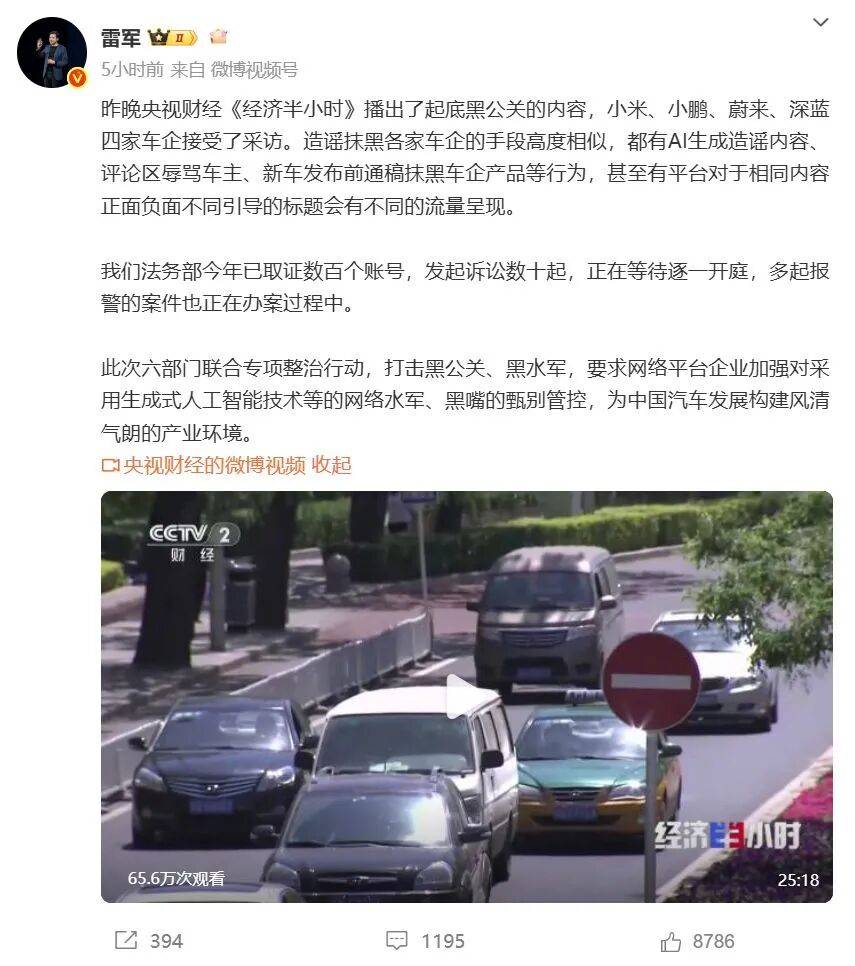
雷军已发起诉讼!央视起底“黑公关”:某些虚假测评能赚数百万元
Hua Xia Shi Bao· 2025-09-14 00:32
Core Viewpoint - The article discusses the rising issue of black public relations (PR) and malicious misinformation targeting automotive companies in China, particularly Xiaomi, Xiaopeng, NIO, and Deep Blue, highlighting the need for regulatory action and legal recourse against such practices [2][6][10]. Group 1: Black PR Tactics - Automotive companies are facing similar tactics of misinformation, including AI-generated false content, derogatory comments towards car owners, and negative press releases before new product launches [2][6]. - Specific instances of misinformation include false claims about NIO vehicles catching fire and Xiaomi cars being unable to open doors after a collision, which were later proven to be fabricated [6][8]. Group 2: Legal Actions and Regulatory Response - Xiaomi's legal department has collected evidence against hundreds of accounts and initiated dozens of lawsuits, with multiple cases currently under investigation [2]. - Xiaopeng Motors recently won a court case against a company that published defamatory content, resulting in a public apology and financial compensation [3]. - NIO and other companies have also reported similar issues and are actively participating in a joint regulatory effort to combat black PR and improve the industry’s public image [4][12]. Group 3: Industry Impact and Call for Action - The black PR issue is significantly disrupting market order and harming consumer rights, prompting companies to take legal action against malicious actors [4][10]. - Industry leaders emphasize the need for stronger regulatory measures and collaboration among industry associations to create a healthier public discourse around automotive brands [12].

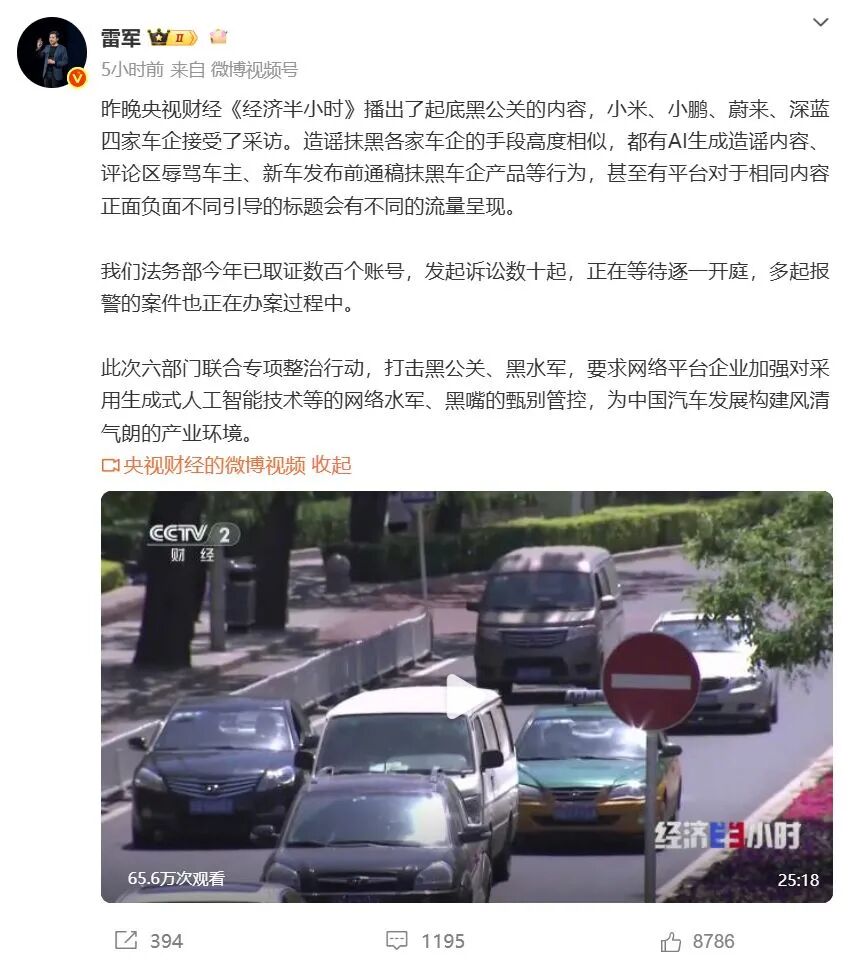
雷军:“黑公关”造谣抹黑各家车企,法务部已发起诉讼
Sou Hu Cai Jing· 2025-09-13 13:27
Core Viewpoint - The founder and CEO of Xiaomi, Lei Jun, highlighted the issue of black public relations targeting several automotive companies, including Xiaomi, Xiaopeng, NIO, and Deep Blue, emphasizing the use of AI-generated defamatory content and coordinated smear campaigns [1] Group 1: Black Public Relations Issue - Multiple automotive companies, including Xiaomi, have been targeted by similar smear tactics involving AI-generated false information and derogatory comments aimed at car owners [1] - The smear campaigns also included negative press releases prior to new product launches, indicating a systematic approach to discredit these companies [1] Group 2: Legal Actions and Regulatory Response - Xiaomi's legal department has collected evidence against hundreds of accounts and initiated dozens of lawsuits, with several cases currently under investigation [1] - A joint action by six government departments aims to combat black public relations and requires online platforms to enhance their identification and control over AI-generated content and malicious actors [1]
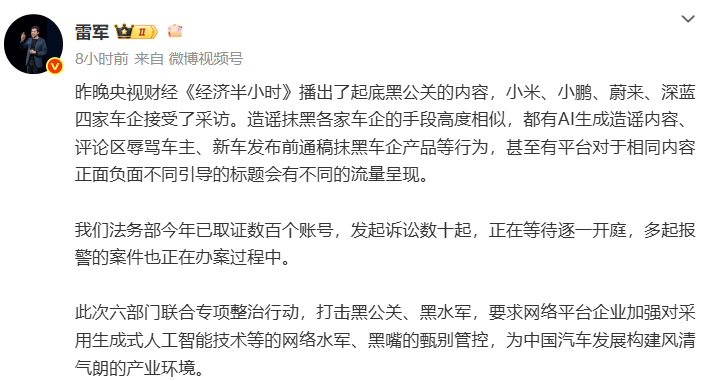
针对“黑公关”一事,雷军:今年已取证数百个账号
Bei Jing Ri Bao Ke Hu Duan· 2025-09-13 12:37
Core Viewpoint - The article discusses the issue of "black public relations" affecting several automotive companies, including Xiaomi, Xiaopeng, NIO, and Deep Blue, highlighting the use of AI-generated defamatory content and the ongoing legal actions taken against such practices [3]. Group 1: Black Public Relations Issue - Several automotive companies have been targeted by similar smear tactics, including AI-generated rumors and negative comments aimed at car owners [3]. - The legal department of the companies has collected evidence from hundreds of accounts and initiated dozens of lawsuits, with multiple cases currently under investigation [3]. Group 2: Regulatory Actions - A joint action by six government departments has been launched to combat black public relations and online manipulation, requiring internet platforms to enhance their identification and control of AI-generated content and malicious actors [3]. - The initiative aims to create a cleaner and more transparent environment for the development of the automotive industry in China [3].
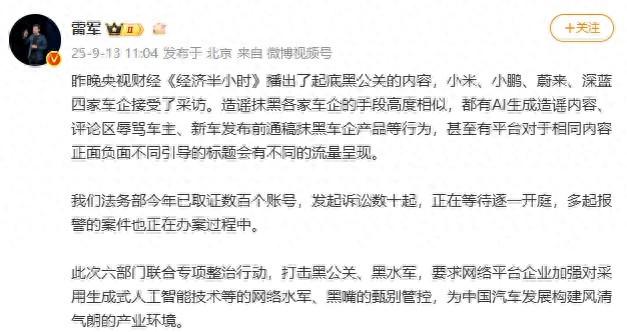
雷军:已发起诉讼!
Zheng Quan Shi Bao· 2025-09-13 12:15
Core Viewpoint - The report highlights the issue of black public relations (PR) in the automotive industry, focusing on companies like Xiaomi, Xpeng, NIO, and Deep Blue, and the measures being taken to combat this problem [2][4]. Group 1: Black PR and Legal Actions - Xiaomi's CEO Lei Jun stated that the legal department has collected evidence from hundreds of accounts and initiated dozens of lawsuits this year, with multiple cases currently under investigation [4]. - The report from CCTV Finance revealed that a car blogger with 600,000 followers charges between 18,000 yuan and 38,000 yuan for promotional videos, depending on their length [2]. - Lei Jun pointed out that the tactics used to defame various car companies are strikingly similar, including AI-generated false content and negative comments targeting car owners [2][4]. Group 2: Regulatory Measures - A joint action by six departments aims to crack down on black PR and online manipulation, urging internet platforms to enhance their identification and control of AI-generated content and malicious accounts [4]. - The initiative seeks to create a cleaner and more transparent environment for the development of the automotive industry in China [4].
雷军:已发起诉讼!
证券时报· 2025-09-13 12:12
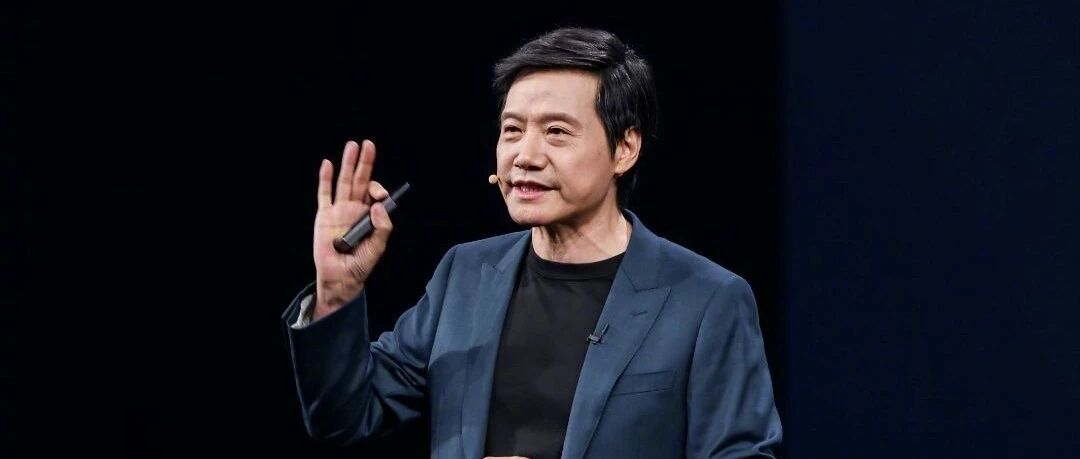
Core Viewpoint - The article discusses the issue of black public relations (PR) in the automotive industry, highlighting the actions taken by companies like Xiaomi, Xiaopeng, NIO, and Deep Blue against malicious online activities [1][3]. Group 1: Black PR and Its Impact - CCTV Finance reported on the prevalence of black PR tactics targeting automotive companies, including the use of AI-generated defamatory content and coordinated smear campaigns [3][4]. - A specific case mentioned is the incident involving Xiaomi's car, where a blogger falsely claimed that the car's door could not be opened after a collision, leading to legal actions against the involved parties [3][4]. Group 2: Legal Actions and Industry Response - Xiaomi's legal department has collected evidence from hundreds of accounts and initiated dozens of lawsuits this year, with multiple cases currently under investigation [4]. - Lei Jun, the founder of Xiaomi, emphasized the need for a clean and transparent industry environment, urging online platforms to strengthen their control over malicious actors using generative AI technology [4].
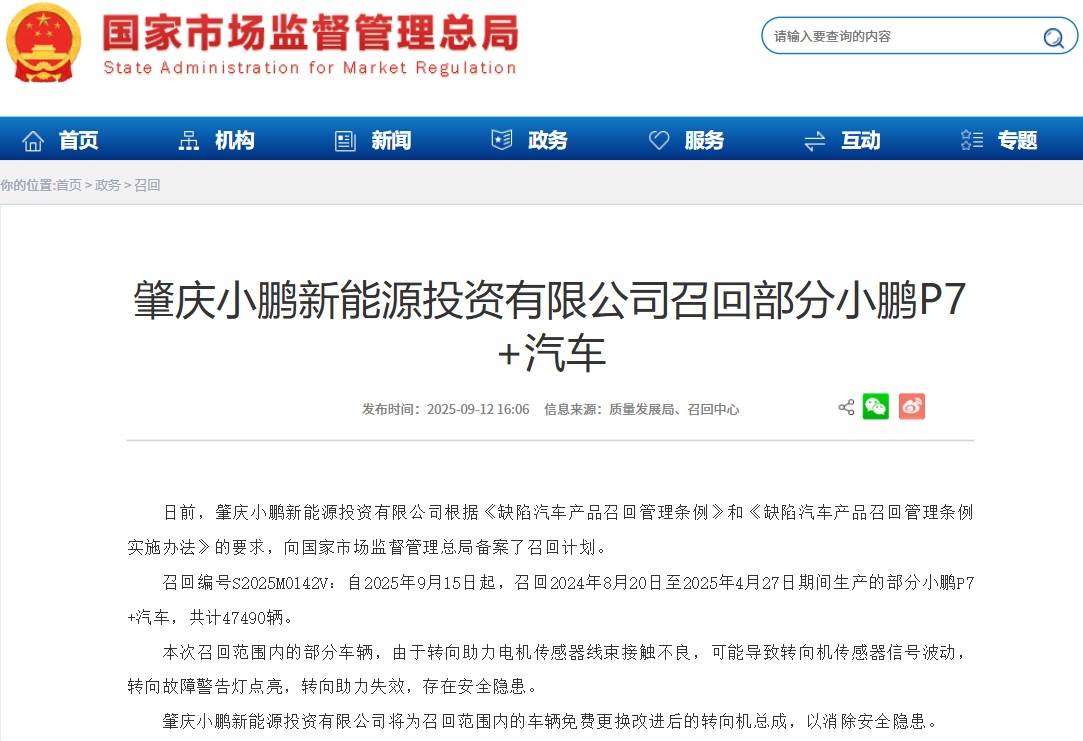
转向机故障终有说法!小鹏汽车主动召回部分P7+ 专家:车企应建立“用户运营+质量监控”双通道
Mei Ri Jing Ji Xin Wen· 2025-09-13 11:42
Core Viewpoint - Xiaopeng Motors has initiated a recall of 47,490 units of its P7+ model due to potential steering system failures caused by faulty sensor wiring, highlighting safety concerns in the electric vehicle sector [1][4][5]. Group 1: Recall Details - The recall affects P7+ vehicles produced between August 20, 2024, and April 27, 2025, due to issues with the steering assist motor sensor wiring that may lead to steering failures [1]. - Xiaopeng Motors will replace the affected steering assemblies free of charge to eliminate safety risks [1]. - The recall plan was filed with the National Market Supervision Administration, and the process took time due to the need for a comprehensive solution and sufficient replacement parts [4][5]. Group 2: Industry Context - The recall reflects broader issues in the electric vehicle industry, where there has been a tendency to prioritize technology and performance over quality and safety [5]. - Compared to traditional automakers, new energy vehicle companies like Xiaopeng are under greater scrutiny during recalls, as they often utilize advanced technologies that can introduce new types of failures [9]. - Despite the higher attention on new energy vehicle recalls, traditional fuel vehicles still dominate in terms of recall numbers, with 375.16 million vehicles recalled in the first half of 2025 compared to 152.9 million for electric vehicles [9][10]. Group 3: Expert Opinions - Experts suggest that proactive recalls, like that of Xiaopeng, demonstrate corporate responsibility, contrasting with companies that conceal defects [5]. - The challenges faced by new energy vehicle companies include high costs and complex technologies, necessitating a robust after-sales service system to manage recalls effectively [10]. - Recommendations include establishing a dual-channel approach for user feedback and quality monitoring to enhance defect assessment and recall processes [10].