
BABA(09988)

Search documents
阿里给千问装上了“手脚”
2 1 Shi Ji Jing Ji Bao Dao· 2026-01-15 06:08
Core Insights - Alibaba's Qwen has evolved to integrate with its entire ecosystem, launching over 400 new features that allow users to perform tasks across different applications with a single voice command [1][3] - The integration of Qwen with services like Taobao, Alipay, and Fliggy marks a significant step towards creating a comprehensive AI assistant capable of handling real-world tasks [1][4] Group 1: AI Functionality and User Experience - Qwen can understand natural language commands and execute a series of tasks such as finding merchants, selecting products, placing orders, and processing payments seamlessly [3][4] - The AI assistant can provide tailored shopping recommendations based on user preferences and historical transaction data, enhancing the shopping experience [3][6] - Qwen's ability to connect various services allows it to function as a personal assistant, capable of planning trips, booking hotels, and even simulating phone calls for reservations [4][5] Group 2: Technical Integration and Ecosystem Advantage - The integration of Qwen with existing Alibaba services like Gaode (Amap) has proven the technical feasibility of connecting AI models with application interfaces, creating a closed-loop service experience for users [5][6] - Qwen leverages real transaction data from Alibaba's ecosystem to train its models, providing a competitive edge over other AI assistants that rely on publicly available information [5][6] - The cross-business collaboration within Alibaba's ecosystem allows Qwen to evolve from a mere tool to a comprehensive "housekeeper" role, enhancing user engagement and experience [6]


千问:阿里第二次“无线战争”
乱翻书· 2026-01-15 05:55
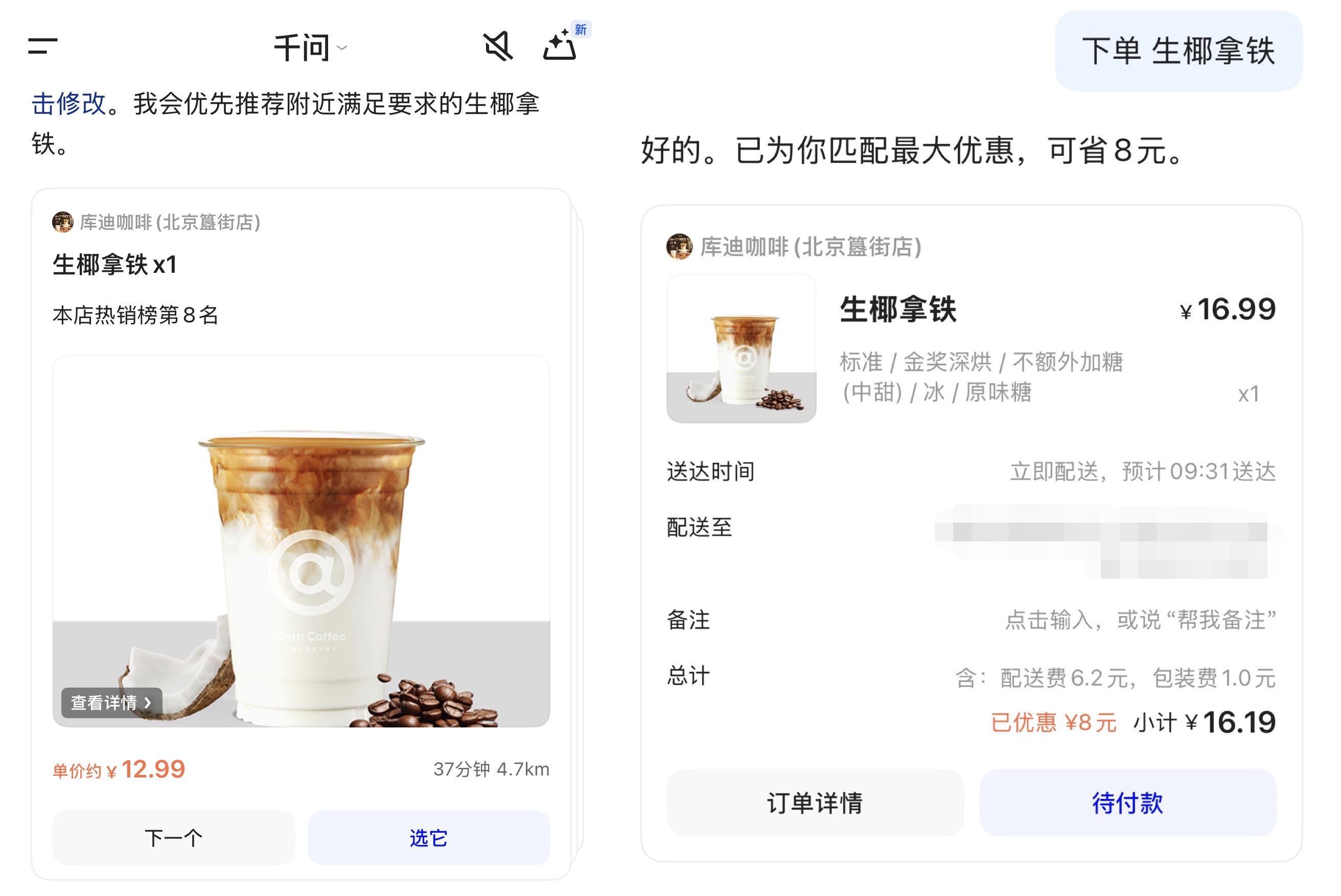
Core Viewpoint - The article discusses the evolution of user interaction with technology, particularly the transition from mobile-centric to AI-centric paradigms, exemplified by the shift from a humorous iPhone call in 2007 to the practical use of AI in everyday tasks by 2026 [5][12]. Group 1: Historical Context - The first iPhone call made by Steve Jobs in 2007 showcased the revolutionary communication capabilities of smartphones, marking the beginning of a new era in mobile technology [3]. - The act of ordering coffee has transformed in the AI era, now involving complex processes like semantic understanding and automated task execution, highlighting AI's capabilities [4]. Group 2: AI as a New Paradigm - The shift from mobile to AI represents a fundamental change in how digital experiences are designed, with a focus on future-oriented product development rather than merely optimizing existing services [7][12]. - The emergence of AI as a new entry point in technology suggests a limited window for companies to adapt and innovate [7]. Group 3: Competitive Strategies - Companies like Douyin and Pinduoduo utilize a strategy of focusing on a limited number of high-performing products to maximize user satisfaction, contrasting with traditional platforms that offer extensive choices [14]. - The article suggests that AI can streamline decision-making by providing users with optimal solutions rather than overwhelming them with options, similar to the strategies employed by Pinduoduo and Douyin [17][18]. Group 4: AI Product Development - Alibaba's Qianwen app exemplifies a comprehensive approach to AI, integrating various functionalities and resources to create a robust user experience [15]. - The app's development strategy includes rapid iterations and a focus on practical applications, such as AI-generated content and task automation, to engage users effectively [21]. Group 5: Future Implications - The article posits that AI's ability to generate content and perform tasks could redefine user interactions, moving away from reliance on user-generated content to direct solutions [19]. - The success of AI products will depend on the capabilities of underlying models, with Qianwen's flagship model being one of the most advanced currently available [18].
千问“吃掉”淘宝、支付宝等App,阿里巴巴Agent行动开始了
Tai Mei Ti A P P· 2026-01-15 05:43
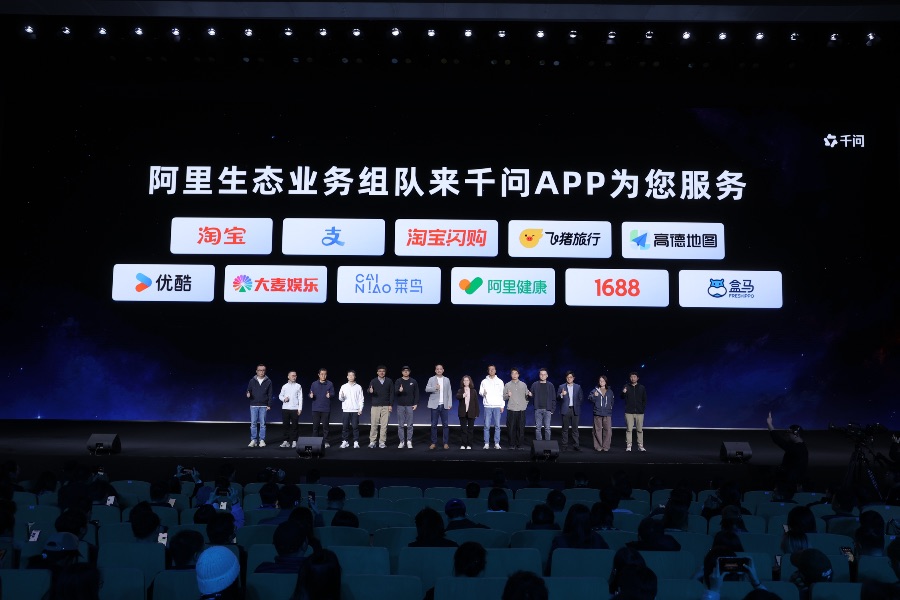
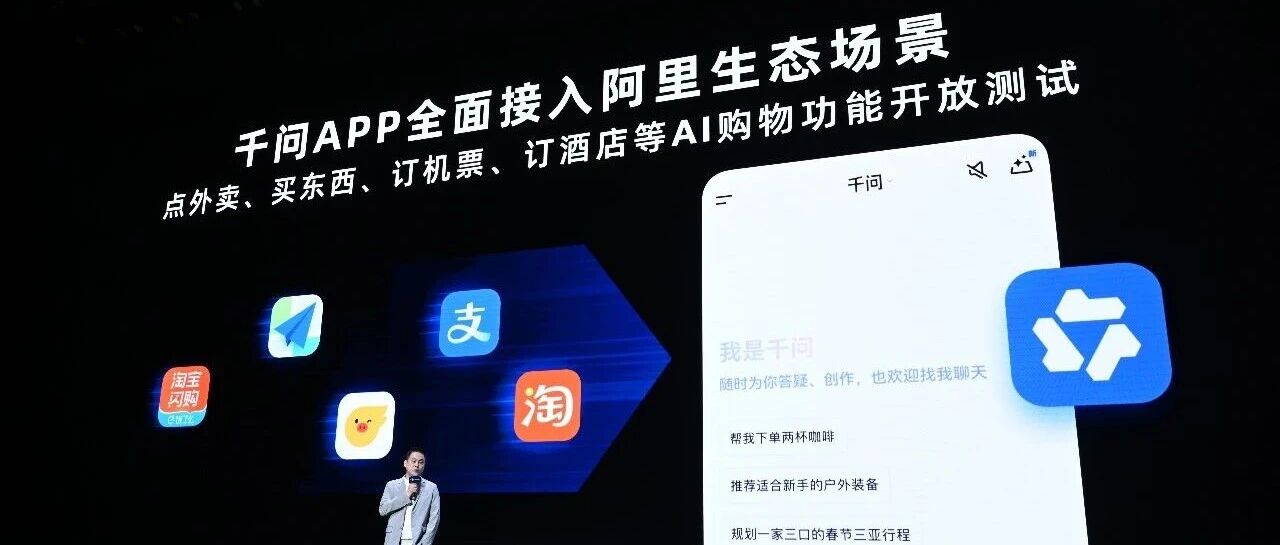
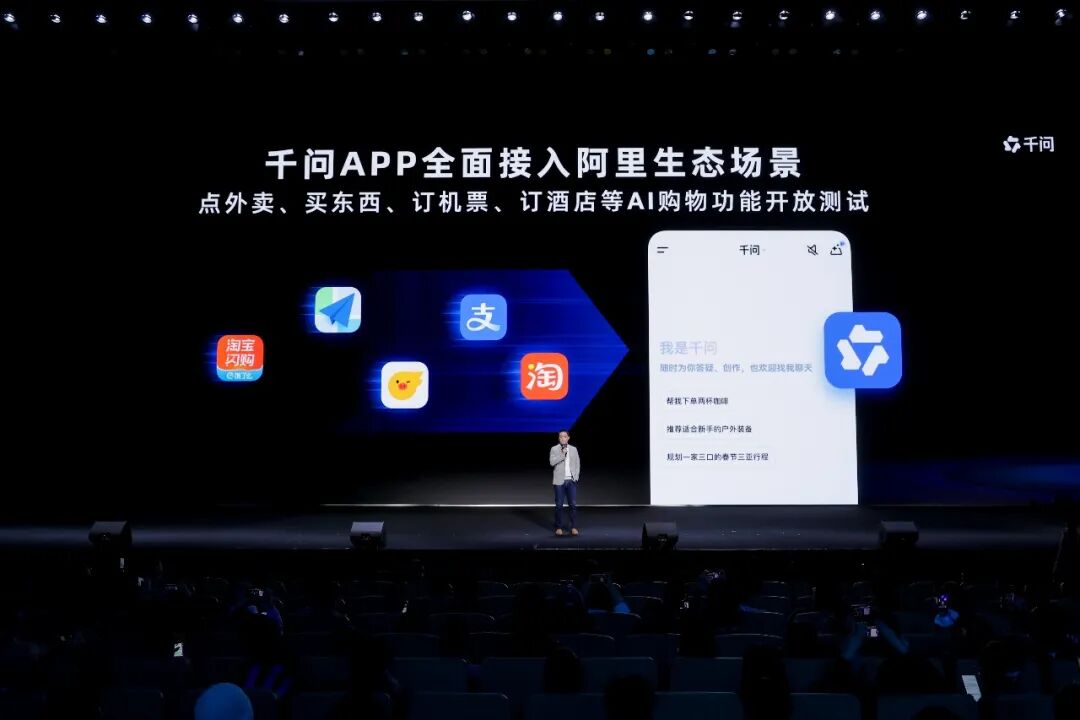
这显然是阿里巴巴预谋已久的一次集团行动。 1月15日,千问App宣布全面接入淘宝、支付宝、淘宝闪购、飞猪、高德等阿里生态业务,在全球首次 实现点外卖、买东西、订机票等AI购物功能,并向所有用户开放测试。此次升级将上线超400项AI办事 功能,让千问App成为全球首个能完成真实生活复杂任务的AI助手。 豆包手机走的是AI原生终端路线,豆包没有把Agent看做一个App,而是嵌入到操作系统和硬件层面, 让 AI 接管搜索、拍照、记录、导航、购物等行为,当然目前有一些安全法规等方面的限制。 从产品层面看,千问是阿里巴巴最"年轻"的应用,要调用淘宝、支付宝、高德等App的能力,相当于阿 里巴巴要将App的部分功能打碎,以原子化的方式为千问所用,这必然少不了集团的首肯和斡旋。发布 会现场,阿里系App各业务负责人也来到现场表示支持。 千问C端事业群总裁吴嘉表示,"AI在拥有超强大脑之后,开始长出了能够触达真实世界的手和脚,在 生活中实实在在地替用户'干活'。千问是第一个真正能帮你办事的AI,我们的独特优势在于'Qwen最强 模型'与'阿里最丰富生态'的结合。AI办事时代才刚刚开始,一些能力还在探索,我们将一步步迈进, ...
阿里千问上线“一句话点外卖”功能 和豆包助手走了不同路线
Nan Fang Du Shi Bao· 2026-01-15 05:24
Core Insights - Alibaba's C-end AI application "Qianwen" has launched a life assistant feature that allows users to order food, book flights, and hotels, and find restaurants through simple voice commands, currently integrated only within Alibaba's ecosystem and not with external platforms like Meituan [1][4]. Group 1: Functionality and User Experience - The "Qianwen" app can automatically call Taobao's flash purchase service to recommend nearby coffee shops based on user location when given a command to order coffee [1]. - For hotel and flight bookings, "Qianwen" integrates with Alibaba's Fliggy, providing users with multiple options based on price and comfort, allowing them to select suitable options through card links [4]. - The app has seen a 300% month-on-month increase in user inquiries for product recommendations since its launch two months ago, indicating a growing reliance on AI for shopping decisions [10]. Group 2: Technical Implementation - "Qianwen" utilizes an API-based approach for its AI capabilities, allowing for a smooth user experience by recognizing and analyzing user commands, retrieving inventory from partner platforms, and generating pre-orders for user confirmation [14]. - The AI agent only executes sensitive actions up to the "pending confirmation" stage, requiring users to review and confirm order details before payment, ensuring user oversight in transactions [14]. Group 3: Competitive Landscape - The mobile AI agent is seen as a crucial future traffic entry point, with competition intensifying among major model vendors and mobile manufacturers [14]. - ByteDance's Doubao mobile assistant, which uses screen reading and simulated operations, has gained significant attention but faces challenges in execution smoothness and privacy concerns, leading to temporary restrictions on its capabilities [15]. - The API interface approach has its own challenges, including limited availability of third-party app APIs and the need for extensive negotiations to access these interfaces, making it difficult for mobile AI agents to meet diverse user needs [15].
阿里巴巴宣布将千问接入淘宝等APP 迈出打造一站式AI平台的重大一步
Xin Lang Cai Jing· 2026-01-15 05:01
Core Insights - Alibaba Group announced a significant integration of its AI application, Qianwen, into its ecosystem of online shopping and travel services, aiming to create a one-stop AI platform for consumers [1] - The integration will include over 400 AI service functions and is currently undergoing public testing in China [1] - The company envisions that Qianwen's 100 million users will be able to complete shopping, hotel bookings, and payments through a single platform [1] Group 1 - The integration of Qianwen into platforms like Taobao, Alipay, and Fliggy marks a major step towards enhancing user experience [1] - Qianwen's unique advantage lies in the combination of the "Qwen model" and the "Alibaba ecosystem," indicating a strategic focus on AI capabilities [1] - The ambitious plan reflects a broader industry trend where companies like Amazon and Meta Platforms Inc. are exploring AI to assist users in completing real tasks [1] Group 2 - Qianwen was launched in November last year, with plans to gradually integrate various services to develop it into a comprehensive personal assistant [2] - A "Task Assistant" feature, currently available to invited users, aims to perform more complex tasks, such as making restaurant calls or creating web applications [2] - After testing, the Task Assistant feature will be made available to users for free [2]
千问App,全面接入!从“会聊天”到“能办事”
Zhong Guo Zheng Quan Bao· 2026-01-15 04:35
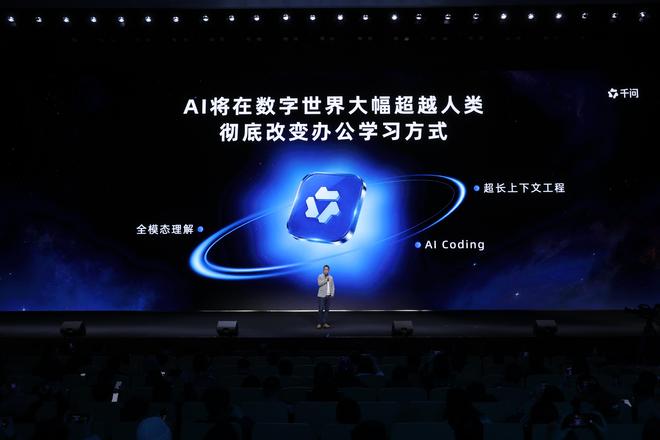
Core Insights - Alibaba's Qianwen App has integrated with various services within its ecosystem, enabling AI-driven shopping functionalities for users globally, marking a significant advancement in digital commerce [1] - The app has achieved over 100 million monthly active users within two months of launch, showcasing strong user engagement and demand for AI services [1] - Alibaba's VP emphasized the shift of AI from a supportive role to a leading role in digital tasks, predicting that 60%-70% of routine tasks will be executed by AI in the next two years [3] Group 1 - The Qianwen App allows users to perform multiple tasks such as ordering food, shopping, and booking travel seamlessly, enhancing user experience by reducing the need to switch between different applications [1] - The app's capabilities are driven by three key advancements: improved coding ability, full-modal understanding, and extended context processing, which are essential for handling complex tasks [3] - The industry consensus is that Artificial General Intelligence (AGI) is evolving from chat-based interactions to more agent-like functionalities, enabling closer integration with the physical world and enhancing productivity [3] Group 2 - Google is also focusing on AI shopping assistants, collaborating with major retailers to develop its chatbot, Gemini, into a virtual shopping assistant [3] - At the NRF annual meeting, Google, along with companies like Shopify and Walmart, introduced a new open standard called Universal Commerce Protocol (UCP) aimed at streamlining the shopping process by eliminating the need for separate connections with different agents [4]

谷歌、OpenAI在探索的新赛点,被阿里率先实现了
Feng Huang Wang· 2026-01-15 04:35
Core Insights - Alibaba is one of the few global players that possesses both a "top-tier open-source model" and a "national-level consumer service ecosystem," enabling real-world interactions and tasks through AI [2][10] - The launch of the Qianwen App marks a significant shift from AI as an information tool to an autonomous agent capable of executing complex tasks, entering the "service era" of AI [4][9] Group 1: Product Launch and Features - The Qianwen App integrates over 400 AI service functions, allowing users to perform various tasks such as shopping, ordering food, and booking hotels through natural language commands [2][8] - The app can provide personalized recommendations based on user intent, utilizing Alibaba's extensive product database and review system to enhance user experience [8][11] - Qianwen also connects with Alipay to offer 50 public service functions, streamlining processes like visa applications and healthcare registration [8][9] Group 2: Market Position and Growth - Since its launch, Qianwen has become the fastest-growing AI application globally, surpassing 100 million monthly active users, particularly among students and white-collar workers [5][15] - Alibaba's comprehensive AI capabilities position it as the leading investment target in China's AI sector, with analysts highlighting its competitive advantages in AI infrastructure and model development [5][15] - The stock price of Alibaba has increased by over 10% following the announcement of Qianwen, reflecting positive market sentiment towards its AI initiatives [15] Group 3: Competitive Landscape - Alibaba's unique combination of a powerful AI model and a rich consumer service ecosystem sets it apart from global competitors like Google and OpenAI, who struggle with real-world application [10][11] - The launch of Qianwen signifies a paradigm shift in the AI industry, where the focus is moving from algorithmic capabilities to the richness of application scenarios and ecosystem integration [12][14] - As the first to successfully implement large-scale real-world task execution, Alibaba is leading the charge in the AI industry's evolution from theoretical discussions to practical applications [9][14]
刚刚,喝到了千问APP给我点的奶茶
机器之心· 2026-01-15 04:31
Core Insights - The development of intelligent agents has accelerated significantly at the beginning of 2026, with notable advancements from companies like Anthropic and Alibaba [1][11] - Anthropic's release of Cowork aims to revolutionize the workplace by integrating large models with intelligent agent capabilities for general users, not just programmers [1] - Alibaba's Qianwen App has introduced a new AI Agent feature called "Task Assistant," which integrates with Alibaba's ecosystem to offer over 400 new functionalities for free [2][4] Group 1 - The Qianwen App can automate tasks such as ordering food by simply stating preferences, streamlining the entire process from selection to payment [5][20] - Users can consult the Task Assistant for shopping decisions, which can provide recommendations and direct links to payment [7][9] - The Task Assistant has demonstrated its ability to handle complex tasks like multi-brand group purchases, significantly reducing the time and effort required for users [12][18] Group 2 - The Task Assistant can create detailed travel plans, such as a two-day itinerary for a trip to Weihai, by analyzing user needs and sourcing information from various platforms [22][27] - The assistant integrates with Alibaba's services, allowing users to navigate, book tickets, and manage travel logistics seamlessly [29] - The interaction model has shifted from dialogue with a large model to task delegation to an intelligent agent, marking a significant evolution in user experience [31] Group 3 - Qianwen's Task Assistant is built on a new universal agent system that enhances task execution efficiency and accuracy through a hierarchical planning approach [33] - The system allows for continuous learning and improvement, enabling agents to refine their capabilities based on past experiences [35] - The integration of AI coding capabilities allows the assistant to autonomously generate tools for less common tasks, enhancing its functionality [36] Group 4 - The AI sector is entering a product explosion phase, with new offerings from various companies, including Anthropic and OpenAI, indicating a rapid evolution in intelligent agent applications [38] - Qianwen's launch is compared to the introduction of the first iPhone, suggesting it could signify a transformative moment in the AI landscape [38] - The shift from AI as a distant entity to a practical assistant in daily tasks represents a pivotal change in human-machine interaction [38]

AI开始“动手”了,全世界第一个带头的是阿里千问
量子位· 2026-01-15 04:26
梦瑶 发自 凹非寺 量子位 | 公众号 QbitAI 当代打工人「酷刑」四件套,看看友友们有没有躺枪: 一点外卖就贼纠结还嫌麻烦、Excel一开人先宕机,攻略越做头越大、买东西还总能买贵…… (光想想都脑仁疼.jpg 但好消息是:可以不用疼了,因为现在AI,已经能《直接上手》替我们把这些糟心事儿给办了。 这!是AI帮我选购下单的27杯霸王茶姬,一键魂穿 「淘宝闪购」 ,优惠券自动加好,顺手帮我小薅一把~ 还有这!AI帮我制定了一份超详细的南京旅游攻略,自动直达 「飞猪」 页面,订机酒、订门票全都一把掐! 不卖关子,这就是 阿里千问App 的新能力,一口气上线400多项新功能,把 淘宝、闪购、支付宝、飞猪 这些阿里自家生态全给安排进来 了。 四天前,谷歌宣布了与沃尔玛等零售商的AI购物合作计划,但目前尚未上线。 而阿里领先于谷歌,目前已成为了全球首个大规模开放"搜索-决策-支付-履约"全链路AI功能的科技公司。 不用在N个App间来回跳转,说一句指令,就能在手机里把点外卖、买东西、订机票、订酒店,甚至是办签证、查社保这些事儿轻松搞定。 Qwen模型+最全阿里生态强强联手,AI终于不只会聊天,也开始有模有样地替人 ...

阿里巴巴-W(09988.HK):3QFY26前瞻:关注云出海表现 电商受宏观影响表现疲软
Ge Long Hui· 2026-01-15 04:19
Core Viewpoint - Alibaba is expected to release its Q3 FY2026 financial report, with projected revenue growth of 2% year-on-year and an adjusted EBITA margin of 11.7% [1][3]. Group 1: Financial Performance - For Q3 FY2026, Alibaba's revenue is anticipated to reach 285.8 billion yuan, reflecting a 2% year-on-year increase, with international digital commerce and cloud intelligence revenues growing by 8% and 35% respectively [2][3]. - The adjusted EBITA for Q3 FY2026 is projected at 33.5 billion yuan, down 39% year-on-year, with the EBITA margin decreasing by 7.8 percentage points due to ongoing investments in flash sales and increased computational demands from AI applications [4][6]. Group 2: Cloud Business - Alibaba's cloud revenue is expected to accelerate in Q3 FY2026, with a year-on-year growth of 35%, while maintaining a stable EBITA margin [4][5]. - The Qwen model has been adopted as the technical foundation for Singapore's national AI project, which is expected to enhance Alibaba's market share overseas, with anticipated higher growth rates in international cloud revenue compared to domestic [4]. Group 3: E-commerce Performance - The gross merchandise volume (GMV) for Alibaba's e-commerce segment is projected to increase by 3% year-on-year in Q3 FY2026, impacted by a weak retail environment [6]. - The company is expected to incur losses of approximately 20-25 billion yuan in its instant retail segment, with plans to prioritize market share and increase investments in the coming quarters [6]. Group 4: Other Business Segments - The AIDC segment is expected to continue its revenue decline, with losses remaining similar to the previous quarter, while the overall losses for other segments are projected to exceed 7 billion yuan due to increased spending on model training and AI applications [6]. Group 5: Investment Recommendations - Revenue forecasts for FY2026 to FY2028 have been slightly adjusted to 1.0307 trillion, 1.1494 trillion, and 1.2751 trillion yuan, reflecting a decrease of 1.5%, 2.8%, and 1.4% respectively, primarily due to a weak consumer environment [3][6]. - Adjusted net profit forecasts for FY2026 to FY2028 are revised to 101.6 billion, 135.4 billion, and 165.5 billion yuan, with reductions of 9.1%, 6.6%, and 3.7% respectively, driven by weaker-than-expected e-commerce revenue and higher-than-expected costs related to AI applications [3][6].