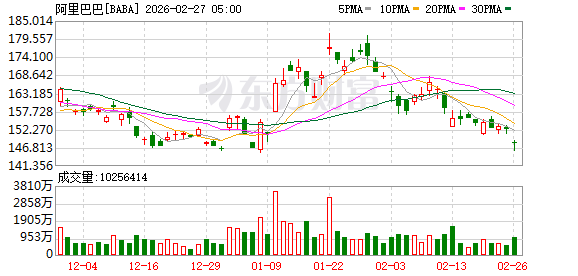
BABA(09988)

Search documents
Top 3 Consumer Stocks That Are Preparing To Pump In Q1 - Alibaba Gr Hldgs (NYSE:BABA), Genuine Parts (NYSE:GPC)
Benzinga· 2026-02-27 11:36
Core Insights - The consumer discretionary sector has identified oversold stocks, presenting potential investment opportunities in undervalued companies [1]. Group 1: Oversold Stocks - The Relative Strength Index (RSI) is a momentum indicator that helps assess stock performance by comparing price strength on up days versus down days [1]. - Stocks are considered oversold when their RSI is below 30, indicating potential buying opportunities [1]. - A list of major oversold stocks in the consumer discretionary sector includes Genuine Parts Co (NYSE:GPC), Alibaba Group Holding Ltd – ADR (NYSE:BABA), and Papa John's International Inc (NASDAQ:PZZA) [2][3].


50亿红包AI战之后:谁在退场,谁能留下
3 6 Ke· 2026-02-27 11:20
Core Insights - The AI competition during the recent Spring Festival has significantly transformed social interactions, with major companies investing heavily to capture market share and educate users about AI [1][2][3] - The total investment from major players like Tencent, Alibaba, ByteDance, and Baidu exceeded 5 billion yuan, surpassing previous years' spending on similar promotional activities [1][2] Group 1: User Engagement and Market Dynamics - The engagement on social media platforms surged, with over 371 trending topics related to AI models on Weibo, accumulating 12.7 billion views and nearly 26.9 million interactions during the festival [1] - The rapid adoption of AI applications was evident, with significant increases in app downloads and user activity, such as the "Yuanbao" app reaching a peak of 1.2 billion in WeChat index within hours of its launch [3][5] - The competition among major players led to a dramatic increase in daily active users (DAU), with "Doubao" achieving 145 million, "Qianwen" at 73.5 million, and "Yuanbao" at 40.5 million during the festival [11] Group 2: Competitive Strategies and Outcomes - Companies aimed to replicate the success of past mobile payment wars by heavily subsidizing user acquisition, but the challenge remains whether these users will continue to engage post-subsidy [2][21] - "Qianwen" emerged as a dark horse, experiencing a 940% increase in user participation after launching its "Spring Festival Treat Plan," which significantly boosted its DAU [15][16] - "Doubao" maintained its lead due to effective marketing strategies, leveraging its parent company ByteDance's ecosystem for user acquisition and retention [15][16] Group 3: Industry Trends and Future Outlook - The AI industry is witnessing a clear bifurcation, with large companies focusing on user engagement and ecosystem integration, while smaller firms concentrate on technological advancements and B2B services [22][23] - The competition is expected to shift from casual interactions to solving real user needs, as companies like "Qianwen" and "Antifor" integrate AI into practical applications like e-commerce and health services [23][25] - The high operational costs associated with AI applications pose a challenge for sustainability, as the industry grapples with the balance between user growth and profitability [25]

2月净流入约905亿元 频现单日百亿流入逆势抄底科网股
Xin Lang Cai Jing· 2026-02-27 11:10
Core Viewpoint - In February, southbound capital inflow into Hong Kong stocks reached approximately 90.575 billion HKD, marking a three-month high despite a volatile market, indicating strong investor interest in certain sectors [2][4]. Group 1: Capital Inflow Data - Southbound capital recorded a net inflow of about 90.575 billion HKD in February, with an average daily inflow of 6.469 billion HKD, a nearly 90% increase compared to January [2]. - There were five trading days where the net buying exceeded 10 billion HKD, setting new records [4]. - The technology sector attracted the most capital, with a net inflow of 39.372 billion HKD, while the non-essential consumer sector saw 21.196 billion HKD [5][6]. Group 2: Sector Performance - The technology sector has seen a cumulative inflow of over 66 billion HKD in the first two months of the year, despite the Hang Seng Technology Index declining nearly 7% [6]. - Non-essential consumer goods also received significant attention, with a total inflow exceeding 38 billion HKD in the first two months [6]. - The materials sector, particularly non-ferrous resources, faced continuous selling pressure, with a cumulative outflow of nearly 20 billion HKD over the past two months [6]. Group 3: Individual Stock Performance - Tencent Holdings (0700.HK) was the top net buyer with 24.453 billion HKD, followed by Xiaomi Group (1810.HK) with 7.337 billion HKD and Alibaba (9988.HK) with 3.473 billion HKD [7][9]. - Conversely, Zijin Mining (2899.HK) experienced the largest net sell-off at 3.520 billion HKD, followed by SMIC (981.HK) at 2.867 billion HKD [8][9]. - Notable trends include continued inflows into Meituan (3690.HK) and Xiaomi Group despite their respective declines of 16.51% and 1.69% in February [9].





恒生指数上涨0.95% 恒生科技指数上涨0.56%
Xin Lang Cai Jing· 2026-02-27 11:07
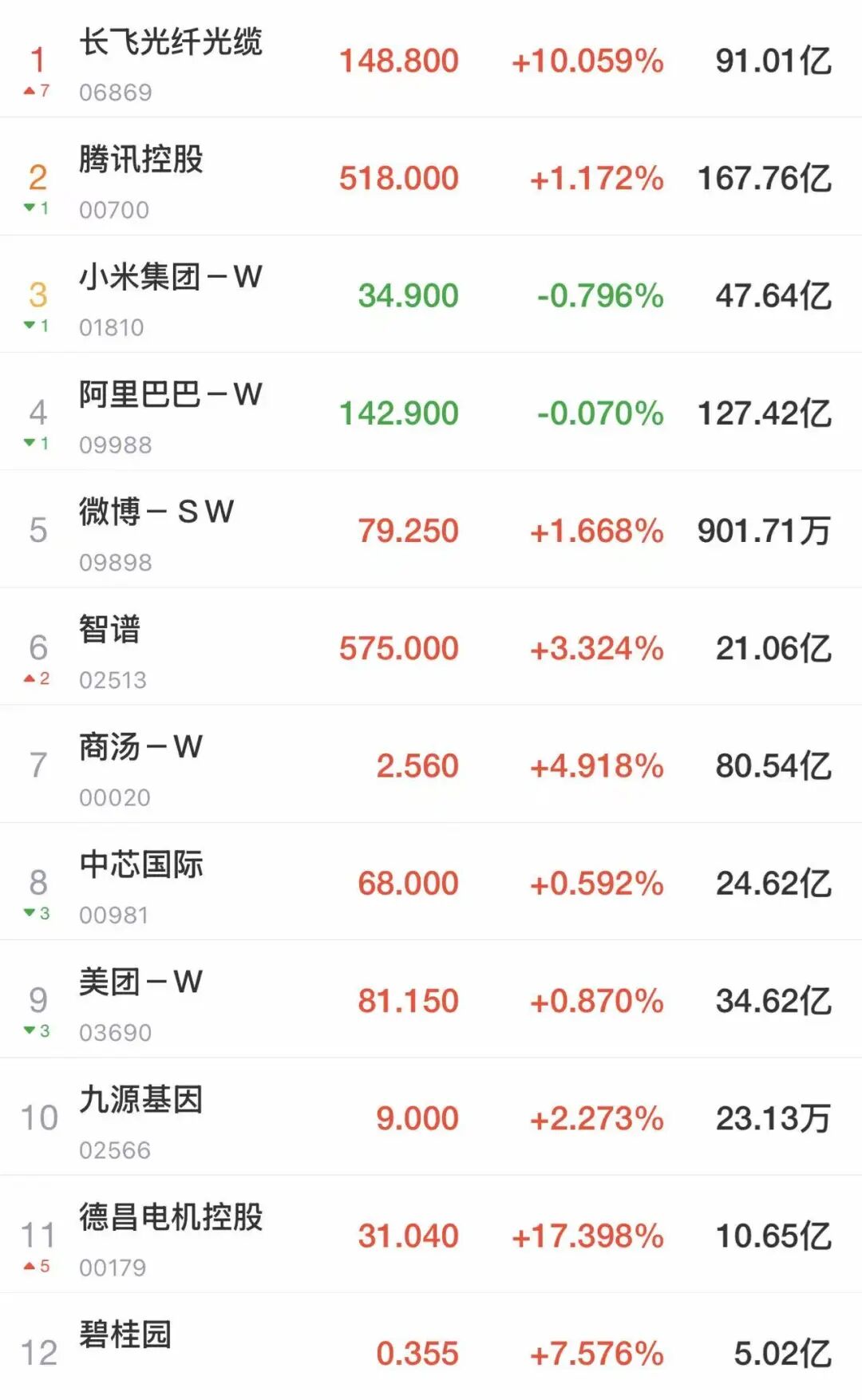
Market Performance - The Hang Seng Index rose by 0.95% to close at 26,630.54 points, while the Hang Seng Tech Index increased by 0.56% to 5,137.84 points, and the National Enterprises Index gained 0.51% to 8,859.49 points [1] - The main board recorded a trading volume exceeding 288.4 billion HKD, with a net inflow of over 14.9 billion HKD in the southbound trading of Stock Connect [1] Sector Performance - Sectors such as gold, biomedicine, technology, coal, high-speed rail infrastructure, oil and gas, and telecommunications generally saw gains, while sectors like non-ferrous metals, commercial aerospace, banking, and real estate experienced mixed results [1] - New consumption, chips, new energy vehicle companies, brokerages, and aerospace sectors mostly faced declines [1] Individual Stock Movements - Notable stock movements included Xiaomi Group down by 0.80%, China Ping An up by 0.22%, SenseTime up by 4.92%, and SMIC up by 0.59% [1] - Tencent Holdings rose by 1.17% with a trading volume exceeding 16.7 billion HKD, while Alibaba fell by 0.07% with a trading volume over 12.7 billion HKD [2] - Longi Green Energy surged by 10.06% with a trading volume of 9.1 billion HKD [2]


智通港股通活跃成交|2月27日



智通财经网· 2026-02-27 11:02
Core Insights - On February 27, 2026, the top three stocks by trading volume in the Southbound Stock Connect were Yingfu Fund (02800), Tencent Holdings (00700), and Alibaba-W (09988), with trading volumes of 6.861 billion, 2.764 billion, and 2.741 billion respectively [1] - In the Southbound Stock Connect of the Shenzhen-Hong Kong Stock Connect, Tencent Holdings (00700), Alibaba-W (09988), and Southern Hang Seng Technology (03033) were the top three stocks, with trading volumes of 2.883 billion, 2.415 billion, and 2.051 billion respectively [1] Southbound Stock Connect (Hong Kong) - The top active stocks by trading volume included: - Yingfu Fund (02800) with a trading amount of 6.861 billion and a net buying amount of +6.777 billion - Tencent Holdings (00700) with a trading amount of 2.764 billion and a net buying amount of +0.236 billion - Alibaba-W (09988) with a trading amount of 2.741 billion and a net selling amount of -0.193 billion - Other notable stocks included Changfei Optical Fiber (06869) and Hang Seng China Enterprises (02828) with trading amounts of 2.335 billion and 1.817 billion respectively [2] Southbound Stock Connect (Shenzhen) - The top active stocks by trading volume included: - Tencent Holdings (00700) with a trading amount of 2.883 billion and a net buying amount of +0.996 billion - Alibaba-W (09988) with a trading amount of 2.415 billion and a net buying amount of +0.531 billion - Southern Hang Seng Technology (03033) with a trading amount of 2.051 billion and a net buying amount of +2.039 billion - Other notable stocks included Yingfu Fund (02800) and Changfei Optical Fiber (06869) with trading amounts of 1.613 billion and 1.220 billion respectively [2]
7.9元/月,AI进入“百亿补贴”时代
Guan Cha Zhe Wang· 2026-02-27 10:46
Core Insights - Alibaba's Qianwen APP launched a "Spring Festival 3 billion free order" campaign, leveraging a 25 yuan no-threshold coupon, resulting in a 940% increase in daily active users (DAU) to 73.52 million [1] - The competition in the AI programming environment (IDE) escalated as Alibaba Cloud launched a Coding Plan starting at 7.9 yuan/month, significantly undercutting industry prices and bundling several flagship domestic programming models [1] - Major internet companies are applying their "hundred billion subsidy" strategies from e-commerce and delivery sectors to the AI model market, indicating a fierce competition that has transitioned from consumer to business environments [1] Industry Developments - The Coding Plan for domestic AI models faced a price increase, with Zhizhu's GLM Coding Plan experiencing a 30% price hike and the overseas version increasing by 60%-100% shortly after its launch [2] - Following the GLM-5 release, Zhizhu acknowledged operational errors, including insufficient transparency and slow rollout, leading to user dissatisfaction and refund requests [3] - Alibaba Cloud became the first to offer GLM-5 cloud services, incorporating it into a low-cost package, directly challenging Zhizhu's pricing strategy [3][4] Competitive Landscape - The rapid decline in pricing for AI coding services is evident, with Alibaba's Coding Plan at 7.9 yuan/month compared to competitors' higher rates, showcasing aggressive market positioning [4] - Other major players like Baidu and ByteDance have also entered the AI coding space with competitive pricing, indicating a collective strategy to capture the developer market [4][5] - The focus on coding tools is driven by the high token consumption of programmers, making them a lucrative target for AI service providers [5] Structural Challenges - The reliance on open-source models like GLM-5 raises concerns about pricing power shifting to those with computational resources, highlighting a structural contradiction in the industry [7]

三大指数全红
Xin Lang Cai Jing· 2026-02-27 09:55
Market Performance - The Hang Seng Index closed up 0.95%, the Hang Seng Tech Index rose 0.56%, and the National Enterprises Index increased by 0.51% on February 27, with net inflows from southbound funds exceeding 14 billion HKD [1] - Major tech stocks such as Tencent, Meituan, JD.com, and Baidu saw gains, with Alibaba initially rising over 1.7% before closing down [3] Sector Performance - The optical communication, steel, non-ferrous metals, rare earth, and innovative pharmaceuticals sectors experienced significant gains, with Longi Green Energy rising nearly 10%, Maanshan Iron & Steel up 6.6%, and Kintor Pharmaceutical increasing by 6% [3] Stock Highlights - Longi Green Energy: 148.800 HKD (+10.059%), market cap 9.101 billion HKD [4] - Tencent Holdings: 518.000 HKD (+1.172%), market cap 16.776 billion HKD [4] - Meituan: 81.150 HKD (+0.870%), market cap 3.462 billion HKD [5] IPO Market Outlook - Multiple institutions are optimistic about the Hong Kong IPO market for 2026, with UBS predicting a financing scale exceeding 300 billion HKD and around 150-200 listings [6] - Huatai Securities estimates the main board IPO financing scale at approximately 310 billion HKD with about 100 new companies [7] - Deloitte forecasts around 160 new listings with a financing amount of no less than 300 billion HKD [8] - PwC anticipates about 150 new listings with total fundraising between 320 billion to 350 billion HKD, potentially ranking among the top three globally [8] Valuation Insights - Analysts from China Merchants Securities indicate that the current valuation of the Hong Kong tech sector is at a historical low, suggesting that the sector is undervalued in the context of the AI development and technology-driven growth [8]

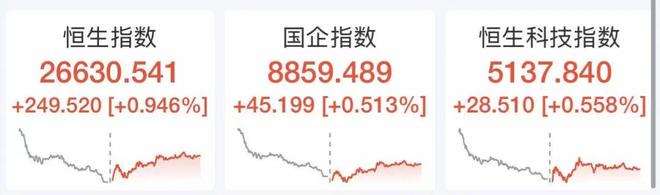
三大指数全红,腾讯、美团、百度等齐涨,碧桂园涨超7%,南向资金净流入超140亿港元!后市怎么走?丨港股收盘
Mei Ri Jing Ji Xin Wen· 2026-02-27 08:53
Market Performance - The Hang Seng Index closed up 0.95%, the Hang Seng Tech Index rose 0.56%, and the State-Owned Enterprises Index increased by 0.51% on February 27 [1] - Southbound capital saw a net inflow exceeding 14 billion HKD [1] Stock Movements - Major tech companies such as Tencent rose over 1%, while Meituan, JD.com, and Baidu also experienced gains; Alibaba initially increased by over 1.7% but fell back towards the end of trading [1] - Specific sectors like optical communication, steel, non-ferrous metals, rare earths, and innovative pharmaceuticals saw significant increases, with Longi Green Energy rising nearly 10%, Maanshan Iron & Steel up 6.6%, and Kweichow Moutai increasing by 6% [1] IPO Market Outlook - Multiple institutions express optimism regarding the Hong Kong IPO market for 2026, with UBS predicting a financing scale exceeding 300 billion HKD and around 150-200 listings [3] - Huatai Securities estimates the main board IPO financing scale at approximately 310 billion HKD with about 100 new companies [3] - Deloitte forecasts around 160 new listings in the Hong Kong market with a financing amount not less than 300 billion HKD [3] - PwC anticipates about 150 new listings with total fundraising between 320 billion to 350 billion HKD, potentially ranking among the top three globally [3] Technology Sector Valuation - Analysts from China Merchants Securities indicate that the current valuation of the Hong Kong tech sector has dropped to historical lows, suggesting that the sector is significantly undervalued in the context of the AI development and technology-driven national strategy [3]

国都港股操作导航:每日投资策略:港股高开低收,恒指收跌 384 点-20260227
Guodu Securities Hongkong· 2026-02-27 05:52
Group 1: Market Overview - The Hang Seng Index opened high but closed down 384 points, or 1.44%, at 26,381 points, with significant selling pressure observed throughout the day [3][4] - The market saw a total turnover of 25.93 billion HKD, with net outflow from northbound trading amounting to 736.6 million HKD [3] Group 2: Company Performance - NIO's subsidiary GeniTech secured over 2.257 billion RMB in investment from Chinese investors, maintaining a 62.7% controlling stake post-transaction [12] - New World Department Store China reported a 3.93 times increase in interim profit to 15.327 million HKD, despite a 12.44% decrease in revenue to 536 million HKD [13] - Chow Tai Fook Jewelry Group announced a 15.26% increase in interim profit to 1.334 billion HKD, with revenue rising 5.9% to 12.827 billion HKD [14] - Baidu reported a 65.68% decrease in net profit to 1.782 billion RMB for the fourth quarter, with total revenue declining 4.06% to 32.74 billion RMB [15] Group 3: Industry Developments - Hong Kong Exchanges and Clearing is exploring the development of a multi-asset tokenization platform, contingent on technological capabilities and market demand [7] - The People's Bank of China issued a notice to enhance the management of RMB cross-border interbank financing, aiming to improve transparency and stability in offshore RMB liquidity [10] - The Hong Kong government plans to inject 10 billion HKD into the Hong Kong-Shenzhen Innovation and Technology Park and the New Territories Science Park to bolster public-private partnerships [9]



在巴展发布AI眼镜 千问将面向全球推出多款AI硬件产品
Bei Jing Shang Bao· 2026-02-27 05:19
Core Insights - Alibaba's personal AI assistant "Qianwen" is officially entering the AI hardware market, planning to launch multiple AI hardware products globally this year [2] Group 1: Product Launch - Qianwen will unveil its first AI glasses at the 2026 Mobile World Congress in Barcelona, with online and offline reservations starting on March 2 [2] - In addition to AI glasses, Qianwen plans to release AI rings and AI headphones later this year for global distribution [2] Group 2: User Engagement - During the Spring Festival, users placed nearly 200 million orders using the "one-sentence order" feature on Qianwen, with over 130 million total users [2] - The "Spring Festival Treat Plan" attracted 14.75 million users on its first day, with participation rising to nearly 20 million the following day [2] - Daily active users (DAU) reached 73.52 million on February 7, up from 7.07 million the day before the event [2]