
POP MART(09992)

Search documents
9月4日午间涨停分析
Xin Lang Cai Jing· 2025-09-04 03:48
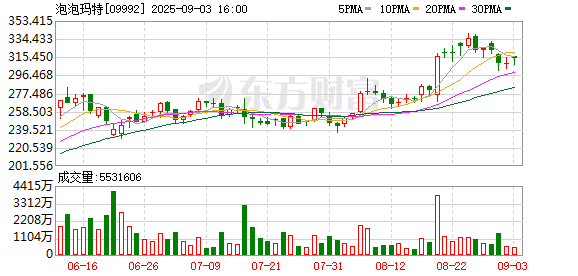
Group 1: Company Developments - Anzheng Fashion focuses on mid-to-high-end brand fashion, achieving a turnaround in net profit year-on-year in the first half of the year [2] - Zhengye Technology's subsidiary has mastered the "silver-free process" for heterojunction battery technology [2] - Meibang Clothing, a leading domestic leisure apparel brand, is set to enhance its production capacity for foldable screens significantly by 2025 [3] Group 2: Industry Trends - The State Council emphasizes the acceleration of service consumption and new consumption growth points [2] - The demand for data centers and energy storage is expected to grow rapidly [4] - The National Development and Reform Commission is promoting the development of the biopharmaceutical industry among central enterprises [4] Group 3: Market Movements - Companies like Tongrun Equipment and China Ruilin are experiencing stock price increases, with Tongrun Equipment's stock rising for two consecutive days [4] - The international gold price has reached a historical high, benefiting companies like Eurasia Group, which collaborates with well-known gold brands [4] - The stock price of Pop Mart has reached a new historical high, indicating strong market interest in IP economy [5]



智通港股通资金流向统计(T+2)|9月4日
智通财经网· 2025-09-03 23:33
Key Points - On September 1, Alibaba-W (09988), Yingfu Fund (02800), and Tencent Holdings (00700) ranked the top three in net inflow of southbound funds, with net inflows of 4.885 billion, 1.542 billion, and 1.231 billion respectively [1] - Xiaomi Group-W (01810), Pop Mart (09992), and China Mobile (00941) ranked the top three in net outflow of southbound funds, with net outflows of -1.037 billion, -0.914 billion, and -0.583 billion respectively [1] - In terms of net inflow ratio, K Wah International (00173), Luk Fook Holdings (00590), and Wanwu Cloud (02602) led the market with ratios of 58.98%, 54.37%, and 52.86% respectively [1] - In terms of net outflow ratio, Kington Services (09666), Kangji Medical (09997), and CRRC Corporation (01766) led the market with ratios of -58.60%, -53.01%, and -50.23% respectively [1] Top 10 Net Inflow Stocks - Alibaba-W (09988) had a net inflow of 4.885 billion, representing a 8.89% increase in closing price to 137.100 [2] - Yingfu Fund (02800) had a net inflow of 1.542 billion, with a 9.04% increase in closing price to 26.160 [2] - Tencent Holdings (00700) had a net inflow of 1.231 billion, with a 12.74% increase in closing price to 605.000 [2] - BYD Company (01211) had a net inflow of 1.030 billion, with a 8.50% decrease in closing price to 108.400 [2] - Ping An Insurance (02318) had a net inflow of 0.681 billion, with a 24.98% increase in closing price to 56.650 [2] Top 10 Net Outflow Stocks - Xiaomi Group-W (01810) had a net outflow of -1.037 billion, with a 12.74% decrease in closing price to 54.000 [2] - Pop Mart (09992) had a net outflow of -0.914 billion, with a 20.69% decrease in closing price to 308.400 [2] - China Mobile (00941) had a net outflow of -0.583 billion, with a 26.96% decrease in closing price to 86.550 [2] - Kuaishou-W (01024) had a net outflow of -0.459 billion, with an 11.26% decrease in closing price to 73.600 [2] - Meituan-W (03690) had a net outflow of -0.455 billion, with a 3.38% increase in closing price to 103.000 [2] Top 10 Net Inflow Ratios - K Wah International (00173) had a net inflow ratio of 58.98%, with a net inflow of 2.9435 million and a closing price of 2.210 [3] - Luk Fook Holdings (00590) had a net inflow ratio of 54.37%, with a net inflow of 35.9339 million and a closing price of 24.780 [3] - Wanwu Cloud (02602) had a net inflow ratio of 52.86%, with a net inflow of 12.1550 million and a closing price of 25.620 [3] - Zhong Chuang Hang (03931) had a net inflow ratio of 47.21%, with a net inflow of 6.21928 million and a closing price of 21.840 [3]





下一个LABUBU是星星人?
第一财经· 2025-09-03 15:29
Core Viewpoint - The article discusses the success of the LABUBU IP under Pop Mart and emphasizes the need for sustainable development and diversification of product lines to avoid over-reliance on a single IP [2]. Group 1: LABUBU's Success and Challenges - LABUBU is a highly successful phenomenon in the collectible toy market, but its dominance raises concerns about sustainability and the need for Pop Mart to develop other IPs [2]. - The long-term shortage of LABUBU led to counterfeit products entering the market, and while production capacity has been increased, there have been complaints about product quality that need to be addressed [2]. - The popularity of the mini LABUBU continues to drive sales, but it is essential for Pop Mart to innovate and develop new IPs alongside LABUBU to maintain market relevance [2][3]. Group 2: Potential New IPs - The Star People IP under Pop Mart shows significant potential to become the next successful product line, particularly with the recent "Good Dream Meteorological Bureau" series gaining popularity [4]. - There has been a noticeable increase in demand for Star People products, leading to stock shortages in stores, similar to the sales model of LABUBU [4]. - The secondary market for Star People products has seen rapid price fluctuations, with hidden variants selling for over 700 yuan, indicating strong market interest and potential for growth [5]. Group 3: Growth Metrics - Star People has quickly entered the billion-yuan IP club, generating 390 million yuan in revenue in the first half of the year [5]. - Other IPs like HACIPUPU and CRYBABY have also shown impressive growth, with revenue increases of 249.6% and 248.7% respectively in the first half of the year, highlighting the potential for new IPs to achieve similar success [5].

迷你LABUBU价格炒至翻倍
Di Yi Cai Jing· 2025-09-03 10:37
Core Insights - The recent launch of the "mini LABUBU" dolls by Pop Mart has generated significant consumer interest, with products selling out within one minute online [1] - The retail price for a single "mini LABUBU" doll is 79 yuan, while a complete set is priced at 1106 yuan [1] - Over 580,000 consumers added the "mini LABUBU" to their carts at launch, and nearly 1.5 million viewers tuned into the live stream event [1] Sales Performance - The "mini LABUBU" dolls were sold out across major online platforms such as JD and Taobao shortly after their release [1] - In physical stores, consumers are experiencing long wait times to pick up their pre-ordered dolls, as there is no stock available for immediate purchase [1] Secondary Market Trends - The popularity of the "mini LABUBU" has led to a surge in prices on secondary markets, with complete sets now selling for as high as 2450 yuan [1] - The increased demand has made it challenging for consumers to acquire the dolls even at inflated prices [1]
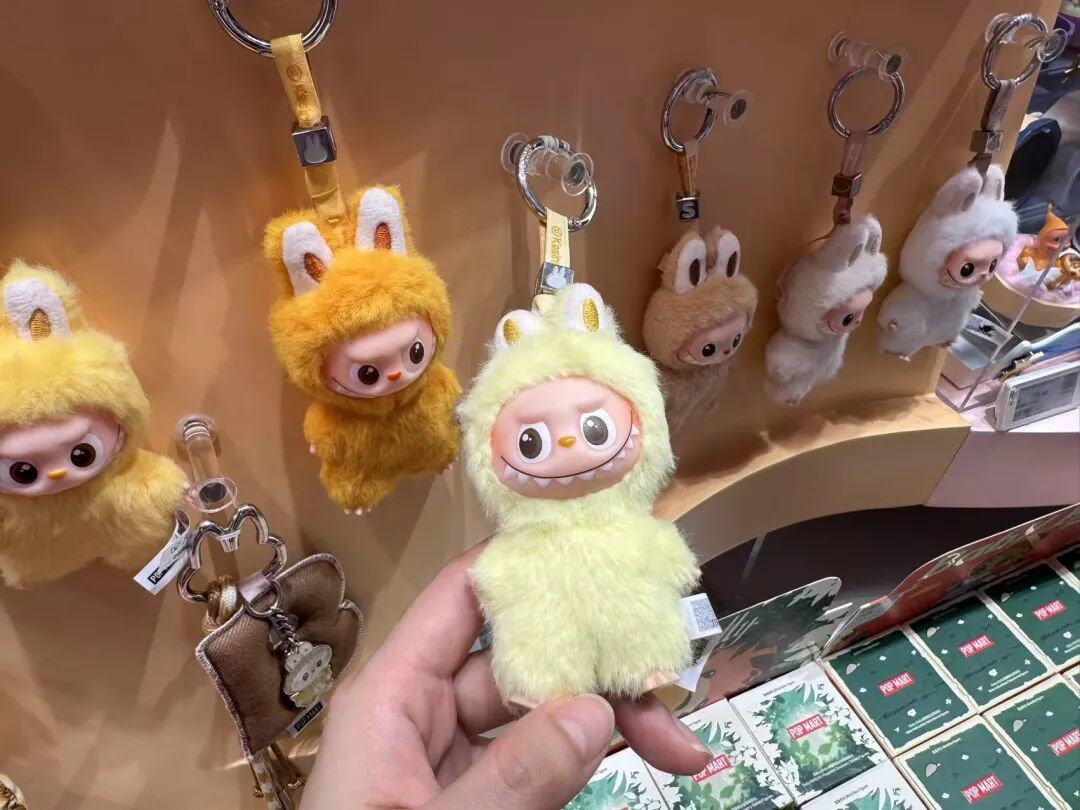
迷你LABUBU价格炒至翻倍
第一财经· 2025-09-03 10:26
Core Insights - The popularity of the "mini LABUBU" dolls has led to a rapid sell-out online, with over 58,000 people adding them to their carts at launch, and nearly 150,000 viewers in the live stream within 10 minutes [2] - The retail price for a single "mini LABUBU" doll is 79 yuan, while a set of 14 regular and 1 hidden doll is priced at 1,106 yuan [2] - The resale market for "mini LABUBU" has seen prices soar, with a set now reaching 2,450 yuan, indicating high demand and limited supply [3] Sales Performance - The "mini LABUBU" dolls sold out within one minute of their online release, highlighting the strong consumer interest [2] - In-store experiences show long lines of customers waiting to pick up their online orders, with no stock available for immediate purchase [2] Market Trends - The surge in demand for "mini LABUBU" dolls has resulted in increased prices on second-hand platforms, reflecting a growing trend in collectible toy markets [3]

北水动向|北水成交净买入55.08亿 阿里巴巴(09988)再获内资加仓 芯片股继续遭抛售
智通财经网· 2025-09-03 10:00
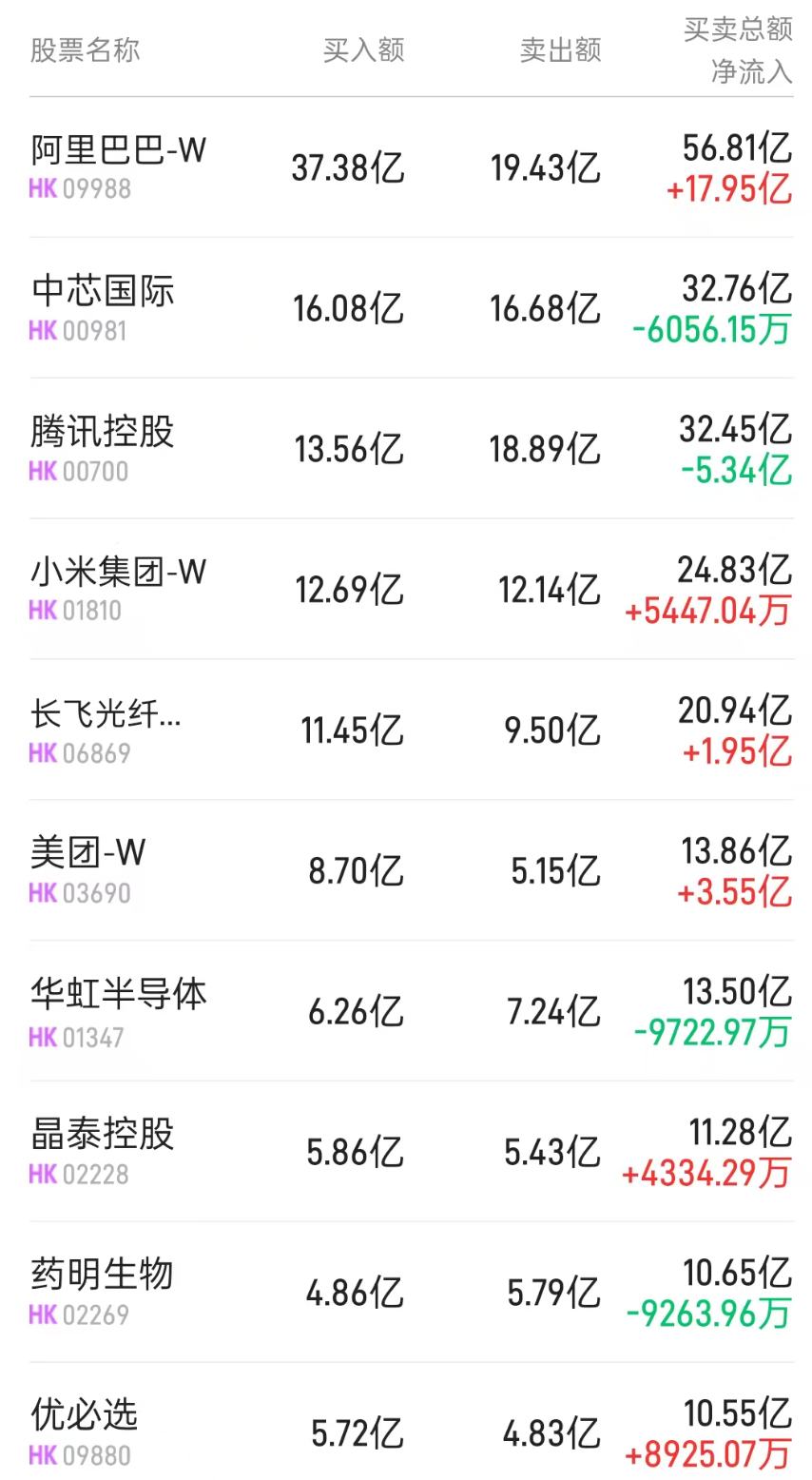
Summary of Key Points Core Viewpoint - The Hong Kong stock market experienced significant net inflows from northbound capital, totaling HKD 55.08 billion on September 3, with notable net purchases in stocks like Alibaba, Xiaomi, and Meituan, while Tencent and Huahong Semiconductor faced substantial net sell-offs [1][4]. Group 1: Northbound Capital Inflows - Northbound capital recorded a net purchase of HKD 55.08 billion, with HKD 32.02 billion from the Shanghai Stock Connect and HKD 23.07 billion from the Shenzhen Stock Connect [1]. - Alibaba (09988) was the top net buyer, with a net inflow of HKD 17.95 billion, followed by Xiaomi (01810) and Meituan (03690) [2][4]. Group 2: Individual Stock Performance - Alibaba-W (09988) saw a net purchase of HKD 24.88 billion, driven by positive earnings expectations and management's optimistic outlook on core business growth [4][5]. - Xiaomi Group-W (01810) received a net inflow of HKD 6.98 billion, attributed to exceeding delivery targets and strong order demand [5]. - Meituan-W (03690) had a net inflow of HKD 5.7 billion, reflecting ongoing investor interest [8]. Group 3: Notable Sell-offs - Tencent (00700) faced a net sell-off of HKD 4.71 billion, with analysts expressing concerns over its recent performance despite a significant stock price increase [7][8]. - Huahong Semiconductor (01347) experienced a net outflow of HKD 4.05 billion, indicating a shift in investor sentiment [6][8]. Group 4: Market Insights - The market is witnessing a trend where companies like Alibaba and Xiaomi are gaining traction due to strong operational performance and growth prospects, while others like Tencent are facing scrutiny due to overvaluation concerns [6][7].

迷你LABUBU价格炒至翻倍但部分旧款亏本出售,下一个LABUBU是星星人?
Di Yi Cai Jing· 2025-09-03 09:08
Core Insights - The recent launch of the mini LABUBU dolls has created a significant demand, leading to rapid sellouts and inflated prices in the secondary market [2][3][4] - While the new mini LABUBU dolls are highly sought after, older models have seen a drastic price drop, with some being sold at or below original prices [4][5] - Quality issues have emerged with the new LABUBU dolls, prompting consumer complaints and returns, raising concerns about the brand's quality control [6][7][8] Pricing Dynamics - The mini LABUBU dolls are priced at 79 yuan each and 1106 yuan for a set, with over 580,000 items added to shopping carts at launch [2] - In the secondary market, the price for a set of mini LABUBU has surged to 2450 yuan, reflecting the high demand [3] - Older LABUBU models, which previously sold for 300-3000 yuan, are now being listed at original prices or even at a loss, indicating a market correction [4][5] Quality Concerns - Consumers have reported various quality issues with the new LABUBU dolls, including stability problems and cosmetic defects [6][7] - Complaints have been made regarding the inconsistency in quality across different production batches, raising questions about manufacturing practices [7] - The company has a policy for handling defective products, allowing for exchanges or refunds, but some consumers feel their rights are not adequately protected [7][8] Financial Performance - The company reported a revenue of 138.8 billion yuan for the first half of the year, a year-on-year increase of 204.4%, with net profit rising by 362.8% [9][10] - The LABUBU series accounted for 48.1 billion yuan in revenue, representing 34.7% of total sales [10] - The company aims for a revenue target of 200 billion yuan for the year, with potential to exceed 300 billion yuan [10] Future Prospects - The company is exploring new IPs to sustain growth, as reliance on LABUBU may not be sustainable long-term [10][11] - The "Star People" IP is gaining traction and may become the next big hit, with recent releases showing strong sales performance [11][12] - Other IPs like HACIPUPU and CRYBABY are also experiencing rapid growth, indicating a healthy diversification strategy [12]
2025年中国消费市场趋势洞察报告v1.0
Sou Hu Cai Jing· 2025-09-03 05:10
Group 1 - The core of new consumption is not about "new brands" but the ability to "solve user tasks," emphasizing the importance of understanding consumers' real needs in specific scenarios [2][3] - The rise of new consumption represents a "user task revolution," where consumers actively choose products that meet their life, emotional, and social needs, moving towards a more equal and human-centered market [1][11] - The traditional business logic is being disrupted by a "task-oriented" approach, with significant growth in both the affluent Z generation and the rational, potential-rich lower-tier markets [3][4] Group 2 - The "value-for-money revolution" is shifting from low-price competition to a consensus on quality-price balance, with brands like 瑞幸 and 名创优品 providing high-quality products at reasonable prices [4][5] - The rise of "self-care consumption" is notable, with 73% of urban white-collar workers willing to spend on long-term psychological satisfaction rather than short-term material possession [5][6] - The integration of domestic products with cultural elements is becoming a significant trend, as brands convey cultural identity through their offerings, enhancing consumer engagement [6][12] Group 3 - The report highlights the structural imbalance in resource allocation, with traditional brands focusing on high-end urban markets while neglecting the potential of lower-tier markets, which now account for 59% of total consumption [24][25] - Traditional businesses face challenges due to a product-centric approach that fails to address the complex task needs of consumers, leading to the rise of new brands that offer comprehensive solutions [25][28] - The shift towards digital channels is evident, with online shopping growing at 10.8% while traditional retail experiences a decline, indicating a need for businesses to adapt to immediate consumer demands [28][29]



大摩:升泡泡玛特目标价至382港元 评级“增持”
Zhi Tong Cai Jing· 2025-09-03 03:34
Core Viewpoint - Morgan Stanley has raised the target price for Pop Mart (09992) by 5%, from HKD 365 to HKD 382, due to a 15% increase in the 2025 net profit forecast, while maintaining a 32x implied P/E ratio for 2026, with an "Overweight" rating [1] Group 1: Financial Projections - The estimated sales for Pop Mart this year are RMB 34.8 billion, representing a year-on-year increase of 167%, with a projected net profit of RMB 11.1 billion, indicating a 257% year-on-year growth [1] - For next year, sales are expected to reach RMB 45 billion, which corresponds to a 30% year-on-year increase, and net profit is forecasted at RMB 14.6 billion, reflecting a 31% year-on-year growth [1] - Morgan Stanley has adjusted the net profit forecasts for 2025 to 2027 upwards by 15%, 5%, and 4% respectively, driven by increased revenue expectations from Greater China and overseas markets, as well as a reduction in operating expense ratios [1] Group 2: Market Performance - Sales in Greater China are projected to be RMB 17.3 billion this year, indicating a 96% year-on-year increase, with monthly store productivity reaching RMB 1.7 million, doubling year-on-year [1] - Online sales are expected to increase from 35% in the first half of the year to 40% in the second half [1] - Sales in the Asia-Pacific and Americas markets are estimated at approximately RMB 8 billion, with monthly store productivity rising from RMB 3.8 million in the first half to between RMB 5 million and RMB 5.5 million in the second half [2] - The European region is projected to have sales of RMB 1.4 billion [2] Group 3: Profitability Metrics - The estimated gross margin for 2025 is 71.6%, with Greater China at 68% and overseas markets at 75% [2] - The core operating profit margin for the second half of the year is expected to be 43%, compared to 41.6% in the first half [2] - The net profit margin for the second half of the year is anticipated to be lower than that of the first half [2]
大摩:升泡泡玛特(09992)目标价至382港元 评级“增持”
智通财经网· 2025-09-03 03:28
Core Viewpoint - Morgan Stanley has raised the target price for Pop Mart (09992) by 5%, from HKD 365 to HKD 382, due to a 15% increase in the 2025 net profit forecast, while maintaining a target P/E ratio of 32x for 2026, with an "Overweight" rating [1] Group 1: Financial Projections - The estimated sales for Pop Mart this year are RMB 34.8 billion, representing a year-on-year increase of 167%, with a projected net profit of RMB 11.1 billion, indicating a 257% year-on-year growth [1] - For next year, sales are expected to reach RMB 45 billion, reflecting a 30% year-on-year increase, and net profit is forecasted at RMB 14.6 billion, which means a 31% year-on-year growth [1] - Morgan Stanley has adjusted the net profit forecasts for 2025 to 2027 upwards by 15%, 5%, and 4% respectively, driven by increased revenue projections from Greater China and overseas markets, as well as a reduction in operating expense ratios [1] Group 2: Market Performance - Sales in Greater China are projected to be RMB 17.3 billion this year, indicating a 96% year-on-year increase, with monthly store productivity reaching RMB 1.7 million, doubling year-on-year [1] - The online sales proportion is expected to increase from 35% in the first half to 40% in the second half of the year [1] - In the Asia-Pacific and Americas markets, sales are approximately RMB 8 billion, with monthly store productivity increasing from RMB 3.8 million in the first half to RMB 5-5.5 million in the second half [2] Group 3: Profitability Metrics - The estimated gross margin for 2025 is projected to be 71.6%, with Greater China at 68% and overseas markets at 75% [2] - The core operating profit margin for the second half of the year is expected to be 43%, compared to 41.6% in the first half [2] - The net profit margin for the second half of the year is anticipated to be lower than that of the first half [2]