
China Unicom(600050)

Search documents
六部门集中整治汽车行业网络乱象;甲骨文大涨超36%丨盘前情报
2 1 Shi Ji Jing Ji Bao Dao· 2025-09-11 00:39
Market Overview - On September 10, the A-share market experienced fluctuations with the three major indices rebounding after an initial drop, closing with the Shanghai Composite Index up 0.13%, the Shenzhen Component Index up 0.38%, and the ChiNext Index up 1.27. The total trading volume in the Shanghai and Shenzhen markets was 1.98 trillion yuan, a decrease of 140.4 billion yuan from the previous trading day [2][3] - The market saw rapid rotation of hotspots, with the number of rising and falling stocks being roughly equal. Sectors such as oil and gas, film and television, and computing hardware led the gains, while battery, non-ferrous metals, and wind power sectors saw declines [2] Overnight US Market - On September 10, US stock indices showed mixed results, with the S&P 500 and Nasdaq indices reaching new highs. The S&P 500 rose by 0.3%, while the Dow Jones fell by 0.48%. Oracle's stock surged over 36% due to projected cloud infrastructure revenue growth of 77% to 18 billion dollars for the fiscal year 2026. Major tech stocks like Amazon and Apple dropped over 3% [4][5] - In Europe, the FTSE 100 index closed at 9225.39 points, down 0.19%, while the CAC 40 index in France rose by 0.15% to 7761.32 points. The DAX index in Germany fell by 0.36% to 23632.95 points [4][5] Commodity Prices - International oil prices increased on September 10, with WTI crude oil futures for October rising by 1.04 dollars to 63.67 dollars per barrel, a gain of 1.66%. Brent crude oil for November delivery rose by 1.10 dollars to 67.49 dollars per barrel, also a 1.66% increase [4][5] Key Policy Updates - The National Development and Reform Commission emphasized the need to continuously release domestic demand potential and promote deep integration of technological and industrial innovation. The report highlighted that the economy has shown signs of recovery and high-quality development in the first half of the year [6] - The Ministry of Finance reported that fiscal policies have become more proactive, aiming to support employment and foreign trade while fostering new growth drivers and improving people's livelihoods [7] Industry Insights - The film and television sector is expected to stabilize in Q3 after a decline in Q2, with attention on upcoming film releases during the National Day holiday [14] - The satellite communication industry is transitioning towards a combination of communication, computing, and data services, which is expected to support the long-term development of integrated networks [15] Company Announcements - Cambrian Technology will hold a semi-annual performance briefing on September 18, while BYD's senior management has collectively increased their holdings in the company by 52.33 million yuan [16]






2025年服贸会信息通信主题展举办
Ke Ji Ri Bao· 2025-09-11 00:07
Group 1 - The 2025 Service Trade Fair will be held from September 10 to 14 at Shougang Park in Beijing, featuring a "5G Smart Connection Global · Beijing Colorful Service" information and communication theme exhibition [1] - The exhibition showcases significant achievements in 5G network construction, technological innovation, and integrated application services since the commercial launch of 5G in China, with participation from major global companies like China Telecom, China Mobile, China Unicom, and China Tower [1] - The theme exhibition includes ten experiential scenarios such as smart customs clearance, communication services, smart travel, and intelligent accommodation, highlighting the international facilitation level of communication service trade [1] Group 2 - The exhibition features a unique dual narrative: a 30-year 'time comparison' showcasing the evolution of information and communication technology, and an 'insider perspective' from international guests sharing their experiences in China [2] - Interactive experiences are central to the exhibition, with a full-chain scenario covering entry and exit services, transportation, work, and home life, enhanced by a task-based engagement model and AI-guided robot tours [2]



联通“领衔”,多家A股厂商入局eSIM
Mei Ri Shang Bao· 2025-09-10 23:09
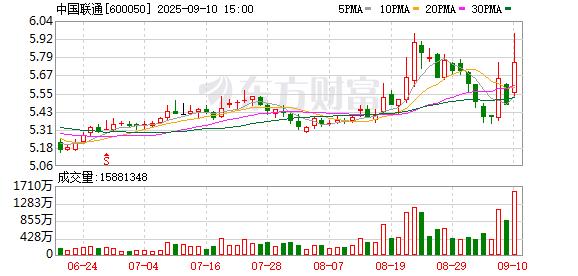
Core Viewpoint - The launch of the thinnest iPhone, the iPhone Air, featuring eSIM technology, marks a significant shift in communication technology and presents opportunities for the A-share industry chain [1][2][3] Industry Impact - The iPhone Air, measuring 5.6 mm in thickness and weighing 165 grams, eliminates the physical SIM card slot, fully adopting eSIM technology, which enhances connectivity and security, making it ideal for travelers [2] - eSIM technology, defined as Embedded Subscriber Identity Module, allows for remote configuration and management of network operators, indicating a shift from traditional SIM card services [2][3] Company Developments - China Unicom has begun eSIM mobile service trials across 25 provinces, with its stock rising by 5.30% to 5.76 CNY per share, reflecting a market capitalization of 180.1 billion CNY [3][4] - Several A-share companies, including Unisoc (紫光国微), New Henghui (新恒汇), and Eastcompeace (东信和平), are actively involved in the eSIM sector, with reported revenue growth from eSIM-related products and services [4][5] Market Performance - The average increase of eSIM-related stocks in the A-share market is 32.89% year-to-date, significantly outperforming the broader market, with some stocks like Rihai Intelligent (日海智能) and New Henghui (新恒汇) seeing substantial gains [4][5] - The global eSIM market is projected to exceed 12 billion USD by 2031, with China being a key production and demand hub for eSIM modules [5]

三大运营商均已布局eSIM手机业务
Zheng Quan Ri Bao· 2025-09-10 16:41
Core Viewpoint - The launch of the iPhone Air, featuring eSIM technology, is expected to stimulate demand for new mobile devices and potentially trigger a wave of upgrades in the smartphone market [4][6]. Group 1: eSIM Technology Overview - eSIM, or embedded SIM, is a new generation SIM card standard that allows for remote configuration and management of mobile networks without the need for a physical SIM card slot [4]. - The introduction of eSIM in the iPhone Air is seen as a significant move that could lead to increased adoption of eSIM technology across the industry [4][5]. Group 2: Market Impact and Industry Response - The iPhone Air's adoption of eSIM technology is anticipated to drive domestic smartphone manufacturers to follow suit, potentially leading to a new wave of smartphone upgrades [4]. - Industry experts express caution, noting that the complexity of eSIM activation compared to traditional SIM cards may affect user acceptance [4][5]. Group 3: Current State of eSIM in China - Currently, China Unicom is the only supported operator for iPhone eSIM in mainland China, while China Mobile and China Telecom are preparing to launch their eSIM services [2][3]. - The domestic eSIM ecosystem has developed a complete supply chain, covering chips, modules, platforms, and operators, and is applicable in various sectors including consumer electronics and IoT [4][5]. Group 4: Company Developments in eSIM - Unisoc Microelectronics is a leading player in the domestic eSIM market, with solutions already in commercial use across multiple countries and supporting over 400 operators [6]. - Hengbao Co., Ltd. has reported that its eSIM technology covers consumer electronics and IoT devices, aligning with global eSIM standards [6]. - Chutianlong Co., Ltd. is enhancing its eSIM product line and service capabilities to expand its domestic and international business [7].


三大运营商eSIM手机业务进展:电信准备就绪,移动联通待批复
Cai Jing Wang· 2025-09-10 14:34
Core Viewpoint - The introduction of eSIM technology by major Chinese telecom operators is set to enhance mobile connectivity options, with China Unicom, China Telecom, and China Mobile preparing to launch eSIM services following Apple's announcement of the iPhone Air, which exclusively supports eSIM [1][3][4]. Group 1: Company Developments - China Unicom is leveraging the launch of the iPhone Air to initiate its eSIM card business, which is already operational for smartwatches and tablets [1][3]. - China Telecom has completed preparations for its eSIM mobile services and has submitted necessary documentation to the Ministry of Industry and Information Technology (MIIT) for commercial trial approval [1][4]. - China Mobile has also applied for eSIM services and will announce availability once it receives MIIT approval [2][4]. Group 2: eSIM Technology Overview - eSIM, or embedded SIM, differs from traditional SIM cards by being embedded directly into device chips, eliminating the need for physical SIM cards [2][5]. - eSIM technology allows devices to connect to local networks globally through apps or cloud services, ensuring optimal speed and coverage [2][5].
联通获卫星移动通信牌照,卫星通信进程加速
Yin He Zheng Quan· 2025-09-10 13:46
Investment Rating - The report maintains a "Recommended" rating for the satellite communication industry [3]. Core Insights - The satellite communication sector is evolving from traditional voice and emergency connections to a composite infrastructure upgrade that integrates "communication + computing power + data" [6]. - The approval of mobile satellite communication licenses for major telecom operators like China Unicom accelerates the formation of the satellite communication landscape, enhancing service offerings in emergency, maritime, and remote area communications [5][6]. - The industry is expected to see significant market expansion, with both To C and To B models driving satellite applications [6]. Summary by Sections Industry Overview - The satellite industry encompasses manufacturing, launching, operational services, and ground equipment, forming a complete closed loop from spacecraft development to commercialization [5]. - According to SIA statistics, in 2024, the global revenue distribution for satellite industry segments is as follows: 3.2% for launching, 6.8% for manufacturing, 37.0% for operational services, and 53.0% for ground equipment manufacturing, indicating a shift towards downstream applications and terminal segments [5]. Business Models - The report identifies three main business directions for satellite operations: 1. Space computing power leasing services, acting as a "space data center" to provide edge computing capabilities [2]. 2. Space communication and the "Star Cable Plan," which aims to create a low-latency, high-security cross-domain transmission network [2]. 3. Monetization of intelligent data assets through applications in various industries, forming a "Data as a Service (DaaS)" model [2]. Investment Recommendations - The report suggests focusing on companies such as Putian Technology, Tongyu Communication, Zhenyou Technology, Jinxinno, Zongheng Communication, Zhenxin Technology, Shanghai Hantong, and Shunhao Co., Ltd. as potential investment opportunities in the satellite communication sector [6].
通信行业点评:联通获卫星移动通信牌照,卫星通信进程加速
Yin He Zheng Quan· 2025-09-10 11:40
Investment Rating - The report maintains a "Recommended" rating for the satellite communication industry [3]. Core Insights - The satellite communication sector is evolving from traditional voice and emergency connections to a composite infrastructure that integrates "communication + computing + data" [6]. - The recent issuance of satellite mobile communication licenses to China Unicom accelerates the formation of the satellite communication landscape among major telecom operators, enhancing service offerings in emergency communication, maritime communication, and remote area connectivity [5][6]. - The industry is witnessing a shift in value distribution towards downstream applications and terminal segments, with the commercial exploration of operational and service models being crucial for future development [5]. Summary by Sections Industry Overview - The satellite industry encompasses four main segments: manufacturing, launching, operational services, and ground equipment, forming a complete closed loop from spacecraft development to commercial application [5]. - According to the Satellite Industry Association (SIA), the global revenue distribution for 2024 is projected as follows: 3.2% for satellite launching, 6.8% for manufacturing, 37.0% for operational services, and 53.0% for ground equipment manufacturing, indicating a trend towards downstream application and terminal segments [5]. Business Models - The report identifies three major business directions for satellite operations: 1. Space computing leasing services, where satellite constellations act as "space data centers" providing edge computing capabilities [2]. 2. Space communication and the "Star Cable Plan," which aims to create a low-latency, high-security cross-domain transmission network [2]. 3. Monetization of intelligent data assets, transforming collected data into commercial value across various industries [2]. Investment Recommendations - The report suggests focusing on companies such as Putian Technology, Tongyu Communication, Zhenyou Technology, Jinxinno, Zongheng Communication, Zhenxin Technology, Shanghai Hantong, Shunhao Co., and Hangyu Micro [6].
苹果新品引爆eSIM 国内eSIM业务或年底全面开放
Nan Fang Du Shi Bao· 2025-09-10 11:29
Core Viewpoint - Apple's annual event on September 10 introduced the iPhone Air, which exclusively supports eSIM technology, raising significant attention in the market [2][4]. Group 1: eSIM Technology Overview - The iPhone Air can only be activated through eSIM, making it incompatible with physical SIM cards. Users must choose a carrier that offers eSIM services and obtain a corresponding mobile service plan [4]. - eSIM technology allows for remote configuration of multiple carrier profiles, saving internal device space and enhancing user connectivity management. This technology is increasingly important as traditional SIM card growth plateaus [7][10]. Group 2: Current Market and Regulatory Landscape - In China, only China Unicom currently supports eSIM for the iPhone Air, while China Mobile and China Telecom are preparing to offer eSIM services and have submitted applications to the Ministry of Industry and Information Technology [6][18]. - China Unicom has been a leader in promoting eSIM, having launched eSIM services in 25 provinces and cities, and has previously collaborated with Huawei and Apple for eSIM-enabled devices [11]. Group 3: Future Prospects and Challenges - Despite the push for eSIM, its adoption has been slow, with applications primarily in wearables rather than smartphones. The industry aims to eliminate physical SIM slots to enhance device design and performance [10]. - Regulatory bodies have paused eSIM services due to security concerns, but there are indications that the three major Chinese telecom operators plan to fully restart eSIM services by the end of the year [15][18].
通信行业点评报告:联通获卫星移动通信牌照卫星通信进程加速
Yin He Zheng Quan· 2025-09-10 11:22
Investment Rating - The report maintains a "Recommended" rating for the satellite communication industry [3]. Core Insights - The satellite communication sector is evolving from traditional voice and emergency connections to a composite infrastructure upgrade that integrates "communication + computing power + data" [6]. - The approval of mobile satellite communication licenses for major telecom operators like China Unicom accelerates the formation of the satellite communication landscape, enhancing service offerings in emergency, maritime, and remote area communications [5][6]. - The industry is witnessing a shift in value distribution towards downstream applications and terminal segments, with the commercial exploration of operational and service models being crucial for future development [5]. Summary by Sections Industry Overview - The satellite industry encompasses four main segments: manufacturing, launching, operational services, and ground equipment, with the revenue distribution in 2024 being 3.2% for launching, 6.8% for manufacturing, 37.0% for operational services, and 53.0% for ground equipment [5]. Business Models - The report identifies three major business directions for satellite operations: 1. Space computing power leasing services, acting as "space data centers" to provide edge computing capabilities [2]. 2. Space communication and the "Star Cable Plan," creating low-latency, high-security cross-domain transmission networks [2]. 3. Monetization of intelligent data assets through applications in various industries, forming a "Data as a Service (DaaS)" model [2]. Investment Recommendations - The report suggests focusing on companies such as Putian Technology, Tongyu Communication, Zhenyou Technology, and others as potential investment opportunities in the satellite communication sector [6].
海光信息与联通软件研究院签署战略合作协议
Zheng Quan Shi Bao Wang· 2025-09-10 11:07
Group 1 - The core viewpoint of the article is the strategic partnership between Haiguang Information and China Unicom Software Research Institute, focusing on the establishment of a joint innovation laboratory to address key demands in the digital transformation of the telecommunications industry [1] Group 2 - The collaboration aims to conduct in-depth cooperation and technological breakthroughs in multiple directions within the telecommunications sector [1]
