
SINOLINK SECURITIES(600109)

Search documents
国金证券:黄金增长期叠加连锁化率提升 宠物医院板块机会在即
智通财经网· 2025-12-25 06:44
Core Viewpoint - The pet hospital market in China is projected to reach approximately 47.3 billion yuan by 2024, driven by factors such as increasing pet ownership, enhanced healthcare awareness, pet aging, and the trend of treating pets as family members, along with improved quality of medical services. The compound annual growth rate (CAGR) is expected to be around 7% over the next three years [1]. Market Size and Expansion Drivers - The pet medical and examination market is expected to reach about 47.3 billion yuan by 2024, with a potential growth to approximately 58 billion yuan by 2027, driven by increased pet ownership, higher visit rates, and rising per capita medical spending [1][2]. - Key drivers for market expansion include: 1. Growth in pet numbers, with significant potential for increased penetration compared to mature markets [2]. 2. Enhanced healthcare awareness leading to more frequent veterinary visits [2]. 3. Aging pets resulting in higher spending per case [2]. 4. Increased willingness to spend among pet owners due to the trend of treating pets as family members [2]. 5. Development of specialized veterinary services to meet the rising demand for quality care [2]. Competitive Landscape - The pet hospital industry in China is characterized by low chain operation rates and a fragmented competitive landscape, with only about 21.8% of pet hospitals being part of chains compared to 36% in the U.S. [3]. - Major players include New Ruipeng and Ruipai, with New Ruipeng leading in terms of store numbers, although it has recently reduced its store count from nearly 2,000 to about 1,400 [3]. - The market is witnessing a trend of capital consolidation, with significant investments directed towards leading companies, and the emergence of new players like Ruichen, which has over 200 hospitals [3]. Operational Challenges in Chain Pet Hospitals - The industry faces challenges such as a shortage of qualified veterinary professionals, with a significant portion of veterinary students coming from lower-tier educational institutions [4]. - Profitability concerns exist, particularly regarding the ability of chain hospitals to improve their profit margins and operational efficiency [4][5]. - The market is currently under pressure due to rapid expansion leading to a high proportion of new stores in the cultivation phase, low technical barriers, and high competition among community hospitals [5].

保险股上涨,证券保险ETF年内涨超15%,保险证券ETF年内涨超11%
Ge Long Hui· 2025-12-25 06:26
Core Viewpoint - The insurance and securities sectors are experiencing significant growth, with the Securities Insurance ETF up over 15% and the Insurance Securities ETF up over 11% year-to-date, driven by strong performances from major companies in the industry [1][2]. Group 1: ETF Performance - The Securities Insurance ETF tracks the CSI 300 Non-Bank Financial Index, with 61.4% of its components being securities and 37.7% being insurance [3]. - The Insurance Securities ETF follows the CSI 800 Securities Insurance Index, with 73.8% of its components in securities and 25.6% in insurance [4]. Group 2: Industry Outlook - According to a recent report by CICC, the life insurance industry is expected to enter a golden development period by 2026, with a more positive trend in liabilities, shifting the investment logic from "seeking revaluation of existing businesses" to "valuing growth capabilities" [4]. - The current surge in the insurance sector is attributed to the expansion of asset under management (AUM) and the recovery of interest rate spreads, enhancing the certainty of investment returns [4]. - The insurance sector is seen as being in a critical window for performance and valuation recovery, supported by favorable policy and market conditions, with leading companies strengthening their advantages [4]. Group 3: Securities Firms - West Securities believes that there is a mismatch between profitability and valuation in the brokerage sector, indicating potential for future recovery [4]. - Guojin Securities highlights four themes for 2026: increased market activity from resident deposit migration, enhanced resilience and reduced volatility in capital markets, opportunities in direct financing for innovative enterprises, and ongoing mergers and acquisitions in the brokerage industry [5]. - Huatai Securities notes that the market remains active with daily trading volumes around 1.7 trillion yuan and financing balances stabilizing at 2.48 trillion yuan, indicating a favorable environment for brokerage value recovery [6].



国金证券:国内HNB行业开启或已是大势所趋 重视相关供应链布局机遇
智通财经网· 2025-12-25 02:17
Core Viewpoint - The development of new tobacco products, particularly heated not burned (HNB) tobacco, is an inevitable trend in the industry, with potential for high-quality growth in the domestic tobacco system as it aligns with global trends [1] Group 1: Global Tobacco Market Trends - The global cigarette market is experiencing an irreversible decline, with smoking rates dropping from 30.75% in 2005 to 21.74% in 2022, and cigarette market volume decreasing from 53,908 billion sticks in 2018 to an estimated 51,561 billion sticks in 2024, reflecting a CAGR of -0.74% [2] - Major international tobacco companies are shifting focus to new tobacco products as a core growth driver, with Philip Morris International aiming for over two-thirds of its revenue to come from new tobacco products by 2030, and British American Tobacco targeting 50% by 2035 [2] Group 2: Domestic Tobacco Market Dynamics - The growth of traditional cigarette consumption in China is under pressure, with production increasing from 23,642 billion sticks in 2019 to 24,655 billion sticks in 2024, reflecting a CAGR of 0.84%, while sales grew from 23,631 billion sticks to 24,507 billion sticks, with a CAGR of 0.73% [4] - The inventory levels in the tobacco industry have risen significantly, from 150 billion yuan in 2010 to 439.4 billion yuan in 2024, indicating high stock levels and increasing difficulty in growth [4] Group 3: HNB Tobacco Development and Regulation - The penetration rate of heated tobacco in Japan has rapidly increased since 2019, with market volume growing from 37.28 billion sticks in 2019 to an estimated 64.50 billion sticks in 2024, achieving a CAGR of 11.59% [3] - The regulatory framework for HNB products in major markets like the US, Japan, and Europe is well-defined, providing a potential reference for domestic regulation in China [5] Group 4: Domestic HNB Product Development - Domestic tobacco companies have made significant progress in HNB product development since 2017, with multiple companies launching HNB devices and pods targeting Southeast Asian markets, and over 50 patents in the field of heated tobacco technology [6] - The current product offerings and technological advancements in the HNB sector provide a solid foundation for the development of the domestic HNB industry [6]
国金证券:全球储能行业正开启增长新周期
Di Yi Cai Jing· 2025-12-25 00:13
Group 1 - The global energy storage industry is entering a new growth cycle, with an expected addition of 438 GWh of new installations by 2026, representing a year-on-year growth of 62% [1] - The growth drivers have shifted from solely renewable energy consumption to a combination of "AI computing infrastructure + energy transition demand + grid congestion" [1] - The supply-demand relationship in the industry has significantly improved, transitioning from a destocking phase to a replenishment boom, with certain segments of the supply chain expected to experience both volume and price increases [1]
研途新生 专业为翼 破局佣金旧章
Shang Hai Zheng Quan Bao· 2025-12-24 19:15
Core Insights - The brokerage research sector is experiencing a fundamental shift, moving from traditional roles of "report suppliers" to becoming "decision enablers" with industry insights and capital pricing capabilities [1][5] Demand Restructuring - The continuous decline in commission fees is forcing a profound change in the demand side of brokerage research, with total commission fees dropping to 4.474 billion yuan in the first half of 2025, a year-on-year decrease of 33.98% and a 54.05% drop compared to the same period in 2020 [1] - Despite the decline in commissions, the number of analysts is increasing, reaching 6,185 by December 24, 2025, an increase of nearly 470 analysts or over 8% from the end of 2024, and nearly 30% from the end of 2023 [1][2] Capability Upgrade - Research value is shifting from "assisting trading" to "professional empowerment," leading to a revolution in report production from quantity to depth of understanding [3] - Research teams are developing multi-layered, systematic tracking frameworks to enhance insight sustainability, particularly in rapidly evolving sectors like AI [3] - Digital tools are being integrated into the research value chain, improving efficiency and enabling dynamic, interactive, and customized research services [3] Talent Development - The focus of research resources is increasingly directed towards key areas aligned with national strategies and industrial upgrades, with nearly 3,300 A-share companies covered in individual reports, particularly in hard technology and high-end manufacturing sectors [4] - Coverage of companies on the Beijing Stock Exchange is expanding, with over 150 companies covered and a nearly 26% increase in related research reports [4] Role Evolution - Analysts are evolving from "report suppliers" to "strategic partners," integrating into client decision-making processes and providing tailored solutions [5] - This evolution requires analysts to possess diverse competencies, including market pricing perspectives, deep understanding of client needs, and the ability to navigate macro policy directions [5] - Research outputs are shifting from traditional reports to building "trust assets" through long-term professional relationships, emphasizing the importance of foresight and timely tracking [5][6] Service Model Transformation - The new service model relies heavily on top-tier human resources and time investment, with significant resources needed to maintain relationships with key institutional clients or industry think tanks [6] - The future of the analyst workforce will be closely linked to "capability building," with analysts becoming key nodes connecting industry and capital, as well as knowledge and decision-making [6]

国金证券宋雪涛:美国经济的深秋,正在经历“增长的盛夏”和“就业的寒冬”
Xin Lang Cai Jing· 2025-12-24 14:45
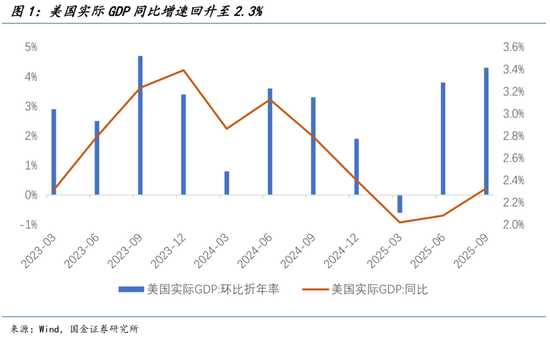
Core Viewpoint - The U.S. economy is experiencing a dichotomy characterized by "growth in summer" and "employment in winter," indicating a significant structural divide in economic performance [1][4][18]. Group 1: GDP Performance - The U.S. GDP for Q3 recorded an annualized growth rate of 4.3%, surpassing expectations of 3.3%, while the year-on-year growth rate rose to 2.3%, still below the previous year's 2.8% [2][25]. - Key contributors to the 4.3% growth included personal consumption and net exports, contributing 2.4 and 1.6 percentage points, respectively [4][27]. - There is a notable divergence in economic performance, with AI-related investments showing strong growth while traditional sectors like residential investment remain weak despite interest rate cuts [11][35]. Group 2: Investment Trends - AI-related investments, although experiencing a decline in growth rate in Q3, remain the fastest-growing investment category, contributing 0.8 percentage points to GDP, while private consumption contributed 1.1 percentage points [7][30]. - The volatility in AI investment reflects a normalization after strong growth, highlighting the difference between "committed investment" and "realized investment" [9][31]. - Traditional sectors sensitive to interest rates, such as durable goods consumption and residential investment, continue to show declining year-on-year growth, raising doubts about the effectiveness of rate cuts in stimulating the economy [11][35]. Group 3: Consumer Spending - Private consumption is strong overall, but there is a significant disparity within consumption categories, with actual disposable income growth slowing down, leading to increased reliance on wealth effects, declining savings rates, and borrowing [12][37]. - The spending structure shows that healthcare, international travel, and entertainment are the largest contributors, while broader service demand categories like transportation and dining out have not shown significant seasonal improvement [40][41]. - Excluding healthcare and international travel, the growth in narrow service consumption remains stable but does not reflect the overall service sector's rebound, indicating a widening gap in consumption performance [41]. Group 4: Employment Dynamics - The rapid economic growth in Q3 is juxtaposed with rising unemployment rates and a downward trend in non-farm payroll additions, indicating a concentration of growth in sectors with lower labor demand [18][42]. - The divergence in economic indicators necessitates careful interpretation, as productivity improvements may not be immediately evident, and labor market weakness remains a significant concern [20][45]. - The economic outlook for late 2025 mirrors early 2025, with challenges in distinguishing the effects of policy changes and economic stimuli on growth and employment [22][46].

增长的盛夏,就业的寒冬(国金宏观钟天)
雪涛宏观笔记· 2025-12-24 14:40
Core Viewpoint - The article discusses the contrasting dynamics of the U.S. economy, characterized by strong growth in GDP alongside rising unemployment, indicating a divergence between economic expansion and labor market performance [2][20]. Group 1: Economic Growth - The U.S. GDP for Q3 recorded an annualized growth rate of 4.3%, surpassing expectations of 3.3%, while the year-on-year growth rate rose to 2.3%, still below the previous year's 2.8% [4]. - Key contributors to the GDP growth were consumer spending and net exports, contributing 2.4 and 1.6 percentage points respectively, although there are concerns about the sustainability of this growth due to underlying disparities [6][7]. - AI-related investments, despite a slowdown in growth, remain the fastest-growing investment category, contributing 0.8 percentage points to GDP, while private consumption contributed 1.1 percentage points, indicating a dual-engine growth model [7]. Group 2: Employment Trends - Despite strong economic growth, the unemployment rate is rising, and non-farm payroll growth is declining, highlighting a disconnect between economic performance and labor market health [20]. - The labor market's weakness is a significant concern, with indicators suggesting a potential increase in unemployment rates, as consumer confidence has also dipped [20][22]. Group 3: Consumer Spending - Private consumption showed strength overall, but there are signs of wealth disparity and overestimation, particularly as disposable income growth has slowed, making consumption increasingly reliant on wealth effects and borrowing [14][15]. - The report indicates that the strongest contributions to consumer spending came from healthcare, international travel, and entertainment, while broader service demand did not show exceptional seasonal performance [15][17]. Group 4: Investment Dynamics - Traditional sectors sensitive to interest rates, such as durable goods consumption and residential investment, continue to show weakness despite significant interest rate cuts, raising doubts about the effectiveness of monetary policy in stimulating traditional economic recovery [12][23]. - The volatility in AI-related investments reflects a normalization after strong growth earlier in the year, indicating a gap between committed and realized investments [9].
毫厘技术拟冲刺北交所:国金证券辅导,48岁董事长彭彪支配55%表决权
Sou Hu Cai Jing· 2025-12-24 12:44
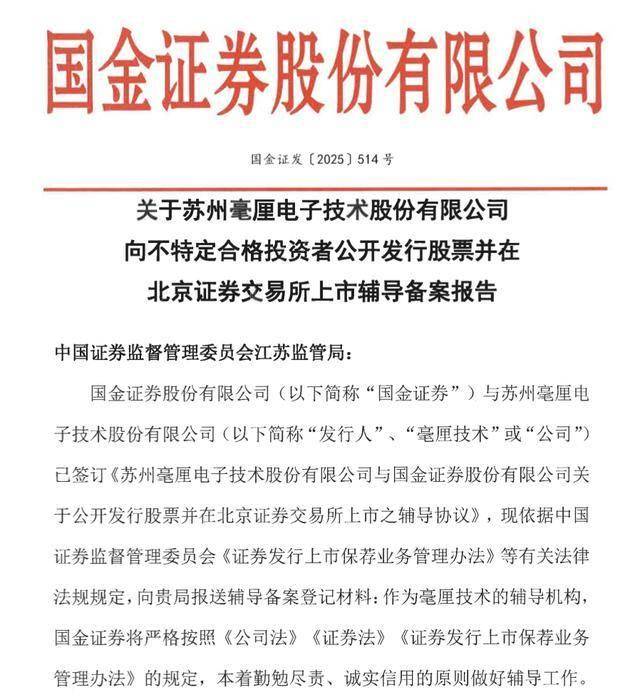
瑞财经 吴文婷12月23日,苏州毫厘电子技术股份有限公司(以下简称"毫厘技术")启动IPO,拟冲刺北 交所。 本次IPO的辅导机构为国金证券股份有限公司,律师事务所为上海市通力律师事务所,会计师事务所为 容诚会计师事务所(特殊普通合伙)。 毫厘技术专注于高功率半导体芯片等电子系统热量管理领域10余年,客户广泛分布于能源电子、新能源 汽车电驱、高端医疗影像设备、半导体测试、人工智能算力中心、超级充电等领域,是涉足 行业较广 泛的国内热量管理领域企业之一。 业绩方面,2023年-2024年及2025年前两个月,毫厘技术实现营收分别为8134.30万元、1.65亿元、 3024.65万元;归母净利润分别为-20.71万元、1181.98万元、395.41万元。 | 项目 | 2025年1月-2 | 2024 年度 | 2023 年度 | | --- | --- | --- | --- | | | 月 | | | | 营业收入(万元) | 3.024.65 | 16.528.43 | 8.134.30 | | 净利润(万元) | 395.41 | 1,181.98 | -20.71 | | 归属于申请挂牌公司股东的净 ...
飞潮新材IPO撤单一年后被追责,国金证券保代又栽了!
Sou Hu Cai Jing· 2025-12-24 08:09
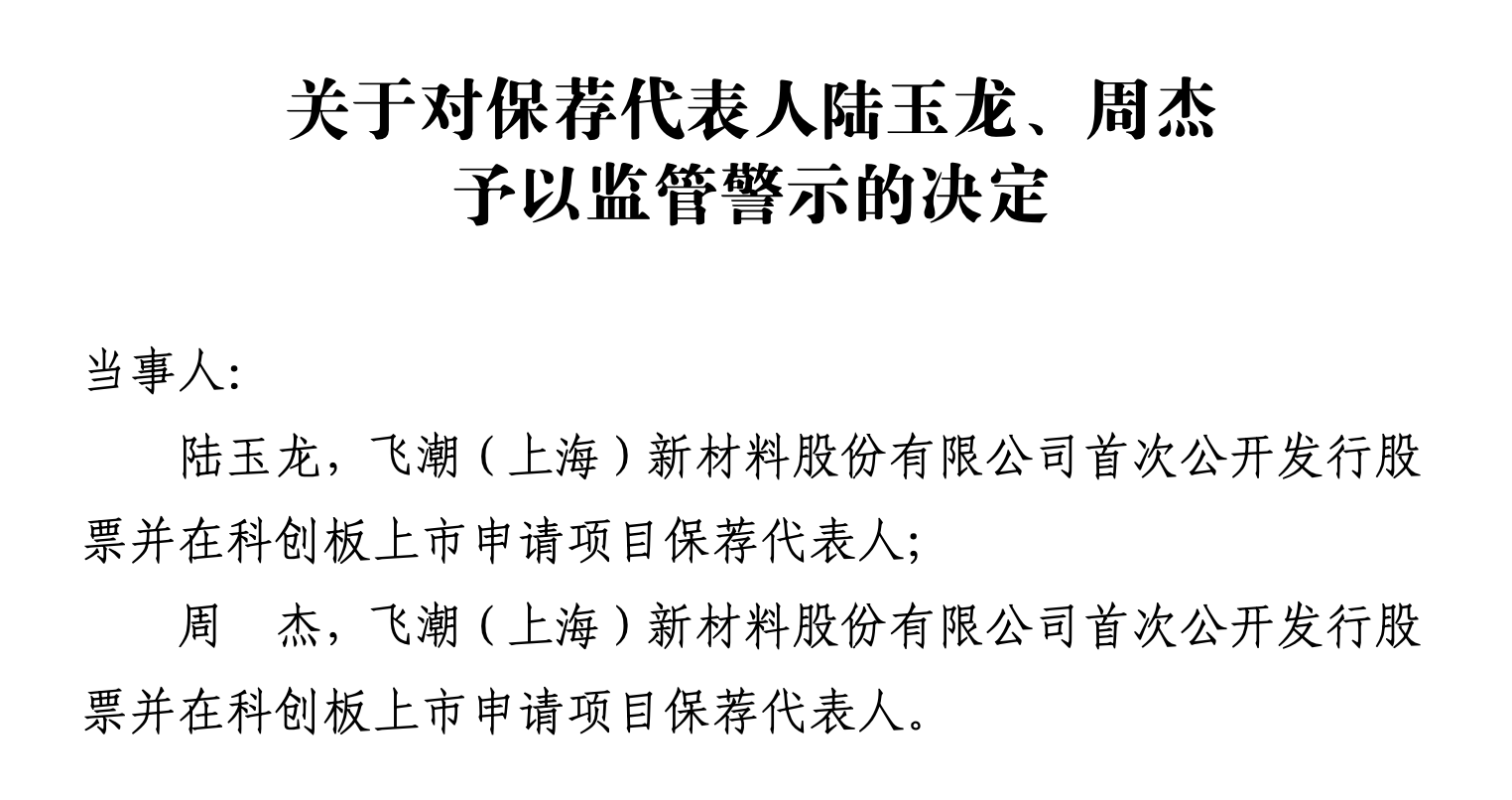
Core Viewpoint - Feichao New Materials, a technology company engaged in the research and production of filtration materials, withdrew its IPO application after being found in violation of several regulations during the listing process [2][3]. Financial Irregularities - The company failed to recognize estimated liabilities for loss contracts, inaccurately allocated R&D expenses, insufficiently justified revenue recognition, and miscalculated inventory impairment. These irregularities led to an overstatement of profits by 1.66 million yuan and 1.45 million yuan for 2021 and 2022, respectively, accounting for 6.96% and 2.40% of total profits for those periods [2][3]. Corporate Governance Issues - There were significant deficiencies in corporate governance and independence, with personnel, asset, and fund management being mixed between Feichao New Materials and its controlling shareholder, Chuangfudi, as well as shareholder Feichao Kemao. Some of these issues persisted even after the company underwent restructuring and established relevant management systems [2][3]. Insufficient Disclosure of Related Transactions - The application documents did not disclose the transfer of certain trademarks from Feichao Kemao to the company as a related party transaction, nor did they adequately explain the formation of a 17.997 million yuan fund balance lent to shareholders in early 2020. The necessity, reasonableness, and fair pricing of sales from Feichao New Materials to Feichao Kemao were also not sufficiently analyzed [2][3]. Internal Control Failures - Internal controls were inadequately executed, including superficial reviews of fund management with related parties, improper sales management and revenue recognition processes, and issues in inventory and cost management, such as uncounted inventory at the end of 2020 and unclear external processing management procedures [3]. Regulatory Actions - The Shanghai Stock Exchange issued regulatory warnings to the then Chairman He Xiangyang, then General Manager He Sheng, and then CFO and Board Secretary Zhu Qigao for their roles in the violations. The underwriters from Guojin Securities, Lu Yulong and Zhou Jie, were also penalized for failing to identify and rectify these issues, highlighting significant deficiencies in their verification procedures [3][4]. Industry Context - Guojin Securities has faced multiple regulatory penalties in recent years, indicating ongoing issues with its underwriting practices. For instance, in September 2024, the Xiamen Securities Regulatory Bureau criticized the firm for inadequate diligence in the IPO project of Luopute, leading to inaccurate reports. Additionally, the Shanghai Stock Exchange issued a public reprimand to Guojin Securities for deficiencies in the issuance process of Xiangnian Foods [7][8]. Performance Metrics - In the first half of 2025, Guojin Securities had a withdrawal rate of 25% for equity projects, the highest among its peers, compared to leading firms like CITIC Securities and Guotai Junan, which maintained rates below 10% [8].
国金证券:能源转型叠加AI驱动 储能周期反转步入繁荣期
Zhi Tong Cai Jing· 2025-12-24 02:48
Core Insights - The global energy storage industry is entering a new growth cycle, with an expected addition of 438 GWh of new installations by 2026, representing a year-on-year growth of 62% [1] - The growth drivers have shifted from solely renewable energy consumption to a combination of "AI computing infrastructure + energy transition demand + grid congestion" [1] - The supply-demand relationship in the industry is significantly improving, transitioning from a destocking phase to a replenishment boom, leading to simultaneous increases in both volume and price in certain segments of the supply chain [1] Regional Insights - China is projected to install 250 GWh by 2026, a year-on-year increase of 67%, with policies shifting from "strong allocation" to "profitability" [2] - The United States is expected to add 70 GWh of installations by 2026, a 35% increase year-on-year, driven by AI [2] - Europe is forecasted to install 51 GWh by 2026, a 55% increase year-on-year, with long-term contracts locking in gigawatt-level demand [2] - Emerging markets are anticipated to add 67 GWh by 2026, a 91% increase year-on-year, with significant growth in Australia, the Middle East, and Chile [2] Technological Developments - AI computing is becoming synonymous with electricity, with energy storage evolving from merely backup power to active supply, addressing voltage fluctuations and serving as a strategic infrastructure for AI data centers [3] - The mismatch between rapid renewable energy generation and slow grid development is intensifying, making energy storage a critical solution for congestion [4] - Solid-state batteries are expected to enter small-scale production by 2026, marking a significant step towards commercialization across various applications [7] Supply Chain and Market Dynamics - The lithium battery supply is expected to recover by 2026 after a two-year destocking phase, driven by sustained high demand from AI and energy storage, while supply expansion slows due to reduced capital expenditure [6] - Trade barriers are increasing, with the U.S. and EU implementing stricter regulations, favoring companies with localized production capabilities [5] Investment Recommendations - Focus on midstream materials that are expected to benefit from supply-demand reversals, particularly lithium fluoride, lithium carbonate, separators, and electrolyte additives [8] - Invest in leading companies with localized manufacturing capabilities and strong ESG frameworks, such as CATL and Sungrow, to capitalize on high-profit markets while mitigating tariff risks [8][9] - Target companies that can integrate into the overseas data center supply chain, providing solar-storage solutions and microgrid systems [9]

