C&D INC.(600153)

Search documents
建发房产打造穿越周期的“好房子”
Guan Cha Zhe Wang· 2025-11-25 10:24
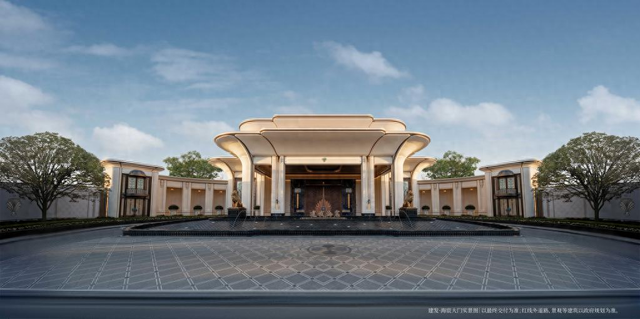
Core Insights - The Shanghai new housing market is undergoing a significant adjustment, with a focus on quality and structural differentiation as the new norm following the implementation of the "Good House" regulations on September 26 [1][5] - The launch of Jianfa Haichen, the first "lighthouse" project in Shanghai by Jianfa Real Estate, marks a pivotal moment in the market, showcasing the company's innovative approach to high-quality housing [1][6] Market Dynamics - The new housing market in Shanghai is experiencing a deep adjustment, with a clear trend towards quality enhancement and structural differentiation [1] - The "Good House" regulations are encouraging upgrades in design aspects such as balconies and facades, leading to increased market expectations for quality [1] Project Overview - Jianfa Haichen is located in the New Jiangwan City, an area recognized for its ecological advantages and proximity to top educational institutions and businesses, enhancing its appeal to high-quality residents [2][4] - The project has a total area of approximately 100,000 square meters with a low plot ratio of 1.55, featuring a mix of 10 small high-rise buildings and 30 low-rise villas, catering to a diverse range of buyers [5][6] Sales Performance - Jianfa Haichen achieved a remarkable 128% subscription rate during its first launch on September 30, setting multiple sales records for high-value projects in Shanghai [5] - The project continues to attract attention with its ongoing sales and the opening of a real-life display area, reinforcing its status in the market [5] Product Features - The project emphasizes high-quality living standards with features such as multiple balconies, efficient space utilization, and premium finishes, including top-tier kitchen and bathroom fixtures [6][7] - Jianfa Haichen incorporates cultural elements and craftsmanship, reflecting a unique "Sea-Pai Oriental" aesthetic that blends global styles with traditional Chinese culture [6][7] Strategic Framework - Jianfa Real Estate's "Lighthouse Strategy" aims to innovate housing products by focusing on customer needs and integrating cultural, value, strategy, and technology dimensions [6][7] - The company has developed a six-dimensional value system to enhance the living experience, emphasizing safety, comfort, and sustainability in its housing offerings [7]


哑铃型配置强化,红利资产再获资金青睐,国企红利ETF(159515)盘中上涨0.26%
Sou Hu Cai Jing· 2025-11-25 02:43
Core Insights - The China Securities State-Owned Enterprises Dividend Index has shown a slight increase of 0.15% as of November 25, 2025, with notable gains in constituent stocks such as Fujian Expressway, which rose by 9.97% [1] - The National Enterprise Dividend ETF (159515) has also increased by 0.26%, indicating a positive trend in dividend-focused investments [1] - Market sentiment is under pressure due to a lack of performance policies and fluctuating expectations regarding the Federal Reserve's interest rate decisions, leading to a focus on dividend assets [1] Market Performance - The National Enterprise Dividend ETF recorded a turnover rate of 0.06% with a transaction volume of 27,200 yuan, and an average daily transaction volume of 3.54 million yuan over the past week [1] - The overall industry prosperity index continued to decline in October, but at a slower rate, with essential consumption, midstream manufacturing, and large financial sectors showing the most improvement [1] Investment Strategy - The dividend strategy is highlighted as a foundational investment approach, focusing on high dividend yields and stable cash flows from quality enterprises, which can provide continuous cash flow and long-term compounding potential [1] - A balanced investment approach is recommended, incorporating growth, cyclical, and dividend assets to identify opportunities with improving industry conditions and relatively low valuations [1] Index Composition - The China Securities State-Owned Enterprises Dividend Index comprises 100 listed companies selected for their high and stable cash dividend yields, reflecting the overall performance of high-dividend securities among state-owned enterprises [2] - As of October 31, 2025, the top ten weighted stocks in the index accounted for 17.08% of the total index weight, including companies like COSCO Shipping Holdings and Agricultural Bank of China [2]



物流板块11月24日跌0.04%,建发股份领跌,主力资金净流出1.27亿元
Zheng Xing Xing Ye Ri Bao· 2025-11-24 09:12
Core Viewpoint - The logistics sector experienced a slight decline of 0.04% on November 24, with Jianfa Co. leading the losses, while the Shanghai Composite Index rose by 0.05% and the Shenzhen Component Index increased by 0.37% [1][2]. Summary by Category Market Performance - The logistics sector's performance was mixed, with Jianfa Co. reporting a significant drop of 5.31% in share price, closing at 10.17 yuan [2]. - The overall market saw the Shanghai Composite Index close at 3836.77 points and the Shenzhen Component Index at 12585.08 points, reflecting minor gains [1]. Individual Stock Movements - Notable gainers in the logistics sector included: - ST Haiqin, up 3.79% to 8.22 yuan with a trading volume of 84,700 shares and a turnover of approximately 17 million yuan [1]. - XinNing Logistics, up 2.21% to 4.17 yuan with a trading volume of 205,600 shares and a turnover of about 8.5 million yuan [1]. - Conversely, significant decliners included: - Jianfa Co., down 5.31% with a trading volume of 555,100 shares and a turnover of 574 million yuan [2]. - Longzhou Co., down 4.90% with a trading volume of 1,256,700 shares and a turnover of approximately 681 million yuan [2]. Capital Flow - The logistics sector saw a net outflow of 127 million yuan from institutional investors, while retail investors contributed a net inflow of 106 million yuan [2][3]. - Specific stock capital flows indicated: - SF Holding had a net inflow of 29.94 million yuan from institutional investors, while it faced a net outflow of 52.47 million yuan from speculative funds [3]. - Jianfa Co. experienced a net inflow of 22.95 million yuan from institutional investors but a net outflow of 31.64 million yuan from retail investors [3].

房地产开发2025W47:本周新房成交同比-38.2%,住建部提出把城市更新摆在更加突出位置
GOLDEN SUN SECURITIES· 2025-11-23 11:16
Investment Rating - The industry maintains an "Overweight" rating, with a focus on real estate-related stocks due to expected policy support and market recovery [5][7]. Core Insights - The report emphasizes the need for urban renewal, highlighting the government's commitment to improving living conditions and urban infrastructure, which is expected to support high-quality urban development [2][12]. - The real estate market is showing signs of pressure, with new home sales in 30 cities down 38.2% year-on-year, despite a 6.5% month-on-month increase [3][27]. - The report suggests that the competitive landscape in the real estate sector is improving, with leading state-owned enterprises and select private firms expected to benefit from favorable policies and market conditions [5]. Summary by Sections 1. Market Overview - The real estate index decreased by 5.8% this week, underperforming the CSI 300 index by 2.06 percentage points, ranking 20th among 31 sectors [2][16]. 2. New Home Sales - In the latest week, new home sales in 30 cities totaled 169.3 million square meters, with a year-on-year decline of 38.2% and a month-on-month increase of 6.5% [3][27]. - Year-to-date, new home sales in these cities have reached 85.89 million square meters, down 9.7% year-on-year [33]. 3. Second-Hand Home Sales - Second-hand home sales in 14 cities totaled 199.9 million square meters, down 12.6% year-on-year and slightly down 0.2% month-on-month [38][39]. - Cumulatively, second-hand home sales for the year have increased by 9.9% [38]. 4. Credit Bond Issuance - A total of 9 credit bonds were issued by real estate companies this week, amounting to 4.71 billion yuan, with a net financing amount of -1.79 billion yuan [4][48]. 5. Investment Recommendations - The report recommends focusing on companies with strong fundamentals and those benefiting from urban renewal policies, including both state-owned and select private enterprises [5].



物流板块11月21日跌1.86%,龙洲股份领跌,主力资金净流出7.46亿元
Zheng Xing Xing Ye Ri Bao· 2025-11-21 09:33
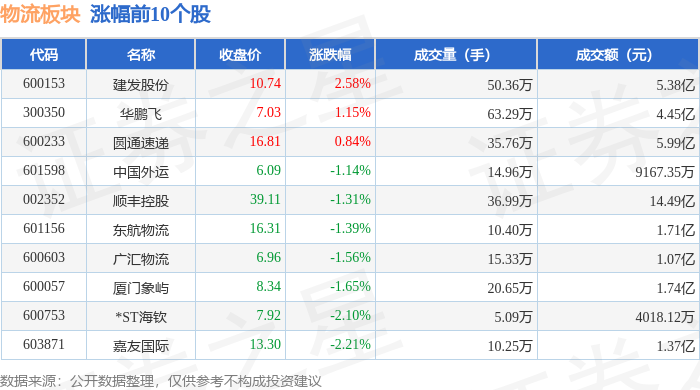
Market Overview - The logistics sector experienced a decline of 1.86% on November 21, with Longzhou Co. leading the drop [1] - The Shanghai Composite Index closed at 3834.89, down 2.45%, while the Shenzhen Component Index closed at 12538.07, down 3.41% [1] Individual Stock Performance - Jianfa Co. (600153) saw an increase of 2.58% in its closing price at 10.74, with a trading volume of 503,600 shares and a transaction value of 538 million [1] - Longzhou Co. (002682) reported a significant drop of 9.92%, closing at 5.72, with a trading volume of 1,066,100 shares and a transaction value of 614 million [2] - Other notable declines included Pulu Tong (002769) down 6.56% and Tiensheng Co. (002800) down 6.48% [2] Capital Flow Analysis - The logistics sector experienced a net outflow of 746 million from institutional investors, while retail investors saw a net inflow of 401 million [2] - The data indicates that speculative funds had a net inflow of 344 million [2] Detailed Capital Flow for Selected Stocks - Guanghui Logistics (600603) had a net inflow of 16.10 million from institutional investors, while it faced a net outflow of 10.09% from speculative funds [3] - Hongchuan Wisdom (002930) reported a net inflow of 6.75 million from institutional investors and a net inflow of 4.51 million from speculative funds [3] - New Ning Logistics (300013) had a net inflow of 1.75 million from institutional investors, with speculative funds showing a net inflow of 10.38 million [3]



挖来万科前首席营销官,建发“灯塔战略”能否破局突围?
Xin Lang Cai Jing· 2025-11-20 01:23
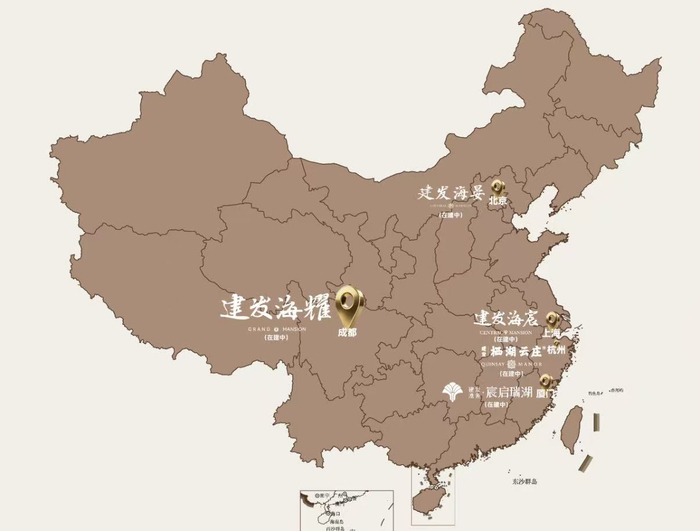
Core Insights - The real estate market is experiencing a deep adjustment phase, prompting developers to accelerate the recruitment of experienced marketing management talent [1][10] - Yan Yong, former Chief Marketing Officer of Vanke, has joined Jianfa Real Estate Group as a reserve general manager for the Shanghai company, indicating a strategic move to enhance marketing capabilities during challenging market conditions [1][10] Company Developments - Yan Yong's departure from Vanke occurred after a brief tenure as CMO, during which Vanke faced declining sales performance [1] - Jianfa's "Lighthouse Strategy" is entering a critical phase, with projects in Shanghai, Hangzhou, and Chengdu requiring urgent marketing talent to navigate market challenges [2][10] - Jianfa's key projects, including Jianfa Haicheng in Shanghai, are under pressure to perform amid a cooling market, with sales strategies being adjusted accordingly [4][5] Market Conditions - The real estate market has seen a decline in activity, with fewer projects achieving rapid sales compared to previous months [8][9] - Developers are facing increased pressure as high-priced "land king" projects struggle with slower sales and market adjustments [7][10] - The expectation for market recovery is being set for 2026, with developers hoping for a resurgence in demand during the spring months [9][10] Strategic Implications - The recruitment of Yan Yong is seen as a strategic move to leverage his extensive marketing experience to address the challenges of high-priced project sales [10] - Jianfa's focus on product presentation and marketing efficiency is critical for the success of its "Lighthouse Strategy" amid current market conditions [5][10] - The company aims to create a differentiated competitive edge through deep collaboration between product development and marketing efforts [10]

物流板块11月19日跌0.3%,龙洲股份领跌,主力资金净流出2.52亿元
Zheng Xing Xing Ye Ri Bao· 2025-11-19 08:52
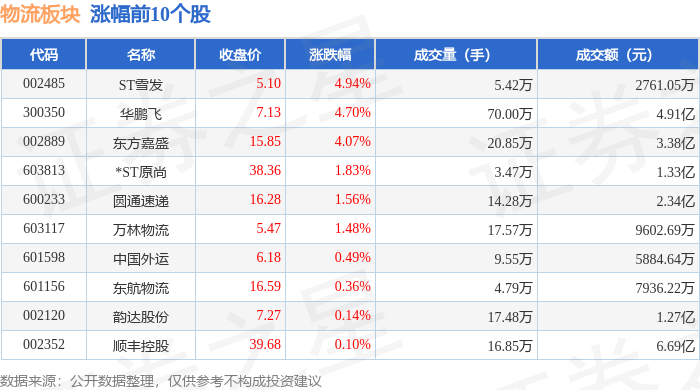
Core Insights - The logistics sector experienced a decline of 0.3% on November 19, with Longzhou Co. leading the drop [1] - The Shanghai Composite Index closed at 3946.74, up 0.18%, while the Shenzhen Component Index closed at 13080.09, unchanged [1] Stock Performance - ST Xuefa (002485) saw a significant increase of 4.94%, closing at 5.10 with a trading volume of 54,200 shares and a turnover of 27.61 million yuan [1] - Longzhou Co. (002682) led the decline with a drop of 9.95%, closing at 7.06 with a trading volume of 2.24 million shares and a turnover of 1.648 billion yuan [2] - Other notable performers included Huapei (300350) with a 4.70% increase and Dongfang Jiasheng (002889) with a 4.07% increase [1] Capital Flow - The logistics sector saw a net outflow of 252 million yuan from institutional investors, while retail investors contributed a net inflow of 194 million yuan [2] - The table of capital flow indicates that Dongfang Jiasheng (002889) had a net inflow of 44.26 million yuan from institutional investors, while it faced a net outflow of 22.33 million yuan from retail investors [3]



商贸零售行业跟踪周报:2025年双十一数据复盘:综合电商平台稳健增长,即时零售表现亮眼-20251118
Soochow Securities· 2025-11-18 12:00
Investment Rating - The report maintains an "Overweight" rating for the retail industry [1] Core Insights - The 2025 Double Eleven sales period saw a total e-commerce sales of approximately 1,695 billion yuan, representing a year-on-year increase of 14.2%. The comprehensive e-commerce platforms accounted for 1,619.1 billion yuan, with a year-on-year growth of 12.3% [4][9] - Instant retail showed remarkable growth, with sales reaching 67 billion yuan during the Double Eleven period, marking a year-on-year increase of 138% [10][15] - Key product categories such as digital appliances, food and beverages, furniture, and pet products experienced significant growth, with pet sales reaching 9.2 billion yuan, up 59% year-on-year [15][16] Summary by Sections Weekly Industry Viewpoint - The Double Eleven sales period was extended, contributing to steady growth in total e-commerce sales. The sales period for 2025 was from October 7 to November 11, compared to October 14 to November 11 in 2024 [9] - Instant retail emerged as a highlight, with substantial growth compared to traditional e-commerce formats [10] Weekly Market Review - From November 10 to November 16, the Shenwan retail index increased by 4.06%, while the Shanghai Composite Index decreased by 0.18% [17] - Year-to-date performance shows the Shenwan retail index up by 8.43%, compared to a 19.06% increase in the Shanghai Composite Index [17][22] Company Valuation Table - The report includes a detailed valuation table for various companies in the retail sector, with specific metrics such as market capitalization and P/E ratios [24][25]


建发股份跌2.04%,成交额8675.89万元,主力资金净流出601.18万元
Xin Lang Cai Jing· 2025-11-18 03:15
Core Viewpoint - Jianfa Co., Ltd. has experienced a decline in stock price recently, with a year-to-date increase of 7.74% and a significant drop in net profit for the first nine months of 2025 [2][3]. Group 1: Stock Performance - On November 18, Jianfa's stock price fell by 2.04%, trading at 10.58 CNY per share, with a market capitalization of 30.677 billion CNY [1]. - The stock has seen a 0.66% decline over the past five trading days and a 2.22% increase over the last 20 days, while it has decreased by 5.54% over the past 60 days [2]. Group 2: Financial Performance - For the period from January to September 2025, Jianfa reported a revenue of 498.983 billion CNY, a year-on-year decrease of 0.63%, and a net profit attributable to shareholders of 1.149 billion CNY, down 44.19% year-on-year [2]. - Cumulative cash dividends since the A-share listing amount to 19.039 billion CNY, with 6.570 billion CNY distributed over the past three years [3]. Group 3: Shareholder Information - As of September 30, 2025, Jianfa had 58,200 shareholders, a decrease of 2.69% from the previous period, with an average of 49,786 circulating shares per shareholder, an increase of 2.77% [2]. - The top ten circulating shareholders include Hong Kong Central Clearing Limited, which holds 111 million shares, an increase of 4.128 million shares from the previous period [3].
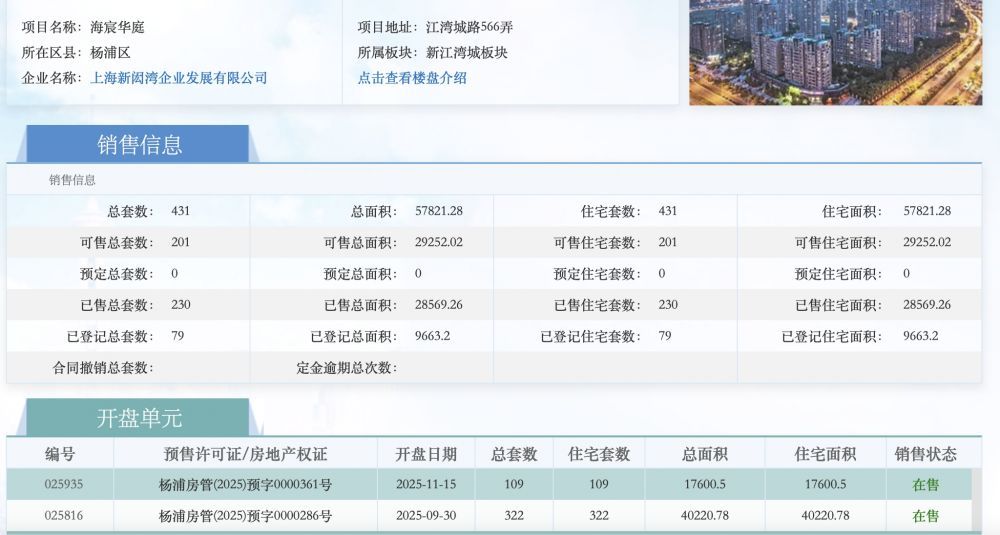
建发房产:严勇已入职公司,属正常人事储备
2 1 Shi Ji Jing Ji Bao Dao· 2025-11-17 10:09
Core Insights - Vanke's former Chief Marketing Officer, Yan Yong, has left the company and joined Jianfa Real Estate Group as the General Manager of its Shanghai division, indicating a strategic personnel shift within the real estate sector [1] Company Developments - Jianfa Real Estate confirmed Yan Yong's employment as part of normal personnel reserves, although it did not clarify whether he would be assigned to the Shanghai company [1] - Jianfa Shanghai currently has three projects for sale: - Jianfa Haicheng, which has a total of 431 units with a sales rate of approximately 53.36% since its opening in September 2025 - Jianfa Langyue, which will open in 2024 with 1,293 units and a projected sales rate of about 76.49% - Jianfa Qingyunshang, located in the Pudong New Area, is in the liquidation phase [1] Project Performance - Jianfa Haicheng has sold 230 out of 431 units, translating to a sold area of 28,569.26 square meters out of a total area of 57,821.28 square meters [1] - The project has 201 units available for sale, with a total saleable area of 29,252.02 square meters [1]