
Hengrui Pharma(600276)

Search documents
恒瑞医药(600276.SH):注射用瑞康曲妥珠单抗药品上市许可申请获受理并纳入优先审评程序
Ge Long Hui A P P· 2026-02-10 09:31
Core Viewpoint - The company, Hengrui Medicine, has received acceptance for its drug application for injection of Rukang Qutuzumab, which is now included in the priority review process by the National Medical Products Administration [1] Group 1: Drug Approval - The company's subsidiary, Suzhou Shengdiya Biopharmaceutical Co., Ltd., has received the acceptance notice for the drug listing application [1] - The injection of Rukang Qutuzumab is expected to be approved for market launch in China by May 2025 [1] - The drug is indicated for adult patients with unresectable locally advanced or metastatic non-small cell lung cancer (NSCLC) who have HER2 (ERBB2) activating mutations and have previously received at least one systemic therapy [1]
恒瑞医药(600276) - 恒瑞医药关于药品上市许可申请获受理并纳入优先审评程序的提示性公告
2026-02-10 09:15
证券代码:600276 证券简称:恒瑞医药 公告编号:临 2026-024 一、药品的基本情况 药品名称:注射用瑞康曲妥珠单抗 剂型:注射剂 受理号:CXSS2600018 申报阶段:上市 申请人:苏州盛迪亚生物医药有限公司 拟定适应症(或功能主治):本品适用于治疗经奥沙利铂、氟尿嘧啶和伊立 替康治疗失败的 HER2 阳性结直肠癌成人患者。 江苏恒瑞医药股份有限公司 关于药品上市许可申请获受理并纳入优先审评程序 的提示性公告 本公司董事会及全体董事保证本公告内容不存在任何虚假记载、误导性陈述 或者重大遗漏,并对其内容的真实性、准确性和完整性承担法律责任。 近日,江苏恒瑞医药股份有限公司(以下简称"公司")子公司苏州盛迪亚 生物医药有限公司收到国家药品监督管理局(以下简称"国家药监局")下发的 《受理通知书》,公司注射用瑞康曲妥珠单抗的药品上市许可申请获受理,且已 被纳入优先审评程序。现将相关情况公告如下: 在经奥沙利铂、氟尿嘧啶类和伊立替康治疗失败的 HER2 阳性晚期结直肠癌受试 者中的有效性和安全性,并探索该药物的免疫原性及药代动力学特征。本研究由 上海高博肿瘤医院李进院长和浙江大学医学院附属第二医院袁瑛 ...
恒瑞医药:注射用瑞康曲妥珠单抗上市许可申请获受理并优先审评
Xin Lang Cai Jing· 2026-02-10 08:53
Core Viewpoint - The company announced that its subsidiary, Suzhou Merrion Biopharmaceutical Co., Ltd., has received a "Notice of Acceptance" from the National Medical Products Administration for the marketing authorization application of injection Rituximab, which has been accepted into the priority review process [1] Group 1 - The drug has been approved in China since May 2025 for the treatment of specific lung cancer [1] - The new indication is for the treatment of adult patients with HER2-positive colorectal cancer who have failed treatment with oxaliplatin and other therapies [1] - Cumulative R&D investment in related projects has reached approximately 1.773 billion yuan [1]
医药行业BD交易井喷,2025全年首付款大涨226%,交易模式从“单次授权”迈向“共同开发”
Cai Jing Wang· 2026-02-10 06:39
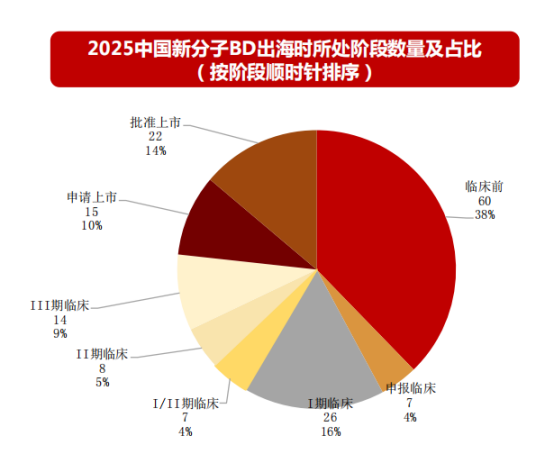
Core Insights - The surge in the stock price of 3SBio and its subsidiary Sanofi's recent A-share market performance is driven by a significant $60.5 billion licensing deal with Pfizer for the anti-cancer drug SSGJ-707, marking a record for upfront payments in domestic BD transactions [1] - The year 2025 has seen a remarkable increase in business development (BD) activities in the pharmaceutical sector, with total transaction values exceeding $130 billion, including over $7 billion in upfront payments [1][2] - The evolution of BD transaction models reflects changing industry dynamics, moving from simple licensing agreements to more complex co-development and risk-sharing arrangements [1][9] BD Transaction Trends - In 2025, 62% of BD transactions involved early-stage assets, with a notable increase in deals for molecules in clinical phases I and II, indicating a shift towards earlier-stage investments [3][4] - Major multinational corporations (MNCs) have significantly increased their collaborations with Chinese firms, with top companies like GSK and Pfizer participating in 35 deals, a tenfold increase from 2015 [3] - High-value transactions involving molecules in late-stage clinical trials are becoming more common, providing greater certainty and stability to the BD market [4] Asset Deal Dynamics - The trend towards asset deals rather than full company acquisitions allows pharmaceutical companies to acquire specific assets without the burden of integrating entire organizations [7][10] - The focus on high-demand therapeutic areas such as bispecific antibodies (bsAbs), antibody-drug conjugates (ADCs), and GLP-1 drugs has led to a concentration of BD activities in these segments [7][8] - The bispecific antibody sector alone accounted for nearly $3.5 billion in upfront payments, representing 49.8% of all BD upfront payments in 2025, with a year-on-year growth of 414.7% [8] Innovative Collaboration Models - New collaborative models such as platform-based deals and joint development agreements are emerging, allowing for deeper partnerships beyond traditional licensing [10][11] - The NewCo model, which involves creating new entities for specific pipeline rights, is gaining traction, although it currently represents a smaller share of the overall BD landscape [11][12] - The shift towards strategic alliances emphasizes shared risks and benefits, enhancing long-term collaboration between companies [11][12] Future Outlook - The BD landscape is expected to continue evolving, with a focus on the long-term value of research and development capabilities as companies navigate the complexities of global markets [12][14] - The successful execution of BD deals will depend on the ability of companies to translate these agreements into tangible innovations and market successes [14]

沪深北交易所同日“亮剑”:再融资新政对A股影响(附精选股票)
Sou Hu Cai Jing· 2026-02-10 06:14
Core Viewpoint - The simultaneous release of refinancing optimization measures by Shanghai, Shenzhen, and Beijing stock exchanges marks a significant transformation in China's capital market, aimed at enhancing capital allocation efficiency and reshaping the A-share market landscape [1]. Group 1: Policy Framework and Differences - The policy frameworks of the three exchanges are highly similar, focusing on "supporting the strong, limiting the weak, promoting innovation, and enhancing convenience and regulation" [2]. - Shanghai Stock Exchange emphasizes "main board" characteristics, tailoring financing rules for large, mature technology companies [2]. - Shenzhen Stock Exchange adopts a bolder stance on supporting technology innovation, easing fundraising restrictions for growth-oriented enterprises [2]. - Beijing Stock Exchange focuses on "innovative small and medium-sized enterprises," addressing their financing challenges with flexible policies [2]. Group 2: Strategic Insights on Separate Announcements - The decision to release policies on the same day rather than a joint announcement reflects the nuanced wisdom of tiered regulation in China's capital market [3]. - Different market positioning allows each exchange to cater to the unique characteristics and needs of the enterprises they serve, avoiding a one-size-fits-all approach [3]. - The simultaneous release creates a strong policy resonance, reinforcing market perception of deepening capital market reforms while maintaining the distinct identities of each exchange [3]. Group 3: Deep Impacts on Market Perception - The new measures aim to shift the long-standing fear of "blood-sucking" effects of refinancing, which was believed to drain market funds and destabilize the market [4]. - The principle of "supporting the strong, limiting the weak" will act as a catalyst for market differentiation, favoring quality companies, especially in hard technology, while raising barriers for poorly performing firms [4]. - The policy directs resources towards "new productive forces," providing strong support for leading companies in sectors like semiconductors, AI, biomedicine, and high-end manufacturing [5]. - Allowing companies that have experienced stock price declines to raise funds through methods like private placements and convertible bonds offers a lifeline to solid businesses facing temporary challenges [6]. - A complete regulatory loop is established, tightening post-fundraising supervision while relaxing initial approvals, transforming refinancing from a mere "money-raising tool" to an "engine" for corporate development [7]. Group 4: Implications for Investors - The coordinated actions of the three exchanges signify the entry of China's refinancing mechanism into a "precise drip irrigation" era, providing tailored financing support for different types of enterprises [8]. - Investors are advised to focus on genuinely innovative and well-governed companies while avoiding those that merely chase trends without substance [8]. - The transformation of refinancing from a "blood-sucking machine" to a "blood-producing pump" is expected to enhance the value discovery function of the A-share market, leading to a healthier and more vibrant capital market [8].






驱动基因阴性NSCLC专题:下一代治疗范式:双抗、IO+ADC
Southwest Securities· 2026-02-10 03:06
Investment Rating - The report does not explicitly state an investment rating for the industry Core Insights - The proportion of driver gene-negative non-small cell lung cancer (NSCLC) patients is approximately 31% in both China and the United States, indicating a significant market opportunity for treatments targeting this demographic [2][15] - The estimated market size for immune drugs used in first-line treatment of driver gene-negative NSCLC is projected to be around 7.5 billion CNY (approximately 1.1 billion USD) in China and 18 billion CNY (approximately 2.7 billion USD) in the United States by 2030 [2] - The current first-line treatment for advanced driver gene-negative NSCLC primarily relies on PD(L)-1 inhibitors combined with chemotherapy, but there are limitations in long-term efficacy and options for patients intolerant to chemotherapy [3] Summary by Sections Section 1: NSCLC Global Overview - Lung cancer is the leading cancer type globally, with new cases accounting for approximately 12% of all cancer cases in 2022, translating to about 2.5 million new lung cancer cases [10] - In China, lung cancer represents about 22% of new cancer cases, with approximately 1.06 million new cases in 2022 [10] Section 2: Market Potential for Driver Gene-Negative NSCLC - The report highlights the significant market potential for immune therapies in treating driver gene-negative NSCLC, with a focus on the limitations of current treatment options [2][3] Section 3: Next-Generation Immunotherapy Approaches - The report discusses the advancements in dual (multi) antibody therapies and immune-oncology (IO) combined with antibody-drug conjugates (ADC), emphasizing their potential to improve treatment outcomes for patients with driver gene-negative NSCLC [5][8] - The clinical data supporting these new therapies is expected to catalyze further investment and development in this area [5] Section 4: Treatment Guidelines Comparison - The report compares treatment guidelines for driver gene-negative NSCLC between the United States and China, noting differences in treatment stratification and recommended therapies [32][34] - The U.S. guidelines emphasize PD-L1 expression levels, while Chinese guidelines focus more on performance status (PS) [32][34] Section 5: Future Catalysts - Key upcoming clinical data releases and studies are highlighted as potential catalysts for investment opportunities in the sector, particularly regarding dual antibodies and ADC therapies [5][8]


华源晨会精粹20260209-20260210
Hua Yuan Zheng Quan· 2026-02-09 23:30
Group 1: Pharmaceutical Industry - The pharmaceutical index increased by 0.14%, outperforming the CSI 300 index by 1.47% during the week [2][6] - The report highlights the potential of molecular glue technology to target "undruggable" proteins, expanding the scope for innovative drug development [8][9] - Recommended stocks in the innovative drug sector include Heng Rui Medicine, China Biologic Products, and Yuan Dong Biology, among others [11][9] Group 2: Construction and Building Materials - Major engineering projects are identified as a key focus for the "14th Five-Year Plan," with significant investments planned across various provinces [13][14] - The report notes that infrastructure projects will dominate investment, with substantial funding allocated to transportation, municipal, and energy sectors [14] - The issuance of special bonds has increased significantly, with a total of 5,164.55 billion yuan issued as of February 8, 2026, marking a year-on-year increase of 125.35% [15] Group 3: Real Estate - The Shanghai government has initiated the acquisition of second-hand homes for rental housing projects, indicating a strategic move to stabilize the real estate market [19][21] - New home sales in 42 key cities totaled 1.48 million square meters, a slight decrease of 0.1% week-on-week, while second-hand home sales fell by 3.0% [20][19] - The report suggests that the real estate market is entering a phase of structural differentiation, with high-quality housing expected to see increased demand [23] Group 4: Overseas and Education Research - The first round of negotiations between the US and Iran concluded, with market sentiment shifting towards risk assets, particularly in AI and commercial aerospace sectors [26][30] - Bloom Energy reported better-than-expected earnings, with Q4 2025 revenue reaching $777.8 million, a year-on-year increase of 35.9% [26] - The quantum computing sector is gaining attention, with NERSC announcing a call for proposals utilizing neutral atom quantum processors [28]



【医药】政策推动中药工业提质升级,中长期利好行业集中度提升——行业跨市场周报(20260209)(黄素青/吴佳青/黎一江/曹聪聪/叶思奥)
光大证券研究· 2026-02-09 23:06
Market Overview - The A-share pharmaceutical and biotechnology index rose by 0.14%, outperforming the CSI 300 index by 1.47 percentage points and the ChiNext index by 2.06 percentage points, ranking 15th among 31 sub-industries [4] - The Hong Kong Hang Seng Healthcare Index fell by 1.41%, outperforming the Hang Seng Index by 1.65 percentage points [4] R&D Progress - Heng Rui Medicine submitted an NDA for HRS-9531; He Yu Bio's ABSK043 clinical application is under new undertaking [5] - Xianwei's Enogrelide is in Phase III clinical trials; Xiansheng Pharmaceutical's SIM0278 is in Phase II clinical trials; Yingxi Intelligent's ISM-4808 is in Phase I clinical trials [5] Investment Outlook - Continuous attention to AI healthcare-related investment opportunities is advised [6] - The Ministry of Industry and Information Technology, along with eight other ministries, issued the "Implementation Plan for High-Quality Development of Traditional Chinese Medicine Industry (2026-2030)", aiming to establish a collaborative development system for the entire industry chain by 2030 [6] - The plan focuses on enhancing the stable supply of key traditional Chinese medicine raw materials, improving digital and green levels, and optimizing the structure of the traditional Chinese medicine industry, which is expected to benefit the sector through policy dividends [6] Investment Strategy for 2026 - Future investments in the pharmaceutical sector should increasingly focus on the intrinsic clinical value of medicines, addressing clinical needs of patients [7] - Both domestic medical insurance policies and global expansion strategies are placing higher premiums on clinical value [7]

医药生物行业跟踪周报:分子胶海外风起,国内管线蓄势破局
Soochow Securities· 2026-02-09 05:24
Investment Rating - The report maintains an "Accumulate" rating for the pharmaceutical and biotechnology industry [1] Core Insights - The pharmaceutical index in A-shares has shown a slight increase of 0.14% this week and 3.28% year-to-date, outperforming the CSI 300 by 1.41% and 0.85% respectively [3][8] - The report highlights the emergence of molecular glue as a significant trend in the industry, with several successful stocks like RVMD, GLU, and KYMR, and substantial business development (BD) activities [3][15] - The report suggests that molecular glue has the potential to create new blockbuster drugs in oncology and autoimmune diseases, urging investors to focus on domestic companies involved in this area [3][11] Summary by Sections 1. Market Performance - The A-share pharmaceutical index has outperformed the CSI 300 index, with notable gains in traditional Chinese medicine (2.56%), medical services (1.31%), and raw materials (0.64%) [3][8] - The report lists top-performing stocks, including Guangsheng Tang (+29.83%) and HaiXiang Pharmaceutical (+18.64%), while noting declines in stocks like Changshan Pharmaceutical (-15.78%) [8] 2. Molecular Glue - Molecular glue is defined as a class of small molecule drugs that facilitate the binding of E3 ubiquitin ligases to previously unrecognized pathogenic target proteins, leading to their degradation [15] - The report mentions that BMS has two marketed molecular glues with peak sales exceeding $16 billion, and ongoing research into new iterations [3][15] - Domestic companies such as Yuan Dong Biology and Jin Fang Pharmaceutical are noted for their potential in molecular glue development [3][11] 3. R&D Progress and Corporate Developments - The report highlights significant clinical research milestones, including Pfizer's initiation of a Phase II/III trial for its PD-1/VEGF bispecific antibody SSGJ-707 [3] - It also notes that Novartis has submitted its BAFF-R monoclonal antibody for approval in China, and AbbVie has started a Phase II trial for its Bcl-2 inhibitor Venetoclax [3] 4. Recommended Stocks - The report provides a list of recommended stocks across various sectors, including: - CXO and upstream research services: WuXi AppTec, Hao Yuan Pharmaceutical, and Aopumai [11] - Traditional Chinese medicine: Zuo Li Pharmaceutical and Fang Sheng Pharmaceutical [11] - PD-1 PLUS: 3SBio, KANGFANG Biologics, and Innovent Biologics [11] - ADC: Ying En Biologics and Kelong Biotechnology [11] - AI drug development: Jing Tai Holdings [11]


医药生物行业跨市场周报(20260209):政策推动中药工业提质升级,中长期利好行业集中度提升-20260209
EBSCN· 2026-02-09 02:12
Investment Rating - The report maintains a "Buy" rating for key companies in the pharmaceutical sector, including Innovent Biologics, Efang Biologics, Tianshili, WuXi AppTec, and Mindray Medical [4][28]. Core Insights - The policy-driven upgrade of traditional Chinese medicine (TCM) industry is expected to enhance industry concentration in the medium to long term, benefiting companies with strong quality control and innovative capabilities [2][24]. - The implementation plan for high-quality development of the TCM industry aims to establish a collaborative development system by 2030, focusing on raw material supply, innovation, production quality control, and internationalization [2][23]. - The investment strategy emphasizes the importance of clinical value in the pharmaceutical sector, recommending a focus on innovative drugs and high-end medical devices [3][26]. Summary by Sections Market Review - The A-share pharmaceutical index rose by 0.14%, outperforming the CSI 300 index by 1.47 percentage points [1][16]. - The Hong Kong Hang Seng Medical Health Index fell by 1.41%, but still outperformed the Hang Seng Index by 1.65 percentage points [1][16]. Policy Insights - The Ministry of Industry and Information Technology and other departments issued a plan to enhance the TCM industry, which includes fostering leading enterprises and establishing high-standard raw material production bases [2][24]. - The plan emphasizes digitalization and sustainability, aiming to raise compliance standards and accelerate the exit of smaller companies from the market [2][25]. Company Updates - Recent clinical progress includes the NDA submission for HRS-9531 by Heng Rui Medicine and the initiation of clinical trials for various drugs by other companies [1][31][32]. - Key companies such as Yunnan Baiyao, Baiyunshan, and Taiji Group are highlighted for their strong positions in raw material supply [2][25]. Financial Forecasts - The report provides earnings per share (EPS) forecasts for key companies, with Innovent Biologics projected to have an EPS of 0.49 in 2025 and WuXi AppTec expected to reach an EPS of 5.07 in the same year [4][28]. - The pharmaceutical manufacturing industry reported a revenue decline of 1.2% year-on-year for 2025, with total revenue reaching 2,487 billion yuan [51].


