
Shuangliang Eco-Energy(600481)

Search documents
太空光伏概念震荡拉升
Jing Ji Guan Cha Wang· 2026-02-03 02:51
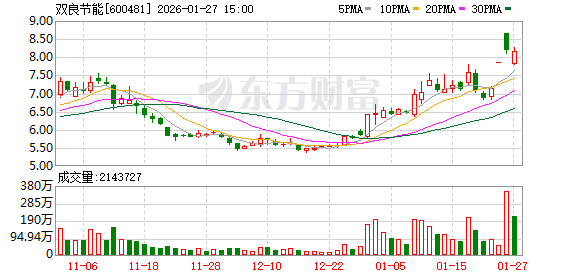
经济观察网 2月3日早盘,太空光伏概念震荡拉升,截至10时整,双良节能(600481)涨停,奥特维涨 超18%,高测股份涨超10%,迈为股份(300751)、钧达股份(002865)等多股上涨。消息面上,近 日,多家机构发布看好太空光伏发展的研报。中金公司(601995)研报提到,在商业航天蓬勃发展背景 下,太空光伏作为其电源系统升级的核心方向,在星座批量组网的牵引下正迈向技术路线升级与产业化 交付的新阶段。随着我国低轨星座进入密集部署期、单星功率持续上行叠加太空算力等新应用场景推进 探索,建议把握太空光伏带来的全产业链变革,持续关注制造产业端落地密集催化。 ...



太空光伏概念拉升!金银反弹
Shang Hai Zheng Quan Bao· 2026-02-03 02:24
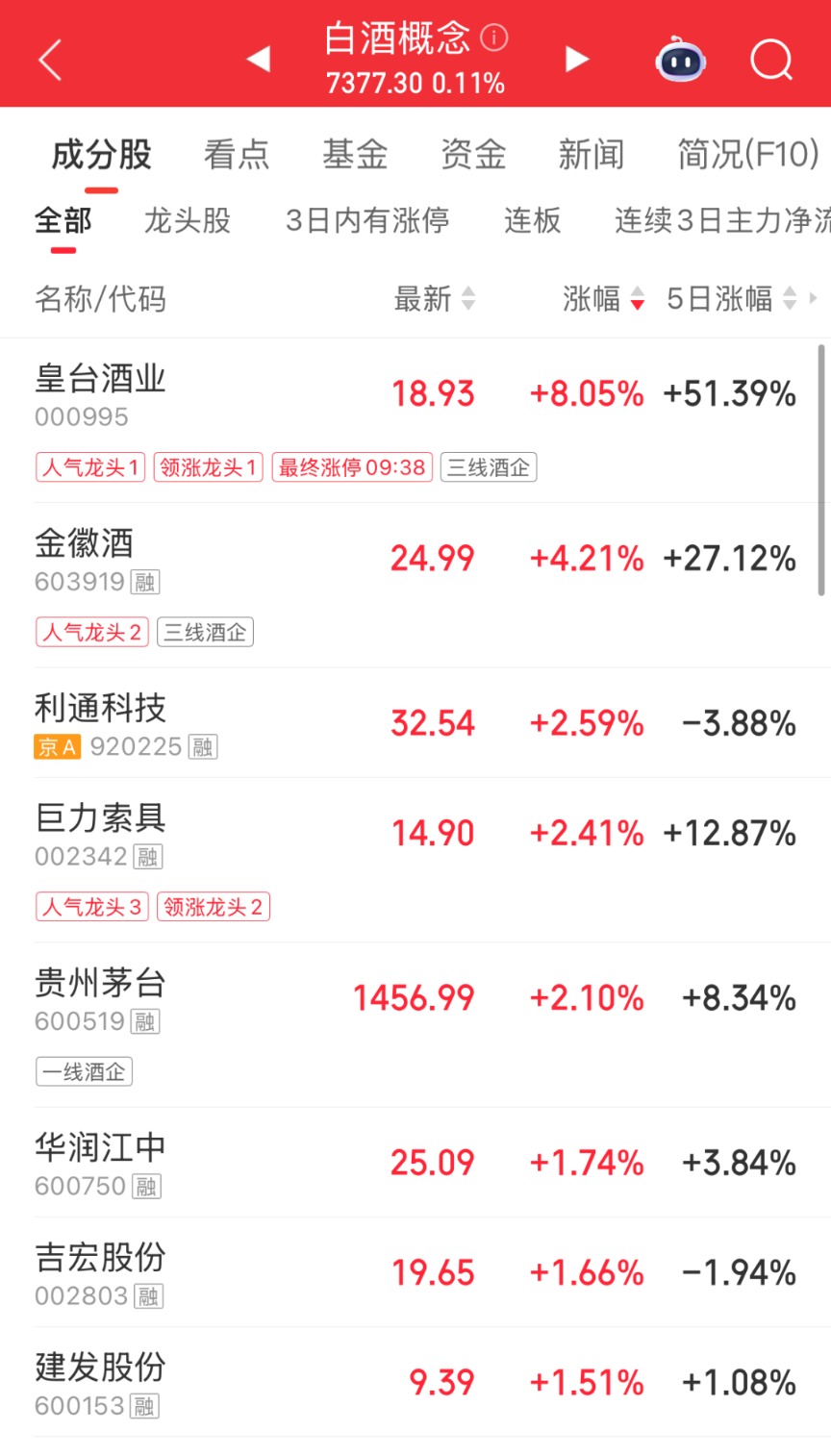
Group 1: Space Solar Power Concept - The space solar power concept saw a significant rise in early trading, with companies like Shuangliang Energy and Aotewi hitting the daily limit up, while others like Maiwei Co., Dike Co., and Guosheng Technology also experienced gains [1] Group 2: Baijiu Sector Activity - The baijiu sector remained active, with Huangtai Liquor reaching the daily limit up and other companies like Jinhui Liquor, Litong Technology, and Kweichow Moutai also seeing increases. Guosen Securities noted that sectors like baijiu and real estate, which had previously lagged, are now performing well as the spring market enters its second half, leading to a convergence in market structure [1] - Huangtai Liquor's stock price increased by 8.05% to 18.93, marking a 51.39% rise over the past five days [2] - Jinhui Liquor's stock price rose by 4.21% to 24.99, with a five-day increase of 27.12% [2] - Kweichow Moutai's stock price increased by 2.10% to 1456.99, with an 8.34% rise over the past five days [2]




商业航天为何会成为2026年的主线?
Soochow Securities· 2026-01-29 00:20
Investment Rating - The report maintains an "Overweight" rating for the commercial aerospace industry, indicating a positive outlook for the sector in the coming months [1]. Core Insights - The commercial aerospace industry is expected to undergo a significant transformation by 2026, driven by advancements in launch capabilities and the successful deployment of domestic rockets, which will remove previous constraints on industry growth [8][9]. - The competition in commercial aerospace is fundamentally a "land grab" for space sovereignty and resource allocation, emphasizing the need for increased launch frequency to secure China's position in low Earth orbit [10]. - The report highlights the strategic importance of commercial aerospace in national defense and resource acquisition, particularly in the context of lunar resources like Helium-3, which could reshape global energy dynamics [12]. - Key catalysts for the industry include domestic policy support and capital market developments, with significant IPOs expected from leading aerospace companies in 2026 [13][15]. Summary by Sections 1. Why has the domestic commercial aerospace industry reached a qualitative change? - The industry has transitioned from a limited payload capacity to a robust launch capability, marked by the successful launch of the Zhuque-3 rocket, which signifies a shift from speculative themes to a narrative driven by operational capacity [8]. 2. How to understand the importance of commercial aerospace? - The scarcity of low Earth orbit resources has made the commercial aerospace race a critical national strategy, with the need to enhance launch frequency to secure space assets and maintain competitive advantages [10][11]. 3. What subsequent catalysts are worth paying attention to in commercial aerospace? 3.1. Domestic: Accelerated release of policy and capital dividends - The report anticipates significant policy support and capital market activity, with major aerospace companies expected to enter the IPO market in 2026, reflecting the strategic importance of the sector [13]. 3.2. International: Clear policy framework and tight planning timeline - The U.S. has shifted from a public to a private ownership model for space resources, establishing a legal framework that encourages commercial investment in space resource development [15][16]. 4. Investment Recommendations 4.1. SpaceX Concept - Companies that could potentially enter the SpaceX supply chain are highlighted, indicating a strong future in commercial aerospace [17]. 4.2. Rocket Sector: "Many Stars, Few Rockets" Expected to Breakthrough - The report suggests that advancements in large-capacity reusable rocket technology will lead to significant changes and valuation adjustments in the sector [19]. 4.3. Satellite Sector: Certainty in Implementation - The urgency to secure low Earth orbit resources is driving domestic satellite constellations from planning to large-scale deployment [20]. 4.4. Space Computing and Space Photovoltaics: Next-Generation Core Tracks - The report identifies space computing and space photovoltaics as critical future sectors, emphasizing their role in supporting lunar economies and global intelligence ecosystems [22].


双良节能(600481) - 双良节能系统股份有限公司2026年第一次临时股东会会议资料
2026-01-28 10:15
2026 年第一次临时股东会会议资料 双良节能系统股份有限公司 2026 年第一次临时股东会 会议文件 二〇二六年二月 第 1 页 共 10 页 2026 年第一次临时股东会会议资料 目 录 | 目 录 | -------------------------------------------------------------- 2 | | --- | --- | | 双良节能系统股份有限公司 2026 | 年第一次临时股东会会议须知 ------------ 3 | | 双良节能系统股份有限公司 2026 | 年第一次临时股东会会议议程 ------------ 5 | | 议案一:关于开展期货套期保值业务的议案 | ----------------------------- 6 | 第 2 页 共 10 页 2026 年第一次临时股东会会议资料 双良节能系统股份有限公司 2026 年第一次临时股东会会议须知 为维护广大投资者的合法权益,确保股东在本次股东会期间依法行使权利, 根据《中华人民共和国公司法》、中国证券监督管理委员会《上市公司股东会规 则》和《公司章程》等有关规定,特制定本会议须知: 一、公司 ...
光伏设备板块1月28日跌2.77%,欧普泰领跌,主力资金净流出52.16亿元
Zheng Xing Xing Ye Ri Bao· 2026-01-28 09:04
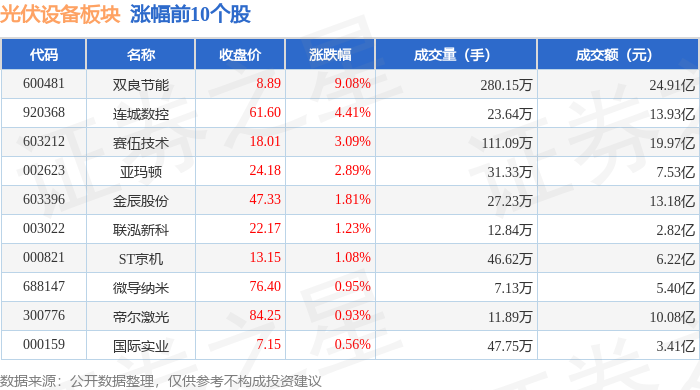
Core Viewpoint - The photovoltaic equipment sector experienced a decline of 2.77% on January 28, with Optec leading the drop, while the Shanghai Composite Index rose by 0.27% and the Shenzhen Component Index increased by 0.09% [1]. Group 1: Market Performance - The closing price of Optec was 17.16, reflecting a decrease of 10.81% with a trading volume of 147,700 shares and a transaction value of 261 million [2]. - The sector saw a net outflow of 5.216 billion from major funds, while retail investors contributed a net inflow of 3.687 billion [2]. Group 2: Individual Stock Performance - Shuangliang Energy closed at 68.8, with a rise of 9.08% and a trading volume of 2.8015 million shares, resulting in a transaction value of 2.491 billion [1]. - The stock of Jianqiang Technology closed at 18.01, up by 3.09%, with a trading volume of 1.1109 million shares and a transaction value of 1.997 billion [1]. - The stock of Jicheng Technology saw a decline of 5.97%, closing at 128.57, with a trading volume of 351,200 shares and a transaction value of 4.570 billion [2].
【大涨解读】云计算:“AI通胀”继续传导,海外云计算龙头接连涨价,Clawdbot爆火还带动Agent爆发
Xuan Gu Bao· 2026-01-28 03:36
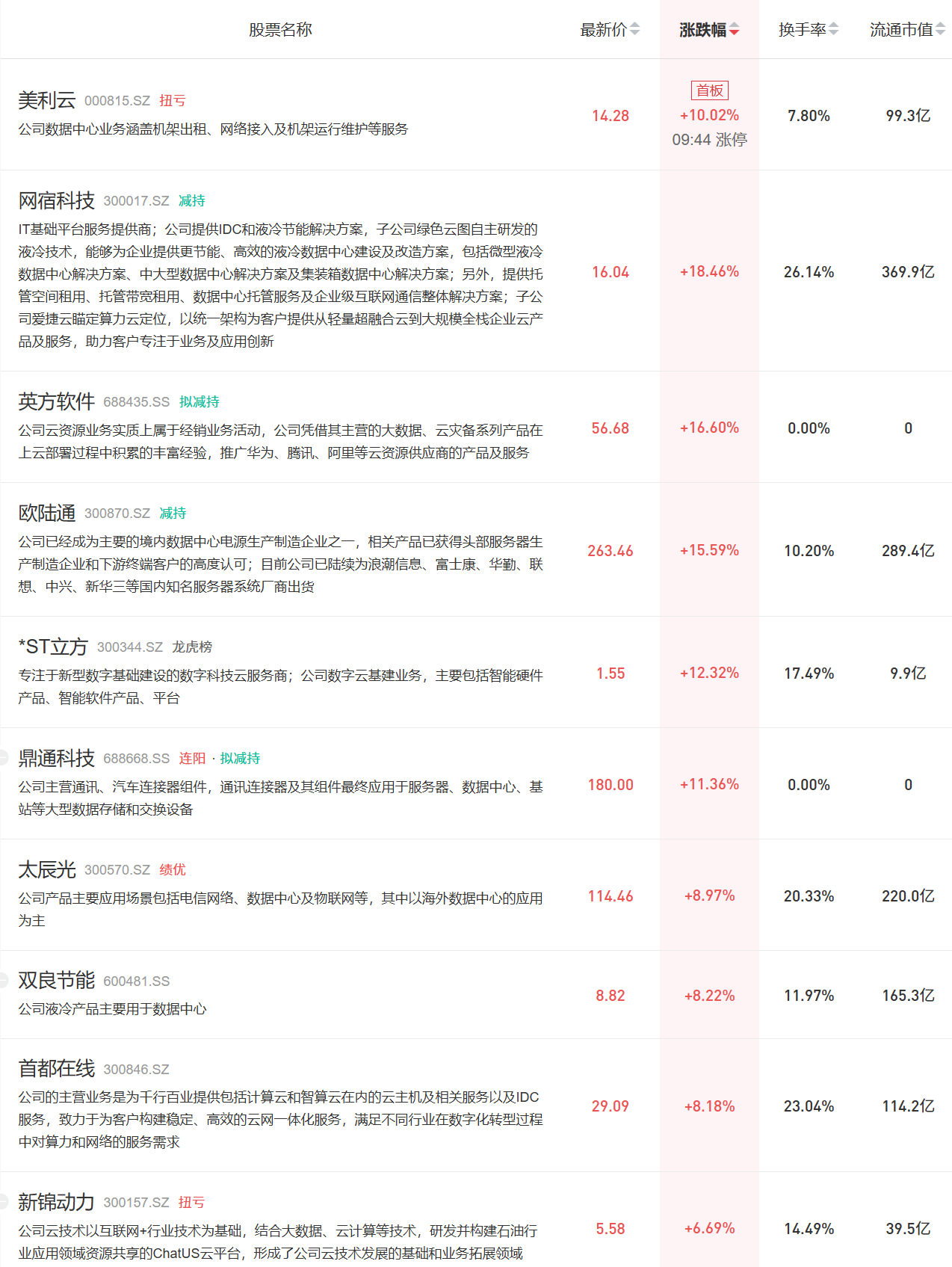
Market Overview - On January 28, the cloud computing sector experienced a significant surge, with Meili Cloud hitting the daily limit, and companies like Wangsu Science and Technology and Oulutong rising over 10% [1] - Meili Cloud's stock price reached 14.28, reflecting a 10.02% increase, while Wangsu Science and Technology saw a price of 16.04, up by 18.46% [2] Price Increases by Major Cloud Providers - Google Cloud announced on January 27 that it will increase global data transfer service prices starting May 2026, with North American rates expected to double from current levels [3] - Amazon Web Services raised its EC2 machine learning capacity block prices by approximately 15%, with the p5e.48xlarge instance's hourly cost increasing from $34.61 to $39.80 [3] Institutional Insights - The recent price hikes confirm the high demand for AI computing power globally, indicating a growing scarcity of resources in the AI cloud industry [4] - The price increases mark a departure from the long-standing trend of declining cloud service prices, suggesting that once a price increase is successfully implemented without significant customer loss, further increases may follow more easily [4] - The global cloud computing market is projected to reach $692.9 billion in 2024, with a year-on-year growth of 20.3%, driven by the demand for IaaS due to AI model training [4] - The emergence of Clawdbot signifies a shift in AI product forms from "scene-level assistants" to "system-level agent platforms," enhancing overall efficiency in various business operations [4]




光伏反内卷攻坚,政企同心方得始终
第一财经· 2026-01-27 13:08
Core Viewpoint - The photovoltaic industry is undergoing a deep reform to combat internal competition, with regulatory measures and policy adjustments reflecting a commitment to high-quality development. However, many companies are still facing significant losses, indicating that this battle is not a short-term fix but a necessary step to resolve structural issues within the industry [2][5]. Industry Performance - Major companies like Tongwei Co., Ltd. and LONGi Green Energy are projected to incur substantial losses in 2025, with estimated net losses of 9 to 10 billion yuan and 6 to 6.5 billion yuan respectively. Other companies such as JA Solar, JinkoSolar, and Trina Solar are also expected to report significant losses, highlighting the severe challenges faced by the industry [2][3]. - The average gross margin for the entire industry is only 3.64%, with many companies trapped in a cycle of "production equals loss" due to oversupply and rising raw material costs [3][4]. Causes of Losses - The industry's performance crisis is primarily attributed to excessive homogenous production capacity and fierce price competition, compounded by soaring raw material costs. The supply of silicon materials is projected to exceed global demand by more than double over the next three years, leading to a significant imbalance [3][4]. - The price of silver, a key material in photovoltaic cells, has surged by 231% in 2025, pushing companies to adopt cost-cutting measures at the expense of technological innovation and quality [4][5]. Recommendations for Improvement - Companies must shift their focus from price competition to technological innovation and quality improvement, investing in advanced battery technologies such as TOPCon, BC, and ABC to enhance efficiency and reduce costs [4][6]. - The industry needs to establish self-regulatory standards to combat unfair competition practices, such as selling below cost and misrepresenting product capabilities, while promoting collaboration among companies to consolidate resources [4][6]. Government Role - Government policies and regulatory actions are crucial for supporting the industry's reform efforts. A unified and clear policy direction is necessary to stabilize market expectations and foster industry consensus [5][6]. - Regulatory bodies should enhance oversight on low-price dumping and set higher energy consumption and environmental standards for mature production stages, while also optimizing bidding rules to prioritize technology and quality over price [5][6]. Future Outlook - The photovoltaic industry is at a critical juncture, with the potential for recovery as companies begin to reduce losses and improve profitability. Analysts suggest that the industry may see a turning point in profitability by early 2026 [6][7]. - A collaborative effort between companies and government is essential to ensure that innovation becomes the cornerstone of industry development, allowing China to transition from a manufacturing hub to a center of innovation in the global energy transformation [7].






双良节能2025年业绩大幅减亏 多维创新与政策红利打开增长新空间
Xin Hua Cai Jing· 2026-01-27 08:16
Core Viewpoint - The company, Shuangliang Energy, forecasts a net loss of 780 million to 1.06 billion yuan for 2025, indicating a significant reduction in losses compared to 2024, attributed to the seasonal characteristics of the photovoltaic industry [2] Group 1: Financial Performance - Shuangliang Energy's projected losses are relatively smaller compared to leading companies in the photovoltaic sector, which are expected to incur losses ranging from 4 billion to 10 billion yuan [2] - The company has made provisions for fixed asset impairment, which may also contribute to the losses in the fourth quarter [3] Group 2: Growth Drivers - The company has made breakthroughs in zero-carbon parks, core equipment, and emerging sectors, which inject growth momentum and enhance market confidence [3] - Shuangliang Energy's zero-carbon park solutions have gained industry recognition, with significant projects underway, including a 24 MW rooftop photovoltaic green electricity project and a 600 MW wind-solar-storage project expected to be operational by 2026 [3] Group 3: Technological Advancements - Continuous breakthroughs in core equipment technology are crucial for supporting performance, with the energy service industry in China projected to exceed 1.2 trillion yuan by 2025, growing at a compound annual growth rate of over 18% [4] - The company has achieved significant advancements in its natural ventilation direct air cooling system, which has been successfully applied in extreme conditions, filling a gap in the market [4] Group 4: Market Opportunities - The synergy between the photovoltaic sector and emerging markets strengthens the growth foundation, with the company adopting a customer-centric strategy to ensure stable supply and delivery [6] - The space photovoltaic sector is expected to open a trillion-yuan market, with Shuangliang Energy positioned to benefit from its technological capabilities in photovoltaic silicon materials and smart energy management [6] - The green hydrogen production business is emerging as a new growth driver, with the company’s alkaline water electrolysis equipment setting global benchmarks and aligning with low-carbon transition demands [6] Group 5: International Recognition - Shuangliang Energy is a core equipment supplier for the largest polysilicon project in the Middle East, showcasing its international recognition and capability to provide solutions for the photovoltaic industry [7] - The company’s diverse business layout and technological accumulation enable it to maintain stable development amid industry fluctuations, supported by national energy-saving and carbon reduction policies [7]
壹快评丨光伏反内卷攻坚,政企同心方得始终
Di Yi Cai Jing· 2026-01-27 04:26
Core Viewpoint - The photovoltaic industry is undergoing a significant transformation towards high-quality development, driven by both internal corporate self-discipline and external government support, as evidenced by recent regulatory measures and policy adjustments aimed at combating price competition and fostering innovation [1][4][7]. Industry Performance - The photovoltaic sector is currently facing severe financial challenges, with major companies like Tongwei Co. and LONGi Green Energy projected to incur substantial losses in 2025, highlighting the industry's struggle with low-price competition and rising material costs [1][2]. - The average gross margin for the industry has plummeted to just 3.64%, leading many companies into a cycle of "production equals loss" [2]. Competitive Landscape - The industry is experiencing an oversupply of homogeneous production capacity, with silicon material capacity exceeding global demand by more than double, resulting in a fierce price war among companies [2][3]. - Companies that previously relied on scale advantages are now also facing revenue declines and negative profits, indicating a widespread crisis across the sector [2]. Material Costs and Innovation - The price of silver, a critical component in photovoltaic cells, has surged by 231% in 2025, pushing companies to adopt cost-reduction technologies such as "less silver" or "silver-free" approaches [3]. - The focus on price competition has led some companies to neglect technological innovation and quality improvement, which are essential for long-term survival [3]. Government Role and Policy Recommendations - Government intervention is crucial for the success of the anti-involution measures, requiring a unified and clear policy direction to stabilize market expectations and foster industry consensus [4][6]. - There is a need for coordinated regulatory efforts across various government departments to effectively combat unfair competition and ensure sustainable industry practices [5][6]. Future Outlook - The current challenges in the photovoltaic industry present an opportunity for transformation, shifting from a focus on quantity to value creation, which is expected to be a long-term process [7]. - Some companies are beginning to reduce losses, and there is optimism that the industry may see a profitability turning point in early 2026 [7].
双良节能2025年业绩减亏 多维创新与政策红利打开增长新空间
Zhong Guo Jin Rong Xin Xi Wang· 2026-01-27 02:49
Core Viewpoint - The company, Shuangliang Energy, has significantly narrowed its overall loss for the 2025 fiscal year, despite the photovoltaic industry facing challenges in the fourth quarter, which is typically a slow season [1] Group 1: Financial Performance - Shuangliang Energy's loss is relatively small compared to leading companies in the photovoltaic sector, which are expected to incur losses between 40 billion to 100 billion yuan [1] - The company has made provisions for fixed asset impairment, reflecting a cautious financial approach, which is a contributing factor to the fourth-quarter loss [1] Group 2: Industry Position and Developments - The company has gained recognition for its zero-carbon park solutions, with its photovoltaic industrial park being selected for a national-level zero-carbon park construction [2] - The industrial park has completed a 24MW rooftop photovoltaic project and is expected to achieve additional projects by 2026, contributing to significant reductions in coal consumption and water usage [2] Group 3: Technological Advancements - Continuous breakthroughs in core equipment technology are crucial for supporting the company's performance, with the energy service industry in China projected to exceed 1.2 trillion yuan by 2025, growing at a compound annual growth rate of over 18% [3] - The company has developed a natural ventilation direct air cooling system that has passed preliminary design reviews, marking a significant advancement in extreme environment applications [3] Group 4: Market Opportunities - The space photovoltaic sector is expected to create a trillion-level market space, with the company positioned to benefit from its technological advancements in photovoltaic silicon materials and smart energy management [4] - The green hydrogen production business is emerging as a new growth driver, with the company’s alkaline water electrolysis technology setting global benchmarks and aligning with low-carbon transformation demands [4] Group 5: Long-term Outlook - The combination of stable profitability in core equipment, rapid growth in green hydrogen, and favorable national policies is expected to drive the company towards sustained profitability and long-term value for investors [5]