
GXED(600617)

Search documents
链博会现场声音:中国新能源汽车在全球汽车版图中分量越来越重
Huan Qiu Wang Zi Xun· 2025-07-19 03:10
Core Viewpoint - The Chinese new energy vehicle (NEV) industry is increasingly influential globally, contributing significantly to the transformation of the automotive sector towards electrification and intelligence [1][2]. Industry Overview - The third China International Supply Chain Promotion Expo showcased key technologies and products across the entire NEV industry chain, highlighting over 20 years of development in China [1]. - The NEV industry in China has established a complete supply chain system, with major clusters forming in regions such as Beijing-Tianjin-Hebei, Yangtze River Delta, Pearl River Delta, and Chengdu-Chongqing [1]. Market Performance - In the first half of the year, China's NEV exports surged by 75.2% year-on-year, surpassing one million units, reaching 1.06 million [2]. - Despite the growth, the industry faces challenges from rising trade protectionism in some countries, particularly following the EU's imposition of anti-subsidy tariffs on Chinese NEVs [2]. Strategic Recommendations - To navigate international market challenges, domestic manufacturers should focus on technological innovation, enhance product value, and reduce reliance on price competition [2]. - Companies are advised to accelerate local production overseas, including establishing manufacturing bases, sales networks, and service teams [2]. - Strengthening brand recognition and reputation in different international markets is essential for enhancing competitiveness [2]. Future Outlook - The collaboration between domestic and foreign enterprises at the expo indicates a trend towards closer cooperation in the NEV sector, which will play a crucial role in addressing climate change and promoting green transformation globally [3].

链博会搭台 外企深耕中国新能源产业新蓝海
Jing Ji Wang· 2025-07-18 09:22
Core Insights - The third China International Supply Chain Promotion Expo has commenced, injecting new momentum into global industrial chain innovation and cooperation [1] - Wacker Chemie, a leading global silicone producer, made its debut at the expo, showcasing over 20 innovative products in the automotive and electronics sectors, along with 4 new products, reflecting the confidence of foreign enterprises in the Chinese market [1] Company Highlights - Wacker exhibited core products such as fire-resistant materials for electric vehicle busbars and thermal conductive materials for automotive chips, precisely addressing key demands in China's new energy vehicle supply chain [2] - The silicone rubber material developed for battery pack safety can rapidly ceramicize at temperatures up to 1000 degrees Celsius, providing a robust safety barrier for the "three electric" systems [2] - Automotive-grade thermal conductive materials can withstand temperature variations from -40 to 180 degrees Celsius, supporting the upgrade of intelligent driving technologies [2] Industry Context - Wacker's innovations represent the technological achievements of its deep engagement in the Chinese market and exemplify the collaborative innovation between domestic and foreign industries [2] - The Chinese new energy vehicle industry chain is recognized as complete and expansive, serving as a significant source of global industrial innovation [2] - The expo is becoming an important platform for enterprises from various countries to share development opportunities in China, highlighting the strong appeal of the Chinese market and the resilience of its supply chain [2]


守得住方能跑得远 中国新能源汽车破卷向新
Zhong Guo Chan Ye Jing Ji Xin Xi Wang· 2025-07-17 22:52
Core Insights - The automotive industry in China is facing a significant decline in profit margins, dropping from 5.7% in 2022 to below 4% in May 2023, primarily due to intense "price wars" and "involution" competition [1][2] - Industry leaders and associations are advocating for a shift away from price competition towards long-term innovation and quality improvement [3][4] Group 1: Industry Challenges - The automotive industry's profit margin has decreased significantly, with a reported loss of 177.6 billion yuan due to price wars in the new car market [2] - Over 200 car models experienced price cuts in 2024, with some reductions exceeding 50,000 yuan, leading to further profit declines [2][3] - The focus on short-term gains from price reductions is hindering long-term innovation and development within the industry [2][3] Group 2: Calls for Action - The China Automotive Industry Association has issued a clear stance against bottomless price wars, urging for fair competition and healthy industry development [4][5] - The Ministry of Industry and Information Technology supports these initiatives and plans to enhance regulatory measures to maintain a fair market environment [4][5] Group 3: Strategies for Improvement - Companies are encouraged to prioritize technological innovation and core competitiveness to escape the cycle of price competition [6][8] - Various automotive leaders emphasize the importance of global expansion and maintaining brand value while avoiding price wars in international markets [8][9] - The concept of "Five Transformations" (electrification, intelligence, AI, low-carbon, and globalization) is proposed as a strategic direction for companies to enhance their competitiveness [6][9] Group 4: Global Market Considerations - Companies are advised to avoid bringing domestic price war practices into international markets, as the tolerance for such behavior is low [9][10] - Emphasizing quality, safety, and service in global competition is crucial for building a respected automotive brand [9][10]



年中经济观察|中国新能源汽车如何逐“新”提“智”——中国经济年中观察之二
Xin Hua She· 2025-07-17 13:53
Core Viewpoint - The Chinese electric vehicle (EV) industry is experiencing significant growth, with production and sales both surpassing 6.9 million units, reflecting over 40% year-on-year growth, and a market penetration rate that continues to rise. Exports have also increased by 75.2% [1]. Group 1: Innovation and Technology - The introduction of advanced technologies, such as AI-driven paint defect detection systems, is enhancing quality control in the EV manufacturing process [2]. - The integration of over 1,600 smart terminals and 3,000 robots in factories has achieved 100% automation in production, showcasing the industry's shift towards intelligent and efficient manufacturing [4]. - New battery technologies, like the dual-core battery developed by CATL, are being tailored to meet specific user needs, indicating a trend of innovation driven by market demands [5]. Group 2: Collaboration and Industry Dynamics - The automotive industry is witnessing increased collaboration between suppliers and manufacturers, exemplified by CATL's production lines being integrated within vehicle assembly lines for immediate battery installation [8]. - Partnerships, such as that between BMW and Momenta, highlight the importance of local collaboration to enhance technological advancements in the Chinese market [8]. - The establishment of innovation alliances among over 300 partners is aimed at improving overall innovation efficiency within the automotive sector [9]. Group 3: Market Regulation and Competition - The Chinese government is taking steps to regulate the competitive landscape of the EV industry, addressing issues of irrational competition and low profitability, with the automotive industry's profit margin reported at 4.3% compared to 5.7% for downstream industrial enterprises [10][11]. - New national standards for electric vehicle batteries are being implemented to enhance safety and performance, reflecting a commitment to high-quality development in the industry [11]. - Major automotive companies are moving away from price wars and focusing on long-term value creation, with commitments to fair payment practices and reduced sales targets to foster sustainable growth [12]. Group 4: Future Outlook - The consensus within the industry emphasizes the need for a long-term strategy focused on value creation rather than mere volume, with calls for the Chinese automotive sector to become a leader in quality and innovation [13].
中国新能源与智能网联技术领跑全球 以“链”为“桥”促进共赢发展
Yang Shi Wang· 2025-07-17 06:58
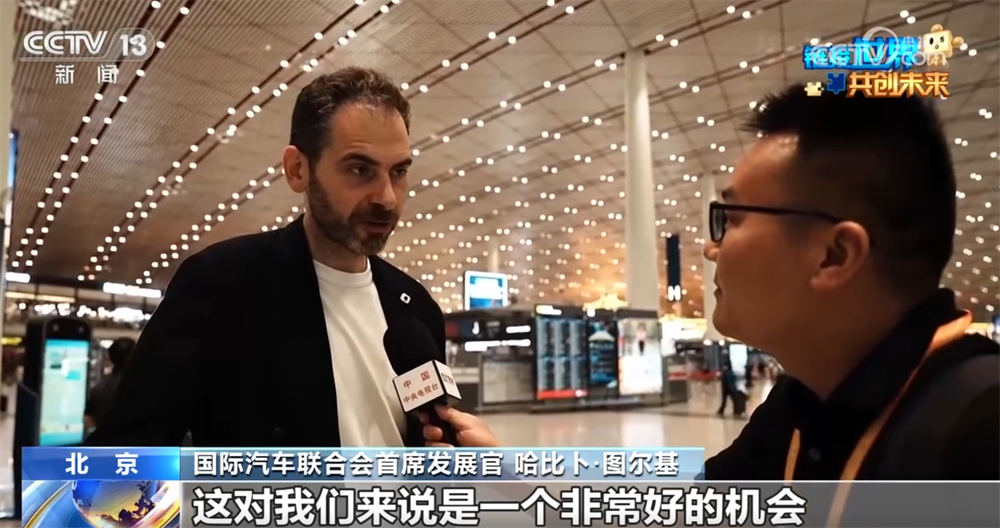
Group 1 - The International Automobile Federation (FIA) aims to establish new partnerships with companies it has not previously engaged with, viewing the event as a significant opportunity for brand development [3] - FIA's Chief Development Officer, Habib Turkie, has a comprehensive list of companies to meet during his five-day visit to China, including battery suppliers, software and AI providers, automotive manufacturers, racing teams, local governments, and regulatory bodies [5] - The FIA hosted a cooperation meeting on the first day of the Chain Expo, which attracted over ten automotive industry companies, leading to an increase in seating due to high attendance, indicating strong interest in collaboration [7] Group 2 - The Chain Expo highlighted the synergy between global racing resources brought by the FIA and innovative technologies from Chinese enterprises in the fields of new energy and intelligent networking, promoting mutual cooperation and win-win development [9]
研报预计:中国新能源市场5年内将迎洗牌 仅15个品牌能“存活”
Cai Jing Wang· 2025-07-17 04:09
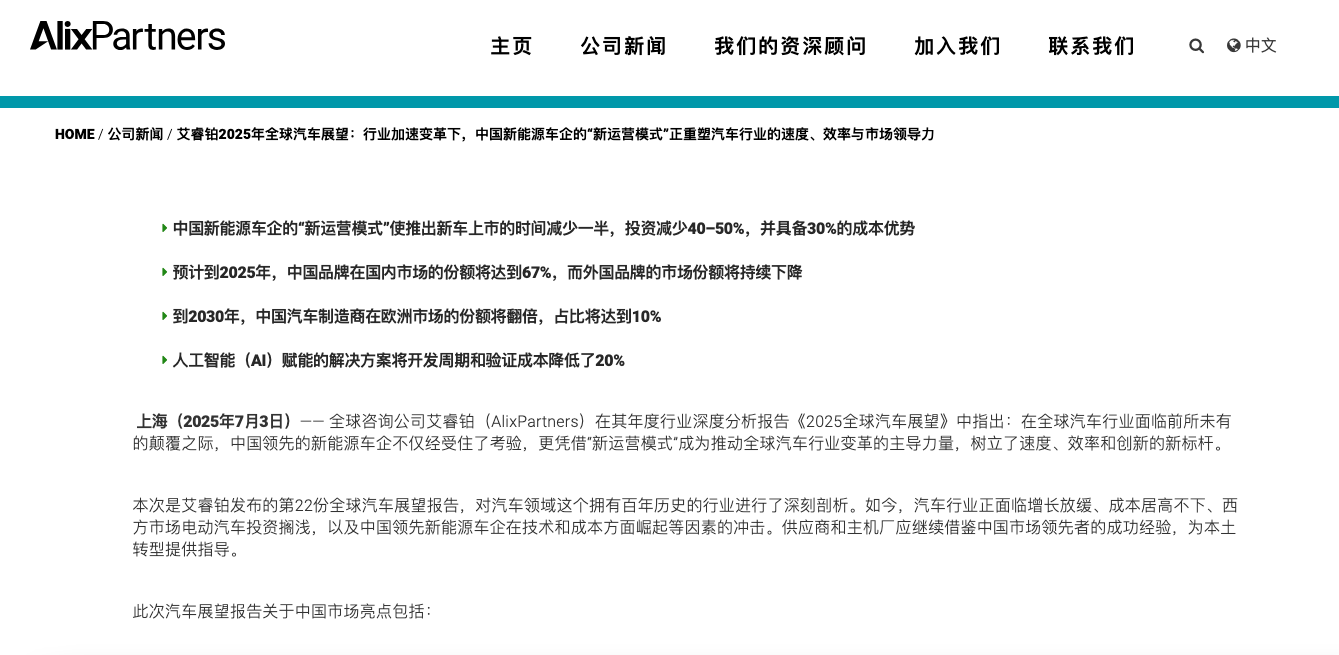
Core Insights - The AlixPartners report predicts that by 2030, only 15 out of the current 129 electric vehicle brands in China will remain financially viable, indicating a significant market consolidation where nearly 90% of brands face exit risks [1][2][4] - The report highlights that the Chinese automotive industry is accelerating its expansion into overseas markets, particularly Europe, which is expected to reshape the global automotive landscape by 2030 [1][6] Industry Overview - The current number of electric vehicle brands in China has decreased from 137 in 2023 to 129, with many brands selling fewer than 1,000 units, effectively not competing in the market [2] - Brands with sales exceeding 100,000 units are increasing, suggesting a trend towards higher market concentration as the industry matures [2] Financial Performance - As of last year, only BYD, Li Auto, and Seres reported annual profitability among listed Chinese electric vehicle companies, while others like GAC Group and BAIC BluePark reported significant losses in Q1 2025 [4] - NIO reported a net loss of 6.891 billion yuan in Q1 2025, a 31.1% increase in losses year-on-year, indicating widespread profitability challenges across the sector [4] Market Expansion - Chinese automakers are expected to increase their annual production in Europe by 800,000 units by 2030, doubling their market share to 10% as they localize production [6] - The competitive pricing of Chinese electric vehicles is attributed to a mature supply chain, allowing them to offer lower prices compared to European counterparts [9] Competitive Advantage - China holds a first-mover advantage in the electric vehicle sector with a relatively complete industrial chain, providing stronger product competitiveness and cost control compared to traditional European manufacturers [12] - Chinese companies are increasingly establishing local production facilities in Europe, with examples including BYD's factories in Hungary and Turkey, and Chery's collaboration in Spain [12][14] Market Performance - In February, sales of Chinese automakers surged by 64% year-on-year, reaching 38,902 units, with market share increasing from 2.5% to 4.1% [14] - By May, sales further increased by 85% year-on-year, surpassing 60,215 units and achieving a market share of 5.4%, marking a historic high for Chinese brands in Europe [14]
中国新能源汽车受澳市场认可 和谐比亚迪第100家海外门店落地墨尔本
Ren Min Wang· 2025-07-16 02:07
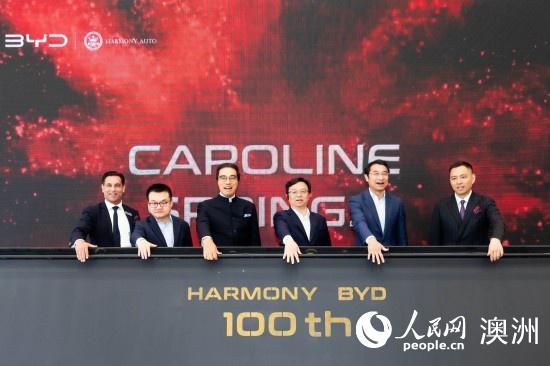
Group 1 - The opening of the 100th overseas store of Harmony BYD in Melbourne marks a significant milestone in the brand's global expansion and reflects the increasing influence of Chinese electric vehicle companies in the Australian market [5][11] - The Australian public's demand for green transportation aligns with BYD's vision of "cooling the Earth by one degree," making BYD a preferred choice for consumers purchasing new energy vehicles [5] - BYD has entered the top five in local car sales in Australia, gaining widespread recognition among Australian consumers, with a focus on combining quality products with localized services [7][11] Group 2 - The opening ceremony included the delivery of the 60,000th BYD new energy vehicle, showcasing the company's service system and operational model in the Australian market [9] - Over 80% of all electric vehicles sold in Australia in the first half of the year were produced in China, with BYD capturing 45% of the plug-in hybrid vehicle market [11] - BYD's vehicle sales in Australia have increased by 103% over the past year, indicating a strong and steady development of Chinese new energy vehicle brands in overseas markets [11]
中国新能源汽车的崛起是因为补贴吗?
Xin Lang Cai Jing· 2025-07-15 01:57
Core Insights - The Chinese automotive industry, particularly the new energy vehicle (NEV) sector, has shown robust growth despite economic challenges, with production and sales reaching 15.62 million and 15.65 million units respectively in the first half of the year, marking year-on-year increases of 12.5% and 11.4% [1] - NEV production and sales reached 6.97 million and 6.94 million units, with year-on-year growth of 41.4% and 40.3%, accounting for 44.3% of total new car sales [1] - Exports of NEVs totaled 1.08 million units, a significant increase of 75.2% year-on-year, indicating strong international demand [1] Government Subsidies and R&D Investment - Government subsidies for NEVs from 2010 to 2020 exceeded 152.1 billion yuan, covering at least 3.17 million vehicles, but the R&D investment by companies like BYD in 2024 alone is projected to be 54.2 billion yuan, highlighting the substantial private investment in the sector [1][2] - The argument that government subsidies are the primary driver of NEV success is challenged by the fact that significant R&D investments by companies have played a crucial role in the industry's growth [1][2] Competitive Dynamics - The introduction of competition among enterprises and local governments has been pivotal in the rapid rise of China's NEV sector, with the market opening up to private and foreign players since 2001 [3][5] - The "new forces" in car manufacturing emerged in 2014, leading to a surge in competition and innovation within the industry, driven by both domestic and foreign companies [4][5] Local Government Support - Local governments have shown a strong interest in fostering the NEV industry due to its economic benefits, leading to intense competition among regions to attract and support local manufacturers [6][7] - The use of "performance contracts" or "betting agreements" between local governments and companies, such as the one between Shanghai and Tesla, exemplifies how local authorities incentivize investment while expecting future tax contributions [7][8] Economic Implications - The current model of tax reduction for enterprises, while beneficial in the short term, raises concerns about sustainability and the need for a balanced approach to stimulate consumer demand through income redistribution [8][9] - The historical context of tax reduction as a catalyst for industry growth is emphasized, suggesting that a shift towards enhancing consumer purchasing power is necessary for long-term economic stability [9][10]

2025年我国新能源汽车人才缺口高达上百万 招聘规模预计大幅提升
Yang Shi Xin Wen· 2025-07-13 03:03
Core Viewpoint - The automotive industry in Chongqing is undergoing a significant transformation, with a focus on smart and connected electric vehicles, leading to a shift in talent demand towards multi-disciplinary skills in software, algorithms, and AI [1][2][3]. Group 1: Industry Overview - Chongqing is a major manufacturing hub in Western China, possessing 39 out of 41 industrial categories, with the automotive sector being a key driver of its economy [1]. - The production of smart connected new energy vehicles has become the leading industry in Chongqing, with the city ranking among the top three in national automotive output over the past two years [1]. Group 2: Talent Demand Transformation - The shift towards smart and connected vehicles is changing the talent landscape, requiring skills in software, algorithms, and AI, moving away from traditional mechanical engineering [2]. - By 2025, there is an anticipated talent gap of over one million in China's new energy vehicle sector, with a supply-demand ratio for intelligent driving engineers at only 0.38 [2]. Group 3: Educational Initiatives - Chongqing Electronic Engineering Vocational University is adapting its curriculum to meet industry needs by restructuring programs and creating a new professional group focused on smart connected vehicles [3][4]. - The university has implemented a modular course system that aligns with industry demands, allowing students to customize their learning paths and gain cross-disciplinary skills [4][5]. Group 4: Industry-Academia Collaboration - The university collaborates with leading automotive companies to enhance practical training, including a national-level "Field Engineer Special Training Program" that allows students to engage in real-world projects [5][6]. - Partnerships with multiple top automotive firms have been established to co-develop educational resources and conduct joint research on key technologies [6].

机构预测:到2030年约有15个中国新能源车品牌仍将保持财务活力
Di Yi Cai Jing· 2025-07-11 14:50
Group 1 - The core viewpoint of the report is that by 2025, Chinese brands are expected to capture 67% of the domestic market share in the electric vehicle sector, while foreign brands will continue to decline in market presence [1] - The report predicts that out of 129 brands selling electric vehicles in 2024, only 15 will remain financially viable by 2030, collectively holding three-quarters of the market share [1] - The report highlights that the number of brands with sales exceeding 100,000 units is increasing, indicating a growing market concentration [1] Group 2 - In the first half of the year, several new energy vehicle companies, including Zeekr, Leap Motor, and Li Auto, have reported cumulative deliveries exceeding 200,000 units, with specific figures of 244,900, 221,700, and 203,900 units respectively [2] - The latest financial forecasts indicate that Seres expects a net profit of 2.7 to 3.2 billion yuan for the reporting period, representing a year-on-year increase of 66.20% to 96.98% [2] - Li Auto reported a revenue of 25.9 billion yuan in Q1, with a net profit of 647 million yuan, reflecting a year-on-year growth of 9.4% [2] Group 3 - The report suggests that the market will experience significant consolidation, with only the most competitive brands likely to succeed in the coming years [3] - Some leading electric vehicle companies have already achieved profitability, highlighting the sustainable growth potential of the industry [3] - The changes driven by new operational models focusing on speed, cost-effectiveness, and flexible decision-making are expected to create a more competitive and innovative landscape for China's electric vehicle industry [3]


