
FYG,FUYAO GLASS(600660)

Search documents
贝莱德增持福耀玻璃(03606)43.76万股 每股作价63.9423港元
智通财经网· 2026-02-23 11:17
Group 1 - BlackRock increased its stake in Fuyao Glass (03606) by 437,600 shares at a price of HKD 63.9423 per share, totaling approximately HKD 27.9812 million [1] - After the increase, BlackRock's total shareholding in Fuyao Glass is approximately 42.7453 million shares, representing a holding percentage of 7.04% [1]
福耀玻璃逆势上涨,技术面超跌反弹与产能扩张成主因
Jing Ji Guan Cha Wang· 2026-02-23 04:43
Group 1: Stock Performance and Market Sentiment - Fuyao Glass experienced a counter-trend increase on February 23, 2026, with A-shares slightly down by 0.07% while Hong Kong shares rose by 3.18% [1] - As of February 23, Fuyao Glass A-shares had a cumulative decline of 2.01% over the past five days, approaching the lower Bollinger Band (59.13 yuan), indicating a potential for a rebound [1] - Over the last five days, there was a net inflow of 115 million yuan in main funds, and the Hong Kong Stock Connect continued to increase positions, suggesting some investors are buying on dips [1] Group 2: Project Development - The company is accelerating its capacity expansion, with projects in Fuqing Yangxia and Hefei, each expected to complete 3 million sets of capacity by the end of 2025, now entering the ramp-up production phase [2] - In January 2026, the company announced an investment of 5.75 billion yuan in a new automotive glass project in Hefei, alongside the launch of a Chongqing aluminum trim project, further enhancing long-term growth expectations [2] - In terms of overseas operations, the capacity utilization rate of the second phase of the U.S. factory increased from 30% in Q3 to a target of 40%-50% in Q4, with revenue growth in the European market exceeding expectations, optimizing global layout [2] Group 3: Industry Policy Environment - The automotive trade-in policy was launched ahead of schedule in 2026, with over 20 provinces introducing subsidy measures (up to 20,000 yuan), which is expected to boost automotive consumption demand [3] - The company's aluminum trim business is projected to generate revenue of 2.3-2.4 billion yuan in 2025, with a target of 5.5-6 billion yuan by 2028, diversifying its strategy to mitigate risks associated with reliance on a single business [3] Group 4: Product Development Progress - The company recently announced an international patent for "electric heated glass and vehicles" (PCT/CN2025/114898), with a total of 12 new international patent applications in 2026, representing a 50% year-on-year increase [4] - Research and development investment continues to grow, with 883 million yuan spent in the first half of 2025, reflecting a year-on-year increase of 12.59%, strengthening the company's technological barriers [4]
王思聪做“小生意”,郑裕彤长孙闯迪拜,“新贵老钱”如何破局?
Sou Hu Cai Jing· 2026-02-22 11:09
Core Viewpoint - The transition of leadership from the first generation of entrepreneurs to the second generation is reshaping the landscape of China's private economy, with the "second generation" becoming a key variable in the business world [2][3]. Group 1: Transition of Leadership - The "first generation" of entrepreneurs is gradually stepping back, while the "second generation" is either taking the stage or preparing to do so, marking a significant shift in power and wealth [2][3]. - The future of Chinese business is being shaped by the choices of the "second generation," who may either break through traditional barriers with new perspectives or face challenges that could leave opportunities for a new "first generation" [2][3]. Group 2: Notable Second Generation Entrepreneurs - Wang Sicong, a prominent figure among the "second generation," has shifted his focus from high-risk investments to more stable, cash-flow-driven businesses, indicating a potential change in strategy [6][9]. - Zheng Zhigang, from the Zheng family, has transitioned from managing a family business to independent entrepreneurship, focusing on innovative industries and global markets [10][12]. - The succession of leadership in Fuyao Glass, with Cao Hui taking over from his father Cao Dewang, is highlighted as a successful example of family business transition, with the company showing steady growth in revenue and profit [13][14][15]. Group 3: Financial Background of Second Generation - A trend is emerging where younger "second generation" members with backgrounds in finance are returning to family businesses, bringing with them experience in capital operations and compliance management [16][18][19]. - The entry of "00s" into leadership roles is becoming more common, with young leaders like Jin Xi and Nie Yipeng stepping into significant positions despite facing performance pressures [20][21]. Group 4: Challenges Faced by Second Generation - The "second generation" of Meike Home, led by Feng Lu, is struggling with significant financial losses, highlighting the difficulties in transitioning leadership while managing declining performance [22][24]. - The marriage between high-profile entrepreneurs, such as Gao Haichun and Zhang Junjie, reflects the ongoing dynamics of wealth and social capital in the business landscape, but both companies face their own operational challenges [25][28][29].


【兴证策略张启尧团队】2026年出海链有哪些投资机会?
Xin Lang Cai Jing· 2026-02-21 01:42
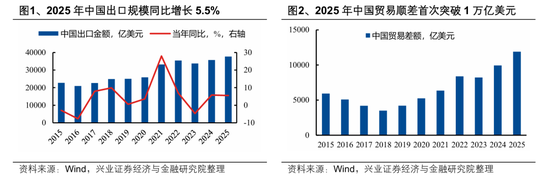
Group 1 - In 2025, China's foreign trade showed strong resilience, with total exports reaching a historical high, growing by 5.5% year-on-year, despite a complex external environment [1][57] - China's trade surplus exceeded $1 trillion for the first time, marking a significant increase of 19.8% year-on-year [1][57] - The net export of goods and services contributed 1.64 percentage points to GDP growth, the second-highest level since 2007, only behind 2021 [3] Group 2 - The diversification of external demand has strengthened, with emerging markets compensating for the decline in exports to the US, which fell by 19.79% year-on-year [6] - Exports to ASEAN, Africa, and the Middle East saw significant growth rates of 25.9%, 13.64%, and 9.7% respectively, contributing positively to the overall export scale [6] - The share of US exports in China's total exports decreased by 3.53 percentage points to 11.15% [6] Group 3 - The product structure of China's foreign trade is shifting towards higher value chains, with high-end products like electrical machinery, machinery, automobiles, and ships being the main export drivers [8] - Traditional light industrial products such as furniture and toys have seen a decline in export scale due to tariff friction and industrial chain relocation [8] Group 4 - The restructuring of global supply chains is creating significant opportunities for Chinese companies, with a notable increase in the number of Chinese enterprises establishing production capacities abroad, reaching 229 in 2025, nearly doubling from 2024 [18] - ASEAN, Mexico, and India are the primary destinations for Chinese production capacity outflows, with ASEAN covering a wide range of industries [18] Group 5 - The AI expansion cycle is a core focus in the Chinese capital market, with significant growth expected in AI computing hardware, supported by macro investment scales and healthy balance sheets of major tech companies [29][30] - The capital expenditure of major cloud service providers is projected to increase significantly, reflecting strong demand for AI computing [35] Group 6 - Cultural and technological value output is becoming a major trend for Chinese enterprises going abroad, with significant growth in IP exports and innovative products in sectors like gaming and new dining [39][41] - The Chinese innovative pharmaceutical sector is increasingly integrated into the global supply chain, with more products commercialized in the US and Europe [41] Group 7 - Key sectors with strong overseas expansion opportunities in 2026 include new energy (batteries, grid equipment), machinery, TMT (technology, media, telecommunications), and innovative pharmaceuticals [46] - The gaming industry is also highlighted for its potential, with significant overseas revenue growth expected [49]




福耀玻璃公布国际专利申请:“电加热玻璃及车辆”
Sou Hu Cai Jing· 2026-02-21 01:05
Core Viewpoint - Fuyao Glass (600660) has filed an international patent application for "Electric Heated Glass and Vehicles," with the application number PCT/CN2025/114898, set to be published internationally on February 19, 2026 [1]. Group 1: Patent Application - Fuyao Glass has announced an international patent application, indicating its commitment to innovation in the automotive glass sector [1]. - The company has filed a total of 12 international patent applications this year, representing a 50% increase compared to the same period last year [1]. Group 2: R&D Investment - In the first half of 2025, Fuyao Glass invested 883 million yuan in research and development, which is a year-on-year increase of 12.59% [1].

【汽车零部件&机器人主线周报】敏实“牵手”绿的谐波,极智嘉发布仓储机器人Gino 1
东吴汽车黄细里团队· 2026-02-15 15:16
Investment Highlights - The SW Auto Parts Index increased by 1.69% this week, ranking 3rd among SW Auto sectors, with a year-to-date increase of 4.94% [3][12] - The latest PE (TTM) for SW Auto Parts is at the 85.68% historical percentile, while the PB (LF) is at the 79.62% historical percentile [3][35] - The trading activity in the auto parts sector has shown a gradual increase since February [3][30] Robotics Sector Review - The Wande Robotics Index rose by 2.27% this week, with a year-to-date increase of 2.54%, outperforming the SW Auto Parts sector by 0.58% [4][12] - The latest PE (TTM) for the robotics sector is at the 73.90% percentile for the past year, and the PB (LF) is at the 78.31% percentile [4][46] - The trading heat in the robotics sector is at a low point since 2025 [4][40] Key Company Developments - Sensible Group will establish a joint venture in North America with Green Harmony for robotic joint modules [5] - Top Group forecasts 2025 revenue between 28.75 billion to 30.35 billion yuan, with a net profit of 2.6 billion to 2.9 billion yuan [5] - Feilong Co. increased its investment in Longtai Company by 732 million yuan [5] - New Spring established a wholly-owned subsidiary in Shanghai [5] Top Performers of the Week - The top five gainers this week include: - Precision Forging Technology +28.98% - Sensible Group +17.05% - Naisite +16.22% - Yinlun Co. +7.73% - Changhua Group +7.34% [6][54] Major Events - The release of the world's first warehouse robot Gino 1 by Jizhi Jia [8] - Xiaomi open-sourced its first-generation robot VLA large model [8] - UBTECH and the humanoid robot innovation center launched the full-size research humanoid robot "Tiangong Walker DEX" [8] Investment Recommendations - For auto parts, focus on structural opportunities by selecting product-oriented companies and those entering high-value sectors to increase ASP, with a priority on companies expanding capacity in Europe, North America, and Southeast Asia [9] - For robotics, look for certainty in opportunities, especially with the anticipated release of Optimus V3 in Q1 2026, and monitor the order timeline and application deployment by domestic companies like Xiaopeng, Yuzhu, and Zhiyuan [9] - Recommended stocks based on EPS include: Fuyao Glass, Xingyu Co., Sensible Group, Junsheng Electronics, and Xingyuan Zhuomei, with New Spring as a focus [9] - Recommended stocks based on PE include: Top Group, Junsheng Electronics, Shuanghuan Transmission, Sensible Group, Yinlun Co., and Feilong Co., with a focus on Yapu Co. and Daimai Co. [9]



有一家中国企业,拿下34%的全球市场,却拿到全球55%利润
Sou Hu Cai Jing· 2026-02-15 09:41
Core Insights - Fuyao Glass holds a remarkable 34% share of the global automotive glass market, capturing 55% of the industry's profits, while its competitors collectively hold 66% of the market but only share 45% of the profits [1][3][5] Group 1: Market Position and Profitability - Fuyao's net profit margin of 23.6% significantly exceeds the typical range of 3% to 10% for manufacturing companies, showcasing its exceptional profitability [5][7] - In 2024, Fuyao's revenue reached 39.25 billion yuan, marking an 18.37% increase from 2023, with net profit growing by 33.2% to 7.498 billion yuan [7][19] - Over the past 20 years, Fuyao's net profit has increased nearly 90 times, highlighting its financial success compared to century-old competitors [7][19] Group 2: R&D and Innovation - Fuyao invests over 4% of its revenue in R&D, amounting to nearly 1 billion yuan annually, which is significantly higher than its competitors' R&D investment ratios [5][9] - The company has transformed from a traditional manufacturer to a high-tech player, developing high-value products like smart panoramic roofs and HUD glass, which command higher profit margins [15][17] Group 3: Operational Efficiency - Fuyao's founder, Cao Dewang, emphasizes extreme cost control while being generous in R&D spending, leading to a highly efficient production system [9][11] - The company has implemented advanced accounting systems since 1999, which have proven crucial in legal disputes and maintaining transparency [11][13] Group 4: Strategic Expansion - Fuyao is diversifying its operations by entering the aluminum trim business and the photovoltaic glass sector, enhancing its market presence and production capacity [17] - The company has established a global footprint with production bases in 11 countries, reflecting its strategic growth and international collaboration [13][17] Group 5: Shareholder Returns - Fuyao has distributed a total of 34.7 billion yuan in cash dividends since its IPO, which is 48 times its financing amount, with a dividend payout ratio of 62.65% in 2024 [19] - The company's commitment to shareholder returns is complemented by significant charitable contributions from its founder, illustrating a focus on both profit and social responsibility [19]
福建上市公司ESG-V评级|上市公司观察
Sou Hu Cai Jing· 2026-02-14 14:04
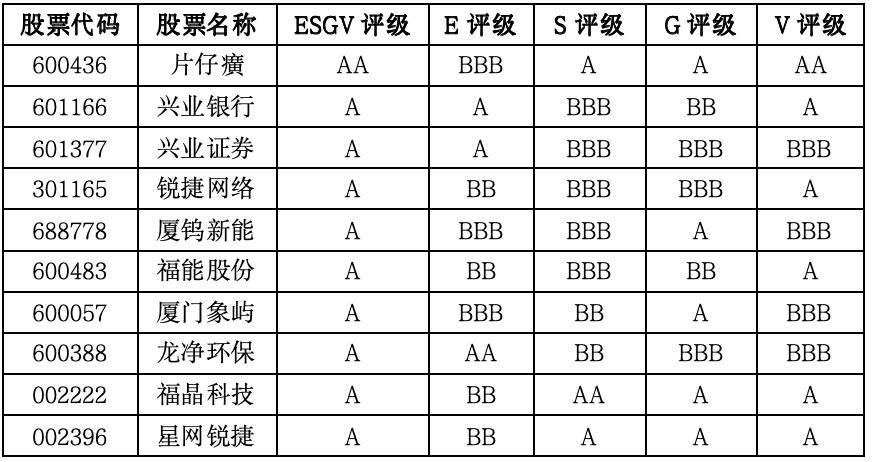
Core Insights - Fujian's economy is characterized by a vibrant private sector, high degree of outward orientation, and strong industrial resilience, with notable companies like CATL and Fuyao Glass leading the market [1] - The recent ESG-V rating by Jinan Jinxin highlights the transformation of market advantages into sustainable governance and long-term value for Fujian companies [1] ESG-V Rating Overview - Three companies, Ruixin Microelectronics, Yilian Network, and Gibit, achieved the highest AAA rating, representing the leading tier in Fujian's ESG-V landscape [2] - These AAA-rated companies are concentrated in the technology and digital economy sectors, indicating that long-term capital recognition is awarded to firms that integrate technological advantages with governance and value realization [2] Value Realization in Manufacturing - The AA tier includes a diverse range of companies from sectors such as power batteries, automotive parts, biomedicine, and food consumption, showcasing strong value realization capabilities [3] - Notable companies like CATL and Fuyao Glass demonstrate robust profitability and clear capital return structures, making them attractive investment opportunities [3] Social Responsibility as a Core Value - High ratings in the social dimension (S) are a common highlight among Fujian-listed companies, reflecting a deep-rooted "Min business culture" that emphasizes reputation, employee care, and community support [4] - This cultural foundation has evolved into a modern social responsibility management system, leading to superior performance in employee rights, product quality, and data privacy [4] Environmental Performance and Green Transition - Fujian companies excel in governance (G) and value (V) dimensions, but environmental (E) performance shows significant variation [5] - Companies with resource-intensive operations, such as Zijin Mining and Xiamen Tungsten, face challenges in meeting environmental standards, while firms in the environmental sector, like Longjing Environmental Protection, are emerging as leaders [5] Investment Implications - The ESG-V rankings reveal that social responsibility translates into trust premiums, which are crucial for building brand loyalty and stable cash flows [6] - Strong governance structures are essential for navigating market fluctuations, while environmental performance will increasingly differentiate competitive advantages in the future [7] - The challenge for Fujian lies in balancing excellence across all ESG dimensions to achieve sustainable development without sacrificing business efficiency [7]



摩根大通下调福耀玻璃评级 股价近期表现疲软
Jing Ji Guan Cha Wang· 2026-02-14 07:57
Group 1 - Morgan Stanley downgraded Fuyao Glass (600660) from "Overweight" to "Neutral" with a target price reduction from 80 HKD to 70 HKD due to intensified industry competition, slowing domestic automobile production growth, and cost pressures [1] - The current consensus target price for Fuyao Glass is 74.89 CNY, indicating an upside potential of approximately 19.56% from the latest stock price [1] Group 2 - Recent stock performance has been weak, with Fuyao Glass A-shares dropping by 2.03% to close at 59.26 CNY on February 12, with a net outflow of 73.10 million CNY in principal funds; on February 13, it slightly decreased by 0.07% to close at 59.38 CNY, with a net outflow of 2.39 million CNY [2] - Over the past five days, the stock has cumulatively declined by 2.01%, and the year-to-date decline stands at 8.32%, with a turnover rate of 0.78%, indicating short-term capital outflow pressure [2] Group 3 - On February 12, the company announced progress in solar technology and automotive applications, achieving mass production capability for solar sunroof glass, which can power vehicle electronics through laminated solar cell components [3] - The company clarified that it has not participated in the construction or investment of the Fuyao Technology University chip production line, emphasizing its business independence [3]
中国汽车:市场反馈及行业预期下调 -1 月季节性表现弱于往常,且物料成本通胀加剧-China Automobiles_ Marketing feedback & lowering estimates for the sector on weaker-than-usual Jan seasonality with BOM cost inflation
2026-02-13 02:18
Summary of Conference Call Notes on the Automotive Industry Industry Overview - **Industry**: Automotive, specifically focusing on electric vehicles (EVs) and new energy vehicles (NEVs) in China - **Current Market Sentiment**: Investor positioning in the automotive sector is underweight as of early 2026, with concerns about demand and cost inflation impacting outlooks [1][2] Key Points 1. Industry Volume Trajectory - **January 2026 Performance**: Domestic passenger vehicle retail volume decreased by 20% month-over-month (mom), compared to a 14% decrease in January 2024 [3] - **Market Expectations**: Anticipation of continued volume decline into February 2026, attributed to the Chinese New Year holiday and reduced stimulus effects [3] - **Future Outlook**: Expected recovery in consumer demand starting March 2026, coinciding with new product launches from BYD and the Beijing Auto Show [3] 2. Raw Material and Memory Cost Inflation - **Cost Increases**: Year-to-date increases in commodity prices (lithium, copper, aluminum) range from 27% to 85% year-over-year [4][18] - **Impact on BOM Costs**: Estimated average increase in Bill of Materials (BOM) costs for EVs is approximately Rmb4,000, leading to a gross margin decline of 2.0% and a net margin decline of 1.7% [4][11] - **OEM Negotiations**: OEMs are negotiating cost-sharing with suppliers, but are expected to absorb 100% of memory cost increases [4] 3. Potential Policy Stimulus - **Government Support Expectations**: Investors anticipate additional government support if demand remains weak, including subsidies for Level 3 vehicles and domestic chip usage [7] - **Economic Contribution**: Passenger vehicles accounted for about 5% of GDP in 2025, indicating the sector's significance to the economy [7] 4. Sensitivity Analysis on Costs - **Margin Concerns**: Rising raw material and memory costs are raising concerns about potential margin impacts for OEMs [8] - **Cost Pass-Through Assumptions**: Analysis assumes a 50/50 cost pass-through ratio for battery and metals, while memory costs are fully absorbed by OEMs [9][12] 5. Target Price Adjustments - **Price Target Reductions**: Target prices for covered OEMs and suppliers have been cut by up to 12% due to weaker demand and higher costs, with average estimates lowered by approximately 16% [2][24] - **Specific Company Adjustments**: - **BYD**: Target price reduced from Rmb144 to Rmb137 due to weaker delivery volumes and higher BOM costs [25] - **Li Auto**: Target price reduced from US$27 to US$24, reflecting lower sales and higher costs [25] - **XPeng**: Target price reduced from US$25 to US$22, driven by weaker sales and pricing pressures [25] - **NIO**: Target price reduced from US$7.0 to US$6.6, impacted by BOM cost inflation [25] 6. Long-term Projections - **Revenue and Net Income Changes**: Projections for revenue and net income have been adjusted downward for several companies, reflecting anticipated market conditions through 2030 [24][30] Additional Insights - **Investor Concerns**: There is a growing concern among investors regarding the sustainability of margins in light of rising costs and competitive pressures [8] - **Market Dynamics**: The automotive sector is facing significant challenges from both internal cost pressures and external market conditions, necessitating close monitoring of policy developments and consumer demand trends [7][8] This summary encapsulates the critical insights from the conference call, highlighting the automotive industry's current challenges and future outlook.




