YILI(600887)

Search documents
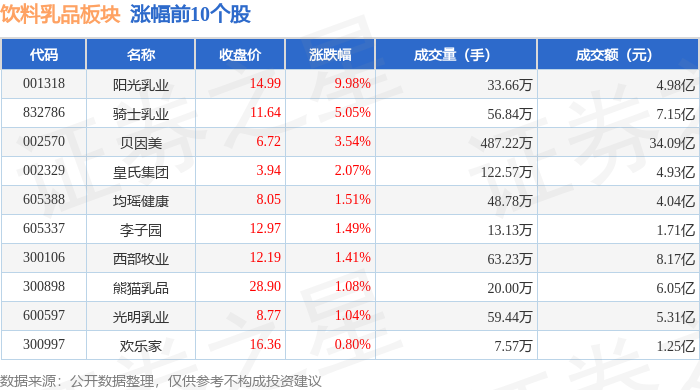
饮料乳品板块7月29日跌0.67%,天润乳业领跌,主力资金净流出7.36亿元
Zheng Xing Xing Ye Ri Bao· 2025-07-29 08:34
Market Overview - The beverage and dairy sector experienced a decline of 0.67% on July 29, with Tianrun Dairy leading the drop [1] - The Shanghai Composite Index closed at 3609.71, up 0.33%, while the Shenzhen Component Index closed at 11289.41, up 0.64% [1] Stock Performance - Sunshine Dairy (001318) saw a significant increase of 9.98%, closing at 14.99 with a trading volume of 336,600 shares and a turnover of 498 million yuan [1] - Knight Dairy (832786) rose by 5.05%, closing at 11.64 with a trading volume of 568,400 shares and a turnover of 715 million yuan [1] - Other notable performers included BeiYinMei (002570) with a 3.54% increase, closing at 6.72, and Huangshi Group (002329) with a 2.07% increase, closing at 3.94 [1] Capital Flow - The beverage and dairy sector saw a net outflow of 736 million yuan from institutional investors, while retail investors contributed a net inflow of 653 million yuan [2] - The overall capital flow indicates a mixed sentiment, with institutional investors pulling back while retail investors remained active [2] Individual Stock Capital Flow - Sunshine Dairy (001318) experienced a net inflow of 1.09 billion yuan from institutional investors, but a net outflow of 68.84 million yuan from speculative funds [3] - Dongpeng Beverage (605499) had a net inflow of 32.08 million yuan from institutional investors, while experiencing a net outflow of 40.64 million yuan from speculative funds [3] - Light Industry (600597) saw a net inflow of 17.12 million yuan from institutional investors, with a net outflow of 8.03 million yuan from speculative funds [3]


白酒可能根本不存在杀业绩、杀逻辑阶段
雪球· 2025-07-29 08:34
Core Viewpoint - The article discusses the current state of the liquor industry, particularly the challenges faced by second and third-tier liquor companies, suggesting that the industry is entering a phase of performance decline, which may lead to significant price drops and a reevaluation of price-to-earnings (PE) ratios [2][3]. Group 1: Industry Performance - The liquor industry is experiencing a significant downturn, with many companies reporting poor mid-year results, leading to speculation about further declines in performance and valuation [2]. - Historical examples indicate that the anticipated phases of "killing performance" and "killing logic" may not occur as expected, as past performance declines have often already reflected negative market sentiment before official poor results are announced [3]. - The article highlights that the market often reacts prematurely to negative news, as seen in the cases of Yili and Dong'e Ejiao, where stock prices did not follow the predicted patterns of further declines after performance issues were revealed [3]. Group 2: Market Perception and Misconceptions - There is a tendency among investors to apply lessons from the real estate sector to the liquor industry, leading to an overly pessimistic outlook on liquor stocks [5]. - The liquor industry operates on a low-leverage model, contrasting with the high-leverage nature of real estate, which can lead to more severe consequences during downturns [5]. - The financial characteristics of real estate differ significantly from those of consumer stocks, as demand for liquor does not vanish in the same way that demand for real estate can during economic downturns [5][6]. Group 3: Supply and Demand Dynamics - The article posits that the liquor market will eventually reach a balance between supply and demand, as poor sales will force smaller producers out of the market, leading to a reduction in supply and a potential recovery in prices [6]. - In contrast, the real estate market faces challenges in reducing supply due to the nature of ownership and the presence of a large number of second-hand properties, complicating the recovery process [6].



里昂:内地育儿补贴金额有限但支持明确 伊利股份(600887.SH)H&H国际(01112)中国飞鹤(06186)维持“跑赢大市”评级
Zhi Tong Cai Jing· 2025-07-29 08:33
Group 1 - The Chinese government has announced a subsidy of 3,600 RMB per child per year for infants aged 0 to 3, signaling policy support for childbirth, although the amount is limited [1] - The subsidy aims to boost consumption rather than directly stimulate childbirth, but it may have a limited positive impact on the number of newborns in the short term [1] - This policy is a response to the declining birth rate and aims to alleviate the financial burden of raising children on families [1] Group 2 - The infant formula market is closely linked to the number of newborns, with a temporary rebound in newborn numbers expected to stabilize market size in the first five months of 2025 compared to 2024 [2] - Leading domestic companies are pushing subsidy policies, impacting the competitive landscape in the infant formula industry [2] - Companies such as Yili (600887.SH) are showing strong growth momentum, while H&H International (01112) has seen a recovery in market share in the ultra-premium segment; China Feihe (06186) is focused on channel inventory reduction and retail price control [2]
“育儿补贴”方案刺激乳企股价大涨,母婴及乳业有望承接政策红利
Sou Hu Cai Jing· 2025-07-29 07:45
Core Viewpoint - The introduction of the national childcare subsidy policy is expected to boost the dairy industry, enhancing consumer confidence and increasing demand for infant formula products [2][3][4]. Group 1: Policy Impact on Dairy Industry - The newly implemented childcare subsidy will provide annual support of 3,600 yuan per child for families with children under three years old, starting from January 1, 2025 [2]. - Following the announcement of the subsidy, several dairy companies saw significant stock price increases, indicating positive market sentiment [2][3]. - Industry experts believe that the subsidy will encourage local governments to introduce complementary measures in areas such as housing and education, further supporting the dairy sector [3]. Group 2: Company Responses and Strategies - Major dairy companies like Feihe, Yili, and Junlebao have announced substantial investments in subsidies for eligible families, with Feihe committing 1.2 billion yuan and both Yili and Junlebao pledging 1.6 billion yuan each [4]. - Companies are focusing on enhancing consumer education and engagement throughout the entire lifecycle of motherhood, from pregnancy to early childhood [3][4]. - The dairy industry is facing challenges such as overproduction of raw milk and a lagging consumer market, prompting calls for innovation and new product development to stimulate growth [4]. Group 3: Market Projections - According to research, the implementation of the childcare subsidy is expected to lead to a significant increase in newborns, with projections indicating an additional 520,000 newborns in 2024, which will positively impact the demand for infant formula [4][5]. - The first quarter of 2025 is anticipated to show a 2.3% year-on-year increase in infant formula sales, a notable improvement compared to previous periods [4].


“智链”正当时:探寻乳业高质量发展新路径
新华网财经· 2025-07-29 07:05
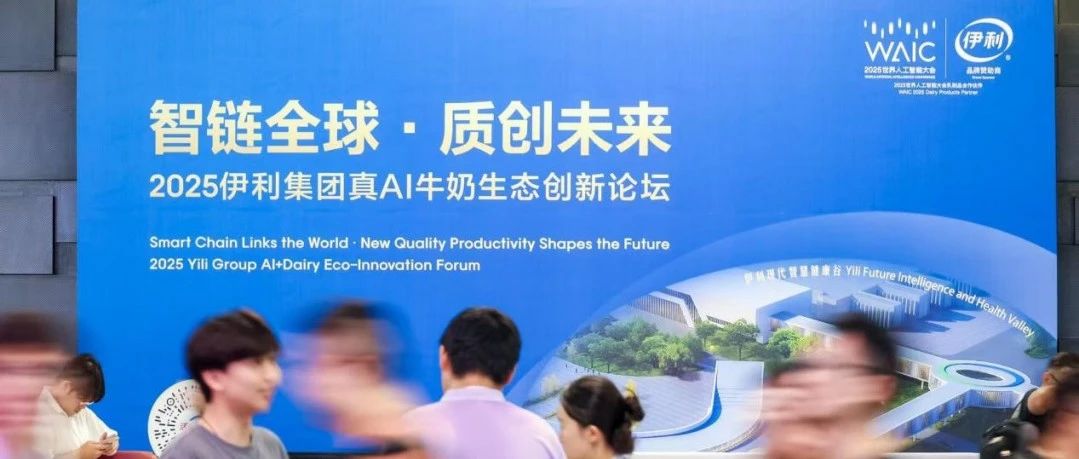
Core Viewpoint - The article emphasizes the importance of digital intelligence as a core engine driving industrial iteration and strategic pivot, highlighting the challenges industries face in optimizing supply chain management and enhancing product quality to meet consumer demands [1][3]. Group 1: Digital Transformation in Dairy Industry - Yili has been a pioneer in the digital transformation of the dairy industry, initiating a comprehensive digital strategy as early as 2017 and launching a full-scale digital transformation in 2020 [3][4]. - The company has developed over 1,000 algorithm models covering various aspects of the supply chain, including farm management, intelligent production, and marketing [3][4]. Group 2: Smart Supply Chain Management - Yili's smart farms utilize digital identification for cows, monitoring vital data such as temperature and activity levels, which supports scientific farming practices [4]. - The company has achieved significant improvements in supply chain efficiency, reducing response times from days to seconds and increasing on-time delivery rates to 98% [4]. Group 3: Global Smart Chain Ecosystem - At the WAIC 2025, Yili launched the "Global Smart Chain Ecosystem," collaborating with various enterprises and institutions to integrate resources across the dairy and technology sectors [5][7]. - This initiative aims to enhance the competitiveness of the dairy industry by leveraging AI and creating an open cooperative ecosystem [5][7]. Group 4: Open Data and Industry Impact - Yili is opening up 50 million industry parameters to smaller dairy enterprises, allowing them to access advanced models without barriers, thus shifting the industry from experience-driven to algorithm-driven [7]. - The article anticipates that this initiative will not only enhance the competitiveness of the dairy sector but also contribute to the broader digital economy in China [7].
里昂:育儿补贴明确释出政策支持生育的信号 维持伊利、H&H“跑赢大市”评级
news flash· 2025-07-29 03:55
Group 1 - The Chinese government has introduced a subsidy plan of 3,600 yuan per child per year for infants aged 0 to 3, signaling policy support for childbirth, although the amount is limited [1] - The primary intention of the policy is to boost consumption, which accounts for approximately 0.2% of retail sales, rather than directly stimulating childbirth, but it may have a limited positive impact on newborn numbers in the short term [1] - The subsidy is a response to the declining birth rate and aims to alleviate the financial burden of raising children on families [1] Group 2 - The infant formula market is closely linked to the number of newborns, and a temporary rebound in newborn numbers in 2024 is expected to stabilize the market size, showing improvement compared to the decline in unit numbers in mid-2024 [1] - Within the research coverage, Yili Co., Ltd. (600887) demonstrates strong growth momentum with an increasing market share, while H&H International has also seen a recovery in its market share in the ultra-premium segment [1] - The investment ratings for Yili and H&H are maintained at "outperform," with target prices set at 33 yuan and 13.5 Hong Kong dollars, respectively [1]
母婴消费行业点评:国家育儿补贴出台,改善母婴消费预期
Shenwan Hongyuan Securities· 2025-07-29 03:43
Investment Rating - The report rates the mother and baby consumption industry as "Overweight" [2][9] Core Insights - The introduction of a national childcare subsidy of 3,600 yuan per child per year, totaling up to 10,800 yuan per child, is expected to improve consumption expectations in the mother and baby sector [3] - The report highlights that despite a decline in birth rates over the past seven years, the overall mother and baby market has experienced a compound annual growth rate (CAGR) of over 15% from 2018 to 2024 due to consumption upgrades and refined parenting [3] - The report emphasizes the rise of domestic brands in the mother and baby sector, with significant market share gains and a return of industry influence to local brands [3] Summary by Sections National Childcare Subsidy - The national childcare subsidy program will start on January 1, 2025, providing cash subsidies to families with children under three years old, with a basic standard of 3,600 yuan per year [3] - Local governments are expected to introduce additional subsidies, creating a wave of local support for childbirth [3] Market Growth and Opportunities - The mother and baby market is projected to rebound due to improved policies and an anticipated increase in birth rates in 2024 [3] - Key sectors and companies recommended for investment include: - Fertility and reproductive health: Focus on companies like Jinxin Reproductive and Livzon Pharmaceutical [3] - Infant nutrition: Recommendations include China Feihe and Yili Group [3] - Baby appliances: Suggested investment in Bear Electric [3] - Apparel and home textiles: Companies like Semir and Anta are highlighted [3] - Baby care products: Brands such as Runben and New Page are recommended [3] Valuation Table - The report includes a valuation table with various companies in the mother and baby sector, indicating their stock prices, market capitalization, and profit forecasts for 2025, 2026, and 2027, along with corresponding investment ratings [4]


守护北京!伊利捐赠营养物资驰援北京怀柔、密云受灾严重乡镇
Bei Jing Wan Bao· 2025-07-29 03:20
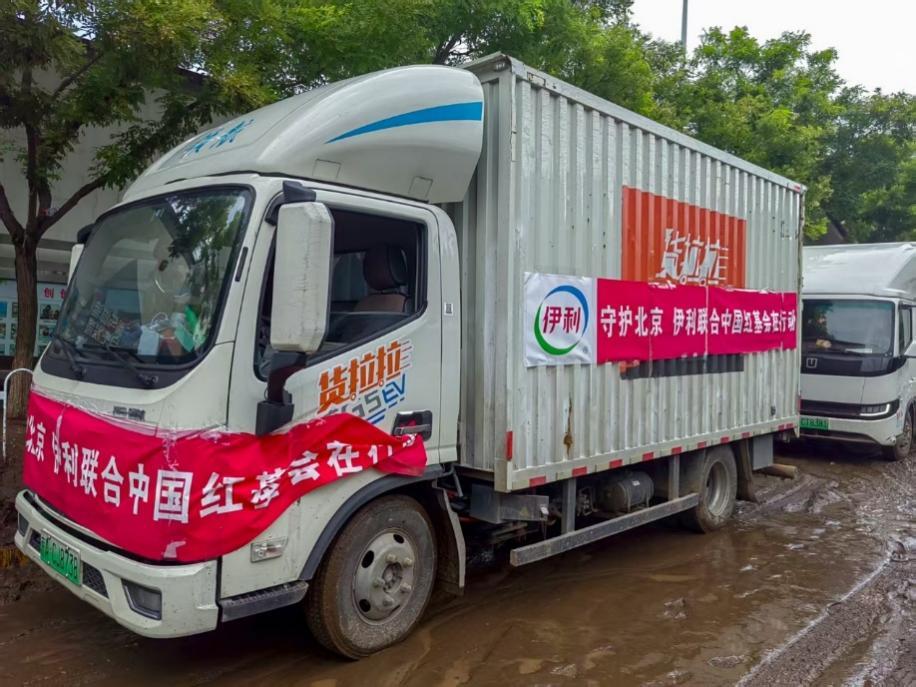
Group 1 - The article highlights the severe flooding in Beijing's Miyun and Huairou districts, prompting emergency responses and evacuations of over 10,000 people [1][3] - Yili Group has initiated a disaster relief plan in collaboration with the China Red Cross Foundation, mobilizing volunteers to deliver essential supplies to affected areas [1][3] - The "Yixin Xiangyang" volunteers faced significant challenges, including damaged roads and communication disruptions, but successfully delivered milk and water to disaster-stricken towns [3][9] Group 2 - In the hardest-hit areas, such as Shicheng and Fengjiayu towns, residents are facing water and power outages, with urgent needs for food and clean water [3][9] - Volunteers also assisted in clearing mud and debris to create safe zones for the distribution of supplies, demonstrating community solidarity [9] - Yili Group plans to continue monitoring the situation and provide ongoing nutritional support and living supplies to the affected populations [14]
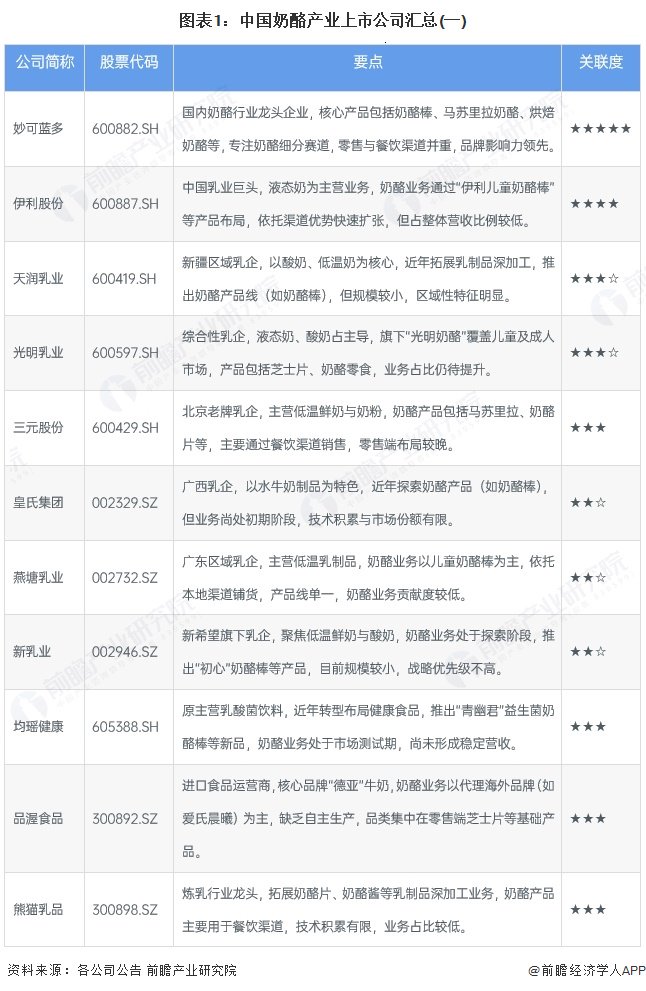
【最全】2025年奶酪行业上市公司全方位对比(附业务布局汇总、业绩对比、业务规划等)
Qian Zhan Wang· 2025-07-29 03:08
Core Insights - The Chinese cheese industry features a mix of leading companies and regional players, with Miaokelan Duo being the only listed company focused solely on cheese products, dominating the retail cheese stick and catering ingredient markets [1][6] - Major dairy companies like Yili and Mengniu leverage their channel and capital advantages to expand their cheese offerings, although cheese remains a minor segment compared to liquid milk [1][6] - Regional dairy companies such as Guangming, Sanyuan, and Tianrun focus on liquid milk as their core business while expanding into cheese as a supplementary category, targeting local markets and catering channels [1][6] - The industry is characterized by a high concentration of children's snacks, while opportunities in catering and adult cheese products remain underexplored [6][11] Company Overview - **Miaokelan Duo (600882.SH)**: The leading company in the domestic cheese industry, focusing on cheese sticks and mozzarella cheese, with a strong brand influence and a balanced approach to retail and catering channels [3][6] - **Yili (600887.SH)**: A major player in the dairy sector, primarily focused on liquid milk, with cheese products like "Yili Children's Cheese Sticks" contributing to its growth, although they represent a small portion of overall revenue [3][6] - **Tianrun Dairy (600419.SH)**: A regional player in Xinjiang, focusing on yogurt and low-temperature milk, recently expanding into cheese products, but with limited scale [3][6] - **Guangming Dairy (600597.SH)**: A comprehensive dairy company with a focus on liquid milk and yogurt, offering cheese products but with a need to increase their business share [3][6] - **Sanyuan Dairy (600429.SH)**: A well-established dairy company in Beijing, primarily selling low-temperature fresh milk and milk powder, with cheese products mainly sold through catering channels [3][6] - **Huangshi Group (002329.SZ)**: A regional player in Guangxi, exploring cheese products but still in the early stages with limited market share [3][6] - **Yantang Dairy (002732.SZ)**: A regional company in Guangdong, focusing on low-temperature dairy products, with cheese offerings primarily targeting children [3][6] - **New Dairy (002946.SZ)**: A subsidiary of New Hope, focusing on low-temperature fresh milk and yogurt, with cheese products still in the exploratory phase [3][6] - **Panda Dairy (300898.SZ)**: A leader in the condensed milk sector, expanding into cheese products mainly for catering, but with limited innovation [3][6] Financial Performance - Yili and Mengniu lead the industry in revenue, achieving 115.4 billion yuan and 94 billion yuan respectively in 2024, with most companies maintaining gross margins above 14% [6][7] - The highest gross margin is reported by H&H International at 60.65%, while Tianrun Dairy, Guangming Dairy, and Pinwa Foods have margins below 20% [6][7] - Earnings per share show significant variation, with Yili at 1.33 yuan, followed by Panda Dairy, Guangming Dairy, Yantang Dairy, and New Dairy, while smaller companies like Miaokelan Duo and Tianrun Dairy report lower earnings [10][11] Market Dynamics - The cheese industry in China is experiencing a tiered development, with Miaokelan Duo as the core leader, while Yili and Mengniu focus on children's cheese products [6][11] - Regional companies like Guangming and Sanyuan are concentrating on local markets, while others like Huangshi and Yantang are testing niche cheese products with limited scale [6][11] - The market is characterized by a reliance on imported raw materials and intense competition, necessitating innovation and localization of supply chains for future growth [6][11] Strategic Planning - Leading companies are enhancing their supply chain integration and focusing on differentiated innovation, while regional brands are honing in on local market needs [14][19] - Miaokelan Duo aims to deepen its market presence in children's cheese and expand into adult health snacks, while Yili plans to leverage its channel advantages to grow its cheese segment [17][19] - Companies like Tianrun and Guangming are exploring unique product offerings and regional partnerships to strengthen their market positions [17][19]


乳品行业动态点评:育儿补贴落地,积极关注乳品需求
Dongguan Securities· 2025-07-29 02:22
Investment Rating - The report maintains an "Overweight" rating for the dairy industry, indicating an expectation that the industry index will outperform the market index by more than 10% over the next six months [2][5]. Core Insights - The implementation of the "Childcare Subsidy System" is expected to positively impact dairy demand, as it provides annual subsidies of 3,600 yuan per child for families with children under three years old starting from January 1, 2025 [2][4]. - The subsidy policy aims for nationwide coverage, which is seen as a pioneering move that could stimulate local policies and enhance birth rates, thereby increasing demand for dairy products [2][4]. - The current low prices of raw milk and the gradual reduction of production capacity are anticipated to improve the supply-demand structure in the dairy sector [2][4]. Summary by Sections Childcare Subsidy Policy - The "Childcare Subsidy System" was announced on July 28, 2023, detailing the subsidy recipients and standards, with a national rollout planned [3][4]. - The policy allows families with children born before January 1, 2025, to receive subsidies calculated on a monthly basis until the child turns three [4]. Market Impact - The report suggests that the subsidy will serve as a model for local governments, potentially leading to increased financial support for families and stimulating birth rates [4]. - The expected increase in birth rates and improved population outlook is likely to drive up dairy product demand, benefiting the dairy industry [2][4]. Investment Strategy - The report recommends maintaining an "Overweight" rating for the food and beverage sector, highlighting the potential for growth in the maternal and infant industry chain due to the subsidy policy [2][4]. - Specific companies to watch include Yili Group (600887), New Dairy (002946), and Miaokelando (600882) as potential beneficiaries of the expected demand increase [2][4].