Zhongtai Securities(600918)

Search documents
调研速递|银川威力传动接待中泰证券等47家机构 风电增速器智慧工厂产能爬坡中 毛利率有望显著提升
Xin Lang Cai Jing· 2025-11-24 13:51
登录新浪财经APP 搜索【信披】查看更多考评等级 周建林强调,智慧工厂投产后将从三大层面构筑核心优势:市场布局上,契合风机"大型化、智能化"趋 势,弥补陆上大功率增速器产能空白,提升产业链国产化配套水平;产能效率上,通过智能物流、全流 程自动化等技术缩短订单响应周期,规避交付延迟风险;经营效益上,优化流动比率、速动比率等财务 指标,降低资产负债率,为研发投入提供资金支持,推动公司从"行业跟随"向"市场引领"转型。 此次调研中,公司与机构投资者就行业趋势及公司战略进行了充分交流,严格遵循信息披露相关规定, 未出现未公开重大信息泄露情况。 周建林介绍,公司风电增速器智慧工厂(一期)目前处于建设期关键推进阶段,核心生产设备已基本完 成到厂部署,为后续产能释放奠定硬件基础。不过,由于工厂仍处于产能爬坡初期,当前存在三方面阶 段性因素影响产能完全释放:一是生产团队需进一步提升操作熟练度以确保设备精准运行;二是产线各 环节仍在持续优化衔接;三是供应链协同需按计划推进。公司将持续跟踪产线磨合、人员培训及设备调 试进度,待各环节成熟后逐步向设计产能靠拢。增速器市场前景广阔:全球风电装机扩容驱动需求,中 国市场引领增长 针对增 ...
美农生物:关于变更持续督导保荐代表人的公告

Zheng Quan Ri Bao· 2025-11-24 11:41
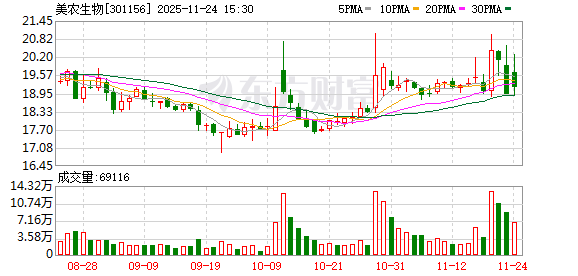
证券日报网讯 11月24日晚间,美农生物发布公告称,上海美农生物科技股份有限公司(以下简称"公 司""美农生物")于近日收到保荐机构中泰证券股份有限公司(以下简称"中泰证券")出具的《关于变 更上海美农生物科技股份有限公司首次公开发行股票并在深圳证券交易所创业板上市项目持续督导保荐 代表人的报告》,中泰证券作为公司首次公开发行股票并在创业板上市项目的保荐机构,持续督导期为 2022年6月17日至2025年12月31日。中泰证券原指定吴彦栋先生、嵇志瑶女士为该项目的签字保荐代表 人。现吴彦栋先生因工作变动,不再负责美农生物持续督导工作。为保证持续督导工作的顺利进行,中 泰证券决定授权陶雪祺先生接替吴彦栋先生担任该项目持续督导的保荐代表人,继续履行持续督导职 责。 (文章来源:证券日报) ...

证券板块11月24日涨0.22%,国联民生领涨,主力资金净流出12.83亿元
Zheng Xing Xing Ye Ri Bao· 2025-11-24 09:12
Market Overview - On November 24, the securities sector rose by 0.22% compared to the previous trading day, with Guolian Minsheng leading the gains [1] - The Shanghai Composite Index closed at 3836.77, up 0.05%, while the Shenzhen Component Index closed at 12585.08, up 0.37% [1] Top Gainers - Guolian Minsheng (601456) closed at 10.40, up 2.87% with a trading volume of 297,600 shares and a turnover of 304 million yuan [1] - Guosheng Securities (002670) closed at 17.86, up 2.76% with a trading volume of 444,300 shares and a turnover of 788 million yuan [1] - Industrial Securities (601377) closed at 6.69, up 2.14% with a trading volume of 941,000 shares and a turnover of 625 million yuan [1] Top Losers - Shouchao Securities (601136) closed at 20.20, down 2.27% with a trading volume of 375,700 shares and a turnover of 757 million yuan [2] - Changjiang Securities (000783) closed at 7.92, down 1.12% with a trading volume of 849,100 shares and a turnover of 679 million yuan [2] - Sihai Securities (600369) closed at 4.40, down 0.90% with a trading volume of 642,200 shares and a turnover of 284 million yuan [2] Fund Flow Analysis - The securities sector experienced a net outflow of 1.283 billion yuan from institutional investors, while retail investors saw a net inflow of 914 million yuan [2] - Among individual stocks, Guosheng Securities had a net inflow of 48.03 million yuan from institutional investors, while it faced a net outflow of 22.88 million yuan from speculative funds [3] - Dongfang Securities recorded a net inflow of 31.53 million yuan from institutional investors, with a net outflow of 10.96 million yuan from speculative funds [3]


沪指收红,资金逢低抢筹,上证综指ETF(510760)连续5日净流入近6亿元
Mei Ri Jing Ji Xin Wen· 2025-11-24 07:42
Core Viewpoint - The current technology market is not yet over, with expectations for continuation after a short-term correction, primarily due to the low likelihood of a fundamental reversal in the AI industry in the US stock market [1] Group 1: US Market Insights - AI industry leaders continue to show strong performance growth, providing a positive outlook for A-share companies [1] - Share buybacks by US-listed companies are significantly offsetting institutional selling pressure, contributing to market stability [1] - The potential for high volatility and internal clearing at the individual stock level exists, but a systemic collapse similar to the 2000 tech bubble is unlikely [1] Group 2: A-share Market Outlook - The current stage of the AI sector in the A-share market corresponds to the period from 2023 to 2024 in the US, where funding is shifting from hardware to applications [1] - The hardware infrastructure phase has been fully realized, while the equipment and materials sectors are beginning to develop, and the application layer is just starting [1] - The domestic economy appears to be in a recovery phase, with ongoing support for technology narratives centered around artificial intelligence [1] Group 3: Investment Recommendations - It is suggested to focus on representative broad-based ETFs, particularly the CSI A500 ETF (159338) and the SSE Composite Index ETF (510760), to better navigate the anticipated high volatility in the market [1]
机构:持续看好算力产业链投资机会
Zheng Quan Shi Bao Wang· 2025-11-24 03:16
Group 1 - The core viewpoint emphasizes the growth of the digital economy in Hebei Province, focusing on digital industrialization and the establishment of a data-driven, intelligent integration model [1] - The proposal includes plans for a national integrated computing network hub in the Beijing-Tianjin-Hebei region, aiming to accelerate the development of intelligent computing clusters [1] - Zhongtai Securities highlights that AI computing power is becoming a major growth engine in the telecommunications industry, with a focus on investment opportunities in the computing power supply chain [1] Group 2 - CITIC Securities notes that since 2025, both Chinese and American tech stocks have performed well, with the computing power sector leading market gains and emerging opportunities in models and applications [2] - Looking ahead to 2026, the domestic computing power sector is expected to thrive, with performance elasticity and investment certainty, potentially replicating the long bull market seen in U.S. stocks since 2023 [2] - The urgency for domestic semiconductor equipment and AI chips has increased due to overseas restrictions, making domestic substitution a prevailing trend [2]
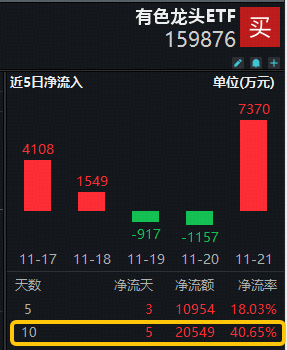
有色龙头ETF(159876)近10日狂揽2亿元!地缘局势转折+美联储大放“鸽声”,有望推升有色金属价格!
Xin Lang Ji Jin· 2025-11-24 01:29
Core Viewpoint - The recent surge in investment in the non-ferrous metals sector, particularly through the non-ferrous metal leader ETF (159876), indicates strong market confidence in the future performance of this sector [1][4]. Investment Trends - On November 21, the non-ferrous metal leader ETF (159876) attracted 73.7 million yuan in a single day, with a total of 205 million yuan accumulated over the past 10 days, reflecting positive market sentiment [1]. - As of November 21, the ETF's latest scale reached 677 million yuan, making it the largest among three ETFs tracking the same index in the market [1]. Geopolitical Factors - The escalation of the Russia-Ukraine conflict, particularly the recent attack on Moscow, is expected to impact the supply of key metals like aluminum, nickel, and copper, potentially driving prices higher due to supply chain disruptions and increased sanctions against Russian metals [3]. - The conflict is also likely to stimulate demand for safe-haven assets such as gold and copper, as investors seek to hedge against geopolitical risks [3]. - Increased strategic reserve demands for metals used in defense applications, such as antimony, are anticipated due to the ongoing military tensions [3]. Macroeconomic Influences - Recent dovish comments from the Federal Reserve's New York Bank President, indicating potential for further interest rate cuts, have heightened expectations for a 70% probability of a rate cut in December [3][4]. - Analysts believe that even if the Fed pauses a rate cut, the ongoing expectation of future cuts will continue to support non-ferrous metal prices [4]. Market Outlook - Institutions are optimistic about the continuation of a bull market in the non-ferrous metals sector, with various analysts highlighting three main investment themes: constrained supply and recovering demand for industrial metals like copper and aluminum, explosive demand for energy metals like lithium and cobalt, and strategic assets such as gold and rare earths [4]. - The non-ferrous metal leader ETF (159876) and its linked funds provide comprehensive exposure to various metals, allowing for risk diversification compared to investing in single metal sectors [6].


券商晨会精华 | 配置上围绕中期主线 重视安全边际
智通财经网· 2025-11-24 00:31
Market Overview - The market experienced fluctuations last Friday, with the Shanghai Composite Index falling over 2% and the ChiNext Index dropping over 4% [1] - The total trading volume in the Shanghai and Shenzhen markets reached 1.97 trillion, an increase of 257.5 billion compared to the previous trading day [1] - By the end of last Friday, the Shanghai Composite Index fell by 2.45%, the Shenzhen Component Index by 3.41%, and the ChiNext Index by 4.02% [1] Investment Strategies - Huatai Securities emphasized the importance of focusing on mid-term themes and maintaining a safety margin in current market conditions, suggesting that the market adjustment has begun to show potential for recovery [2] - The firm noted that the current market valuation is close to a "reasonable" central point, and if there is an overshoot, investors could consider increasing their positions [2] - Recommended sectors include low-level domestic consumption, domestic computing power, and innovative pharmaceuticals, while continuing to hold large financial stocks to reduce volatility [2] Monetary Policy Insights - CITIC Securities highlighted that the recent issuance of offshore central bank bills in Hong Kong aims to stabilize the offshore RMB exchange rate and curb speculative trading [3] - The issuance is intended to tighten offshore RMB liquidity, thereby increasing the cost of short-selling and preventing a consensus on unilateral depreciation [3] - The central bank's strategy is based on three considerations: managing liquidity to avoid excessive market fluctuations, enhancing the competitiveness of the offshore RMB bond market, and preventing abnormal cross-border capital flows to maintain financial stability [3] Policy Focus - Zhongtai Securities indicated that the current "anti-involution" policies are likely to focus more on key sectors with global "rare earth-like" characteristics, particularly in industries like photovoltaics, batteries, and automobiles, where low-price competition has intensified [4] - The characteristics of these key sectors include holding dominant capacity and technology in the global market, facing challenges from disorderly expansion and low-price competition, and having potential for long-term growth driven by external demand [4] - The policies aim to ensure healthy industry development and leverage these sectors as strategic tools or bargaining chips between nations [4]

券商晨会精华:配置上围绕中期主线,重视安全边际
Xin Lang Cai Jing· 2025-11-24 00:25
Group 1: Market Overview - The market experienced fluctuations with the Shanghai Composite Index falling over 2% and the ChiNext Index dropping over 4% last Friday [1] - The total trading volume in the Shanghai and Shenzhen markets reached 1.97 trillion, an increase of 257.5 billion compared to the previous trading day [1] - Key sectors showing gains included the shipbuilding sector and AI applications, while battery, silicon energy, and lithium mining sectors faced declines [1] Group 2: Securities Insights - Huatai Securities emphasized the importance of focusing on mid-term themes and maintaining a safety margin in current market conditions [1] - CITIC Securities noted that the central bank's issuance of offshore central bank bills in Hong Kong could help stabilize the offshore RMB exchange rate [2] - Zhongtai Securities indicated that the current "anti-involution" policies may increasingly focus on key areas with global "rare earth-like" characteristics, particularly in industries facing low-price competition [3] Group 3: Policy Implications - The issuance of offshore central bank bills is aimed at tightening offshore RMB liquidity, increasing short-selling costs, and stabilizing exchange rate expectations [2] - The "anti-involution" policy is expected to address industries that dominate global capacity and technology, face chaotic expansion, and have long-term growth potential driven by external demand [3]
中泰证券:本轮“反内卷”政策或更加聚焦于具备全球“类稀土”特征的重点领域
智通财经网· 2025-11-23 23:39
Core Viewpoint - The report from Zhongtai Securities highlights the intensifying low-price competition in industries such as photovoltaics, batteries, and automobiles since 2024, prompting policy attention towards "anti-involution" measures aimed at optimizing supply-side structures and enhancing national competitiveness [1][2]. Group 1: Policy Development - The "anti-involution" policy has evolved from departmental advocacy to institutionalization, with significant milestones including its introduction in the 2024 Politburo meeting and its incorporation into the 2025 government work report and the "14th Five-Year Plan" [2]. - The current governance approach is characterized by top-level institutionalization, market-driven clearing, and comprehensive expectation management [2]. Group 2: Background of the Current "Anti-Involution" - The current "anti-involution" policy is initiated in a macroeconomic context where growth has slowed to 5% or lower, contrasting with the previous supply-side reforms that occurred during a period of over 6% growth [3]. - The industrial structure has shifted, with China now holding leading capacities in sectors like photovoltaics and new energy vehicles, yet facing overcapacity due to slowed demand and intensified competition [3]. Group 3: Strategic Logic of "Anti-Involution" - The core of current high-level policies is to address international competition and enhance national competitiveness, positioning "anti-involution" as a critical tool for optimizing supply-side structures [4]. - The ultimate goal is to establish industries with global pricing power, technological barriers, and resource control, transforming them into strategic assets in international negotiations [4]. Group 4: Lessons from the Rare Earth Experience - Prior to 2010, the rare earth industry faced chaotic competition and low prices, leading to resource wastage and a low global value chain position [5]. - The establishment of large rare earth enterprise groups in 2014 and the completion of industry consolidation by 2016 significantly improved the situation, positioning China as a key player in the global high-tech supply chain [5]. Group 5: Focus Areas for "Anti-Involution" - The current "anti-involution" policy is likely to concentrate on sectors with "rare earth-like" characteristics, which include global capacity and technological leadership, the presence of chaotic expansion and low-price competition, and potential for long-term growth driven by external demand [6]. - The new energy sector is positioned as a strategic tool in international relations, with China maintaining technological leadership and significant global production capacity in areas like photovoltaics and battery storage [6]. Group 6: Investment Recommendations - Investment focus should be on upstream new energy sectors, particularly companies with raw material barriers and cost advantages in lithium, silicon materials, and electrolyte production [7]. - Opportunities in power equipment and energy storage are highlighted due to structural growth driven by AI-related electricity demand, with recommendations for companies targeting overseas markets [7]. - Emphasis on resource security and small metal materials as strategic pillars, recommending companies with high resource concentration and barriers, including leaders in rare earths, copper, cobalt, and lithium [7].
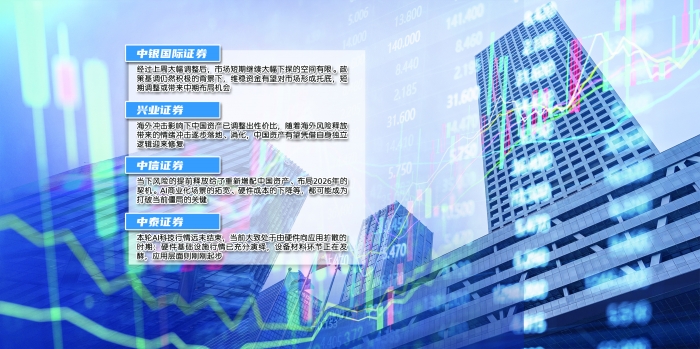
A股本轮上涨行情基础并未改变短期调整或带来布局良机
Shang Hai Zheng Quan Bao· 2025-11-23 18:02
Market Overview - The recent global market downturn, driven by heightened risk aversion, has led to a significant adjustment in the A-share market, with the Shanghai Composite Index falling below 3900 points [2][3] - Key sectors such as new energy, photovoltaic, and power equipment have experienced notable pullbacks, while banking, shipbuilding, and consumer sectors have shown relative resilience [2] External Influences - The adjustment in the A-share market is primarily attributed to external factors, including concerns over the "AI bubble," a retreat in expectations for Federal Reserve interest rate cuts, and a cautious shift in market sentiment [3][4] - The volatility in global risk assets has been exacerbated by year-end fund settlement periods, prompting some investors to lock in profits and rankings through selling [3] Fundamental Support - Despite recent market fluctuations, the fundamental factors supporting the current rally in the Chinese stock market remain intact, including steady macroeconomic recovery, improved competitiveness of key industries, and enhanced capital market positioning [4][5] - The adjustment is viewed as a short-term disturbance rather than a fundamental shift in market dynamics, with expectations for a potential recovery as market sentiment stabilizes [4] Investment Opportunities - The current market adjustment presents a strategic opportunity for investors to reposition their portfolios ahead of the anticipated spring market rally in 2026 [6] - There is a consensus among institutions that the internal certainties of the Chinese market, such as new growth momentum and clear policy direction, will not be adversely affected by external disturbances [5][6] - Following the adjustment, sectors such as banking and insurance, along with consumer stocks with stable fundamentals, may present rotation opportunities before the technology sector regains momentum [6]