Seazen(601155)

Search documents
光大地产板块及重点公司跟踪报告:近期地产跑赢大市,优质龙头涨幅明显
EBSCN· 2025-07-29 03:11
Investment Rating - The report maintains a "Buy" rating for key companies in the real estate development sector, including Poly Developments, China Merchants Shekou, and Binjiang Group, while also giving a "Buy" rating to China Overseas Development, China Resources Land, and China Jinmao in the H-share sector [37][71]. Core Insights - The real estate sector has shown resilience, with the real estate (Shenwan) index rising by 7.8% from July 1 to July 25, 2025, outperforming the CSI 300 index by 2.93 percentage points [29][37]. - The report highlights a structural alpha opportunity in the real estate sector, particularly for leading companies with strong brand recognition and product reputation, despite a weak beta performance overall [4][65]. - The report emphasizes the importance of urban renewal and structural optimization in high-capacity core cities, which are expected to benefit from ongoing real estate policies [70][71]. Summary by Sections Real Estate Development Sector Valuation and Key Companies - As of July 25, 2025, the real estate (Shenwan) price-to-earnings (P/E) ratio is 42.93, with a historical percentile of 99.45% [11][20]. - The top-performing A-share real estate companies from July 1 to July 25, 2025, include New Town Holdings (+12.2%), China Merchants Shekou (+9.3%), and JinDi Group (+7.4%) [29][31]. Property Services Sector Valuation and Key Companies - The real estate services (Shenwan) P/E ratio is 46.73, with a historical percentile of 86.21% as of July 25, 2025 [2][40]. - The top-performing A-share property service companies during the same period are TeFa Service (+10.4%), World Union (+9.2%), and Ningbo Fuda (+5.9%) [51][55]. Public Fund Holdings in Real Estate Sector - As of the end of Q2 2025, public funds held a total market value of approximately 484.4 billion yuan in real estate stocks, representing a decrease from 548.4 billion yuan at the end of Q1 2025 [3][63]. Market Trends and Sales Performance - In the first half of 2025, the sales amount for commodity residential properties in major cities increased by 6.0%, while the overall sales amount for the top 100 real estate companies decreased by 11.4% [4][66]. - The report notes a significant increase in land transaction prices and areas in key cities, indicating a potential recovery in the real estate market [67][70]. Investment Recommendations - The report suggests focusing on three main lines for investment: stable leading companies with high product reputation, companies with rich existing resources, and the long-term growth potential of the property services sector [71][70].




优质资产加速上市 | 2025年7月商业地产零售业态发展报告
Sou Hu Cai Jing· 2025-07-28 11:44
Group 1 - The core viewpoint highlights the ongoing development of commercial real estate, particularly in retail, with various companies expanding their operations and enhancing consumer experiences through innovative strategies [3][5][8] - Multiple cities are implementing or enhancing tax refund policies to stimulate inbound consumption, with notable examples including Guangzhou and Dalian, which have introduced convenient tax refund services for foreign tourists [5][6] - Companies like China Resources and Poly are expanding their commercial footprints through strategic partnerships and new project developments, targeting both core cities and emerging markets [10][11] Group 2 - Alibaba is raising funds to support its international e-commerce and cloud computing businesses, while competitors like JD.com and Meituan are intensifying their efforts in instant retail [4][28] - The REITs market is experiencing significant activity, with several companies, including Cinda and China Overseas, pushing for the listing and expansion of quality assets, indicating a robust interest from investors [31][33] - High-end brands are innovating their retail experiences, as seen with LV's unique store concept in Shanghai, which has attracted considerable foot traffic and consumer interest [19][21] Group 3 - The retail landscape is evolving with brands like Ba Wang Cha Ji and Lao Xiang Ji expanding into Hong Kong, indicating a trend of brands using the city as a launchpad for global expansion [18][24] - Nike is facing challenges in the Chinese market, with a reported 13% decline in revenue, while luxury brands are leveraging experiential marketing to attract consumers [19][20] - Community-focused commercial projects are on the rise, with new concepts like DT-X aiming to enhance local shopping experiences and meet consumer demands for convenience [17][18]



房地产行业周度观点更新:如何看待反内卷对地产的间接影响?-20250727
Changjiang Securities· 2025-07-27 12:11
丨证券研究报告丨 行业研究丨行业周报丨房地产 [Table_Title] 如何看待反内卷对地产的间接影响? ——房地产行业周度观点更新 报告要点 [Tablary] 地产行业属性与传统产能概念差别很大,直接出台相关反内卷政策的概率不高,但也会受到一 些间接影响。反内卷一定程度上将缓和物价下行压力,有助于降低实际利率,但可能对生产、 就业和收入等总量数据造成一定压力。关键还是需求端扩张性政策的配合,既提升居民就业和 收入预期,反内卷又降低实际利率,如此方能更有效地提振地产需求;但如果没有收入提升预 期,物价的提升反而会压制实际可支配收入,提振地产需求依赖总需求扩张引致的良性通胀, 而非供给侧优化之下的成本上涨。 分析师及联系人 [Table_Author] SAC:S0490520040001 SAC:S0490525060001 SFC:BUV416 刘义 侯兆熔 请阅读最后评级说明和重要声明 %% %% %% %% research.95579.com 1 [Table_Title 如何看待反内卷对地产的间接影响? 2] ——房地产行业周度观点更新 核心观点 止跌回稳的政策目标一定程度上对市场预期有所提振, ...


群雄逐鹿,星沙崛起湖湘商业新图景
Zhong Guo Jin Rong Xin Xi Wang· 2025-07-25 13:05
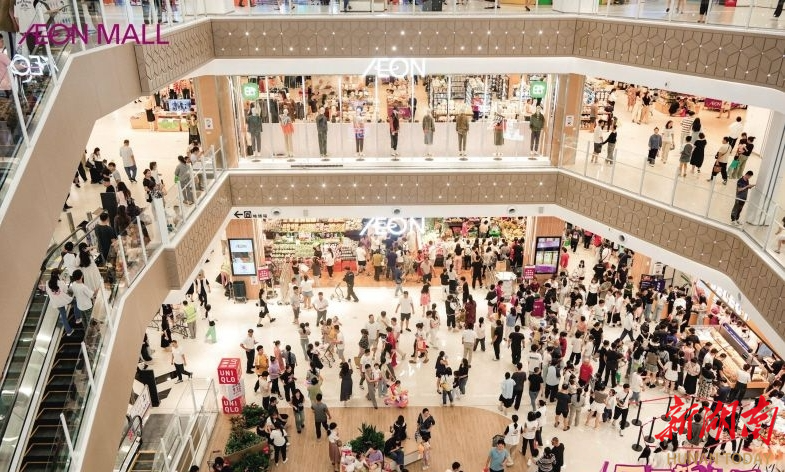
Core Insights - The commercial landscape in Xingsha is experiencing significant growth, with multiple high-profile retail projects opening, including the first "Convention + Outlet" commercial complex in Changsha, set to open in September with over 230 international brands [1][3][9] - The influx of major commercial players into Xingsha reflects the area's strong market potential and favorable business environment, as recognized by national economic policies aimed at boosting consumption [3][8] - Xingsha has become a leading county in commercial development, with a notable increase in the number of flagship stores and a robust consumer base, supported by a comprehensive transportation network [5][6][8] Group 1 - The opening of the Aeon Mall in Xingsha has attracted over 128,000 visitors and generated sales exceeding 5.1 million yuan on its first day [9] - The upcoming Changsha Shanshan Outlet will feature a significant number of first stores and flagship stores, enhancing the local retail scene [1][9] - The strategic location and development of commercial complexes in Xingsha have transformed it into a competitive shopping destination, reducing the need for residents to travel to the city for shopping [4][5] Group 2 - The commercial ecosystem in Xingsha is characterized by a diverse range of shopping options, with seven large commercial complexes and numerous supermarkets and department stores [5][6] - The county's economic strength is highlighted by its GDP exceeding 220 billion yuan and its recognition as one of the "super strong counties" in China [8][9] - The local government has implemented various initiatives to stimulate consumption, including the "Top Ten Action Plans to Boost Consumption" [9][11] Group 3 - The rapid development of commercial projects in Xingsha is supported by efficient government services, including the establishment of dedicated teams to assist businesses [11][12] - The commercial area has seen a 97,500 square meter increase in the size of large commercial complexes and supermarkets over the past decade [12] - The upcoming openings of Shanshan and Junshang commercial centers are expected to further enhance the consumer market in Changsha County [9][12]

4.06亿元资金今日流入房地产股
Zheng Quan Shi Bao Wang· 2025-07-25 09:18
Market Overview - The Shanghai Composite Index fell by 0.33% on July 25, with nine industries rising, led by electronics and computers, which increased by 1.37% and 1.26% respectively. The real estate sector ranked third in terms of gains [1] - The construction decoration and building materials sectors experienced the largest declines, with decreases of 2.06% and 1.69% respectively [1] Capital Flow Analysis - The main capital outflow from the two markets totaled 49.376 billion yuan, with four industries seeing net inflows. The computer industry led with a net inflow of 2.924 billion yuan, followed by the electronics sector with a net inflow of 2.348 billion yuan [1] - The non-ferrous metals industry had the largest net outflow, totaling 6.911 billion yuan, followed by the power equipment sector with a net outflow of 5.773 billion yuan [1] Real Estate Sector Performance - The real estate industry rose by 0.63% with a net capital inflow of 406 million yuan. Out of 102 stocks in this sector, 38 rose, including two that hit the daily limit, while 55 declined [2] - The top three stocks with the highest net inflow in the real estate sector were Zhangjiang Hi-Tech, with 743 million yuan, followed by Quzhou Development and New Town Holdings with 122 million yuan and 63.28 million yuan respectively [2] - The stocks with the largest net outflows included Hainan Airport, China Merchants Shekou, and Tibet Urban Investment, with outflows of 166.84 million yuan, 146.88 million yuan, and 75.17 million yuan respectively [3] Real Estate Capital Inflow Rankings - The top stocks in terms of capital inflow included: - Zhangjiang Hi-Tech: +10.00%, 8.56% turnover, 743.26 million yuan inflow - Quzhou Development: +2.37%, 1.99% turnover, 122.43 million yuan inflow - New Town Holdings: +2.88%, 1.26% turnover, 63.28 million yuan inflow [2] Real Estate Capital Outflow Rankings - The stocks with the largest capital outflows included: - Hainan Airport: +3.14%, 5.92% turnover, -166.84 million yuan outflow - China Merchants Shekou: +2.29%, 1.38% turnover, -146.88 million yuan outflow - Tibet Urban Investment: -6.74%, 7.12% turnover, -75.17 million yuan outflow [3]


中国城市运行周期跟踪(2025.Q2):量价回落,波动加剧
GUOTAI HAITONG SECURITIES· 2025-07-25 08:28
Investment Rating - The report assigns an "Accumulate" rating for the real estate industry [5]. Core Insights - The overall market in Q2 2025 shows weak transaction volumes, stable prices lacking trends, and increasing inventory with heightened de-stocking pressure [3]. - Only 19% of the 27 cities analyzed exhibit signs of market bottoming, indicating a general trend of "volume contraction, price stagnation, and inventory pressure" [12]. - The new housing market is experiencing a downturn, with first-tier cities showing a significant slowdown in sales growth, while the second-hand housing market demonstrates relative resilience but with increasing regional disparities [12][13]. Summary by Sections 1. Transaction Decline and Lengthening De-stocking - The report highlights that the real estate cycle varies significantly across cities due to localized policies and differing reliance on land finance [8]. - A comprehensive scoring model based on seven core indicators is used to assess the real estate cycle of each city, categorizing them into four stages: bottoming, rising, topping, and declining [8][9]. 2. Price Trends: Q2 New and Second-hand Housing Prices Decline - In Q2 2025, new housing prices experienced a slight decline after a period of stabilization, with 85% of cities unable to sustain price increases for more than two months [17]. - Second-hand housing prices also fell, with 78% of cities still in a downward trend by June [17][19]. 3. Transaction Volume: Weak Recovery and Increased Volatility - First-tier cities maintained an upward trend in new housing transactions until June, where a decline of 12% was noted [22]. - Second-tier cities saw a 15% year-on-year drop in new housing transactions in Q2, reflecting greater inventory pressure and declining buyer confidence [22][27]. 4. Demand Entering a Tug-of-War Phase Leading to Rising Inventory Cycles - The de-stocking cycle for first-tier cities increased to 20 months by June 2025, indicating intensified market supply-demand conflicts [29]. - Second-tier cities faced even longer de-stocking cycles, reaching 23 months, highlighting structural issues such as declining population attraction and excess land supply [29]. 5. Company Profit Forecasts - The report includes profit forecasts for key companies, with several companies rated as "Accumulate" based on their projected earnings per share (EPS) and price-to-earnings (PE) ratios [32].




地产持仓延续低配,龙头房企迎投资良机
Guolian Minsheng Securities· 2025-07-24 09:50
Investment Rating - Investment recommendation: Outperform the market (maintained) [9] Core Viewpoints - The real estate sector continues to see low allocation, with leading real estate companies presenting good investment opportunities. The total market value of heavy holdings in the real estate sector among public funds was 25.67 billion yuan in Q2 2025, a decrease of 11.3% quarter-on-quarter, with a holding ratio of 0.83%, which is 0.37 percentage points lower than the industry standard [4][10][17]. Summary by Sections Industry: Fund Holdings Decline, Low Allocation Trend Continues - In Q2 2025, the total market value of heavy holdings in the real estate sector among sample funds was 25.67 billion yuan, down 11.3% quarter-on-quarter. The holding ratio was 0.83%, a decrease of 0.12 percentage points, indicating a relative underweight of 0.37 percentage points compared to the industry standard [10][17]. Sector: Development and Service Sectors See Decline - In Q2 2025, the heavy holding ratios for the real estate development and service sectors were 0.74% and 0.09%, respectively, both showing a quarter-on-quarter decline of 0.11 and 0.02 percentage points [11][22]. Individual Stocks: Focus on State-Owned Enterprises and Commercial Real Estate - The top five heavy holdings in the real estate development sector were Poly Developments (4.902 billion yuan), China Merchants Shekou (3.193 billion yuan), and others. Notably, New Town Holdings and China Resources Land saw increases in holdings of 466 million yuan and 202 million yuan, respectively [12][24]. Funds: Northbound Funds Increase Holdings in Poly, Southbound Funds Add to Beike, Longfor, and Greentown - In Q2 2025, the top five companies with increased northbound fund holdings included Poly Developments (+1.37 percentage points) and others. Southbound funds increased holdings in Beike-W (+2.15 percentage points) and Longfor Group (+2.04 percentage points) [13][35]. Investment Recommendations: Continue to Recommend Leading State-Owned Enterprises and Improvement-Oriented Real Estate Companies - The real estate sector's valuation remains at historical lows, with policies supporting market stabilization. The report suggests focusing on leading state-owned enterprises and improvement-oriented real estate companies with strong land acquisition capabilities and high-quality products, such as Jianfa International Group and Greentown China [14][38].
楼市“半年考”| 55家房企上半年交房超50万套背后:交付高峰期已过,企业“保交付”压力持续减轻
Mei Ri Jing Ji Xin Wen· 2025-07-24 09:27
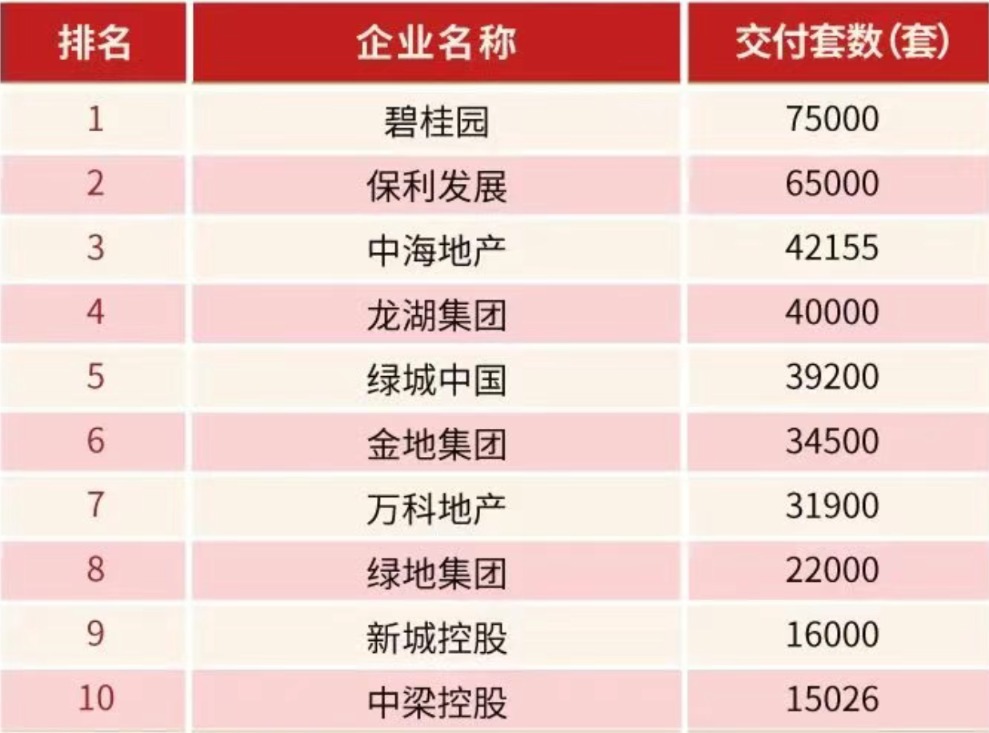
Core Viewpoint - The delivery of residential properties remains a crucial task for the real estate market in 2025, with a notable decline in delivery volumes compared to the previous year, indicating a shift in focus for companies from "guaranteeing delivery" to seeking development opportunities [1][9]. Delivery Performance - In the first half of 2025, 55 real estate companies delivered over 500,000 units, with 15 companies delivering more than 10,000 units each [1]. - Major companies like Greenland Group, Sunac China, and Jianye Group saw delivery declines exceeding 50% compared to the same period last year [1]. - The top three companies in terms of delivery volume were Country Garden (75,000 units), Poly Developments (65,000 units), and China Overseas Property (42,155 units), with the top ten companies accounting for 56.46% of total deliveries [2][1]. Industry Trends - The pressure to ensure delivery is easing as the peak delivery period has passed, allowing companies to shift their focus towards development and operational strategies [1][9]. - Companies like Country Garden and Sunac China are actively working on completing their delivery commitments while also restructuring their financing to align with current market conditions [3][4]. Innovations in Delivery - Some companies have begun implementing innovative delivery methods, such as "delivery and certificate issuance" on-site, enhancing customer experience and operational efficiency [10]. - The focus on improving delivery quality includes better communication with homeowners and offering personalized services during the delivery process [10]. Strategic Shifts - The industry is witnessing a strategic shift where companies are prioritizing product quality, operational efficiency, and asset management over mere scale [11][12]. - Companies are categorizing their strategies into three main types: product-focused, light-asset models, and asset operation, reflecting a more nuanced approach to market challenges [11].



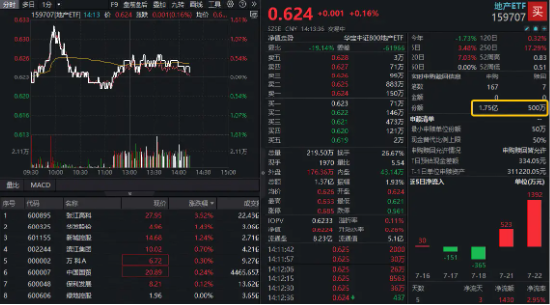
央行信贷改善+政策红利释放,资金逢跌抢筹!地产ETF(159707)获资金实时净申购超1.7亿份!
Xin Lang Ji Jin· 2025-07-23 06:33
Group 1 - The core viewpoint of the news highlights the positive momentum in the real estate sector, driven by favorable policies and market conditions, particularly focusing on the performance of the real estate ETF (159707) [1][3][4] - The real estate ETF has seen significant trading activity, with a peak price increase of over 1.4% and a real-time transaction amount reaching 145 million yuan, indicating active market participation [1] - The People's Bank of China reported a year-on-year increase of 0.4% in the balance of real estate loans by the end of the second quarter, signaling a stabilization in the credit environment for the sector [3] Group 2 - The central urban work conference, held for the first time in ten years, emphasizes policy support for revitalizing existing properties and urban renewal, which is expected to stimulate housing demand [3] - The land market is showing signs of recovery, with the premium rate for land auctions in Hangzhou rising significantly to 29.65%, reflecting increased market confidence [3] - The real estate fund industry has reached a scale of 1.8 trillion yuan, marking an end to five years of decline, indicating a potential turning point for investment in the sector [3] Group 3 - The real estate ETF (159707) tracks the CSI 800 Real Estate Index, which includes 13 leading real estate companies, showcasing a high concentration of top-tier firms with over 90% weight in the top ten constituents [4] - Analysts suggest that the shift towards selling existing homes will have a long-term impact on the real estate industry and the operational models of real estate companies, with a focus on the implementation of local policies and support measures [3]

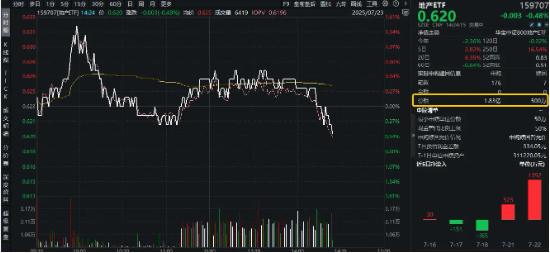
地产ETF,突然被资金买爆了!原因有哪些?
Xin Lang Ji Jin· 2025-07-23 06:30
Group 1 - The core viewpoint of the news is that the real estate ETF (159707) has seen a significant influx of capital, indicating a bullish sentiment in the real estate sector ahead of important policy meetings at the end of July [1][3] - The real estate ETF recorded a trading volume of 135 million yuan, with net subscriptions exceeding 170 million units, reflecting strong investor interest [1] - Leading stocks in the sector, such as Zhangjiang Hi-Tech and Huafa Group, have shown notable gains, with Zhangjiang Hi-Tech leading with over a 3% increase [1] Group 2 - The central government has emphasized the transition from large-scale expansion to improving existing urban areas, marking a significant shift in urban development policy [3] - The recent Central Urban Work Conference, held for the first time in a decade, is expected to lead to increased support for urban renewal policies, which could benefit the real estate sector [3] - Analysts predict that the real estate market may gradually stabilize and recover, driven by supportive policies and a focus on high-quality projects in core urban areas [3][4] Group 3 - The real estate ETF (159707) tracks the CSI 800 Real Estate Index, which includes 13 leading real estate companies, providing a concentrated investment in top-tier firms [4] - The ETF's top ten constituent stocks account for over 90% of its weight, indicating a strong focus on major players in the industry [4] - In the context of industry consolidation, leading real estate companies are expected to demonstrate greater resilience and potential for recovery [4]