
INDUSTRIAL BANK(601166)

Search documents
兴业银行“投行万里行”助力内蒙古高质量发展
Zhong Guo Jin Rong Xin Xi Wang· 2025-09-15 06:40
Core Viewpoint - Inner Mongolia is promoting the transformation of local state-owned enterprises to meet the high-quality development needs of energy base upgrades and industrial structure optimization [1][2] Group 1: Financial Services and Support - The "Investment Banking Journey" event by Industrial Bank in Hohhot aims to provide a combination of financing and intelligence services to 26 state-owned enterprises in Inner Mongolia [1] - Industrial Bank has established a comprehensive financial service system covering bond underwriting, merger financing, syndicate loans, and capital market operations, with bond underwriting exceeding 10 billion yuan for three consecutive years and syndicate loans totaling over 30 billion yuan [1] Group 2: Focus on Transformation Challenges - The seminar focused on practical pain points in the transformation of state-owned enterprises, emphasizing a problem-oriented approach [2] - The research team proposed practical paths for the transformation of local government financing platforms, addressing compliance and sustainability [2] - Experts discussed market-based tools for revitalizing existing assets and achieving industrial upgrades through mergers, along with strategies for capital market operations [2] Group 3: Future Directions - The Industrial Bank plans to continue regularizing targeted activities like the "Investment Banking Journey" to provide tailored financial solutions for state-owned enterprises [2] - The bank aims to integrate financial wisdom with local resource endowments to help Inner Mongolia's characteristic industries expand into broader markets [2]

8月新增信贷恢复较大规模正增长,居民存款搬家现象较明显
Huan Qiu Wang· 2025-09-15 00:59
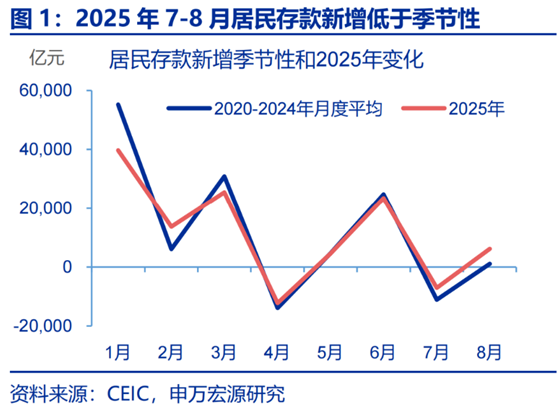
Group 1 - The core viewpoint of the article highlights the significant growth in M2 and M1, with M2 increasing by 8.8% year-on-year and M1 by 6%, indicating a strong financial support for the real economy [1] - The M1-M2 spread has narrowed to -2.8%, the lowest since June 2021, suggesting a shift in the monetary landscape [1] - In the first eight months of the year, RMB loans increased by 13.46 trillion yuan, with a notable recovery in new credit in August, reflecting robust financial support for the economy [1] Group 2 - The article emphasizes the need for future monetary policy to focus on optimizing the structure of financial growth while maintaining reasonable total growth [1] - It is noted that the current low price levels in China provide ample space for moderately loose monetary policy, with expectations for new credit and social financing to see a year-on-year increase [1] - The stock market's significant rise in August coincided with a noticeable shift in resident deposits, with a year-on-year decrease of 600 billion yuan in resident deposits and an increase of 550 billion yuan in non-bank deposits [1] Group 3 - Investment recommendations from Zheshang Securities suggest focusing on improving and high-quality A-share banks, including Pudong Development Bank, Nanjing Bank, Shanghai Bank, China Merchants Bank, and Industrial Bank [4] - The report also advises paying attention to high-dividend H-shares with improving fundamentals [4]





关于以通讯方式召开红塔红土中证同业存单AAA指数7天持有期证券投资基金基金份额持有人大会的第二次提示性公告
Zhong Guo Zheng Quan Bao - Zhong Zheng Wang· 2025-09-14 22:44
Meeting Overview - The meeting will be held via communication method as per the agreement between the fund manager and the custodian bank [1][4] - Voting period for the meeting is from September 12, 2025, to October 13, 2025, at 17:00 [2] - The address for sending voting ballots is specified for the fund management company [3] Agenda Items - The main agenda for the meeting is to discuss the proposal regarding the continuous operation of the fund [4] Voting Rights - The record date for voting rights is September 11, 2025, meaning all registered fund holders by the end of trading on that date can participate [4] Voting Process - Voting ballots can be obtained from the fund management company's website or through newspapers [5] - Specific instructions for individual and institutional investors on how to fill out and submit voting ballots are provided [6][9] Authorization - Fund holders can authorize others to vote on their behalf if they cannot attend the meeting [8] - Detailed procedures for both paper and telephone authorization are outlined, including necessary documentation [11][12] Counting Votes - The counting of votes will be supervised by designated personnel and will occur within two working days after the voting deadline [14] - Each fund share represents one vote [15] Resolution Conditions - A quorum requires that the fund shares represented by attendees or their proxies exceed 50% of the total shares on the record date for the meeting to be valid [18] Re-convening the Meeting - If the meeting does not meet the quorum requirements, it may be reconvened within three to six months [19] Related Institutions - The fund manager is Hongta Hongtu Fund Management Co., Ltd., and the custodian is Industrial Bank Co., Ltd. [20]
2025年8月金融数据点评:信贷迈向“效益优先”新周期,存款搬家仍在继续
Shenwan Hongyuan Securities· 2025-09-14 12:04
Investment Rating - The report maintains a positive outlook on the banking sector, indicating an "Overweight" rating for the industry, suggesting it will outperform the overall market [3][4]. Core Insights - The banking sector is transitioning from a "scale-first" approach to a focus on "efficiency-oriented" strategies, emphasizing balance between volume and pricing [4]. - In August, new loans increased by 590 billion RMB, but this represents a year-on-year decrease of 310 billion RMB, indicating a trend of stable but declining credit growth [4][5]. - The report highlights a shift in banks' assessment criteria from growth metrics to revenue and profit optimization, reflecting a more cautious lending environment [4]. - The report notes that the overall credit growth is expected to stabilize, with banks prioritizing loan structure optimization over market share [4]. Summary by Sections Credit Market Overview - In August, the total social financing (社融) was 2.57 trillion RMB, a year-on-year decrease of 463 billion RMB, with a stock growth rate of 8.8%, showing a slight decline [3][4]. - The new corporate loans in August totaled 540 billion RMB, a year-on-year increase of 240 billion RMB, while short-term loans saw a significant increase due to low base effects [4]. Retail Credit Analysis - Retail credit showed minimal growth, with a slight increase of 303 billion RMB in August, but still down 1,597 billion RMB year-on-year [4]. - The report mentions new policies aimed at stimulating consumer loans, which may provide short-term support for retail credit demand [4]. Government Debt and Financing - Government debt issuance in August was approximately 1.4 trillion RMB, down 2.52 trillion RMB year-on-year, indicating a potential decline in government support for social financing in the coming quarters [4]. - The report anticipates that the contribution of government debt to social financing will decrease as the year progresses [4]. Investment Recommendations - The report recommends focusing on banks with strong fundamentals and potential for valuation recovery, particularly emphasizing the value of mid-sized banks and quality city commercial banks [4]. - Specific stock recommendations include Industrial Bank, CITIC Bank, and China Merchants Bank for large banks, and Chongqing Bank, Suzhou Bank, and Hangzhou Bank for city commercial banks [4].




8月金融数据点评:存款非银化延续,贷款投放或“价在量先”
KAIYUAN SECURITIES· 2025-09-14 08:06
Investment Rating - The industry investment rating is "Overweight" (maintained) [1] Core Viewpoints - The report indicates that the financial management scale is expected to benefit, and there may be changes in investment fund preferences due to new regulations on fund sales [3] - The trend of deposit non-bankization continues, with loan issuance potentially prioritizing price over volume [4] - The report highlights a decrease in both corporate and personal loans in August, with a notable decline in short-term and medium-to-long-term loans [5][6] Summary by Sections Financial Data - In August, M1 and M2 year-on-year growth rates were 6.00% (up 0.4 percentage points month-on-month) and 8.80% (unchanged month-on-month), respectively [4] - The total social financing (社融) increased by 2.57 trillion yuan in August, a year-on-year decrease of 463 billion yuan, with a stock growth rate of 8.8% (down 0.2 percentage points month-on-month) [4] - The new RMB loans amounted to 590 billion yuan in August, a year-on-year decrease of 310 billion yuan [5] Loan Analysis - Corporate loans showed a decline, with medium-to-long-term loans decreasing by 20 billion yuan year-on-year, while short-term loans increased by 70 billion yuan, marking the first positive growth in five years for corporate short-term loans [6] - Residential loans also decreased, with medium-to-long-term loans adding only 20 billion yuan, a year-on-year decrease of 100 billion yuan [6] Investment Recommendations - The report anticipates a recovery in credit rhythm in September, with potential short-term loan growth for enterprises [7] - Recommended bank stocks include Agricultural Bank of China, China Merchants Bank, CITIC Bank, Industrial Bank, Beijing Bank, Jiangsu Bank, Hangzhou Bank, Chengdu Bank, and Chongqing Rural Commercial Bank [7]

银行业协同发力赋能电子信息制造业
Zheng Quan Ri Bao Zhi Sheng· 2025-09-13 10:10
Core Viewpoint - The "Action Plan" issued by the Ministry of Industry and Information Technology and the State Administration for Market Regulation aims to guide the expansion, technological breakthroughs, and resilience enhancement of the electronic information manufacturing industry, emphasizing the need for banks to provide comprehensive financial support to ensure stable growth [1] Group 1: Financial Innovation and Support - Banks are actively exploring ways to serve electronic information manufacturing enterprises, exemplified by the "Science and Technology Credit Loan" which enabled a company to secure 20 million yuan quickly, resulting in over 53% year-on-year revenue growth in the first half of 2025 [2] - Various innovative financial products have been launched to address the high R&D investment and insufficient collateral issues faced by electronic information manufacturing companies, including "Innovation Points Loan" and "Intellectual Property Pledge Loan" [2] - A comprehensive financing solution combining policy loans and special subsidies was tailored for a semiconductor company, providing 95 million yuan in low-cost loans to facilitate technological breakthroughs [2] Group 2: Cross-Border Financial Services - Cross-border financial services are being upgraded to meet the "going out" needs of electronic information manufacturing enterprises, with a service plan that converts "intangible credit" into "tangible funds" to help companies mitigate exchange rate risks and accelerate capital turnover [3] - Banks are encouraged to develop customized financial products based on the specific funding needs of different enterprises, promoting services like intellectual property pledges and accounts receivable pledges [3] Group 3: Supply Chain Financial Support - The banking sector is leveraging supply chain finance to alleviate funding bottlenecks in the industry chain, providing innovative products to support core enterprises while injecting growth momentum into related businesses [4] - A bank provided 11 million yuan in funding to a national-level specialized enterprise to support its capacity expansion amid rising market demand [4] Group 4: Comprehensive Service Models - Banks are establishing online service platforms for electronic information enterprises, allowing them to submit financing requests 24/7, ensuring seamless integration of online and offline services [6] - In addition to financing support, banks are extending their service offerings to include cross-border settlement, foreign exchange hedging, and overseas financing, enhancing the global competitiveness of enterprises [6] - The banking industry is shifting from "single-point financing support" to "full-chain ecological services," emphasizing the need for deeper engagement with the electronic information manufacturing sector [6]



深圳近20家银行官宣:不再区分首套二套房贷利率
21世纪经济报道· 2025-09-13 07:55
Core Viewpoint - The recent policy changes in Shenzhen's real estate market have eliminated the interest rate differentiation between first and second homes, leading to a reduction in mortgage costs for second homes, which is expected to stimulate market activity and improve housing demand [2][4][7]. Group 1: Policy Changes - As of September 6, 2023, banks in Shenzhen will no longer differentiate between first and second homes in their mortgage interest rate pricing [2][4]. - The new policy results in a reduction of 40 basis points in the interest rate for second home loans compared to previous rates [4][6]. - For a loan of 1 million yuan over 30 years, the total repayment cost will decrease by nearly 80,000 yuan, with monthly payments reduced by approximately 220 yuan [4][6]. Group 2: Impact on Borrowers - Borrowers with existing second home loans can apply for adjustments to their mortgage rates if their current rates exceed the average new loan rates by more than 30 basis points [6][8]. - The adjustment mechanism is designed to allow borrowers to renegotiate their loan terms based on market conditions and individual credit situations [6][8]. - The policy aims to alleviate the financial burden on homeowners looking to upgrade, particularly those facing challenges in selling their existing properties [4][8]. Group 3: Market Dynamics - The reduction in mortgage rates is seen as a strategy for banks to attract and retain customers amid declining housing demand and increased competition [8]. - The overall decline in household deposits and mortgage activity indicates a pressing need for banks to adjust their lending strategies to maintain profitability [8][9]. - The policy changes are expected to enhance liquidity in the real estate market, particularly for second-hand homes, by stabilizing prices and facilitating transactions [4][8].


深圳多家银行启动房贷利率调整
Ge Long Hui· 2025-09-13 01:46
Core Viewpoint - Shenzhen has implemented new housing market policies, leading to significant changes in mortgage lending practices by multiple banks in the region [1] Group 1: Policy Changes - On September 5, Shenzhen introduced new housing market regulations, which prompted banks to revise their lending guidelines [1] - As of September 12, 12 banks, including Industrial Bank, Agricultural Bank of China, Industrial and Commercial Bank of China, China Construction Bank, Shanghai Pudong Development Bank, and Shanghai Bank, announced new policies [1] Group 2: Mortgage Adjustments - The new policies eliminate the distinction between first and second home purchases for mortgage lending [1] - Several banks indicated that existing second-home commercial mortgage loans are now subject to a normalization adjustment mechanism for interest rates, allowing customers to apply for adjustments immediately [1]
服贸会秀“绿”绩
2 1 Shi Ji Jing Ji Bao Dao· 2025-09-12 23:06
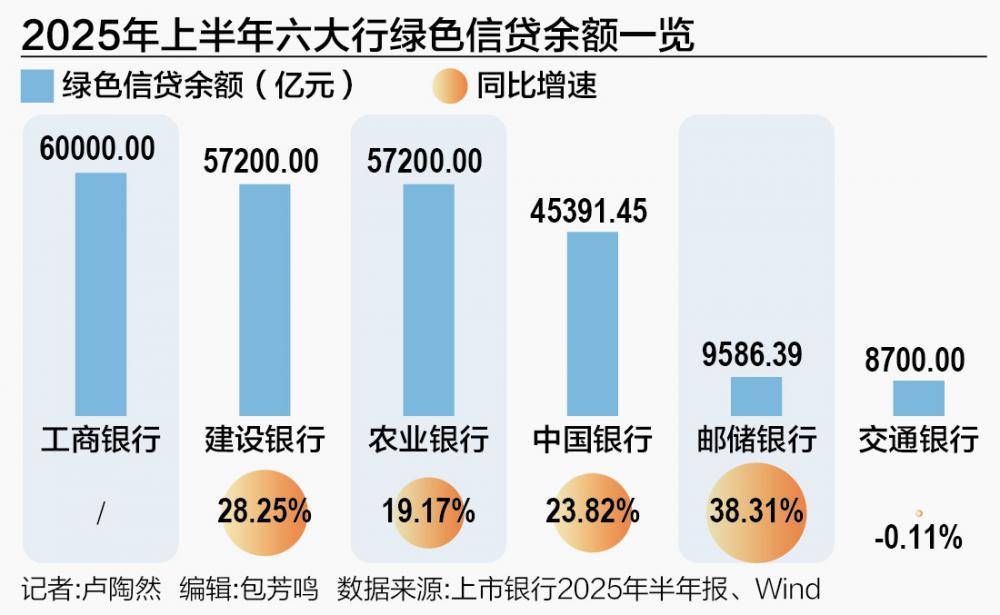
Core Insights - As of the end of Q2 2025, China's green loan balance reached approximately 42.4 trillion yuan, and the green bond balance exceeded 2.2 trillion yuan, positioning China among the top globally [1] - The carbon reduction support tool has guided financial institutions to issue carbon reduction loans exceeding 1.38 trillion yuan [1] - A total of 37 listed banks reported a combined green loan balance of 29.22 trillion yuan, with an average balance exceeding 800 billion yuan, reflecting a year-on-year growth of 41.79% [1][5] Green Loan Growth - The green loan balance of the banking system in China is leading globally, with state-owned banks playing a significant role [4] - Among the six major state-owned banks, the Industrial and Commercial Bank of China (ICBC) leads with a green loan balance of 6 trillion yuan, followed by China Construction Bank and Agricultural Bank of China, each with 5.72 trillion yuan [5] - Postal Savings Bank of China showed a remarkable year-on-year growth rate of 38.31%, nearing the 1 trillion yuan mark [5] Innovation in Green Financial Products - Banks are actively expanding and innovating specialized green financial products and service models, covering areas such as clean energy and environmental remediation [2] - The green financial product system is becoming increasingly diverse, showcasing various practical paths and innovative outcomes [2] Carbon Reduction Support Tool - The carbon reduction support tool is becoming a key indicator of banks' green financial capabilities, effectively directing financial resources towards green and low-carbon sectors [9] - In Q2 2025, 16 banks reported carbon reduction loans that facilitated a carbon reduction equivalent of over 7 million tons, with a total loan amount of nearly 24 billion yuan [9] - Major banks like ICBC and China Construction Bank have over 100 projects funded through carbon reduction loans, leading in both project numbers and loan amounts [9] Performance of Smaller Banks - Smaller banks, including city commercial banks and rural commercial banks, are showing significant growth in green loan balances, with some achieving substantial year-on-year increases [8] - Zhangjiagang Rural Commercial Bank led the rural commercial banks with a growth rate of 30.25% in green loan balances [7] - Smaller banks are encouraged to leverage local advantages and develop differentiated paths to support local green projects [8]




兴银基金管理有限责任公司兴银颐福保守养老目标一年持有期混合型发起式基金中基金(FOF)基金份额发售公告
Shang Hai Zheng Quan Bao· 2025-09-12 18:15
Fund Overview - The fund is named "Xingyin Yifu Conservative Pension Target One-Year Holding Period Mixed Fund of Funds (FOF)" and is classified as a mixed fund of funds (FOF) [15][16] - The fund has a minimum holding period of one year, during which investors cannot redeem or transfer their shares [11][15] - The fund aims for long-term stable appreciation of pension assets through a diversified asset allocation strategy [17] Fund Management and Custody - The fund is managed by Xingyin Fund Management Co., Ltd., and the custodian is Industrial Bank Co., Ltd. [1][49] - The fund management company was established on October 25, 2013, with a registered capital of 143 million RMB [48] Fund Sale and Subscription - The fund will be publicly offered from September 16, 2025, to September 30, 2025, with the possibility of adjusting the sale period based on market conditions [20][21] - The minimum subscription amount for the fund is 1 million RMB for the initial investment, and subsequent investments can be as low as 1 RMB [3][25] - Investors must open a fund account with the management company to subscribe to the fund [7][30] Investment Strategy - The fund will invest primarily in publicly offered securities investment funds, including those managed by the fund manager [10][12] - The fund's asset allocation will limit equity investments to between 5% and 20% to control risk, positioning it as a conservative pension-targeted fund [10][11] Risk and Compliance - The fund is subject to various risks, including market volatility and specific risks associated with the Hong Kong stock market due to the investment strategy [12][13] - The fund's contract will automatically terminate if the net asset value falls below 200 million RMB after three years [13] Sales Institutions - The fund will be sold through various direct and third-party sales institutions, including Ant Fund, Tian Tian Fund, and others [2][19] - The management company reserves the right to adjust the list of sales institutions as needed [58]