
GAC GROUP(601238)

Search documents
广汽集团在柬埔寨投资1900万美元建汽车组装厂,年产能1.5万台
Ge Long Hui· 2025-09-21 07:21
格隆汇9月21日|9月19日,广汽国际与柬埔寨合作伙伴TH集团正式签署KD工厂合作协议。柬埔寨KD 工厂位于柬埔寨中部磅清扬省,该工厂严格按照广汽标准建设,总投资约1900万美元。工厂计划设立4 条组装线,年产能可达1.5万台,预计将于2025年12月竣工,并于2026年1月正式启动量产。 ...
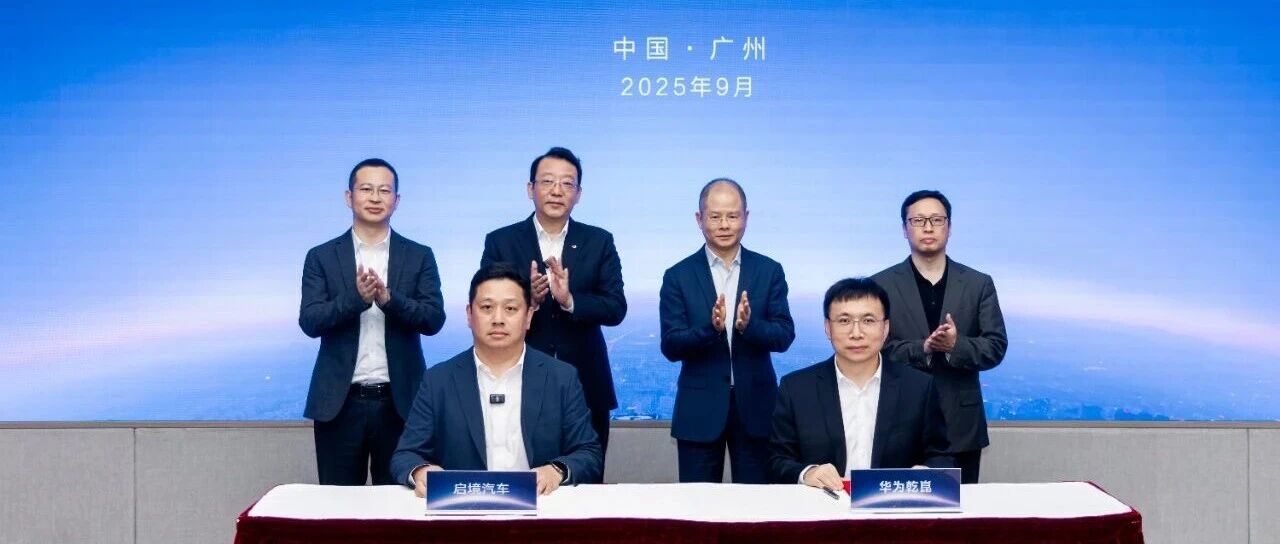
【启境】品牌官宣:华为牵手广汽,打造高端智能汽车新标杆
雷峰网· 2025-09-21 04:05
Core Viewpoint - The collaboration between Huawei and GAC Group to create the new high-end smart electric vehicle brand "Qijing" is seen as a significant strategic move, aiming to enhance both companies' positions in the competitive automotive market, particularly targeting younger consumers and emphasizing technology integration [2][9][22]. Group 1: Strategic Importance of Qijing - The establishment of Qijing represents a deep collaboration between traditional automaker GAC Group and tech giant Huawei, marking a critical strategic initiative for both companies [8][9]. - For GAC, Qijing serves as a vehicle for elevating its high-end brand capabilities, addressing the need for a strong brand to attract new-generation consumers in the competitive high-end electric vehicle market [8][9]. - Huawei's involvement positions Qijing as a showcase for its advanced smart automotive technologies, enhancing its recognition in the high-end market [9][10]. Group 2: Unique Collaboration Dynamics - This partnership is characterized as a new paradigm of cooperation between tech companies and traditional automakers, where Huawei retains control over core smart modules while GAC manages brand operations and sales channels [10][12]. - The collaboration allows for a streamlined product development process, ensuring that Qijing's vehicles are designed with a consistent smart technology framework from the outset [10][12]. Group 3: Product Development and Market Potential - Qijing is strategically targeting the high-end electric vehicle market, which is expected to be highly competitive, especially as many established players face market challenges [14][18]. - The first product from Qijing is set to launch in mid-2026, coinciding with a pivotal moment in smart automotive technology advancements, including the rollout of L3 autonomous driving capabilities [18][20]. - The brand's focus on user needs in product design, along with a collaborative operational model starting in 2025, positions Qijing to effectively respond to market demands and optimize user experience [15][20]. Group 4: Future Outlook - Qijing is anticipated to leverage Huawei's successful product methodologies and GAC's extensive automotive experience to carve out a competitive edge in the market [22]. - The upcoming launch of Qijing's first vehicle is expected to introduce innovative product experiences that resonate with younger consumers, potentially disrupting the current market dynamics [20][22].

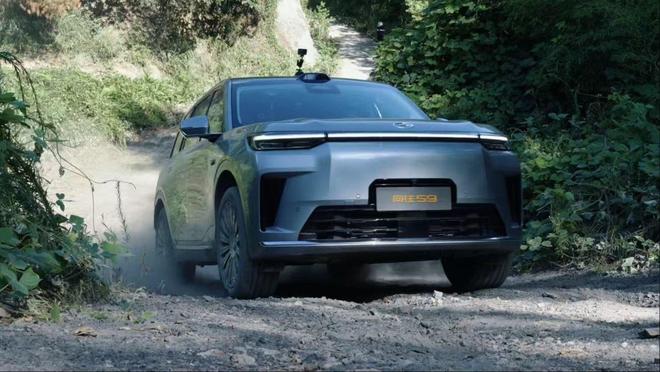
华为加持、宁德赋能,传祺S9能否在“9系”赛道跑赢?
Tai Mei Ti A P P· 2025-09-21 00:29
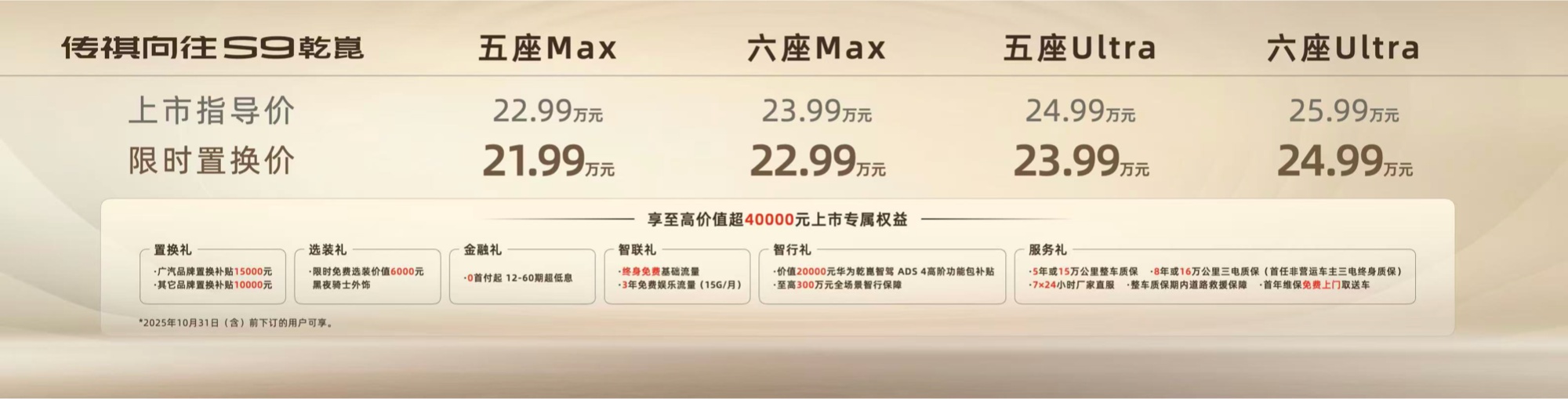
Core Viewpoint - The domestic large hybrid SUV market is experiencing explosive growth, with most independent brands launching their "9 series" SUVs, leading to intensified competition [2][3]. Group 1: Product Launch and Features - GAC Trumpchi officially launched the Xiangwang S9 Qiankun on September 19, with a starting price of 229,900 yuan and a limited-time exchange price range of 219,900 to 249,900 yuan [2]. - The Xiangwang S9 Qiankun is positioned as a plug-in hybrid SUV aimed at family users, featuring a 1.5T plug-in hybrid system and dual-motor four-wheel drive, with a maximum engine power of 118 kW and a combined motor output of 250 kW [2][3]. - The vehicle is equipped with a 44.5 kWh large-capacity battery, achieving a pure electric range of 252 kilometers and a comprehensive range of 1,200 kilometers under CLTC conditions [2]. Group 2: Intelligent Driving and User Experience - The intelligent driving system, Huawei QianKun ADS 4, is a key differentiator, featuring 192-line lidar, three 4D millimeter-wave radars, and 11 cameras, supporting full-scene "parking to parking" navigation [3]. - The vehicle's cabin features a six-screen interactive system, including a 27-inch W-HUD, a 15.6-inch central control screen, and a 17.3-inch rear entertainment screen, enhancing user interaction [3]. - Comfort features include a zero-gravity passenger seat with leg support, electric angle adjustment and heating/cooling for the rear seats, and extensive sound insulation materials to reduce noise [3]. Group 3: Market Strategy and Competitive Position - GAC Trumpchi aims to penetrate the "9 series" SUV market with a pricing strategy below the expected price, leveraging Huawei's intelligent systems to create a competitive edge [3][4]. - The collaboration with Huawei and CATL is expected to enhance the product's advantages in intelligent driving algorithms and battery safety performance, although the brand must build user reputation for market breakthrough [4].

广汽联手华为乾崑:“启境”能否续写问界奇迹?
Tai Mei Ti A P P· 2025-09-20 23:56
Core Viewpoint - The collaboration between Huawei and GAC has resulted in the launch of a new high-end automotive brand called "Qijing," which signifies GAC's commitment to fully integrate Huawei's technology into its vehicles [2][4]. Group 1: Brand and Product Development - The first product under the "Qijing" brand is expected to be a luxury smart electric vehicle priced around 300,000 yuan, with a planned launch in 2026 [2]. - "Qijing" vehicles will feature Huawei's advanced smart technologies, focusing on areas such as assisted driving, smart cockpit, user ecosystem, and brand marketing, while GAC will contribute its expertise in electric vehicle technology and manufacturing [2][4]. Group 2: Collaboration Model - The partnership represents a new collaboration model termed "HI Plus," which differs from previous models by integrating Huawei's technology more deeply into GAC's product development and marketing processes [4][6]. - This model allows GAC to maintain product definition authority while benefiting from Huawei's technological influence, creating a synergistic effect that aims for a "1+1>2" outcome [5][6]. Group 3: Market Context and Challenges - The market response to the announcement of "Qijing" has been lukewarm, with GAC's stock experiencing slight declines, indicating investor skepticism about the brand's potential to replicate the success of Huawei's previous collaborations [7]. - GAC's recent performance has been challenging, with a 12.48% year-on-year decline in sales and a significant net loss, highlighting the urgency for GAC to leverage Huawei's capabilities to enhance its competitiveness in the electric vehicle market [8][9]. Group 4: Future Outlook - The success of "Qijing" will depend on its ability to establish a strong foothold in the market for vehicles priced above 300,000 yuan, which could potentially restore GAC's position in the electric vehicle sector [9]. - GAC is implementing a city recruitment plan for "Qijing," aiming to create a robust distribution network across major cities in China, which is crucial for the brand's market penetration [9][10].
首批搭载华为乾崑智驾ADS 4+ HarmonySpace 5 传祺向往S9上市22.99万起
Yang Guang Wang· 2025-09-20 12:51
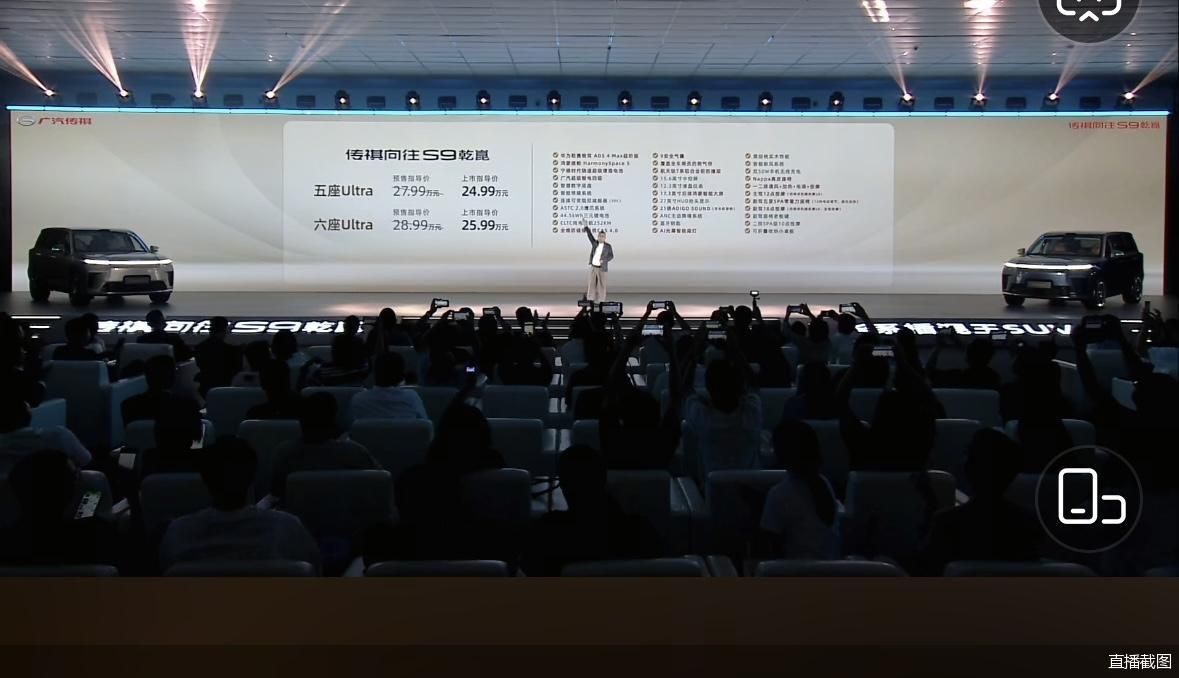
Core Insights - The GAC Trumpchi Xiangwang S9 QianKun series was launched on September 19, featuring advanced technology and safety features, positioning it as a unique hybrid SUV in the 220,000 RMB price range [1][3]. Pricing and Offers - The market guidance price starts at 229,900 RMB, with a limited-time exchange price of 219,900 RMB, and exclusive launch benefits valued at over 40,000 RMB, including a 20,000 RMB Huawei QianKun intelligent driving ADS4 package [1]. Technology and Performance - The vehicle is equipped with Huawei's QianKun intelligent driving ADS4, which enhances driving efficiency by reducing end-to-end latency by 50% and improving traffic efficiency by 20% [3]. - It features a 192-line LiDAR and three 4D millimeter-wave radars, providing comprehensive safety and assistance in complex driving conditions [3]. Safety Features - The Xiangwang S9 incorporates the CAS 4.0 multi-dimensional safety system, designed to enhance active safety capabilities across various extreme scenarios [4]. - The vehicle's body is built to five-star collision standards, utilizing aerospace-grade materials for improved strength and energy absorption [4]. Comfort and Luxury - The interior is designed for comfort, featuring a 27-inch AR-HUD for enhanced navigation and safety, and a HarmonySpace 5 smart cockpit for seamless connectivity and entertainment [5]. - The vehicle includes a unique massage system in the front passenger seat, offering a high-end spa-like experience with multiple massage points and heating features [6]. Family-Friendly Features - The second row is equipped with independent ventilation, massage, and heating functions, enhancing comfort for all passengers [6]. - The vehicle also includes a 17.3-inch eye-care entertainment screen, certified for low blue light, ensuring a safe viewing experience for children and elderly passengers [7]. Overall Experience - The GAC Trumpchi Xiangwang S9 aims to create a mobile living space, combining advanced technology, safety, and comfort to enhance family travel experiences [7].
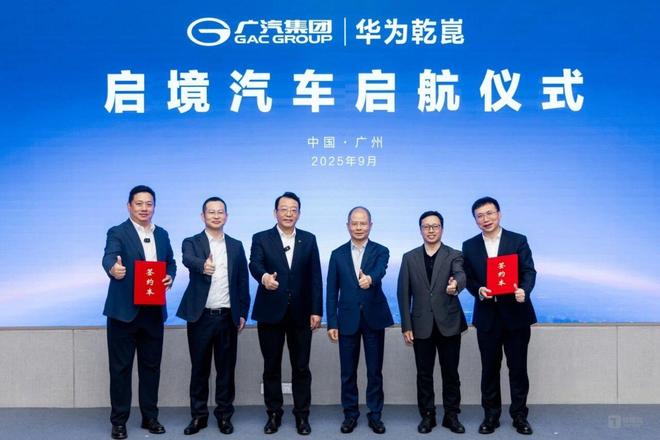
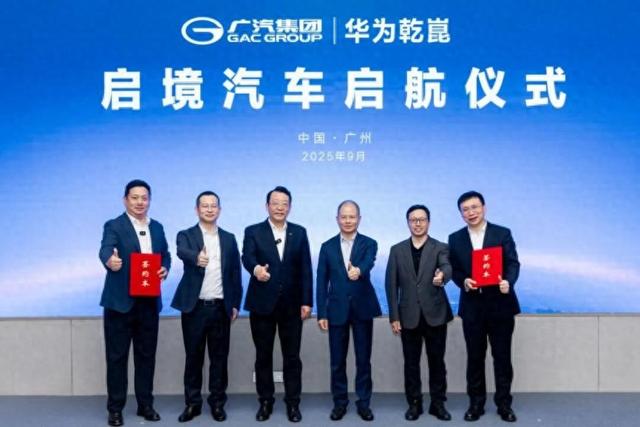
“启境”品牌正式官宣 广汽集团携手华为乾崑共启新程
Bei Jing Ri Bao Ke Hu Duan· 2025-09-20 09:38
Core Viewpoint - The establishment of the "Qijing" brand, a high-end smart electric vehicle brand jointly created by GAC Group and Huawei, marks a significant strategic collaboration aimed at enhancing the smart mobility experience [1][3]. Group 1: Strategic Collaboration - Huawei's rotating chairman, Xu Zhijun, expressed the hope that Qijing can open new horizons and win the future by integrating intelligence into every vehicle, enhancing safety and quality of life [3]. - GAC Group's chairman and general manager, Feng Xingya, emphasized that Huawei is not only a key partner but also a model for the transformation of GAC, prioritizing the Qijing brand for long-term development [3]. Group 2: Technological Integration - Qijing vehicles will be equipped with Huawei's advanced intelligent technologies, leveraging Huawei's strengths in assisted driving, smart cockpit, user ecosystem, and brand marketing, combined with GAC's expertise in electric power and vehicle manufacturing [3]. - The Qijing brand aims to deeply integrate the advantages of both GAC Group and Huawei in areas such as intelligence, ecology, and brand synergy, providing consumers with a forward-looking smart mobility experience [3].
汽车早报|小米汽车回应OTA召回 问界M9将推出全新配色
Xin Lang Cai Jing· 2025-09-20 00:38
Group 1 - The China Automobile Association (CAAM) has initiated an anti-discrimination survey in the automotive industry to understand the impact of integrated circuit applications [1] - Xiaomi Auto announced a recall of 116,887 units of the SU7 standard version electric vehicles, which will be addressed through an over-the-air (OTA) software upgrade to enhance the reliability of driving assistance features [1] - BYD's Han L model will be the first to feature the "parking space to parking space navigation assistance" function, allowing for autonomous navigation through parking lots and toll booths without manual intervention, with OTA updates expected in Q4 [3] Group 2 - GAC Group announced the resignation of its Deputy General Manager Yan Zhuangli due to personal reasons, effective immediately upon receipt of his resignation letter [4] - Huawei's newly authorized patent for a "starry sky interior" aims to improve the durability and lighting effects of vehicle interior components [5] - Chasing Technology's founder Yu Hao responded positively to inquiries about entering the automotive sector, indicating that financial assessments have been conducted and the company is prepared [6] Group 3 - GAC Trumpchi officially launched the Xiangwang S9 Qiankun model, which features Huawei's advanced driving assistance system and is priced starting at 229,900 yuan [7] - The Deep Blue S07, a new smart mid-size SUV, has been launched, and the company also announced the opening of its zero-carbon emission factory in Nanjing with an annual output value exceeding 3.7 billion yuan [8] - Dongfeng Motor has established a new company, Dongfeng Motor Group Yuechuang Technology Co., to accelerate the transformation of its parts business towards new energy [8] Group 4 - Ford is recalling approximately 101,944 Taurus vehicles in the U.S. due to a risk of door trim panels detaching while driving, which could pose a road hazard [8] - The former Continental Group's automotive subsidiary, now known as Omowei Group, has officially listed on the Frankfurt Stock Exchange with a market capitalization of 3.5 billion euros [9] - As of June 30, 2025, the company reported having 1.5 billion euros in cash and 2.5 billion euros in credit lines [9]

22.99万起 传祺向往S9乾崑正式上市
Bei Jing Shang Bao· 2025-09-19 19:55
Group 1 - The core viewpoint of the article is the official launch of the GAC Trumpchi Yawning S9 Qian Kun, with a starting price of 229,900 yuan, offering options for five or six seats to meet diverse consumer needs [1] - The new model is equipped with Huawei's Qian Kun Intelligent Driving ADS 4 Max, featuring 192-line lidar and three 4D millimeter-wave radars, totaling 29 perception units across the vehicle [1] - The vehicle comes standard with a 44.5-degree CATL Xiaoyao Super Hybrid Battery, which exceeds national safety standards and meets the new battery national standard a year in advance, with a CLTC pure electric range of 252 km and a comprehensive range exceeding 1,200 km, capable of using 92-octane gasoline [1]
今日新闻丨广汽集团携手华为乾崑推出新品牌启境!捷途纵横G700开启预售!广汽传祺向往S9上市,售价22.99-25.99万元!
电动车公社· 2025-09-19 16:05
Group 1 - The core viewpoint of the article highlights the recent developments in the automotive industry, particularly the pre-sale of the Jietu Zongheng G700 and the launch of the GAC Trumpchi Xiangwang S9, along with the introduction of a new high-end smart electric vehicle brand by GAC and Huawei [1][3][17] Group 2 - Jietu Zongheng G700 has commenced pre-sale with a price range of 349,900 to 429,900 yuan, offering four models [1][3] - The G700 features a boxy design, dimensions of 5198mm in length, 2050mm in width, and 1956mm in height, with a wheelbase of 2870mm, and includes off-road styling elements [2] - The vehicle is powered by a Kunpeng super hybrid CDM-O system, with a 2.0T engine producing a maximum power of 155kW and a total system power of 560kW, achieving a range of 1400km on full fuel and battery [5] - The interior design emphasizes luxury with numerous physical buttons, featuring amenities such as a ceiling screen for the second row, a built-in refrigerator in the armrest, heated and ventilated seats, and a high-end sound system [6] - The G700 is positioned similarly to models like Tank 500 Hi4-T and Fangcheng Leopard 8, combining off-road capability with luxury features suitable for daily commuting [7] Group 3 - GAC Trumpchi Xiangwang S9 has been launched with a price range of 229,900 to 259,900 yuan, offering four models [8][9] - The S9 adopts a new design language with a spacious and luxurious feel, measuring 5060mm in length, 1950mm in width, and 1760mm in height, with a wheelbase of 2930mm [11] - It features a simplified interior design with wood accents, equipped with advanced technology such as Huawei's ADS 4 Max and a high-quality sound system [13] - The powertrain consists of a 1.5T engine combined with a dual-motor hybrid system, achieving a maximum power of 118kW for the engine and 170/80kW for the front and rear motors, with a 0-100 km/h acceleration time of 6.6 seconds [15] - The S9 aims to compete in the crowded 200,000 yuan SUV market, leveraging product strength and Huawei's technology [15] Group 4 - GAC Group has partnered with Huawei to launch a new high-end smart electric vehicle brand named Qijing, targeting the premium market above 300,000 yuan, with the first vehicle expected to debut in 2026 [17] - The collaboration will involve GAC's manufacturing and battery technology, while Huawei will provide smart technology and participate in product development and marketing [17]

广汽集团:副总经理辞职
Zheng Quan Ri Bao Zhi Sheng· 2025-09-19 15:13
(编辑 姚尧) 证券日报网讯 9月19日晚间,广汽集团发布公告称,公司董事会于近日收到公司副总经理严壮立先生送 达的《辞职函》,由于个人原因,其申请辞去公司副总经理、执行委员会委员职务,辞职后不再担任公 司任何职务。 ...