PICC(601319)

Search documents
车险持续提升保障能力
Jing Ji Ri Bao· 2025-09-21 21:53
Core Insights - The Chinese auto insurance market is projected to exceed 913 billion yuan in premiums by 2024, accounting for over 54% of total non-life insurance premiums [1] - The industry is focused on improving operational capabilities to provide fair pricing and comprehensive risk coverage for consumers [1] - The auto insurance sector is also expected to drive improvements in vehicle safety and performance standards among manufacturers, supporting the international expansion of Chinese automotive brands [1] Group 1: Market Performance - By the end of 2024, the comprehensive expense ratio for auto insurance is expected to be 23.8%, a decrease of 4.1 percentage points year-on-year, marking the lowest level in nearly 18 years [2] - The comprehensive claims ratio for auto insurance is projected to rise to 74.1%, an increase of 3.1 percentage points year-on-year [2] - The average premium paid by consumers has decreased by 21% compared to pre-reform levels in 2020 [2] Group 2: Industry Reforms - The commercial auto insurance sector has undergone multiple rounds of reforms over the past decade, addressing issues from earlier development phases by lowering rates, reducing commissions, and expanding coverage [2] - The implementation of the "reporting and operation in unison" policy has effectively regulated the auto insurance market, with a reported comprehensive cost ratio of 94.2% for a major insurer, down 2.2 percentage points year-on-year [2] Group 3: Emerging Risks and Opportunities - Natural disasters are increasingly impacting the auto insurance sector, with losses from significant events potentially reaching nearly 1% of market premium volume [2] - The auto insurance market is facing challenges from high claims costs associated with new energy vehicles, which have an average comprehensive cost ratio exceeding 100% and incurred losses of 5.7 billion yuan [4] Group 4: New Energy Vehicle Insurance - In 2024, premiums for new energy vehicle insurance are expected to reach 140.9 billion yuan, representing 15.4% of total auto insurance premiums [4] - The average risk cost for new energy vehicles is 2.2 times that of traditional fuel vehicles, contributing to high claims rates [4] - The high claims rates are attributed to specific physical characteristics of new energy vehicles and differences in driving behavior compared to traditional vehicles [4] Group 5: Regulatory Support and Innovations - Regulatory bodies have issued guidelines to promote high-quality development in new energy vehicle insurance, focusing on reducing maintenance costs and innovating insurance offerings [5] - A new platform has been launched to facilitate insurance for new energy vehicles, ensuring that insurers cannot refuse coverage [5] Group 6: International Expansion - Chinese insurers are beginning to expand new energy vehicle insurance services internationally, with a focus on markets like Hong Kong and Thailand [6][9] - The first overseas new energy vehicle insurance policy was successfully issued in Hong Kong, with plans to further expand into Southeast Asia and beyond [6][9] - Strategic partnerships with local insurers are being formed to provide comprehensive risk management solutions for Chinese automotive brands operating abroad [7][8]

非银金融行业跟踪周报:基本面向好趋势确定性高,保险、券商估值修复均可期-20250921
Soochow Securities· 2025-09-21 12:03
Investment Rating - The report maintains an "Overweight" rating for the non-bank financial industry [1] Core Views - The fundamentals of the non-bank financial industry show a positive trend with high certainty of recovery in valuations for insurance and brokerage firms [1] Summary by Sections Non-Bank Financial Sub-Industry Performance - In the recent five trading days (September 15-19, 2025), only the diversified financial sector outperformed the CSI 300 index, with diversified finance down 0.03%, securities down 3.55%, insurance down 4.80%, and the overall non-bank financial sector down 3.80% [10][11] - Year-to-date performance shows diversified finance up 11.54%, insurance up 5.74%, brokerage up 4.47%, and the overall non-bank financial sector up 5.27%, while the CSI 300 index is up 14.41% [11][12] Securities Sector - Trading volume has significantly increased year-on-year, with the average daily trading volume for September reaching CNY 28,214 billion, up 209.19% year-on-year and 7.65% month-on-month [16] - The margin trading balance as of September 18 was CNY 24,025 billion, up 75.22% year-on-year and 28.85% since the beginning of the year [16] - The average price-to-book (PB) ratio for the securities industry is projected at 1.3x for 2025, with recommendations for leading firms benefiting from active capital market policies, such as CITIC Securities and Dongfang Zhi Tong [21] Insurance Sector - The net profit of listed insurance companies showed a slight increase, with a total net profit of CNY 1,782 billion in the first half of 2025, a year-on-year growth of 3.7% [23] - The new business value (NBV) for life insurance remains high, with significant growth rates reported by major firms, driven by improved value rates due to declining interest rates and increased new premium sales [23] - The insurance sector's valuation is currently at 0.65-0.86 times the 2025E P/EV, which is considered historically low, maintaining an "Overweight" rating [27] Diversified Financial Sector - The trust industry saw its total assets reach CNY 29.56 trillion by the end of 2024, a year-on-year growth of 23.58%, although profits have significantly declined [29] - The futures market experienced a trading volume of 10.59 billion contracts in July, with a transaction value of CNY 71.31 trillion, reflecting year-on-year growth of 48.89% and 36.03% respectively [36] - The report suggests that innovation in risk management will be a key direction for the futures industry moving forward [41] Industry Ranking and Key Company Recommendations - The recommended ranking for the industry is insurance > securities > diversified finance, with key recommendations including China Ping An, New China Life, China Pacific Insurance, CITIC Securities, and Dongfang Zhi Tong [47]




新公司获批!险企发力这一赛道
Zhong Guo Zheng Quan Bao· 2025-09-21 09:32
Core Viewpoint - The approval of the establishment of PICC Health Management Co., Ltd. by the Financial Regulatory Bureau signifies the further consolidation of China PICC Group's licensing framework and the expansion of health management companies funded by insurance firms [1][2]. Group 1: Industry Trends - Major insurance companies are increasingly establishing specialized health management companies, integrating insurance products with health management services to enhance the value of insurance offerings and improve risk management [1][4]. - The health insurance sector is becoming increasingly crowded, with a shift from traditional insurance models to products that encompass exclusive coverage, medical services, and unique benefits [4][6]. - The new "National Ten Articles" policy encourages the integration of commercial health insurance with health management, aiming to enhance service levels and promote a proactive approach to health [4][6]. Group 2: Company Developments - PICC Health plans to utilize 200 million yuan of its own funds to establish the health management company, aiming to create a new business model that combines insurance, health services, and technology [2][3]. - The health management business of PICC Health is projected to generate service revenue of 159 million yuan in the first half of 2025, serving over 4.8 million people, reflecting a year-on-year growth of over 20% [2][3]. - The company aims to transition its health insurance model from traditional reimbursement to managed healthcare, enhancing collaboration across various business segments [2][3]. Group 3: Future Outlook - The synergy between health insurance and health management is expected to enhance product value, reduce the risk of illness among insured individuals, and optimize profit margins for insurance companies [6][5]. - The use of mobile internet and artificial intelligence in health management services is being explored to improve efficiency and promote the health of insured populations throughout their life cycles [5][6].
非银金融行业周报:坚定看好非银板块投资价值-20250921
Shenwan Hongyuan Securities· 2025-09-21 07:43
Investment Rating - The report maintains a positive outlook on the non-bank financial sector, indicating an "Overweight" investment rating for the industry [2][3]. Core Insights - The brokerage sector has experienced a recent adjustment, with the Shenwan Brokerage II Index declining by 3.51%, underperforming the CSI 300 Index by 3.07 percentage points. However, the sector is expected to maintain double-digit year-on-year profit growth in Q3 2025, supported by ongoing capital inflows [3][6]. - The insurance sector has seen a decline of 4.76% in the Shenwan Insurance II Index, with significant movements such as Ping An Life increasing its stake in China Pacific Insurance to over 10%. This reflects a strong positive outlook from insurance capital towards the sector [3][8]. - The report highlights the upcoming National New Conference on September 22, which is anticipated to bring new policies that could positively impact market sentiment [3][15]. Summary by Sections Market Review - The CSI 300 Index closed at 4501.92 with a slight decline of 0.44%. The non-bank index reported a drop of 3.66%, with the brokerage, insurance, and diversified financial sectors showing declines of 3.51%, 4.76%, and 0.50% respectively [6][8]. Non-Bank Industry Key Data - As of September 19, 2025, the 10-year government bond yield was 1.88%, with a slight increase of 0.65 basis points. The average daily stock trading volume reached 25,181.36 billion yuan, reflecting an increase of 8.23% week-on-week [11][14]. Non-Bank Industry News and Key Announcements - The report notes that the property insurance sector achieved a record high in underwriting profits in the first half of 2025, with premium growth of 4.2% [16]. - Ping An Life's recent acquisition of shares in China Pacific Insurance is seen as a strong signal of confidence in the insurance sector's investment value [19]. - China Pacific Insurance announced the completion of a convertible bond issuance, which is expected to enhance its capital position [20]. Investment Recommendations - For brokerages, the report recommends focusing on leading firms benefiting from improved competitive dynamics, such as GF Securities, Guotai Junan, and CITIC Securities. It also suggests considering firms with strong international business capabilities like China Galaxy and CICC [3][8]. - In the insurance sector, the report recommends China Life, China Pacific, New China Life, and Ping An, among others, due to their favorable valuation and growth prospects [3][8].


恒生电子中标:人保资产私募基金公司恒生OPlus服务集采项目采购结果公告
Sou Hu Cai Jing· 2025-09-20 04:36
Group 1 - The core point of the article is that Hengsheng Electronics Co., Ltd. has won a procurement project from China People's Insurance Group Co., Ltd. for the Hengsheng OPlus service, with a bid amount of 1,180,000 [1][3] - Hengsheng Electronics has invested in 132 companies and participated in 6,609 bidding projects [1] - The company holds 909 trademark registrations, 520 patents, and 1,122 copyright registrations, along with 243 administrative licenses [1] Group 2 - The procurement was announced on September 16, 2025 [3] - The specific region for the procurement is not disclosed [3]


从业5至10年的保险代理人流失明显;中国平安7年花费288亿,为49万员工购买股票;平安人寿2次举牌中国太保H股|13精周报
13个精算师· 2025-09-20 03:05
Core Viewpoint - The article provides a comprehensive overview of recent developments in the insurance industry, highlighting regulatory changes, company dynamics, product innovations, and personnel movements. Regulatory Dynamics - Nine departments are accelerating the construction of a long-term care insurance system to expand coverage and enhance training for caregivers and service providers [7] - Eight departments encourage insurance institutions to optimize automotive export credit insurance services to mitigate risks associated with exchange rate fluctuations [8] - The Minister of Agriculture announced that comprehensive cost and income insurance for three major grain crops has achieved nationwide coverage [9] Company Dynamics - Ping An Life increased its stake in China Pacific Insurance H-shares to over 10%, triggering a mandatory disclosure [14] - China Ping An has been actively purchasing shares in three financial stocks, with significant investments in China Life and Postal Savings Bank [15] - China Pacific Insurance reported a 13.2% year-on-year increase in original insurance premium income for the first eight months, totaling RMB 217.05 billion [24] - New China Life's original insurance premium income for the same period reached RMB 158.086 billion, up 21% year-on-year [26] - China Export & Credit Insurance Corporation achieved an underwriting amount of USD 5,656 million in the first half of the year, a 13.5% increase [28] Personnel Changes - Wang Ying is proposed to be appointed as the chairman of China Merchants Jin Mao Life Insurance [29] - He Chunlei resigned as chairman of China Re, with the president, Zhuang Qianzhi, taking over [30] - Several key appointments were made across various insurance companies, including new roles at Ping An Life and China Pacific Insurance [34][36][37] Industry Dynamics - The 2025 Financial Education Promotion Week was launched in Beijing, featuring participation from various financial institutions [43] - Six insurance companies were listed in the 2025 Most Valuable Chinese Brands Top 100, with Ping An ranking in the top 10 [44] - Ten insurance companies made it to the 2025 China Enterprise 500 list, showing an upward trend in rankings compared to 2024 [46] - The number of insurance marketing personnel has decreased significantly, with a notable rise in new entrants to the field [47] Product and Service Innovations - Dajia Insurance launched the "City Heart Elderly Care Ecological Alliance," with its first community opening in Shanghai [60] - China Pacific Insurance introduced a new international engineering liability insurance product at the China International Service Trade Fair [61] - Agricultural cultural heritage protection insurance was launched by PICC, marking a significant step in safeguarding traditional agricultural practices [62] - Nanjing's medical insurance accounts can now be used to purchase supplementary medical insurance for family members [64]


华能信托17亿“信保贷”骗局曝光,世纪华通前高管退4亿赃款不被起诉
Guan Cha Zhe Wang· 2025-09-20 02:56
Group 1 - The core issue revolves around a fraudulent scheme involving 1.7 billion yuan in trust funds, which was exposed after six years, implicating state-owned trust companies, listed banks, and leading insurance firms as tools of the fraudsters [1][2] - The "credit insurance loan" model initiated by Huaneng Trust and Huishang Bank in June 2019 was intended to create a risk-sharing mechanism but quickly deviated from its intended purpose due to internal control failures and lack of compliance [2][6] - The fraudulent activities included fabricating loan entities, forging insurance documents, and manipulating bank account flows, resulting in a total of 12.7 billion yuan in fraudulent loans and an actual loss of 4.2 billion yuan [2][4] Group 2 - The case highlights systemic weaknesses in internal controls and compliance within financial institutions, particularly Huaneng Trust, which failed to verify the true identities of borrowers and did not conduct secondary underwriting on loan materials [6][7] - Huishang Bank has faced significant regulatory scrutiny, receiving 28 penalties totaling 22.79 million yuan from 2021 to 2024 for issues related to financing false projects and inadequate post-loan management [6][7] - The industry has seen a pattern of similar fraudulent events, indicating a trend where trust companies prioritize business innovation over thorough asset verification and risk management, which could lead to further risks if not addressed [7]
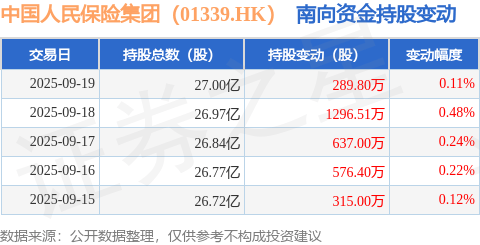
中国人民保险集团(01339.HK):9月19日南向资金增持289.8万股
Sou Hu Cai Jing· 2025-09-19 19:50
Group 1 - The core point of the news is that southbound funds have significantly increased their holdings in China People's Insurance Group, with a total net increase of 31.14 million shares over the last five trading days and 121 million shares over the last twenty trading days [1][2] - As of September 19, 2025, southbound funds hold 2.7 billion shares of China People's Insurance Group, accounting for 30.93% of the company's total issued ordinary shares [1][2] - The daily changes in shareholding show a consistent upward trend, with the most recent increase being 289,800 shares, representing a change of 0.11% [2] Group 2 - China People's Insurance Group is primarily engaged in providing insurance products, including property insurance, health insurance, life insurance, reinsurance, Hong Kong insurance, and pension insurance [2] - The company's property insurance segment includes products for both corporate and individual clients, such as motor vehicle insurance, agricultural insurance, property insurance, and liability insurance [2] - The health insurance segment focuses on health and medical insurance products, while the life insurance segment includes various life insurance products such as participating, whole life, annuity, and universal life insurance [2]
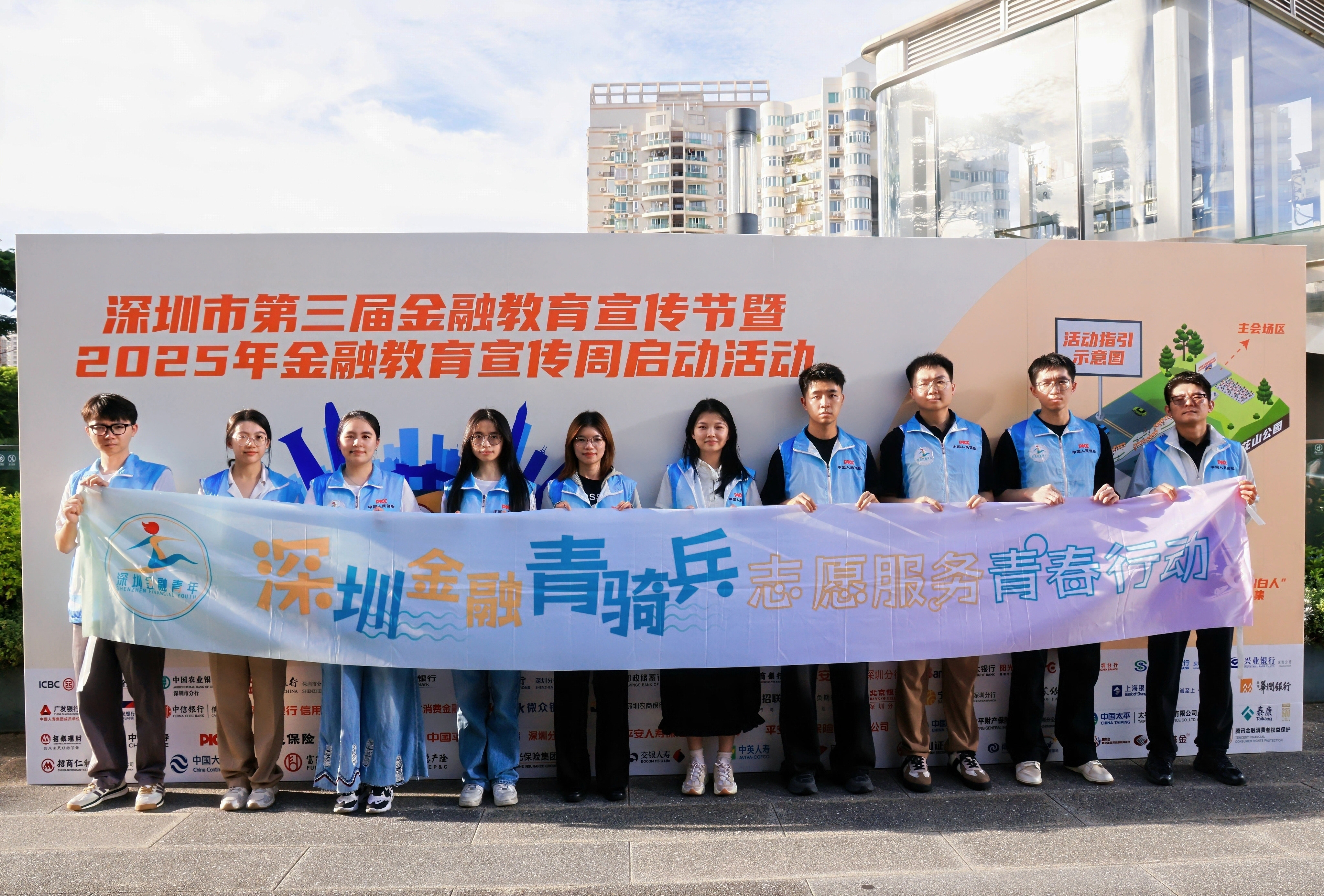
寓教于乐+科技赋能 中国人保健康深圳分公司启动金融教育宣传周系列活动
Zhong Jin Zai Xian· 2025-09-19 10:04
活动现场,人保健康深圳分公司以专属IP形象"CC队长"打造的"线上消保智能体"首次亮相,迅速成为全场 关注焦点。该智能体深度融合AI技术,以拟人化方式实时响应各类咨询,为不同年龄段用户提供金融知识 学习、风险提示及消费者权益保护等个性化服务,有效解决了传统金融教育覆盖面有限、精准性不足等 问题。现场市民踊跃扫码互动体验,纷纷称赞"可以随时随地学习消保知识,非常实用"。 人保健康CC队长 @人保健康 机直营网 Z Hi~我是"人保健康CC队长" 大家好,我是人保健康CC队长!陪你学习保险知识与消 保知识,规划健康保障! 3 什么是健康保险? > > 2 健康保险主要有哪些分类? ?)医疗险与医保有什么区别? > > 金融消费者享有哪些基本权利? S 国 学一学 消保知识小课堂 ) ( 人保健康营业厅 有什么金融知识问题尽管问我 (限42字) 9月15日,以"保障金融权益 助力美好生活"为主题的2025年金融教育宣传周开幕式在莲花山公园成功举 办。人保健康深圳分公司积极响应活动号召,于现场设立金融消保宣教专区,推出"线上消保智能体"智能 创新项目,将AI技术与金融权益保护的深度融合,为市民提供更智能、更便捷的金融 ...
保险板块9月19日跌0.84%,新华保险领跌,主力资金净流出2913.21万元
Zheng Xing Xing Ye Ri Bao· 2025-09-19 08:53
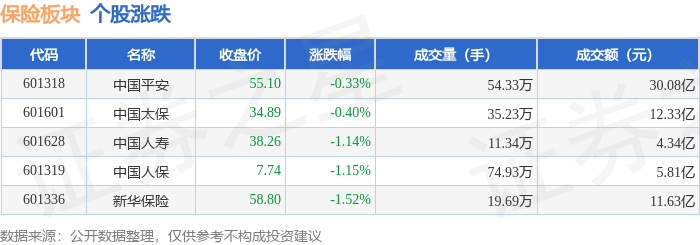
证券之星消息,9月19日保险板块较上一交易日下跌0.84%,新华保险领跌。当日上证指数报收于 3820.09,下跌0.3%。深证成指报收于13070.86,下跌0.04%。保险板块个股涨跌见下表: | 代码 | 名称 | 收盘价 | 涨跌幅 | 成交量(手) | 成交额(元) | | --- | --- | --- | --- | --- | --- | | 601318 | 中国平安 | 55.10 | -0.33% | 54.33万 | 30.08亿 | | 601601 | 中国太保 | 34.89 | -0.40% | 35.23万 | 12.33 乙 | | 601628 | 中国人寿 | 38.26 | -1.14% | 11.34万 | 4.34亿 | | 61319 | 中国人保 | 7.74 | -1.15% | 74.93万 | 5.81亿 | | 601336 | 新华保险 | 58.80 | -1.52% | 19.69万 | 11.63亿 | 从资金流向上来看,当日保险板块主力资金净流出2913.21万元,游资资金净流出3.74亿元,散户资金净 流入4.03亿元。保险板块个股资金流向 ...