
CPIC(601601)

Search documents
银保渠道崛起!低利率时代,险企如何深耕实现业务增长?
Huan Qiu Wang· 2025-09-24 05:20
Core Insights - The life insurance industry is undergoing significant changes due to a continuous decline in preset interest rates and the implementation of the "reporting and operation integration" policy, leading to a shift towards a transparent fee structure and a focus on dividend insurance products [1][4]. Group 1: Sales Channel Dynamics - The bancassurance channel has seen a substantial transformation, with major insurance companies reporting significant growth in premium income from this channel. For instance, China Life's bancassurance premiums reached 72.44 billion yuan, a year-on-year increase of 45.7% [2]. - In the first half of 2025, New China Life's bancassurance premiums totaled 46.19 billion yuan, up 65.1%, while Taiping Life's premiums grew by 82.6% to 41.66 billion yuan [2]. - The individual insurance channel's performance has lagged, with some companies experiencing a decline in new business volume, highlighting the need for large insurers to reassess the value of the bancassurance channel [2][4]. Group 2: New Business Value - New business value, a key indicator of an insurance company's profitability and sustainability, has shown remarkable growth in the bancassurance channel, with companies like Taiping Life and New China Life reporting over 100% year-on-year growth in this area [3]. - The contribution of new business value from the bancassurance channel for New China Life and People’s Insurance has exceeded 50%, indicating its critical role in overall business performance [3]. Group 3: Product Strategy - The decline in product attractiveness due to lower interest rates has prompted insurers to adjust their product structures, with dividend insurance emerging as a strategic option due to its combination of guaranteed and floating returns [6]. - Dividend insurance is particularly suited for the bancassurance channel, as it aligns with customer preferences for stable returns and is easier for bank staff to sell compared to more complex products [8]. Group 4: Challenges for Smaller Insurers - Smaller insurers face heightened challenges in the current environment, struggling to compete for bancassurance resources due to the transparency of fees and the preference of banks for larger, more established companies [9]. - To navigate these challenges, smaller insurers are encouraged to focus on product differentiation, establish exclusive partnerships with regional banks, and leverage digital tools to enhance channel efficiency [9]. Group 5: Strategic Recommendations - The bancassurance channel is seen as a vital growth engine, complementing the individual insurance channel, which requires a professional transformation to enhance customer experience [10]. - Insurers are advised to promote multi-channel collaboration, ensuring that both bancassurance and individual channels work synergistically to maximize market potential [10].




陕西金融监管局同意太平洋产险西安市临潼支公司变更营业场所
Jin Tou Wang· 2025-09-24 03:20
Core Points - The Shaanxi Financial Regulatory Bureau approved the request from China Pacific Property Insurance Co., Ltd. for the relocation of its Xi'an Lintong branch [1] - The new business location is specified as 14th floor, rooms 1401, 1402, and 1403, Hengsheng Building, No. 168, Yinqiao Avenue, Lintong District, Xi'an, Shaanxi Province [1] - The company is required to handle the change and obtain the necessary permits in accordance with relevant regulations [1]

陕西金融监管局同意太平洋产险西咸新区支公司变更营业场所
Jin Tou Wang· 2025-09-24 03:20
2025年9月12日,陕西金融监管局发布批复称,《中国太平洋财产保险股份有限公司陕西分公司关于西 咸新区支公司变更营业场所的请示》(陕太保产〔2025〕69号)收悉。经审核,现批复如下: 一、同意中国太平洋财产保险股份有限公司西咸新区支公司将营业场所变更为:陕西省西安市沣东新城 三桥新街630号搜宝中心2号楼11203-2-2、11104-0号。 二、中国太平洋财产保险股份有限公司应按照有关规定及时办理变更及许可证换领事宜。 ...
中国太保产险以客户为中心 筑牢保险服务根基
Zhong Guo Jin Rong Xin Xi Wang· 2025-09-24 02:52
Core Viewpoint - China Pacific Insurance (CPIC) has focused on high-quality development in the insurance industry over the past year, emphasizing a people-centered approach and enhancing service through innovative insurance products and a "Three Hearts Service" initiative [1][10]. Product Side: Financial Supply Optimization - CPIC has concentrated on the financial "five major articles," improving the quality and level of financial services to the real economy [3]. - The number of technology enterprises served reached 75,000, a year-on-year increase of 24%. In the first half of 2025, technology insurance premium income grew by 6.3% [3]. - CPIC has collaborated with major companies in the integrated circuit field and supported significant aerospace projects, including the launch of the "Logistics Unmanned Aerial Vehicle Comprehensive Liability Insurance" [3]. Green Finance: Innovative Products - CPIC launched over 37 innovative products in green finance, including the first CCER loss insurance in the country. In the first half of 2025, green insurance premium income increased by 13.03%, accounting for over 30% of total premiums [4]. - The company provided risk protection for over 5.36 million new energy vehicles, representing 19.8% of auto insurance premiums [4]. Inclusive Finance: Supporting Small and Micro Enterprises - CPIC has provided 10 trillion yuan in insurance coverage for small and micro enterprises, aiding 110 million new citizens. The "Zishangbao" project in Sichuan covered 139,000 individual businesses [5]. - The "Wan Jia Deng Huo" plan has served over 200,000 enterprises, with total coverage exceeding 100 million yuan [5]. Digital Finance: Enhancing Service Value - CPIC has adopted a "insurance + service + technology" model to expand insurance coverage and enhance service value, including the use of AI in agricultural insurance [6]. - The company has developed cybersecurity insurance products and implemented advanced risk assessment models [6]. Service Side: "Three Hearts Service" Initiative - CPIC aims to reduce customer action costs, eliminate concerns, and build long-term trust through its "Three Hearts Service" initiative [6]. Peace of Mind: Reducing Customer Action Costs - The company has enhanced online service operations, enabling quick claims processing and self-service options through "cloud stores" [7]. - CPIC has integrated medical services with insurance to streamline the claims process for personal injury cases [7]. Trust: Transparent Service - CPIC has implemented a "transparent claims" service through the "Tai Tie Xin" app, allowing customers to track the claims process in real-time [8]. - The company has expanded its transparent service model to include all customer interaction points, ensuring timely feedback and follow-up [8]. Assurance: Building Long-term Trust - CPIC has established a risk reduction service system, offering innovative services tailored to customer needs, including various specialized insurance products [9]. - The company has proactively connected customers with service points and provided personalized solutions to enhance customer experience [9]. Commitment to Innovation and Service - CPIC will continue to innovate insurance offerings and improve service ecosystems to support the well-being of the people and contribute to high-quality development [10].
平均赔付率45%,你买的短期健康险真的赔到了吗?
经济观察报· 2025-09-24 02:30
Core Viewpoint - The comprehensive claim ratio of short-term health insurance in the industry is low, with a median of 42.12% and an average of 45%, indicating insufficient consumer protection and trust in insurance companies [1][3][4]. Summary by Sections Comprehensive Claim Ratio - The comprehensive claim ratio is a crucial indicator of insurance product protection, with a higher value indicating more payouts to consumers [4]. - The current ratio of around 45% is considered low, with industry professionals suggesting a more reasonable range of 50%-70% for better consumer experience and sustainable operations [4][11]. Trends Over Time - From 2023 to the first half of 2025, the median claim ratio for life insurance companies increased from 38.83% to 42.12%, while for property insurance companies, it rose from 38.70% to 42.30% [6]. - Among the insurers reporting data, 11 had negative claim ratios, and 9 exceeded 100%, with 44 companies falling between 0%-40% and 33 between 40%-60% [6]. Company Performance - Major insurers like China Life, Ping An Health, and others have claim ratios above 50%, while companies like Zhong An Insurance and Tai Kang Online have significantly lower ratios [11]. - The disparity in claim ratios among companies is influenced by their product focus, with those offering broader coverage typically having higher ratios [14]. Cost Structure and Profitability - Low claim ratios do not necessarily equate to high profits for insurance companies, as high operational costs can offset potential gains [13]. - The competitive landscape for acquiring customers, especially through digital channels, has led to increased costs, impacting claim ratios [13]. Market Dynamics - The importance of commercial health insurance is growing, especially with reforms in payment methods that open new opportunities for development [16]. - The current short-term health insurance products primarily cover out-of-pocket expenses after basic insurance reimbursements, often with high deductibles [16]. Future Outlook - There is a recognized need to improve the claim ratio by at least 20 percentage points to enhance consumer satisfaction and trust [16]. - Strategies to increase consumer engagement and expand coverage are being explored, including targeting sub-healthy and sick populations [18][19]. - Government initiatives to support group health insurance purchases may provide a significant boost to the commercial health insurance market [20].




2025上海百强企业榜单发布:总营收再超10万亿元 新兴产业引领增长新格局
Shang Hai Zheng Quan Bao· 2025-09-23 18:04
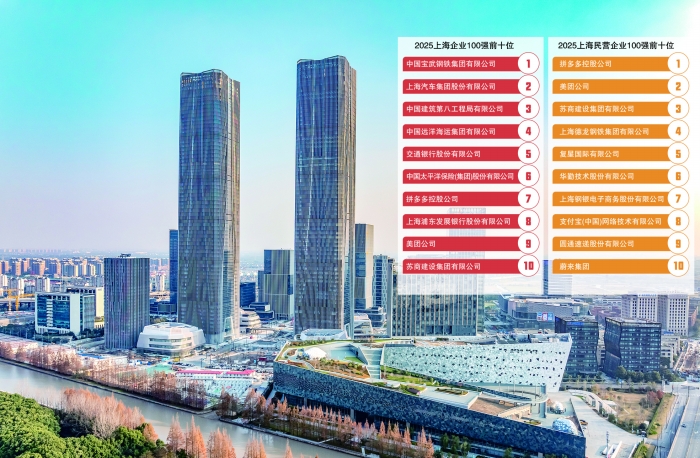
Group 1 - The core viewpoint of the news is that the Shanghai Top 100 Enterprises list reflects the overall economic climate and has expanded to include eight categories, showcasing the growth and dynamic adjustments of large enterprises [2] - In 2024, the total revenue of Shanghai's Top 100 Enterprises reached 10.03 trillion yuan, marking the third consecutive year of exceeding this threshold, with a net profit of 665.57 billion yuan, a year-on-year increase of 24.84% [3] - The entry threshold for the Top 100 list has risen to 10.73 billion yuan, indicating a competitive landscape among enterprises [3] Group 2 - The new emerging industries among the Top 100 Enterprises achieved significant growth, with total revenue reaching 220 billion yuan and net profit soaring by 72.47% to 19.54 billion yuan [4][5] - The information technology sector was a major driver of growth, with 47 companies generating a combined revenue of 150 billion yuan, reflecting a growth rate of 19.14% [5] - The private sector's revenue surpassed 3 trillion yuan for the first time, reaching 3.3 trillion yuan, with a net profit increase of 69.50% [6]



【长江策略戴清团队】9月W3港股资金:南向流入互联网,外资加码硬件设备——“重估牛”系列之港股资金面
Xin Lang Cai Jing· 2025-09-23 17:28
Market Overview - The Hong Kong stock market experienced an increase from September 5 to 19, 2025, with the Hang Seng Index rising by 0.59% and the Hang Seng Tech Index increasing by 5.09% [3][12] - The main drivers for this growth include a 25 basis point interest rate cut by the Federal Reserve, which aligns with market expectations, leading to increased liquidity in overseas markets that benefits the Hong Kong stock market [3] - The signing of strategic cooperation agreements between major internet stocks in Hong Kong and state-owned enterprises has contributed to the significant rise in the technology sector [3] Southbound Capital Flow - From September 5 to 18, 2025, southbound capital inflow reached HKD 550.84 billion, primarily directed towards sectors such as consumer discretionary retail, non-bank financials, pharmaceuticals, automotive, and non-ferrous metals [3] - The top five sectors for net inflow were: consumer discretionary retail (HKD 259.66 billion), non-bank financials (HKD 91.69 billion), pharmaceuticals (HKD 40.14 billion), automotive (HKD 37.55 billion), and non-ferrous metals (HKD 21.99 billion) [3] - Notably, there was a net outflow from durable consumer goods, hardware equipment, and telecommunications services, totaling HKD -11.89 billion, -6.54 billion, and -5.88 billion respectively [3] Foreign Institutional Capital Flow - Foreign institutional capital saw a net outflow of HKD 294.95 billion, with significant inflows into hardware equipment, consumer services, food and beverage, durable goods, and media sectors, totaling HKD 204.27 billion [4] - The top five sectors for foreign institutional net inflow were: hardware equipment (HKD 83.73 billion), consumer services (HKD 48.63 billion), food and beverage (HKD 33.16 billion), durable goods (HKD 19.75 billion), and media (HKD 19 billion) [4] - Conversely, there was a substantial outflow from consumer discretionary retail (HKD -323.72 billion), non-bank financials (HKD -111.32 billion), automotive (HKD -47.48 billion), pharmaceuticals (HKD -27.16 billion), and textiles (HKD -15.03 billion) [4] Sector Performance - The Hong Kong industrial sector led the market performance during the specified period, reflecting strong investor interest and capital inflow [3][24] - The technology sector also showed significant gains, driven by strategic partnerships and collaborations aimed at enhancing industrial intelligence in China [3][24] - Overall, the market sentiment appears positive, with various sectors experiencing varying degrees of capital inflow and performance metrics [3][24]



2025凤凰之星最具品牌影响力上市公司:中国铁建、中国太保、白云山、以岭药业、康师傅、海尔智家
Feng Huang Wang Cai Jing· 2025-09-23 14:01
Core Viewpoint - The "2025 Phoenix Star Listed Company Awards" ceremony was held in Guangzhou, recognizing companies for their performance in innovation, returns, responsibility, growth, brand influence, and globalization [1] Award Categories and Winners - The awards included categories such as Best Innovative Listed Company, Best Shareholder Return Listed Company, Most Socially Responsible Listed Company, Best Employer Award, Most Growth Potential Listed Company, Most Brand Influential Listed Company, Best Global Business Contribution Listed Company, Best Overseas Globalization Case, and Best IPO Company [1] - Six companies were awarded the title of "Most Brand Influential Listed Company": China Railway Construction Corporation, China Pacific Insurance, Guangzhou Baiyunshan Pharmaceutical, Yiling Pharmaceutical, Master Kong, and Haier Smart Home [1][3] Company Highlights - **China Railway Construction Corporation**: Recognized for its significant role in the "Belt and Road" initiative, operating in over 140 countries, and has been listed among the Fortune Global 500 for 19 consecutive years. The company emphasizes high-quality development and innovation in infrastructure [5][6] - **Master Kong**: Acknowledged for its long-term respect for consumers and commitment to quality. The company aims to promote Chinese culinary culture globally while focusing on technological upgrades and cultural heritage [8][9] - **China Pacific Insurance**: The company has a strong brand value and influence, providing comprehensive protection to 180 million customers. It has been ranked among the top five global insurance brands for several years [11] - **Guangzhou Baiyunshan Pharmaceutical**: As a World Fortune 500 company, it emphasizes high-quality products and social responsibility, with a brand value of 31.79 billion yuan, leading the pharmaceutical health sector in China [13] - **Haier Smart Home**: Transitioned from a home appliance leader to a smart living pioneer, serving over 1 billion users globally. The company focuses on technological innovation and sustainable development, holding the highest number of smart home invention patents for 13 consecutive years [15][16] - **Yiling Pharmaceutical**: Known for its innovative traditional Chinese medicine products, with 17 patented drugs, 11 of which are included in the national medical insurance directory. The company has successfully expanded its market presence in over 50 countries [17][18]




中国太保积极应对第18号台风“桦加沙”
Xin Hua Cai Jing· 2025-09-23 09:42
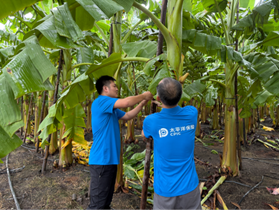
Core Viewpoint - China Pacific Insurance (CPIC) has initiated comprehensive disaster prevention and response measures in anticipation of Super Typhoon Haikui, demonstrating proactive risk management and customer support strategies [1]. Group 1: Disaster Response Initiatives - CPIC has launched an integrated disaster prevention and response operation, covering 6.418 million vehicle owners with disaster risk alerts as of September 22 [1]. - The company has established a specialized disaster response team and a full-process risk reduction service channel, ensuring readiness for immediate action [1]. - CPIC has provided pre-disaster inspections and preventive measures for 692 enterprises and construction projects in high-risk areas [1]. Group 2: Regional Actions - In Guangdong, CPIC is assisting farmers in harvesting fruits and reinforcing trees in typhoon-prone orchards [1]. - In Shenzhen, a "Typhoon Disaster Green Authorization Channel" has been opened for clients, simplifying claims processes and ensuring customer safety [3]. - In Hainan, CPIC is mobilizing resources for risk inspections in key areas and has deployed 25 survey vehicles and 30 drones for monitoring [3]. Group 3: Risk Mitigation Efforts - In Fujian, CPIC's specialized teams are conducting client visits and risk reduction activities, sending over 1,000 risk alerts to insured enterprises [4]. - In Guangxi, CPIC has utilized remote sensing and big data to send typhoon warnings and preventive measures to over 80,000 insured farmers [4]. - The company is actively assisting farmers in clearing drainage systems and reinforcing agricultural facilities to minimize flood risks [4].
“大城养老 守护记忆”——中国太保助力推动认知症防治“上海经验”
Mei Ri Jing Ji Xin Wen· 2025-09-23 09:25
Core Insights - China Pacific Insurance's high-quality institutional elderly care brand, Taibao Jiayuan, has reached a significant milestone with the opening of two new communities in Shanghai and Zhengzhou, enhancing its operational capabilities in elderly care services [1][9] - The aging population and brain health have become focal points for society, prompting discussions on building a scientific and humane care system for dementia [1][2] - The company has established a comprehensive and professional care system for dementia, integrating various care models and emphasizing personalized interventions [5][6][7] Group 1: Operational Expansion - Taibao Jiayuan has opened 12 operational communities, laying a solid foundation for a comprehensive elderly care ecosystem [1] - The recent openings in Shanghai and Zhengzhou are part of a broader strategy to enhance the company's presence in the elderly care market [9][10] - The company aims to provide a "professional elderly care + cultural elderly care" model in Zhengzhou, contributing to the local elderly care service system [10] Group 2: Dementia Care Focus - The company has introduced dementia-friendly environmental designs in its communities, which help reduce anxiety and enhance the quality of life for residents [3][4] - Taibao Jiayuan's "Le Yi Jia" dementia care sub-brand focuses on person-centered care, offering comprehensive support for different stages of dementia [5][6] - The integration of a multi-disciplinary team in the Shanghai community ensures a holistic approach to health management for the elderly [6] Group 3: Innovative Care Models - The company has adopted a data-driven approach to improve care quality, transitioning from experience-based to data-driven management [7] - The "PDCA cycle" quality management system is implemented to continuously enhance care services based on various performance metrics [7] - The company emphasizes the importance of community involvement and technological integration in dementia care, aiming to contribute to global solutions [2][8] Group 4: Strategic Vision - China Pacific Insurance is advancing its "insurance + elderly care" model, which has shown promising results in addressing the challenges of dementia care [9][10] - The company has received over 770,000 visits from insurance and social clients, indicating strong interest and engagement in its elderly care services [10] - The ongoing development of the "Taibao Jiayuan" model aims to transform financial guarantees into tangible quality of life improvements for the elderly [10]
