
CPIC(601601)

Search documents
预定利率下调掐表!分红险能接住下一波流量吗
Bei Jing Shang Bao· 2025-08-31 13:48
Core Viewpoint - The recent adjustment of the predetermined interest rate in the life insurance industry marks a significant historical moment, leading to a surge in insurance sales as companies prepare for the transition to new products that comply with the new rate standards [3][4][5]. Group 1: Impact of Predetermined Interest Rate Adjustment - The predetermined interest rate for ordinary life insurance products has been adjusted to 1.99%, marking the first reduction since the dynamic adjustment mechanism was implemented [4]. - Major insurance companies, including China Life and Ping An, have announced new maximum rates for their products: 2.0% for ordinary life insurance, 1.75% for participating insurance, and 1.0% for universal insurance [4][5]. - The end of the 2.5% interest rate era has led to a significant increase in sales activity, with reports of system overloads and agents working extended hours to accommodate the surge in demand [5][6]. Group 2: Product Strategy and Market Trends - Leading insurance companies are focusing on transforming their product offerings, particularly emphasizing participating insurance as a key growth area [9]. - The shift towards participating insurance is seen as a response to the changing market dynamics, with companies like China Life and Ping An highlighting their strategies to enhance product competitiveness and diversify offerings [8][9]. - Research indicates that participating insurance products are becoming more attractive due to their combined protection and income features, especially in a declining interest rate environment [9]. Group 3: Consumer Considerations - Consumers are advised to consider purchasing insurance products before the new rates take effect, as premiums are expected to rise significantly post-adjustment [10][11]. - For example, a popular children's critical illness insurance policy will see premiums increase from approximately 2,440 yuan to about 3,294 yuan, reflecting a potential rise of 15% to 35% in costs for various products [12]. - The adjustment in predetermined interest rates will lead to higher premiums and lower returns on investment-type products, prompting consumers to carefully evaluate their insurance needs and financial capabilities [13][14]. Group 4: Future Outlook for the Insurance Industry - Despite the rate adjustments, industry leaders remain optimistic about the future of the life insurance sector, citing opportunities for growth and innovation [15][16]. - The government is expected to play a supportive role in the industry's development, with new policies aimed at enhancing the quality and efficiency of insurance services [15]. - The life insurance sector is viewed as a critical component of wealth management for the middle class, providing essential protection and value-added services [16].





金融中报观|稳固收、抓股息、寻成长,五大上市险企详解低利率周期应对之策
Bei Jing Shang Bao· 2025-08-31 13:28
Core Viewpoint - The low interest rate environment is reshaping investment strategies for insurance companies, leading to a significant focus on equity investments and high-dividend assets to enhance returns [1][5][6]. Investment Performance - As of June 30, 2023, the total investment assets of five major A-share listed insurance companies reached 19.73 trillion yuan, a year-on-year increase of 7.52% [3]. - Investment returns for several companies improved significantly in the first half of 2023, with China Life achieving a total investment return of 3.29%, while China Pacific Insurance saw a decline of 0.4 percentage points to 2.3% [3][4]. Asset Allocation Strategies - Insurance companies are increasing their allocation to equity investments, with China Ping An's stock investment ratio rising to 10.5% from 7.6% year-on-year [4]. - China Life's equity financial assets reached 1.43 trillion yuan, with stock assets increasing by 1.19 billion yuan [4]. Focus on High-Dividend Stocks - In the current low interest rate environment, insurance companies are prioritizing high-dividend stocks that provide stable cash flow and align with their long-term investment strategies [5][6]. - Companies like China Life and China Pacific Insurance are actively seeking opportunities in high-dividend and growth sectors, emphasizing the importance of stable returns [6][7]. Diversification of Assets - Insurance companies are exploring diverse asset classes beyond traditional fixed income, including innovative quality assets like ABS and public REITs [8]. - China Life is also focusing on overseas markets, particularly the Hong Kong stock market, which has shown strong recovery and offers valuable investment opportunities [9].


半年股票持仓增加四千亿,A股上市险企这样布局资本市场
Di Yi Cai Jing· 2025-08-31 12:38
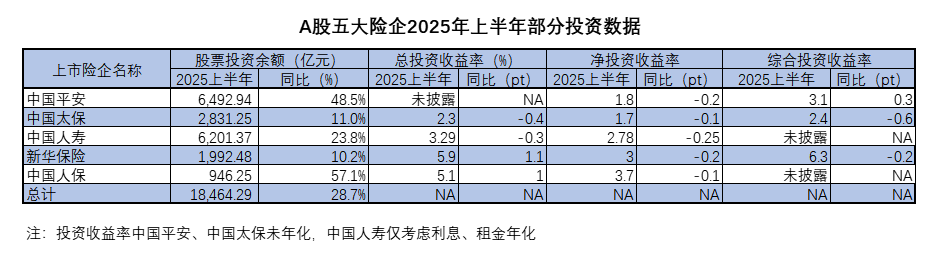
Core Viewpoint - The five major listed insurance companies in A-shares have significantly increased their stock investments, with a total increase of 411.86 billion yuan, representing a growth of 28.7% compared to the end of last year [1][6]. Group 1: Investment Performance - As of the end of the first half of the year, the total investment assets of the five A-share listed insurance companies reached 19.7 trillion yuan, an increase of 7.5% from the end of last year, accounting for 54.4% of the total insurance funds [2]. - The total investment return rates of various insurance companies showed a mixed performance, with China Pacific Insurance and China Life experiencing a year-on-year decline, while New China Life and China Reinsurance saw an increase of about 1 percentage point [4]. - The net investment return rates generally decreased by 0.1 to 0.25 percentage points, attributed to the decline in bond interest income in a low-interest-rate environment [6]. Group 2: Stock Investment Trends - The stock investment balance of the five major listed insurance companies reached 1.8 trillion yuan at the end of the first half, with an increase of 411.86 billion yuan, marking a growth of 28.7% [6]. - China Re and China Ping An saw stock investment increases of around 50%, while China Pacific Insurance and New China Life had smaller increases of 11% and 10.2%, respectively [6]. - New China Life had the highest proportion of stock investments in total investment assets at 11.6%, while China Ping An and China Pacific Insurance had lower proportions around 15% [6]. Group 3: Future Investment Strategies - Insurance companies plan to continue increasing their investments in the capital market, focusing on high-dividend stocks and growth stocks as part of their investment strategy [8][9]. - The companies expressed confidence in the capital market, citing regulatory support and favorable policies as key factors for optimism [8][9]. - The insurance companies are also participating in long-term investment pilot programs, with several funds already established to invest in stocks, focusing on companies with stable dividends and growth potential [11][12][13].
1.8万亿元!中国人保、中国人寿、中国平安、中国太保、新华保险集体加码股市
Jin Rong Shi Bao· 2025-08-31 03:32
Group 1: Industry Overview - The five A-share listed insurance companies have significantly increased their allocation to equity assets in the first half of 2025, with stock investment scale reaching nearly 1.8 trillion yuan, an increase of 405.36 billion yuan compared to the end of 2024, indicating strong confidence in the stock market [1] Group 2: China Life Insurance - China Life Insurance has added over 150 billion yuan to its equity asset allocation in the first half of 2025, with stock investment amounting to 620.14 billion yuan, an increase of 119.05 billion yuan from the end of 2024, raising its proportion from 7.58% to 8.70% [3][4] Group 3: China Ping An - China Ping An's stock investment scale reached 649.29 billion yuan by the end of June 2025, an increase of 211.91 billion yuan or 48.5% from the end of 2024, with stock investments now accounting for 10.5% of total investments, up by 2.9 percentage points [5] Group 4: China Pacific Insurance - China Pacific Insurance reported a stock investment increase of 28.06 billion yuan, with total stock investment amounting to 283.13 billion yuan, and its core equity proportion rising to 11.8%, an increase of 0.6 percentage points from the previous year [6] Group 5: New China Life Insurance - New China Life Insurance's total stock investment reached 152.13 billion yuan, an increase of 11.95 billion yuan from the end of 2024, with high-dividend OCI equity investments growing from 30.64 billion yuan to 37.47 billion yuan, an increase of 6.83 billion yuan [7][8]

上市险企权益资产配置一手抓股息一手抓成长
Zhong Guo Zheng Quan Bao· 2025-08-30 16:37
Core Viewpoint - The performance of the five major listed insurance companies in A-shares for the first half of the year was significantly influenced by investment returns, with a notable shift towards equity assets in response to a low interest rate environment [1][2]. Investment Performance - All five major insurance companies reported growth in investment assets ranging from 5.1% to 8.2% compared to the beginning of the year [2]. - Among these, A-share investments were a key component, with China Pacific Insurance reporting a 26.1% increase in A-share investment assets, raising its proportion in total investment assets by 1.2 percentage points [2]. - The net profit growth rates for the major insurers were as follows: New China Life Insurance at 33.53%, China Pacific Insurance at 10.95%, China Life Insurance at 6.93%, and China People’s Insurance at 16.94%, while China Ping An experienced a decline of 8.81% [1]. Asset Allocation Strategy - In response to the pressure on fixed-income asset yields, insurance companies are increasingly diversifying their asset allocations, focusing on high-dividend equity assets [1][3]. - China Pacific Insurance reported a total investment yield of 2.3% and a comprehensive investment yield of 2.4%, both down by 0.4 and 0.6 percentage points year-on-year, primarily due to declines in the fair value of fixed-income assets [2]. - Companies are actively exploring alternative assets, including convertible bonds, bond funds, and REITs, to mitigate reinvestment risks in a low-interest environment [3]. Focus on High-Dividend Stocks - Several insurance companies have increased their allocation to OCI (Other Comprehensive Income) stocks, with China People’s Insurance reporting a 60.7% increase in OCI stock investments, outperforming the CSI 300 Dividend Index by 7.8 percentage points [3]. - High-dividend stocks are viewed as a stabilizing factor for overall investment returns, especially in a declining interest rate environment [3]. Growth and Value Investment - The goal of constructing equity investment portfolios includes ensuring stable cash flows and capturing opportunities for excess returns through the identification of growth-oriented targets [4]. - Companies like China Life Insurance and China People’s Insurance are focusing on sectors such as technology innovation, advanced manufacturing, and new consumption for their equity investments [4].
上市险企半年报亮点:寿险财险双轮驱动,转型成效显著
Sou Hu Cai Jing· 2025-08-30 14:35
Group 1 - The Chinese insurance market underwent significant changes in the first half of 2025, including a reduction in the life insurance preset interest rate, strict control of liability costs by regulators, and deepening integration of reporting and operations in the auto insurance market [1] - As of the end of August, listed insurance companies in A-shares and H-shares reported strong stability in premium income and profitability, with many companies showing robust growth in core financial indicators [1] - The total original insurance premium income for the insurance industry reached 3.74 trillion yuan, a year-on-year increase of 5.04%, with life insurance premium growth maintaining a high level, often exceeding 16% monthly [1] Group 2 - China Life accelerated its channel transformation and diversified its business structure, with dividend insurance becoming a significant support for new single premium income, accounting for over 50% of the first-year premium [2] - The property insurance sector saw total premium income of 964.46 billion yuan, a year-on-year increase of 4.2%, with major companies like PICC having the largest premium scale and Ping An Property & Casualty showing the fastest growth [4] - Non-auto insurance business, particularly in Sunshine Property Insurance, demonstrated remarkable performance with a 12.5% year-on-year growth in non-auto premium income, reaching a 50.6% share of total premiums [4] Group 3 - The positive market performance and financial data reflect the flexibility and resilience of listed insurance companies in responding to industry changes, indicating steady progress towards high-quality development in the Chinese insurance industry [5] - With the gradual effectiveness of economic stimulus policies and a rebound in insurance product demand, listed insurance companies are expected to maintain a steady growth trend in the second half of the year [5]

中国太保业绩会释放多重信号:分红险占比将持续提升、新能源车险实现盈利、权益资产配置稳步增加
Mei Ri Jing Ji Xin Wen· 2025-08-30 14:24
Core Viewpoint - China Pacific Insurance (CPIC) is actively transforming its business structure in response to the declining preset interest rates in the life insurance sector, focusing on enhancing its dividend insurance products and expanding its presence in the new energy vehicle insurance market [2][3][4]. Group 1: Dividend Insurance Business - The company has implemented four key measures to drive the transformation of its dividend insurance business, resulting in a significant increase in new premium income [3][4]. - In the first half of the year, the new premium income for dividend insurance reached 10.128 billion yuan, a nearly 14-fold year-on-year increase, with the proportion of dividend insurance in new premium income rising to 42.5% [3][4]. - The company aims to further increase the proportion of dividend insurance by the end of the year, despite challenges posed by the recent adjustments in preset interest rates [4]. Group 2: New Energy Vehicle Insurance - In the first half of the year, the new energy vehicle insurance generated original premium income of 10.596 billion yuan, accounting for 19.8% of the total vehicle insurance premiums, an increase of 5.7 percentage points year-on-year [6]. - The new energy vehicle insurance has entered a profitable phase, with the comprehensive cost ratio for household vehicles being relatively favorable, while commercial vehicles face higher cost ratios [5][6]. - The company is focusing on two strategies to optimize costs: strengthening cooperation with manufacturers to reduce claims costs and utilizing data to enhance risk selection [6]. Group 3: Investment Strategy - CPIC has been steadily increasing its allocation to equity assets and alternative investments, with total investment assets reaching 2.92 trillion yuan, a 7% increase from the previous year [8]. - The company has adopted a dividend value strategy and is actively exploring new investment channels, including private securities, investment funds, and gold investments, to enhance the efficiency and quality of its asset management [8][9]. - The average investment return rate over the past decade stands at 4.70%, positioning the company favorably within the industry [10].
业绩发布会上,中国太保管理层说了14次“稳健”
第一财经· 2025-08-30 12:49
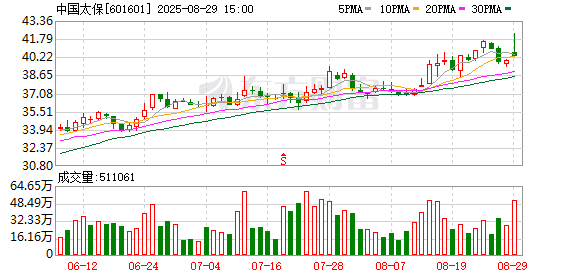
Core Viewpoint - The article highlights that China Pacific Insurance (601601.SH; 02601.HK) achieved a solid performance in the first half of the year, with a year-on-year increase of 11.0% in net profit attributable to shareholders and a 7.1% rise in operating profit, despite challenges in a low-interest-rate environment [3][5]. Group 1: Financial Performance - In the first half of the year, China Pacific Insurance's net profit attributable to shareholders turned positive with an 11% year-on-year increase, contrasting with an 18.1% decline in the first quarter [5]. - The management emphasized "steady growth" as a key theme, with the term "steady" mentioned at least 14 times during the earnings release [3][6]. Group 2: Investment Strategy - The company’s total investment return rate was 2.3%, and the comprehensive investment return rate was 2.4%, both showing a decline of 0.4 and 0.6 percentage points year-on-year, respectively [8]. - The investment strategy focuses on "stability" and "long-term" adjustments to maintain a stable return base, including increasing allocations to long-term bonds and alternative assets [9][10]. Group 3: Future Outlook - The company anticipates continued steady growth in operating profit for the full year, despite facing new challenges in the second half, such as pricing adjustments in life insurance and uncertainties in property insurance [6][10]. - The management believes that optimizing the long-term investment return rate will help cover liability costs sustainably [10].
金改前沿|中国太保业绩会直击:新能源车险已盈利 坚持股息价值策略配置权益资产
Zhong Guo Jin Rong Xin Xi Wang· 2025-08-30 09:29
Core Viewpoint - China Pacific Insurance (CPIC) reported a revenue of 200.5 billion yuan for the first half of 2025, marking a 3% year-on-year increase, and a net profit of 27.9 billion yuan, up 11% year-on-year [1] Group 1: Life Insurance Performance - The life insurance segment, which accounts for over 70% of CPIC's net profit, showed positive core operating indicators [2] - New business value reached 9.5 billion yuan, reflecting a 32.3% increase year-on-year, driven by significant growth in the bancassurance channel, which saw a 156.1% increase in new business value [2] - The contribution of individual insurance and bancassurance channels to new business value was 60% and 37.8%, respectively, indicating a more balanced structure [2] Group 2: Agent Channel Development - CPIC is focusing on building a professional and skilled agent workforce, with approximately 186,000 agents as of June, showing improved retention rates [3] - The "Great Health and Elderly Care" strategy is yielding results, with successful integration of insurance and elderly care services, exemplified by a fully occupied elderly care community in Nanjing [3] Group 3: New Energy Vehicle Insurance - CPIC's new energy vehicle insurance generated 10.6 billion yuan in premium income, increasing its share of total vehicle insurance premiums from 14.1% to 19.8% [4] - The profitability of new energy vehicle insurance has been achieved, although challenges remain due to high comprehensive costs, particularly for commercial vehicles [4][5] Group 4: Investment Strategy - As of June 2025, CPIC's total managed assets reached 3.77 trillion yuan, a 6.5% increase from the end of 2024, with investment assets growing by 7% to 2.92 trillion yuan [7] - The average investment return over the past decade has been 4.7%, with confidence in maintaining good performance in 2025 [7] - CPIC is focusing on long-term investments in equity assets, while also increasing allocations to innovative quality assets such as ABS and REITs [8]

中国太保(601601)1H25业绩点评:净利润和净资产表现环比改善 NBV延续快速增长
Xin Lang Cai Jing· 2025-08-30 09:13
Core Viewpoint - China Pacific Insurance (CPIC) reported its 1H25 performance, which met expectations, showing improvements in net profit and net asset growth compared to previous quarters [1][2]. Financial Performance - The company's net profit attributable to shareholders reached 27.89 billion, with a year-on-year increase of 11.0% [1] - The new business value (NBV) was 9.54 billion, reflecting a year-on-year growth of 32.3% on a comparable basis [1][2] - The net profit for 2Q25 showed a significant year-on-year increase of 36.5%, driven by rising equity markets and declining interest rates [1] - The company's net assets stood at 281.9 billion, down 3.3% year-to-date but up 6.9% quarter-on-quarter [1] Business Segments - The NBV growth continued at a rapid pace, with a notable increase in the proportion of participating insurance products, which accounted for 42.5% of new single premium [2] - The company’s individual insurance and bank insurance new premium saw a year-on-year decline of 7.7% and an increase of 95.6%, respectively [2] - The property and casualty insurance premium income grew by 0.9% year-on-year, with motor insurance up 2.8% and non-motor insurance down 0.8% [2] - The combined ratio (COR) improved to 96.3%, a decrease of 0.8 percentage points year-on-year, indicating better underwriting performance [2] Investment Performance - The non-annualized net, total, and comprehensive investment yields were 1.7%, 2.3%, and 2.4%, respectively, showing a year-on-year decline [3] - The company’s stock and fund investments increased by 11.0% and 16.1% year-to-date, outpacing the growth of total investment assets [3] - The proportion of stock investments included in other comprehensive income (OCI) rose by 4 percentage points to 33.8% [3] Future Outlook - The company is expected to maintain strong growth in net profit and NBV, with projected net profits of 52.1 billion, 56.8 billion, and 61.3 billion for 2025-2027, reflecting growth rates of 15.9%, 9.0%, and 8.0% respectively [3] - The current stock price corresponds to a P/EV multiple of 0.65, 0.61, and 0.57 for 2025-2027 estimates [3]